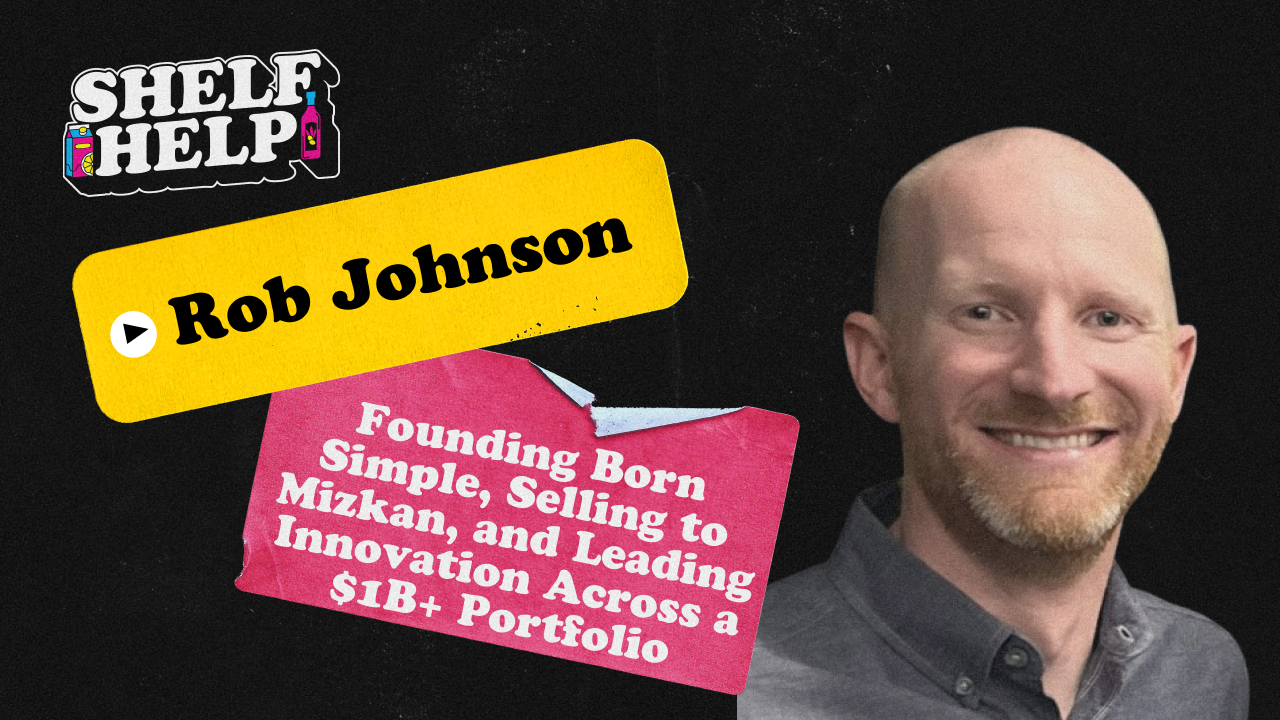
Founding Born Simple, Selling to Mizkan, and Leading Innovation Across a $1B+ Portfolio | Rob Johnson, Born Simple & Mizkan



On this episode, we're joined by Rob Johnson, Co-Founder & CEO of Born Simple and Head of Innovation at Mizkan America - the protein-forward shelf-stable complete, prepared meals brand that pivoted from barbecue sauces and broth concentrates into a category that every buyer in the country says is desperate for a makeover.
Rob spent years running small natural and organic brands inside Conagra before leaving to build Born Simple, selling it to Mizkan in 2021, and sticking around for nearly five years - one of the longer founder tenures post-acquisition in recent memory.
We dig into how Born Simple was literally born in a Whole Foods meeting - the buyer hated the existing brand but loved the products, and Rob walked out with a nationwide launch commitment across two categories before the brand even had a name.
Robs gets into what he calls the "NASCAR package" problem in big CPG, the Mizkan acquisition, and what founders should actually pay attention to beyond the check size.
We also cover Rob's new role leading innovation across Mizkan America, where he's trying to expand beyond what he calls "innovation behind a computer screen" and replace it with startup-style consumer empathy inside a 225-year-old, $1B+ family-owned company.
---------------
Episode Highlights:
🍖 How Born Simple went from barbecue sauce to protein-forward shelf-stable meals
🛒 Landing a nationwide Whole Foods launch before the brand had a name
🎨 Brand design inspired by Brandless and Public Goods - simplicity as strategy
📦 The "NASCAR package" problem and why big CPG over-communicates on shelf
🏷️ Adapting packaging to category - why Tetra Pak pasta sauce didn't work
💰 Selling to Mizkan in 2021 and key deal terms for founders (earnouts, key man clauses)
🤝 Why post-acquisition integration speed is the #1 thing founders overlook
🔄 Pivoting into shelf-stable complete meals - a category in desperate need of a makeover
🚀 Leading innovation at Mizkan America and killing "innovation behind a computer screen"
🧪 Bringing startup thinking to a 225-year-old, $1B+ family-owned company
---------------
Table of Contents:
00:00 – Intro
00:45 – Origin story and the Whole Foods meeting
03:18 – The Brandless and Public Goods insight
04:52 – Small companies doing unscalable things
05:57 – What big CPG experience actually teaches you
10:10 – Sitting on both sides of M&A
12:01 – Building Born Simple's brand identity and packaging design
14:40 – The "NASCAR package" problem
15:55 – Adapting packaging to category (Tetra Pak pasta sauce)
17:18 – The stand cap pouch and glass recycling
21:42 – Selling to Mizkan and reading the funding tea leaves
26:10 – Key deal terms and what founders should negotiate
28:15 – Post-acquisition integration and why it destroys value
32:08 – Pivoting to protein-forward shelf-stable meals
36:33 – Head of Innovation at Mizkan America
38:00 – "Innovation behind a computer screen"
---------------
Links:
Born Simple – https://www.bornsimple.com/
Mizkan – https://www.mizkan.com/
Follow Rob on LinkedIn – https://www.linkedin.com/in/robj2/
Follow Adam on LinkedIn – https://www.linkedin.com/in/adam-martin-steinberg/
For help with CPG production design - packaging and label design, product renders, POS assets, retail media assets, quick-turn sales and marketing assets and all the other work that bogs down creative teams, check out https://www.kitprint.co/.
Episode Transcript
Speaker: 00:00
Welcome to Shelf Help. Today we're speaking with Rob Johnson. Rob founded Born Simple, the Protein Forward Prepared Meals brand in 2018, sold the business to MizCon in 2021, been running the brand inside the larger company ever since while also leading innovation across the broader portfolio. A lot of really cool stuff going on. Excited to dive into it. Just first off, just for the listeners that maybe aren't all that familiar with Born Simple, love just kind of start off getting a quick lay of the land just in terms of kind of the origin story, why behind the Born Simple brand, and then kind of Born Simple lineup, kind of core product lineup as well as maybe a quick overview in terms of the broader Ms. Con portfolio and where Born Simple fits in there.
Speaker 1: 00:46
Yeah, cool. Yeah, thanks for having me. So Born Simple is uh, like you said, we are a protein forward, complete, uh, shelf stable, complete meals company. We look very different than we did when the brand was founded. And the founding story is, you know, one of those things that's like half luck and kind of half trying to take advantage of a of an opportunity. I was actually running a like a small kind of family-founded barbecue sauce brand in the Midwest, backed by a private equity group in Chicago, and was down meeting with the Whole Foods buyer, the barbecue sauce buyer for Whole Foods at the time. And she hated the brand that we came into pitcher, and we started just kind of spitballing with her about how we could potentially recreate basically the same products, but upgrade them a little bit and then kind of completely rethink the branding. And that's really where the brand sort of came from. I had been sort of thinking about it for a long time, and my background is basically running uh small, natural, organic, kind of entrepreneurial brands under the umbrella of big CPG. So, like my very first job uh out of grad school was running the Alexia brand, which is frozen potatoes, frozen french fries, under the banner. It's actually kind of a funding structure, under the banner of a company called Lamb Weston, which was owned by Conagra. So sort of two steps removed from the mothership in Omaha back then, but kind of got a great um, you know, exposure to founders, the entrepreneurial journey, fundraising, and then, you know, what happens when you integrate it into a big company and what things struggle, how can you benefit from the resources and stuff like that? So, long story short, we started pitching this idea to the Whole Foods buyer at the time, and she loved it. And then I had to basically go back and pitch my private equity investors on hey, there's a new brand that we think we can sell into Whole Foods. She wanted it in two different categories. So she's like, I want the barbecue sauce product, but I also want this other product, which ended up being a soup broth concentrate at the time, because she was looking for a supplier for that. She's like, this thing you just pitched me would be perfect for that. So we ended up basically leaving the meeting in Austin with her saying, Hey, if you can get your investors behind this and you can start this new brand, we will take you to market in across two categories, nationwide, and it ended up being like eight items. So it was one of those things where it was like got effectively got the sale before we even had the brand design and all that kind of stuff. And then we worked with her over, you know, the next couple of months. But the genesis of it was there were two big things happening at the time, right? So you got to think back to 2018, e-commerce basically became mainstream for CPG. But there were two big kind of upstart e-commerce companies that were doing more or less the same thing. So one of them was brandless. So I don't know if you remember that company. They are now defunct, but um, and great story there. And then the other one is public goods, who I think is still around. Okay. But the central kind of yeah, so they're both really cool brands. Like um, ironically, brandless, you know, sort of their whole ethos was like, we don't believe that brand means anything. And so we're gonna effectively like not brand any of our products. But the the insight that I took from that was was basically consumers wanted value and the right price, right? Like a really good product and the right price. And the brand was important, but only to an extent. And so, especially like an upstart brand, in the early days, nobody really knows what the brand means, and you sort of have to establish that over time. And so you can win on just a product and a price. Brandless was was really trying to do that. I mean, they'd raised, you know, I want to say like $250 million or something crazy like that. And they ultimately spread themselves way too thin. And then public goods was doing more or less the same thing, like very light touch branding, very um sort of straightforward communication, that kind of stuff. But both of them were digitally native and had no plans to go into retail at all. And I was like, well, my background is in retail. I know how to go to market in retail. We could take this insight and basically do it in retail, which will allow us to scale way faster than anybody in e-commerce ever could. So I skipped that e-commerce stuff. The other thing that was going on that led to kind of the idea behind Born Simple was um, you know, small companies have an advantage, and this idea still exists today. Small companies have an advantage over big companies because they are willing to do things that don't scale in the early days to ultimately get to scale later on. Big companies, the conversation that always happens is, uh, that's a lot of capital to invest, or our manufacturing platform is not flexible enough to do that kind of thing. So, like the first thing we did, those barbecue sauces were in, if you've ever seen the this the pouch that Daisy Sour Cream is in, it's like this inverted pouch. Yeah. We basically said, well, we're gonna do that, but we're gonna do it in other sort of liquid condiments. And so that was what sparked the idea with the Whole Foods buyer. And then we sort of put those two ideas together. It's like if we created this sort of like light touch branding, super straightforward communication, very simple to its core, and we did these things that are not sort of scalable that no big CPG company is gonna do until we're massive, right? I think there's an opportunity, there's like a lane there. Um and so that's kind of how that's kind of how we uh you know we got started.
Speaker: 05:57
Maybe some other people that are that have that are currently in or have spent majority of their career in kind of bigger CPG that are thinking or have been tempted by branching out on their own and building something on their own like like you did. What up? Maybe just to give them some some confidence, I guess, if nothing else. Like what aspects do you feel like of that Conagra experience where I think you were managing that Alexi brand was like, I don't know, 450 million-ish portfolio. What do you feel like um were some of the most valuable learnings you brought from that bigger CPG world into you know starting and building Born Simple and in those, yeah, what was the most valuable in terms of those three years from from launch to acquisition?
Speaker 1: 06:35
Yeah, I would say um, I would say if I gave one piece of advice to anybody working in big CPG that has interest in doing something more entrepreneurial, it would be go find a startup and work for it. Because there is absolutely no substitute for being in the trenches and actually doing the things that startups do. Um, and there's a ton of reasons why big companies operate very differently than startups, right? I mean, not the least of which what I said earlier about doing things that are unscalable in the early going. Uh big CPGs don't do that, right? Because uh they they it's harder for them, especially public companies, harder for them to take a long-term view of um, you know, of kind of how they do things and invest early, you know, and suffer losses along the way to ultimately get to, you know, a prize at the end of the rainbow, so to speak. So I I would say, you know, I I had a super, it's mostly luck, but I had a really unique kind of you know come up story in in Big CPG because my very first job was working on a brand that had just been acquired like five years prior. It was still operated independently. The founders were not still involved, but they were still connected and I still had access to them. And then because of that experience, I was able to kind of move up within Conagra, sort of on that track. So when I left Conagra in 2017, I was running basically a division of Conagra whose entire job was to take these small natural organic brands that they had acquired, you know, all of them were sub-50 million in revenue, and figure out how to run them and figure out how to take the resources and expertise that Conagra had and make that of a positive impact for those businesses. And, you know, there's a lot of like oil and water between those two things, right? Big companies just think differently and operate differently than small companies. And it's really hard for big companies because after you've done things for a long time and you've run billion-dollar brands and had some success and stuff, you, you know, for better or for worse, your ego sort of gets in the way and you're like, well, what does this $50 million brand know that we don't know? And they should be doing things the way we do things, not the other way around. And so, so yeah, I think the most valuable bit of my experience was being sort of in the trenches and being able to actually operate those businesses independently, you know, feel the things that founders feel. And then when I left to go and kind of, you know, do pursue my own sort of entrepreneurial journey, I had that background, but I also had the great training that a big CPG would give you, right? So I knew how to use IRI, you know, and and to analyze that data and what that meant. I knew, you know, I had a great mentor early in my career at Lamb Weston who was kind of a hard ass, but but was very unforgiving around product launches from kind of a planning and um, you know, planning, marketing, telling the story, understanding how it's gonna fit with the customer, you know, understanding trade strategy. I mean, all those kind of things, right? And so like I got a really, really good um sort of dose of what does a what is an effective commercialization for a new product look like, which was super helpful when I then went to, you know, kind of do my own thing because it was like, well, I know how this, I know how all of this works, soup to nuts. And I can, I can sort of put myself in the shoes of a buyer and I know what questions they're gonna ask me, I know what sensitivities they're gonna have, I know what things I need to talk to them about in order for them to be sort of, you know, for this concept to be attractive. And so yeah, I think the benefit I had that I don't think a lot of people have is I got to see both sides of the world. I literally have sat on both sides of the table for MA deals, right? On the acquirer side at the big company and thinking about things from that standpoint on the on the seller side, right? We sold Born Simple to Ms. Con in 2021. So I got to be a part of that whole process on the other side. And then I also got to be embedded with these founding teams like immediately post-acquisition when I was at Conagra, right? So Blake's All National is a small, um, you know, kind of family-run frozen pot pie business out in New Hampshire. I got to spend, I mean, I was probably traveling almost 50% of the time out to New Hampshire to to be with that team and get to spend time with them and understand the world they lived in. And I'll never forget, like the the quote that still rings in my head today: if if anybody out there is in big CPG and is thinking about becoming an entrepreneur, like hear this. And he said to me, he said, you don't really know what it's like to be uh an entrepreneur until you wake up on Monday and you don't know how you're gonna make payroll on Friday. Like that is to me, to just captures the the um the level of stress and and the types of things that you have to think about that when you're working for a big CPG, like you don't think about how the bills get paid. No. You don't really care. You don't know where the money comes from and and you don't really care, right? You you get your paycheck, you do your thing, and you go home. And that actually dovetails into a lot of the work around innovation that you know that I've been involved in at MizCon over the last you know six to nine months. It's it's less about like, what are the great innovations that we should be launching and more about how do we bring startup thinking to a bigger organization and how do we leverage MizCon scale plus an entrepreneurial mindset to basically take the way that startups do things and supercharge that and de-risk a lot of it because we have the resources to invest in things like data and research and some of those kind of things.
Speaker: 12:02
From a brand identity and packaging design standpoint, what were kind of those top key variables that were top of mind for you when you were building out the brand identity positioning, voice packaging design for Born Simple?
Speaker 1: 12:14
Yeah, I mean, this this could have really turned out to be a super stupid thing for me to have done because just imagine yourself, you know, you're the CEO of a small private equity backed company, right? Walking into the largest natural foods retailer in the country, and you got a meeting to pitch your products. The buyer tells you she hates the branding, but loves the products, and you go into like, you know, pitch mode on this new concept that literally no one has ever heard of or knows about. You you didn't warn your private equity backers that you're gonna do this, right? I mean, they they very easily could have fired me and been like, you're pitching your own product when you're supposed to be in there pitching this brand that we invested in, right? It all ended up, you know, working out for them when we sold to to Ms. Con and stuff. But um, but yeah, big risk, right? So I had been thinking about this for a long time, right? Because part of the reason I left ConAgra because I was because I got so frustrated with how slow and methodical and risk-averse they were. And it's the same thing I talked about in terms of like small companies do things that are very unsustainable in the short term, right? Which is a huge advantage that they have over big companies. So I'd been thinking about this for a long time. It's just been something I'd been kind of mulling over. And so, in terms of the design elements, you know, simplicity was basically the foundation of all of it. And if I you I go back to the examples I gave that were kind of the inspiration for the brand, you know, brandless and public goods. If you look at the packaging that brandless had, and I think public goods still has, man, that you don't get much simpler. And actually, I had been probably the only person in the world that knew about this idea before I went to go pitch it to Whole Foods was, um, or I didn't go pitch it to Whole Foods, I found myself in a meeting pitching it to Whole Foods, was my wife. And she uh I've been talking to her about it for a while and like this idea of kind of doing this thing in retail that was getting popular in e-commerce and kind of taking some brand design elements from it. And she was at a brewery in Oregon and with a uh, I think maybe with her brother, and sent me a picture of a beer bottle that had that was basically like spot on exactly what I was trying to do around the brand design. So I think I even had that picture on my phone and showed it to the Whole Foods buyer when we were there and and was like, this is kind of the aesthetic I'm going for. So this is what you can expect. We didn't even have a name at that point, right? So Born Simple, the name Born Simple came later. Um, but yeah, it was really all around simplicity. I wanted, you know, clean lines, I wanted very straightforward communication. Because one of the other insights that I had, you know, around kind of the way big CPG does things is what we used to call the NASCAR package, which is, and you see this today around protein. So protein is a huge trend. And so what everybody does is, you know, even brands that have had protein and haven't really changed their products at all, they're now slapping a protein claim on the bag because it's they want to be on trend and they want to capitalize on that, you know, the rise of that trend.
unknown: 15:11
Yeah.
Speaker 1: 15:11
And so what you end up with in Big CPG a lot is like you stand back from the shelf and it's like you've got all these products that are screaming a thousand things at you. It's really hard to, as a consumer, to make your way through that. And so, you know, the insight I had was like, man, what if we just did away with all that? And like it's just it's just super straightforward. It's very easy to trust, uh, it's very easy to understand. You don't have to do, you don't have to do a lot of research at the shelf to figure out what this is. And so that was kind of the underpinning of of what ultimately became, you know, the original Born Simple brand design. We've moved, I'd say, pretty dang far away from that now because we've gone through a couple of different iterations of you know of products. And, you know, you gotta adapt to the category. And I'll tell you one big learning we had was we launched a line of pasta sauces in a tetracarton, okay, which is great for a whole bunch of reasons. There's a bunch of benefits to it. But one of the downsides is if you think about the pasta sauce category, everything is in a glass jar, which means you can see through it. Good point. You could you make the argument that like you know what's going to be in there, you don't really need to see it. But there's just this enough of an element of consumer trust that you get from being able to see through the package that something that's not see-through raises enough questions that it's just another hurdle for a consumer to pick you up off the shelf, right? So again, just going back to what I said about you need to sort of adapt. Sometimes you need to adapt your packaging design to the category. We didn't do a good job of adapting it. And then when we launched into the complete meals, which I'll say has been the most successful thing we've done, you know, to date, we added some big food photography to the package. And then obviously before protein got crazy, we started talking about protein. So I know everybody says, oh, we were on the protein trend before it was a trend. I wouldn't necessarily say that. I would say in the process of developing these, protein started to kind of pop. And so we prioritized that over some other things that we um, you know, that we could have done. But yeah, underpinning was super straightforward, straight lines, easy to understand, simple communication. Um, and then that obviously has evolved as we've kind of evolved.
Speaker: 17:16
I think you're you live in Boise from Boise, and there is some specific moment where Boise stopped accepting glass and curbside recycling that kind of sent you down a rabbit hole. Assuming I got that right, yeah. Curious about that journey that kind of ultimately landed you on the stand cap pouch.
Speaker 1: 17:32
Yeah. So the stand cap pouch, I would say, you know, like a lot of things, was was part opportunistic and part like part luck and and part, you know, sort of understanding the opportunity we had in front of us and kind of capitalizing on it. So yeah, so I live in Boise, Idaho. I'm originally from Oregon. So recycling has been a part of my sort of life since I was since I was born, right? It just in Oregon. In fact, I was funny, I was with my parents this weekend and I went to throw away a plastic bottle, and my mom like, you know, uh admonished me and like grabbed it out of the trash and was like, that's 10 cents, because they have, you know, they do bottle recycling there and stuff. And so um it's just sort of embedded in in our culture, just because that's you know, that's how things go in Oregon. And so, um, and so uh, and I think a lot of consumers are confused by what you can recycle, what you can't recycle. It's just a really kind of daunting thing to try to dive into. And not a lot of people spend a lot of time thinking about it. And so, yeah, we got to notice at some point, you know, this is like right around the time I was leaving Conagra, that Boise was gonna stop accepting glass and curbside recycling. And I so I was like, that seems so strange. You'd think glass is like the most recyclable thing ever. Yep. Just based on the way it's made and all those kind of things. And um, I started diving into it and realized, holy cow, something like 70% of the glass that gets recycled in the US gets put on these barges and sent to overseas to like China or places that ultimately end up putting them in landfills, right? So the idea of glass recycling is a total misnomer. And so so it is recyclable, but it's not like most things, it's driven by money. So it's not like economically viable because the capital that it takes to set up a glass recycling facility and the cost, the incremental cost of recycling a glass bottle is actually more than producing virgin glass. So it just makes no economic sense. It's a huge sort of supply chain challenge. And so saw that, and then we were at Expo West. This must have been 20, it must have been 2018. And uh a sales guy from Glenroy, who is the company that patented that stand cap pouch and sold it to Daisy, came by our booth and was like, hey, I see you guys do barbecue sauces. Have you ever thought about putting barbecue sauce in this pouch? And both the co-founder who I was working with at the time and myself were like, you know, kind of light bulb moment. And then you couple that with the fact that, you know, I learned all this about glass recycling. What he kind of pitched us on was, yes, it's plastic and no, it's not recyclable. But if you think about sustainability from kind of cradle to grave, this pouch, because it, if you think about when you ship packaging into your production facility, right, glass jars ship in exactly the same way they ship out, right? You don't can't fold a glass jar down. Well, the space and savings and consequently the fuel savings from basically being able to lay those pouches flat is really significant. The other thing I didn't realize is glass manufacturing is super water intensive. And so you are spending a lot of natural resources. Anyway, long story short, he pitched us on the pouch. And I go back to what I originally said, like that is something that is totally unsustainable in the short term because we had to work with a coman, the margins were tight, you know, those pouches were expense, way more expensive than glass bottles would be. And so no big CPG company is gonna completely remake their supply chain to be able to fill, you know, inverted pouches. And so we got a lot of traction with them just because it was different. There was a an element of consumer convenience because the other thing about barbecue sauce that everybody's experienced is like you get set down to the last 10%, and there's just no good way to get it out of the bottle. You're like putting it upside down in your fridge, and and this was already inverted. So for the same reason it works in sour cream, it could work in a lot, basically any liquid condiment category. It's taken off in honey now, I think. Yeah, and some other places guacamole, you know.
Speaker: 21:39
So shifting gears are fair amount. I think it was August 2021. You sold Born Simple to MizCon, which is you know where you are now, the US subsidiary of the of the big um Japanese company that I think has been around for two hundred plus years. Tell me a bit about that that journey.
Speaker 1: 21:57
Yeah, we were actually in the market raising money. So I was out pitching. You know, venture funds and family offices and stuff for probably six months plus before we were approached by MizCon. And it's, you know, like everything else I've said, it was it was mostly luck, right? So one of the um, so the private equity fund that was backing us in Chicago was actually the partners of an ad agency there. And um, and one of the partners of the ad agency that I knew well happened to be playing golf one day with a guy who I believe was the general counsel at MizCon at the time. And he started talking about Born Simple and the cool things we were doing and our relationship with Whole Foods. And and uh this guy from MizCon was like, wow, that's super interesting. You know, I'm gonna kind of take this back to the folks at MizCon and just talk to them about this might be something, you know, we're kind of looking to make some inroads in the natural channel and come, you know, find a brand that we can, you know, leverage to expand um and and kind of develop as a new platform. And one thing led to another, you know, we sort of made a pitch to them. Um we talked to them about investment and they were interested in acquiring the whole company. I mean, we were still really small at the time. And so we were honestly not in the market looking to sell the company. And I think we all believed in the the you know, the business that we were building and and our ability to get bigger and do that kind of stuff. But I think one of the signs we were seeing in the market, because you got to remember, they approached us like in October of 2020. And if you remember 2020 and 2021 in kind of the food money and funding landscape, that's when everything sort of came to a crashing halt, right? Um, the money was crazy during right, like during COVID and then immediately after. And I started to see some signals as I was out raising money that like this funding is kind of drying up and it's gonna be a really tough slog for the next who knows how long to go out and raise money for these companies that are, you know, typically unprofitable for a long time and stuff like that. And so just kind of trying to read the tea leaves, and we're like, man, these guys think differently. Because I'd been, you gotta remember, like, my background was at Conagra, and I had to been on the other side of the table, you know, pitching founders on why they should sell their company to Conagra and then working with them afterwards and seeing, you know, that what we said in the meetings and at the table was not ultimately what happened. And you know, MizCon, what I now know is MizCon is entirely privately held by a single family in Japan. It's a 225-year-old company. So when I say they think long term, like they think like in generations. And um, you know, I didn't know very much about Japanese culture or anything like that. And what I have found, and I think what I could sort of sense from them early on was they are, you know, the foundation of everything that that happens in Japanese culture is respect. And so you couple just a core ethos of respect with a really long-term vision, it is a really great place to grow a company because you don't have the. So, yes, we have financial targets, you know, all that kind of stuff, set the same as any other company, but you know, they are more willing to invest in the short term to ultimately get to the right outcome than almost any other organization I've ever I've ever heard of. So, you know, really great meetings with them early on. And then yeah, like I said, I decided to sell the business to them, close the transaction in August of 2021. And I would say, you know, if you look at any sort of CVG transactions in the last 10 years, you will be hard pressed to find another founder that has stuck around with the parent company for as long as I have. And I think that's a that's a testament to the people at MizCon, the family's vision, you know, the autonomy that they've given me, you know, the ability, the the the ability to sort of digest a couple of pivots on the brand, which just wouldn't have happened, you know, in in another place. And and so yeah, feel very lucky that they were ultimately the the you know the organization that ended up with the brand and and that I've been able to, you know, be a part of the company for now almost five years. That's awesome.
Speaker: 26:08
Yeah, they sound like great partners.
Speaker 1: 26:10
Yeah.
Speaker: 26:11
Without going into any level specifics at all, but maybe just for some other founders that are lucky enough to be in a similar position where they're starting to seriously explore an acquisition with some sort of a strategic acquirer. Um what were just in terms of kind of at a you know, in a general high level, what were the I guess kind of key deal terms or I don't know, structural elements that were the most important to you when you were thinking about going through this acquisition process and then thinking about what, yeah, generally what was most important to you?
Speaker 1: 26:40
Yeah, I mean, it's a lot of things, right? The the purchase price is always really important. So, so you know, I would be remiss if I didn't say that. And so, you know, actually we we made them, we pitched, we pitched them on a number. They came back and said, yeah, that's that's just not gonna happen. And so then we said, okay, you know, we're gonna come back down to earth a little bit. And then, you know, we structured there was like an earnout provision, which is not uncommon, right? So we would ultimately get paid on on, you know, if we hit future targets. Um we were super comfortable with that. And ultimately, you know, at the end of the day, when you're backed by a private equity group, really the number that matters is uh, you know, what kind of a return are they gonna get on their investment? And so I think when it sort of came down to brass tax, I think what we the conversations we had internally were hey, this is an opportunity for you guys to get a decent return on your investment here. There was a key man clause, which I won't get into the specifics around that, but basically meant that, you know, I was gonna have a home for a period of time because they wanted me to come and lead the business, which again I wanted to do. It was, you know, something I founded and had passion for. And then one of the things I think that gets overlooked in terms of transactions, and again, I've now been because I participate in in Ms. Con's uh activities as well. And so I've been on that side of the table quite a few times now. I think, you know, having the experience at Conagra, having worked with founders like immediately post-acquisition, seeing when those go badly, and also seeing when, you know, from my own experience, when they go really well, I think the number one thing that gets overlooked the most is sort of the structure of the entity when it's acquired, meaning how quickly are they going to try to integrate you? You know, I go I go back to this is gonna sound like a little bit of a weird reference, but like I go back to when I was in grad school, I was like on the student council and I was the VP of student services, which doesn't mean anything other than to say that like my job was basically to try to make sure that the printers were working and uh everyone had a copy card and like the things that make life easy, that was sort of my responsibility. What I learned through that experience was like if you just make people's everyday lives simpler and easier and and and less friction, there's a lot of other things that you can do that they're not gonna care about, right? It's it's kind of like it's kind of like gas prices, right? Lots of things could be going on in the world. And at the end of the day, if people's gas prices are going up, that's what they're gonna pay attention to. And so in the context of an MA transaction, the thing that I think a lot of companies acquirers risk that I would say, I will say Ms. Con it does this better than almost anybody is if you try to try to integrate a company too quickly, you are going to make the lives of the, and in every transaction is different. So this is not a blanket statement, but like you're gonna make the lives of the acquired team a living hell. A living hell can look like things that you might think don't matter. Like I'll just give you an example. If an acquiring team, and this is not an example from anything specific, but like if an acquired team is all using Mac computers and the parent company uses PCs and you acquire them and you say, Well, now you need to get on all of our digital technology, and you grab the Macs from them and try to get them on PCs, those are the kind of things that make people leave, right? Totally. Yeah. And so ultimately what you end up doing is in the process of trying to integrate and streamline and systematize, you destroy value because the value that you're acquiring is a lot of it is in the people that have built that thing, right? And so, so as a founder who cares about the future of the business that you started, I would just pay a lot of attention to the language that acquirers use around how they're gonna integrate the business or if they're gonna integrate it, if they're gonna operate it independently, where are those sort of connection points gonna be? Do they have anybody on the team that's ever worked for a startup or understands what it's like to be an acquired founder, right? That's a really important thing. I think that gets missed a lot because obviously the transaction price is the thing that carries the day. And in my experience, you know, it's hard to find good advisors other than founders who have exited, that have been through this, that know what it's like on the other side. Because those are the kind of things that, yeah, you're gonna cash the check, but I have known and been involved with a lot, a bunch of founders who have found themselves on the other side of a transaction that they were happy with the outcome in terms of the price and were extremely, extremely unhappy with the way that you know things went after the transaction and ultimately end up leaving the company sooner than even like their, you know, a lot of times you'll get like a retention bonus after being there for a year or two years or whatever. And I've seen, I've seen founders not single digits, like a lot of founders renegotiate those to be able to leave earlier because they're like, I just can't, these people are coming in and trying to tell me how to run my business that that I ultimately ran and got to the point where they wanted to acquire it and now they don't want my opinion anymore. That I would say that's the number one most overlooked thing when you're when you're selling a business, because you get really caught up in like, I'm about to be, you know, wealthier than I'd ever imagined. The check size is awesome, and it's hard to sort of balance that with what is life actually gonna be like once I'm a part of this parent company and how are they gonna treat us?
Speaker: 32:06
Totally. Since the acquisition, I believe Born Simple's gone through a pretty notable transformation. Started with those barbecue sauces, broth, concentrates, and then now you've shifted to a big focus on shelf stable protein bowls. Yeah, just walk me through what that kind of pivot looked like from the behind the scenes.
Speaker 1: 32:26
Yeah, I mean, I think it's a lot of things. It was not sort of any one factor that kind of made us pivot. So the the first thing that happened was, you know, MizCon owns iconic pasta sauce brands. So MizCon owns Ragu and Bertoli. And so I think one of the things that they saw with Born Simple early on was like, hey, this is a clean label. You know, we were all organic at the time. Um, this is an opportunity for us to make an impact in the pasta sauce category that we can't with our current brands. And so we did that. Again, I think hindsight being 2020, TetraPack packaging was a challenge in the category for reasons I don't think we foresaw. And so that sort of happened, and and then, you know, we sort of exited that business. But through that, again, the if there's one theme here through this entire discussion that, you know, there have been strokes of luck along the way that have led us to the different things that we've done and and you know, different ways that we've we've been successful. The protein meals was was one of those. Um so I, because I was at Conagra for, you know, a long time, Conagra owned Chef Boyer D. So I never worked directly on that brand, but I was in meetings where they would talk about it and some of the challenges. And so I understood a little bit about that category. And we threw our TetraPack manufacturer, we understood that they, you know, could do basically could do meals in that packaging. And it wasn't something we ever wanted to do or ever thought we were gonna do, but we started looking at the opportunity. And it's like we already have a supply chain set up to basically to do this. We have a co-packer, we have, you know, the direct tie to Tetra, so we can buy the packaging, all these relationships that we have. And we started looking at the category and we're like, man, this category is in desperate need of a makeover. It is losing consumers hand over fist, and effectively all the brands there are just in a race to the bottom. And I remember, you know, at Conagra, we used to pre-this pre-COVID, right? So Chef Boyard was effectively a cash cow. They were just milking it for the profit because if you went above that dollar or $1.25 price point, your volume would just drop off the map. And so they were totally stuck. They couldn't improve the food. They couldn't, you know, if you think about what gets you to a dollar twenty-five in retail cost at the shelf, that doesn't leave a lot of room for food cost, right? Retailers got to make margin, the manufacturers got to make margin. And so, and so they just were totally stuck. It was like, we're just gonna ride this thing out. And then you saw, like a year and a half ago, they ultimately ended up selling the business to a private equity firm because it just, you know, they could never figure out how to grow it. Everybody in the category is doing the exact same thing. Spaghettio is doing the exact same thing, right? And so it was like, somebody's got to come in here and make an impact. Like convenient food has never been more important for consumers, and there is so much great technology out there. And so, anyway, long story short, started looking at the category and realizing holy cow, this is a massive opportunity. And I'm happy to report that um, you know, every buyer that I've talked to in the country has basically told me the exact same thing. Like this category is really struggling, it's dragging down the rest of dry grocery. It's totally out of step with everything else going on in the store. And so they're desperate for somebody to come in and bring back younger, wealthier consumers to a category that just makes logical sense that there would be a solution like that. And so that's what we're trying to build. We've been successful, I'd say, at understanding the target and um being able to attract the right target. We're gonna continue to improve the food over time because I'd say there's probably that's probably the biggest opportunity for us to, you know, to improve is just to make the food better and better and better. And so um, so we're actually in the process of of doing that right now. We've we've hired uh um an outside consultant um that works with chefs to help us um kind of redesign some of the food to make it really, you know, really, really good food. And we'll continue to evolve the line. But we're, you know, for all the pivoting that we've done since, you know, the original barbecue sauce and broth concentrate, we are fully committed to this category and we're gonna be in it for a long time with no plans at this point to really pivot away from it. This is this is gonna be, I think, the thing that gets us to, you know, ultimately um to scale.
Speaker: 36:33
Yeah, you're still running Born Simple, you know, with within MISCOM, but I think more recently you took over, took on the head of innovation role for I think all of MISCON America in general. What is that, what does your kind of day-to-day look like between still running Born Simple, also running innovation of the company and kind of what you own and yeah, what what the day-to-day looks like for you and how you split your time?
Speaker 1: 36:52
Yeah, well, the the running joke was that the head of innovation role was only supposed to be 30% of my time. And what ultimately ended up happening is it's been about 50-50, and now I'm just operating at 120% of my capacity instead of a hundreds. Um, but it's it's all fun. I mean, this is the stuff I I really love and get excited about, right? So, like I kind of mentioned earlier, my role as head of innovation is less about what we should launch, because what we should launch ultimately is a function of all of the processes and systems that get us to a product idea, right? And so what I've been focused on for the last six to nine months has been bringing kind of some startup thinking and some agility and some nimbleness to the innovation capability at MISCon. And then really trying to improve some of the systems and processes that we have for commercialization. So working with our, you know, kind of project management team to basically to streamline like we use a stage gate process, which a lot of companies use, right? So it's that, but it's also like where do we get our ideas from? Right. My bias is to say, you know, having operated at the startup level for most of my career, right? I think the thing that big companies get wrong is they do what I like to call innovation behind a computer screen. So you're sitting behind a computer and you're reading research reports and you're looking at trends online and you're, you know, diving into Circana or IRI data or whatever. Well, what you miss when you do that is actually interacting with the products like a consumer would, right? And so, and if you look at most successful startups, where did they start? They didn't start with, I have an idea for a product, or there's an opportunity in this category. They started with, I'm having a struggle in my own life, and I'm gonna come up with a solution to this struggle that is not intended to be a business. It's literally just intended to be a solution to a problem I'm having at home that ultimately other people are also having. And then that becomes, you know, a concept and a and a company and a and a product line, and you know, you grow from there, right? Um, so I'm trying to sort of help the company evolve. And I will say, you know, I my report to the CEO. Um, the CEO of MizCon is a guy named Diego Palmieri, and I have to give him a ton of credit because I think he is a visionary leader in the sense that he is not afraid to take on the daunting task of evolving the culture at MizCon to think more like a startup. And you can't walk away from the scale and resources that we have, right? So we're a little over a billion dollars in net sales. So we have some scale, we have some resources, but we're not Conagra or General Mills or Unilever or any of those guys. So we still have the ability to operate, you know, with a lot more efficiency than a lot of those companies because we just we just don't have, you know, the hang ups. We're not a public company. You know, there's effectively one family that can ultimately make the go or no-go decision on everything. And so with him as a partner kind of on this journey to evolve our innovation capability, you know, we've spent a lot of time focusing on how do we make sure to set the company up to sort of think differently about how we're solving problems, um, and less about sort of how we're capitalizing on opportunities and categories and more about how are we thinking like a consumer and really um establishing a deep sense of empathy with the consumer, um, ultimately to get to, like I said, solving problems for the consumer rather than rather than giving them products to fit into their lives.
Speaker: 40:20
Yeah, I love that. Last question for you, Rob, especially being in this innovation role. I think this question is a bit more interesting for you. And uh if there's anything that you guys are kind of circling around that are still under the radar, you can you can not disclose any of those, but any any specific brands or just kind of trends in general across CPG that you've been kind of particularly excited about lately or things you're watching closely?
Speaker 1: 40:43
Yeah, I mean, there's so I it would be hard for me to pinpoint just one thing happening at MizCon. I think that's part of the fun is is, you know, especially with two iconic pasta sauce brands, right? Regu and Bertoli, and I think consumers will see a lot of really cool things come from those two brands here in the next year to 18 months. We also have, let's not forget, we're a legacy vinegar company and and that has real credibility in kind of the Asian set, right? So there's a ton of really fun, cool breakthrough stuff that we're working on in that space. Um probably next year to two years, you know, that stuff will hit the market um and and make a big impact. Um so there's a ton going on at MISCOM. Like I said, I think I've focused a lot on sort of capability enablement and kind of thinking and culture and and stuff because again, my belief. So there's this great quote that I love, um, this guy, Edward Deming, and it's I'm gonna get the exact quote wrong, but something around like um uh every every system gets exactly the results that it's designed to get, right? And so we've focused a lot on how do we design a system that is gonna get us to really, really great, cool breakthrough, you know, solution-oriented innovation rather than I think what we've done historically and a lot of big companies do is you know, you take a research report, you look at category data, and then you come up with ideas through brainstorming or, you know, consumer groups or whatever. Um, and I think just kind of shifting that mentality a little bit. Um, I will say one of the brands that I've always held out as, you know, incredibly innovative is um, and everybody will be familiar with this, but once upon a farm, so for a couple of reasons. I am, we are consumers. I have a four-year-old at home. So um, you know, we love those juice pouches. And and um, and but I think the thing that really uh stands out to me about that company is not only did they come up, like their juice pouches have existed forever, right? But they really took a very, very difficult idea in terms of like changing the way that they're manufactured and putting them in the refrigerated set. Like I cannot imagine a more daunting task than establishing a new segment or category in a temperature controlled environment. Like the because I worked in Frozen most of the early part of my career, like the idea, just the supply chain, the limited shelf space. I mean, that is a Herculean task, and they have basically established a completely new space. I mean, there's lots of other brands that have done it, but um, you know, the cool thing is I I would say, you know, they really stand out. I would say one of the lessons that I think everybody can learn from Once Upon a Farm is that is sort of the lesson of um kind of like technology, what they would call an MVP, right? If you look at the products that Once Upon a Farm launched when they very first started, they look super different from the products that they have today, both in terms of brand design and structure and strategy and all that kind of stuff. And so I think that's a great lesson for for food entrepreneurs, which is you know, just because the thing that you launched didn't necessarily hit the mark, it's a great opportunity for you to learn and continue to pivot and improve. And there's no better sort of laboratory for experimentation than the real world. So get your products out there, sell them, listen to your consumers, weak as you go, you know, um, find great partner retailers that are willing to go on that journey with you. And then, you know, it's like they say, right? Every overnight success took 20 years to build. That's the fun of building, is like you get to, you get to, you know, sort of try things out and see what works and and improve as you go. And and like I said, we're trying to sort of instill some of that mentality at at MizCon as well. Well, yeah, Rob, this has been awesome.
Speaker: 44:30
I know we got a hard stop in here in three minutes, but um, yeah, this has been awesome. Really appreciate the time.
.svg)