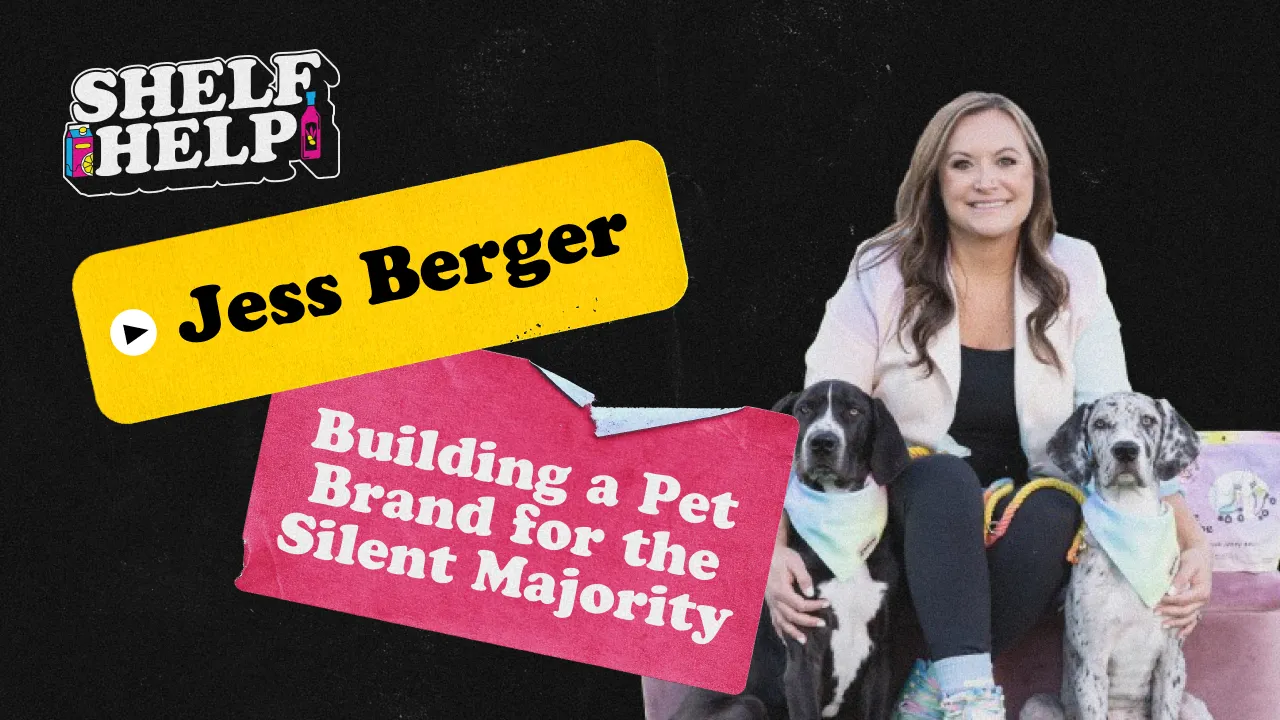



On this episode, we’re joined by Jessica Berger, Founder & CEO of Bundle X Joy, the female-founded, purpose-driven pet brand rethinking dog nutrition, branding, and community.
Jess brings nearly two decades of experience from inside the pet industry, including building private label brands and working across major retailers, before stepping out to create the brand she wished existed.
We get into the realities of launching a modern pet brand from scratch - how early formulation and R&D decisions shape everything that comes next, how to think about initial SKU strategy, and what founders should know about pet co-packers and commercialization before scaling.
We also dig deep into brand identity and packaging design and why Jess trusted her gut despite some tough feedback. Jess shares how she built community before launch, the go-to-market strategy that unlocked early traction, and what it really took to land major retailers like Walmart and Costco.
---------------
Episode Highlights:
🐶 Jess’s origin story and journey through “Big Pet”
🏭 Building private label brands and lessons from inside the industry
🧪 Formulation, R&D, and early SKU decision-making
📦 Working with pet co-packers and commercializing products
🎨 Brand identity and packaging design decisions
✏️ The naming process behind Bundle X Joy
🤝 Building community before launch
🚀 Go-to-market strategy and early traction
🛒 What it really took to land Walmart
🏬 Lessons from selling into Costco
🔮 Brands and trends Jess is watching next
---------------
Table of Contents:
00:00 - Intro
00:43 - Origin story
03:33 - “Big Pet” experience, building private label brands
07:07 - Formulation and R&D, go-to-market SKU decisions
10:53 - Pet co-packers and commercialization
14:44 - Brand identity and packaging design, sticking with your gut
19:49 - The naming process
22:12 - Building community pre-launch
23:56 - Go-to-market strategy
29:45 - Walmart and beyond
34:17 - Costco
35:46 - Brands and trends Jess is watching
---------------
Links:
Bundle X Joy – https://bundlexjoy.com
Follow Jess on LinkedIn – https://www.linkedin.com/in/jessicarberger/
Follow me on LinkedIn – https://www.linkedin.com/in/adam-martin-steinberg/
For help with CPG production design - packaging and label design, product renders, POS assets, retail media assets, quick-turn sales and marketing assets and all the other work that bogs down creative teams - check out KitPrint.
Episode Transcript
Speaker 1: 00:00
Welcome to Shelf Help. Today we're speaking with Jess Berger, founder and CEO of Bundle Enjoy, gut health brand for pups and their people. I think Jess might be considered pet industry loyalty by some. She's spent more than 15 years in the space and leadership roles at big name brands like Pet Smart, Merrick Pet Care, Nestle's Pet Division. So if you're looking for to hear from an expert in the pet space, definitely come to the right place. So really excited to get into it. Jess, just first off, for the listeners that maybe are not that familiar with Bundle Enjoy, give us just kind of a quick lay of the land in terms of just origin story and kind of why behind the brand, core products in the lineup, and then maybe just throw out a few places that people can get their hands on them and then uh we'll go from there.
Speaker: 00:44
Absolutely. So uh I've been really lucky to spend the last 18 years of my career in the pet industry. We all love our pets sometimes more than people. And it's a really fun category because we will spend on our pets sometimes before ourselves. And I think our pets have become just even more important to us post-pandemic as we delay having children longer, just pets, pets run the world, is what we think. But bundle and joy as a company and products really focused on helping you unleash a happier gut for your pup. You know, gut and gut nutrition is super important for us as humans, but it's also extremely important for our pets. It can drive a lot of things longevity, overall health, immunity, quality of life, and really the length of life. And so, you know, myself personally had gotten my first grade Dane, uh Winston, and definitely just noticed that he was having a lot of skin and gut issues. Uh, I say poor back-end performance is kind of how I refer to it. And when you have a 140-pound dog, that's not really an option. So I just started to do a lot of testing, kind of what I would say um elimination diets, testing different things. And I continued to find that when I removed poultry, chicken ingredients, and really removed grains, some of the things that seemed to be causing issues, and then adding probiotics, it was like a different dog. So the challenge, though, is I couldn't find anything without chicken. It was extremely difficult. Today, even if you go to pick up a bag of food on the shelf and it says it's a fish, you know, food or something. Uh, nine times out of 10, it's got hidden chicken and beef and other ingredients in that ingredient deck. So it really stemmed from a personal need for me. And also at the same time, I felt like the pet industry was what I call the four B's, which is blue, brown, basic, and boring. And I thought, why couldn't I create a pet brand and a company that was just a little more focused on the joy that comes from our pets? And also to like celebrate the pet person who's, you know, doing a lot of the work to make things happen. Our pet's health impacts us, right? Like it's ultimately yeah, ultimately, we're the ones that are responsible for caring for them. I've met so many people who literally have been in tears, uh, you know, of their frustration. And, you know, unfortunately, traditional medicine or vet care um doesn't always address the nutrition piece of it. And that can be um really nine times out of ten a thing that can change a lot of symptoms. And it's I don't know, it's it's kind of my mission to get out there and share that a little bit more.
Speaker 1: 03:34
Before you launch at Bundle and Joy and after you left, let's just call it Big Big Pet. There's kind of like that, I think there's an in-bet kind of might call it an in-between phase where you built private label brands from scratch on behalf of some of the larger retailers. It feels like it's definitely kind of a good transition to building your own brand from scratch. Assuming I got that right, I'm kind of curious what um what did you learn with this that time of building these private label brands that you didn't really feel like you learned during your time at you know some of the bigger industry players and you know what might you have maybe had to learn the hard way if you didn't spend time on this private label stuff first?
Speaker: 04:12
Yeah, I think for so many of us who have worked or are working in the corporate world, right, we always kind of dream of you know what it's like across the pond. And you know, if I didn't work for a large corporation, things would be so much better. And the reality is, I think that my corporate career and experience gave me my education. When I give mentorship guidance to kind of new um people starting their career, I'm like, hey, go work for a corporation, get out there and get as much experience as you can on someone else's dime. You're gonna have a check, you're gonna get paid every two weeks, you know. It's a great way to start. And, you know, that's what I really did was say, okay, how can I learn as much as possible under somebody else's watch and security? Um, and that's what I did in the corporate side. And then I just hit a point candidly where I was pretty burnt out in 2018. Um, I think it happens to a lot of us. I had been sort of chasing, you know, the corporate life, traveling a lot, and felt some misalignment, sort of of values, and uh came to a point where I wasn't exactly sure what I was gonna do, but made a decision with my husband that I was gonna take a break. It was kind of a plan, and uh left the organization. And yeah, I think when you sometimes have space, all of a sudden ideas and things come to you. My husband and I always talk about like I'll go on a hike or a walk, and all of a sudden my brain starts reminding me of all these things. Um, one of them was just, hey, like, what if I could try to have my own brand, but in a less risky way? And that's sort of what led me down the path. And the beauty of that was like for the first time, there was not a playbook. I had to go do something I'd never done before. Like I had seen it be done on the other side, but something as simple as like, okay, how do I secure packaging? Who do I call? Where do how do I do this? What are all the elements? Like, I literally started from scratch and had to learn everything formulation, packaging, state regulations in pet, it's insane. Like pet is actually uh governed by several different agencies. And I tell people that it's actually more stringent than human food. So I think that, you know, I usually recommend that like a corporate career gives you so much education, finding that opportunity to go take a risk and sort of learn on your own in a way that is also, you know, manageable and sustainable. You don't, you know, I meet a lot of people who are like, oh, I'm gonna start a business and I'm just gonna, okay, wait, wait, like, hold on. You know, what's the path? What's the bridge?
Speaker 1: 06:53
Yeah.
Speaker: 06:53
Um, and yeah, so I kind of strategically set up that bridge, not realizing it. And that's what ultimately got me to the place of having all the learnings kind of the full wheel that I needed to go and and try to do it myself.
Speaker 1: 07:06
Totally. Yeah. Let's rewind back to some of those really early days, uh, a bundle and joy and kind of those formulation and RD stage without, you know, giving it away any trade secrets you don't want to share. But like, what were some of the key variables you're playing around with or key tweaks you made between, let's just say, like, the first version and the final version when you knew this is right in terms of those first SKUs you brought to market and what were kind of some of the must-haves and non-starters?
Speaker: 07:31
Yeah, so I, you know, we actually launched with about 15 SKUs day one, which I don't recommend. Now, all those we always look back and we're like, okay, what are the things I would have done or not done? You know, I think at the time I really felt that I needed to create a solution all around this bundling concept. Obviously, we're bundle and joy. And I felt like I needed to be able to provide their food, their treats, their supplements kind of all at once. You know, I would say looking back, I probably should have focused on, you know, maybe two at two core, you know, categories because it was a lot of RD. It took, it took a long time to finalize. I also had, you know, expectations of what I was looking for, and it was a little different than what was in the marketplace. And so, you know, that did come with some challenges. Our human grade stews, for example, which we sell today, they're a uh complete and balanced meal, they're shelf stable, which is great, and a recyclable tetrapack. You know, those took us almost two years because I refused to sort of compromise on the ingredients. I wanted them to be human grade and responsibly sourced and single protein. And so, you know, I I think you have to sort of focus on one or two products, I think is kind of better advice than what I did. And then also just sort of figure out what your non-negotiables are and then figure out kind of where you can be flexible. And I think that's how you have to kind of come out at the beginning. Because if you're so focused on this is the way it's gonna be, like you're gonna be really challenged because it's sometimes it's not actually viable. Or so but yeah, RD was definitely a process. For me, I found it to be one of the easier pieces for me at the time, just because of all the experience that I had built. The bigger thing was how do I now go tell people about it and go market it?
Speaker 1: 09:12
What does kind of consumer testing look like with with pets and and dogs?
Speaker: 09:17
Yeah, I mean, it's interesting. Uh, Winston was definitely our number one taste tester, of course, of all things. Um, yeah, I mean, it's definitely harder. I mean, there is a lot of testing and things that can be done. We're, you know, actively investing in like clinical research and testing around gut health, where you actually there is ways to kind of check performance and improvement and things like that. But yeah, a lot of things for pet food come down to palatability, right? Will will your dog eat it? Do they enjoy it? That's kind of the number one thing, right? If your pet won't eat it, then it doesn't really matter what the value or benefits are.
Speaker 1: 09:52
Totally.
Speaker: 09:53
So palatability is always first and foremost that thing that we're focused on. But I also like to say that your dog can actually give you more feedback than anybody. They will tell you if something's wrong. So I usually talk to people and say, hey, is your pet, you know, licking their paws, scratching, loose stools? Like, or do you have these symptoms? Like, and they're like, Yeah, that all the time. And I'm like, okay, your pet's trying to tell you something. Their body is something is off, right? And so I I usually recommend that, you know, people sort of trust their pet before anybody else.
Speaker 1: 10:28
Totally.
Speaker: 10:28
Because there are a lot of people out there that'll tell you what to do and don't do. And you got celebrities now, you got vets, you got so many different people that will tell you what to do. But honestly, your pet is gonna tell you whether it's working for them or not. And the gut uh pets microbiome actually can change it as quick as 36 hours. They are actually way more nimble than us in that regard. And so you typically should be able to see results within a couple of days.
Speaker 1: 10:53
In terms of commercialization, manufacturing and and copacker partners, what did what does that look like in in your space and what you did? Did you like engage copackers right from the start when you were kind of doing formulation in RD? Or did you try to make did you, you know, do like, you know, your own bench top type stuff and what did that process look like?
Speaker: 11:12
I mean, I think the best like small business start is one where you could really test MVP and you know, get out to markets, talk to people. Unfortunately for me, in the pet space, I just knew from the gate, like out of the gate, that wasn't really gonna be an option. And it was either kind of like go big or go home was really where we were. At the same time, we launched post-pandemic or kind of in the tail end, and there was still a lot of supply chain disruption. Um, that also was a factor. Luckily for me, I had a really good pulse of sort of who the best co-manufacturers are in the pet space. So I had that leg up for sure versus someone who kind of didn't know where to start. I also had good relationships and had built, you know, kind of that reputation. It goes back to, you know, that corporate life. Like you never know who you're gonna work with in the future. And I think it's really important to maintain those relationships. So for me personally, I already kind of knew who to contact. The biggest aha moment was when I realized what our minimum order quantities were gonna be. And we're talking hundreds of thousands of pounds, you know, not small orders. And so I think, you know, the one thing about starting Bundle of Joy is I've never been able to play small, which is kind of crazy because if you knew me like, I don't know, five, 10 years ago, like I was a very practical conservative, very, you know, nervous knell-y, like, you know, gotta make sure everything's been analyzed. And I just had to jump right in. Like, and I didn't have a choice. So, and and really as it as we talk about commands for us specifically, our food, for example, is made on a particular manufacturing piece of equipment, right? That there's only a couple in the US. So, you know, a lot of times it's like it's very specialized, but I mean, we've also had co-mans that have not worked out, right? And it's always a gamble on both sides. And, you know, I would say in the beginning, I was like kind of like, whatever the co-man says, you know, like payment terms, things like that. I think I could have been a little more in the beginning, a little bit more focused on protecting myself, but you get that over time.
Speaker 1: 13:21
Yeah. Um what are MOQs look like in this space? I I feel like launching a 15 SKUs out the gate, assuming the MOQs are not super low, that that feels like a big first production run spent across 15 SKUs.
Speaker: 13:35
Yeah, I mean, I'm I'm usually pretty public and cherry, and that I cashed in my 401k and my husband and I took a second on our house. And that was just really what it was gonna take for us to just even buy inventory out of the beginning out of the start. We did raise some money with friends and family, but early days I was literally just raising to pay for inventory for the most part.
Speaker 1: 13:54
Yeah.
Speaker: 13:55
Because of those investments that were required and it takes time to catch up. But yeah, I mean, minimum order quantities, you know, dog food can be, you know, 40,000 to 100,000 pounds of a flavor. And so very early on, I got really comfortable with being uncomfortable with having a lot of inventory. And, you know, obviously that challenge was okay, I have to run this production. Okay, now I need to go find someone to buy it. And I do think, I do think that uniquely for us, that has been what has propelled us maybe to grow and accelerate a little faster because I didn't have the choice to just go start selling door-to-door, you know, one store at a time. I really had to secure anchor accounts in order for us to be able to actually stay in business. And so I had to go full speed ahead and, you know, find some big guys to support us.
Speaker 1: 14:43
Totally. Yeah. From a brand identity packaging design standpoint, and at least from what I read, your time in the pet space led you to kind of believe that I think I read you say something the lines like pet parenting has become kind of guilt-ridden, and I assuming I got that right. Like, what were some of the the key things that were top of mind for you? And you're building out the brand identity kind of from a positioning and voice standpoint.
Speaker: 15:06
Yeah, so my friend Christina and I really developed sort of the initial look and feel and and brand design together and spent a lot of time. I flew up to Berkeley and in her living room, we had post-its all over the wall, and we were just really trying to anchor and hone in on, you know, what did we want to communicate? What did we want our brand to speak for? And, you know, the one thing that we kept kind of coming back to was this immense amount of guilt that, you know, is very commonly felt for pet parents. And I think it's just because over time, with even just you go on social media for five minutes and there's gonna be a pet brand telling you that you're killing your dog because you're feeding them a particular type of food or because you're not spending hundreds and hundreds of dollars every month, you know, whatever they want to tell you. And so that just kept popping up was like, hey, this actually doesn't really have to be complicated. You could actually buy a food that has multiple health benefits in it versus buying multiple, you know, you actually can get affordable, accessible pet nutrition with like a premium offering. And so yeah, I think in the early days we wanted to kind of kick this sort of dog mom guilt idea, you know, out. And it kind of helped to build our community out of the gate, too, is like, hey, like we're just doing our best. And I feel like that has stuck with us. I think it's something we want to continue to share and talk about more. Um, is that you don't you don't have to feed all these fancy things that you see on social media to be a good pet parent.
Speaker 1: 16:38
Totally. I love that. It sounds like I think you got some like not so great feedback from some of your industry peers, but you trusted your gut and stuck to your guns, and obviously it's turned out well. I think, you know, in my experience, building companies sticking to your sticking to your guns and vision is really important as a founder. And tell me a bit about what what this was like for you.
Speaker: 16:57
Yeah, I think, you know, being in a particular industry for so long, I had sort of put certain people on pedestals of like, hey, these people know what they're doing, they've got it all figured out. And so naturally I felt like those were the first people that I wanted to go tell about my ideas and share my ideas. And yeah, I got a lot of really negative feedback. And I think a lot of it is also just because I came at such a different came at it in such a different way. I wanted to build a very female forward brand and company. And, you know, and I told someone I'm gonna have purple and pink pet food bags, you know, it was kind of like nobody wants that, you know, is literally a direct quote that I got from another CEO. And uh yeah, I took it very personally at first for sure. You know, at the time, I think I was really more visionary and like kind of what I saw, the opportunity could be, and I think it was um a little early. I would tell you now the industry has come along a bit more. So I'm definitely not, you know, the only one sort of having these types of conversations about more diversity and representation in the industry and more representation of, you know, the kind of the female pet owners. So women buy over 80% of pet products today, but it kind of goes back to that four B's of blue, brown, basic, and boring. And I thought, you know, what if I could create something? I kept hearing people say, Oh, I hide my pet food, I put it away, you know, but yours I would leave on the shelf. And I was like, okay, I like that. So yeah, I think you have to trust your guns. I mean, I would say there have been periods in my career where I've kind of leaned in and listened to pe other people more. But gosh, over the last five years, individually as a person, I have come so far and like spending more time really trusting myself and then also keeping that circle of trust, you know, a little bit tighter because, you know, everyone has opinions and some are not always in your best interest.
Speaker 1: 18:47
Yeah.
unknown: 18:47
Yeah.
Speaker 1: 18:48
I feel like that's one of the hard one of the hardest things about being an entrepreneur is knowing what feedback to actually internalize and use to actually maybe make some pivots, another one, and when to just totally ignore it and say, this is not at all relevant to me. I know exactly what I'm doing. This is, you know, I know this is the right path.
Speaker: 19:02
Yeah, I think it also as you grow, right? Who you bring onto your team, who you bring into your circle does help to really just start creating and developing the company and the brand naturally. And so, you know, it's interesting. It's been kind of fun to look back at the evolution. To me, it feels very constant because it's always been me and sort of my vision. But when I really step out of that and look back, I'm like, oh, okay, like we we were here and then we sort of pivoted to here and then we kind of evolved here. Um, you know, early days I talked a lot about like leveling up. Okay, it's time to level up again, you know. So I I think it's just it's constantly a selling dance, right? We're humans and just trying to find the right team and the right people around you to kind of help you to get through the next step, whatever that might be.
Speaker 1: 19:49
Naming is such an important part of building a brand, but it's like it's kind of really ambiguous and can be pretty challenging. What did that process look like for you that ultimately landed you on bundle and joy?
Speaker: 20:00
Yeah, I mean, like I said at the time, I really we were in the middle of the pandemic. So it was a D2C was on fire, you know, really. And I think all of us thought we were never going to go back into a store and you know, maybe in some way, shape, or form. And so I was very focused on D2C All the Gate and this idea of bundling sort of all your pets' needs in one shipment just kind of kept coming full circle for me. And so that's a lot of where like the bundle idea. And then sort of this play on like, hey, your pet is kind of your child, your bundle of joy that kept kind of circling back up. It didn't connect with me as much, but it did a lot in conversations. And then the other, the third piece that I always kind of had vision for the brand was this idea of collabs and sort of working with other brands. And so I really felt like the X at the time represented sort of the ability for us to collaborate and support other brands and and companies. And so, and then for me personally, the idea of joy has just been something that's resonated with me over the last 10 years, probably. You know, I really our pets bring us so much joy, but I think kind of going into the pandemic, maybe we had forgot some of that. And all of a sudden we were in our house 24-7 with our pets. And I felt like I personally sort of reconnected with the joy of my of, you know, our dog and our in the home. And I wanted to kind of help emote that emotion and our packaging and our brand and our community. And so Bunal and Joy is like very complex to me. I think to some people, it's confusing. You know, it's funny to have a brand name where, you know, it's like it's the it could be the people say it so many different ways, but um, but yeah, it's meant a lot to us. And then obviously with our packaging, I also took a very different approach. I wanted it to be kind of more um aspirational, whimsical, a little more inspirational. Our dog food brand, uh, dog food formulations are vibrant, brave, and golden, you know, just a little bit more descriptive versus. Is just very direct.
Speaker 1: 22:02
It sounds like if I got this right to you, that you started building community and leading up to the launch of the brand. What did this look like for you in terms of what you were focused on pre-launch?
Speaker: 22:13
I mean, very practically, we didn't have product when we thought we would have it. So, you know, here we all systems go and we didn't have product to ship. So it was kind of like, what do we do now? And so we pivoted a bit to focus on community. But, you know, the great thing is once we did finally launch, we already had built this community of fans and supporters who were able to sort of champion and start telling our story on our behalf early days. Um, I think that was really important. I mean, candidly, I look back and wish that we had, you know, dug our heels in even more because we were one of the first pet brands on TikTok shop and things like that. And there's, you know, there's probably a lot more we could have done to go even harder into building community via social. The reality is that we just started to go full speed and in sales and launching and retailers and things. I think we, I think we started off really strong. I think that it has always been an area where candidly it's kind of hard to get right because there's not a playbook for it. But I do think it's something we're really starting to reinvest back in. And we just did a big dog mom walk in New York and we're like, hey, let's just put this dog mom walk together and see if anyone shows up. You know, we're not New York based. And we had like 75 people show up on a Saturday to go walk with us. So I, you know, for 2026, I would say community is is gonna be first and foremost our probably our number one initiative because it does really help us to connect with our customer and then you do get loyal fans that then tell, you know, their friends about us.
Speaker 1: 23:48
From a go-to-market standpoint, I think within like eight, eight months or so of uh D to C launch, you had secured shelf space, and I think close to 500 doors. What did that playbook look like to kind of make this happen and get in so many doors so quickly?
Speaker: 24:03
Yeah, I think it goes back to, like I said, like I knew early on we had to like go big or go home. And so that meant that I signed up for natural products, Expo West, which is a huge trade show, Africa Zoomer Product Goods. And I signed up in their new products area long before I even knew, like, would I have products, would I be ready? And you know, at that point we did think we would have products, but we did not. So we still went and showed up and we literally built our booth like wood planks and all, and you know, drove it all the way from Arizona to California, you know, made mock packaging and and set up a booth. Like, you know, we had a brand and we had products, and it felt like a big bluff to me at the time, but it worked because I applied for like as many pitch opportunities at that trade show. And, you know, in the course of you know, that show basically we we were able to secure sprouts and whole foods pretty quickly. So definitely if we had not been at Expo West that year, you know, we wouldn't have had those opportunities. And that was just a decision that I made at the time, but it it paid off for us.
Speaker 1: 25:07
So did the uh you call it just different brand look, did that generally make it easier to get on shelf in these in those first batch of retailers, or is it harder or kind of a mix of both, depending on the retailer?
Speaker: 25:20
I think it depended on the retailer, to be honest, because there were definitely buy a lot of buyers that just said, I just don't, I don't get it.
Speaker 1: 25:27
Sure.
Speaker: 25:29
But then they would also tell me in the same breath, well, my wife buys all the pet food. And I would say, Well, if you showed this to your wife, she would be excited about it. But I did say that, of course. But um I I mean I think I think the buyers that got it understood right away, and that's why we were able to get on shelf. Obviously, we intentionally wanted to be disruptive, right? We want to catch your eye first, you know, then sort of sell you on the features and benefits, get you to try it, of course, and then keep you for life. But yeah, we we built a brand and products with retail in mind day one. And uh maybe not everyone does that, but we did. That being said, you know, probably I think it was 18 months ago, we redid all of our packaging, right? Because there's still things we didn't get right, weren't talking enough about you know, benefits, problem solution, things we had just overlooked, you know, weren't clear. So there was just we did do a refinement because we didn't get it right in the beginning. But I don't know, I as a CPG brand, I think you're never gonna get it right. You're just gonna keep iterating.
Speaker 1: 26:33
Yeah, totally.
Speaker: 26:34
But yeah, I mean, I I definitely think it helped tremendously because even if someone had not maybe purchased our product before, they'd be like, oh, I've seen this brand. So that visual identity and that connection is really important.
Speaker 1: 26:48
I agree with that totally. I think you're pretty intentional when it comes to supporting independent retailers. We're also nailing down some of the bigger, I guess, kind of anchor accounts. Like how have you kind of balance balance that dedication to some of these independent retailers while still kind of putting a big focus on the bigger guys like Walmart and whatnot?
Speaker: 27:07
We like I said, we mentioned our we launched into kind of big retail, I'll say, um, out of the gate. And so I didn't have the ability to just say, hey, I'm I'm just here for you, you know, independent stores, and that's it. So I was very aware of sort of who we were from the beginning. That being said, we really tried to share, you know, our story, how small our team was and still is today, more of my story. And we sort of just hoped that they would connect with us as people. And that's sort of where we started, and that's where we did build some of that community. And we had independent stores that have purchased our products since day one that continued to buy us, knowing right, that we're still in larger retail stores. Right. That's at the same time. Yeah, at the same time, we had retailers who sent us really nasty messages and emails that, you know, are like, hey, I heard you did a Costco Roadshow. Clearly, you're not supporting independent retailers anymore. And how dare you? And, you know, I think the reality is we sometimes like put small businesses into a box and say, like, hey, we want you to be a small business and we have these expectations that you can't go to these places. And the reality is like we're competing a lot against very large, well-funded businesses. And so I don't have the same ability to pick and choose, you know, where I go. And also I have to scale to grow and to be profitable. Yeah. And so, you know, I think that there have been those that have understood it, and then there have been those that don't, and it's okay because I I guess this year my mantra has sort of been like, unless you're in the ring with me or you're currently in the ring as well, your opinions don't mean as much to me because I'm the one that has my entire life savings on the line. I'm the one that made a decision with my family that we were going to change our lifestyle. Like I'm the one on the weekends that's at markets and at roadshows, and you know, have just lived and breathed this company every single day and am fighting for it with my life, literally. And, you know, at some point you just kind of have to let go of those people that don't necessarily agree with what you're doing. And I am so much more at peace about it because I don't know, I'm too busy. I've got things to do.
Speaker 1: 29:44
I admire that a lot. Well, this year, speaking of some of the larger retailers, I think this year you launched into 500 or more Walmart locations, which is huge. What have you found is unique about, and you might have worked with them in some of your past lives too, but what have you found is unique about working with and I guess really winning in Walmart in the pet space?
Speaker: 30:03
Surprisingly, yeah, Walmart was a new partner for me. And so I kind of went in, you know, really unsure. I guess I had heard things through the years, maybe not always the most positive about experiences of working with Walmart. And I have to tell you, like it, the buying teams, the leadership team have been so gracious and supportive of our brand since day one. Uh, it's definitely been a journey, right? To work together to get to where we are. But I have felt so much support from them since we launched. And it was a lot of work to get there, but you know, we are in sort of premium pet locations for them. Um, you know, people are looking for premium pet food and already in the space. It's just gonna keep happening. And there's another big pet brand that just recently is announced, they're kind of going everywhere, right? Like there is coming a point where a premium pet shopper is shopping all over the place. And so we're just really focused on being where the customer is and providing that convenience and that kind of consistent pricing and affordability and premium nutrition. Walmart's been a great partner for us in that regard. Um, and I love I love that I have a company and brand and products that can be successful um, you know, in a sprouts and in a Walmart, in Costco and also on Amazon. So I think it's been a little bit of a unique path for us being in multi-channel distribution.
Speaker 1: 31:35
Sure.
Speaker: 31:36
And there definitely have been times where I'm like, okay, did I do this wrong? But if at the end of the day I'm really just intending to provide premium nutrition and options in an affordable and accessible way to my customer, then I kind of have to honor her or him and where they're shopping. And that's what we've done. And I think so far it's been the thing that's allowed us to grow two, three X year over year and to continue to just be successful on shelf.
Speaker 1: 32:05
I think I read it took you like, you know, 18 meetings to get the deal done is a long journey. What just for some other early stage founders in in the pet space or maybe just in in general in the CPG space that are trying to get on shelf at Walmart? What should they expect in terms of if they want to have a shot on shelf?
Speaker: 32:24
I guess my feedback would be for any retailer, right? I think there's a couple things you can do that give you a much higher propensity for potential success. I think the first one is applying for pitch competitions, submissions, right? A lot more of these retailers are doing small business calls, main USA calls. You know, put yourself out there. I can't tell you how many things I've applied to in the last five years. I've gotten a whole lot of no's, right? But if I hadn't taken the time to apply, I wouldn't have had the yes.
Speaker 1: 32:56
Totally.
Speaker: 32:57
So I think that's so important. Number one. I think for us, range me actually has been a great resource for us over the last couple of years. There are options and ways to kind of get like a lower priced account, but that really has opened us up to retailers. A lot of retailers will also post kind of like calls or opportunities on there. And I again, early days applied for every single thing. I still do um on range me. And that opened a lot of meetings and conversations. And then I think the third one is just being scrappy. Like you might be surprised, you might actually be able to email a buyer directly um and kind of throw yourself out there, get some samples in someone's hands. Like, you know, you only get the shots, right? I'm so bad on analogies, but you miss 100% of the shots you don't take, right? Wayne Bradsky, something I always get these things wrong. But the truth is that like your statistics will show that you need to put yourself out there 10 times more than you think you have to. And and then there's a little bit of bluffing, a little bit of confidence, a little bit of fake until you make it. And then as long as you have a product that actually people want, then that's kind of the key to success.
Speaker 1: 34:12
You also mentioned Costco a little bit. Is there anything, I mean, obviously there's the roadshow aspect, but anything that's really unique about Costco compared to the other retailers, that in terms of what it takes to win there?
Speaker: 34:22
Yeah, I think Costco is looking for innovation and and newness, right? Companies, products that people are going to recognize and be excited about on shelves. So it is very much becoming a lot about sort of your brand recognition on social and other channels, which I think is happening everywhere. But I do see a lot more of that happening with Costco. Road shows are definitely a huge piece of success. You have to prove that you can sell product before you can come in and take space because if you think of the productivity of a typical Costco warehouse, like you have to be super productive and have pretty high velocities. So I think Costco is really a long-term investment for a lot of brands, but honestly, they're one of the best partners to work with. And for us, we believe there's so much opportunity to keep growing with Costco. And also the nice thing about Costco is anytime we're in store in warehouses or we did a rotation earlier this year, right? Like I now have 30,000 potential new customers who have tried my product and who are going to be looking for that product wherever they can find it. And so Costco's an amazing channel. Typically, I would say it's a channel most brands don't get the opportunity for, um, out of the gate, of course, but you can control a bit more of your destiny there than you might think.
Speaker 1: 35:37
Yeah, totally. That's really helpful. This has been great, Jess. A lot of really great insights here. Last question for you. Any any specific brands or just other trends you're kind of tracking, following in the pet space that have got you excited or things you're watching closely?
Speaker: 35:54
I think that we are just starting to learn, you know, more around the total health impact of gut health for us. I think there's a lot of education, specifically in the pet space, to come there. Um I'm excited to be sort of a part of that and to keep learning as we implore sort of more human-grade ingredients. We have two ingredients with colostrum, for example, two ingredients with collagen. We have just developed, you know, daily boost powders that are kind of similar to, you know, the AG one and the AMRAs and, you know, some of the human products out there. So I'm excited about that. I also think that, you know, how we think about specific breeds is still an opportunity. You know, nine times out of 10, if I meet somebody that has a golden doodle, for example, they'll tell me their dog has a lot of stomach issues. And I'll say, yeah, that's because your dog is very highly allergic to chicken. And they're like, what? And I'm like, yeah, I it's just a golden doodle thing. So I think we will continue to learn more about breed specific, hopefully over time. Um, I think there's a lot that can be learned there. But yeah, I mean, right now we're just focused on sort of telling our story and getting people to try us. We're just getting started. It feels, it has does feel like it's been a lifetime, but it's only been a few years. But I'm excited what the next few years hold.
Speaker 1: 37:22
For sure. Now we'll be following closely. What's um what's the best place for people to follow along with you with how much expertise you've got in this space? And then what's the best place these days for people to follow along with the brand as well?
Speaker: 37:34
So our website is bundlexdroy.com. We have a great store locator on our website, which you can just put in your address and find the closest retailer to you because we are in so many new different retailers across the US. Um, we're also on Amazon and we just recently announced our launch on Chewy as well. So we have a lot of ways to make it convenient and easy for you to buy your Bundle Enjoy products. Um, we're on social bundle XJoy on Instagram and TikTok. We love to just share kind of the dog mom journey. And as we move forward next year, I hope to be sharing even more around sort of real talk around pet nutrition and sharing a lot of what I've learned over the last two decades.
Speaker 1: 38:18
Awesome. Love it. Well, thanks, S. This isn't great. Really appreciate the time. I think that's the pod.
.svg)