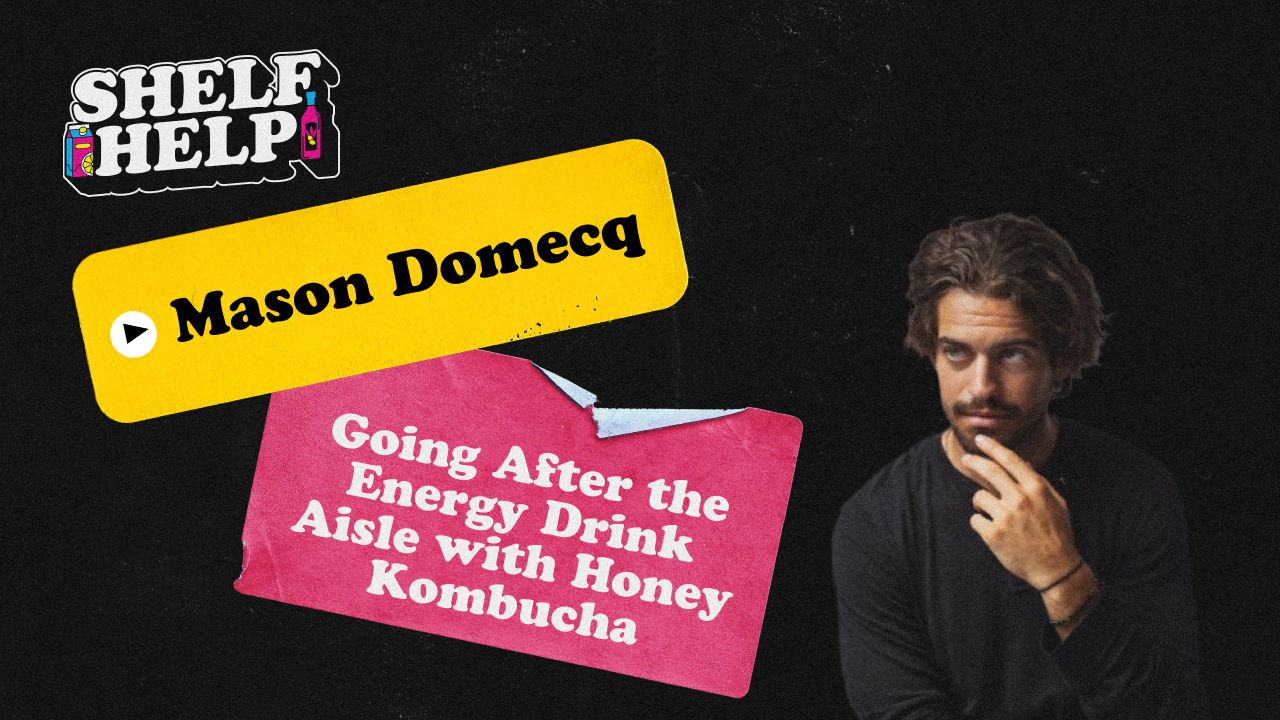



On this episode, we're joined by Mason Domecq, Founder of DIVINI, the Scottsdale honey kombucha brand that's about to take over Sprouts in the Southwest.
We get into the formulation that makes the product scalable: ferment the kombucha base to zero sugar, then add back honey, fruit juice, nootropics, and a probiotic strain.
We dig into why he chose cans over glass and went after people stuck on energy drinks and soda rather than the high-end Whole Foods shopper, the recent rebrand that helps the cans jump off a crowded shelf, and Mason's pricing strategy and philosophy.
We also cover the community-first playbook of music and art events, how a cold LinkedIn DM to category managers led to an imminent Sprouts launch in his Phoenix backyard, and what building in public actually did for the brand.
---------------
Episode Highlights:
🍯 Borrowing a SCOBY from a family friend's table
🧪 Fermenting to zero sugar then adding honey back
🏭 Cold-calling the first brewery to white label
🥫 Why cans beat the $6 holistic bottle
🎨 Rebranding so the product sells itself on shelf
💰 Pricing from landed cost to a $4.49 Sprouts MSRP
🎶 Building a community through music and art events
🛒 Cold-DMing category managers into a Sprouts launch
🚚 The local playbook to hit 160 to 200 doors
📈 Going from a pre-seed round to a seed raise
📱 Building the brand in public before a polished product
🔭 What's next: more flavors and grab-and-go formats
---------------
Table of Contents:
00:00 – Intro
00:51 – From investment banking to brewing kombucha
03:35 – The recipe that started DIVINI
04:36 – Quitting the day job and the first commercial run
06:01 – Formulating honey kombucha (and why honey is tricky)
07:36 – Finding the first brewery and white labeling in
10:59 – Why cans, and recategorizing functional health
12:29 – Packaging that sells itself on the shelf
14:51 – Knowing when it's time to rebrand
18:03 – Pricing and building the margin model
20:39 – Building community through music and art events
22:51 – The accessibility gap they had to fix
23:56 – Landing Sprouts through a LinkedIn DM
26:53 – The local distribution playbook
28:07 – Fundraising and scaling production
30:03 – Building the brand in public
32:49 – Product roadmap and what's next
34:27 – Where to find DIVINI
---------------
Links:
DIVINI – https://www.livedivini.com/
Follow Mason on LinkedIn – https://www.linkedin.com/in/mason-domecq-2a3b34192/
Follow me on LinkedIn – https://www.linkedin.com/in/adam-martin-steinberg/
For help with CPG production design - packaging and label design, product renders, POS assets, retail media assets, quick-turn sales and marketing assets and all the other work that bogs down creative teams - check out https://www.kitprint.co/.
Shout out to my friends over at Glimpse, the go-to partner for automating retail-related back-office operations and unlocking margin trapped in invalid fees and manual processes.
Episode Transcript
Speaker 1: 00:00
Welcome to Shelf Help. Today we're speaking with Mason Domek, co-founder of Divinny, the honey kombucha brand based out of Scottsdale area. Started brewing Davinny in his apartment in August 2023, I think, after a fermented green tea and honey recipe was passed along to him by some family friends, I think, um, which I think he'll probably touch on here in a second. But started brewing at night after his day job, sold close to, I think, a thousand bottles or so in the first few months. And I said, all right, cool. I'm quitting my investment banking job, fast forward a bit. Here we are today. The very long story short, I'm sure he's gonna touch on here in a bit more detail. But um, yeah, super excited to dive into it, Mason. But yeah, just first off, for the the listeners that maybe are not as familiar with the Divinity, we'll love it to just start off by just getting a quick lay of the land, just in terms of origin story, why behind the brand, core products in the lineup, and then maybe a few places that uh people can get their hands on them, and then uh we'll go from there.
Speaker: 00:59
Yeah, that's great. Thanks, Adam. Yeah, I was uh this recipe came from, as you said literally, uh I was trying to get into the health space. I didn't really know how. Um, you know, I got out of college and immediately got into the business world. My family backgrounds and clothing, so we had a Western clothing business for 25 years, so I grew up in a warehouse, you know, packing clothing and like modeling as a kid and cowboy hats and like like when you had a catalog and stuff, and um just helping out the family, and we moved from Wyoming here in 2007, so I've been in Arizona for uh going on almost 19 years, which is crazy. And um, yeah, I was I mean, I was I was learning so much. I was playing college golf and um wanted to get into business, and I knew that was like the route I wanted to go. I just didn't really know what facet. So, you know, naturally when you're going out of college, you're like, all right, I'll just get into the best, like, you know, base career path I possibly can and go from there. And uh it was it was really an interesting job of pretty much everything that I'm doing today, like that knowledge has stemmed from, which helps me a lot. So a lot of it was like working with business owners and uh it was all on the MA side, so transacting businesses, doing financial projections, working with lawyers on packaging up your business and transacting it to another buyer, and uh so I got a ton of hands-on experience with that, and then all while that was happening, I was like, man, like it was so cool to work with business owners, and I you know that I always wanted to create a product, and especially when you're in service, for me, it was hey, I really want to strap my identity to a product and have that show through. And as you're also trying to like figure out yourself, naturally you're like, you know, okay, I'm just gonna figure it out through this brand and kind of you know combo it in two-in-one. I mean, I mean, prior to Vinny, like, yeah, I would just work all day, and then any time I had outside was trying to work on business concepts. I'd like designed the full service restaurant, farmed a table restaurant that I was gonna work with local farmers on and did renderings for it and everything, you know, because of kind of just trying to like pick some ideas, and I was always good at like inquiring to people that were way smarter than me in that field. So I would talk to restaurant owners and farmers and you know, all the people in my network that I knew, and um, and uh still I was kind of drawn back to like, oh, it'd be really nice to just have a product and started that as a base, a little lowered barrier to entry, you can always scale it up from there. And was lucky enough to uh my two good friends at the time, um, Dylan and McKenna, they we had like a family, it was like a family friends, you know, uh friends giving type vibe where it had like 20 people. It was uh she's super holistic. So we had like a home cooked meal and and she had fermented all of her tea in the back for pantry, so and we'd bottled up and use that as you know what the liquid we use, uh, the company the meal. And I I tried it and I was just blown away instantly. I was like, oh wow, this really tastes good. And I knew it it was very healthy, you know, just from the ingredients, and it was just a honey fermented tea of fruit and some herbs. So I was like, hey, can I borrow like some of that SCOBY and start producing it in my house? Um so I started off like a little half gallon, and in the span of eight months, I had about 40 gallons brewing between like three different vats, a bunch of uh like fruit infusion jars that I was uh moving it to. I had two commercial fridges and like 2400 bottles next to my bed. So it was getting a little um a little much, a little to say I dove headfirst into it. Uh I just really love the process, started giving out to friends, and at that point it was like February 24. Saved up a good chunk of money, so I was like, all right, I I think this is really something I want to do. I I don't really know how to do it yet, but I I know I don't want to be here, so I'm just gonna focus on trying to bridge the gap here. So I took two months off and um and I was talking to like some investors at the time, talking to breweries, commissary kitchens, trying to figure it out. And luckily I found a brewery that would kind of take me under their wing and produce my first product um in August of 24, had that to market by September, started with 2,400 cans, then did a re-up of 5,600 cans in March of 25, spent that whole year literally doing like 100 plus events, meeting everyone in the community, like really making like a community beverage, and uh kind of figured out you know the stripes of the beverage industry and everything that needed to happen to make the product succeed. Uh, reformulated everything, repackaged everything that your team had the you know pleasure to partnering with. Um, next thing you know, we had you know almost 30,000 cans sitting at brewery right now, about to get bottled, got a sprouts contract in Phoenix set up for um July of this year. Um got some some more meetings with retailers here locally, so we're gonna just take over Phoenix and look to expand from there. Um love it.
Speaker 1: 05:59
That's awesome.
Speaker: 05:59
Three cans that we're taking to market.
Speaker 1: 06:01
Diving into the weeds of the formulation RD stuff a little bit, it seems like honey is a notoriously tricky ingredient to ferment with. Why is that? What was the key to actually making it work?
Speaker: 06:13
Yeah, so honey is interesting because it's um there's so many variants of honey. You know, it really just depends on what the bees pollinate on. And uh, so it, you know, honey in Arizona is gonna be completely different than honey in Minnesota, Michigan, and Northwest, gonna be different than South America, gonna be different than literally any part of the world. It's still honey, but uh, you know, it can have very like floral notes, it could have more drier notes, it could it just varies a lot. So I think that's like the trickiest thing for sure, especially when you're dealing with fermentations and you're introducing bacteria. So, you know, traditionally I think uh that's been like the biggest advancement in kombucha, it's probably been how to make that process consistent. And so kombucha breweries pop up. Now uh what we do with our product is we take a regular kombucha base, we ferment it down to zero sugar, and so it's just like a super strong kombucha base, and then we dilute it with you know regular tea and water, and then we actually add back honey and then all of our fruit juice, nootropics, and we use a probiotics trait as well. So we've kind of found a way to systemize that a bit so we can use that to scale instead of actually traditionally you know fermenting it with the honey. Just using honey as an ingredient is uh yeah so much easier. And honestly, I think it'll be better for everyone because you're creating a more consistent product by just having it as an additive ingredient.
Speaker 1: 07:30
Totally. Down in the formulation, obviously at some point you made a jump from your home brewery situation to some level of commercial production. Tell me just a bit about that going to that search for the first brewery co-packer, what you're actually looking for, how'd you go about that search?
Speaker: 07:44
Yeah, it was tough. I mean, um, yeah, because I really struggled with like, you know, creating that like brewery and you know, starting Commissary Kitchen and and kind of the woes of doing that, and and really just came down to what I had access to. You know, there's so many ways you could do it. And it's just like, all right, well, what's the quickest you can go to market? What do you have accessibility to? What's your experience? And I mean, my experience definitely, you know, I was I was making good tea, but it wasn't anything that I I knew from a background of like brewing or anything like that. So I was like, hey, I'm way more comfortable partnering with someone that that did that for a living, that like that was their thing, and just finding like an A plus player in that, and then building on my skills and building a team that could kind of you know formulate everything that needed to happen.
Speaker 2: 08:29
Yep.
Speaker: 08:29
So I used, I don't know, there's a lot of companies out there where you can like search, they have good databases of a lot of local breweries and people that specialize in this, specialize in that. Um, so a lot of it was word of mouth, a lot of it was just research. And and honestly, like the first brewery deal I got literally just um co-called the owner. Like I just called him up and luckily the owner picked up and I was like, uh, hi, how's it going? My name's Mason. I uh I I brew tea like you guys do, and like here's like what I want to do. And um, and uh they like they're like, Yeah, okay, that sounds interesting. Like, we can set up a meeting, like, you know, kind of like pushed it back a little bit, and I was like, Right, no, like I'll I'll drive over there this week and I got samples ready to go. Like, I want to show you guys what I'm doing, and kind of just really like pushed that I had this figured out and all I needed was just capability and ended up getting a meeting in person. And I I brought like a ton of my home brews, I brought printed out material of like what my cans would look like at the time, and just tried to do it as professional as possible and just put a good foot forward. And they're like, Okay, well, I mean, you got a lot figured out, and kind of just told the story and was like, all right, yeah, we can. So the first recipe I actually just white-labeled off their base, their kombucha base, and then just added my own flavor and branding. So that was how I got my entry in without kind of knowing what product to create. So I kind of just created off their base they already had dialed. And then um the hardest part was, you know, kind of understanding, because you're kind of blind at that point then, because it's like, okay, we have this base, but if you want to actually build a brand and have that sourcing control and everything, you kind of have to, you know, in the back end, I was trying to try to figure out how do I make this my own and my own recipe that I knew and that no one else had. So that was kind of the woes and kind of what we did the year that we were marketing that, building the Divini brand, and then it's like, okay, cool. Now I I know some experience, I know a lot more people. I have some advisors now. Let me get the right intro. So I ended up going to uh just they don't have a kombucha brand, they solely comp uh copack, they copack for a lot of different variations, like some alcohol infusions of fruit, um, but they're predominantly a kombucha brewery, so it made sense to go with them first. Um, we could really go with any co-packer at this point, but systematically I think it made the most sense. And uh they got me in at a price point that I could model out and make sense at the uh at our volume. So uh so yeah, I kind of just relied on people that knew what to do better than me.
Speaker 1: 10:54
Yeah, totally sense. How'd you decide between going with cans or or bottles?
Speaker: 10:59
Yeah, bottles were, I mean, honestly, it was uh it was a couple things. One was accessibility. So I was kind of thinking of like, okay, if I really want to make a product, you know, Divinity's not gonna be that product that's gonna be I I don't necessarily want it as like the golden, you know, the golden holistic product that you find in Whole Foods that you pay six, seven dollars for you buy off a month or you know, I don't really see it fitting into that. I really want to kind of re-categorize what a functional health product is. And so that's where I was like, man, I would love to see this product like take over energy drinks and gas stations. I would love to see this product um, you know, fit in the health market, but be something that doesn't really identify with necessarily like the high-end health consumer. Like, what about all these other people that have all these problems with energy drink consumption and sodas? And like, how do we how do we make how do we change that market? So it's like, okay, well, you know, that's where the cans made the most sense. Easy accessibility, younger demographic, you know, you can you can take it out, you can take it on the beach, you can take it if it doesn't weigh a lot. So it's kind of like a little more on the go as opposed to that like super high-end health product.
Speaker 1: 12:06
It's like find a middle ground or to make it convenient, make it accessible, but also really what matters most is what's going inside the totally talking about kind of visual identity, packaging, tone, voice, positioning, packaging design, rebrand, you executed pretty recently. In terms of um that kind of initial brand look and feel positioning, what were kind of some of the key variables that were top of mind for you when you when you were building that out?
Speaker: 12:32
Yeah, well, so with our first product, we we built it very much off of like beauty first, you know, like very visual first, which which worked with a lot of capabilities. And especially when we're marketing towards like when we're going in person, you know, it's very easy to speak on a product when you're the one introducing it to everyone. Right when you start to hit store shelves and you kind of eliminate that person that's selling you, and so the product now has to sell itself. Yep. The transition where it's like, okay, yeah, if if this is gonna sit on the store shelf, there's a thousand other products in the store, like how is someone that doesn't know anything about our brand that might not come from social media or come to search for us, pick it off the shelf and and want to consume that.
Speaker 2: 13:14
Yeah.
Speaker: 13:15
So then it was more of like uh a strategy on having the product sell itself versus having you sell the product you've made. Yeah. That was the main thing of like me looking at the our last product and being like, yeah, this this needs to change. And uh so that's why I like with a curb product, we've made like the front very visually easy to understand the name, the PNG, the flavor, and like we do focus and gut health. So that's like our two things that we're we're kind of marketing towards. And then we can kind of have you know the artsy elements on the sides. We have a lot of like floral artwork, but on the plain view, it's very like, oh, this is the Divinity product, and you can read it, understand it, and um, and hopefully want to try it. I I gave a lot of creative freedom to our last agency because I didn't know what I wanted.
Speaker 2: 14:04
Yeah.
Speaker: 14:04
So it's kind of make something that you know it our previous artwork was sick. I it was really cool. Yeah, it was cool, really cool. It didn't, it didn't storytell how I thought, and it was it didn't really speak to the brand we've you know spent the last year marketing. Sure. So, you know, especially when we approached you guys and we worked through the rebrand, it was like, okay, yeah, how can we kind of put our true brand voice and ourselves into it, and then you know, have you guys with your knowledge kind of put the artwork element and and speak that story into existence? So that was probably the main help and assistance and for sure.
Speaker 1: 14:38
No, that totally makes sense. Let's just say uh just approach you tomorrow and say, hey, I'm a founder, early stage founder, I've had a brand in the market for a year or two, told you I'm kind of considering going through rebrand or and or a packaging refresh. What kind of questions might you ask me to just even help me understand is this the right strategy? Is this the right time to even go through this rebrand in the first place?
Speaker: 14:58
Yeah, I yeah, I mean, I I think you very much have to understand what you want to some extent. You know, and you don't have to always get it right. Like even when we were going through it, like you know, we had renderings, we made changes, um, and it it gets clearer and easier to make those changes once you're like, no, I want my brand to say this. Sure. I want it to be that way. Which helps, you know, the agency to be like, okay, I just need to now cater it to as long as you know what you want, then it's easy to make what you want. When you don't know what you want, then you're just shooting in the dark. So it was very clear, you know, after a year into that first product, we were like, okay, we know we want our current product's not what we want. So something needs to change. That was like the trigger where it's like, okay, now it's time to, you know, it it was a very clear, like green signal on that. So I mean, you can just, you know, you have to take the time to test a product. I mean, it took us, you know, about a year and a half from that first design to this design. Sure. And we just had to get feedback. We didn't understand what people thought and what they wanted. And, you know, you just gotta go in in front of people and get their perspective.
Speaker 1: 16:01
You weren't in 10,000 doors yet at this point, which I think made the process probably easier to do it all. Kind of, you know, thinking about how to balance the that need for obviously a fresh look, you're you're doing it for a reason, but also keeping some of those familiar components that as existing fans of the brand still feel like resonating. And also when they're walking down the aisle, they'll still recognize the brand right away and and know how and where to find it. Does that make if that makes sense?
Speaker: 16:26
Yeah, absolutely. I mean, I mean, like with this product that we still have like that floral artwork elements on the sides. So that's very still much apparent. So it still looks at its core, like yeah, for sure. It's to a Divinity product, like what people recognize. I think, you know, if if yeah, if I mean, and we've been in, you know, we were in about 40 stores locally in Phoenix, more not like traditional retailers, but more just regular stores. I think uh, you know, when you go back to those places, it's like, hey, here's why we did this. Here's what we've realized people want. So we've made those improvements. Not only have we made those visual improvements, but here's what we've done to our base product. Here's why we've made it now easier for you to get cheaper, better ingredients, more functional ingredients. Like this is what you kind of just storytell, you know, as long as you made a change for a very logical reason and and it'll help them, and it's like, oh, this product will be easier to sell now. Sure. Or you can get them to agree. I mean, I think that's the main thing that that we've experienced, and you know, we've had great feedback off of um everyone that's that we've shared to that previously purchased from us or have been around our brand. So you just gotta be honest with people, you know, and just like totally, you know, just you don't need to sugarcoat anything. There's a reason why you did it. And if you did it for the right reasons, then you know, there's that story will tell itself.
Speaker 1: 17:44
Totally. From a pricing standpoint, what did your strategy and or kind of process look like for nailing down your your go-to-market price when you initially went to market? And then second part of that question, now today, re-entering the market, and or just over the time, has your mindset, thought process changed at all or evolved at all around how you priced the the the uh the brand in the market?
Speaker: 18:05
Yeah, I think um I mean at a core, we we just looked at what you know these products sell for between X-range and X range, and then we kind of said, okay, well, um, since we're using you know these ingredients, we're using honey as opposed to sugar or circulose, we're using kombucha base of carbonated water and citric acid. So we're gonna price ourselves on the higher end of the market just by nature. Um, as a you know, one, because those ingredients cost more than artificial ingredients, obviously, and two, um, you know, it's gonna um in the health space, you know, you kind of have to pay to play, but you're you're buying it because you know that it's good and it's gonna have a benefit. And so, you know, naturally your people are gonna buy better products and they're gonna understand that to get those products, it's probably not gonna be, you know, fast food versus uh versus a good farm and table meal. As far as like what we marketed towards, I mean, with this with this new product, I said, okay, um, landed costs were gonna be at X price, and then kind of just worked up the margin supply chain there from distribution retail. Uh, so we can offer this at MSRP. I think we're gonna launch at $4.49 at Sprouts and do like a two for eight. But then on our website, we can offer you know, bulk price down to like $3.25, and then we wholesale to local businesses for like $3. And um, so we can kind of build out like, you know, hey, here's what like a retailer like Sprouts would buy for. We can offer that similar price to if we just directly wholesale to local businesses in our area, here's what I'm gonna have to pay, you know, our distributor. And as long as we're hitting our margins on that, then I know I can cash flow it. So I think you know, as long as as you're providing an outlet to to cash flow, because you know the worst case scenario is you can provide a super cheap product that's good, and then it's like, oh great, I can get this product really cheap. And it's like, hey, we actually have to you know raise another million dollars, or hey, we actually can't like supply this product that price. Um, so you know, you just gotta do what you know you can do and stand by you know why you price it at that, and then if it's comparative to other beverages or products of the market, then it should um you know speak for itself. You never want to offer someone you know, we would never sell this for like six, seven dollars, but you play in the game and understand, trying to match consumer expectations.
Speaker 1: 20:23
Yeah, totally. Yeah, that makes a lot of sense too. From the really early days, from a go-to-market standpoint, pretty sure you put a pretty big focus on really integrating and really deeply partnering with the creative studio in the Phoenix Scottsill area that has a lot of music and art events and really kind of trying to weave Davinny and the honey kombucha into that whole scene. Um, it seemed like it's a pretty intentional strategy that early on, like a curious kind of thought process around that decision to focus there so much initially. How are you tracking the impact of that? Were there any kind of KPIs you're looking at?
Speaker: 20:59
Yeah, it's interesting to look back on like how you spend money early on. I mean, if you know, let's say um, yeah, we were dealing with a hundred thousand dollars, it's like, and now, you know, I would probably spend a lot more of that on product and and a lot more surplus, and then just get it in locations where people can buy, set up those deals with grocery stores that way you at least have like the hardest part that we the best part that we nailed about that strategy was we had such um such like like people would go around and be like, I under like I know who who Davinny is. Like we got such great brand awareness from that. That's awesome. Like we would have jam nights where we like it would invite, we'd have like 20 musicians over, everyone was like, you know, doing music, and we had like music showings at that studio and for like music videos, and it was really like quite spectacular. And then, but yeah, you know, with that, like on top of that, people have to then it's like okay, well, how do I easily purchase this product if it's only available at the studio, then you're probably purchasing when you're at the studio. Right. If it's at some local boutique shops, then it's gonna be like harder to find. And then if all your stuff's e-commerce and you really haven't had like that really good um you know social traction or or Google traction or Amazon, then it it's it's definitely hard to convert. So that's probably the hardest like the best part of that and also the hardest part. So I think like nailing down you know a good supply chain or at least a good retail partner like like now that we're in Sprouts if we did that again like we could easily um integrate that into Sprouts. So it's like totally if you come to the studio like cool if you want our product like we're in Sprouts everywhere it's like oh yeah I'll pick it up at Sprouts tomorrow. So now it's at the top of your mind but you've created that consistent traction of people just coming through and talking with you. So it feels very real. So I I I think it's great in a lot of ways but uh the part that we didn't nail early on was having easy accessibility for purchase and um like a local footprint of being available in stores. So now that we've solved that we'll start to reintegrate um and probably more like running that space was awesome um but it was also kind of a part-time job as well. Yeah so and uh so kind of and but you can make good money from that as well because if you're using it as a studio and stuff then I mean we charge for events we would do like let's say we had like 150 people show up we do like a $10 ticket and you get a free divinity with it. So boom you just got 150 sales from you know one night event um so it kind of goes hand in hand but I think looking forward yeah we're gonna focus a lot more on just getting density on stores and some building out the product side and then we'll kind of reintegrate that that community feel starting to get get on shelf in some key locations sprouts is a great example.
Speaker 1: 23:49
What was the key to getting that meeting with the Sprouts team initially how did you position the brand and now that you've gotten that commitment from them between now and when you're actually you know getting on shelf there, what's got that kind of process looking like getting ready to actually launch there uh effectively yeah I think uh I think it made a lot of sense specifically with them because I mean like our office right here I mean me and Cam basically grew up in Phoenix our entire lives um so you know approaching Sprouts felt very comfortable and easy and it was like hey we're in your backyard um you know we're probably one of the only beverages you know that's going into Arizona that where people live in Phoenix like they live right next headquarters um so that was like a helpful end element there.
Speaker: 24:34
Um I mean I literally got contact just from DMing on LinkedIn a bunch of of uh of category managers and eventually met the person and then it was powerful because like we could set up a meeting and then I was like oh yeah we just drove here like we're 15 minutes away. So like vocationally that helped a lot you know if you're if you're if you sprouts and you're on the east coast like it's just gonna naturally be harder. So that was very helpful. I think um you know we we got in the meeting and um I mean we were very upfront about like where we are we wanted to be kind of where we want to position ourselves how we're and I think it's also a a new space for them you know they don't really have a lot of shelf stable kombucha they kind of have their kombucha set and then they have their functional yeah um like alcohol alternative set and then this new kind of functional element non-alk elements um not really like a category in their store yet as far as like shelf space yeah so we can kind of sit in a unique position to introduce a lot of elements that are already doing well for them and then figure out and kind of bring that locality in to yeah just create a powerful kind of local impact. Really easy partner to work with so far and um so yeah just kind of nailing that down. But yeah I think you know with any retailer meeting he's going there to be honest. I always try to focus a lot more on like building relationships and just being you know fun to hang out with and an easy person to work with and you know let the product kind of just do its thing.
Speaker 1: 26:15
Thinking about over the next I don't know let's just say year or two in terms of kind of sequencing out going from regionally in sprouts to the next goal and then the next goal after that.
Speaker: 26:24
For sure yeah so I think yeah really nail on that I mean that'll be our first big chance to get like great data that we can obviously um use to tell a story as opposed to us just saying our product's good and that that it'll do well. So having kind of that yeah just a great opportunity to just get really good data um to have a bunch of friends in the area that support us and going back to you know throw those events like we have so many people that will go in and purchase product and and support us that way so that's that's great. Yeah I think you know just looking around your area and saying okay cool well you know we got the like the bash families families local they have an AJ so we can strap on so we can get another you know 30-40 doors that way we can um get an intro to Alperson safe way we could um you know kind of just look at like what are the best opportunities locally that you could add on with um yeah just having your product local there and and just figure out kind of a a distribution playbook but I think really focusing first on like you know I I definitely love diving deep into one area and then kind of looking up and seeing what opportunities are there. But I mean there's no reason why we couldn't be in 160, 200 doors by the end of the year.
Speaker 2: 27:37
Oh that's great.
Speaker: 27:38
So just just playing that strategically and then you know at that point then it's like okay cool well now I have a legit proof of concept of of why we would bring on more people or or ask for more money. So just trying to build that that playbook to to just make sense we're gonna take over Phoenix and you know Southwest regions make a lot of sense whether it be Colorado or California or Utah but you know those don't go anywhere unless you kind of have your backyard covered. On the topic of fundraising what's that looking like for you yeah I mean when I first started I mean I sacrificed everything so basically liquidated all my assets and you know when we first started I mean I raised my first check August 24. So we're about almost two years in from that. So I pretty much filled an entire pre seed round and that has kind of you know got us to the point of of having a scalable product and and being able to to grow up from there. So I mean we would definitely be in a great position to kind of yeah move more into a seed and especially when we're talking about hey okay cool how do we you know let's say we bankroll 30 000 cans and then we get a cover all of our POs now we got legit purchase orders now we can proof that and you know maybe we produce another 30 or 5000 cans but then it's like all right cool cool how now that we have set up these authorizations it's a lot more easy to storytell hey we can easily produce 2000 cans and activate these regions and then you know we'll have places where the cans instantly go. And as long as we have the good data back it, you know there's always okay cool you you you know you sell in Arizona can you sell in Cali or sell in Utah or whatever. And that's where we've just done a lot on you know we're pretty active on social pretty much willing to do whatever you know as long as we're not shy at all which I think you know I've seen a lot of brands in general like they have an amazing product and they just can't uh you know I'm not not willing to get a little crazy um and you know that's what you gotta do you gotta if you're gonna make a product to to kind of defy what products are out there then you gotta be willing to yeah totally to get ass out of the box on your marketing as well.
Speaker 1: 29:44
So we'll just keep keep doing that in conjunction with growing the product and hopefully they both grow simultaneously and then we're able to um you know take more money and and put it to a very efficient use is it seems like you've basically kind of built the brand in public on LinkedIn and Instagram even before there was really a polished product to sell like what have you found for the other founders thinking about going through a similar route of kind of you know building in public route like what kind of specific kinds of content is who you found like has actually moved the needle for you the most and like gotten the most you know traction whether it's like you know I don't know founder POV posts like product focus content behind the scenes brewing a lot of like commercial production type imagery and and content like yeah what have you found is been like resonating the most yeah I I feel like um it's different for a lot of people I feel like um one anything you can do that that storytells um you know brand awareness is cool but there's got to be like that okay cool but like now I I I need to go on Shopify and purchase this or I need to um you know uh go into a grocery store and find this product.
Speaker: 30:51
Um there's difference between just like being known and and solving a problem. I think what's been great for us is really focusing on storytelling through problems and being transparent on the whether it be like filming at the brewery and showing everything that we're doing and so someone really understands the product. They're comfortable with you know me and Cameron on the front end. I think that was great to start just making content without having a product yet because I think it was more beneficial from the founder perspective because it just makes you more comfortable to just go on camera anytime and and talk and um I think it's just great for yeah meetings like just talking in person because if you're always talking about your product all the time then it's just gonna become second nature of why totally you're doing what you're doing. Me and Cam doing a real talk about our product like if you're not already um on the personal side like if you're not only already blown up and you have that pull already that it it's it's obviously a little harder than like you know Logan Paul marketing prime like you're gonna stop on the video because Logan you're like oh what's Logan doing sure so it's not even like the attention grab's not the person yeah for us you know because no one knows who we are so I think it's we really have to pursue more on the product and then and then it's just getting a little experiment experimentative. I mean we've done and we'll we'll continue doing skits for comedy we'll do like funny ads we'll do informational ads we'll like you just can't just stick with one option and sure and once something that works then you you might get views but then it needs to convert so I think it's just always experimenting and kind of turning yourself into a not only a product but also kind of your own personal agency as well. And just trying all kinds of stuff so we haven't we definitely have not nailed that at all yet but that's why we're that's why we're in the business and meeting at the office every day and coming up ideas and just doing it till it works.
Speaker 1: 32:47
Yep. Constant iteration is basically what business is essentially anything you you're uh you are able or willing to share in terms of anything else that's coming down the pipe from a product roadmap standpoint?
Speaker: 32:59
I uh I have I definitely have some good ideas on uh yeah like how we would expand like our Divinity line and whether it be more flavors or actually other like segment products. I think uh you know we have a great opportunity the next like six months that really just nailed this product and uh you know cash flow that into you can kind of start some other projects and I think you know I I love it when beverage companies or companies in general come out with like a long array you know a longer array of products based off of grab and go or you know satchels like the powder satchels or so you kind of have like stuff for everyone. Some are focused on e-commerce because they're light and they're easy to get and there's you can still sell them at a good price point. Some are better because they're more grab and go stuff that you're on the go. And so just kind of having something where at every walk of life you can kind of walk in and be like oh that's Divini products let me get some or solve that you know need through various different you know Bloom's been a great example of their supplements and their beverage and you know they got all kind of facets so that really intrigues me. I've seen a lot of supplements products go into beverage after they've already created their supplement foundation. So that's been interesting to see so yeah a lot of learning but as far as Divini side I think we'll just go 10 toes down on on the cans and then um towards the end of the year uh we can start looking a little more towards like specific Divini iterations.
Speaker 1: 34:17
For sure that totally makes sense. Well yeah uh Mason this has been awesome great to learn more about Divinity and kind of where you guys are going what's the best place we were just talking about you know founder content and everything what's the best place for people to follow along with with um with you and Cam kind of personally and then what's best place for people to follow along with everything that's going on with the brand these days too yeah we're at we're at Live Divini everywhere we chose live instead of like drink because we really want people to live the brand.
Speaker: 34:45
Yep love it. Our website's at Live Divinity we just made us a fully custom website um our like cart's super cool so you can actually like mix and match each flavor based off of like what you want specifically and it'll actually like build you your item list. So that's been super fun to work with you know work more with like technology in the consumer space and you know uh build these AI implementations and it just makes it way more fun. And you know I'm definitely like an experimenter tinker um so I love always yeah just coming up with new ways to make your product look fun look cool. For sure totally and yeah on all our socials everything I limited love it.
Speaker 1: 35:25
Cool awesome mate appreciate the time I think that's the pod
.svg)