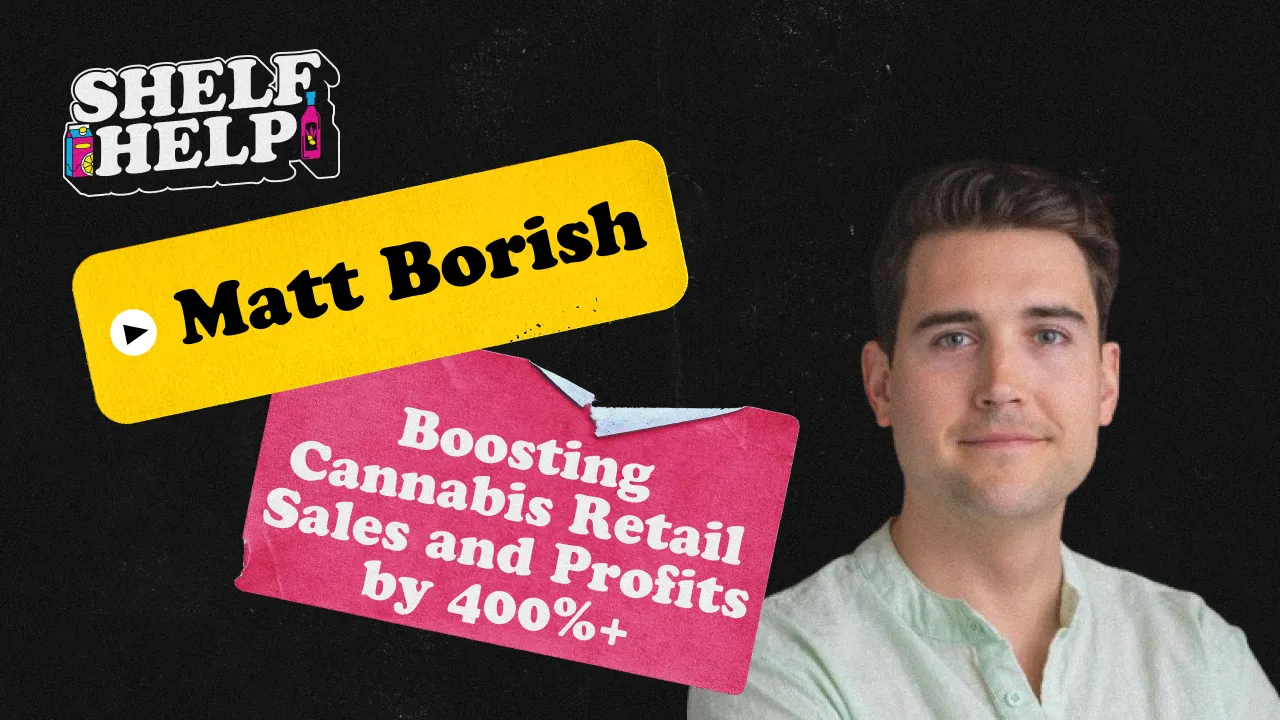



On this episode, we’re joined by Matt Borish, VP of Marketing at Union Chill Cannabis Co. - a multi-state cannabis retailer operating in New Jersey and New York.
We get into the realities of driving foot traffic and new customer visits when paid media options are limited and competition ramps quickly. Matt breaks down how Union Chill approaches the Super Bowl of cannabis, how they think about platform spend, and how to balance acquisition versus retention in a category where margins are constantly under pressure.
We also dive deep into promo mechanics, product mix decisions, and how category trends like beverages and infused prerolls are reshaping the retail experience. Matt shares how Union Chill thinks about tech stack, consumer demographics, and what he’s watching as the cannabis retail landscape continues to evolve.
---------------
Episode Highlights:
🌿 Driving foot traffic with limited paid media
🔥 Green Wednesday strategy and promo planning
💸 Marketing budget allocation and platform spend
🔁 Balancing acquisition vs retention in cannabis retail
📊 Building repeatable promo frameworks
🧠 Retail tech stack and tooling decisions
🚀 Launching dispensaries in new adult-use markets
📦 Product mix strategy and category performance
🥤 Beverages and infused preroll trends
👥 Understanding shifting consumer demographics
📉 Marketing under 280E constraints
📈 Trends shaping the future of cannabis retail
---------------
Table of Contents:
00:00 – Intro
00:42 – Matt’s journey in cannabis
03:16 – Green Wednesday
04:00 – Driving traffic and new customers to retail
06:55 – Marketing budget allocation
09:12 – Platform spend
10:15 – Retention strategies
11:25 – Recurring promo strategy
14:37 – Tech stack
15:54 – Dispensary launch strategy
17:58 – Building out a retailer promo framework in a new cannabis market
19:29 – Product mix
20:51 – Beverages
22:22 – Infused prerolls
22:54 – Consumer demographics
25:43 – Optimizing for 280E
26:24 – Trends
---------------
Links:
Union Chill Cannabis Company – https://unionchillco.com/
Follow Matt on LinkedIn – https://www.linkedin.com/in/matt-borish-09933b27/
Follow me on LinkedIn – https://www.linkedin.com/in/adam-martin-steinberg/
For help with CPG production design - packaging and label design, product renders, POS assets, retail media assets, quick-turn sales and marketing assets and all the other work that bogs down creative teams - check out KitPrint.
Episode Transcript
Speaker: 00:00
All right. Welcome to Shelf Help. Today we're speaking with Matt Borish, VP of Marketing at Union Chill Cannabis Company, cannabis retail operator with locations in New York and New Jersey, some of the most exciting markets in the in the country right now. Matt started his career in finance wealth management, then at a long stint as a recording artist and actor before he ultimately kind of finding his way to leading marketing and again two of the hottest markets in cannabis. So really cool background. Excited to get into it. Yeah, Matt, first, yeah, the first question I had was just like, you know, you definitely had quite an interesting journey into the cannabis space, ultimately ending up as kind of the top dog from a marketing perspective at a leading East Coast operator. Um just kind of give me a bit of the give me the highlights and how you ended up where you are today.
Speaker 1: 00:42
Yeah, so definitely uh, and first off, thanks, thanks for having me on. Really appreciate it. Yeah, but so I was uh I definitely have a unique background. I was a professional actor when I was younger as a child, like from ages nine to thirteen, and then ended up going, I kind of I was able to remain in school during that time, which is pretty unusual. But past that point, definitely would not have been able to to remain in school and kind of wanted to, yeah, just just finish out, you know, high school and and college like a normal kid. So yeah, ended up going to University of Richmond in Virginia. I majored in finance there mostly because that's what uh you know all my friends seem to be doing. But yeah, when I graduated there, I moved out to Los Angeles and moved out there to pursue a career in in music. Actually, ended up working for uh a publishing company while starting to kind of write my own stuff and ended up signing with them and yeah, so lived out there doing that for three years. That didn't quite pay the bills, so yeah, moved back to the Philly area and and took a job in finance and yeah, did that for about seven, eight years, was in a couple of different cities, but ended up back in the Philly area on the East Coast in the town where I live in now, which is New Hope in Bucks County. And I was kind of feeling pretty burnt out with finance at that point, was definitely looking at you know other options. I have Crohn's disease too, so cannabis has been, you know, hugely, hugely, hugely helpful for that. I would say like life-changing. Not that I didn't like cannabis before that, but definitely so yeah, you know, definitely realize like the the amount of medical potential it has and and how much it helps people, and would always go into dispensaries with my wife and would say, like, God, I wish I could just like work in a dispensary. And yeah, ended up meeting the founder of Union Chill. Uh, her name was Lori McHugh. Um, and she told me she was opening up, you know, one of the the first cannabis dispensaries, wreck cannabis dispensaries in New Jersey. So was fortunate to to kind of get a role on on her team. And yeah, it's been a crazy journey. She she unfortunately she actually passed away pretty suddenly in a car accident about three months after we opened. So that was definitely a shock. And yeah, a lot of us had to, you know, kind of step up and and continue to carry out her vision. So yeah, it's been uh quite the ride and um very happy with with where I ended up.
Speaker: 03:02
Definitely an interesting, exciting journey, that's for sure. Yeah. Uh kind of timely that next week, as I was just saying right before we kind of hit record of this next week, is kind of like the the Super Bowl for the cannabis space. It's for like the people that are more in non-cannabis CPG world, what's just like given the background, what's what is happening next week in cannabis?
Speaker 1: 03:19
Yeah, so next week is uh we call it Green Wednesday. Um, and it's actually surpassed 420, I think, as the biggest cannabis sales day of the year. I think it started just because retailers were were noticing like, wow, on the day before Thanksgiving, which is you know a big day for for alcohol too, everyone's coming to the dispensary. So yeah, people started offering you know huge sales and it's kind of become a a tradition across the country. Yeah, that whole week, including you know, Black Friday and Small Business Saturday, Cyber Monday, like that's that's kind of the busiest week of the year for us um in cannabis. It's a good time to shop if you're if you're a cannabis customer, definitely go on Green Wednesday because they have the steals of the year.
Speaker: 04:01
Diving straight into the weeds a bit. Uh I think what I read at your new at your New Jersey location over a you know roughly like two year period, you helped boost revenue by almost 400% gross profits by more than that. I think it was like close to 450% boost to the monthly customers by similar numbers. I'm just kind of curious, what have you found are some of the keys to really consistently driving new customers, new foot traffic to your locations these days, and kind of what are the big buckets you allocate the majority of resources to to in order to maximize that number?
Speaker 1: 04:32
Yeah, so definitely it's it's union chill. We've had we've had a ton of success, and I'd like to take credit for for at least some of that. But yeah, so but definitely, you know, our customers and everybody else too. But I would say in terms of marketing, I approached marketing like from a finance background kind of very skeptically, I would say, I think as a lot of finance people look at marketing. So started out really, really focused on attribution and really focused on revenue generating marketing. So we were doing a lot of stuff that I think at the time was was definitely cutting edge, at least in the New Jersey cannabis market, focusing pretty heavily on programmatic display ads, Google ads, meta ads, just finding the right partners that that were able to execute on those was definitely a big thing. And we also, when I first joined, we were with an agency and then we moved to another agency, and and kind of what I found was even the ones in the cannabis space, like every market is totally different. And because we were so early on in the New Jersey market, like what had worked for their clients, um, you know, maybe in other markets didn't necessarily apply to New Jersey. So kind of took things in-house, started, you know, managing and and selecting marketing vendors directly. And yeah, that was that was definitely a huge, a huge part of the success. Like cut costs by you know, almost a third just on the management side, keeping the budget the same and next the marketing attributable returns. I would say the digital side is a big piece. The other thing I would say though is from the start, like we really wanted to be a part of the community, give back to the community, be involved as much as we could. And that has certainly paid us back, you know, over and over again. So we sponsor a lot of local events. There's a lot of we're we're kind of in a big arts community, so we a lot of musicals, other types of theater, art shows. We have feature a lot of artists in our in our dispensary, and then we partner with a lot of other local businesses. So yeah, I would say those are kind of the big buckets. And then, you know, you always have email, text, push notifications, loyalty program, all of that stuff is definitely really, really important.
Speaker: 06:42
Does like budget allocation to some of those big buckets like change at all of the past few years? As an example, you're dedicating, you know, 30% of your marketing budget programmatic performance related stuff, you know, 30% of the community stuff, and now it's the same, or is those kind of buckets change at all?
Speaker 1: 06:56
Yeah, so they've definitely there hasn't been a huge, huge shift, but the channels within those buckets have definitely had to, you know, change and evolve as things change. So on the digital side, we ended up finding a really, really solid partner for meta ads. And you know, sometimes you find a new vendor and that can really change things about where you want to shift your budget to. We also started doing like co-brand programs on the on the programmatic side where the brands will actually pay for the cost of the entire campaign. It'll, when people see the ad, click on it, it takes them right to that brand's product page on our menu. And yeah, that that had a huge effect on growth as well. Yeah. That's kind of what I would say on the digital side. Uh, another thing is with with Google Ads, we've run into a lot of account shutdowns, things like that. That's definitely a little bit of a lower priority for us now until we can find, you know, a vendor that can consistently execute there, which as long as Google's policies don't change, I think is going to be difficult. Yeah. But yeah, so those are a couple examples. Another, trying to think of some other another thing we started doing just to uh, you know, we always have to satisfy the the 21 plus requirement, um, partnerships with a lot of um local brewers, distilleries, uh bars where we we can put our coasters in in the bars, and you know, they'll usually say bring bring this coaster in for you know 20% off your first order. And um that's actually in terms of like ROAS by channel, it it costs us not much to to make 10,000 coasters, and um we typically see tens and tens of thousands of dollars just from coasters that cost a few a few hundred dollars. So yeah, that's definitely been they're always like it's fun to find new things that you're you know, don't think this will be like a game changer, and it turns out like, wow, this is this is like one of the best performing things we have.
Speaker: 08:45
Yeah, totally. That totally reminds me when uh in San Francisco we um when we were building a company in California, we started sponsoring um trivia nights at bars that were close proximity to discountries, and then we would like absolutely like integrate cannabis-related questions, and that worked that worked really well. That's something I I would like to try. That sounds like a great idea. If that's all it worked pretty well. All right.
unknown: 09:06
Yeah.
Speaker: 09:07
Where do the uh Nessor Evil platforms kind of play in your strategy? That's like weed maps, the main one that come to mind. Yeah.
Speaker 1: 09:13
Um, so as far as like the iHeartJane thing, we run both of our stores on Dutch E, POS, and e-com. Um, so I don't know if anything's changed on on Jane's side, but I I thought it was mostly limited to brands and then retailers that are using Jane, but certainly have heard really good things about that, that actually their program. But as far as like weed maps, leafly, we found that definitely as far as like advertising on the platforms, and again, it's it totally depends on what market you're in um and what part of the country you're in. But for us, it's definitely our budget is usually better spent on other f forms of advertising. I do think it is worthwhile. You know, we always maintain listings on both sites. That's that's great for SEO and um you know, just to have some some extra backlinks out there for your websites. Yeah. Definitely drives a little bit of traffic. But yeah, in terms of ad spend, uh, you know, we tested that a lot and didn't didn't find a ton of value.
Speaker: 10:08
On the retention side, it typically seems to be like a kind of a text email campaign kind of combo, maybe some like retargeting. What's what have you found is the most thing from a retention standpoint?
Speaker 1: 10:19
Yeah, definitely I would say we we primarily use email. With text, there have been a lot of developments, uh including like the 10 DLC registration, which has actually kind of started working now, but initially that was that was a little tough.
Speaker: 10:33
Yeah.
Speaker 1: 10:34
But push notifications are another great way. We try and get as many people as we can to download our app, as many people as we can in the loyalty program. We we definitely offer, I think, one of the more generous ones out there for customers, and they they really appreciate that. And then retargeting in terms of digital ads is is is a big, big piece for us, and I think that's helped with our retention a lot. But beyond that, just I think we we really try to pass on the as we've grown, we get you know much better pricing from our brand partners, and we really do pass a lot of that on to the consumer.
Speaker: 11:08
That makes total sense. On it's kind of a similar track. Um, I think it's kind of related to retention. Um, the agency I I I run, we work with a good number of MSOs, and some of the stuff we help out with is ongoing recurring promo strategy. And it seems like we found everyone is a little bit different, um, but it's a really important uh driver.
Speaker 1: 11:26
Yeah, so that's that's definitely a big, a big, big piece of my job and and something that, especially in the New Jersey market, for for New York, they finally are just, I think as of this week, finally allowing retailers to to offer discounts, which they didn't since we've been open. But yeah, New Jersey, it's a big, big, big piece of the business. Uh we typically offer you know fresh promotions weekly. I usually actually do it like bi-weekly. We'll have you know Monday through Wednesday promos and then Thursday through Sunday promos. We do have days of the week uh that are recurring every week. Like uh Wisdom Wednesday is a big one for us. Anyone over 55 gets 20% off on Wednesdays. We use a lot of like senior magazines to to advertise that, and people clip out the coupons and and come in with them. And that's yeah, so we every every day for the most part, except for Thursday and Friday, we have um, you know, our weekly promos. And how we decide on what to discount in addition to that is definitely based, we we've we've been able to improve our margin a lot from when when we opened, we were gross margin. Um, you know, we were running at like 40 to 45 percent. Now we're 55 to 60 percent. And and um so part of that is is um you know our purchasing power has increased, but very, very conscious of margin uh anytime we run promos. So we like to keep things you know above 50% if we can at least get keystone pricing on things. And yeah, I think we're we've been fortunate in that we we generally have uh enough stuff to to be able to do that with that we can kind of consistently offer a pretty fresh promo with people, which they definitely also appreciate. And then the the last piece of that is expiring products. So pretty early on we realized that that was becoming a big issue. Um, and definitely like purchasing strategy has helped with that, but we also set up a system where 60 days out from expiration, um, it goes to a certain level of discount, then 45, then 30, then 15 and 5. Um we usually don't don't end up with um you know any expired inventory at this point. So yeah. And then uh brand splits. Um if brands are offering split promos, um, that's the other big thing that we look at.
Speaker: 13:40
That helps with margin too. It's not like there's kind of like a delicate dance to a certain extent where like you want to drive business, but also kind of strategize these promos where where you're not kind of a conditioning consumer to kind of wait for promos and discounts so they only come in when there are discounts. Is that make sense?
Speaker 1: 13:55
Yeah, absolutely. So that that's definitely another big focus. We I think that's another reason why we're constantly switching around the promos. I you know, if you have something that that's at 30% off all the time, then it's not really a discount. That's that's the actual price for the customer. Totally. So yeah, it's definitely important, but really important for us to to be conscious of that, um, you know, and s and and switch things around. So yeah, that's kind of how we we get around that. Yeah, that totally makes sense. Yeah, market computation we're we're starting to see a little bit in New Jersey and you know, in any mature market, that's uh that'll happen eventually. So trying to hold that off for as long as possible.
Speaker: 14:32
Yeah, it's definitely a delicate balance. What are kind of the the core tools that are in your tech stack?
Speaker 1: 14:37
Yeah, so for us, we've been on Dutch EPOS and e com since the beginning. In New York, actually, we opened under with um the Dutchy marketing and loyalty, which is uh a new product of theirs. They're still they're still developing things, but we're able to you know work with Dutchy a lot and actually give them feedback on on features and stuff, and they're pretty quick to implement new things. So that's that's definitely been an advantage up there. For the New Jersey store, we use we've we've used a couple different providers, started out with happy cabbage for text and email, had um had a lot of delivery rate issues early on, which I think has at this point has been fixed, but then we switched to Clavio for email and happy cabbage for SMS. That got to be kind of too much managing both of those, wanted it under one place, so we moved to Happy Cabbage. And then Happy Cabbage actually recently there's been a lot of consolidation. They actually got bought by Alpine IQ. Our loyalty program and our app is under Spring Big's. Now we're we're in New Jersey, everything is under uh Spring Big. Yeah. That makes it easier, I guess. Yeah, for sure. But they're definitely it can be worthwhile, you know, to to have multiple systems, you know, different people are good at different things, and there's definitely still a lot of that.
Speaker: 15:51
And uh, of course, you know, good old Microsoft Excel has built out the launch plan for the New York location, a well-rounded launch plan look like for a a newly opening Canvas retailer.
Speaker 1: 16:04
Yeah, so I think, and I've I've certainly learned a lot since opening New York as well, but I would say some things that that remain consistent are in the beginning, like people don't know who you are yet. It's it's focusing on those, you know, like things like programmatic display ads and everything like that, that kind of comes later once people know who you are. So definitely a ton of a ton of brand awareness stuff. I think PR is really important early on, just getting mentioned as often as as possible. And then again, like partnering with other businesses, that's a great way to kind of get the word out about your store. So yeah, I would say in the very beginning, like PR brand awareness stuff is is absolutely key and when you when you're both before you're opening and then when you do open. Totally. I think as you kind of start to establish yourself, that's when, and I'm not saying we don't do any of the performance marketing stuff uh in the beginning, but really you have to feed that top of funnel stuff to for the bottom of funnel stuff to perform really well. So yeah, I'd I'd say that that starts to shift um, you know, after your first month or two, um, definitely lean more heavily into strategic partnerships, all the performance marketing stuff. And yeah, we're about about five months in at this point in New York. And yeah, still, still kind of the other big thing I've learned with that is I think this is true for any e-business in any industry, like every market is totally different. Um, you know, you can't apply the same marketing strategy. You can you can try it, and I think it was certainly worthwhile trying all the stuff that worked well for us in New Jersey, but I think you'll quickly find that like, yeah, you have uh your customer demo is going to be completely different potentially, and and yeah, the market that you're in is gonna dictate a lot of what works well and and what doesn't. So for anything, I think it's you know, a lot of cautious trial and error is a really great way to kind of see what works and what doesn't.
Speaker: 17:58
Cannabis is unique because it's kind of, you know, each state is its own little market as more and more operators come online, it gets more competitive. So yeah, kind of curious as you're building out the pro forma, how did you kind of take some of those variables into account?
Speaker 1: 18:09
Yeah. Um, so I I did the pro forma for New York, and I basically used the kind of the template that we had from New Jersey to do that. But it was really, it started by looking at your total addressable market, your segment of that addressable market, and then um kind of refining from there. So really I I think a good starting point is what are the prices currently in the market, what are people paying? And then you look at population, and there are a lot of great, you know, data data tools we use like BDSA, um headset, hoodie analytics that that can kind of give you uh an idea before you're opening in a market what percent of the population is actually consuming, how frequently are people buying, and then I think from there it's a lot easier to kind of start building out the the modeling. But I do think that as we've seen in state over state over state over state, like eventually there's going to be price compression. So I think typically, at least in my in my experience in New Jersey and New York, we're definitely starting to see some of that in New Jersey, but not as rapidly kind of as we had expected. And then in New York, I think it's still kind of early stages, but we are we are seeing, you know, the more the more competitors you have in a space, the more brands and the more retailers, people are gonna compete on price, and that's gonna drive the price down. So yeah, definitely a really important thing to keep in mind.
Speaker: 19:30
From a a sales standpoint, what does your kind of product mix look like as of as of late, meaning percentage of sales that are flour, vape edibles? And is that drastically different between New York and New Jersey?
Speaker 1: 19:42
So in New Jersey, it's it's remained pretty consistent. I mean, flour is usually the biggest, uh, the biggest bucket. Yeah. But I will say that like vapes for for our store has finally overtaken flour in New Jersey as our biggest category. Wow. So that's been interesting to see. I think concentrates can take a long time. I would say for any store that's opening up, like don't do half your stuff as concentrates, like um, because it takes a while, especially in a new market, for people to realize that's where things are headed. So yeah, I I would say flour and vapes are generally pretty close, usually with flour being a little higher than vapes, pre-rolls. Actually, I would say the next biggest piece are are edibles um and pre-rolls. Again, it kind of depends on the market that you're in, or actually like the area that you're in terms of customer preferences. And then yeah, we we try and put uh an emphasis on you know merch and accessory sales as well. We we we think like, you know, if they're all these smoke shops that are able to stock like all this amazing glass and all these cool devices and tools work cannabis shop, why why why would we not, you know, the same stuff?
Speaker: 20:52
DHC beverages seem to be the thing that everyone's talking about. Obviously, things have changed more recently politically, but historically been sold a lot of places, and I think it's been getting a lot of tension. I'm curious, just because people can buy those other places, have have you seen that trickle into your dispensary world too, of like beverages sales increased and/or at least have requests for them peaked over the past year or so?
Speaker 1: 21:12
Yep. Yeah, that's a great question. And so in in New Jersey, there really aren't any actual canned beverages on the market yet, which is surprising. We've been expecting kind of since we opened, like, all right, it's gonna be soon, it's gonna be soon, but still kind of no one has stepped into that space. I think a reason for that, at least in New Jersey, is because you know you can get them anywhere for the most part. Right. I know laws have recently changed around that, and we'll we'll see what happens over the next 12 months. But in New York, that's a a huge, huge part of our edible category. Okay. Beverages are allowed there. Um they're not like the the hemp derived ones, although I think people are starting to realize like there's not a big difference. But yeah, so uh that's definitely a big, big percentage of our sales in in New Jersey, uh New York in on the edible side. I think like as far as it like trickling down at the dispensary level, at least in New Jersey, I do think the more people that that get to try the plant in any form and you know find it helpful for different things, like a lot of them are gonna, you know, wanna explore beyond just the beverages. So I think it's it's actually been helpful for us in a lot of ways in in New Jersey.
Speaker: 22:20
Umfused pre-rolls like one of the fastest growing categories in both markets for you guys? Yeah, definitely.
Speaker 1: 22:27
I think you know, a lot of cannabis consumers, especially first-time cannabis consumers or in the younger demo, they they sort by THC um when they when they get to the menu. So having those infused pre-rolls on our menu, like that, they're the first things that a lot of people are seeing. Yeah, there's been there's been huge growth in that in New Jersey since we've opened and continuing to see growth, and then it's been a big, big part of the market in for us in in New York since we've opened.
Speaker: 22:54
Yeah, yeah. Consumer demographics perspective, what's your consumer look like that's responsible for the bulk of your sales and if it's different between New Jersey and New York, definitely cure from that piece too.
Speaker 1: 23:06
Yeah. So in New Jersey, um, our dispensary is is definitely in a little bit of a more affluent area. Our clientele is uh significantly, the average age is significantly higher than it is in in Corning, New York. So yeah, and that that informs a lot of our marketing as well. Uh knowing that you know our our biggest customer base uh is seniors. We we cater a lot of stuff uh around that. And then in New York, it's definitely much, much, much of a younger demographic. We still try to get you know as many people of every background as we can in the store, but definitely have the marketing's been more focused on that that younger demographic in New York. Top types of products that the seniors are are buying. I would say uh edibles to start, but I am like always shocked by the amount of just flour that that seniors buy and a lot of times concentrates. Um and and vapes too. I think they're you know they like to try different things and and see what works best for them. But definitely initially, I think edibles are uh are a really easy, you know, kind of more familiar way um for for people to try the plant. Yeah. But one thing I think that we put a big emphasis on is start low, go slow with the edibles. Um there are I've I've been in a couple different other shops where you know a senior comes in and they're like, Yeah, try these. These are, you know, 40 to 50 milligram edibles. And I'm like, oh my god, like now we so we we try and um start people on as low of a dose as possible just so they don't have because if you have that first experience and it's it's horrible, you feel overwhelmed and anxious, like you're not gonna you're not gonna want to do it again. You might be missing out on a lot of the benefits.
Speaker: 24:47
Any big changes in the customer demographic over the years, or has it remained pretty consistent? Well, in terms of the customer demographic, yeah.
Speaker 1: 24:54
The customer demographic has has remained pretty consistent in New Jersey for us, which yeah, it's kind of unexpected. We we've definitely had a lot of competition open up. But again, I I just think we're we're so involved in the community, really doing a lot of things like food drives. We've we've raised over 3,000 pounds of food for local food banks. Yeah, we've had a really, really loyal customer base. And um, yeah, you know, we're we're really grateful for that. In New York, since we've opened, there's been within an hour and a half radius, we now have uh 18 competitors. When we even five months ago when we opened, I think it was 14 competitors. And then you look, you know, a year before that when we were hopefully going to be opening, it was like two competitors. So yeah, both both markets I are growing really, really fast from a retail perspective. That's awesome. That's great.
Speaker: 25:42
This question is really getting into the weeds. Do you guys try to optimize the business at all from a 280E standpoint?
Speaker 1: 25:50
Yeah, definitely. That's another reason we, you know, put a lot of emphasis on devices and merch and accessories for the that 280E reason. Beyond that, though, it's been like the last couple years, it's been like, all right, it's it's about to happen, it's finally gonna happen. And uh, we're still hopeful that'll happen soon.
Speaker: 26:07
Yeah, we're all very hopeful. Last question for you in terms of um any particular brands in the cannabis space or just general trends in cannabis, or maybe just CPG beyond that uh you've been kind of tracking lately, or things that have got you particularly excited?
Speaker 1: 26:23
Yeah, I mean, I I think this isn't just true for the cannabis industry for everyone. I mean, everything that's going on with AI is is exciting and scary. So that's that's something we've been watching pretty closely and you know, having to start incorporating some of that into my day-to-day work and the systems we use. So that's that's probably the biggest one. But as far as like things I'm excited about in cannabis in New York, they're doing a ton of really cool stuff on the edible side. That's my favorite category. And yeah, you know, up there we have like chocolate-covered waffle cones, we have freeze pops, just kind of like any edible you can think of. So the more I that's what that that's uh something that really excites me for sure is just seeing all these really cool edible products that that are starting to enter the market. And I remember a decade ago getting the like frozen pizzas and everything. So they've had that for a long time. But on the East Coast, it's definitely exciting to see.
Speaker: 27:15
For sure, totally. Yeah. Well, yeah, Matt, this has been awesome. You have a lot of great insights. What's the um what's the best place for people to kind of follow along with everything you're you're working on, and then best place for people to follow along with the Union Chill as well.
Speaker 1: 27:28
Yeah. Um, so me, you can find me on LinkedIn under Matt Borish. Um, you can find me on Instagram under at Matt Carrie Music. Still have some stuff on Apple Music, Spotify, and everything. So feel free to check that out. And then as far as Union Chill, our website for New Jersey is www.unionchill co. And then our New York website is unionchillny.com. But you can follow our New Jersey location on Instagram. That's at Union Chill NJ, and New York is at underscore ny Union Chill. So perfect. Yeah, the website's a great place to start for both.
Speaker: 28:09
Yeah, we'll call it on the notes for sure. Yeah, Matt, awesome.
Speaker 1: 28:12
This is awesome. Appreciate the time. Yeah, really appreciate you having me on. This has been a lot of fun.
.svg)