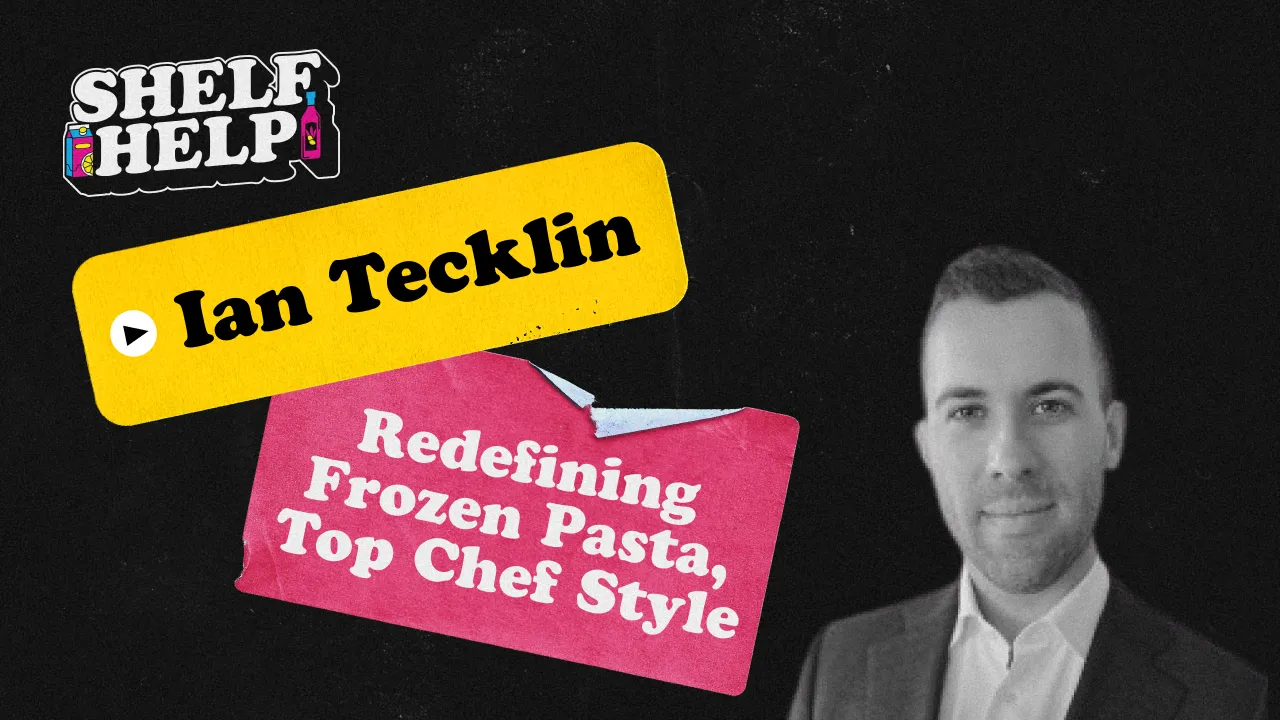



On this episode, we’re joined by Ian Tecklin, the Founder & CEO of Ripi, a recently launched, fast-growing upstart that’s redefining frozen pasta. Ian spent years in M&A and early-stage investing before partnering with Top Chef alum Joe Sasto to bring chef-level pasta to the masses through an accessible, freezer-friendly format.
With explosive early retail traction and a growing fan base, Ian shares an inside look at how Ripi developed its formulations, chose its first SKUs, and built a distinctive brand identity in a sleepy category.
We dive into R&D, how he selected and onboarded co-packers, and why launching with the right hero SKUs matters in frozen. Ian unpacks what most brands misunderstand about the frozen aisle, why packaging architecture matters more than founders think, and how Ripi thinks about shelf placement, facings, and competing behind a condensated glass door.
—---------------
Episode Highlights:
🍝 Building Ripi: a chef-led, premium frozen pasta brand
🧪 Formulating restaurant-level pasta that scales
🏭 How to choose and work with the right co-packer
📦 Why product set is critical in frozen
🎨 Packaging architecture that wins in the freezer aisle
🛒 Retail go-to-market & early traction
📊 Tactics for capturing more shelf space
❄️ What brands misunderstand about the frozen category
🧭 Advice for entrepreneurs entering frozen
🔭 Trends Ian is paying attention to
—---------------
Table of Contents:
00:00:00 - Ian Tecklin intro
00:41:08 - Ripi origin story
03:55:13 - Formulation and R&D
07:56:11 - Copackers
12:41:22 - Go-to-market SKU decisions
15:15:24 - Brand identity and packaging design
21:43:19 - Retail go-to-market
26:49:12 - Capturing more shelf space in a competitive category
30:17:19 - The frozen category
35:25:10 - If Ian could redesign the frozen section
37:33:02 - Recs for other frozen entrepreneurs
39:45:05 - Trends Ian is watching
—---------------
Links:
Ripi – https://ripifoods.com
Follow Ian on LinkedIn – https://www.linkedin.com/in/ian-tecklin-44655698/
Follow me on LinkedIn – https://www.linkedin.com/in/adam-martin-steinberg/
For help with CPG production design - packaging and label design, product renders, POS assets, retail media assets, quick-turn sales and marketing assets and all the other work that bogs down creative teams - check out KitPrint.
Episode Transcript
Speaker: 00:00
Welcome to Shelf Help. Today we're speaking with Ian Techlin, founder and CEO of Rippy, the fairly recently launched fast-growing frozen pasta brand based out of New York City. Prior to Rippy, Ian led early stage investments and new incubations for a family office, did strategy and corp dev work at an ad tech company and also global talent agency UTA, which you may be familiar with. So lots of great experience. First off, just for the listeners that aren't that familiar with Rippy, just give us a quick lay of the land in terms of an origin story, why behind the brand, core products in the in the lineup today, and then maybe just a few places that people can get their hands on them today, and then uh we'll go from there. Absolutely. Well, thanks for for having me on.
Speaker 1: 00:44
Love the pod, love the apps that you've uh released. And so appreciate the opportunity to tell our story. Um, Rippy, it's it's short for the Italian word rippieno, which means filling or stuffing. So it speaks to not only our core product of frozen stuffed pasta, but also the whole brand ethos of filling life with more of the good stuff. Ultimately, I see a massive opportunity to disrupt what historically has been a stale legacy category of frozen pasta, where the average brand is 65 years old. Everyone's focused on the same basic standard flavors like cheese, spinach and cheese, mushroom, butternut squash. The packaging is fairly similar across the board. And no one's really leaned into social to create engaging content and foster sense of community online. And all you have to do, frankly, is look at what Graz has done in olive oil, Fishwife and Tin Fish, Truff and Hot Sauce, Jenny's and Van Leuwen in ice cream, you know, Mila and Frozen Dumplings. There's example after example, all of these challenger brands who've introduced premium chef-driven products, had a unique voice on social and found success. And to me, frozen pasta is that next frontier that's right for disruption, and we want to be that next big challenger brand. And so I partnered with this guy, Joe Sasto, who was on top chef twice, has done a lot for the Food Network, is very well known on social for his pasta making. I had initially DM'd him five years ago when I first thought of Rippy and can get into sort of what that origin looked like. Um, didn't launch it at the time, but when it came time to really pursue this, you know, brought him on as our chief colony officer. And with his help, we officially launched our first three SKUs this past February. So we've got a braised short rib ravioli with Swiss chard, parmesan, and red wine, got a chicken palm ravioli with crushed tomatoes, moths, and basil, and a sweet potato ravioli with brown butter, rosemary, and maple. So it's meant to be sophisticated and elevated, but accessible at the same time, both from an ingredient perspective as well as a pricing perspective. And what we're doing is using frozen pasta as a vehicle to empower the average home chef and really help them elevate their weeknight meals.
Speaker: 02:51
I've heard you say that you're not just making better ravioli or reimagining ravioli and asked kind of what this looks like, but I think you kind of just laid it out there.
Speaker 1: 03:00
Yeah, no, look, it's about prioritizing bold flavors, um, you know, eye-catching design, you know, not only from a packaging perspective, but from a social perspective and just frankly from a branding perspective, bringing energy and having, you know, a modern brand voice and tone and ethos that frankly is bringing energy to a stale legacy category. That's what we're looking to do.
Speaker: 03:23
Let's um rewind back to some of those earlier days working with your partner on some of that initial RD formulation when you're working on reimagining raviolis. I mean I mean, I imagine it definitely took a while to probably dial things in and find formulation process that that worked without giving away any of your trade secrets or anything. What were like some of those kind of key variables you guys were playing around with or kind of key tweaks you had to make along the way between that the first version that came out versus the final version that you felt like this is right, this is it, I'm ready to go to bat with how many batches, months, title?
Speaker 1: 03:58
Yeah, a lot of batches, many months. It's funny when I look back or think back on you know the whole RD process, you know, as I mentioned, I first thought of the idea for Rippy five years ago. This was June 2020. COVID, as we all recall, restaurants were shut down, people were cooking at home more than ever before. And I was walking the aisles of a grocery store by me when I was living in LA at the time, uh, and had this light bulb moment, you know, and I thought, why can't uh the freezer aisle, specifically frozen pasta, why can't there be sophisticated, unique flavor profiles that are, you know, different and accessible from an ingredient and pricing perspective? You know, I'm a born and raised New York. I've like so many people have come to love uh some pretty amazing pasta dishes, you know, for places like Missy and Lillian and Lartuzzi and Via Corota. And I thought, why can't that type of quality be available in the freezer aisle? And if you can, you know, lean really into uh unique packaging and bold flavor profiles and have a unique voice on social, then it's a very interesting proposition. And having been a top chef fan my whole life, I think that's my favorite show in the world, I DM'd Joe just out of the blue and said, Hey, you know, huge fan, have a crazy idea for a pasta venture. Uh, can I tell you more about it? And coincidentally, he lived five blocks away from me in LA at the time. And so for the next six, eight months during COVID, every week he would drop off a different stuffed pasta version, you know, a different filling, a different dough option, different shape option. And we continue to tweak the ratios of the ingredients accordingly for each call it skew. We have a recipe book of you know 70 to 80 flavors right now. Wow. And so we spent so much time during COVID. Ultimately, with the world upside down, I didn't think it was the right time to launch a brand. And so I moved back to New York, started working at this family office, but I've been thinking about Rippy every single day and ultimately got to this point where I decided, you know, to dust off all the materials I'd put together a few years prior and pursue Rippy, you know, after fully diligencing it and in that whole process, re-engaged with Joe from a small batch RD perspective. And, you know, at that time we had basically perfected our recipes on a small scale, but then we knew we obviously had to commercialize them and make them feasible at scale, you know, in a manufacturing setting. And so I spoke to, I think, 18 copackers. If there's someone who produces frozen pasta at scale, I've spoken to them. And we asked a number of key questions for us that were sort of non-starters, you know, in terms of their ability to create IQF frozen stuffed pasta, then being USDA certified because we have two meat-based products, then being able to support the ravioli shapes we we want to do, and then most importantly, having an RD team in-house to work with us on this whole commercialization process. And so, you know, uh we launched the brand in February of this year, but last year was just a big behind-the-scenes build year, focusing on branding work with our agency, but most importantly on the product side, RD with our co-packer. And we went through dozens of iterations. And we had Joe's small batch sample as a comparison, if you will. And we spent, you know, virtually 12 months and probably around 10 months in RD land last year. And genuinely, we were able to recreate Joe's uh recipes on a small scale, which is you know incredible.
Speaker: 07:37
That's great. What was that process like that you find in the co-packer that you ended up circling around? And then once you found that one, was it hard to kind of get them to take a chance on a you know, upstart brand and getting them convincing them to get excited enough to take you know the risk on smaller production runs and kind of seeing seeing the vision, or did they kind of get it right away?
Speaker 1: 07:56
You know, I I I mentioned I had spoken to 18 copackers. You know, obviously some were fast nose because they didn't want to work with us in RD because they didn't have the capability or didn't have the bandwidth to lean in. So we went into called various stages of discussions with different partners. You know, the one we ultimately ended up working with, you know, was willing to work with us and spend the time because they believed in the vision and the market opportunity and our ability to execute. You know, ultimately we're we're in it on a commercial side to have long-term partners. And it's just an amazing situation to be in that we found a commercial partner, you know, our key production partner, who before we even launched was willing to take that risk, you know, from a timing and and bandwidth perspective on their end, to lean in, to roll up their sleeves and go through again, dozens of iterations to commercialize these initial recipes and and make them feasible at scale. Yeah.
Speaker: 09:01
Which, you know, I'm very grateful for. When you're going from the the kitchen, your partner's kitchen to larger scale Copac or was there any trade-offs you had to make? No, it's a it's a great question.
Speaker 1: 09:11
For us, the one thing we would not, I will never make a concession on is on quality. It's quality. The product obviously has to taste great. I'd say if that's priority 1A, priority one B being we have to be clean label and have transparent ingredients. It cannot, the back of the box cannot read like a periodic table where the average consumer has no idea what we're putting in our product. You look at our ingredients today on the back of our box or side of our box, you're gonna be familiar and know how to read every single ingredient listed there. So that was the most important piece for me here. Um so we didn't want to sacrifice on quality, obviously, but we have to, you know, make some, I don't want to call it concessions in a negative light, call it optimize efficiencies, if you will. You know, there are things that we need to do in a commercialized setting because what we did on a small scale is not feasible. You know, perfect example, our sweet potato ravioli with brown butter, rosemary, and maple, you know, that on a small scale involved Joe taking sweet potatoes, cutting them in half, roasting them whole, putting them through a sieve and mashing them together to get a sweet potato puree and then mixing in uh brown butter and maple and rosemary and a few other seasonings. That's not you know scalable or efficient, you know, and it's very laborious, you know, it gets expensive, it's complex from a production lens. And so with that skew, for example, we found a fantastic partner who provides a sweet potato puree, you know, which is the same exact flavor and texture profile that Joe created on a small scale, but takes a fraction of the time. So that's one example that comes to mind.
Speaker: 10:58
For someone that's let's say a year behind you, they're just starting that kind of co-packer search, trying to nail down who's gonna be a good fit. Many things jump out in terms of recommendations, things they should just keep top of mind.
Speaker 1: 11:10
Yeah, I mean, the first is I would talk to as many co-packers as possible. There's for any category, unless you're a super niche product, there's a number of potential co-packing partners out there, and I would talk to them all and compare and contrast because they each have for their own merits and considerations. The second one being know your non-negotiables. You know, for us, it was, as I mentioned, having a co-packer who was USDA certified because we have two meat-based products. It was finding a co-packer who had an in-house RD team andor capability to work with us over, you know, many months. The third I would say with that is someone who has small batch quality. You know, they're not just so mechanized or industrial out of the gate. They can, you know, craft unique flavor profiles with that sort of small touch flavor while not being too small from a production capacity lens in the sense of you being able to grow with them. And then the last piece, just from a financial lens, ensure that, you know, the margins can support the business from uh the get-go, you know, that there's a clear path, importantly, on top of that, to margin expansion as you scale. Because if your margins don't work out of the gate, you're sort of DOA. And especially if there's no clear path to margin expansion, you know, over the next couple of years, then you have no business being in business.
Speaker: 12:40
Right. Totally. You mentioned you guys have a big recipe booklet. I think you said like 70 or so different recipes. You watch those three. How'd you decide in which three to go with?
Speaker 1: 12:50
It's a great question because the benefit, obviously, and the benefit and downside of stuffed pasta is that there are endless filling options. And so you can get creative, you know, very creative in terms of what you put in the pasta, which is great from a creativity lens, bad from a call it analysis paralysis lens, because you know, there's unlimited options. But for us, with our existing, you know, skis we have in market and the ones, you know, we're launching soon andor that are in a future pipeline, it's all about striking the right balance between something that's sophisticated and elevated, but accessible at the same time from an ingredient and pricing perspective. And we wanted something that was familiar and approachable, but you know, a bit more elevated at the same time. So short rib, you know, I want to say everyone, but most folks know what a braise short rib, you know, tastes like. You know, it's it's rich, it's uncuous, it's homey. We wanted to capture that, you know, essence in a pasta, you know, in a ravioli, which I think we've done fantastically well. It's actually our best-selling skew right now. The second, you know, the chicken parm, very familiar. Everyone knows that. I'm comfortable with saying everyone knows what a chicken parm tastes like, you know, so it was familiar there. And then the third, you know, with the sweet potato, there are so many call it butternut squash products out in market today. We wanted a vegetable-based product, you know, knowing that we had the other two meat ones. Um and so we thought, okay, well, what's good from a color and texture uh and flavor perspective? Thought sweet potato, you know, really could work well. Um, and we were able to really elevate it by adding, you know, brown butter and rosemary and maple. So it tastes, you know, very, very homey and perfect for fall, actually, though I love it around. Um, and so those were the initial three that we prioritized out of the gate. So there were some wacky flavors we also went into. We had initially planned to do a fourth skew as well. It was going to be a spicy crab tortellini, so blue crab, flawberry and chili, and kale, but you know, we could not get the margins to work. And so we scrapped it and ended up going with these three. And, you know, it's been great so far.
Speaker: 15:03
Let's talk packaging design for a minute. I know you you obviously did uh did some things right because I think you guys got some awards and some recognition pretty early on in that front. What were um some of like the key variables that were top of mind for you?
Speaker 1: 15:16
Yeah, you know, and I appreciate the the comment. Well, first I have to shout out and and thank RAF and the Truffle team who were fantastic partners, still are fantastic partners. They're our agency and they worked with us from brand strategy, visual identity, packaging design, logo, web design, just sort of full service, soup to nuts. For me, packaging was so important because that's the number one marketing vehicle for us as you think about countless people just walking the aisles of a grocery store and seeing it on shelves. So it had to pop, especially with the freezer aisle, the conventional, call it heritage value brands in the space today, all have very similar packaging. We wanted something that immediately drew your, drew your attention from the coloring to the typography, but equally as important is that visual that you see in the front of the box, which is just a big ravioli, you know, with the sauce dollop on top, which I just think is so striking visually. That was really important for us from a packaging lens. You know, obviously we didn't start with packaging first. It all goes back to sort of the initial brand ethos that we really drilled down on, which is providing restaurant-worthy pasta without the reservation and using frozen pasta as a vehicle to empower the average home chef and instilling in consumers that we are doing the hard stuff so that they can enjoy the good stuff, you know, which is one of our mantras. So we're, you know, braising our short rib at scale, we're roasting our sweet potatoes, we're making the pasta dough, we're shaping the ravioli, we're cooking it, um, or parkooking it rather, and then freezing it. So all you have to do is drop it in and boiling water for three to three half, three to three and a half minutes at home, and you know, you have a true restaurant quality meal in a matter of minutes. All of that type of sentiment should be communicated one way or another on the packaging, whether it's just through the front or it's on the side panels or it's on the back. And I think, you know, we did a great job of it.
Speaker: 17:20
Yeah, totally agree with that. What you obviously narrowed, you know, circled all circled around a great agency partner. What would that decision-making diligency process look like that helped you hone in on them?
Speaker 1: 17:33
Yeah, and again, I I think this is where my background as an investor is helpful in terms of just diligencing every call it opportunity or consideration of this business. I mentioned with our Copacker, talking to 18 manufacturers to land on the right partner. With our agency search, I probably spoke to a dozen agencies, large and small. What initially drew me was just Googling the brands I admire or had heard about and finding their agency and then reaching out and having a number of calls, sometimes just one call, sometimes a couple. But for me, it was important to see the clients that they had worked with, the work obviously that they had done. It was important for me to find a full service agency because I wanted someone to provide a range of services all just under one roof. And then obviously the important piece of pricing. Those were sort of the key criteria for us. I think Truffle checked all of the boxes for us and we made the right choice there.
Speaker: 18:34
If I came to you and told you, I was like launching a CPG brand, getting ready to kick off kind of brand packaging design, any kind of tips that come to mind or things out for that I can uh holds in mind I can avoid.
Speaker 1: 18:47
Well, I would say the first is don't design for yourself, design for the shelf. You know, I think a lot of founders make the mistake of falling in love with something that looks great on a laptop, per se, you know, not necessarily in store. And so I would say if you're in love with a particular packaging design, you know, print it, tape it on our freezer door, stand 10 feet back. And that's sort of the test. You know, there's there's a really big difference between what a call it singular package looks like in isolation versus if you put it, you know, whether in in real life or digitally, what it'll actually look like on shelves. So that's the first piece. I think the second is not to go in order of priorities, just things that uh come to mind. Budgeting for photography and printing tests. You know, that digital file isn't the finish line, it's just one component of the broader package and design phase. And so you need to do a number of printing tests to ensure that there's color accuracy, to make sure that the substrate choice and and finishing all um are in coordination with, you know, your color and how you want your product to feel. I think you can't sort of overiterate, if that makes sense. You know, it'll never be perfect, nothing's ever perfect, but try to get it to 90 to 95%, let's say, and launch. And you know, real consumer feedback will, I think, be more valuable than you know, another round of agency revisions, if you will. Totally. And then I'd say the last piece, actually, two more that just come to mind. One is just I would say clarity beats clever, meaning you have literally three seconds to tell someone what it is that you're selling and and why it's different. I wouldn't try to be clever and bury the product name or flavor in design. You know, it should be treated as a walking billboard, as I mentioned, and be very clear from the outset what it is that you're selling and why you're selling it and the value, you know, that you're offering. And then the last piece is don't ignore, really frankly, plan for the boring stuff. You know, getting your UPCs set up on GS1, getting your nutritional panels in order, your ingredient statements, you know, all of the call it unsexy compliance work that ultimately could call it derail your timeline if you forget about it, you know, is important to consider as you're, you know, kicking off that process.
Speaker: 21:16
Shifting gears a bit just from a go-to-market standpoint. I'm pretty sure you guys got a good, a good number of retailers pretty quickly out the bat. I'm just curious, thinking back, tell me a bit about that journey of getting on shelf in terms of just getting that first buyer meeting or two, getting that first commitment or two, and kind of once you got that that first or two yeses, kind of all the steps leading up to actually getting on shelf and and ensuring doing everything you could to have a successful launch from there.
Speaker 1: 21:43
Yeah, you know, we we launched in February of this year initially with 33 stores. We're now in, you know, eight months later, over 150 stores right now. I'd say the initial focus from a retail perspective, you know, we wanted to prioritize the natural channel, wanted. prioritize the independent and specialty stores in this channel, you know, just to call it crawl before we walk and dip our toes or get our get our skis under us operationally before we scale up and you know are ready for the big players. And so the focus, you know, really had been just uh geography, because you obviously can't be everywhere all at once. But we had targeted, you know, Pacific Northwest and NorCal as one area on the West Coast or two areas, the near metro area. Because I'm here, my friends, family, investors are here. I want to be able to visit stores frequently. And then the third bucket is just called strategic ad hoc opportunities. So retailers that are outside the two areas that I just mentioned but potentially unlock a larger opportunity through their ownership. So market district is is one example by Giant Eagle that we're in right now in the Midwest. You know our first two retailers were Nugget Markets in NorCal and Hagen, you know, and in the Pacific Northwest. And we just made sure we launched there in February. So we started shipping out product I believe late December, early January to make sure that we were ready and you know it was really important that we were buttoned up operationally, obviously being onboarded with UNFI and having those DCs activated in those two areas. But from a production planning perspective, making sure that all the packaging was printed in advance and and ready to go, all of the raw materials were ordered and delivered in advance. And you know demand planning is a bit tricky early on because there's no science to it. It's all sort of art. You can make some you know estimates based on preliminary demand, but you don't really know until you get in it, making sure that we obviously weren't shorting stores that we had some called backstop of inventory available. And you know we launched pretty seamlessly and the 33 stores I mentioned in February, we're over 100 now by the call end of this year, you know, we'll be in uh 700 stores. Really what I'm excited by as well though, over the next six months we're rolling out to over 1500 stores. We have some large logo accounts that you know we'll announce at a later time be sure to let you know though that we're very excited about and I think that just speaks to the the reality that a lot of these retail buyers that we're talking to see you know the vision and and business opportunity, frankly the white space that we're going after and have really leaned in accordingly.
Speaker: 24:28
What have you started to kind of find in terms of tools on the ground tactics that actually have the most impact in terms of you know maximizing velocity and driving self or you know I'd say for us it's the in-store promotional trade activity, you know, that is driving the most call it in-store purchase right now.
Speaker 1: 24:48
There's a lot of stuff that we're starting to do from a top of funnel social perspective just to get the word out there and we have a lot of exciting stuff planned there. But in terms of call it in-store execution it's really you know TPRs and BOGOs and other similar call trade tactics that we're prioritizing. We had dipped our toes a little bit in demos and sampling you know it's a bit harder and comes with its own considerations as you think about demoing a frozen food, you know, that's not ice cream you know we need to boil water and plug in our portable stovetop and cook the pasta. And so there's just an added complexity there. But it's really you know the in-store promos that we work with the stores on to drive trial because that's my focus right now is to do everything we can both from a top of funnel perspective on social and with the collabs that we're doing with creators and chefs and whatnot to you know in-store tactics that we're executing on is to drive that initial purchase, drive that initial trial because the biggest challenge but also the biggest opportunity for us as a brand is the preconceived notion that people have around frozen food. And when people think about frozen pasta their minds automatically go to more conventional value brands like Link and Stofers, for example. And look, don't get me wrong, there's always going to be a market for those types of products. Our bet is there's also a large swath of the population who appreciate good food and are open and are looking for something a bit more sophisticated, a bit more elevated that's again accessible from an ingredient pricing perspective. And so it takes time to invest in the brand and convince folks that the freezer aisle can in fact be a destination for delicious food. And I'm convinced once you buy our product you try our product the quality is there that you're going to become a repeat customer. And so it's about driving you know that initial trial across a number of different ways and we just I've seen success so far and now as we ramp up into larger stores we want to you know really accelerate growth and yeah frozen pasta we're competing obviously with the conventional value brands today, but increasingly with private label brands, these retailer owned and operated brands and so there's only so much shelf space available. And so it's really about what is the the value that you're providing to the retailer that would convince you know this retail buyer to give you an extra shelf placement or an extra row, whatever that looks like. You know, for us it's a two-pronged argument which is you're you're selling hey as in to the retail buyer, you're selling primarily the same conventional value brands today in addition to your private label product, swap out your your lowest performing non-private label brand uh you know and replace it with Rippy existing customers who like that brand will either trade into a similar branded product or to your private label product or they'll trade up to a premium brand like Rippy. So it's an incremental margin opportunity for you. But also given our brand ethos and our flavor profiles and our packaging, you know, and the fact that we're a modern brand bringing energy to a scale category, we're bringing a new type of buyer to the freezer aisle as well. So it's that call a dual argument, that two prompt argument that we've been giving to retailers I'd imagine that's very similar to a lot of other brands you know in in other categories. We're not entirely calling reinventing the wheel at least in frozen pasta we are but that pitch has been applicable to to other categories where you've seen you know success with certain challenger brands. And so that's why you know we we've seen pretty good pickups so far from retail stores in terms of them buying in that's why we've on average most stores are taking three SKUs um and we're actually launching another skew in January you know with a with a notable retailer and we're launching a that'll be our fourth and we're launching a fifth skew with a notable retailer in the spring. And so come springtime we'll we'll have five skews. I think we'll wrap you know each box right now it's a nine ounce box feeds two people comfortably I think we'll cap this at it maybe eight SKUs total. So in an ideal world if we can take over two rows now with four across at a retailer that would be amazing. But again it's just about continuing to communicate that value prop and obviously having the the retail sell through data speak for itself.
Speaker: 29:14
Yeah. Any sneak peeks into what those next SKUs are coming coming or uh too early so far?
Speaker 1: 29:20
It's a little early but I I will tell you I'm happy to hop on back on the pod or I'll touch too it's uh you know this business is at a very interesting inflection point where we're only eight months old but you know look I'm very proud and and happy with all we've accomplished to date but I'm very excited by the near term pipeline that we have and you know very rarely and I say this humbly very rarely is there a situation where a young brand like ours gets an opportunity to sell in you know some pretty major stores and so really want to uh you know prove this out and and obviously spread the ravioli love and convince folks that the freezer aisle can be a destination for delicious food. And so that same mantra of you know strengthen that balance between sophistication and elevation but accessibility that's going to be applicable to all of the SKUs that we launch, all of the products we launch in the future.
Speaker: 30:18
Taking a bigger step back just talking about this frozen category in general it definitely seemed like it's getting a lot of attention right now.
Speaker 1: 30:24
There's a lot of cool things happening like what um yeah what what do you feel like is kind of unique about this category versus all the other non-frozen yeah I look I think uh look the frozen category has been around for a while but I think it's having a a renaissance right now. You know it's it's having a real moment. You know all you have to do is look at what Whole Foods and this just validates a proof of concept for us but Whole Foods you know released their 2026 uh trends for um uh you know their stores or really the industry at large and number five in that list you know that forecast was freezer fine dining which I think perfectly captures what Rippy is all about. It's been in our DNA it's been part of that core thesis since I first thought of the business five years ago. We are still in the top of the first inning as it relates to this whole premiumization of the freezer aisle. But that's where the puck is going. I think as I mentioned the freezer aisle has been around for for decades. But I feel like people really started to think about it seriously in terms of being a destination for innovation around COVID, you know, when when restaurants were shut down, people were cooking at home more than ever before they wanted elevated at-home dining experiences because they didn't want to go out or you know they couldn't go out for whatever reason. I feel like that's when most consumers and it's just a gut check anecdotal based on my experience and others I've spoken to but I feel like that's when people really started to take the freezer aisle seriously. And you know all you have to do is look at uh a number of categories across the freezer aisle. You know, these are brands that have popped up over the last few years and you can see the type of innovation that's possible, you know, whether it's Mila and Lauba and Dumpling Daughter and frozen dumplings, whether it's uh Jesse and Ben's in the frozen you know veggie space with their French fries, whether it's uh True Fru in the frozen novelty space, evergreen in the frozen waffle space, there's been category after category you know throughout the freeze that have proven that innovation is possible. And to us, you know, frozen pasta is an untouched category. It's going to be that next big area that's ripe for destruction and we want to be that big challenger brand to take it on and be a category leader accordingly. And so what it enables us, you know, the freeze is to be and to really be a convenient indulgence, you know, meaning we have a 12 month shelf life. And so we go through a flash freezing process which in its own right has its own benefits by locking in that flavor and freshness and preserving that nutritional value, but also the convenience factor that it affords in that you could park us in your freezer for 12 months, though I'd hope you would eat it sooner than that. Take us out, enjoy us whenever you want, you know, on a weekly basis, biweekly however often you want to eat pasta. And simply boil water and drop us in for three to three and a half minutes and you have a true restaurant quality meal, you know, at a fraction of the price of going out while not settling for subpar quality with value brands. So that's what the freezer aisle affords. That's why I'm so excited by it and you know I feel like every year that's gone by since I first thought of this idea just become even more and more bullish on the frozen category. And you know I think consumers in in large are going to really catch up because again I really do think it's early and we're in the top of the first inning here.
Speaker: 33:49
But again that's where the the puck is going ultimately does seem like this category from like merchandising and POP standpoint can be more challenging. You're sitting behind a freezer door you know maybe freezer claims are things you're doing but you know shelf talkers and that kind of stuff just don't really make a whole lot of sense. Anything you found to kind of get around some of those just challenges that everyone has in this space and anything that can have an an a real impact?
Speaker 1: 34:12
Yeah, you know unfortunately you you nailed it you the reality is with a I'd say a close you know 99% of retail stores there really aren't uh secondary freezer placements. You know merchandising is is limited. And so that's why it's so important you know going back to our discussion on the packaging front to have something that pops to to use promos effectively to drive that initial trial because you know it's not like a graza for example and I absolutely love that brand it's it's not like a shelf stable product like that which is also ubiquitous you know and able to be applied across a number of different areas you can't merchandise us throughout the store there's really only one area primarily in which we can be placed which you know is a downside. I do have this sort of wish list of things that stores can be doing but who knows if you know that'll ever happen.
Speaker: 35:10
Right totally yeah I think that's I think that's that's a good reality check. I mean on that front I'm not sure if you have ever even time to think about this or whatever but if like you had the got an opportunity to kind of redesign the entire frozen section layouts or in the what that what could that potentially look like yeah you know well one I would increase a bunch of things because I I think about this all the time.
Speaker 1: 35:35
One is bringing frozen forward in the store you know typically most stores have the freeze you know sort of in the back of the store I would that's how I often see it, you know, some are center store and whatnot, but I would I would treat frozen products as part of meal discovery, not an afterthought at the end of a grocery run. That's first and foremost, you know, call it philosophically but there's things you could be doing in terms of moving us around in stores. The second is to the extent possible I would increase the number of frozen end caps and secondary placements. Like I love the idea of having glassdoor islands or mini freezers in high traffic zones. You see that sometimes with ice cream I feel like Yasso you know has these coolers everywhere or like MIMOCIMO I forget the brand. Yeah yeah yeah yeah that had those everywhere by by cash registers. You don't really see that for frozen meals frozen pasta for example yeah good point. But I think that's certainly an opportunity and what that enables is also just cross merch opportunities with sauces or or wines for example if they sell alcohol you know there's basically limited to no merchandising opportunities for frozen brand today. And then the last piece I would just say better or improved presentation you know better lighting having digital screens perhaps or QR codes that can show the chef and brand stories to really make frozen feel curated and not so industrialized. I think those are a lot of things I think about more and more retailers are prioritizing the freezer aisle they're investing more in expanding you know their frozen offerings and so the curation itself I think brings an aura of discoverability by having the average consumer walk by and see, whoa, look at all these brands that's part of the whole notion of having people see the freezer aisle as a destination for delicious food. But on top of that obviously there's I think a number of areas that retailers can get creative from a merchandising perspective.
Speaker: 37:32
Yeah totally for someone that's uh you know considering maybe building a brand that's gonna be focused on the frozen category any kind of things they should keep top of mind other than don't do it.
Speaker 1: 37:42
You know it's not for the faint of heart. You have to have a high level of conviction you know to you know for me personally I mentioned I I was an investor before this led early stage investing at uh a family office did uh for uh a talent agency before that and you know I always told myself I wouldn't leave a call it nice comfortable situation unless I had a high level of conviction around whatever idea I came up with you have to have a lot of conviction around the white space you know the business and and market opportunity and most importantly your ability to execute first and foremost. Totally. But then once you've decided okay yeah I do want to launch a frozen brand so there's a number of things that people should keep in mind. That's fine I'd say packaging matters more you've heard me say the word packaging a lot because it's so important. It must stand out through glass you have to test out how it looks how your packaging would look under condensation, under a glare, what it looks like you know, 10 feet back for example. But there's limited as we just talked about merchandising opportunities. And so that's your real estate so how do you make that billboard as as sexy as possible the second is really nail nail down that pitch to retail buyers as I mentioned you know frozen there's only a five finite amount of of space available you need to show these retail buyers you know why you're a value ad here while you'll drive new traffic or provide an incremental margin opportunity or you know bring a new type of buyer to the to the category I mentioned our sort of two-pronged approach I think every brand is different but there has to be some justification and whether it's on the product side whether it's on the um you know ingredient side whether it's on whatever it is in terms of being able to convince a retail buyer to bring you on. And then the last piece I would say is just ops are everything. Find a copacor andor a 3PL that specifically specializes in frozen not just one that can handle that's that's really important.
Speaker: 39:45
Last question for you any br any like trends or brands in this frozen category beyond let's say like the frozen category that you're tracking or if anything outside of frozen in general in the CPG that you're got you've got you excited about lately?
Speaker 1: 40:00
Yeah you know look from from a frozen lens there's a number of of brands that I admire that you know just have proven out that innovation as I mentioned is possible in the freezer aisle. You know and these are brands I mentioned like Mila and Jesse and Benz and Truefru and Evergreen you know they're ushering in a new wave I'd like to think Rippy you know is on par with those brands you know for frozen pasta but they've each disrupted stale legacy categories. They have clean label, fantastic branding, fantastic product um you know, those are brands I admire. I'd say those are comps for us in terms of the level of innovation that's possible in the freezer aisle today. And then there are brands outside the freezer aisle that I admire just simply because of their branding and ability to build community and their packaging is great. You know, Fishwife, Grazza, Saws, you know, those brands come to mind. And so for us it's about meshing you know those two comps if you will really drilling down on on branding and community and and leaning in and investing in social accordingly while also proving out that you know we can be a destination brand in in the freezer aisle and you know a challenger brand accordingly.
Speaker: 41:21
Yeah. Well yeah Ian this has been awesome really appreciate the time a lot of really great insights here I think people are getting a lot of value out of this what's what's the best place for people to follow along with Rippy and then best place to follow along with you as well.
Speaker 1: 41:32
Yeah well first off thanks so much for for having me on this has been fun always good to talk pasta talk frozen um you can follow us at at rippy foods on Instagram and TikTok you know I'm in LinkedIn Ian Techlin and uh yeah I appreciate the time.
Speaker: 41:49
Yeah likewise I think that's it pod
.svg)