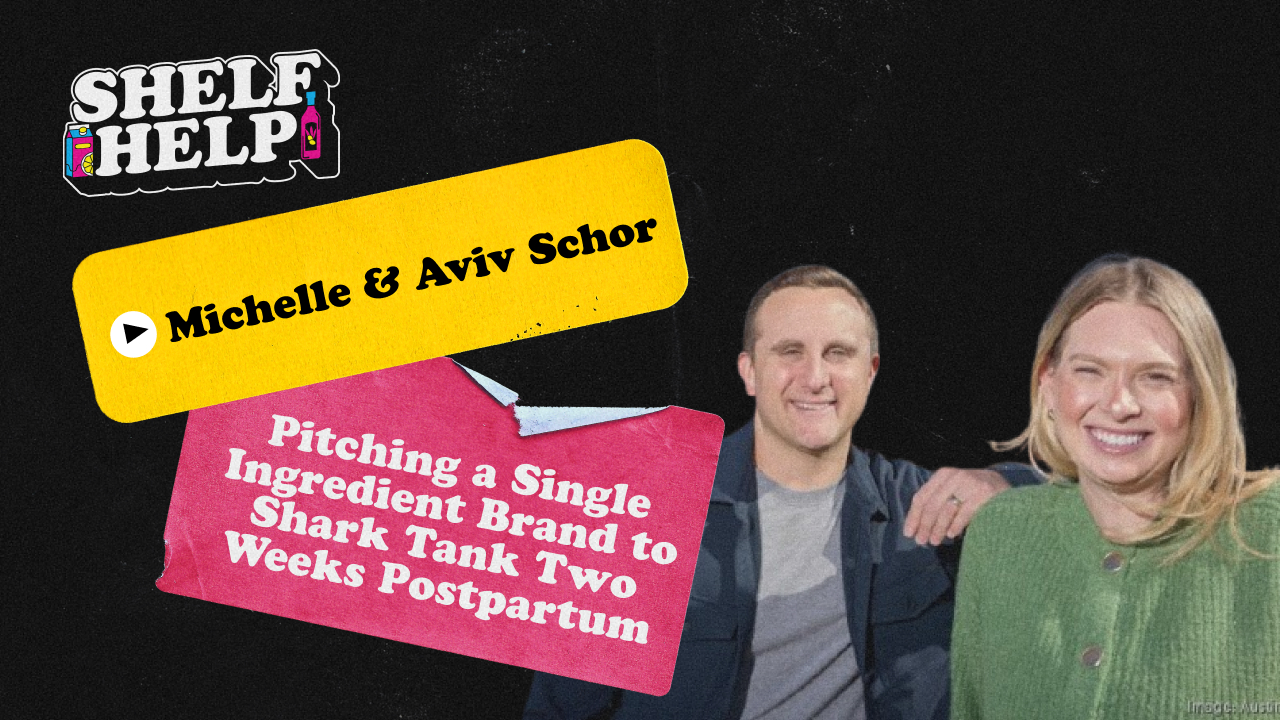
Pitching a Single Ingredient Brand to Shark Tank Two Weeks Postpartum | Aviv & Michele Schor, HUNDY!



On this episode, we're joined by Aviv and Michelle Schor, Co-Founders of HUNDY! - the frozen fruit pop brand made from a single ingredient: 100% organic whole fruit.
We dig into the R&D reality of a one-ingredient product, sourcing organic tropical fruit through brokers and growers across Latin America, and commercialization (they searched for months and could not find a co-packer anywhere with the right equipment, so they spent about a year building their own machinery.)
We dive into the recent rebrand, going deep with independents like Nugget Markets for a full year of learning before scaling, plus landing Costco off a first Expo West booth that cost $800. They also share the Shark Tank story, including pitching two and a half weeks after having their daughter and walking out without a deal.
---------------
Episode Highlights:
🧊 Reformatting the frozen pop aisle with one ingredient
💼 Building a business with your spouse (and the dinner rule)
🧪 Why one-ingredient R&D is harder than it sounds
🍍 Brix, pH, and which fruits actually freeze well
🌎 Sourcing organic tropical fruit through brokers and growers
💸 The hidden COGS lines: packaging and frozen storage
🏭 No co-packer had the equipment, so they built their own
✍️ How the HUNDY! name got validated by a five-year-old
📦 The rebrand: merchandising complaints and unclear shelf messaging
🛒 Going deep with independents before going wide
🎯 Landing Costco off an $800 Expo West booth
📺 Shark Tank two and a half weeks postpartum
🔮 The brands and trends they're watching
---------------
Table of Contents:
00:00 – Intro
00:59 – Origin story and the agency years
02:47 – Building a business with your spouse
05:24 – Who owns what between the two of them
06:34 – One-ingredient formulation and R&D
07:52 – Hand-made R&D in Mexico and the first Expo West
09:48 – Sourcing and consistency across seasons
11:55 – Why they lean tropical, and the sustainability angle
12:59 – No co-packer had the equipment
14:35 – What really drives COGS
15:44 – Locking fruit contracts and rates
16:22 – Building the original brand identity
17:29 – How the name got validated
18:21 – The why behind the rebrand
21:56 – Managing old and new packaging on shelf
23:18 – First pitches: Costco and Nugget Markets
24:51 – Pricing strategy and right-sizing the tube
30:58 – Driving velocity, and the Shark Tank story
---------------
Links:
HUNDY! – https://hundy.com/
Follow Aviv on LinkedIn – https://www.linkedin.com/in/avivschor/
Follow Michelle on LinkedIn – https://www.linkedin.com/in/michelleschor/
Follow me on LinkedIn – https://www.linkedin.com/in/adam-martin-steinberg/
For help with CPG production design - packaging and label design, product renders, POS assets, retail media assets, quick-turn sales and marketing assets and all the other work that bogs down creative teams - check out https://www.kitprint.co/
Shout out to my friends over at Glimpse, the go-to partner for automating retail-related back-office operations and unlocking margin trapped in invalid fees and manual processes.
Are you in the market for a new flexible packaging partner? Check out HD Packaging. Third-generation, family-owned and built for the needs of category leaders like Newman’s Own and A Dozen Cousins. Faster launches, lower costs, and no artwork fees.
Episode Transcript
Speaker: 00:00
Welcome to Shelf Help. Today we're speaking with Aviv and Michelle Shore, co-founders of Hundy Frozen Fruit Pot made from a single ingredient, 100% organic fruit, nothing else. Aviv and Michelle are new parents, just got fed up with the so-called better for you frozen treats that things still hide added sugar and a fairly long ingredient list. And before Hundy, the two of them built and sold an agency after almost a 10-year journey. So they definitely really know marketing and brand for sure. Since launching in early 2024, they pitched on Shark Tank, brought on NBA All-Star Trey Young as an investor, ran a full re ran a full rebrand. And now I think have pushed into Thousand Plus Doors at this point. So a lot of cool stuff to talk about. Maybe just first off for the listeners that aren't all that familiar with Hyundai, maybe just let's start, just getting a quick lay of the land, just in terms of origin story, why behind the brand, core products in the lineup, and then uh we'll take it from there. Yeah, thanks for having us.
Speaker 1: 00:59
Sure. Part of your introduction was very true for Michelle and I, and for a big reason of honing in on you know reformatting the unhealthy pops that we all grew up with, especially us that are of millennial age and uh didn't have access to super clean treats. That's what we were looking at to reformat the kind of the worst of the worst frozen pop. But yeah, as you mentioned, Michelle and I do have extensive marketing backgrounds. We ran an agency for more than eight years. When we relocated to Austin uh six years ago, we were inundated with the CPG space. And we did have a few CPG clients of our own and were always interested in being on the other side of that, actually, you know, being the creators of a brand. And uh the more we networked and got involved with the CPG space here in Austin, um, we started to really explore and nerd out on CPG brands. So fast forward, we we honed in on that frozen aisle and just start saw a lot of reinventing of the wheel going on with frozen novelty specifically. And a lot of those pops were trying to mimic the flavor of what is real, which is actually whole fruit. And a lot of these pops didn't have whole fruit, or really all of them didn't. Uh juices, concentrates, and a lot of binders and stabilizers to sort of cheapen it and hide the fact that you know you really should use real whole fruit to make something wholesome and healthy and appealing. So that's where Hyundai was born to create a truly single ingredient whole fruit pop. And uh here we are.
Speaker 2: 02:26
And it's important to note that like we are what we say we are, and we're really authentic. Even the name Hyundai itself, uh, it's not a gimmick, right? It's truly it is what it is, and we're really proud to take that issue head on and make a treat that just is so refreshing and delicious and really what it should have been all along.
Speaker: 02:48
You guys are married married. It seemed like there's polarizing views on kind of both sides about build building a business with family from someone that's actually done the thing, built a really successful business with family. This is the the second one. What's that experience been like for you guys and what have you found the pros and cons?
Speaker 1: 03:03
You can ask our parents if they think it's polarizing. Because I would say the maybe three, four months of us into dating, we actually started working. I can't tell you why really. I just think uh we both kind of had this entrepreneurial drive and kind of had aligned goals for you know how what we saw for ourselves in the future. And yeah, I you know, we've been doing this for as long as we've known each other. Pretty much. And you know, there are the highs are really high, the lows are really low. But the high, they're gonna be more highs than lows. And that's just because we, you know, obviously in business and in life, you have to we have to support each other, we have to have each other's backs, especially when things get really tough and you face adversity, like who better to lean on than your partner, right? Than your spouse. And uh it's uh it's really carried us forward. I mean, that's that's how I would said.
Speaker 2: 03:59
I mean, we really are a team and we really try to understand each other's sides. We definitely have two different brains that uh look at things differently, which I think actually works to our advantage so that we stay in lanes. Uh but when one of our lanes, I guess, needs kind of help. I always say that it's like, you know, you go straight on the road, but eventually you're gonna have to curve around an issue. And it's just like, how do you get back on that road together? How do you get through it and not like freak out, right? Like things are always gonna come up in any business. And I think the marketing agency side really taught us that because we were immersed in so many other businesses and we got to be involved in you know, top-line conversations and see how other businesses were making decisions. And I think that made us really strong coming into Hyundai and just being really open-minded, right? Like everyone's not gonna agree with you, but if you could at least listen to the other side, then you can make the best decision for your company. And sometimes you're just so close to something, right? So that even leads to the redesign of you know, Hyundai in its first year. So I think that's stuff that we've kind of taken away. And we're really, really a team. The only thing I will say our rule has been since day one. Dinner time is where we were together, we shut it off. Even if it's a quick 30-minute dinner versus an hour or we're just trying to get something in, we we've always made that time since like the very beginning of our relationship.
Speaker: 05:25
Who owns what between the two of you?
Speaker 1: 05:28
Yeah, so we, you know, over time we've been able to really sort of split two very critical components of the business. I'm on the uh uh brand and product side. So really shaping our brand. Uh my I have, you know, we give ourselves titles for the sake of you know organizational flow, but uh chief brand officer, I set the tone for the brand, make sure that we're conveying our brand in the way that we know is is right. And then I manage product, so I work very closely with our co-packer when it comes to ensuring our product is the way it should be. Got it.
Speaker 2: 06:01
I would say I'm business, but I'm also creative. So I call it creative business in a way because as a startup, it's not, you know, corporate at all. You have to get creative with how you see things and not run the business in fear or make decisions out of fear. You really got to make the right decisions for the business because money will come. If you're doing things the right and you're building the brand the right way and the product the right way, there's money out there. I think it's for the founders who are like willing to take the time to do things the right way and not be scared.
Speaker: 06:35
Totally. Love to rewind back to some of those early days of formulation RD, you know, one ingredient, 100% organic fruit, nothing else. Sounds easy, but or sounds simple, I guess, is maybe another way to put it. But I I could be totally off here, but I imagine just freezing single ingredient fruit into a pop that has the right texture doesn't turn into a solid block of ice is less than easy without giving away any any traits, secrets. Obviously, like I don't know, what were some of the hardest variables to get right? And what was, I don't know, what did it the first iteration look like compared to the final iteration where you guys felt like, all right, if we feel great about this, we're ready to bring this to market.
Speaker 2: 07:13
I think because we are a hundred percent whole organic fruit, that's the challenge. Every single mango, every single pineapple is going to be slightly different. So we're we don't have like refined sugar, right, that you can get consistently and put into your product and have an exact ratio. So I think for us, that's like really the biggest challenge is like how do you use one ingredient and get it right every single time? But the variable of that ingredient can change year to year, season to season. And even in the same lot number or in the same season, there's variation. We can't control it. Um so I think that's like the biggest challenge when it comes to RD. Iv and I started this working on it while we were still doing our marketing agency. And so we decided to go down to Mexico to like a farm that had the equipment and just really RD by hand, get in the weeds. And we ended up making, I think, around six pallets, and that led us to going to our first Expo West.
Speaker: 08:15
Nice.
Speaker 2: 08:15
Where we're like, where's the cheapest table in this building? Because they're all so exciting. And we set up our table and our whole setup for like $800. Like it was nothing beautiful. You go to Expo, and there's these flashy booths, and we were like these little guys coming in, and we're like, let's just see if people like this product as much as we do, right? And we really got some exciting interest between accounts from UNFI and Costco, and that really led to us in 2024, by the end, going full force into Hyundai. It took about a year to build our own machinery because we knew we could scale this by hand and really answer the question of why this hasn't been done before. And there's a lot of different reasons we think. I think a consistency issue, really, you know, vetting your process. We have whole chunks in there, we don't have wargum. So I think when you look at the landscape of all the different variables, it's much cheaper to do it the way that it's currently being done. And no one's come out to push that boundary yet. So, and that kind of goes back to that better for you versus like I think there's gonna be a new category that's gonna be almost like this best for you category because everything is better for you right now.
Speaker: 09:30
True.
Speaker 2: 09:30
Yeah, everywhere I look, it's I'm a better for you coffee, granola, fruit pop, drink, whatever it is. And I think at a certain point it loses its meaning.
Speaker: 09:40
Totally. I agree with that.
Speaker 2: 09:42
So I I think that answers. I don't know if you want to add, sorry.
Speaker 1: 09:45
Yeah, no, I think uh you nailed it. Uh yeah. Uh I would just the only thing I would add is as far as like uh you know the critical components of the challenges early on that have led us to fine-tune some processes, is of course sourcing fruit, having a few predictable, consistent sources that we source from organic fruit that we know we're gonna get great quality and that are good partners and uh understand our product and uh we you know we know like their their seasonality, their growing cycles, things like that to ensure that we're consistent there. You asked about how the product has changed from its first iteration to now. Obviously, the the ingredients haven't changed. Sure. That the the that that's the same on the back of the box, but uh you know there's uh there are components to production and formulating that just has to do with the size of the fruit chunks and uh the way we break down the fruit and things like that. So we've we made some adjustments there to ensure that taste, texture, and appearance of the of our pop optimal.
Speaker: 10:46
So you talked about sourcing a little bit. Do you guys have I'm just thinking back to my days building a company that you know we sourced different agricultural products from a lot of different suppliers and we had a pretty, you know, we over time we've built kind of you know a grading process. Is that do you guys have a similar thing? Because you talked about kind of some of the challenges of achieving consistency across, you know, batch to batch, season to season.
Speaker 1: 11:09
Yeah, I think the way to do that is to obviously we have we have brokers that we work with to identify like you know, certain growers and partners, always thoroughly vetting through spec sheets and looking at those closely with our broker. And we always ask for samples. Like we, you know, we have to have samples of the fruit shipped us. And I mean, also you got to keep in mind like um most of our SKUs right now are tropical fruits and lean tropical. So we're not getting that stateside. We we are getting that fruit from different countries most uh in Latin America. So as much as I'd love to fly down to Peru and Chile and Mexico or Costa Rica every time we're ready to source fruit, um, we really have to rely on our partners to ensure that we're thoroughly vetting totally.
Speaker 2: 11:55
And I think too, the reason we lean tropical is like we do the fruits that are just challenging to deal with. Like I've never met anyone who's like, I enjoy cutting a pineapple or mango.
Speaker 1: 12:05
Yeah, it makes our product solution oriented as well versus just being a you know a fun snack.
Speaker 2: 12:11
And then there's the sustainability side too, right? You buy a mango or pineapple in the store, you only have a few weeks to eat it if you're lucky. I mean, our product holds that two-year shelf life for sustainability. And I think that's also really cool about it as a sustainable solution.
Speaker: 12:26
Um the garbage or compost, right? Yeah, yeah, totally.
Speaker 2: 12:30
Yeah, there's so much fruit wasted a year. There's so much fruit that people buy that they throw it every single week from the grocery store. Yeah, it's a great point. But I think it's just really cool that we have a solution where you can still get the fruit. It's frozen at its like peak uh ripeness. You're getting that nutrients and it's locking it in. So I think that's like just a kind of it's like a fun fact on top of everything else. It's not like why we necessarily do it, but it really has become important to us.
Speaker: 12:59
Yeah, that makes total sense. I didn't really think about that. You bought or developed some some machinery on that track from a commercialization standpoint. Once you kind of got the form factor, the place that you felt like was was ready for market. What did that process of actually commercialization look like? Did you immediately start looking for a copacker? Did you initially launch, you know, producing these yourself and this machinery you mentioned? Yeah, I'm kind of curious what that process looked like of actually getting to market at more scale.
Speaker 2: 13:24
I think our issue was when we first started, we're like, yeah, we're gonna find a copacker that has this equipment. Like, you know, like every other brand does usually, and they look for a cop where that can, you know, either make beverages or pack granola or whatever that kind of looks like. And we really looked. Like we took months.
Speaker: 13:42
Yeah.
Speaker 2: 13:43
We're looking and looking, and everyone was like, we don't have the equipment to do it. We were looking in Latin America, South, like everywhere, America, like just and we couldn't find it. So that's when we realized like we're actually gonna have to like invest in our own equipment. And once we decided we were gonna do that, we knew that we had to go full into Hyundai, like, because we were still at the agency technically.
Speaker: 14:09
Right.
Speaker 2: 14:10
So at the end of like 2024, that's kind of where we were like, we gotta do this, and we really believe in it. And so we did that, and I think that's kind of the scary part too about selling because when you're starting up, usually you can go to Copac or maybe do you know a few pallets at a time. The overhead isn't as expensive that way, but like committing to like working with an engineer to like customize your machine for you, that's a really expensive upfront cost.
Speaker: 14:36
Totally. From cogs from inputs standpoint, but there are things that I'm not thinking about that has a big impact on cogs other than the organic fruit.
Speaker 2: 14:46
I mean, obviously the fruit's the big one, but it's the packaging.
Speaker: 14:50
Yeah.
Speaker 2: 14:50
That I think people kind of forget about, especially when you change your packaging and you go more to this premium level that we've just done.
Speaker 1: 14:57
Frozen storage, probably. Yeah, frozen storage. Yeah, good point.
Speaker 2: 15:03
Yeah. And then we also get hit with that we're dealing with a commodity. Again, it's a variable that changes, it's an ingredient that changes consistently. It's not manufactured. So I think that's something that people also forget. Like everyone's like, price, price, price. But I'm like, pineapple per pound is X. That's like that's what it is, and we have to work with that. We try to buy what I've been doing at like peak times so that we can kind of control our pricing, and that's been really working out for us. So we always have fruit on hand in storage, and we're watching the market consistently, and we're working with our partners, farmers, brokers to make sure that we're always uh ensuring that we stay to keep our margins in a healthy place.
Speaker: 15:45
Are you gonna start looking at futures contracts?
Speaker 2: 15:47
So we currently do that, so we log race at different times and we have contracts per year and it's being stored for us. I think where we're gonna be able to jump to that's even gonna help us further, is that we're gonna be able to buy direct, you know, either from farmers or just full truckloads from our brokers and have places to store it because we'll be moving through it so much faster. And that's really gonna help us. I think again, what he said about storage of the ingredients is that's a hidden cost for sure that can add up really quickly if you're not moving through it and getting it out the door.
Speaker: 16:21
Totally. Yeah, that makes sense. Talking about visual identity, packing design, the rebrand you got just executed recently, and just first off, thinking back to the those early days, like what were the variables that were top of mind, things that were most important to you when you were building out the initial brand identity, positioning, voice, look and feel of the brand.
Speaker 1: 16:41
Yeah, uh the Hyundai brand uh was created very, very close. I mean, it coincided very closely with actually discovering the whole in the in the category that we saw. Hyundai, of course, is short for 100%. Well, I shouldn't say of course, it's sometimes not so obvious to people. But visualizing the brand, you know, there's a reason it's in all caps with an exclamation mark. It's because we wanted to make this very simple yet obvious concept exciting and loud and bold because something like this should excite people and it should resonate with people, the fact that they can enjoy something they know and love, formatted in the healthiest way possible. So that that was top of mind when visualizing the brand. A funny story is that I literally wrote it down as you basically as you how you see it now. And we went to a colleague's house of ours just to check in, talk business. And I think her son at the time was probably five or six years old, and he found the piece of paper that it was the Hundy was written it written down on. I think he was like in the other room, and I heard him shout it the way it was written down, and it struck me just to hear like a kid shout the brand. I was and I in that moment I was like, yeah, that this is good, this is gonna work. So yeah, Hyundai as as a brand is just meant to evoke that that joy and that that fun in enjoying something so simple and so obvious that doesn't require an over-education, right, in what you're eating. It's simple, it's delicious, it's healthy and enjoying any time of day. And it's we've we've stayed true to that brand identity even with the redesign.
Speaker: 18:21
What was the why behind the rebrand? Like what led that decision to go through rebrand and get to the place you feel like this is this is needed.
Speaker 2: 18:29
I think it really was listening to feedback from buyers. There was a few buyers that you know came to us and were like, it's really hard to merchandise your product because the are heavy and they're tall and they're in these bags, and the bags would fall down if it wasn't completely tight on shelf.
Speaker: 18:45
Got it.
Speaker 2: 18:46
And that was kind of the first thing. And then the second thing we started learning as we were demoing was people didn't, even though we thought the window would show the product like through the bag of our original one, people still didn't understand what it was. And we thought that was important, and then certain call-outs are just so important to people. So as we were demoing again, we learned like no sugar added is a huge call-out that people want to see right now. What are the calories? We're really low in calories. Why don't we highlight that and make it more of a focal point? What does the pop look like? A lot of people when they eat the popsicle for the first time, they're like, oh my god, there's whole chunks of fruit in here. This is so cool. And when you look at our redesign, you'll see that we really thought through what was like so important that we stay true to. And everyone's feedback counts. And I think it goes back to the beginning of this conversation. It's so important, you know, to leave your ego at the door and just listen to that feedback because I think it was really valid. And I'm really, really proud, especially if it kind of helps lead the charge on this. Like our new packaging, it really hits the message that we want to hit. And I can grab it right here just to bring it closer. So, like you'll see, you know, the first thing we wanted was like only a hundred percent fruit. Like that is clear now. The calories you can see inside the pop that there's those chunks when you look at the um photo of the pop there. So I think it's just it really came together so uh well, but it's based off you know, the consumer and the buyer's feedback.
Speaker: 20:15
Yeah. How did you think about balancing a fresh look for a reason while still maintaining some of those legacy brand elements for the existing customer?
Speaker 1: 20:24
Yeah, I think us being s still so young of a brand, um, I actually think the uh this redesign will improve um the experience for a consumer trying to find our brand. I I think it it's a lot more uh it's a lot more easy to find our product. And Michelle mentioned merchandising challenges, right? Our bags falling down. Uh and you know, with our initial package design, we were sort of banking on the consumer understanding what the product was right away. We had a clear window in the bag. It said 100% fruit pops on the bag. You could see through the window, you could see the fruit inside the pop. Um, so we were trying to kind of you know convey this element of transparency to where that the consumer would understand what it was when they saw it. But we weren't really hitting the mark with that. So obviously, there are a lot of things in the pipeline that we were about to launch as our new packaging gets into all of our retailers. It's really literally rolling out as we speak. Right. So now that our new packaging has this hyper-realistic render of the pop on the front, I think consumers are definitely going to recognize that. Um, I feel like the brand is stronger and bolder as well. So, yeah, all those factors combined and starting to really uh promote a new look and having this on shelf because it really does pop. I mean, we made sure packaging was super colorful and uh kind of loud in a fun way and blur the line between it being a natural premium product versus a very approachable product that everyone should be able to access.
Speaker: 21:56
So yeah, it looks great. I've I'm gone through this process of number. Of times in my past. And the thing that's always been challenging to figure out there's inevitably that transition where you're putting the new, you know, newly branded product on shelf, but there's still some of the old inventory on shelf as well. Like how are you thinking about, you know, are they both going to just gonna sit on the shelf at the same time for a brief period of time and so the older ones sell through? Or are you trying to strategically like rolling it out by when an order sells, you know, sells out, you get on the next one? How are you how are you guys thinking about that, if at all?
Speaker 2: 22:25
We actually pulled our old product out of even a five.
Speaker: 22:29
Okay.
Speaker 2: 22:30
Um, is what we did. And to us it was kind of worth it doing a thought approach.
Speaker: 22:35
Sure.
Speaker 2: 22:36
So that this could hit the shelves. Overlap if like a store, you know, merchandises the old with the new and there is that slight overlap. It is what it is, unfortunately, because like the truth of the matter is we can't go to every single store. Of course.
Speaker: 22:50
Yeah.
Speaker 2: 22:51
And our approach from the beginning was that we really wanted to go deep with independence first, learn for the first year. There's a lot of brands who either go independent or they go national right out of the gate. We thought it was important to take our learnings. And yes, that's a year that's maybe a little bit slower, but we thought that that approach would allow us to make the best product like that we could put on the shelf moving forward. And I'm really glad we did that approach because it allowed us to adjust.
Speaker: 23:18
On that topic of retail and go to market, I think Hundy's in about a thousand doors, maybe more at this point. Tell me about that first pitch to the first retailer look like and what you found like really worked and resonated.
Speaker 2: 23:30
It was definitely we had Costco on one end and we actually had a retailer called Nugget on the other end.
Speaker: 23:35
Yeah, I know Nugget very well. Yeah, yeah.
Speaker 2: 23:36
Yeah, we love Nugget. Amazing store. Um, amazing store, amazing buyer. And I think it kind of just resonated with at least both of them. Like it's just fruit. There's no gimmick here. They're really, it is what it says it is, and it's so unique. And we checked all their different boxes, right? We're woman-owned, we're organic, we're really good for you, we're low calorie, we had all these things. So they really wanted to work with us because Costco's angle is obviously putting a unique product on shelf and then also getting the price point at that value, right? And then you've got Nugget, who I think just saw an opportunity, right? There's so many protein ice creams right now, and then there's these other popsicles, but there's this little white space. And I think we kind of fit in there just being a single ingredient. You know, we don't add protein or collagen or electrolytes. We really just stay true to us and we're just whole foods. And so I think when a buyer is looking at it, it's like you could buy Hyundai and you could buy something else in my aisle.
Speaker: 24:39
Yeah.
Speaker 2: 24:39
And I think that's what it kind of came down to. And uh, we were so lucky with Nugget, uh, amazing buyer, amazing support, and same thing on the Costco end. Amazing buyer and amazing support again.
Speaker: 24:52
What did your strategy and our process look like for nailing down your your go-to-market price? And has it changed at all over time?
Speaker 2: 25:01
It has changed to the new packaging. I think our strategy is, you know, obviously we're a little bit more expensive on shelf because we are the only ones with whole fruit in our category, and fruit costs more than sugar. And so I think the challenge for us is showing the consumer the value in that. But I do think a lot of consumers care, a lot of parents care, and that's been proven with us being on the shelf and the growth that we've had. Some feedback we got was that our tubes used to be three ounces and they were a full serving of fruit. And for a kid or someone who just wants a snack, that was really filling.
Speaker 1: 25:38
Yeah, hefty.
Speaker 2: 25:39
So, what the redesign allowed us to do too is make our tubes slightly a little bit less. We were also the biggest fruit pop in the aisle at that point, too. So we kind of shrunk down just a little bit to be more snackable, and that allowed us to hit our margins comfortably now.
Speaker: 25:53
Tell me about landing Costco and what that first conversation looked like. Curious how the numbers work in the club channel from a pack size pricing standpoint, and yeah, all things Costco.
Speaker 2: 26:04
You want to take this one?
Speaker 1: 26:06
Yeah, I I can start with the begin very beginning. As we mentioned earlier, uh after we developed the product for the first time, we were at Expo S uh in 2024. Or 2023. 2024? 2024 was our first year with a simple booth and really uh sort of a minimum viable product, but it was it was obviously very good and resonated. Um and we only brought our Mango Pops uh to this particular show. And uh we were fortunate enough to have Costco come by our booth. And you know, I I will also say that Michelle is uh you should see her in action at these shows. She does not necessarily take no for an answer or doesn't let anyone walk by without having a conversation with her, and uh she'll always make a compelling case about our product. But I think those initial interactions with Costco got them to see how novel and unique and a fit of a product we were with Costco. I think people watching this might not know that Costco is the world's largest organic retailer, and they do have a desire to innovate, and they always have their members top of mind when they're introducing products. So I really think just from a product standpoint and like the value we could offer and mango being like an immensely popular fruit and a very high velocity fruit and ingredient across the board in Costco, it just really checked the boxes for them, which would which allowed us to really move forward in discussions, which Michelle can speak to more.
Speaker 2: 27:39
Yeah, and again, it was like kind of simple to pitch it. It's like it's just fruit, it's just real fruit. You can buy an organic mango for three to five dollars in retail right now, or you can get a 14-pack at the time of Hyundai for $12.99 of organic mango that doesn't go bad that you don't need to cut. I mean, which one as a consumer would you buy? And if you have kids, it's a really fun way of eating fruit. Um, so for a parent, like when we pitch a five-year-old or a kid, I always he has a different way of doing it. But my way is like, I have a secret for you. And the kid will be like, What is it? And I'm like, This isn't any time of day popsicle. Breakfast, lunch, dinner, snack, late night snack, you've got it, kiddo. And they'll look at their parents like and the mom's like, Yeah, like I would let you eat this. You want to get some, or do you want to get, you know, that other product? Right. And I think that is just really cool to see that a kid is that excited about it. And yeah, so I think that was kind of the way that would resonate.
Speaker: 28:48
If I was a parent, that would resonate with me, that's for sure.
Speaker 2: 28:50
Right? Like, it's just that simple. I mean, our daughter eats them all the time. She's been holding one since she was about five months old. She knows how to like take it out, get it back. I'm like, I don't know how you just picked up on it so quickly, but it's just a really easy snack, and it's also mess-free, right? We're in a tube, we're not on a stick. A stick melts, there's mess around it. Yes, there's things you can buy to put like a stick in to to catch the drippings of your popsicle, but this is really grab and go. And with our new packaging, too, we have a tear and it just an easy tear across the top. So you can take it with you, you could have it in school lunches, after school, you know, programs, soccer, and you don't need, you know, scissors or anything to open it with. So I think that's the convenience factor.
Speaker: 29:35
Have you found are there certain types of fruit types that will will transition well into this frozen Hyundai format and others that won't? Yeah. Absolutely. Absolutely.
Speaker 1: 29:44
Uh we like to focus on fruits that have like, you know, specific texture, uh, water content, brick score, which translates to natural sugar content within a fruit. You know, not all fruits are gonna freeze the same. PH levels, I mean, there's a lot that goes in that goes into identifying what fruits will work. For an example, like a lot of citrus won't work as well because uh citrus fruits are just it's a ton of pulp.
Speaker: 30:13
Yeah.
Speaker 1: 30:14
And uh with with a film and juice within that. So that freezing might not work as well as say as a fleshy, smooth fruit like mango or some stone fruits or um, you know, pineapple, for example. But having said that, there are a lot of fruits in our pipeline that we're very excited to to you know experiment with and develop, and also very lucky that our co-packer um is very well versed and knowledgeable when it comes to handling fruits and understanding the the ingredient. So uh yeah, there not every single fruit will work, but there are definitely enough and it and combinations that we can do to really innovate our SKU pipeline. So yeah.
Speaker: 30:58
From a velocity standpoint, what have you found has had the biggest impact in terms of you know really driving trial, repeat purchase, and maximizing those velocity numbers?
Speaker 2: 31:10
I think definitely for us, we're a new brand. So demos, promos, just to introduce it to the customer have been so, so helpful. I'm really excited to see how this new packaging converts to velocity because I think it's very clear what we are now right on that box. So I think we're definitely gonna see an uptick. I also think that we've been featured quite a bit over the past few months. So we've been seeing an uptick already with Velocity with that. Uh Dark Tank was a really, you know, for us was really great because now people who didn't know Hyundai across this country really do know what Hyundai is. And, you know, online we we feel like people really resonated with our product and uh our story. So I feel like that was really great to see. And we did see an uptick there as well on retailer shelves.
Speaker: 31:55
That's great. On the topic of a Shark Tank, I think you went in asking for 300k for 10%, stood firm, ended up walking out without a deal, which I I respect. You got all the publicity, which is which is great. Yeah, tell me a bit about that whole Shark Tank journey. What was the the biggest surprise, biggest mis misconception maybe about the whole process and how Shark Tank works?
Speaker 2: 32:16
First one that's fine, and then I'll Yeah, uh we'll split it up here.
Speaker 1: 32:20
The Shark Tank experience overall was was really cool. It's a lot of work that goes into it. They sent their casting to Expo West 2025. Wow. To search for brands. Uh you know, I guess looking back, it it makes sense for them to do that if they really want to find a cool CPG brand to bring bring on the show. Conversation with them at the show led to like three months later us being in front of the sharks pitching. I mean, it that's how fun move. But within that time frame, there's just a lot of work that goes into it in prepping your pitch and working with your producer team.
Speaker 2: 32:50
But having a baby.
Speaker 1: 32:52
Shout out to Michelle. She, you know, we had a baby in on May 22nd. She was up there in front of the sharks uh two and a half weeks later. That was that was a huge part of the story. She did incredibly, but uh, you know, obviously it was the hardest on her out of our whole team. Biggest surprise, I would say, how nice Mr. Wonderful was to us. I'll start. I also think that also the biggest surprise was not honestly not getting not reaching a deal because we nailed our pitch, and the you know, the the first moments of being out there um even uh to the end was just super, super positive. Like every single shark was loving the product and they were impressed with the brand and they understood it, and uh it was just very positive. And then you know, eventually it just got down to um a lot of most of the sharks were just not well versed in the CPG journey and started to express their cold feet. Um, not all of them agreed with the evaluation, but I feel like we had you know some compelling data and uh trajections to back it up given how you know new we were and the rocket start that we got off to. So, you know, it was a really good segment, super positive. The biggest misconception I'll say that was your question was uh what you saw on TV was uh a very, very, very cut down from what actually happened in the tank. So um there's a lot of our story that you didn't get to hear, and a lot of back and forth negotiating that you didn't get to hear, which is understandable. You know, it's it's 4 TV, and they wanted to get the get to the core issues of the pitch, but uh overall enjoyed the experience.
Speaker 2: 34:29
Yeah, I think the biggest misconception is that the way it's kind of edited. And then I also think on our day, and I think Daniel kind of highlighted this, he did a follow-up Instagram on us. Um, we really clicked with all the sharks. Um, but Daniel kind of was like, I had to go back and re-watch your segment to figure out why we didn't offer you guys anything. And I think that's the feeling that we had in the room that was so kind of odd because like they liked us, they liked the product, they liked the story. Even we kind of pushed back on the valuation as you saw on air, like I didn't get a response back.
Speaker: 35:05
Yeah.
Speaker 2: 35:06
I was kind of just like, okay, next.
Speaker: 35:08
Yeah.
Speaker 2: 35:09
And I think that was interesting. I think also you go in knowing that they're gonna negotiate with you, right?
Speaker: 35:14
Sure, okay.
Speaker 2: 35:15
Our valuation where like if we say it's 15%, then it's gonna be 25. Like, so you got some kind of like right, like at least our approach, we really did, we were really open-minded to it. We did get asked by one of the sharks if we were interested in selling the whole company right now, which we had just started. And I think we were like, well, we're just at the beginning, like we just hit like two months before that. So I think that was also something that maybe wasn't highlighted there, but that was interesting to us. But it was a really great experience, and we were the last to go that day. So it was a really long day for me. Um, and I could just feel it, you know, you get there at I think like 11 or 10. Yeah. We didn't go out until 9 or 9:30, which is like 11 Texas time for us, and just being two weeks postpartum already without a battery of sleep going. That was probably like the personal toughest part on me was just the the waiting kind of in a room to go out and just kind of fatigued.
Speaker 1: 36:15
Yeah, the the crash after after that day was very real.
Speaker: 36:18
Yeah. I can imagine. Man, I can imagine. It's been awesome. But last question for you guys. You guys definitely seem to know this the CPG world pretty well by now. Any brands in particular, or just trends in general outside of your category that you're just have found particularly interesting, or things you're just kind of watching because they they seem fun to follow.
Speaker 1: 36:39
Yeah, uh I just I really like the the trend, you know, call it a trend, call it something that just should be is uh a lot of brands are reformatting things, and you know, this is like us too, that we grew up with eating that just had all these extra things for who knows, well, we know why is to cheapen it and to uh just make things make the process easier with food dyes and preservatives. But I I really respect the brands that are uh reformatting the the things that we grew up with and are making them healthy. Not only that, but they're they're pairing it with an awesome brand and they tell a story, and uh, you know, it it it's it'll lead to consumer really resonating and wanting to be be a part of that brand. That's our goal with Hyundai, is for people to understand that we're trying to recreate something that they know and love and have them you know become loyal to it and attached to it, and they want to be a part of it. Iris really, we really like the P Painterland Sisters yogurt for doing that, having such a strong, like beautiful brand and the product's great. Yeah, big fan of those.
Speaker 2: 37:52
Like the other trend I'm really liking. I feel like when we grew up, it was like mass-produced products and it is what it is. But I love that people are bringing culture and their own recipes to the aisle. I think like those brands, whether it's like sauces or uh pecans or just peanut butters, whatever that is, I really like how people are bringing a little bit of authenticity back to the grocery store because it makes cooking fun, to be honest. Like cooking with these unique products makes cooking at home and eating at home and just having better food and an experience in your own kitchen much greater. So I've really appreciated following those brands and getting to know them and just like getting to try them. We're always down to like buy something that maybe we wouldn't usually at the grocery store just to support as well and just like get to know it. And I think the CPG community, I think one of the first things we fell in love with was like how supportive everyone really is. Like when you go to the trade shows and you're like in the world, founders are amazing.
Speaker: 38:58
Yeah, I agree.
Speaker 2: 38:59
We're all going through it, there's a lot of things to juggle, but it's such a supportive overall community that I think that's really cool too.
Speaker: 39:07
I totally agree with that. Well, yeah, this isn't awesome. This thing that's a great way to close it. What's the what's the best place way for people to follow along with with you guys, and then best place uh where you want people to be following along with the brand these days as well.
Speaker 1: 39:22
Yeah, uh, we'd love for you guys to follow along with us on Instagram. It's keep it Hundy. Perfect. And uh we have a lot of exciting content and announcements coming for the rest of the year. One of uh you know, involving our our new partner who's an NBA All Star and is gearing up for a very exciting season, along with new SKU announcements, new store launches, uh fun content. So yeah, follow along with us. It's gonna be fun. Love it. Well, awesome guys, I appreciate the time. I think that's the pod.
.svg)