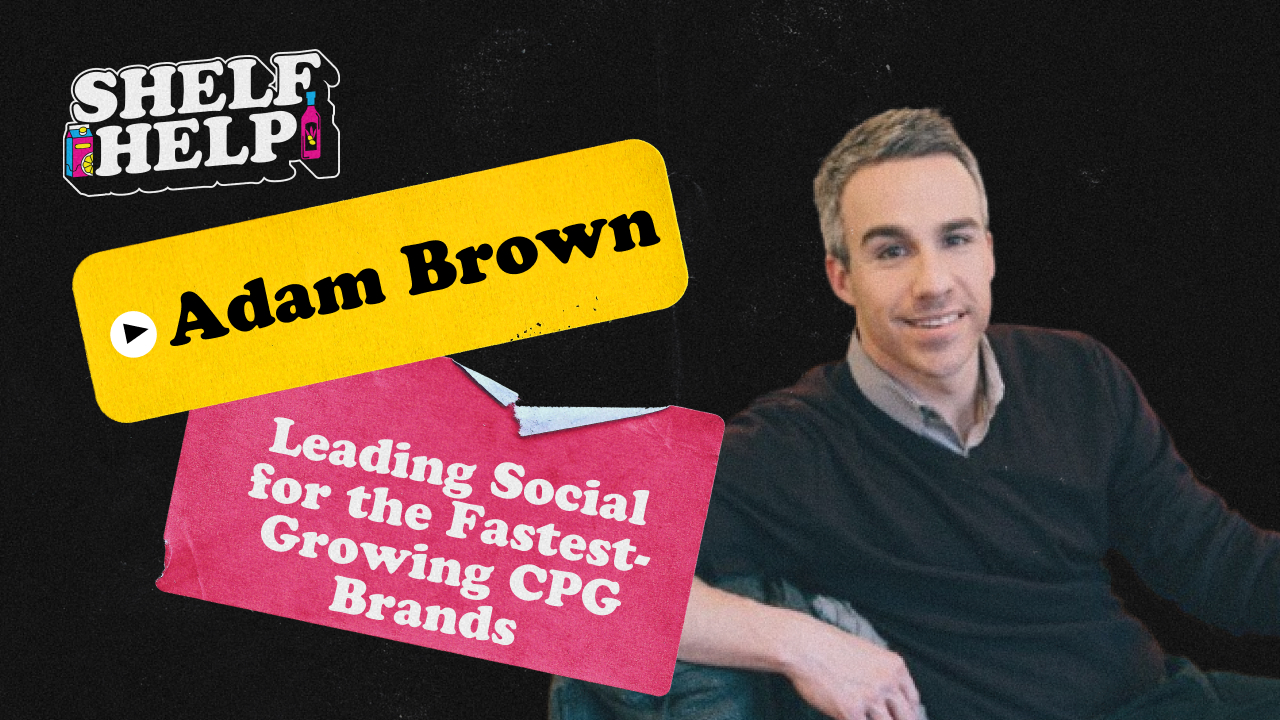



On this episode, we're joined by Adam Brown, Founder & President of Sircle Media - the go-to social media agency for CPG brands. Adam has been in and around digital since 1999, starting Sircle in 2012 after a decade running sales and marketing in the mortgage industry.
Adam walks through what it takes for social to impact retail velocity. One brand told him: move 10,000 units at Walmart and I do not care what it costs. He breaks down how his team proves that lift with control regions, geofencing and hyperlocal creator support, and why the Costco parking lot video every creative director hates keeps beating the polished stuff.
He also shares the seeding math most founders never hear, one or two posts out of ten when you gift cold, and the college campus playbook he would run instead.
---------------
Episode Highlights:
💡 The light bulb moment behind Sircle Media
💸 Pricing an agency at the cost of one hire
⚠️ The messy middle and the toughest year in CPG in 14 years
✂️ Why a 10% haircut beats cutting a partner
🔀 Social as a horizontal, not a vertical
📱 Two primary platforms, two secondary
🛒 What it takes for social to move retail velocity
📸 Scrappy UGC versus studio content
🎓 The college campus playbook for seeding
💳 The hot take that it is all paid now
🛍️ TikTok Shop and who it actually fits
💬 Community management as the most common miss
🔮 Trends: a return to fundamentals
---------------
Table of Contents:
00:00 – Intro
01:05 – The light bulb moment behind Sircle Media
03:19 – Pricing an agency at the cost of one hire
04:54 – When a brand is ready for an agency
06:19 – The messy middle and the toughest year in CPG
07:47 – The 10% haircut across partners
09:37 – Social as a horizontal, not a vertical
11:59 – Two primary platforms, two secondary
14:56 – Making social drive retail velocity
18:34 – UGC versus studio when money is tight
20:00 – The college campus playbook
22:42 – Building for constant algorithm change
25:26 – The hot take that it is all paid
27:56 – TikTok Shop and who it actually fits
31:23 – Vetting influencers and creators
34:53 – Why most seeding programs flop
37:52 – Community management as table stakes
39:56 – Trends: a return to fundamentals
---------------
Links:
Sircle Media – https://www.sircle.me/
Follow Adam Brown on LinkedIn – https://www.linkedin.com/in/adamjbrown23/
Follow me on LinkedIn – https://www.linkedin.com/in/adam-martin-steinberg/
For help with CPG production design - packaging and label design, product renders, POS assets, retail media assets, quick-turn sales and marketing assets and all the other work that bogs down creative teams - check out https://www.kitprint.co/
Shout out to my friends over at Glimpse, the go-to partner for automating retail-related back-office operations and unlocking margin trapped in invalid fees and manual processes.
Are you in the market for a new flexible packaging partner? Check out HD Packaging. Third-generation, family-owned and built for the needs of category leaders like Newman’s Own and A Dozen Cousins. Faster launches, lower costs, and no artwork fees.
Looking to dominate the cognitive health space? Upgrade your formula with Cognizin. It’s the branded, clinically backed citicoline trusted by top innovators in supplements, foods, and beverages. Differentiate your brand today at Cognizin.com.
Episode Transcript
Speaker: 00:00
Welcome to Shelf Help. Today we're speaking with Adam Brown, founder and CEO of Circle Media, really the go-to social media agency for CPG brands. Adam has been in and around the digital world since the late 90s. 2012 was when he started Circle, now runs social for a who's who of pretty much a lot of the mainstay better fee brands, Catalita Crunch, Noose, Justin's Back to Nature, just to name a few. Also a fairly active angel investor advisor to a lot of cool brands like Ryan Snacks, Actual Veggies, Mescla, just to name a few. So definitely knows the space very well, is a long story short. Um yeah, just kind of just kick things off, Adam, just to set the lay of the land. Just first off, for listeners that maybe are not as familiar with circle media, love to just get a quick lay of the land just in terms of kind of the origin story and and the why behind circle core services you guys offer and what makes circle a bit different than some of the other similar players and um yeah, kind of types of brands you work with in a bit more detail in terms of where they are and they're and typically are in their journey, where it makes sense for you guys to slot in and then uh we'll take it from there.
Speaker 1: 01:05
Well, let's do it. That was a lot of questions. So if I forget any of them, just repeat them. I try I tried to keep them all in my brain. Um and just thanks for having me. You're you're like the other Adam that's out there on LinkedIn putting out all this great content. So it's like our worlds are colliding. So I appreciate that. Uh yeah. So I created circle media, like I had the one of those like light bulb moments. I I went on social for the first time back in 2010 and I saw it. So I didn't, I was not on Friendster, MySpace, like I was not a social media guy, and I went on. I'm like, oh, this is going to be it. This is going to be ever-changing, and this is going to be something brands can't insource. It has to be outsourced. You'll never be able to do it insular because you have to keep so much focus and attention on where it's going rather than where it is. So I'm like, this has to be outsourced. And then I just had worked with so many agencies. I was in the mortgage industry for almost a decade, and I ran sales and marketing for a company. And at that company, we were spending like two million a month on marketing, like television, radio, out-of-home, like everything you can name. And most agencies sucked. Like they they started with something and then they became something different. So they were an A plus and they became a B minus. Also, they'd get, you, you'll, you'll relate to this, they would get like a 22-year-old sales guy, because no one likes selling. So they would give it to like the young salesperson on commission and be like, sell our products. And then whatever you got sold was very rarely what you received. So there was this like disconnect and like hatred. It was almost like airlines back in the day, like necessary evil. Like you had to do it, you had to get it on an airplane, but you hated it. So I'm like, I bet four seasons level service, like that feels like ever the opposite of every agency you've ever worked with, paired with outsourced social media management, I'm onto something. Because they're gonna have to outsource it. And what if I could dare to be different? So I was like, let's do it. And I started actually small. I started a company called Social Net Direct, and I went to local businesses in New York, and I was like, for $199, I will get you on Facebook and like Twitter, because Instagram didn't even exist. And then for $49 a month or $99 a month, we'll run your social. And I landed 100 clients in my first month, and I lost 70 of them the next month. And I'm like, I do not want to be in that business. That just feels icky. That's just like a shyster. That's like there's value, but I don't want to be in that. So I want to work with brands. And very quickly, I was like, you know what? I'm gonna price myself roughly around a salary. Because I'm gonna say you should hire Jane Doe, but because Jane Doe doesn't exist, you got to hire us. So we got to be right at the same price point. So price is off the table. And now the gamble is would an agency approach with all these experts outperform any young individual that you hire for 48,000, 58,000, 78,000. And that is the value prop that we came up with. And it's still 80% of our business 14 years later, like focused on this like super ninja social media manager backed by a team of experts at the price point and at the market value of what you might be considering hiring internally. And it's a key differentiator. Like, most people hate social media in the agency world because it's like hard to manage. How do you cap it? It's very blocking and tackling, it's very labor intensive. So, like agencies either stay away from it from it or they do it begrudgingly. Like they're in social, but they hate it. And I speak to other agency owners like, why do you do community management? I'm like, yeah, I do it because that's what brands need. So by design, we kept it very narrow. We only do CPG beverage and spirits so we can really understand the category and not chase everything. And we only really do social and things that are related to social. We don't do anything else. So we're not an AOR. I'm a big believer that that doesn't work. And so we really sit nicely in this like seat of like, yeah, I that's a great gamble for me. I want the feel of an employee and the price of an employee, but I'm smart enough to know that I need the prowess of a team because it's not one human. And that circle, and that's how we differentiate from the market.
Speaker: 04:43
In terms of when it typically makes sense or when you see most brands typically start engaging you, or they just starting to hit scale and they're doing a few million a year, they're a bit more mature, they realize we need to really start scaling this up. Good question.
Speaker 1: 04:54
So I for years I would say it's a three million dollar run rate. Then that changed in the last few years. I've I went a little bit up because everything was everything was tough, everything was more expensive, everyone, all the investors were like getting more granular and like how you're really doing. So it was like more. I'd say it's crept back down now. Like I'm speaking to brands that are like, we're doing 2.4 and we have all these, we're clearly gonna be at three next. Like, so there is it's around two and a half to three-ish. But I'd say like the real sweet spots probably like five to ten, where it's like a no-brainer. Like maybe you maybe you kept cash in-house and you you bought yourself in two to five because you were a founder who was game, you had a niece, you had an intern, you were scrappy. And if I was like a co-founder, sometimes I'd be like, for your business, beverage, frozen, like expensive businesses, maybe you got to wait a little bit longer to do it. But it's probably like around three to five million run rate. You have a because you have a real business, maybe you're gonna go out and raise a Series A. You have some repeat customers, and there's just too many places to be in that I really can't be the founder and it can't be a junior person, and it can't be an intern. So when you're ready to grow up and it's gonna be on your PNL as a salary, that's the time where it makes sense to consider hiring someone like us.
Speaker: 06:04
Yep. That totally makes sense. This is the kind of time of year where I think a lot of people are are starting to take a di a deeper look at their budget so what's that's gonna look like for the rest of this year and into next year. What are you seeing in terms of how people are playing their strategies right now?
Speaker 1: 06:20
So we work with a lot of bigger brands now. And it doesn't you don't have to be big to make have this make sense. But when you start working with brands doing like 50 million, 100 million revenue or more, usually we're in there with other agencies. So there's like an IAT and there's like a stack of agencies, or they have uh a real packaging partner that they work with a lot, or web, and they they just have like a more sophisticated business with more sophisticated people at the table. And this has been a really weird year. To me, this has been the toughest year I've seen in CPG in 14 years because we really work well when things are flush and people are investing. It's like, let's grab circle, let's go. And we work really well when things are lean. Like it's like we just fired everybody and I'm seeing layoffs all over the place. It's been wild west. And after they got rid of those, maybe they were overpriced or maybe they had too many people, whatever it is, we do really nice when it gets lean. We don't do well in the middle because it's like limbo. And this has been in like an eight-month limp limbo. It's like I've never seen this messy middle this long. But I think brands are like licking their wounds and gearing up for next year. And it they're either on like a non-calendar year, which is like probably like June, July, August, or they're planning right now for next year. And right now, I think sometimes they don't think big pictures, so it's like binary. So they'll look at it and they might be like, let's cut social because we got to keep retail media on, we got to keep Amazon on, we should keep performance on, we still have to pay the retailers to slotting fees or whatever it is. So like, let's just cut social and like we'll just do it. And I've I've seen like VPs of marketing doing social media, which is like crazy. So instead of sitting back and being like, well, what are we paying all of these agencies? Right? Because I own an agency and I know that like I don't want to lose business outright, especially great clients. A great client, because they're not all great, right? Sometimes they're really hard, but a really good client, like it's like, let's have a real conversation. Like, I get that the world is tough. So, like, what are we really looking at? Are there areas that maybe you don't need us to be full boat? Are there areas maybe you should be doubling down with us because you're putting you know creative fees with your Amazon agency? I've noticed a lot of Amazon agencies hate creative. Like I have homies that run creative Amazon agencies are like, we don't even like to do the creative. We do it either like begrudgingly or like we like throw it in, but like we suck at it. So it's like take a look at all your agencies and maybe like your Amazon agency fee structure from two years ago should change, or you're still paying a big creative agency some money ongoing where you might not need that anymore. And like there's different areas where it's not like cut one partner, it might be a 10% haircut on a bunch of partners that allows you to still be in the driver's seat. And I think when I say this to like the smart people in the industry that I have a relationship to respect, like they're smart and they get it. So it's not this like profound statement that I'm making, but I see their eyes light up. They're like, I didn't even, I don't even really think about that. I'm just thinking, like, if I have five chairs and I'm getting rid of a chair, let's get rid of the social guy or let's get rid of the PR. And it's like maybe I could keep them all and still have an all-star team. It's like the the Knicks just did. Maybe I could spread the money around and win a championship, go Knicks. And so I think that mentality is something that I would encourage anyone that watches this, and I imagine people in my industry, because I watch your stuff, watch this, take a beat, think about your needs, and then make sure you have the right partners at the table. And the way to keep them might just be a productive, proactive conversation with them about how do we win together. Because I think smart people will be gained to have that conversation.
Speaker: 09:37
I've heard you say something along the lines of social media isn't just a marketing vertical, it's more of a horizontal layer that really touches all parts of the business.
Speaker 1: 09:46
Yeah, I mean, I think like so I I started saying that early on because it was always like, well, we have PR and we have performance marketing and we have our media spend, and then like the little like 17 like lanes down was this like little vertical for social. And it was like in the early stages, like the the front desk girl will do social on the side, and then it was like an intern, and then it was like a junior, and it sort of sort of grew. But really, it's like it goes horizontal because social will help sales, social will help retail media, social will help your Amazon agency, social will help your performance agency. All of it is your creative because social is really comms. So if it's reframed as comms, or actually, you know, Gary Baynerchuk's been saying the like the last year and a half or so, like it's no longer social media, it's interest media. So it's almost good taking that idea, which I think he's right, into all this. Like, where is interest? What do you want people to know about your product? How are we putting the messaging out there? And so instead of like social is just doing cute dancing videos, where right now it's like very like trend forward stuff. That is like one word on one page of one chapter of your book. That is not a social strategy. The social strategy is how are we talking with every stakeholder and how are we helping augment what they need done via social, via influencer, via boosting content, via awareness. And when you start to think about it like that, it's not this or that, it's this and that. Social is going to be the way that we augment that. And that's our best relationships, where it's like, oh yeah, you can't talk to our retail media guy, Rick, who's like it's like we should get Rick in the room. Right. Because whatever you're showing on Instacart actually should match your social content. So it feels like it's coming from one mothership. And if you're Chomps and you're doing this big thing, like make sure Instacart, Amazon A Plus, all the creative is is the same. And so I think that getting people to like not verticalize it and horizontal it, then they're always asking, how will this then look on social? And the brands that do that, I think, win and they're better off for it.
Speaker: 11:47
Yeah. Instagram, TikTok, YouTube social to a certain extent. How should a brand be thinking about which they should go deep on versus you know, maybe spreading it a bit more thin, but be able to cover all of them?
Speaker 1: 11:59
So I'm a big believer in deep rather than wide. So I've always sort of been like two primary, two secondary. So I'd say for most brands, it's still Instagram and TikTok. I'm super bullish on YouTube shorts right now. Because if if you're a believer in AI, which everyone should be, and they're starting to be, and you're a big big believer or you're a human that uses Google, if you go on to Google, you're no longer really looking at the blue links, you're kind of looking at the Gemini real estate. And what's dope about that is that you can riff with it. So if it's like best protein bar and you're invisible there, like that's a problem. So you gotta like make sure that you're visible there. And so YouTube owned by Alphabet and Gemini owned by Alphabet. And so if you're just smart and you're like, that's all gonna win, and instead of Google it, maybe it'll be called something different, but you're still gonna go into your mothership and get information. And if you believe in that, then you should be long on YouTube Shorts and you should be long on long form YouTube. And on long form YouTube, if you take, if you just any video you do, especially for you, like as you're putting out all this great content on Riverside, if you start putting that all on YouTube and turn the transcript on, that transcript is like straight gold for visibility for your business, for my business, for a brand's business. So I'm long on that. I still think Facebook has a place. So that that's a good sort of cocktail of two primaries and two secondaries. And then you just sort of like, you know, you should have passive platforms. Like none of my clients even care about Twitter or X. Like they don't even want to bother with it. But if you've been around for a while and people are mentioning you, you should close those out. So that's like a passive thing. Threads, like, you know, keep an eye on it. Don't you you should like have a methodology for like we're gonna respond that people wanna know from us because that's the whole point of social. But you gotta go strategy deep on like two primaries and two secondaries. And I'd say for quite some time and I'd say for the runway going forward, those are probably the four I would consider. Sometimes brands will come to me be like, with an RFP, and they're like, We want to, we want your strategy for Pinterest. And I'm like, I can give you a strategy for Pinterest, but why are you on Pinterest? And they're like, What do you mean? And I'm like, you don't sell anything online. So if you sold something online, I I might change that. But you're like a frozen brand. They're like, yeah, but Pinterest boards. I'm like, yeah, but like you could be doing so much more elsewhere than Pinterest. And so a lot of times brands just need to like think like, oh, I don't need to be everywhere, which is the spirit of your question, but I want to really be special where I'm at. Yeah. And I think that's just smarter. As you scale, can you can you expand that? Sure. But like if you're really like small early or just trying to like go, you know, over-index or like get more value, I'd probably go more narrow than why.
Speaker: 14:28
Yeah. I'm sure there's a bunch of different reasons why clients initially engage you. But I may imagine one may be that they feeling like, hey, we're getting much of views and followers and we're spending much of time on social, but it doesn't really feel like it's actually converting and or driving actual retail sales for brands that have figured it out and actually are feeling like they're able to directly see, yeah, what they're doing on social is actually driving retail sales. Like what are those brands, what have they figured out, or maybe what have you guys figured out for your brands?
Speaker 1: 14:57
I'd say the best brands are the ones that just believe it religiously without having to be sold. Like they come to us. I remember uh early, early, early, Ithaca Humus was a client and Chris Kirby's just like a killer, smart founder with the like the best products ever. So he I didn't he didn't have to be sold. He's like, I get it. I'm gonna, I'm I'm I'm refrigerated, I have a different shelf life, I have a different dynamic, and I believe that if we are like supporting hyperlocal Wegmans with retail velocity support type, it just works. I'm like, love you. I wish I could replicate you. For others, it's harder. And uh especially in CPG, um, you know, 2012 to 18, everyone had a D2C business. And then iOS changed, and then we had a pandemic, and then the buying behavior of people changed. Like people don't buy from websites anymore. They go to a store, they buy on Instacart, they buy on Amazon or GoCoff, and there's all these options now. So again, if you're a human, you know, like I shouldn't spend that much time on D2C. I still get brands that are like, we're all D2C, it's best margins. And I'm like, why? Who told you that? Did you read a book from six years ago? Like, where'd you get that from? And they're like, Oh, what do you mean? And I'm like, do you buy CPG brands from the websites? And they're like, no, you go to store, right? And how do you know about these brands? I hear about it from friends, maybe I follow a fitness influencer, I keep getting served ads on my Instagram. I don't know. Like, that's like, yeah, that's how it works. So again, I just always tell marketers, like, be human. How do you operate? How do your neighbors operate? How does your wife operate? And like, think about it like that. But obviously, the spirit of your question is like, you know, there's tools that came out in the last few years, like IL and R card and like all these different things that can that you can actually attribute this happened, someone went in, they got a full price turn, which I love. We were early with Tiffin at Ile. We do, we still run a lot of campaigns, and those are really, really good tools like hummingbirds that like get people in the store. Now they have their offers and people are like transacting. I think those are really good tools full stop. And they're also really good tools if you have a CFO or a CMO that like, I gotta see how it's working. So then you got to measure it. Now, with IELTS, you're giving a product away for free. So that you gotta figure that out, right? It's usually a free product or a BOGO, and so that that there's economics to that. But we've had brands, we've had some big brands come to us and say, if you can move 10,000 units at Walmart, I actually don't even care what it costs. Because if I get into Walmart National and we move 10,000 units, we're golden, baby. And so we've helped brands do that, right? But I'd say most common would be if you really want to measure it, let's just do some control regions. Let's just do, let's like only run the aerial support and hyperlocal geofenced in the northeast, and then let's see if you get a lift. And I think a lot of times you get an in-store lift, you're getting that data on the sales side, you're like, wow, this is actually working. And you know, the retailers really want to see how are you going to support velocity in our shelves? What's your plan? And it can't be, I don't know, like it's got to be like, here's what we do hyperlocal, gifted influencers, geofenced, aerial support, foot traffic. It's like a military strike. And so that's the area that we really focus on for brands. And it was a fight. It used to be more of a fight. Now they're like, Adam, we got it. We're with you. We don't need to be sold. Let's go. So it's been like really, it's easier now to have that conversation than it used to be.
Speaker: 18:01
That doesn't surprise me because I feel like a lot of the clients that we talk to, one of the first things the retailer asks is, okay, well, what are you gonna actually do to drive new incremental traffic to my store? And this feels like this is exactly how to do it. So I've heard you talk about marrying curated versus created content. So the UGC kind of feels like more scrappy iPhone type content versus call it polished content, where it's more studio photography, you know, stop motion stuff as kind of the more the hero moments. How should a brand, you know, a few million a year in revenue, how should they be thinking about those two buckets?
Speaker 1: 18:35
It's a killer time to be small because of how popular UGC greeny phone content is. Because that is what you should do early on if you don't have money. So if everything was studio right now, it's hard, it stinks because you're like, I see brands that have no money and they like, we did this like $10,000 photo shoot with like a play. What do you think? And I'm like, I think that's probably not the best way to spend your money early on. So right now you can just do it. Scrappy, I spent a lot of these young founders. I spoke to a founder the other day, and like what they're like, what do you think about my Instagram? I'm like, you're doing some pretty, it's actually pretty great. Like, who is this? And it's like, oh, it's a founder's girlfriend, or it's like just like a we're 23 and we went back 21-year-olds and we asked them, or there's a way to really activate young people that are like down to like get behind your brand. So I think early on, you should do a lot of that. And UGC, UGC is supposed to be authentic, that it came from a user. So if you get it from a user, amazing. But when you're early and no one knows about you, there's probably not a lot of that going around. Like is this crickets. So then you what we call PGC is just anything like scripted user-generated content. It could be it could be all different things, but it's basically like kind of setting a theme or a script and then going. So when we kick off in a client, the first thing we do, even like as we're getting onboarded, it's like, what are your key stores and doors? What's what region? And then like, let's have like Kayleen in California go into the store. We're gonna buy the product, we'll get a you'll get a full price turn at retail, and we'll buy five of them, and then you'll just reimburse us. And then we will do in the parking lot, in the store, checking out, taking it home, going on a run, like day in the life, like not that hard to put that together, whether you use an agency or your homies. And I think that's a really good place to start. Don't overthink it. Do that as much as you can. Ways to do that is sphere of influence, friends, neighbors, nieces, cousins, anyone you know going to college, that. And a sneaky hack that I tell brands all the time, and I think Midday Squares does this the best. Go just go talk at colleges. So if you're in SoCal, go over to any college and be like, hey, do you have any like marketing clubs, business clubs, entrepreneur clubs? Great. Reach out and be like, hey, I'm a CPG founder, I'm in your neck of the woods. You ever want me to come speak to your team? I got you. You roll up, you talk about your brand, do your song and dance, and it also helps you with public speaking and pitching, which is gonna help you as you want to raise money. And then after that, you're like, anyone wants to come over, talk to me, come over. People are gonna come over to you after that in your market demo. And I would say, hey, if you like this thing, do me a favor. The best thing you can do for me, go buy my product somewhere here locally. Here's the stores I'm in. Now you got people going out. And are any of you content creators by any chance, college kids? You're a content creator? Fantastic. I'm looking for an intern for $15 an hour or $100 a video, whatever it might be. And there's you kill so many birds with one stone by doing that. That's what I would do early. Once you have some capital, I think you just need all the golf clubs. You need studio and UGC. I think right now brands are over-indexed on trend in UGC. And like I said before, that's a piece, but you're really shooting yourself in the foot. That's your only piece. You have to be diversifying and telling your story. I always say, don't go so smart, you go stupid. So when they're like, when it's all trend and whatever, and brands will be like, what do you think about our Instagram? I'm like, super cool. You're probably using a freelancer or like small agency, but I don't know what you are, why you exist, why I should buy it, or where you're sold. And they're like, and they're like, we don't, oh, because we don't want to talk about retailers and feel sales y. I'm like, well, that's a mistake. As sales People. It's like you got to show them the journey. So even if you don't want to have like a banner that says buy me at you know Jimbo's, when you're at Jimbo's, at least have the sign in the background because your buyer is going to want that and just make them understand where the hell to buy your product. So I think you need studio and UGC. I can talk about this topic forever, but I'm going to stop. I think that's you need a mix.
Speaker: 22:20
I always hear about these algorithms constantly changing these social platforms in terms of what resonates, and all of a sudden you'll hear people, oh, all of a sudden my my views dropped, or hey, my views increased. I assuming that's resonates with you, and I'm not overstating that. How do you build kind of a durable strategy? And how do you just have that mindset where you're going to have to constantly be iterating and being conscious about how these platforms are are changing?
Speaker 1: 22:43
Well, first off, remember that doesn't catch us by surprise. It's why I created Circle. It's very hard to do it Installar, and you need an outside person who's working with a lot of brands and who is three months ahead because they've been looking for icebergs instead of in the weeds. Like, so that's one. Second, it's a great segue from that conversation we had. If you're just doing one style of content and then the algorithms like become a flat line, you're kind of screwed. So you need to be experimenting with different things. And like, so a creative director be like, well, this is my style and be like, great, but like you might not even be the target demo. And if you want to scale your brand, right? Yeah, of course. Well, if you want to scale your brand, then it's going to be more than just you as the target demo. So you should at least have like 20%, if not 50%, of just seeing what's out there and the algorithms will reward. That's the beauty of algorithm like surfing right now, is like they'll reward what's what's working. So you you want to have the ability, like it used to be like no like animation 3D CGI, like that was dead, dead, dead on TikTok. It sometimes works, and you wouldn't know unless you were experimenting. The the the best thing is like the um in the parking lot holding up in front of like the Costco sign, like the most contrived, lamest that everyone despises. That crushes on meta-ads. Honestly. So it's like, why? So if you didn't, if you didn't do that, you wouldn't know. So so I know like every creative director hates that. I feel like there was also a post on like LinkedIn like a couple years ago where it was like it showed like every brand with the blue sky. It had like one photo and it like everyone had the same image and it was like salting on people. But you know, for a while it worked. So I do think you have to have a mix of like what works and what builds your brand. And ideally, it could be what builds your brand and what works. They don't have to be a binary decision. I'd also encourage brands, like if you really believe, because some of these CPG brands are like, we are gonna be holy on Instagram, then I would still make other content, just do them as dark ads. Like, don't show it on your Instagram, just run them as ads. And if those work, that you should do them. So I think like just brands have to really be like understanding, like, in order to game the algorithms, I have to put out interesting content because that's all that works. And if the interest is how to use my protein powder or my banana spread, I don't know, I'm just making things up, then you have to educate. And there's all different ways to educate, and some things will work this month, some things will work differently the next month. So you just have to be open to experimentation if you want to leverage where algorithms are going. A lot of brands miss that.
Speaker: 25:06
Totally. In terms of organic versus paid, and I'm not sure how much you guys get into the paid side of things, but uh from your perspective, what is like you know, a healthy split between organic and paid look like for and and maybe how it differs and changes over time as that brand that you're initially working with three did three, five million a year versus that one that's doing nine figures a year?
Speaker 1: 25:27
My hot take is that it's kind of all paid. Like there there is some organic, but like I've been saying, like it's all going to Mark Zuckerberg, whether it's what was organic or paid, but it's like, and I and there's so many haters, right? Like just in when you've been around the world as long as I have, and especially in marketing, there's always haters about something. So people are like, yeah, paid is like you're paying and it's not real. And I'm like, that's crazy. I look at it from a very like glass half-full point of view. If I want to sell you a Yeti and I know that I can like make a great piece of content, and then for like 25 bucks, target a demographic that I believe is likely to buy Yeti, who's not me. I'm like a metrosexual guy that lives in New York City. I'm not a Yeti customer. So like it's cool if I like it, but I really want to go after people that are like doing real things on the weekend and getting outdoors. Why would you not target Park City, Utah or target Boulder? Like, and and it's it's so easy to do and so inexpensive. So I feel like you're just like making your life harder by having this holy like, I don't do paid, I don't believe in it. So I always say like you have to believe like the dealer always has 10 in blackjack, like you have to believe like there's no organic. So it doesn't matter what you make, how however creative your creative director is, and you can massage some of the key messages with paid. So I don't think it has to be on everything if you're small. Anytime the logo is front and center, that's good for awareness. If it's just like innocuous stuff or memes or trends and it's just playful, keep that for your community that starts to know you. But if you're gonna start putting out some content for awareness, consideration, and trial, it doesn't have to be a big budget. And then you ask as they get bigger, as they get bigger, scale it. We do as little as like a few hundred dollars a month of meta and spark ads, which is boosting for for every brand. And then we do full-blown, you know, 100,000 plus a month campaigns for brands that don't focus on D2C. We don't do performance marketing. But if a brand is like frozen beverage or just like all in on retail velocity, we can run their full meta, full TikTok, YouTube. Like we'll run their paid social. And I think that it's smart to have that with whoever runs your social.
Speaker: 27:32
I imagine you're somewhat familiar with TikTok shop, but it definitely seemed like it's become a I don't know, fairly pivotal channel, but also somewhat polarizing. I think I'll hear a lot of people, it's like, you know, it's great for sales awareness from a good margin profitability standpoint. It can be fairly challenging from what you know, your your take. I guess TikTok shop a channel most brands should be playing in, not a fit for everyone, and why?
Speaker 1: 27:56
Just be human. Like I buy tons of stuff on TikTok shop, right? It's amazing. One click, I get in there, I see a user, I'm interested in something. It's my algorithm, and if I if it knows I like gum, uh, you know, like and it's easy. This is a great, you know, inexpensive product, easy to ship, whatever. So I think it's very good for certain products. And I see a lot of clients we work with crushing. We don't manage it because we made this delineation years ago, like in 2018, of like it we run organic, social, including my whole philosophy that I just shared with you, like paid social for organic. Yeah. But if you want performance, like top of funnel awareness, down funnel conversion, like just straight assassin mode, it's like we all went to med school together, but then those guys became cardiologists. We know a lot about the heart, but we are not cardiologists. That's an expert that you need. So Shopify, then TikTok shop became that. What's hard about it, the barrier to entry is tough. It's expensive. A lot of agencies out there, and it might have changed, but a lot of agencies early on that we were looking for. It would have been better that it was called Schmick Tok and not TikTok shop, because every brand that we work with assumed we must do TikTok shop because we're their social agency. And we're like, no, it's like it's a I had to tell the same thing I just said to you, it's a different beast, it's it's somebody else. And a lot of the agencies were coming out of like $5,000 a month retainers, like up like $60,000 a year just to manage it was very cost prohibitive for a lot of brands. It was also a pain in the butt to like get set up over the last year and a half. Like it was brutal. Now it's gotten some maturity, it's gotten some rhythm. I think I saw some crazy stat of how much has been sold on TikTok shop this year. And so if you have a Shopify business, you have your fundamentals down, you have a product that you can ship. I mentioned IQ Bar earlier. I think like that's a brand that can rip on a TikTok shop type model. So you have to know your business, your financials, and your fundamentals. And then I think that that's a business. If you can get in with a partner and afford it, so it's not going to be for a $3 million brand, but if you can afford a $60,000 salary to have the fee, which would then have somebody just be an assassin, which I think a lot of brands can, then you can really unlock real revenue. And whether, you know, margins or a whole different, so how are you managing your margins or whatever? But you know what pays bills? Money pays bills. So it's a great way to get revenue in. It is a great way for get awareness. It is a great way to get product in all these like creators' hands, because you have to get product out to creators' hands to talk about your product. And it's a self-fulfilling prophecy. If other people see it's ripping, they also want to get in the mix. And so to me, it's also like low-key, like sort of sneaky, just word of mouth. It's just more bodies with an outcome that is likely to transact. So I always, as a salesperson, I like what's the slowest, uh fastest rhythm from point A to sale? And I know you have to take circuitous, like long routes sometimes, but TikTok shop is pretty immediate. And along the way, you get a bunch of other ancillary benefits. So I think it's for somebody that's a little bit further along revenue-wise, has some other channels, Mitch. You don't have to be a hundred million, but a little bit further along and can afford it and has a mind to like manage it, then I think find yourself a good partner, see what they've done recently for other CPG brands that are similar weights, easy to ship, similar price point. And if you get a good partner, that's the beauty about CPG. It's an incestuous small community. Find somebody who loves a great TikTok shop agency and then let them do their thing. Uh, and then I'm a big fan.
Speaker: 31:19
From an influencer creator standpoint, what's your process for finding and betting influencers, creators?
Speaker 1: 31:23
Yeah, I mean, so we use a SaaS platform for securing like any influencer of any type with all the data for anything. We can go out fishing for them or put it, we can put campaigns. Brand X is looking for this and we'll get inbound. So that's a great way to like get the fish around the boat. When we're looking at that, we're not looking for big numbers. Usually those are overpriced. So I'm looking for value. Um, and even if you get a big number follower influencer and the value is there because they're pricing themselves a little bit lower, I'm just looking at how much they're engaged. Like, are they engaging with people? So there's so many influencers that like they're getting asked all these questions and they're just not responding. So, like if you if you post about refresh and then the people they're like, how's it taste? Does it hurt your stomach? You know, what's the flavor? And you're just ignoring it, like that's a total waste of time. So I want somebody who's deep in the weeds, having that conversation. And I can't tell you how many social media managers are not in the weeds, also. Even if the influencer is not responding, you should be responding. And so I see like brands that are like moonlighting an influencer don't get on that. Brands that are using these like trendy social media agencies and they're paying a fee more for creative than for brass tax, they're not in there. Because it goes back to like the the whole reason I started Circle. Not a lot of people want to be in the business I'm in because it's a lot of work. But I'm like panning for gold. Like my team is looking in the weeds for every single comment. Like, I want to answer every question. Like, what would you wouldn't you kill to have a hundred people walk in and ask you questions about your product? So that is a big part of what happens in your influencer strategy. You gotta be ready, you gotta be prepared to be in there. I think a lot of brands miss that. I do think there's a there's a um thinning of this line between what is an influencer and a creator. And and they're being each used interchangeably now, so it's interesting. So I think like you wanna have a mix. A lot of just pure play creators are less expensive. And the reality is if the bet is that I'm gonna brief you and I'm gonna hire Adam because I think you make cool content or whatever it might be, and then together we're gonna put something something in the world that people want to hear, then the algorithm's gonna do the work. And if the algorithm is gonna do the work, then I don't really need to pay for your 100,000 followers. I can work with my buddy Adam with 300 followers, but we could really put out volume. And if I work with 10 Adams, a few of them will pop, and they're gonna be way less expensive than paying the premium for that big influencer. Now, as you scale, you should have a mixed bag. It's almost like if I was your stockbroker, if you had a thousand dollars to invest with me, we couldn't we couldn't buy a lot of Apple. We could buy like one share. But if you had a million, I might diversify with a big influencer, but highly active in the comments, highly engaged audience. And a lot of times, if you look at comments, it's not just like you look pretty, which is a lot of comments that influencers get, especially around like CPG. That has no value. But if it's meaningful, what are the macros? What's it taste like? Can I take it from celiac? Those are the kinds of partners a CPG brand should be working with, armed and ready to get in the weeds and have a conversation, paired with a little bit of a creator army. And so to your point, a lot of our employees now, my employees that are like 30 plus didn't have to do that because when they got into social, it wasn't that. But a lot of our employees now that are 22 to 25 are all about that because they've been doing it since they were 14. So that's like you need a little bit of that. So we do a lot of that in retail for our clients and our sphere of influence and some of our influencers. And so I would have a mixed bag of all those things, again, just getting awareness and driving consideration and trial. And I think you need some volume.
Speaker: 34:54
What's differential the brands that have a seeding program or actually leads to real content being produced versus seeding program or the product just disappears into the ether, no content really ever comes out of it?
Speaker 1: 35:06
That's a really good question. Uh so you know, so just like seeding or gifting or whatever it might be, I'd say like the hit rate is often like one or two out of ten, especially if your product's mid or they never heard about it before, whatever it might be. And first of all, that's like a blow to the founder. It sucks when they're like, no one posted about my no one liked it. So when we go to our like we have like a really good Rolodex of people we work with because we only do CPG and we've been doing it for so long. So we have homies that like like we can get like seven, eight out of ten to post just on our gifted. Now that's not thousands and thousands, but that's like hundreds and hundreds. Same with our SaaS platform, like we can find some creators and like gift and like do some things. But again, if I was like, you and I founded this brand, I'd be like, all right, you're out where you are. I'm out here in New York. Here's what I'm gonna do. I'm gonna find a New York college. I'm gonna do everything I said before. I won't, I won't repeat it. And then while I'm there, I'm gonna be like, are there any run clubs on this campus? Which is like literally every college in America now has run clubs and all things, not things I was doing at college. Now there's like all that. I would go find the founder or the person that runs the run club at the University of Minnesota or the University of or NYU, whatever it is. While I'm on campus, I would then go meet them. If I was meeting them, I'd meet them at a Whole Foods, not in like a coffee shop where my product is sold. And I would just walk the walk the aisles with them and they'd learn like how much I know about CPG. And then I'd be like, yo, how can I get some products to your run club? And they're like, oh, like we have a we have a run this this tomorrow morning. Cool. Um it's a good thing I'm on campus. I'm gonna just drop some stuff off of your apartment, give it out. If you now have the run club leader being like, I met the founder of this brand, he's super cool, and he is all about fueling runners, and he gave us all this free product, like they're all gonna try that product. When you talk about seating, like that's a very strategic, very unique, very niche audience that you're going after. And now you have product in hand, samples, trial, and maybe like, hey, the founder just said he wants some feedback. You can either just DM him on Instagram, or here's his personal email, or here's his cell phone. If any of you have feedback, some of those people are gonna reach out. Totally. Now you have college ambassadors, you have word-of-mouth heroes, you just have all these things. So people like set, talk about horizontal and vertical. People do all these verticals, and I think they get stressed out. Like, how can I do it all? What I just named is such a good horizontal, because it's like high octane two hours of time on a college campus, and you don't have to travel anywhere. We all have some colleges near where we live. Totally. And that is a home run, especially for a CPG brand. So that's how I would think about you know getting in there and seating with a little bit more strategy than just random seating.
Speaker: 37:42
Does that make sense? That makes total sense. Yeah, that's a great recommendation. I'm not sure the best to ask is like what is a really strong community management, like a structure kind of SOP look like it's it's everything.
Speaker 1: 37:52
Like it's always been one of the three legs of a three-legged chair for us. I think it's the first thing when you're using an agency that doesn't know social or a freelancer, they just from the scale of it, they just can't do the community management. You're also at odds with them, right? This is another reason why I don't think you should hire like a PR firm or a creative shop that does social. Like, they don't want you to get a lot of comments because if you get a lot of comments and they're managing your community the right way, then they have to do more work. So it's working opposite of your goals. Right. So we are always all day social and we are panning for goals, dying for community management because they're all opportunities to strike up a conversation. So just that mentality is important. If it's a founder early stage, they're like, Oh, I know I gotta do it, but uh, I can't get around to it. I'm like, right now while you're on the phone with me, just set an alarm on your phone, either 9 a.m. or 5 p.m. It goes every day, 365, and it just says, check my CM. And when you're early, you just spent, it's gonna, there's gonna be like two comments. It's gonna take you three seconds. Can you give three seconds a day for this? And they're like, of course. So I'm like, so do that. As you scale, I think you need to have somebody on it, and not just doing all the reactive comments inbox DMs, but proactive CM, engaging with products, engaging with influencers, engaging with retailers. There's also platforms out there now. There's like Nectar and Pinpoint, like there's AI agent platforms that you could hire, very affordable, that will run all your CM 24-7, get your sentiment and do all that so that you or the person managing social can go do the proactive stuff and really get into conversations. But I think that's table stakes. And I think it's the most common miss is that they're sleeping on CM, they're spending so much time putting out cute content and then not getting into dialogue, they're missing the plot.
Speaker: 39:34
Yeah. That I totally agree with that. I feel like I totally agree with that. That's like something that people really undervalue. Well, yeah, and this has been great. This has been super helpful. Last question for you. Uh, you're deep in the weeds in CPG. You see a lot of brands, a lot of trends. Any particular brands or just trends in general across CPG that particularly have been piqued your interest lately, things you've been following closely, did you think are gonna be the next big thing? I don't know, man.
Speaker 1: 39:57
I've learned first of all, I've learned that when I answer that and I leave someone off, they get pissed. An email will come in. So I just like stay away from that. I'm not gonna say protein, because I think protein has jumped the shark a little bit, and obviously how much, you know, can we get why we have protein gum, protein cough, like you know, there's certain stages where you need certain things. I do like that there has been somewhat of a return to fundamentals. There's been a somewhat of a return to like normal. I do like that there's like a like a return, like dairy is not so bad. And there's a return to like obviously there's a whole avocado oil drama going on since this UC Davis thing came out last week. Like people aren't really using avocado oil, like seed oils are a little bit too overly demonized, and it's just like everyone chases, everyone runs like lemmings. And being here 14 years, I've seen like so many of these like play out and then backfire. And so I like that there's like, you know, real foods, whole foods, cleaner labels. Like that's where we should be. And I feel like there is more of that now. I wasn't big on like the plant-based meats beyond meat impossible thing. I never got into that. So I'm glad we've come back from that, to be honest with you. And I just like to see I like seeing people like trying good products, limited label, like you know, eating it, returning to it. And so I just think that that paired with businesses being real businesses, and so like having real margins and like actually making trying to make a profit is good for them and also just like good for the ecosystem. So I'm that's a boring answer, but that's kind of like where my head's at.
Speaker: 41:26
No, that's great. That's great. In terms of where people can follow along with you, Adam, and all your clear expertise in the social world. Matt is probably LinkedIn, but I'm curious where you say if there's anything outside of that. And then two, best place to follow along with circle and kind of updates, expertise you guys are putting out in the world. I'm not sure if it's the social actual social circle account, or like you got so many team members out there, they're putting content out there too. I'm not sure what's the best way for people to follow on everything on.
Speaker 1: 41:52
Best way is LinkedIn. I post on there always and I live there. So it's just Adam Brown, and it's obviously a common name, but you'll see a red avatar that looks like a younger version than what you see right here. And uh it's circle media, so it's like S-I-R-C-L-E, so like social circle, so it's circle media. Circle.me is our website, Instagram, circle media. I run our Instagrams from the day we started, no one else touches it. And on TikTok, less so. That's a little bit more Molly than me. But I think best place is follow our content work on Circle Media's Instagram and then engage with me on LinkedIn and reach out. I definitely like to meet new people, kind of just like I met you.
Speaker: 42:27
Yeah, perfect. Awesome. I don't know. I appreciate the time. This has been awesome. A lot of value here.
Speaker 1: 42:32
Appreciate you.
Speaker: 42:32
Yeah, for sure. And that's the pod.
.svg)