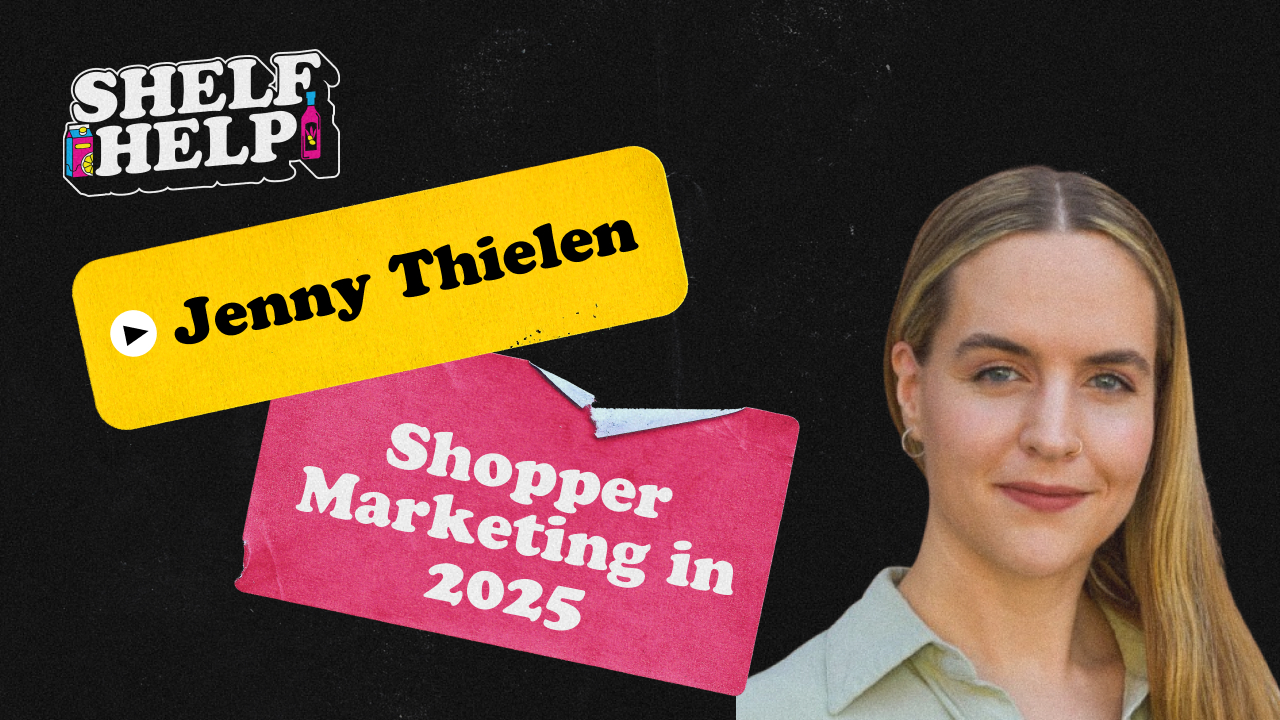



On this episode, we’re joined by Jenny Thielen, CMO at Green Seed North America, and a seasoned CPG marketer who’s spent her career helping food and beverage brands find their footing, grow distribution, and scale sustainably.
Jenny shares a wealth of insights on what it really takes to win in retail today - from how to de-risk growth and avoid costly pitfalls to how to build true shopper marketing muscle that drives velocity without burning cash.
We dive into her playbook for helping international brands successfully launch in the U.S., how to tailor both product and messaging for a new consumer base.
Jenny also breaks down how to approach retail media, what brands are still getting wrong about shopper marketing, and the key lessons she’s learned from Green Seed helping Siggi’s, Quorn, and GoGo squeeZ grow from early-stage to household names.
—---------------
Episode Highlights:
🌱 How Green Seed helps brands de-risk growth
🇺🇸 The playbook for bringing international brands to the U.S.
🥛 Siggi’s, Quorn, and GoGo squeeZ growth stories
💰 When and why Green Seed takes equity
⚠️ The biggest pitfalls Jenny sees emerging brands make
🛍️ What shopper marketing really looks like today
📈 How to think about retail media networks
🔥 Trends and brands Jenny is watching right now
—---------------
Table of Contents:
00:00:00 - Intro & Overview
00:47:23 - Green Seed origin story
04:19:08 - Siggi’s growth story
08:01:03 - Quorn growth story
09:55:27 - GoGo Squeez growth story
11:09:28 - When and why Green Seed decides to take equity
13:53:22 - De-risking growth for brands
16:01:25 - One of most common pitfalls Jenny sees brands make
17:14:03 - The playbook for bringing international brands to the U.S.
20:29:21 - Tailoring messaging and recipes for the U.S. consumer
28:54:10 - Expanding beyond the ethnic aisle
30:50:13 - Shopper marketing
34:40:11 - How brands can get shopper marketing wrong today
36:19:13 - Shopper marketing for brands selling $5–10M/yr
39:11:22 - Retail media networks
41:33:00 - Trends and brands Jenny is watching
—---------------
Links:
Green Seed North America – https://greenseedna.com
Follow Jenny on LinkedIn – https://www.linkedin.com/in/jenniferthielen/
Follow me on LinkedIn – https://www.linkedin.com/in/adam-martin-steinberg/
For help with CPG production design - packaging and label design, product renders, POS assets, retail media assets, quick-turn sales and marketing assets and all the other work that bogs down creative teams - check out KitPrint.
Episode Transcript
Speaker: 00:00
Welcome to Shelf Help. Today we're speaking with Jenny Thielen, CMO at GreenSeed North America, sales and marketing accelerator that's helped scale brands like Siggy's Corn Go Go Squeeze Yogurt, just to name a few into nine-figure exits. Prior to GreenSeed, or Jenny led shopper marketing at RX Bar before co-founding an Ash Leisure brand and had stints as a fractional CMO for a variety of orders before coming on board with Greenseed. So definitely got a lot of really good experience. So really excited to dive into it. Yeah, Jenny, first off, maybe just for the listeners that aren't all that familiar with Greenseed, maybe just give us kind of yeah, quick lay of the land in terms of origin story behind the company, core service offerings that you guys offer to your clients, maybe just a few of the brands you guys work with, and then uh we'll go from there.
Speaker 1: 00:48
Absolutely. Well, thank you for the great uh intro, Adam. Awesome to be here. I love what you're providing for the CPG community. So uh yeah, to start GreenSeed was started by a guy called David Wilson, who had experience bringing different brands into the US market. And so, yeah, I think, you know, just through his learnings, he saw this gap in, you know, how brands come to the US market and what really, you know, it is a unique ecosystem, especially when you compare it to some other markets out of Europe, for example, just way more complex, way more players. And so saw the need to help educate and, you know, handhold a little bit of other brands through that process. And so, yeah, what kind of came out of that is basically a scrappy operator-led alternative to hiring what would be otherwise a full in-house US team. So we guide food and beverage brands from their first doors to scaling and when the timing's right, possibly PE or strategic exits, just depends on you know what the business's goals are. But we're operators first, consumer obsessed, and we spend money like it's our own. GreenSeed also has an international network of 11 offices in Europe. So we've got kind of this global footprint with over 100 consultants focused on CPG food and beverage. And so I think our clients also appreciate that we can kind of look at the US market as both outsiders and insiders, meaning we have like folks from overseas on our US team. So they know the unknown unknowns that hide in this market. And, you know, for example, in many of our brand's home markets, there's only a handful of retail players, and you primarily will ship everything direct as compared to our US ecosystem with many fragmented players. And then we've got a strong team of operators across functions with, I think over we we counted it up once, like over a hundred years of combined CPG experience. So all of that helps scaling brands with that knowledge base and our ability to navigate this challenging market really helps our brands to feel prepared and like they're putting their best foot forward. And then our core service offerings. So there's a couple ways we help. The first way is kind of like a project sprint, I guess I would call it, which we are opportunity assessments. And that's our chance to kind of help you nail your product position, your commercial plan, and also just, you know, figure out if there's a fit with our team and your team. And then the second way is a kind of a fractional shared service model. We've been using this model long before fractional became a buzzword, but our clients definitely see value in having that breadth of experience that our team offers and that can help you run sales, operations, shopper, marketing, analytics, pretty much everything you need to build a successful business without bloating overhead. A few of the brands we work with today, we work with a variety of both private family-owned brands that you know are looking for sustainable growth, to more PE and venture back brands that are aiming for an exit. But at any one time, we have a pretty tight portfolio of select clients that we know we can deliver for. And currently we have beautiful heritage brands like Mald and Salt that will be 150 years old next year, to newer brands that we've incubated and built from scratch in-house, like Sweet Haven Candy Co. That just landed in Costco for the first time this summer, has been in sprouts for a little bit now. So yeah, it really spans the gamut. But yeah, it's it's definitely a fun space to be in, helping brands grow and scale.
Speaker: 04:14
We just to kind of dive into a few, let's just say like real-world examples. Pretty sure you guys helped Siggy scale into, I think I read a 15,000 or so doors plus a bunch of Starbucks on the way to I think it's about like a 300 million or so exit in 2018. Looking at that like first example, I'm kind of curious what did Siggy's look like when you guys started working with him? What were some of like the key areas that that Greenseat helped with? And yeah, I guess what would you say were the keys to getting to the point where the business was ready for that nine-figure exit?
Speaker 1: 04:48
For sure. Yeah, so when GreenSeed began working with Siggy's, I think Siggy had just moved from Iceland to New York City for his MBA, and he had kind of found the problem that US yogurts were overly sweet and artificial tasting. And he definitely wasn't wrong. So he kind of just started making skewer in his apartment with a recipe his mom sent him. Early days, I think he was literally like still riding his bike around Manhattan, delivering yogurt to four or five stores when he met the GreenSed team. So he was like still selling batches at farmers markets, et cetera. And so yeah, Greenseed came in and was like, hey, we think you have something here, but it's all about, you know, how do you position it and set the brand up for successful growth? Um, because it was a pretty different offering at the time. It was kind of, you know, even pre-uh Shobani kind of taking over in the Greek yogurt category. So the yogurt category at this point in time was still very much ripe for disruption. So Greenseed helped lock in the basics. So designing that kind of clean Nordic packaging system that you see, uh setting up the Co-Packer and how to manufacture this product at scale outside of Siggy's apartment, and then through to like opening up the Whole Foods East region in 2009. And so Siggy also worked with the GreenSeed sales team, started selling in the natural channel and getting strong traction there as well. And then I think, yeah, just locking in that positioning that was all about the simple ingredients, not a lot of sugar, capitalizing on some of where the consumer trends were heading, but products were not yet delivering on. Skears also got like this thicker texture. The milk is strained four times, and it's just this really delightful eating experience. So kind of, you know, educating consumers that this is not your kind of run-of-the-mill yogurt. And I think, you know, then heading into the sustainable growth phase, that part was more about keeping spam disciplined, supporting with smart trade support. And there was more like minimal PR and influencer at first, um, but more focus on building a sustainable growth business and building the operating drumbeat as well. So, like getting an SNOP process in place, getting their order to cash and deduction processes in place, which are so many sort of like hidden costs of operating that can really be a lot of pain if you don't have a good process for them. Um, so yeah, this is getting the selling engine and the supply to keep pace with that. So eventually distribution did include a pretty major, as you mentioned, I think uh 2016 Starbucks placement in 7,000 cafes, which that in itself using placement as sort of a marketing lever to get that sort of visibility in a situation where there aren't many other yogurt players. And then that's just such a huge unlock outside the grocery aisle. And so from there, the brand really, you know, scaled even more rapidly, um, becoming pretty much a top growth story in the US yogurt category. And yeah, eventually Lactalis uh acquired them in 2018. So yeah, that is um a great kind of piece of green seed lore, having that that growth story. Um, personally still love the city's brand. But yeah, a fun one for sure.
Speaker: 08:01
How similar was the the that journey to exit with corn?
Speaker 1: 08:05
Yeah, that one. Um, so both actually partners of the green seed business, David Wilson, who I mentioned, and Sanjay Panchell, I think that's actually where they met. So Sanjay had come in, I think, as an operator there, or general manager possibly. Um, and they basically kind of just helped identify the right product range for the US market, more or less mirroring the way consumers actually ate meat. And so at that point in the the meat alt category, it was still very much on like the upward swing or even pre-that upward swing. So corn was one of the first movers there. And they focused on, you know, getting the most differentiated products into market, which at the time were kind of chicken-based. Um, that was a gap in the set, and focusing on their unique protein source of the mycoprotein, which is high protein, high fiber, as well as environmentally friendly with a low carbon footprint. So that brand, you know, it was all about identifying the right sales channels to build a strong, loyal fan base, which began in the natural channel and growing those velocities, growing demand so that they could uh eventually focus on launching into more conventional channels as well, where it made sense. But in the end, I think it was, you know, all about focusing on getting this amazing product into mouths, uh, in-store demoing, brand ambassadors, explaining the product, and also not rushing to scale. So measured growth and scaling smartly as those velocities built.
Speaker: 09:36
That makes total sense too. Last real world example, and then we'll dive into some other stuff. I think the other one that you had a big played a big part in kind of getting in, helping them really scale to an exit as well was I think the name is Mateen, but I know it as like the go-go squeeze yogurt.
Speaker 1: 09:52
Yes, Matern, yeah, I think is how you say that. But I my French is not great. But yeah, so they Matern actually had this product called Pompot, which is like kind of like basically an applesauce that you see here today. But I think, you know, it came, I believe, in a pot at first as well. And so that even pouch format wasn't really a thing yet in the US market. So, you know, the pom pot, I think it just, you know, David had a hunch that we needed to reposition that brand to really resonate with a US consumer. So they led um kind of everything from the rebrand to the go-go squeeze name, the packaging design, the format of the squeeze pouch, um, and the go-to-market plan to again kind of launch that brand in a smart way through the natural channel, regionally, growing sustainably. Um, and yeah, that brand really took off. I think it was kind of a perfect storm of things, just being that on-the-go format and squeeze pouch that's easy for a kid to eat. Being a mom of two now myself, I definitely uh favor the pouch format over a lot of other more messy alternatives. So, yeah, that that was also a really great growth story for Green Seed as well.
Speaker: 11:00
Shifting gears a little bit. I think from from what I know, I'm not sure how much this is part of your world at Ed Greenseed, but I'm pretty sure you guys also in certain situations write checks. I think anywhere from K up to 2 million. I mean, I'm curious what brands, like situations, et cetera, typically lead to an equity invest an equity investment along with the services piece.
Speaker 1: 11:23
Yeah, for sure. I think it really starts first with just having like a really great, highly differentiated product. You know, I think you see new CPG brands launch every day, and to what extent they truly are breakthrough and different and unique varies, but to have the chance to cut through in in our market, you really do need something differentiated that solves a really painful pain point for consumers. The next thing that we look for is great people, just working with people, operators who have that passion, that drive, that kind of X factor, and who are just good people to work with and collaborate with. Some kind of proof of concept in the market as well, you know, early traction, early velocity when something that leads us to believe that there really is something there and scale potential, strong unit economics, obviously important as well. Seeing how, you know, fully understanding how people react to the product, having grit as a founder to learn and iterate and the passion to grow not only a healthy business, but help evolve a category, I think is something that gets us really excited as well.
Speaker: 12:31
Yeah, that makes sense. Because kind of a related question, Siggy's as an as an example, you said you guys started working with him and when he was in his kitchen making yards really early on. You guys offer, you know, a lot of value, and there's typically cost comes along with value. I imagine, you know, he didn't have a huge budget back then. Like, how does that play into is that a situation where you'll forego some service fees up front for maybe equity? I'm just kind of and maybe that's a more too specific example, but in general, using Siggy's as an example, like how does that work when you're getting in with some of that early on that probably doesn't have a huge budget?
Speaker 1: 13:04
Yeah, for sure. I can't speak specifically to the Siggy's example just because that was pre-my time, but I do know that, yeah, the founders of our or owners of our business for sure, uh, Sanjay and David will kind of take a look at the opportunity and you know, work with uh the brands on a case-by-case basis. Like for some, yes, there will be like equity investment uh at play, and you know, any combination of fee, retainer, or equity, I think, you know, they kind of look at you know each brand as a unique butterfly with unique needs, and depending on the potential that they see for it, um, I think they're flexible in how they structure that for sure.
Speaker: 13:41
Yeah, that makes sense. I'm sure it's a case-by-case basis, largely. When we spoke a few months ago, I think it was maybe like two months ago, and one thing you mentioned is you said like one of the green seeds' main goals is to de-risk growth for brands. What are the most common risks to growth that you see or most common ways you see a brand's growth stall at whatever point?
Speaker 1: 14:01
Yeah, for sure. So I guess to the piece about de-risking, we kind of like to crawl before we walk, before we run. Um, I think this kind of goes to what the initial engagement with GreenSeed would look like too. So we have these things I mentioned called opportunity assessments where we really get to know the people, really understand what the business objectives are and the growth ambitions of the brand and not just commercially, financially, but people-wise, you know, what's the business trying to achieve? Is it family run? Is are they looking for an exit? And that really allows us to build the right plan together and allows us to get a feel and understand how the entrepreneurs think, how they work, and if we're a fit for them as well. So I guess that's risk number one that businesses can face is bringing the wrong people into their business too early or the wrong partner on. And to that end, we're helping brands not take on that risk uh in-house and get burned uh in that manner. And from there, we can help build um, you know, a strategy and a PL that is rooted in many, many years and many, many brand launches of doing this. Um, so we really do kind of have the understanding of how much cash it'll take to get a launch uh nationally done, what that means, what partners we would need to bring on to help the brand to be successful. So I guess, yeah, just a lot of years of learnings and trial and errors that we can bring to a brand before they ever set foot in our market. And from there, if there is a mutual fit and an opportunity worth chasing, many brands will bring on the wider green seed, fractional sales, marketing, and operations teams for help to execute the strategic plan. And that, in my view, is another way that brands can kind of de-risk their launches. Again, it comes down to like bringing on, you know, the wrong people in-house or wrong partners. But yeah, I think there are a lot of learnings that, again, we bring to the table to help brands avoid some of the common pitfalls. Your question on like what is one of the most common pitfalls, I think, that emerging brands can make. I think it's really the biggest one I can think of is getting your distribution ahead of your velocity growth. Because if you don't build up that demand in a really meaningful way to where you'll feel confident that the pulls will happen at every new door and be incremental to your business versus cannibalizing your business, that is where things start to slow down. You may risk losing shelf space in some of your earlier retailers. And so then your run rate, you know, will fall accordingly and you may end up sort of close to square one. So I think taking on growth in a measured approach, a strategic approach, um, getting into the right accounts first. I think we get this question a lot too, is like, how is our service different than a broker? And not to say there aren't strategic brokers out there, I'm sure there are, but sometimes we'll hear brands like launching too soon into perhaps a more conventional retailer, full chain, before they really have the demand and velocities to back that up. And so that can be a lot of dollars and slotting fees and essentially investment out the window if you really don't have the right fit to turn those velocities to warrant that distribution.
Speaker: 17:14
One of the big focuses bringing international brands into the the US market. Over the years, just working to doing this a number of times. Have you found there's like somewhat of kind of a I don't know, let's just say a standard playbook for bringing brands in the US market that works versus things that typically don't work?
Speaker 1: 17:32
Absolutely. I mean, yeah, I honestly I wish there was a standard playbook. It would make my job a lot easier. But no, I'm uh in all seriousness, like I think it really does come back to really nailing your fundamentals. I think, you know, even though there's new trends and bells and whistles that come up all the time in this industry, new people trying to sell you new tools, again, it comes back to nailing, you know, your four Ps. So first and foremost, like your product really has to be genuinely delicious, cravable, repeatable. So to that end, how can you drive trial in a way that's efficient, gets products into the right mouths? I think that piece of food and beverage marketing won't, you know, go away, in my opinion. Being crystal clear about your product positioning and brand point of view, it has to be an easy get for emerging brands because you typically don't have a lot of resources. Time earning that awareness from the consumer is hard to do. And so making the most of every interaction with that end consumer is critical. The second P, you know, having a clear and simple pricing architecture that fits with the positioning of your brand and its growth ambitions. Uh, by that I mean it's like, you know, if you have, if you want massive scale, if that's your ambition, you should price competitively for mass reach. Or if you're fine owning a smaller but perhaps more profitable niche premium slice of the pie, price your product accordingly. For promotions, you know, using these strategically, I think it's it can be easy to spend yourself into the ground. And especially if you don't have a back office operations team uh handling your deductions in a really diligent manner. But also blanket OIs kind of don't tend to deliver profitable growth. We tend to want to pulse promotions during particular times of year or just ahead of like the seasonal peaks of your category, so that shoppers are looking to buy you. You might beat out your competitor in that case. Layering your marketing tactics during these promotional windows also tends to be the way we see the best velocity lift and sustained velocity lift. And then finally, place. So even using like class of trade or channel as a marketing lever. So where you choose to show up or don't, where you choose to show up first does say a lot about your brand. One example of this that I think one of our former clients, Stockheld Dreamery, does very well. Their launch strategy was actually to kind of go deep in the food service channel in New York City first and show up at all the most iconic bagel joints, like Saro's Family Bakery. And that was a way they kind of built that street cred and brand ahead of going into retail. So I think, you know, tailoring your strategy in place to actually help build your brand is another kind of scrappy marketing lever that early brands should definitely be intentional about.
Speaker: 20:22
Is there um it's the best way to ask this in terms of the average American consumer versus the average consumers and the other countries that they started in or had been selling in? Is there kind of a commonality in terms of the way you position brands that's coming to the US that has not historically been focusing on the American consumer, if that makes sense?
Speaker 1: 20:40
Yeah, I you know, I wish I could find like a common thread. And I I don't know, like the American consumer when you put that bucket out there is so diverse. And I don't think obviously there is like a one size fits all. I would say even we do work with a lot of international brands, but we work with a lot of domestic brands as well who are maybe regional and looking to scale. So what I really think is important for any emerging brand to remember is like not to be too precious about your brand in early days because you really need to approach with a learning mindset and intellectual curiosity to say, like, is this working? Is it landing with my consumer? Is it an easy get? I can't remember where I first heard this phrase or who to credit for it, but you know, I really like it. Marketing is sales at scale. So I like to imagine myself talking to an individual consumer, like understanding deeply their psychological process, like their thought process, their behaviors in the category. Um and actually, when I was at RX Bar, I think this was such a part of our culture. It was even like part of our on boarding process that everyone had to work in customer service for the first few weeks of their employment, no matter the level, which I love. The whole company was required to work in person demos at least once a quarter. So, like, keep Keeping that voice of the consumer very close in top of mind for everybody in the company, I think is so important. Again, especially early days when you're learning what message really resonates with people, finding your most scalable why, as Dr. James Richardson calls it. Side note, if any entrepreneurs and operators haven't read the book, Ramping Your Brand Yet, I highly recommend it. It's one of the books I train my team on. But, you know, essentially the most scalable why is the reason that people are most likely to convert. And so whether you do that scrappily through your in-market activation, through in-person sampling and taking really good notes on what you're hearing, or if you prefer to figure it out behind the scenes through consumer research, if you're, you know, a little bit more precious about your brand and what you put into the world, either way, it's critical to get this part right before pouring loads of money into your marketing support. Otherwise, you may not see, you may see good trial, but you may not see the repeat you were hoping for.
Speaker: 22:58
Totally.
Speaker 1: 22:59
Um, and one example of this, I think, that we recently worked on is a candy brand called Frit out of Germany. Have you heard of this one?
Speaker: 23:07
I don't think so.
Speaker 1: 23:09
Yeah. So it's a really delightful, chewy candy, genuinely a good product. It's kind of like got little notches in the candy, so it's terrible, like terrible, not terrible. You can tear pieces apart and chew it and really fun, tactile eating experience. So that that brand had been in market for a couple of years before, you know, it wasn't really catching much traction or the eye of retailers. I think in large part because the positioning wasn't really landing with US consumers, and Candy is a very crowded space. So if you look at the brand, it actually still exists in Europe and it's a very uh successful brand there. It's more kind of kid focused, a little bit juvenile with fun characters and things. But we actually saw the opportunity to sort of completely rebrand the platform and go after a different consumer. We are very grateful that the team had kind of let us lead a rebranding effort in everything from consumer research. We did some focus groups with Millennial Moms and Gen Z, and ended up uh developing a completely new brand platform called Sweethaven Candy Co. That really goes after this idea of like nostalgic, chewy candies of our youth, but getting a glow up. So it's a cleaner candy made with real fruit juices and pieces, and even freeze-dried fruit is in there. And it genuinely is so delicious. Like everyone who tries it is like, wow, I can't believe how good this is. And it's natural, vegan, no high fructose corn syrup, no gelatin. So that's been a really fun one to work on. I think I might have mentioned this already, but they just had their first rotation in Costco this summer, and they're really getting some traction digitally and on social media as well now. So yeah, that's been a fun one to start seeing those elements of traction now, previously having not had a lot of big wins.
Speaker: 25:00
Like the old branding that's still under, I'm not sure if the brand name is Frit. Do they in terms of where they're still selling in Europe? Is that still remaining the same? They only did the rebrand just for the US market?
Speaker 1: 25:10
As far as I'm aware, yeah. They they've kept the Frit brand um because it's worked in the international markets. So if it ain't broke, don't fix it. But yeah, now the new brand is starting to catch some wind here in the US, which is really exciting.
Speaker: 25:22
How do you think about the balance between like education around products and product names that are local to a brand's country of origin versus simplifying and just making them more relatable to the US consumers? I'm kind of curious how you guys think about this from product naming and education standpoint.
Speaker 1: 25:39
Totally. I mean, the short answer is simpler the better. I mean, it's again, you're fighting for very uh scarce mental availability in consumers' minds. So the quicker the get, usually the better. But uh, of course, I like my nuance, so I'll give you a long answer too. I really think it depends on who you're talking to. So, and also what phase the market is at. Or like for a more premium priced product, you might be going after a more high-income shopper who has possibly traveled the world a little bit more than the average American. They've tasted global flavors, and so maybe they do know what goji jang is, and you can get away with calling your product goji jang. And if you're fine with maybe having a more niche audience to start, then you can call it goji jang. If your ambition is to get it a little bit more mass appeal more quickly, I would say then maybe that's a case where you would call it chili paste and you know, possibly could call it gochi jang, but have like an explainer line. What is that below? But again, in general, for emerging brands, we'll want, we'll advise our brand partners to explain it in its simplest terms so that the American consumer can grasp, you know, what the product is just from seeing it on shelf, because the packaging really is continues to be the most important marketing lever a brand can have in its early arsenal. Because again, with like limited marketing budget, that your first gut reaction to seeing the product on shelf is what's most likely to convert.
Speaker: 27:11
Aside from actual naming from an act from the actual palette of the average US consumer, do you I'm not sure how much you guys get into the formulation RD side of things, but do you potentially sometimes recommend these brands actually tweak or adapt their recipes to conform to maybe what the average American consumer palette is versus what they're used to in Europe or Asia or wherever they've been used to selling?
Speaker 1: 27:37
Totally. Yeah. So we actually do conduct some in-home usage tests for some of our brand partners, especially if there's, you know, products in the range that maybe we're not sure how they'll go over with US consumers, or if we want to figure out like what the hero items in the range should be. But yeah, actually, one example we had earlier this year working with a tea company, we found out that like their cinnamon flavor actually just wasn't quite hitting the mark for US consumers, actually. And we recommended that they kind of go back and look at potentially adapting that. It turns out that US consumers like a really punchy cinnamon flavor, kind of like red hot gum, if you think of that. I personally loved that growing up. And that their formulation happened to be a little bit more nuanced and balanced and not as in your face. So there are certain palette differences that we definitely see and you know recommend sometimes optimizations to to better hit the mark and expectations of the US consumer.
Speaker: 28:38
For certain brands, is there also often a big push to try to avoid your clients' brands being siloed into the ethnic aisle instead of like the some sort of center store aisle? And I'm curious if that is one of the goals. What have you found works?
Speaker 1: 28:54
And actually, that is, you know, a pretty common issue we hear from brands, especially if they're coming to market through an importer or another root market where they just don't have a lot of control where they ultimately end up. And so they will sort of get relegated to this ethnic or international aisle where the the velocities just don't tend to be quite as high as other parts of the store. So to your point, um, by getting yourself out of that aisle and into the the core set where you belong, quote, um can help drive growth. But that, you know, it can be a tricky path because the buyer tends to be a different buyer. And so it's, you know, managing that retailer relationship in a delicate manner to say, hey, we want to actually present to a different buyer and move our UPCs out of the file can be tricky. And so having a team, again, who's kind of handled those types of conversations before, I think can really help. And then also showing to the retailer why you belong in the core set. So, you know, that could require a positioning change. If if your brand was really, if it was really just a copy paste of your product from your home market, that could mean that you need to do some of the positioning work we've been talking about already to better tailor your offering to a US US consumer with more scale potential. So really kind of doing your homework and figuring out the the elements of your product and positioning that would resonate better. Um, and then it could mean a new packaging, it could mean some new copy on your pack. But whatever that the outcome of that, I think your brand would just have to be ready to possibly make some changes in order to unlock the growth potential of the US market.
Speaker: 30:39
Sure. Yeah, it makes sense. Shifting gears a little bit. I know you've led shopper marketing, our X Bar obviously had a lot of success there just to level set. When you hear the term shopper marketing, what does that actually mean to you in 2025? And what parts of the funnel fall into the shopper marketing bucket?
Speaker 1: 30:55
Absolutely. So I have a pretty broad definition of shopper marketing myself because to me it means really how, of course, you have like brand and consumer marketing. So, you know, what is your creative look like and how is that, you know, emotionally connecting to a consumer? But then for shopper marketing, to me, that means how do you then bring that brand to life across the consumer journey journey and which touch points are most likely to be, you know, moments of purchase intent and growing that purchase intent to a critical mass where the conversion finally happens. And so, you know, that's a little bit broad. But then in those terms, shopper marketing really can be, you know, spanning from digital, so social media or paid touch points, obviously all the way down the funnel to in-store point of sale signage or floor stand displays. Of course, the whole kind of new world of retail media. But in a practical sense, then I kind of bucket shopper marketing anything, any tactic that is meant to drive sales specifically at a retailer versus more brand or consumer marketing, which might have a bit more of a national or halo sort of intent behind it.
Speaker: 32:06
You've been in this broader shopping and marketing world for quite a while. How is it any ways that it's really changed significantly over the past four or five years?
Speaker 1: 32:14
Totally. Yeah. I think, you know, when I was first coming up in shopper marketing, you know, Instacart wasn't really a thing yet. So I'm dating dating myself now. But back then there was sort of this pendulum swing from like into digital. So like, you know, all of the leaders were especially were just like, oh my goodness, you know, now we can have these measurable, attributable, chat, attributable channels. Let's pour all of our money into this, let's maximize the ROAS. But now the digital landscape has kind of changed so much. You know, there's ad inundation on every channel now, AI slop permeating a lot of it. And I almost feel like there's this consumer, you know, they're revolting against some of these things. And it's funny because me as a marketer, I personally love to see ads on my TV, on my digital, on my social. It's a learning opportunity. But as it turns out, like a lot of my friends and family hate ads and they're like, let's skip through them. They're just trying to tune them out as hard as possible. But I think so, what like the world kind of just is craving authenticity in this moment. And so for me, that kind of means the pendulum swinging from digital back to physical. I'm actually a fan of bringing more in-person, high-impact touch points back into the mix. So, for example, in-store demos. I think those can be a great way to again learn your target consumer, what they're looking for, what they're responding to, and having sort of that, like which part of your story are they having that visceral emotional connection to? Experiential events can also give you that kind of insight. Really cool premium brand swag that people actually want to carry and not throw into the trash. Like these physical manifestations of a brand, I think, are actually what's getting more attention now and being shared more organically and earning more word of mouth in social and digital spaces. So that sort of brand traction is actually what's most valuable and coveted, I think. How do you earn that word of mouth? And so I think the more brands can start to think about and reverse engineer that, that'll make everyone your marketing dollars just go that much faster.
Speaker: 34:24
When we chatted a month or two ago, you mentioned something along the lines like a brand can throw a lot in a lot of money into shopper marketing, but if the product product and market fit aren't there, you're just burning cash. So assuming brands have these two pieces dialed in, what are you seeing these days are like the most common ways brands can get shopper marketing wrong or or misunderstand shopper marketing?
Speaker 1: 34:49
Yeah, that's such a good question. And I think it might come back to not having a clear understanding of what your objectives actually are. So the mistake I see a lot of people make is kind of relying on ROAS as your default KPI, maybe. And again, that that ROAS as a your default KPI, I think comes from when you don't have a clear idea of your objectives. The problem with ROAS is it's obviously a useful metric to understand efficiency, but then I think it always needs a secondary KPI. So what's your KPI for effectiveness? And for most emerging brands or you know, brands with eight to nine figure growth aspirations, it will be your new to brand. So what percent of your buyers are new to brand? How many absolute new shoppers or customers are you bringing into the brand? And what are the customer acquisition costs of that? And then not only the the cost, but what quality of customer are you acquiring? Is it a high user? Is it a light user? I think, you know, looking at a lot of the marketing texts, you know, how brands grow. Brands are actually built, large brands are built on a lot of light and medium users. But again, for early stage brands, you really need your core heavy users to be your brand advocates that your ambassadors that are going to go run and tell or whole network, their Instagram network, their family, their friends to help you tell that story and make all of your dollars go farther in an organic capacity.
Speaker: 36:19
So what would you say a minimum viable shopper program looks like for a brand that's doing, you know, f five to ten million a year in sales?
Speaker 1: 36:29
Yeah, for brands like this, I think it's about being very targeted and smart about where you spend because to make an impact, you know, doing blanket programs across across your whole universe may not get you the results in lift and velocity you're looking for. So typically I will recommend that brands kind of be very strategic about the accounts they're even targeting. So looking at accounts that bigger retailers might um tend to look at as inspiration accounts, you know, one example of this would be like Wegmans on the East Coast or, you know, a Gelson's, a Narawan, a Central Market, all of these like higher quality, not to say other groceries aren't high quality, but more premium shopper where the trends start to emerge. Getting into those accounts and performing well can be um sort of an early indication, indicator of traction for your brand and you know, help have retail case studies that then you can go and sell into additional retailers. So focusing your efforts on what I kind of call these tier one accounts and putting in a fully loaded chakra marketing plan in those accounts. So, you know, from driving trial, doing things like in-store demos in a top segment of the stores, depending on what your budget can allow, but focusing on those highest foot traffic stores where you can get the most return, drive the most units moved, show up in the spins data as higher velocity, and other retailers may start to take notice of that. So it's really about being smart and intentional, I think, about where you're spending. And then another lever that I recommend all my emerging brands get into early is uh sponsored search. So usually through Instacart as the platform, just because they are kind of the largest player across most of the key retailers that you can get into early days. But this is the best environment, in my opinion, to kind of test and learn. It's lower funnel and closer to conversion. So it's easier to tie your dollars of what you're investing to see a positive return and scale that. And then on the back end, you'll also get a better idea of your shoppers' behavior, especially for brands in absence of other data or insights. You can just kind of analyze your keywords, see which aren't you know driving the most conversions. And if you're seeing like a particularly strong influx of shoppers from a certain competitor, that can be insightful. Or, you know, what other cross-category keywords are popping up in your data and might indicate a strong partnership opportunity. So yeah, I think those types of things, figuring out how you can get both qualitative insights from your marketing efforts as well as you know quantitative ROI driving uh tactics in your toolkit and scaling those early will help you to build your brand in a profitable and smart way.
Speaker: 39:12
You touch on retail media networks as kind of a newer thing being integrated into the overall shopper marketing strategies. From your perspective, what does this kind of a well-rounded strategy look like for a brand that's investing budget here and what should they keep top of mind?
Speaker 1: 39:27
Especially with a lot of the larger retailers, their programming um tends to be more expensive. Higher minimums, you know, 50 to 100 grand per campaign to get met, you know, attribution and measurement on the back end in some cases. And so obviously, you know, that takes a certain hitting a certain revenue threshold before that makes financial sense.
Speaker: 39:47
Do you feel like it's kind of a requirement depending on what stage a brand is at at this point?
Speaker 1: 39:52
Yes. Yes, and no, I think I'll say because ultimately I think buyers just want to see the velocity on shelf and the incremental dollars you're bringing to set. And if you're doing that in a really strong way, it obviously gives you more leverage to push back. If you but um, you know, the incremental dollars and and uh their category growth is usually what they're incentivized by. But increasingly we've seen retailers like Walmart are challenging their suppliers to achieve certain uh digital penetration targets. So, you know, some of the brands I've worked with um we're hearing that they want to drive as much as like 15, 18% plus of their businesses on digital. When we know that the data shows that for our food and bev in general, digital baskets are still around 10% of purchases. So it's it's kind of interesting where the retailers are, you know, pushing brands to essentially help them grow the digital pie by getting their shoppers into that ecosystem. To that end, I think, you know, the more you can invest and show partnership to your buyer in that area, it does help them to lean into your brand. So it may make sense to invest in these platforms as long as they're driving a positive return for your business.
Speaker: 41:10
Yeah.
Speaker 1: 41:10
And then if they're not, you know, bring someone in with the experience and scaling these platforms because there really is, you know, a lot of untapped growth here. And there's no reason those campaigns can't be driving profitable growth for your brand.
Speaker: 41:22
Totally.
unknown: 41:23
Cool.
Speaker: 41:23
This has all been really helpful. Last question for you, Jenny. You're obviously such an expert in this CBG world and you guys work with a lot of different brands, a lot of different clients. I feel like you have a pretty good pulse on what's happening. Any particular brands or just trends in general in the CBG world that lately you've been really tracking or getting particularly excited about?
Speaker 1: 41:42
For sure. I think this one has been happening for some time at this point, but the premiumization opportunities of commodity categories, those are always really fun and exciting, I think, to see how, you know, brands can come and disrupt the space. And especially as like the macroeconomic environment becomes more challenging for people, squeezing their household budgets for food, people tend to eat out of the home less. However, they obviously still want delicious food at home. So, you know, feel like what are ways that people can feel like they're getting a restaurant quality meal at home? And how can brands help people make those delicious eating experiences? And so I think this is actually a time when premium brands can lean in and invest in trial and educating people just how to elevate their at-home cooking. We're actually doing that currently with a beautiful brand called Malden Salt. If you've heard of them, they're out of the UK, but they have these really beautiful, large, crunchy, pyramid-shaped sea salt crystals that actually a lot of chefs prefer in their cooking. So, how do we educate um, you know, at-home cooks on what are some of the best ways to elevate their dishes through changing, swapping to a higher quality seasoning and salt? It's delicious on everything. I personally love it on my avocado toast or steak. But I think, you know, these types of opportunities on how to bring quality and delicious eating experiences at home is something that I'm really excited about.
Speaker: 43:07
Totally. I think that makes a lot of sense, actually. Jane, this has been awesome. Really appreciate the time. What's the best place for people to follow along with you? And then best place for people to follow along with Greenseed North America.
Speaker 1: 43:17
Yeah, for sure. We're particularly active on LinkedIn, I think. So you can connect with me. I'm Jennifer Phelan or Greenseed Group North America. I'm always happy to connect with emerging brands and founders and bounce around ideas. So thanks again, Adam, to you for bringing this community together and having me here today.
Speaker: 43:35
Yeah, likewise, appreciate the time.

.svg)