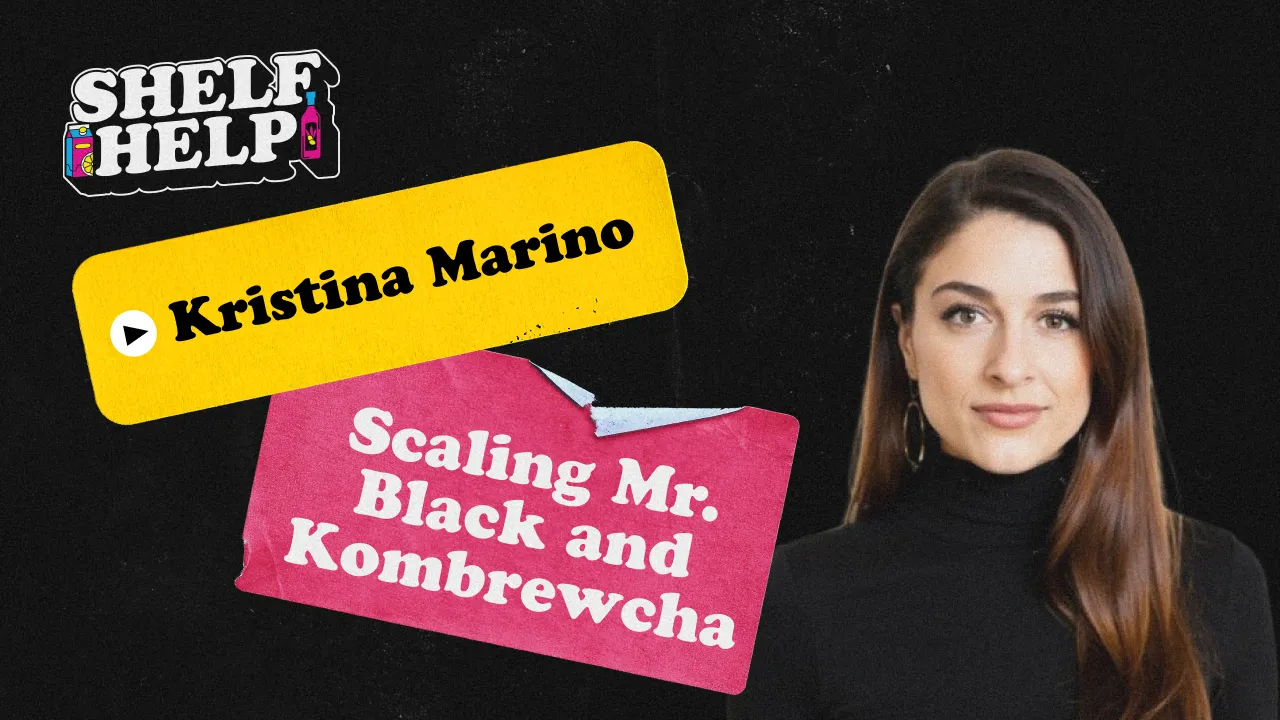



On this episode, we’re joined by Kristina Marino, BevAlc consultant and marketing leader, who’s helped scale brands like Mr Black and Kombrewcha just to name a few. Kristina brings an operator’s lens to today’s bevalc reality: tougher distributor dynamics, shifting shopper behavior, and the need to design brands that earn repeat in both off-prem and on-prem.
We get into what’s working now in bevalc: how to earn a distributor’s attention without overspending, why on-prem needs a purpose-built SKU or ritual, and how early wins come from ruthless focus on route-to-market and velocity metrics (not just awareness).
Kristina also shares her brand identity playbook, the levers that actually move repeat purchase, and what the post-M&A integration process looks like from the inside.
---------------
Episode Highlights:
🥃 Learning lessons from scaling Mr. Black and Kombrewcha
📉 Distributor reality in 2025
🧭 Route-to-market first
🍸 On-premise with purpose
🔁 Driving repeat purchase
🪪 Brand identity playbook: briefs that translate, system-first packaging, and shelf ↔ digital alignment
🧩 Post-M&A integration
📈 Where she’d place bets now and the spirit trends she’s watching
---------------
Table of Contents:
00:00 – Intro
00:39 – Kristina’s experience in the bevalc
03:12 – The current bevalc landscape
05:14 – Trends Kristina is seeing
09:25 – Today’s bevalc distributor landscape
11:53 – How a bevalc startup can win in today’s market
13:42 – What category Kristina would focus on today if she started a brand
15:43 – Brand identity playbook in bevalc
17:34 – On-premise vs off-premise in the early days
18:49 – Driving repeat purchase
21:37 – What the post-M&A integration process looks like
23:17 – Brand and trends Kristina is excited about in spirits
---------------
Links:
Follow Kristina on LinkedIn – https://www.linkedin.com/in/krimarino/
Follow me on LinkedIn – https://www.linkedin.com/in/adam-martin-steinberg/
For help with CPG production design - packaging and label design, product renders, POS assets, retail media assets, quick-turn sales and marketing assets and all the other work that bogs down creative teams - check out KitPrint.
Episode Transcript
Speaker: 00:00
Welcome to Shelf Help. Today we're speaking with Christina Marino, early stage Bev Alc brand Whisperer, I like to say. She has been taking multiple brands from Inception Exit, including Combucha, which sold to A B and Bev, Mr. Black, which was acquired by Diaggio. That's a sample set of a few. Today she's a trusted advisor, a partner to some of the most exciting early stage spirits brands in the market today. So, first off, Christina, just to kind of set the stage, just tell us a bit more about your background, kind of journey in the Bevelk space and what you're working on these days, and then we'll go from there.
Speaker 2: 00:39
Sure. Well, thanks so much for having me on the podcast. Uh I've been in BEVALC for 15, 18 years, something like that. Um, got my start on the agency side, an experiential agency called Mirabal. It does not exist anymore, but I came on there to lead the digital and influencer marketing department. And in 2009, no one was doing influencer marketing. So we were one of the first out there. Um, and that's really where I got my feet wet. In the Bevelk scene, I worked on Hypnotic, Perrier, Amstel Light, Spallone Tequila, Alkantotion, so quite a few brands. And then I left there and went to Stolen Rum, which was a rum brand from New Zealand. They were launching in the US and was brought on to lead marketing for the brand. And that was a very cool counter-culture lifestyle brand. We did a lot with it in a very short period of time. And that was acquired by Spirit Investment Partners and Liquid Asset Brands in 2015, I believe. And then from there, I went to work with VX Ventures and the folks over at ABI in building kombucha, which was the first hard kombucha on the market. So we were definitely way ahead of the time on that. Um, but worked alongside them. Uh, that was my first accelerator experience. So was glad to have that experience. And then that eventually got rolled up into Beyond Beer over at A B. And after that, I went to Mr. Black and built that brand from ground zero uh in the US to a brand that Diaggio wanted to acquire in 2022. You know, leading this Bresso Martini trend and really creating, I hate using the term, but a cult brand. Um so uh that's what led me here to today. So now I help, you know, early stage pre-seed and early stage brands that are looking to accelerate growth. And I pass on all of my knowledge, learnings, mistakes, everything down to them so they could, you know, avoid them and scale faster.
Speaker: 02:57
When we um spoke like a few weeks ago, you were just kind of talking about how much volatility you're kind of seeing in this Bevalk space right now. What does the the state of BeVALC look like today to you? And however you want to take that question.
Speaker 2: 03:13
Well, there's a lot of moving pieces within the Bevelk space right now, and they're all kind of compounding on one another. Um, you know, due to a variety of recent economic fac factors, the investment side is tight, right? So early stage and smaller brands are having to work 10 times as hard to raise capital. You really have to have like early stage proof points to and you know a really strong brand to generate that capital. Um, and so the smaller brands are getting stretched really, really thin from a from a budget and resources standpoint. And then, you know, on the consumer side, you know, you hear in the news, or I don't know, maybe just me, because I follow all the news, uh, that, you know, consumers are drinking less, people are drinking more moderation, which is definitely true. But I think, and this is just my opinion, but I think some of it definitely has to do with health reasons. Also, you know, us millennials are drinking less because we're just older. But I think part of it has to do with just people are people are really feeling past-strapped, I think, at the moment. You know, we've been dealing with inflation over the past few years. Salaries have remained stagnant. And I think, especially in certain markets, people are really feeling the squeeze financially. So people are still drinking, they're just drinking less but better. They're drinking, you know, they're there's zebra striping, um, or they're doing other things. Um, so so, you know, I think there's a few compounding factors there.
Speaker: 04:51
Yeah, totally. That makes sense. What are the biggest or maybe most impactful trends that seem like they've actually had a lasting impact? Like, I don't know, this might be like a minor one, but Mr. Black is a good example. Like espresso martinis seemed to be a trend that came on and is not going away. So I'm kind of curious, like along those lines, any other trends similar to that that feel like popped up over the past 15 years that really have had some staying power.
Speaker 2: 05:16
Yeah, I mean, look, I feel like I'd be remiss to not bring up the moderation movement in general. I think between lower ABV cocktails, non-elp cocktails, as well as the addition of cannabis cocktails, there's just a lot more options on how to spend your night, or um, you know, if you're at a party, um, in terms of in terms of what you you consume, right? So, you know, I think that's something that will we will continue to see and we will continue to to see scale. Uh, but at the same time, like it's very oversaturated. So again, I think just speaking to having a really strong brand um and knowing your consumer and how to connect with that consumer will become increasingly more important. The rise of convenience um and cans now everyone wants everything in a can. Um, you know, I think definitely makes sense for your you know, out-of-home occasions that are, you know, parties, parks, picnics, on the go, things like that. Um I think still finding its place in the bar. Um, but I know when I go out, or right, like I drink, I drink high moons, I drink surf side too, you know. And so when I go out, and if I don't feel like drinking hard alcohol, you know, that's what I want. Sometimes they have it, sometimes they don't. So it's it's really interesting. Then I think with Mr. Black, you know, obviously we're really able to, you know, hit the nail on the head, I guess, in terms of with the espresso martini, and we're able to connect coffee culture to cocktail culture in a way that brands haven't been able to before. I think we will start to see some other trends like that. And look, I think surfside is almost an example of that trend, right? Like people love iced tea and now there's hard iced tea.
Speaker: 07:07
Yeah, are they gonna do like 100, 200 million or something in their first like first or second year? I thought it's some headline of it.
Speaker 2: 07:14
That brand came in fast and furious. Um, you know, but now High Noon's doing the the iced teas as well. So I think it'll be interesting to see which one prevails there. But I think, you know, one thing, and I'll get on my soapbox about this all day. But for Mr. Black as well, I think it was also like just resurrecting the liqueurs market. I mean, obviously, you know, Kampari and Aperol are, you know, always on trend. Um, but there's still a lot of other liqueurs that are either more obscure or haven't been re-energized or modernized, where I think there's an occasion for, you know, and I think we were gonna talk a little bit more about trends later on, but I could speak to some of it now. But I think there's what I call like like wanderlust through flavor. And I think consumers now, especially now, enjoy more of a global palette, experimenting with flavors, and liqueurs is a great medium to do that within the spirit space. So I think there's a lot of opportunity within liqueurs, and maybe I am just biased, but you know, we mix with every base spirit, the partnerships are endless, we complement every portfolio. So I think there's a lot left to be seen there.
Speaker: 08:28
Yeah, for sure. I had another guy uh on the pod a few months back, similar, yeah, a good amount of years in the bevoc space. He was both on the retail side and on the brand side as well. And um, he said one thing that resonated with me, he said something along the lines of the Bevelk distro space has become just like the NBA in terms of the I'm not sure if it's all NBA, but like it's basically talking about how it's turned into a players league, meaning the big conglomerates, I guess the Diagios, maybe InVevs, those those size ones are kind of really setting the priorities for distributor distributors a lot of ways, just because they have so much power and they're kind of commanding all the attention. And so like smaller brands, maybe more of the level you're working with, are kind of left to fend for themselves a bit more from a kind of a selling standpoint, merchandising perspective, and can maybe really more only depend on the distributors, more from kind of a logistical standpoint. Would you agree? Similar take, I think that's totally off. And what's your general take on yeah, the distributor landscape today and how it's kind of changed?
Speaker 2: 09:26
Yeah, so I I agree with that sentiment a hundred percent. And I think unfortunately, you know, speaking about volatility, you know, we were just talking about volatility in the market. There's been a lot of volatility also on the distributor side, lots of movement with RDC pulling out of California, Arreyas coming in, taking a lot of that business. Um, and there's, you know, little shifts and changes happening like that all over the country on the distributor side. And the distributors are getting more and more of those bigger portfolio plays. A lot of these bigger portfolios have their own dedicated sales teams within the distributor. So it is getting increasingly difficult to get mind-turn attention from the distributor. Um, I would say, uh, you know, as tips or trips or or hints, but have you, you know, being able to prove before you even pull a distributor, you know, if you're self-distributing, just being able to have those proof points, be able to prove consumer pull, consumer traction, demand with the trade, um, and going in with those proof points. And then when you're doing your GSMs or your presentations, when you're asking the distributor what to do, um, or sorry, you know, what you'd like them to do, just be really crystal clear and the ask, you know, three things, right? Um and again, I think depending on how you complement the portfolio and what partnerships you can line up in that portfolio will also help from an attention perspective. But for new brands, and I always tell all my all my brands this, um, you know, don't expect the distributor to really be out there like pounding the pavement for you. So either look to handle sales internally yourself. You know, now there's a bunch of different, you know, fractional sales models or brokers, but you know, if you're just expecting that the distributor is going to go out, sell your brand, get you on menu, get you on display, all of those things as a new small brand, that it's just not happening. So, you know, and I also some of the distributors used to have like a craft spirits division or or divisions dedicated towards emerging brands with everything that's happened in the past six months to a year, you know. I don't know if if some of those are still in play or not.
Speaker: 11:44
Taking all that into account, like how can kind of upstart brands, a lot of the ones that you're working with at that early stage actually win in today's market and how they can avoid some of them, the pitfalls.
Speaker 2: 11:54
Yeah, sure. So, you know, I think just again, in terms of winning, really figuring out how to create the demand for your product and not just get on shelf or, you know, behind the bar. Obviously, you want to be in accounts, right? That's how you sell a move product. But if you go too wide too soon, it's gonna be really hard to get the kind of traction that you're looking for. So I always say, you know, go deep, not wide. You know, almost better to be in like 25 accounts, 50 accounts, and really be able to show that you could drive velocity in those accounts and you know what your growth drivers are before you go start expanding elsewhere. And also know where your brand works and where your brand doesn't work from an account perspective. Um, you know, whether that's, you know, some spirits brands do well in grocery. A lot do not. So then it's like, okay, you know, if your brand doesn't perform well in grocery, then why are you in so many grocery stores at the stage when you should be focused on more like Total Wine or ABC, something like that? So, you know, sometimes there's shiny opportunities, whether that's getting into Walmart or getting into um, you know, some of these other big retailers, AVP, Kroger, something like that. But if you don't have any consumer awareness to drive that pull, then you're just sitting on the shelf and that doesn't make the um, you know, the customer happy. And, you know, if you if you get DQ'd, it's very hard getting back in those stores. So I would just say build build slowly and build the right way so you could prove out the playbook.
Speaker: 13:42
Let's say I I had a successful exit in in a totally different CPG category. I told you I wanted to start a brand in the Bev Alc space, not your category I want to go after. What category would you recommend I focus on and why?
Speaker 2: 13:58
Well, it's a bit of a loaded question, I'd say. I think it depends on what your ambition is overall, right? Because the hot categories, whether that's agave, RTDs, not alc, they're growing, they're growing and they're growing fast, but they're also extremely crowd crowded. So what are you gonna do to stand out amongst that crowd? And how are you gonna differentiate and compete? Then there's a lot of overlooked, sexy categories, whether that's you know, in liqueurs, I would say, you know, rum. Now, I mean, I know with my inside knowledge of some like cool challenger brands that are coming out uh in the rum category. I'd even argue even in vodka, there's not a lot of like cool emerging vodka brands. So I think it really just depends, you know, what your ambition is and what you're looking to do and what you personally have passion for, right? Like always talking about like your big why, like, why did you create this brand? So, you know, I'd say that. But I think, you know, when we launched Mr. Black, no one was asking for a new coffee liqueur. I mean, people uh weren't even really necessarily using Kahlua behind the bar. Don't come, you know, don't come for me on that. But, you know, the category was a bit antiquated. And so, you know, we saw the connection to what was happening in the specialty coffee, regular standard coffee industry and market and how consumers were gravitating towards cold brew. And we were able to modernize, create a new cool, modern coffee liqueur that was also really grounded in specialty coffee. Mr. Bop, we roasted all of our beans ourselves. We did the cold brew extraction ourselves, all of that. And then we created that demand for the product. So, you know, that's what I'd say about that.
Speaker: 15:41
Let's just say aside on a category, what would like your playbook generally kind of look like in terms of building the brand identity, brand story, you know, visual identity, um, and what can people really easily get wrong at this stage, especially in the BeValk space?
Speaker 2: 16:00
Well, that's uh also a loaded question in some ways, right? Because I think it depends what stage the the brand is in. I'll say the one thing I always recommend to brands is to invest in the brand, right? And that's in the the brand identity, the packaging, the messaging, the people behind the brand and who's helping you grow that brand, because all of that is the brand, which is also the product that you're selling. It's all one thing. So because if you launch with one brand ID and then you have to go back and redo everything, it's just gonna waste a lot of time and a lot of money. And especially in the beginning, your packaging is almost your first salesperson, right? That's the first thing that people are gonna pick up and be like, oh, what's this? So, or see an ad and be like, oh, let me click. So make sure to get it right, you know, or as close to right as you can off the bat. Um and then I think just kind of building from there, just sitting down and building that core asset suite, your selling story, and um just how you're gonna go to market, whether that's and what markets you're gonna launch in, you know, that all kind of plays a role.
Speaker: 17:13
Would you generally suggest, and this might be two of a uh ambiguous question depending on what category you're after, but in terms of focusing on on-premise or off-premise or both, like should we really focus try to just focus on one, get really good at, you know, want to really hone in on one and and really get good at that channel, or try to test both initially, see what response we get, and then kind of hone in on whichever one we're getting more traction with?
Speaker 2: 17:35
Yeah, so I'd say, again, depending on the brand and the SKU, I would recommend testing both and then proving out how you could drive velocity in both. But I also think launching when you were your first launching, just having some direct to consumer. So you could one learn more about your consumer, test what messaging works, what doesn't work, so that because that can then filter down to what messaging goes on assets in store, and just start building that awareness locally.
Speaker 1: 18:09
Yeah.
Speaker 2: 18:10
Uh, and then you'll also have some early stage proof points to take into retailers, to take to distributors, to take to um, you know, other buyers. So, you know, they always say brands are built in the on-premise, which I am a believer in. But depending on what kind of product you are, retail is also gonna be important. I think with retail, you just need to have, well, and both, you need to have some budget to support, to support it, right? So in retail, you're gonna have to do tastings. And for for on-prem, you know, just just being able to show up and show love and show support uh is also needed.
Speaker: 18:47
In terms of tastings, trade promos, any thoughts in terms of how brands can, you know, ensure that these strategies that you're spending time and resources on don't just drive same-day sales, which obviously they probably will, um, but actually drive, you know, repeat purchase after the fact, a week, two weeks, you know, whatnot later.
Speaker 2: 19:06
Yeah, I'd say be memorable. So, in terms of what is your in-store tasting setup, what assets do you have, what are you giving away to consumers to make sure that they will remember you after the fact. And then just going back to my earlier point about going deep and not wide, if you're in a market where you know you have some good on-premise traction, some good retail traction, and you're focusing all of your marketing efforts, whether it's events, you know, influencer activations, digital in that market, um, they'll start to see you everywhere and they'll remember you. So, but if you go too wide and then you just come and do a tasting and it's like set it and forget it, then you know, you're not gonna necessarily might not see that traction after the fact.
Speaker: 19:52
Building on that on um off-premise retail side of things, how important are off-premise retail employees? What kind of programs have you found to be the most impactful on this front in terms of increasing the chances that they're gonna recommend your brand?
Speaker 2: 20:04
Yeah, so retail, retail employee education is important on-premise. How we look at bartenders um and buyers, right? And we center a lot of education programs around them. Not to say that we don't do it for retail. It's just a bit sometimes harder, especially if you're working through big chains, to get that attention from them, right? Because they have every supplier and they're trying to get master classes or big um, you know, education seminars with their staff on the books. So, but just in terms of retail coming in, giving them love, giving them merch, um, again, making sure your brand is easy to digest and communicate back in terms of your point of differentiation and what makes your brand so special. Because if you make everything so convoluted and really complex to understand, they're gonna have a hard time relaying that information. So, but I would say just back to advocacy, you know, the bud tender analogy, I think, relates most to how we get view trade in terms of bartenders, buyers.
Speaker: 21:06
Got it.
Speaker 2: 21:07
Because they're the ones that I think also spend more time.
Speaker: 21:10
Yeah, that makes sense.
Speaker 2: 21:11
Yeah. They're the ones that are really recommending, oh, what cocktail should I try?
Speaker: 21:15
Right, totally. You know, yeah, good point. So yeah, totally, good point. Shifting gears a bit, let's circle back to that brand we're we're building together. Uh sure. Let's just say fast forward 10 years, we had a lot of success, and we just got recently got acquired by one of the big strategics. I know you've been through this a few times, so I don't want to definitely don't want you to disclose anything specific that you're not supposed to, but just in from a more general kind of high-level standpoint, what is the typical kind of integration process look like? And you know, what should I keep have in mind or I think mentally prepare myself for, let's say?
Speaker 2: 21:47
Yeah, so I think every portfolio and every strategic is probably going to be different in terms of how they integrate brands. But I'd say one, make sure you have everything, all of your trade assets, any Anything that you want to keep and continue to roll over, just organize because everything's going to have to go through a very thorough review and thorough legal review. In terms of what to keep in mind, I would just say get really clear on the DNA of your brand that you want to protect and the things that you refuse to compromise on because you will have to compromise on different various ways of working. So I know again, and I could just speak to my experience, but at Mr. Black, you know, we were obsessed with the product, everything that came within 10 feet of it. And that includes all of our assets, all of our creative, our social. And we didn't want that to go to an agency. So we still wanted to keep that in-house. And it still does remain in-house today, which is very rare for a lot of these larger portfolios to be doing that kind of work internally. So that was like one area that we refused to compromise on. Yeah, I think just being really clear on what areas of the brand are like must protect at all costs before and being clear on that before you go in.
Speaker: 23:07
Any specific brands that you're just kind of tracking in the market or just general trends in this kind of spirits space that you're particularly excited about?
Speaker 2: 23:18
Yeah, I think there's a few things. So, you know, I I spoke a little bit about it earlier, but I'm in general just excited about flavor exploration and Taur storytelling through the world of spirits. And I think that's being brought to life in a lot of different ways, whether that's just, you know, unique liqueurs or unique flavors, or it's, you know, rum from the highland regions of Mexico, or, you know, something like that. You know, now everyone has gins that are made with all of their kind of local botanicals and things like that, which I think is really interesting. I'm obviously keeping an eye on non-alk, low AVV, and really interesting. I'm just personally interested in the cannabis like RTD space, especially now that they're being rolled out across total lines where legal they're following a very similar route to market that WebALC does. Um, and I'm just interested to see how that pans out. Um and the the products that are coming out within that sector.
Speaker 1: 24:24
Same.
Speaker 2: 24:25
Um, and then I think functional, functional beverages, they're a section of non-alk, but just interested in um like I guess what wins in terms of flavor versus function, um, and what consumers start gravitating towards.
Speaker: 24:42
Yeah.
Speaker 2: 24:43
I think that's another interesting thing.
Speaker: 24:46
That came up previously that like looking back now, you like wish you would have jumped on earlier. Maybe like you're so you were like looking back, I wish I actually would have started my own brand in this category because it's exploded so much or anything along those lines.
Speaker 2: 25:00
I mean, I think, I mean, I think with the RTD space, I think that there's a lot of a lot to be said there. You know, surfside's not the hard iced tea, the first hard iced tea. Like there were ones before as well. So again, I think it's just again how you bring that brand to market that makes all the difference. Um, yeah, do I wish I came up with high noon? Yeah.
Speaker: 25:21
Fair enough. Fair enough. Well, yeah, this has been great. Anything else? Anything else that you want to share about what you're seeing in the space that we didn't really touch on at all?
Speaker 2: 25:29
I think well, this is actually just more of a more of a marketing trend. Yeah. It doesn't necessarily have to do with liquid or the actual product, but more of a marketing trend. So I think we're starting to enter an era of digital fatigue. And well, I do recommend, especially during your test and learn phase, to be testing things online as a consumer, um, as well as a brand marketer. I'm just finding it very interesting where this level of digital fatigue will take us. Cause I think at first everything was D2C, everything was online, everything was pushing to digital, then short form content, always having to be pumping out content. And now, you know, when you're on social media, it's like you're in QVC network. I mean, every other swipe is someone selling you something. So I think there's consumer digital fatigue. Everyone's aware that everything's an ad. And now what you're seeing in other CPG sectors or other sectors in general, whether that's fashion or music, are other ways, more analog ways of marketing the brand. Some are novelty. An example of this is there's there's been a few brands doing the scratch like scratch and stiff ads that you and that we probably grew up with.
Speaker 1: 26:38
Yeah.
Speaker 2: 26:39
And that is making, you know, a comeback. I know when Merritt, a beauty brand, was launching one of their new perfumes, they did some scratch and stiff campaigns. I'm also seeing people doing it now on out of home. So little things like that I'm finding really interesting because I feel the digital fatigue myself as a marketer and a consumer. So I know other people are feeling that well. As well as um, I think in line with that is more IRL experiences, events, smaller events, more curated. I think we're slowly seeing, yeah, just the pendulum swinging back the other way. And I think it's gonna be really interesting to see how how brands cut through when they're, you know, trying to zag when everyone else is digging. So I think it's gonna be really interesting. I've seen interactive labels, like I've seen ones where you like peel things off of the label and it like creates shapes. Um and I think now just outside of packaging, the other trend is community. So community building, but like real authentic community building. It's not necessarily how many followers you have on your Insta, but how many like engaged super fans do you have with your brand? How are you engaging with those people and like really being able to build a community around your brand? And we see that again in other categories, brands starting their own Reddit or their own substaff, like people are exploring other digital mediums, so um, and creating their own smaller communities. So this is that's something I'm keeping an eye on as well.
Speaker: 28:17
For sure. Yeah, that's what makes sense. Kashina, this isn't awesome. I really appreciate the time. You definitely have a lot of knowledge in this space. What's the best place for people to follow on with you?
Speaker 2: 28:26
So my LinkedIn is just CreeMarino, K-R-I-Morino. Uh the profile handle and uh hopefully by the time this airs, my substack will be live. But I'm launching a substack, which will be creamorino.com, and you can find me on my website, which is Christina Marino.
Speaker: 28:46
Perfect. Yeah, if if the substack's ready by the time we publish it, I'll put in the notes for sure.
Speaker 2: 28:50
Okay, great.
Speaker: 28:52
Awesome, appreciate the time. It's been great. We'll talk soon.
.svg)