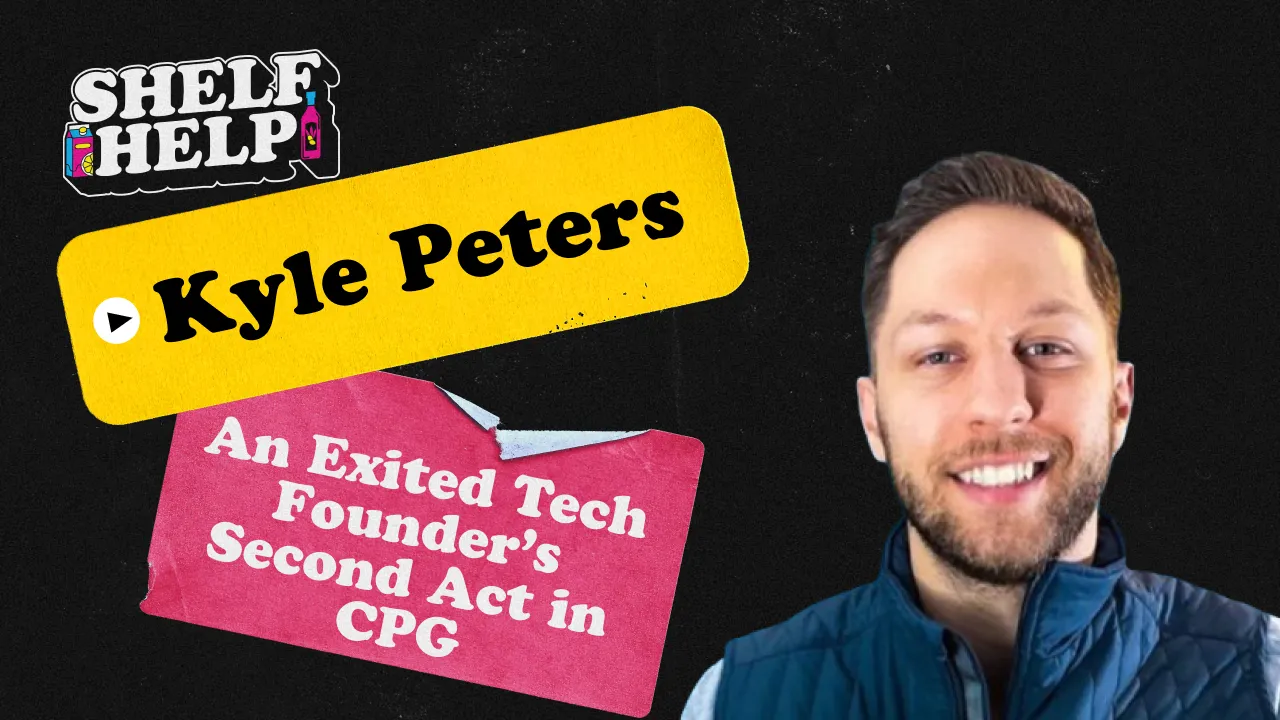



On this episode, we’re joined by Kyle Peters, the Senior Director of Emerging Brands at Jack Link’s, where he leads brand strategy, P&L, and innovation across a portfolio of growth-stage and incubation brands - including Golden Island, Jack Link’s Chili, and more.
Kyle brings a unique lens to scaling emerging brands within a legacy organization, drawing on his experience as a founder of a high-protein ice cream startup and as a former growth leader at Nestlé’s R&D Accelerator.
We dive into navigating the post-founder journey, how to be a good partner to a distributor, and what makes for a truly scalable product strategy. We dive deep into COGS, margin planning, and when (if ever) it makes sense to vertically integrate. Plus: emerging CPG trends from the guy leading the emerging trends at Jack Link’s.
—---------------
Episode Highlights:
🥩 Inside Jack Link’s emerging brand strategy
🧊 The post-founder handoff playbook
🏭 Copacker sourcing tips + trusted directories
📉 Tradeoffs when moving from self-manufacturing
📦 Packaging design lessons + rebrand advice
🚚 How to work with your distributor, not against them
💸 What C-store buyers expect, and how to deliver
📊 Forecasting margin erosion the right way
🔥 Trends Kyle is watching in protein and beyond
—---------------
Table of Contents:
01:00 – Jack Links’ emerging brands portfolio
08:54 – The post-founder journey
21:29 – Copackers
24:18 – Where to find copackers
27:23 – Moving from self-manufacturing, tradeoffs in scaling
31:37 – If/when to vertically integrate
33:36 – Product mix strategy
39:23 – Being a good partner to distributors
43:18 – A distributor’s expected hit to your margin
44:43 – Projecting COGS and margins
46:51 – The C-store channel
50:47 – Packaging design: what matters
53:48 – When to rebrand
56:40 – Emerging trends from the emerging trends guy
57:46 – Why protein is exploding right now
—---------------
Links:
Jack Link’s – https://www.jacklinks.com
Follow Kyle on LinkedIn – https://www.linkedin.com/in/kylempeters/
Follow me on LinkedIn – https://www.linkedin.com/in/adam-martin-steinberg/
For help with CPG production design - packaging and label design, product renders, POS assets, retail media assets, quick-turn sales and marketing assets and all the other work that bogs down creative teams - check out KitPrint.
Episode Transcript
tSpeaker 1: 00:00
Welcome to Shelf Help. Today we're speaking with Kyle Peters, the senior director of emerging brands at Jack Lynx, where he leads strategy brand and oversees the PL for the company's growth stage and incubation brands like Golden Island, Jack Links Chili, and more. And proud of jumping on board with Jack Lynx. Kyle is the founder of a high-protein ice cream brand called Carter and Oak and ran growth marketing for Nestle's US RD accelerator as well. So super excited to get into it. Just first off, for the listeners that aren't that familiar with Jack Links Emerging brand portfolio, I think most people are definitely familiar with the main parent brand, but just maybe just give us a quick lay of the land in terms of those other brands that are in the portfolio. Quick overview of Jack Link's overall emerging brands strategy. And then yes, kind of your role leading these brands and what this looks like on kind of a day-to-day basis, and then we'll go from there.
Speaker: 00:55
Yeah, absolutely. Uh so thanks for having me. Pumped. Love talking about this stuff as much as possible. I mean, at Jack Lynx, we our emerging brands portfolio is made up of, like you said, uh Golden Island. We also have Wild River. So Gold, well, actually, I'll start with Golden Island. Golden Island is an Asian-style jerky brand, primarily sold in Costco. It was originally founded by a first-generation Taiwanese family in the like the mid-90s. They were acquired by a company called Hillshire in like 2013, I think. And then Hillshire was acquired by Tyson. We acquired the business um a handful of years ago from now and been building the business, you know, since then. And so, again, primarily in club, but is sold in in a bunch of other places too. I can talk about the strategy and what we're looking to do there, you know, for hours, but super fun, really working to get it back to like what the founders were doing originally and back to its like authentic roots because it has such an incredible, like rich story with a ton of history, really genuinely like across generations. And that's really every brand has its own strategy. So we're kind of like doing some stuff like that with Golden Island right now. And Wild River is more of like what's called like an old-fashioned jerky, so much smaller segment within the broader jerky category. And so Wild River was developed internally for you know, it's kind of satisfying those needs of that segment. It's specifically like a lot drier, tougher chew style jerky. That one's a lot of fun, primarily like Sea Store. And then we also have, as you mentioned in the beginning, Jack Link's Chili, which is a newer venture for us in the last, I want to say like year or so. That's something that we're just starting to grow a little bit more, but again, taking a different approach to that than we are all the other ones. And so each of these emergent brands kind of have their own strategies. And we have Larissa's Kitchen, which was part of our like incubation team and everything before. We've now kind of started to develop its own team around that to kind of start to really, you know, put more focus and energy and resources behind that to really grow something that we feel is really exciting in like that allergen-free and certified allergen-free space uh within meat snacks and in the future, maybe even beyond. So there's really exciting stuff happening there. And I was on that for the first year and a half of being at Jack Links. And we have like kind of like new business ventures. We have a new business that we've spun up over the last nine months and just launched that. And um, not talking too much about like specifics there, but it's really exciting and kind of a further departure for the company overall, which is just fun and new and a lot of energy behind it. So that's awesome.
Speaker 1: 03:24
Do you you mentioned Larissa's where it's gotten to a certain point where you're starting to build a whole team around it before they get to that stage? Are you essentially managing writing these brands and pulling in resources from the existing the general Jack Lynx team resources and hey, can you help me out with this campaign or this launch strategy or this initiative? And you gotta be able to get them to get allocate some of those resources to these smaller brands, essentially?
Speaker: 03:50
Yeah, for sure. And I I mean, honestly, we're very fortunate because this company, I mean, Jack Lynx is owned by the Link family, right? So we're still wildly entrepreneurial, even for the size of business that we are, for being a category leader as somebody who was a founder before. It's really fun and it's super energizing that, like, you know, the guy at the top is leading with that energy, that enthusiasm, you know, built it with his dad. And it's just it's super fun to be around a family that's like that committed and built something so special. So we have buy-in and support from the cross-functional teams all over, right? Now we got to kind of like pick and choose our spots because at the end of the day, like Jack Lynx is the biggest brand by far. And, you know, we we need to fit like within everything else, but the team cross-functionally from operations and finance and creative services and social and everybody else has been awesome. And then also the company's investing and allocating specific headcount that is dedicated to our emerging brands portfolio, right? So um, we do have some resources that are specific to the the my team, and then we have other resources that are shared. You know, part of what I've done in building and constructing the emerging brands team is uh the entire team is former founders. So they're former CPG founders. So we have a lot of years of experience with people that have had to have their hand in every part of the business before, right? So we have brand managers, senior brand managers that have, you know, pushed people on in the operational side and they've built PLs and they've, you know, found opportunities in supply chain and all types of things, right? Now, we're fortunate that we get to always lean on the experts that are part of the broader organization, but having an internal team so close that understands and can kind of take things maybe 50% of the way, then hand it off to the internal Jack Links team for them to like make sure it's you know right and then also finish it, we're able to maybe sometimes like not put so much on the cross-functional team's plate. And so that can be helpful too, right? Really approaching with like a true like general management like mindset. And so having that skill set to like run, you know, run the gambit is really helpful.
Speaker 1: 06:01
What is your average day or week, whatever makes the more sense to describe? What does that look like in in this role leading this part of the company?
Speaker: 06:09
Yeah, I would say for me and and for a lot of my team too. Like for me, the day changes. Like one day might be really heavy on Golden Island, and I just happen to be spending 80% of my time working on Golden Island with with uh Drake, our brand manager there, right? Another day could be really heavy on Chili, and you know, that's we're actually going through a transition. Our team is just taking on the chili business. So I'm learning more about what's the historical nature of all the relationships within the business and what does the PL look like and why, and where are the opportunities for improving the PL and all of those types of things, right? And so my day will generally be wildly different on what brand am I going to be focused on. But a lot of what we're doing is you know, our our executive leadership, our president and CFO and everybody else are pretty big around just like freedom within a framework. So this idea of like building a strategy, getting the alignment from the executive team on what that strategy is, and then us being able to go and hand over to my team like, hey, here's the framework. Now go and whatever you have to do in between, you know, those edges to get the things done, go and get that done, right? So, you know, like Drake today or yesterday, he was building a creative brief for some packaging things, right? And then, you know, today he's building decks for, you know, some of the new strategic initiatives that we're working on, which is a departure from where the brand was before, right? So it's looking at insights and connecting the dots to, you know, take the insights into strategic decisions and then taking the strategic decisions into the level below of what are the levers to actually activate against them, right? So it's a lot of connecting of those dots. And then for me, it's getting the team to a place to where they can worry about the next, you know, 90 days or, you know, 120 days, and then for me, looking a year and two years out, right? Sometimes I have to look at the next week, right? But like when we're really operating at a high level, it's the team being able to worry about the next three, four months, and then me worrying about the next eight, twelve, twenty-four months.
Speaker 1: 08:12
Yeah. Man, sounds like a cool, exciting role. Definitely never gets bored. Every day is different, which sounds really fun.
Speaker: 08:19
Yeah, definitely. It is fun. It's crazy, right? But I think like similar to being a founder, I'll never say that a job inside of a company is the same as being a founder, right? But I would say that this role is as close as it can be, because having been in the accelerator at Nestle, which was very like, come and be a founder and everything else, right? And learning like what that was, it wasn't exactly that. But being here, and I believe this is probably as close to being a founder as you can be, which is a credit to our leadership here. And it's really fun. It is. That's really cool. It's better than others, right? Similar to being a founder.
Speaker 1: 08:50
For sure, of course.
Speaker: 08:52
Yeah.
Speaker 1: 08:52
Before you jack links, you founded and built Carter and Oak before ultimately I decided to shut it down to the before deciding to shut down the business for what I believe was just margin challenges, which is certainly understandable. Similar front, I co-founded a business in the regulated cannabis space in the California market that similarly had a lot of success with the number one brand in our category for a few years in a row, raised a bunch of money before ultimately winding down the business, kind of had a slow deterioration to a certain extent. And you know, we could both spend the entire time chatting about those journeys. And I know you've talked about years on another podcast interview or too, but just want to spend a few minutes just touching on that the post-founder career journey for just others that are in a the middle of a similar transition. As I remember, that period of my life was wasn't exciting, but definitely also a pretty challenging time. So I'm curious, just from your perspective, you know, founders are pretty atypical hires. How did you go about positioning yourself to show off all your experience while maybe minimizing the concerns that some businesses might have about a founder coming into a reporting structure where he or she has a boss, etc.?
Speaker: 10:01
Yeah, it's nuts, as you know, right? I mean, so there's there's like fa like there's phases of grief in shutting down your company, right? And some people's timeline is longer than others, some people's are shorter, right? The thing for me, the first thing for me that I found to be really helpful, which was like lucky, I did it out actually out of like an insecurity, was like shutting down. I was like, I need to post on LinkedIn that like I'm moving on and I'm shutting down the company and doing my next thing because I was worried that like, oh, I'm gonna go and get a job and then people are gonna see, and then I'm like, I I'm somebody that's like proud of the stuff that I do. So it's like I want to share that. And if I go and I share this new thing that I'm doing and it's not Carter and Oak, people are gonna be like, ooh, guess that didn't go very well. Guess like Kyle is shut down and he's not capable and not smart and X, Y, and Z, right? So it's like super self-conscious about the appearance of all of a sudden me doing something else that isn't Carter and Oak. So I wrote a post to say basically, hey, I'm shutting down and this is the story, and this is what I'm looking to do next, right? The response that I got from that was wildly different than what I had expected. I had people supporting me and also like asking for me to consult for them, like other startups and everything, which to me, I was like, I'm telling you guys how I just failed, and now you you're valuing my experience. Like I always valued the experience and the things that I learned over those five years, but like I just didn't expect anybody else to. And so it was really cool to get that response in the comments of my post of like, hey, do you have time? I want to talk, I want to connect, I want to learn from you. Like, let me pay you to do X, Y, and Z for us. And then similarly, like Nestle, to Nestle, like two people from their company recruited me for two different roles in my comments of that post as well. And it's like just sharing that I was moving on, doing something new, and like gave a few highlights of what I learned, provided me a ton of opportunity for what I was gonna do next. Right. So the first thing I would say is like just like not being afraid to like talk about what's happening and just have confidence in like, hey, you did great things over the time of you being a founder, and there's value for you somewhere, right? So, like that was the first step for me. The tough part is that like you just feel like you're losing your identity. And like my big thing was like, I don't want to go work at a company and do something that just any other person could go and do and just live like a normal, typical life of go and work a job and whatever. And then, like, if I die, I'm gonna be replaced in a few weeks anyway by the company, and then it's business as usual, right? Like, there was a level of significance that you have as a founder, and I feared losing that. And yeah, so I don't know. I mean, what I ultimately ended up doing there was like I got lucky that people, you know, you create your own luck, I do believe. And so, like, from me making that post, Nestle had reached out and I got to go through the process there. I mean, like, again, credit to them. My resume didn't look very good because I didn't really ever have I never really like made like a strong resume. I worked in restaurants and then I started my business, right? So, like, you don't really have great resumes if that's your your track record. And I'd never had to really interview for those types of things so much. And so fortunately, I can talk a lot as you see, and feel like I can communicate the value and the experience that I have. So them seeing that LinkedIn post at least got me the opportunity to talk to somebody, like, you know, virtually at least. And so doing that, I was able to sell myself on why I would be a good fit for the roles that they were recruiting me for, right? Now, the challenges as a founder, you think you can do everything and you've always done everything. And in doing and moving on to your next role, depending on your experience as a founder and what you accomplished and everything else, is gonna kind of slot you into like the level of seniority at a certain size company. So there's like one, you should push to always get the most for yourself, but at a certain point, you may just have to throw in a level of like being realistic on what makes the most sense for you. And yeah, for me, the opportunity at Nestle, like I had to concede oper on operations and on like PL at the time and certain financial things, and like I just had to give up some of that stuff to focus on like more specific branding and insights um and consumer-led things. And part of it was me like, hey, one, I don't even know what some of these titles mean or what these roles are actually doing at companies. Like, you can ask somebody like what's a typical day, oh, until you're in the role and you have more experience in a larger company and everything else. And um, so I think that's really important. But, you know, for me, it was just getting in those moments and then conceding that I'm just not gonna have everything that I want. And I just I you know I had to go and start making money and like kind of like rebuild a little bit, you know, Carter and Oak. Um, and so that was phase one. And then I learned a ton. For me, it was the logo as well, right? I worked the largest CPG company in the world. So I was a founder in ice cream that did something for five years. It was pretty cool. And, you know, uh yeah, I can I'm experienced in a lot of different ways, but coupling that I felt was really valuable with being at Nestle and seeing how the largest company in the world does it and you know, working on things like the Nestle foaming creamer that just came out. That was a project that I was part of when I was at Nestle and Coffee Concentrate on Nest Cafe was part of that too, right? Like really big brands that then give me a little bit more credibility for the next thing. So then I was there for a year and a half. After that, I was like, when I wanted to start looking at my new opportunity, I interviewed with a ton of companies for a ton of roles, some that I didn't think I ever wanted, just so I could learn, right? Like I needed to hear what does it mean for this role? What does it mean for this role? Every company, brand managers are doing different things, directors of brands are doing different things. There's general manager roles that are titled just general manager that mean different things, right? So I used interview processes as like learning and like classroom experiences for myself to be like, okay, what do I actually want to do? And you know, the thing like don't put a governor on yourself right away. Like, go and try and get a VP role, go and get a senior director role, try and get an executive level role, whatever. See what you can do, right? So uh I don't know.
Speaker 1: 15:58
That I that was a lot. Did you have some specific types of roles in mind? But it yeah, it sounds like you didn't know you just took a bunch of interviews. You didn't really have any in mind, you just took a bunch of interviews and helped kind of hone in from there.
Speaker: 16:10
Yeah, exactly. And the thing is like this when I heard when I found this job and interviewed for it, everything, I was like, okay, this gives me the opportunity to be on more than one brand. I wanted to be on more than one brand and to kind of like help lead a portfolio. It was at a level that I was looking to step into. Um it was at a company that seems to be really exciting that I aligned with, right? So like all those things like I'm getting up every day and getting excited versus like, oh, I'm gonna go and I'm gonna sell like toothpicks, like not gonna be excited about selling toothpicks or like improving on the toothpick brand, but I'm gonna be excited about these things that we have going on here at Jack Links. As a founder, it's like you're nobody's more passionate about what they're doing than a founder. So like if you can find company, a brand, whatever, a role that allows you to have something close to that, then like that's also very meaningful too, right?
Speaker 1: 16:58
So if you had let's just say three tips for someone going through similar transition that we did, what would they be?
Speaker: 17:07
The one would be like and their goal is to go and work at a company.
Speaker 1: 17:11
The first thing would be figure out their next step, and yeah, they're gonna they're gonna work again, let's put it that way.
Speaker: 17:16
Yeah, absolutely. It apply to as many jobs as possible. I I applied for a disgusting amount of jobs in the three months, four months that I was applying. And if you take the tenacity that you have as a founder and apply that to the way you're thinking of like, I'm not satisfied until I have five interviews with companies I actually like. You'll be surprised at how many resumes you'll put out there. Right. And I was making like custom resumes for every role. It's like, don't just copy and paste, you have to work just as hard at trying to find your next role as you did on trying to build your business. So, like the resume I sent for this role here at Jack Links didn't look the same as the resume I sent to Pete's Coffee to run their CPGs, right? Like those looked a bit different because I wanted it to give me the best opportunity of getting in front of those people to sell myself to be placed into that role, right? So it's a numbers game, interviews and resumes and everything else. If you don't have a fancy degree, and like you, if you don't have some of the more conventional credentials and you are a founder, like then you're gonna have to work harder than other people. Like the the difference that allows somebody like me that has a degree from a school nobody's ever heard of, no MBA, no, you know, private equity background or anything like that. Not that those are easy like shortcuts or anything, but like if you have a private equity background, start a business, close the business, and move on, like you're a higher value hire, right? So you would just have to work harder as somebody with a non-fancy or distinguished degree, and that was a founder that shut down, right? So numbers game, apply to a lot. Don't be shy. Don't think an interview is you accepting a job. Interview for roles that you don't even think you're gonna take, but use them as lessons to learn, right? Okay, that's one. Um, the other I would say is allow yourself to really push for a value you feel you deserve. But I'm not saying that as like a know-your worth and like everybody deserves, you know, $300,000 a year and X, Y, and like that's not what I'm saying. Because there has to be a level of being realistic as well. I've talked to people on both ends of the spectrum. I've talked to founders that have shut down their companies that really severely undervalue themselves and don't even like think like that they can go and get a director level role. And then I've talked to other founders that have done, you know, their founding experience that was cool, they did some great stuff, but they didn't raise as much money as you did and weren't a category leader like you were. And they maybe think that they should be like the CMO at a company, right? Like there, you have to be somewhat realistic. So there's no advice around that, but like try and gauge yourself to where you're not undervaluing yourself, but don't be so pompous that you think you should be running the company just because you ran your company. Um, so whatever somebody can take from that, I think that's really important too. And then the third one don't be afraid to take a job and then have to leave. Like if you're in take a job and you have to and you want to quit after six months, do that. Now, don't make a habit of it, right? But like I did, and I won't say the company, but like I had a stint in between Carter and Oak and Nestle that I don't often talk about and I don't put on my resume. It's not on my LinkedIn because it was short and it was at a startup and it was for a VP title that like the company wasn't ready to hire a VP for the role. The founders said that they wanted another founder with experience to help bounce things off of, but in practice, they actually didn't want that. And so, like, all those, right? So I learned like, ooh, maybe I do just need a later stage company, a larger company, so that like I can kind of learn what it is like to work in the real world, right? Or like the non-startup, non-founder world, and kind of like learn those skill sets and how do I need to play the game within the role, right? Because there's a political game that every company has. And then how do I also just become a good like leader within an organization that's not where I'm not the founder? So I was like, ah, I learned that. So then I just jumped, right? Talked to somebody last week of like they're worried about taking their next thing because they don't want to just jump. But I'm like, jump. If you got to jump, jump. It's just you just don't put on your resume, you just don't make a part of like your process anymore, right? But it can still be part of your journey. Totally. That would be my thing, is like, don't be afraid to like take a roll, learn, and then have the next thing be the real thing.
Speaker 1: 21:23
If we stopped here, I think this would be super valuable to people. Shifting gears a lot here, much more tactical, operational stuff. I've heard you definitely talk about the importance of engaging copackers early just to really validate unit economics pricing at different volumes, which I'm sure part of that came from the Carter and Oak experience. Just in the beginning of that process, what have you found? What's the best way to go about actually sourcing Copacker options in terms of what's the best way? How can these upstart brands get their attention, get them to commit to working with them on smaller initial runs, taking the time with them? these copackers, most of them are pretty busy. They're a lot of their capacity is filled. So how do you go about that and how do you get them convince them to give you the time?
Speaker: 22:08
Yeah, super tough. The reason I say go after it early is like you should have you should be able to connect the dots somewhat to what your reality may look like in five years. Right. Like I think if you can try to predict a PL three years from now, that's going to help you as you start to go and move on. Now that number's probably going to change and inflation and different, you know, the price of cocoa, right? If you're a brand that's sourcing cocoa, like you can't necessarily you don't know that, oh my God, you know, there's going to be this huge scarcity around the world and we're going to struggle and the price of cocoa is going to increase whatever it ended up doing, right? That can be really challenging. But I think that if you're somebody who's like making your product in a commercial kitchen very small scale, don't wait until you need to go to a copacker to start looking for a copacker. Like have an understanding of who the options are, bang on those doors, understand tolling costs and what are the variables that they want to know from you and know what are the pricing variables that they're looking for and they're going to charge you for. That might change copac and a copacker and it's going to change based off category and product as well. Right. So it helps you educate yourself on what is a reasonable tolling fee, you know, what come what copackers are going to source packaging or not want to source packaging for you and what copackers have the standard ingredients and what copackers have a different set of standard ingredients. That way when you're like holy crap I just got this PO from Target that I've been working on for two years and the company's about the 5X or whatever. I can't do this in house in-house anymore. I have to go to a copacker you can say okay great I'm going to call these people back. I know how to sound confident and knowledgeable to the co-packer because that is one of the most important things. They need to in the first conversation be like this person knows what they're talking about. Otherwise they're not going to take you seriously they're going to throw you away and they'll probably not answer your call again. Right. For me in ice cream I call I ended up on page like 16 of Google. So like I used Google a lot of the time and there's like a really gross like there's a bunch of really gross outdated copacker lists that like I think everybody has used. I think one's like called like specialty copac pages and it's like a gross database looking thing. It's like red and white and just you know the list of different uh manufacturers for different categories. Cornell has a database Penn State has a database and then my buddy Josh he has a platform called Co-Manufactured. I think it's co-manufactured.co is the website but that's kind of like a copacking database that has better UX UI than some of these other ones and like I even use that today to find different things for people or send that resource to people so that they can find stuff for themselves. But similar to what I was saying before is like you just need to pick up the phone and call and ask the questions and you're going to learn on the fly. Like for me in ice cream I was calling and saying like hey I want to make ice cream and it looks like you can make ice cream like what are your minimums and blah blah blah. And they're like oh well like what's your overrun and I'm like what the fuck's overrun like I don't know I don't know what that means. Then I like hang up the phone because they don't care about me anymore. And I'm like Googling what's overrun for ice cream. And then I learned oh it's the percentage of air that's that's whipped into the ice cream mix. So I'm like, oh okay great. Now I'm calculating the overrun of my product so now the next time I have a conversation I have an answer to that question and sound more confident, more buttoned up and more experienced to the the co-packer that I'm talking to right. So that for me that was like I learned over the first like 50 calls probably and uh some copackers are going to offer RD services some aren't you know it's to me it's great like open with an email if you can I had a hundred and somewhere between like 115 130 emails and phone calls to try and find copackers for ice cream. It's really tough because a lot of the copacking game too is like word of mouth and they don't have websites some of them. It's nuts. Like especially in ice cream like there I can probably name like five that just don't have websites. And so it becomes super challenging. So what I would say is like reach out to people in like adjacent categories. That can be really helpful. They might know of co-packers that they can like lead you over to talk to people in your category as well if you can and it's not like weird or competitive but understand what are the what are the answers what are the questions you have to have answers to so you can understand those variables about your business. And if you can answer those when you talk to a copacker it's going to give you a better shot because they're going to have confidence in you as an operator. I think you're always going to have to fake it until you make it a little bit with co-packers, right? Like you have to puff your chest a little bit more until it's real. But I think those are like some of the biggest things. Now I've told copackers too hey I'm just looking to price things out. We're growing rapidly but we know like it's not the right timing. So sometimes I've found that copackers are actually really willing to kind of share a few things if that's the case because you're you're not really asking for their time. Now you could go back in two weeks and be like hey things just really started booming and now we're ready and we want to get going and and you know let's start the process and whatever else but like ask for their typical copacking agreement, you know, all those things that they would typically have and somebody should review. And that's going to make you sound more legit and put you in a good position. But I think not enough people reach out for help to just talk to others who have done it before. So like don't be afraid to reach out to people on LinkedIn and ask very poignant questions because it's going to vary on category. So I can speak a ton about meat snacks and ice cream and a few others, but it's not going to always be copy paste.
Speaker 1: 27:22
For brands that have been that start out self-manufacturing, I think a lot of do whether they actually start in their kitchen or maybe they start using a shared kitchen and renting out space and then they eventually are going to shift to an actual copacker when they get to a certain scale what's what would you say is the most challenging part of that part of transitioning to a copacker whether it's formulation changes to optimize for scale, higher MOQs, you got to change your packaging what if you feel like yeah what's the most challenging part that of that process and what should up and coming founders keep top of mind?
Speaker: 27:54
Yeah it's honestly everything you just said those are like those are dead on right like and those are some of the biggest ones you might need to go to a new packaging manufacturer or packaging style because that's what the manufacturer uses and that's stock like in ice cream there's you know companies like dairy fill and standpack and they typically have deals with co-packers where like we're going to give you this equipment but you have to buy all of your packaging from us. And so those lines are fit specifically to use and run like a dairy fill cup or a standpack cup. So you might be like in this category like this is the manufacturer that will work with me because of MOQs and all these other variables but their packaging might be different. Right. So now you have to account for that and the MOQ of packaging might be higher than what the MOQ is for the run. So that's not going to be a perfect that's not going to perfectly align. The formula oftentimes changes and your product just might or the formula stays the same but it's not going to produce the same output taste texture appearance of the product that you were making previously right so like that's not unexpected that's not expected from a lot of founders and then it it's like super frustrating because you're like this isn't the product that I want but the formula is the same but the process is different. And so it's like you have to really work with the co-packer to be like I'm looking for this result. Is there maybe a new ingredient that I need to introduce because the texture and appearance is more important than the extra ingredient. Right. So it's like what are you what are your must-haves and you're like I'm not going to budge like having those things defined are really important. But I do think that sometimes people will like not budge on certain things and that ends up hindering the business big time. Because and I find sometimes those founders are they prioritize the art versus prioritizing the business and growing the business. And you're not gonna sometimes you have to sacrifice on the art for the sake of scaling a business. Right? I think you see that a lot with brands that have really cool packaging when they launch but it's not effective packaging. And then over time you start to see four of the seven claims that this brand had before they fell off between here and here and that's actually what started to increase their velocity 50% once they kind of did that pack change. And it's because clear concise communication is really valuable. Founders want to scream about all the amazing things that they're that's so great about the product. You have to make decisions like that. So I think that the expectation on the output is really challenging. MOQ can always change that's something copackers are probably going to screw up at some point. They're going to move your production date and it's not going to be when you think it's going to be so you might want to still like retain your capabilities to produce in-house before like betting the farm on moving to the copacker and like well this PO that I'm going to deliver I'm going to pull myself out of where I'm manufacturing today for the sake of the co-packer but they might punt your production down because you're the smallest person at the facility they're going to punt your production a month and now you can't deliver on that PO. And like that could crumble your business you know be different for everybody. So I think all of those are are wildly important to understand. And it doesn't hurt to have backup suppliers even if the copers says hey we have supply of X, Y, and Z. I like to have three suppliers for every ingredient at every single time and I like to stay up to date like quarterly on what those on what the pricing structure is for each of those ingredients and for each of those suppliers as well. Like you have to be prepared for anything. For me I'm huge on contingency planning. I would much rather do the extra work to know what I would do if something if this thing or that thing happens versus rush prioritize speed and get to a situation to where I'm like shit now I need to problem solve on the fly and you know you sometimes you can only do so much lead times or lead time right totally.
Speaker 1: 31:36
On the flip side thinking about a business that they have gotten they've been working with a copacker for a while they've gotten to a certain scale where maybe they're thinking about going the other way and vertically integrating obviously that's going to take they've had to gotten to a certain scale where that takes a fair amount of capex and whatnot but seems like vertical integration has a lot of benefits but it doesn't always make sense no matter the stage of the business. I'm curious I'm not sure if Jack Links that that has gotten that point where it's all vertical but when if ever does it make sense for brands to go back that way and actually vertically integrate again. Yeah.
Speaker: 32:10
Yeah I so I think so Jack Links has we do both but we're primarily vertically integrated. We own a lot of our own manufacturing that's where most of our product is made I'm also not the expert at the company to speak on that either but like we do we own quite a few facilities. What I would say for somebody, you know, I think if you get to a point as a founder and as a business to where the only opportunity for you to improve like if you've raised I think this is I think it depends on your situation, right? And like have you raised how much what's the timeline? What's your run rate? Like how much runway do you have as an organization? Like all of these things are factors. So I'm speaking very high level and like generally but but if you're an organization that like manufactured small, graduated to a co-packer and you need to go and vertically integrate for the sake of margin, like I think that's when you kind of look at okay maybe we do go and we build out a facility because the way for your investors to get their money back and for you to get to a place to where you have healthy margins to where you can be on the offensive in your category because you're able to you know promote differently and spend differently and everything else, I think like that's a reason to go into being vertically integrated because you have to unlock additional margins. Right. And so if you can if you can build a sound business case for why the CapEx is going to pay off in you know X amount of time and everything else, I think that's probably like a a good reason for going from Copacker back to vertically integrated. I think as a founder, if you're just like you know self-manufacturing really small scale and you're like, oh I'm going to go to a Copacker and but you're considering self-manufacturing like you either need to be super passionate about the product, the problem that you're solving and everything else, if you hate like running operations, but you you love the other part and the opportunity and the prospect of solving the problem that you're trying to solve so much that you're willing to take on the burden of running the operations, raising the capital, paying down the debt, like being super tight on finances. If you're able to do those things in spite of you not wanting to like really run a facility then it could be a good decision. But I've talked to plenty of founders that are just like I don't want to run a facility and I'm running a facility and this sucks. And I have not often seen those founders find success after right I've also talked to other founders that are like I just love operations. I love running a facility I love the margins it brings me I'm really fortunate that we're able to be in a position to where we're building this facility. It's really tough. It's really hard sometimes I do hate my days but ultimately they're like this is the right decision for the business and like that's why I love it. Those founders I've seen have a ton of success. Right like those are like and I think we're seeing more and more founders that are succeeding are vertically integrated and they're able to insulate themselves in ways that just Copaced brands can't. It's really interesting. You know it's a huge burden it's it's a big challenge to take on it requires a lot of capital but like for the founders that are really in it for the long game it seems like that that ends up being a big unlock for a lot of brands. You may not get the exit in five years right like that's the other thing like brands that exit in five years aren't always typically building their own manufacturing because it takes so much time like it could take you a year and a half to even just get delivery of a piece of equipment right so it's not necessarily going to be the path for the quick exit but it could be the path for the billion dollar exit.
Speaker 1: 35:27
That's a great way to put it continuing on that same track of the manufacturing side of things but talking about product development a bit more just in terms of product mix what's your general thought process or approach in terms of product roadmap strategy?
Speaker: 35:44
Yeah I so again I think like that's it's super category specific super what are your internal core competencies um you know like if uh I'm trying to think of a category that's like not too close to home. It like I think product roadmap like first I'd build like a matrix of like the we're in this category and we have you know all of these segments we can go into right so if you're in like salty snacks and you're making chips like you can do protein chips and then there's like seven different ways you could deliver a protein chip. And then there are like salty snacks and puffs and there's a million different ways you could execute against puffs and salty snacks. And then there's pretzels and then there's all those different things like to me like what I've been doing on our brands is like mapping out all of the options on the segments and then building like a matrix of like what's the what's the today if we want to go and execute on this product, how easy would it be today? Do we have internal capabilities to get that done or would we have to go and you know get capital to build the capability or are we comfortable co-packing the capability? And then what is the you know what's the total total addressable market for that segment and that product and then what's the growth rate of it? Is it higher or lower than other segments that I'm looking at? I think sometimes a lot of founders are just like oh this is the next right thing. Obviously I'm going to do that. And sometimes that gut and being a little bit naive is an absolute blessing. And it's like you don't want to overthink about it have all these numbers review data, hundred page decks of you know uh like numerator data or like a spins report and whatever else like sometimes that can be the the the enemy of success and growth. But I do think if you have access to it it's good to consider all those things and you're kind of able to say like okay this is what makes sense for my business. And I think for early founders part of it though is like what's going to be the thing that gets you excited and makes you work exponentially harder longer harder than anybody else because the one thing that you can control for the most part as a founder is the time spent working on the business. And so like if you can outwork other people doing it, great because you probably don't have the most money right so it's like what's in your control and again like if you're just not excited about it as an early founder you're just probably not going to be any better than somebody else that you're competing against in the category. So I don't know that's kind of how I approach it but it's so case by case. Sometimes there's just declining segments and it's like don't watch a product there unless you think that you have something so novel that you are going to be responsible for turning around the segment but in everything I've seen like that's few and far between you have to be super super confident and part partly cocky to like believe that you're going to be the one that changes the entire trajectory of a segment or category. So I think it's just really important to understand what's the total size, where are those consumers coming from, what's the growth rate over the past three years, what's the projected growth rate and then where do you have competency in channels, right? Like that's the other thing. If you are currently selling at like Whole Foods and Sprouts and the roadmap, the roadmap you're building may it may not make sense for that next innovation to have the most opportunity at Kroger. Right? You might want to just go and continue building a brand block in the retailers that you have today. Now you need to expand at some point into other retailers and channels but like should your new innovation be the one that breaks you into that? Maybe like that might be that's probably the right thing to do for some brands but I think that's something you have to consider because some items products and innovations are going to make more sense in this channel than this channel.
Speaker 1: 39:19
And yeah some attributes are more valuable to this group of consumers shopping in this store versus this store's on the distributor side of things which are obviously a a a core part of building a business in this CPG space how can a brand truly really partner with that distributor to to really focus on maximizing success with them.
Speaker: 39:38
I think the biggest thing is just be on time and try and get things to them before they even ask for it. Like you have to make their life easy because they're all overworked right now we can all sit here and be like yeah I'm overworked too but at the end of the day they're the gatekeeper to getting your product on shelf so you can make money. So if that's what you want to happen, you need to be the brand in their portfolio that is not causing headaches. And when you have the opportunity to do something cool or plus up do that. But don't be don't drown them because the I think the worst thing brands do is they treat the distributor and they treat that relationship with the distributor as if they are the only brand that that you know account manager is managing. And you're not you're one of a hundred, two hundred especially distributors like and then if you think about buyers it's like yes a lot of buyers are managing multiple categories right and like for us we a lot of times we'll get lumped into like the salty snack buyer and jerky is not the largest set for salty snacks all the time. So like we're not the number one priority all the time. You have to recognize that it's the same thing with distributors. Like again it's like know your role don't don't take more than you give always give more than you take and ask for I would say don't ask for anything for quite a while until your numbers are delivering right and always look for their input. They want to give you input and sometimes they will unsolicited but if you give them the space really listen and find opportunities to do exactly what they want sometimes that don't hurt you or totally contradict what you're trying to build. I think that's really valuable too it it builds you rapport shows that you're listening it shows the trust and then when you do need to cash in a favor, you know, Cindy who's your rep at UNFI is going to go, you know what Kyle, Kyle was listening to me those, you know, over these three times and I appreciate his investment into me and my career in doing what maybe helps me look good to my boss. So if he needs another week to get this paperwork to me I'm gonna let that slide right like you'll fall into moments like that, but you have to overinvest your time energy and effort and results before you're gonna get anything from them. And I think if you recognize that and you really work towards that, that's going to help build a good relationship with your distributor.
Speaker 1: 41:42
Yeah. That's a really yeah just a really refreshing way to think about distributors because I feel like a lot of founders you talk to and in brands that's just a lot of frustration around working with that distributor that if you can really go approach it from a positive mindset I feel like that actually makes a lot of sense. It's refreshing here.
Speaker: 42:01
It's super tough though like distributors are not easy right like there's a ton of charges and chargebacks and they're not always accurate and it's like you know a lot of people say that it's the necessary evil and there's a few that are the most necessary evils and the most evil right like that people want to claim it's just challenging right you know I credit Mark you know who just who's launching Mark snacks Mark Samuels who's like he put a he drew a line in the sand to be like hey I'm not going to distribute with UNFI and KE. Cool. I know I know a very successful brand family owned business they are very successful that a lot of people would recognize if I brought it up but I just don't want to put it on the spot because you know that I don't that don't feel like that would be right. But they also don't work with UNFI and KE They're like I prefer working with regional specialized distributors and that's what's right for our business. Right? I mean we work with Kahee for our Lewis's kitchen business and we're working with UNFI and everything else and you know they are they are the great partners for the things that we're looking to do. So it's tough. It's never easy right but that's that's what you take on as a founder. You know if you want to be in Whole Foods you're gonna have to work with UNFI. You can also work with regionals like Rainforest and everything else but some regions prefer to work with UNFI versus the regionals. And so you know what choice do you want to make?
Speaker 1: 43:16
What should brands and founders expect in just in terms of margin reduction when when partnering with the average distributor just so that they're going in with eyes wide open.
Speaker: 43:26
Yeah I so it's again it varies a bit like category to category. I just blanket like 25% typically it's you know some a lot of scenarios it ends up being too much that you're accounting for but I've also been in other scenarios to where like I'm hitting it like 24. And that's for so many reasons and variables that you could be charged by a distributor. And I think it's really challenging for brands that are starting and like they don't have the benefit of buying large quantities of ingredients that are going to reduce their cost of goods. It's again like you have to that's what you look at brands like coconut coffee And um Lexington Bakes that just they appropriately price their products. They're premiumly priced, but I'll tell you what, if you can sell your product at a 40% premium to the rest of the category, you're damn good, you're gonna be damn confident that like you got something. So I think you have to take that approach, and you just so many brands kill themselves because they just don't give themselves enough margin. So um I five and sometimes it's even 30 if you're working with like a small DSD regional player. Like I worked with a ri local ice cream distributor and they wanted 35%, and I got them to 25 ultimately, but we at first we settled on 30, and then after six months got them to 25, and it's like it's a dance, but yeah, 25. Sorry.
Speaker 1: 44:44
When it comes to actually projecting cogs and margins, just in general, not specific to distributors, just up and down the supply chain as a whole, especially. I know this is what you talked about with some of the challenges you came across with the ice cream brand. Like, what are the most common ways that operators get this process wrong in terms of projecting cogs and margins?
Speaker: 45:04
Yeah, I think sometimes it's just write off different line items, like not like not in the right spot. They're like, ah, this doesn't need to be in the PL or this doesn't have to be part of gross margin. And like I've reviewed, like I've reviewed different like financials of businesses and stuff. Like, wait, why like you're allocating this part of the of like your logistics process all the way over here? Like that should be hitting your gross margin. Like that shouldn't be over here on an island. And I think it's just they don't they build the PL to look more favorable and say, oh yeah, I have 40% margins. But it's like, well, not really. You're just not accounting for a few of these line items that are actually really killing your profitability. And like that has to be accounted for. So I think it's just like talk to other people that have done it in your category or similar categories and make sure that you're accounting for the right things in your margin because you also don't want like an investor to come to you and be like, you don't even know what should be listed and where it should be listed on your PL. Like you're not off on the right foot if that's gonna be the case.
Speaker 1: 46:03
Yeah. What would you say if you had to recommend end just say one number? What gross margin should your really early stage upstart founders and brands be shooting for in those early days?
Speaker: 46:13
40 to 50, which is like feels crazy, but like, yeah, 40 to 50 because you're probably missing something. Like just from oversight and not knowing enough, there's probably 10 points that are just gonna be obliterated. Right. And then there's gonna be other headwinds that come and probably obliterate another 10. And you can talk to 100 founders early stage first time, and they might not even be thinking about like trade rate. Like you have to factor in trade rate into what you do, and a lot of founders just don't, right? So like there's just gonna be things that pop up that you know you're not accounting for.
Speaker 1: 46:50
Talking about channel retail channels for a bit, it seems like the Seastor channel is a big opportunity that doesn't always seem to get talked about quite as much. And I've I think I've heard you and Andre read about you talk about this channel a little bit from from your perspective. What's let's just say unique about this channel and and what are the keys to winning in this channel specifically?
Speaker: 47:10
Yeah, I think Sea Store is cool. I don't think it's right for everybody. Uh brand stage and category, again, are all super important for if it's right for you or not. I think I'm listening I'm far from a Sea Store expert. I mean, we have some brilliant people at Jack Links that are like true Sea Store experts, and like I still like I'll I love it. Like the opportunity of going and like walking like Sea Stores with them and hearing them just talk and point at this or that, and you know, it's super enlightening. Um, you know, what's interesting that I've learned is like a lot of their reviews happen like at the same time, like the phasing for Seastor as a as a channel is like fairly in sync. Like they like to get things done by I forget exactly like what the timing is, but like it's all kind of done by like the same time, at least for jerky, and like and then that's it. If you miss that, it's really tough to just get cut in later. So it's like genuine like one-year cycles, but not just for like one customer, it's it's like all of them, basically, right? Like it's of course, like Whole Foods has their review cycle, but Whole Foods cycle isn't synced up with like fresh time and sprouts and and everybody else. But like for C-Store, a lot of them are synced up on categories, which is very interesting. Yeah, I mean it's it's really cool. I think like the podcast or the article, whatever that you're probably referencing is like the idea of just like some more like unconventional channels. Like when I joined Jack Lynx, I was very surprised at the business that we had in like the hardware channel, right? And I think it's cool. Like if you look at like smack and sunflower seeds, like they are taking an approach where they're trying to kind of go like to more of these complimentary, more like afterthought channels to build up first, and then that give, you know, it just allows you to get maybe an easier foot in the door, build up, you know, revenue and maybe not even have to spend as much against it, right? Like if your right product at the right place at the right price, like sometimes that is all you need to move really well. And if you're the only sunflower seed or the only jerky option at a place where people, where the consumers and the people there like are looking for that kind of product, then you can kind of own an area without having to run promos all the time. Like you don't have to do 16 weeks of promotional time in the channel, right? Or maybe you don't have to, you know, account for all these other variables or spend as much in marketing, right? Like you don't need a national campaign to support the sales of this channel or that channel, right? Like, so I don't know. It's it's it's interesting. Sea store is really cool. It's not right for every brand. It's not often like a discovery place, but again, if you are truly solving a need for somebody that's like traveling in and out, it's an impulse purchase. If you know your category is highly impulsive, like jerky as a whole is highly impulsive. If somebody's gonna start a jerky brand, you you know, maybe it makes sense to say, hey, I'm gonna just focus on C-Store, right? Like jerky is an impulsive product and C Store is an impulsive channel. So like if you can align those things, then like maybe it makes sense for you. But they're typically looking for like different pack size, like pack sizes aren't always the same from C-Store to the natural channel. So it's like also if you're thinking about going into C-Store, you have to have your configurations right. And so you might not be in a position to invest in new configurations. So is it worth overextending yourself and spending more to make a configuration that makes sense? Or is it worth taking a configuration that isn't optimized for the channel and trying to make it work for the channel? Because it probably won't, because that's gonna mess up your price pack architecture and and everything else, and now you're just right product, wrong price, wrong size. You know, who cares? Yeah, nobody wants a Costco sized item that and seems like not now anyway. I don't know. Maybe I'll eat my words in a few years, but I don't think that's the case for right now.
Speaker 1: 50:47
Totally shipping gears. On the topic of packaging, you've just been in this space for for a while working with all these different brands. If I came to you and told you I was launching a new brand in the snack space, I'm about to kick off packaging design. What are, let's just say, two or three things you tell me to keep top of mind or things I should watch out for that could potentially trip me up as I'm going through this process?
Speaker: 51:09
Yeah. Most of the time, less is more. Like, no, know exactly what your communications hierarchy is. Like, do you want to scream protein number one? You want to be known for protein? Again, like the overused like Halo Top example of like Halo Top before was talking about like sugar, protein, and calories in like absolute numbers on front of pack, all weighted equally. And they redesigned and they celebrated calories first, and they actually took off like the grams of protein and just put good source of protein on the bottom, right? So in their product, in their communications hierarchy, calories became number one in the hero. And then they communicated like, you know, then it's like brand is number two, and then so and so. Because you got to think like it's not just your claim and value propositions that are in the hierarchy, it's also where does your brand fall? Is your brand number one? The brand is number like the largest and gets the attention first, or is it your flavor? Is it your first value proposition? Like you have to really be clear on what those are because your one and two uh like your number one and number two communication like variables or factor, whatever pieces shouldn't be competing, right? There's a certain point in the hierarchy where you could have equal weight, but that is like the tertiary quality of your product. And like again, for Halo Top, it was just, oh, we're gonna say good source of protein down here. And like we're okay if people don't necessarily recognize that. We care about communicating calories and the brand. Like that's all that they cared about, right? So be super clear and confident in what you're trying to communicate. You have to be able to say no and like clear hierarchy. It's like the one of the most important things. I think people people trying to be more of an artist versus selling a product, like it's not how cool can I make the pack look, it's how can I best communicate what is inside of this packaging for the consumer. Yeah. That's your only goal.
Speaker 1: 53:05
Yeah, you've got three more like three or five seconds to capture their attention as they're walking down the aisle, right? Yeah.
Speaker: 53:10
Yeah. There's I think I saw something, it's like there's like 10,000 subconscious decisions being made in a grocery store in a single shopping trip or something. And it's like, if you're in the frozen section, good luck because you're at the end of the shopping trip, it's the last thing being purchased. There's this there's like subconscious decision fatigue that's setting in. So like you better nail those one or two things that people are that you're trying to communicate. And if you have five elements competing for attention, they're not going to understand anything. Yeah. They're going to move on.
Speaker 1: 53:38
It's a great point, especially about the frozen category, that it's usually the last because they want it to melt in their cart and they're sick of shopping. That's a great thing to consider. I never thought about that. Similar scenario, let's just say I was a brand leader at an established brand, like maybe it's you and some of these emerging brands that you've been running, they've been going well for a while, but you're considering a packaging refresh. What questions would you ask me that would help me confirm just even if this is the right strategy to do in the first place?
Speaker: 54:07
Yeah. Uh I would first ask why do you want to rebrand? Why do you want to design new packaging? Because I would want to understand your thought process and see if it linked to insights or is it linked to vibes? Right? If you're like, oh, the vibes are off, like I don't know if that's the best decision, right? Like, maybe sometimes it is, but like vibes is not always the best, you know, initiator for something big like that. Yeah. Um, I would, yeah. So I think the why is super important. I would also want to understand within that, like, yeah, are you trying to communicate something differently? Are you changing formula? Is that what's prompting it? Like, what is really just like what's the catalyst for prompting this decision? I would press on the channels that you're gonna be selling in. I would press on who the consumer is and understand what they want, what they value. Why do you think that, you know, in your brief when you list this hierarchy, why do you believe this to be the most important? I would also want to understand your like cash position, like as a founder, like, hey, if you have, you know, if you have $500,000 in the bank, which a lot of founders don't, you know, and you're gonna go and work with an agency that's gonna charge you $100,000, is it the most valuable use of $100,000 today to go and rebrand? Or should you be putting that into things that are gonna drive revenue? Now, if you truly believe, so this is how I this is how I always think with my team and with our brands, it's like, is the packaging today success prohibitive? Is the way we look today preventing us from being successful? If the answer is yes, then we need to find the budget and we need to figure out a way to improve the packaging so we can we can have a pathway to success.
Speaker 1: 55:47
Yeah.
Speaker: 55:47
If your packaging is not necessarily prohibiting success, and it's more of like a vibe, you're like, we just need to refresh because it's a new stage and like it's gonna be sexier and look better, and yada, yada, yada. Like, I think you should maybe reconsider like, is there a better use of funds? Like, can you use that money on this marketing activation or is actually going in? Okay, there's tariffs, right? If you spent a portion of funds to ship your product to Canada because you just launched in Canada, can you ship some of your product to Canada and hold it in a warehouse there for a little bit because you're able to then like get ahead of tariffs and like not have to, you know what I mean? Like, there's just different games you can play. So it's like a dollar spent on packaging is a dollar not being spent over here. And so is that the most valuable use of the dollar at the time? Like that's what I would probably press on, press as well.
Speaker 1: 56:35
Also really helpful. Yeah, it's a really good way to look at it from just a logical, practical standpoint. Last question for you. You're in this emerging brands space, always looking at new stuff. Any brands or just general trends in the CPG space overall that you're particularly excited about?
Speaker: 56:51
Yeah, I love a lot. I think that it's very funny because like a protein ice cream is like sexy right now, again. I can name five brands that are like working on it right now. It's nuts. But I would say one brand that I do really love, it's a category that's been done a ton of times and not overly successfully. It's really tough, but I think she is crushing it is Doe. I'm not sure if you're familiar with them. Carnivate, yeah. Kelly is the founder. She's brilliant, really smart. I think the way she's like operating the background seems to be like just really sharp and it it's edible cookie dough. It's been done a million times, but there hasn't been somebody that's really broken through. I think that Kelly and Doe have a real opportunity to build something special and cool that has like staying power and extendability into things that aren't just like edible cookie dough, right? I think that where we're kind of getting to in multiple categories, like obviously the trend is protein right now, you know, like protein's being slapped on anywhere. I think we're seeing an influx of brands celebrating protein, but the desire for protein has been this, like consumers have wanted this for years, and it's it's been consistent year over year over year. Like consumers want protein. I do think that like production capabilities are at a place now that they haven't been previously to produce higher quality, better tasting items that are packed with protein than we previously have been able to do, right? So I think the proliferation of that has been something that's supported that trend. But Kelly and Doe, I think I'm super excited about that, Brand. I think that's really fun and they're doing great. I think brands that are just getting back to like simple, right? Like I think protein is big, but I do think that there's gonna be an influx of brands that are able to execute on something that's really good, but like simple, um, and not necessarily fortified with XYZ and have these mushrooms and those mushrooms and yada yada yada. I just think a simple version of different products is gonna start to like really kind of like pave the way in things. I don't necessarily think more is more and adding more functional ingredients is gonna be more. I just think simple, good, and better for you is gonna be a valuable thing. Um, I think it's valuable now, but I think it's gonna continue to grow and we're gonna see brands start to succeed more and more that are like, you know, addition by subtraction. Uh yeah, I don't know. I think there's trying to think of other brands that are really exciting. I just joined First Look VC. Like I'm getting packages now of like all these different brands, which is really exciting. Some in categories like I I've never even thought about, like feminine care, like seeing some really brands that are doing like very meaningful things over there that I'm learning about. That's just seems to be really exciting. But again, like I'm not a consumer of that category. So like I don't use it every day, but I'm learning there. And I think that that's something that I'm paying more attention to now because it looks like there's a lot of a lot of advancement happening in like personal care, specifically for women as well, uh, that I'm starting to look at more and more. I think I don't know. I I think that's kind of what I'm excited about now. I'm finding my excitement more in like specific founders and like new styles of packaging and things like that. Um I think more of the boring stuff is exciting. IQ Bar, Will, huge fan of Will and IQ bar. He's the man. Absolutely, you know, he's incredible. The product's incredible. Love the work that they're doing. Love the conviction that Mark has in what he's building with Mark Stacks. I think that's really cool. Was a big fan of i1 before. I think what else? Oh, these are great. That's where I'm at right now, I guess.
Speaker 1: 01:00:14
No, these are great. These are awesome.
unknown: 01:00:16
Yeah.
Speaker 1: 01:00:16
Yeah, Kyle's been awesome. Really appreciate the time. I think uh you've shared a lot of really valuable insights. I'm sure you'll continue to. What's the best place for kind of people that to follow along with you?
Speaker: 01:00:27
Yeah, uh LinkedIn. LinkedIn's the best. I'm on it all the time. Posted it every day except for two days in 2023. It was super valuable for me. Um, but I try and get back to people as much as possible. If you're a founder that's about to shut down, don't hesitate to reach out. I try and, you know, prioritize those people over anybody else and get to them as quick as possible because I know that that's a crazy time in any founder's life. And if you're a founder that's like looking, if you're looking to raise a seed round or anything else, reach out to me as well. I might be able to help you out, but I can also maybe point you in the direction of somebody else who could help you out. And I just love to meet people in the industry. I love this. I can talk this stuff all day. So LinkedIn, best place to find me. Kyle Peters, um, and currently at Jack Links, so you can find the right one. Perfect. Awesome. Appreciate it. That's the pod. Thank you guys.
.svg)