
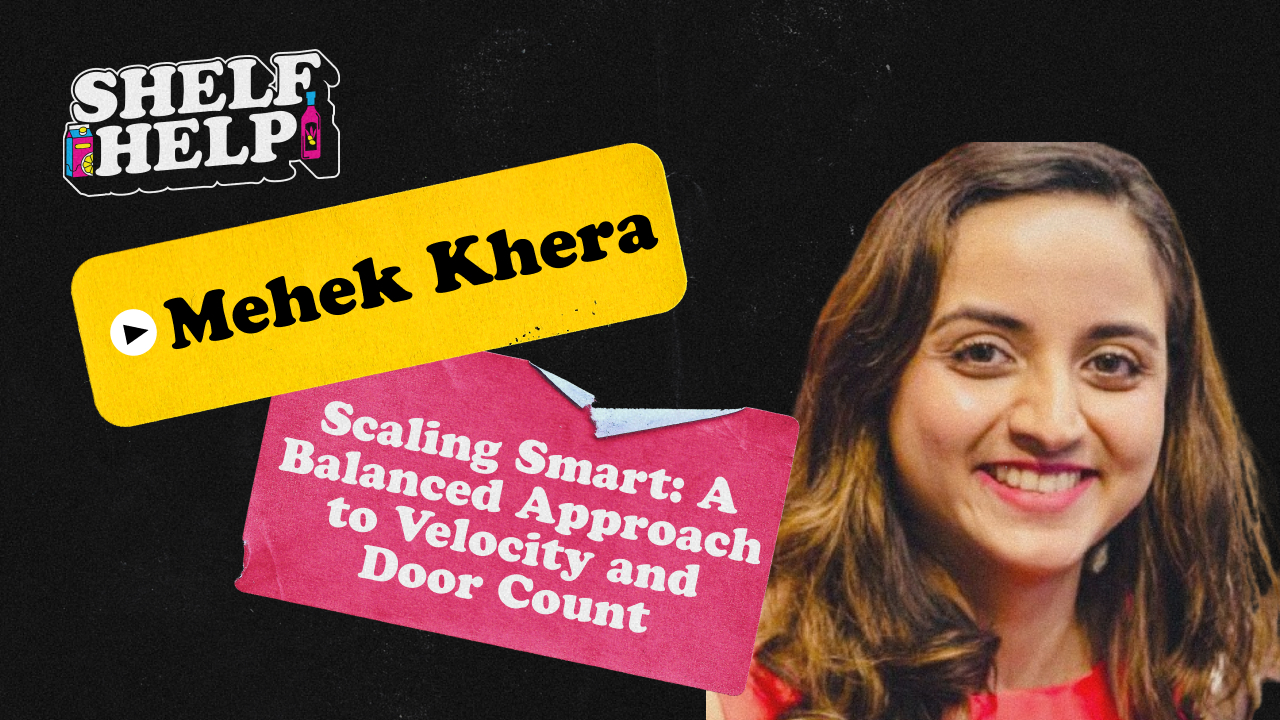
Mehek Khera - Scaling Smart: A Balanced Approach to Velocity and Door Count



.svg)

On this episode, we’re joined by Mehek Khera, the Founder & CEO of Niramaya Foods, heritage-inspired Indian foods built for modern eating.
Mehek takes us inside her two-year R&D sprint to turn homestyle recipes into clean-label, shelf-stable dips (no artificial preservatives) and then expands the platform with Naan Pretzels designed for snackable trial.
We go deep on formulation and process controls (pH, water activity, hot-fill), the oil-free reformulation and how she kept texture and flavor, and the packaging decisions that balance consumer perception and landed cost.
We also talk retail strategy and her contrarian take on velocity vs door count, demo tactics that actually move the needle, and what “buyer empathy” looks like in practice. Plus: the “Walmart Golden Ticket,” what’s on her daily dashboard, and the CPG trends she’s watching.
—---------------
Episode Highlights:
🥘 Shelf-stable homestyle recipes without artificial preservatives
🛢️ Why she removed oils, and how she rebuilt body and mouthfeel without them
🏭 Co-packer search
🥫 Visual identity choices and packaging design
🫙 Glass jar trade-offs
📈 Going wide vs going deep: going against the grain
🧑🍳 Demo cadence
🛒 Buyer empathy, retailer communication, and setting the right expectations
🧾 Specialty aisle vs. center store: finding the right home and the right shopper
🥨 New product: Naan Pretzels and how they pair with the dips
🛍️ The Walmart “Golden Ticket”
📊 What’s on Mehek’s daily dashboard (velocity, deductions, fill rate, and more)
👀 The brands and trends Mehek is tracking
—---------------
Table of Contents:
00:41:23 - Niramaya intro and origin story
03:21:00 - Formulation and R&D
08:40:22 - Achieving shelf stability without artificial preservatives
09:44:44 - Maintaining the fresh product variable at scale
11:44:04 - Copackers
15:20:29 - Removing oils from the formulation
18:34:07 - Visual identity and packaging design
21:29:10 - Deciding on glass jars
22:46:23 - Velocity vs doors, going against the grain
25:39:03 - Launching in, focusing on the NYC market
29:45:06 - Demos
31:06:06 - Maintaining momentum after a big blitz
32:29:04 - Buyer empathy
34:43:18 - Specialty aisle vs center store
36:41:05 - New product: Naan pretzels
39:19:01 - The Walmart Golden Ticket
39:43:05 - Mehek’s daily dashboard
41:03:07 - Brands and trends Mehek is tracking
—---------------
Links:
Niramaya Foods - https://www.niramayafoods.com
Follow Mehek on LinkedIn - https://www.linkedin.com/in/mehekkhera/
Follow me on LinkedIn - https://www.linkedin.com/in/adam-martin-steinberg/
For help with CPG production design - packaging and label design, product renders, POS assets, retail media assets, quick-turn sales and marketing assets and all the other work that bogs down creative teams - check out KitPrint.
Episode Transcript
today we're speaking with Mahak Kara who is the founder and CEO of Near Maya Foods who's joining us from NYC near my foods is an Indian inspired brand that's really on a mission to make delicious nutritious home style Indian dishes just more accessible to the masses I've always been a big fan of Indian inspired food so definitely excited to get into it first off for the listeners that aren't that familiar with near me maybe just give us a quick lay of the land in terms of yeah origin story why behind the brand what products you offer and then maybe just throw out a few places that that people can get their hands on them and then we'll go from there absolutely thank you so much for having me on the podcast Adam I really appreciate it so hello everyone I'm Mehek I'm the founder of Neramaya Foods and we are an Indian American snack food brand so we launched with a line of dips which are versatile go from snacking to meal time you can use them as marinades cooking sauces or even just eat them straight out of the jar like I do and we recently launched a line of naan pretzels which is a hybrid snack between a naan and a pretzel delicious crunchy grain free allergen free bites and you can find all of our products in sprouts nationwide and you know they are proudly placed in the Asian set so I would love if y'all would go and support us there but a little bit about the origin story is that I grew up in India and I was 24 years old when I moved here my great grandmother my Pardadi she lived 120 years old and not just that she was also an entrepreneur so I'm following in her footsteps she used to sell indigo which is a plant um colour um you know that was so popular during the British Raj in India and she used to do commerce on horses swimming rivers just the epitome of entrepreneurship right there so all these recipes and the nutrition that are inherently a part of Indian cooking were passed down through her and I decided to use that wisdom that knowledge of heritage inspired nutrition to bring products to the American consumer that was not just Indian but Indian in a way that were accessible to them in form factors that they could understand love and use again and again but we provided this exceptional unparalleled experience through flavor and attributes that would make them just the premium choice on shelf and of course that was due to my own health journey as well became a host of you know some autoimmune disorders back when I was working for Walmart and I decided to do a nutrition degree at that time and that's when the dots actually connected for me for that what I grew up eating was so nutritious that I never really stopped to realize that because it was so delicious and it was also readily cooked and available for me through my parents so that was what I was missing and there was a huge blank space on the shelf and that was why Neremiah was born Jeremiah means wellness for all and that's the mission and vision we built this company around that's an amazing journey amazing story thanks so much for sharing absolutely yeah let's rewinding back to some of those really early days to those initial R&D formulation days I think from from what I know just doing the research that I did it was quite a journey which is not uncommon I think you did over 200 trials over a multi year period really just to get not only the flavor but I think the mouth feel and shelf stability right as well I'm kind of curious what were some of those key variables that you played around with over those two 2 years or so and did was there eventually some type of aha moment or all of a sudden I felt like this definitely worked or was it kind of just a really slow you know step by step process every time you made something it just got a little bit better until you finally felt like okay this is this is good that's a such a great question so when I started ideating this company Adam 2020 it was the peak of Covid and everybody was quarantined for the most part and you know we were all cooking at home much more than we ever cooked so same for me I was at home cooked up with my husband and I was trying to make our foods more nutritious so you know you we could build up immunity we could eat fresh and healthy at home so whilst doing that I started revisiting these recipes that my family makes consistently at home and decided to boost them with like herbs and plants even more so that you know maybe turmeric could add some of its benefits black pepper Caraway seeds cumin all of that but it was a long journey and I didn't realize it would be so long to take those recipes from my kitchen top to a shelf stable ready to scale commercialized product ready for retail stores of course there are paths where you know folks explore commercial kitchens smaller ways to produce their product and we did that for a while but it didn't work out for us because the product was a complicated batch we needed to achieve a certain level of acidity a certain level of temperatures which was so difficult to manage and uh keep up with every time on the line that it was quickly becoming a business of its own and I needed to go out there and sell and market the product so I decided to stay clear from self manufacturing that was not my strength and that's where the real struggle kind of started I started to call you know my local manufacturers that I found through you know whatever Yellow Pages I found at that time and I remember funny enough the first person I called used to bottle waters you know they had a you know a bottling line and I was like can you please make the sauces for me they are like no you know we we just bottle waters and that's about it and it was so hard for me to understand the nuances of the food industry because I came from retail and fashion which was very different from food and so really understanding that every product is built different the scalability really depends upon already existing infrastructures that you must go and find and so that's when the ideation kind of became more nuanced and iterative where every decision was either built to scale or built to bring a product that was exceptional and nothing like that existed so like one of the first decisions that we took that we will be using real vegetables in the dips we would not just make it a oil and spice paste because people have enough of that right uh they already get a lot of oils and spices anyway so we would make these more wholesome and that's where the positioning kind of naturally shifted from sauces to dips because they were so wholesome and they were not just oil and spice pastes so layer by layer I think the identity of the brand and the identity of the product kinda solidified over the next two years as we found our first contract manufacturing partner and once we found them we brought these recipes to them and then it again took six months from there to be able to align and agree on a flavor profile mouth feel aftertaste shelf ability to get all the certifications that we needed to you know really communicate to the consumer that we really are who we say we are like for example if we buy a non GMO product then we do have a certification to go along with it similar with whole 30 similar with all these different attributes like vegan dairy free gluten free you know testing uh took time QA took time and so it was really learning all these processes that are pretty much needed for food products to sustain and be well in the marketplace and then another thing that I Learned through the process was once you do get into distribution even regional or national it's very difficult to make any kind of changes to your pack size to your quantity to your labels so it's better to do all that research upfront and test and try and we did a lot of that at pop up markets events and many other spaces before we actually launched a commercialized product in our first retail store that's a great overview you do touch on it really briefly but I think one of the things you really pride the brand on is is not using any preservatives so I'm curious what was what was the key to to actually achieving that shelf stability that you were looking for which I know you did but what was the key to getting there yeah absolutely so a lot of condiments use a process Adam which is called a hot full process which leads the product to becoming shelf stable so what they do is they acidify the product at a certain temperature so that it's aseptic and then it's sealed but the challenge that becomes with doing that is often these sauces and these products can be very sour tasting because of the acid so a big challenge was to manage the sourness as a taste offering versus the shelf stability for us and so that's how we made it shelf stable is by using lemon juice which is a natural preservative and also a natural acidifier and so all natural products no high sodium contents or no preservatives that we added on top of that that's great yeah lemon juice makes sense makes a lot of sense I think you touch on this piece a little bit too but when I was doing my research on the brand and I know one thing you really use to really differentiate the formulation as you know via flavor color having a really nutrient dense product is that you really focus on sourcing fresh produce that goes pretty quickly to your co packer so obviously I assume that that produce is being sourced from that's a very close proximity to those co packers and you trust on the co packers a bit but I'm I'm just kind of curious as you continue to expand let's just say not sure your co packer is now I think think it might be on the west Coast but let's just say uh you get to a certain volume in another region where you need to diversify and expand to another co packer or maybe you outgrow the current one and they're not located where a lot of the fresh produce you've been sourcing how are you starting to think about that what that's gonna look like as you continue to scale or do you already kind of have a plan for that are you not worried about that that's such a great question so yes we do uh source from near where we produce Adam and so keeping our supply chain short was always important because there is a value to building a shorter ecosystem of microbes in these vegetables and all of that good stuff that goes into eating fresh local seasonal all of that our co packer is built to scale so they are a nationally distributed co packing facility they co pack for very big brands a lot of the times when we source from farmers let's say in California these are big big farms and these are big farmers and often these vegetables are sold as IQF meaning that they are chopped up or sliced and frozen you know so that they can make it to the co manufacturing facility in the same state that they were frozen at so it the freezing process actually stops their aging and keeps them fresh whilst having a short supply chain so that's I think our magic mantra to scaling up as far as nationally distribution of our dips we are currently nationally distributed so we only have one manufacturing site and they're pretty much able to continue to build up that load and scale along with us through buying fresh and local that's great so I think I read you might have mentioned that or actually reached out to you know 500 or so co packers I know you know there aren't too many databases they're not the easiest to find I'm curious it might have just been a matter of just finding the right fit one but if not did your and a cold call script to calling these co packers and get them excited about the brand and give you the time of day I'm curious and what did you eventually yeah I'm really resonated with these perspective co packer partners 100% so I particularly had a very tedious journey finding the right co manufacturing partner and that's one of the biggest roadblocks in any entrepreneur's journey is the question between self manufacturing versus you know doing the m 0 QS that many of these so I would like to mention that many of these people that I were calling might not were just food manufacturers I had no idea to tell whether they made dips or sauces or chips or what not so a lot of these first hits or first calls were just out of Google searches out of references out of finding people at networking events and all of that so that's why it was a lot of misses more than a lot of hits but then I found my current co packer through actually an introduction from another entrepreneur who made a similar product and that's how I I was able to nail down and build trust and confidence through their high referral for that partner that's great what did when you found out that was a good fit did it were they pretty excited about the concept from the get go and if they were a great if not and it took a bit more convincing to you know get them on board with an upstart brand probably the first you know few production run the volume is gonna be lower obviously that copack your fellow geez so it's it was a multifaceted conversation with them Adam so the first time I spoke with them they were definitely buying into the idea they were very excited they loved the founder journey and story but at the same time they are built to scale and so it's very hard for them to support a young entrepreneur with small MOQs but they were flexible enough to do a lot of test batches for us so we were able to utilize their test kitchen to do a lot of kitchen top testing which was actually very close to uh you know their production facilities so it was better than testing at in my own kitchen at home without the supplier samples and without the different measurement techniques to actually see the acid levels or the temperatures so they were flexible there but when it came to m 0 Q's they were not flexible and I do kind of understand why because their line needs a certain kind of volume to be able to run and make sense of the unit economics and their labour time so I had to pause for a while save money and then go back to uh it truly bootstrapped approach so I saved money through whatever I had from my job and investments and all of that and so it took that initial amount which I invested into achieving their Moqs and once they had the product in hand I think the product even convinced them even more that nothing like this exists in the marketplace your differentiation is huge and the product quality is huge they uh were huge believers in the brand since then and we've scaled up you know thoughtfully and slowly because of that belief and partnership through them so yes I think it was a step by step approach to convincing them that yes this is something that I'm truly invested in and the market also truly needs yeah yeah you went through a process of removing oils and then you know for other brand owners that are maybe considering a similar change to create a cleaner product for them just thinking ahead for them giving them a bit of a bit of a head start what are gonna be some of the biggest challenges gonna come up against as they try to go forward and make that pretty significant change yeah so when we started out Adam our dips had cashews and they also had olive oil so we always had good oils in our product and oils are not bad whatsoever they are a very integral and essential part of any cooking around the world it was a very personal and thoughtful decision on our end because at the time that we made this call we had just received an opportunity to do an innovation aisle at sprouts where it was a three month in and out program for three of our skews of our dips and I personally went from state to state demoing our product to sprouts consumers to made them face to face it was the first time we were in a big retail store and it was our first product and I was a new entrepreneur I had a story to share so it going through that exercise although I do understand that might not have been scalable but I heard first hand from the consumers that you know somebody is going through diabetic diabetes or sugar you know sugar in different types of sugar intolerances or digestive issues or you know certain kinds of dietary requirements where they want a flavor bomb they want a flavor bomb that has clean ingredients but that they can mix with protein or they can mix with the grain of their choice or grain free snack of their choice for the matter and everybody kind of said that we we would eat this dip in a sitting so what if it had no oils in it because we were eating so much of it they were not really cooking with it they were like I'm eating it with carrots and I I'm eating it with veggies or just dipping bread into it so I really heard that feedback and I thought that they have cashews already so they have natural fats and so we may be okay in the cooking process if we did remove the oils and so we tried it and it worked and we then tested it back with our consumers the formulation was a little bit thinner than before but that actually helped make it a little bit more malleable for cooking so for people that were cooking with the dips they had a more malleable formulation and the people that were dipping had no oil so it was a win win for both and that's how we actually took that decision was very consumer LED yeah that totally makes sense so totally shifting gear so just thinking back similar to those early days as you were probably at the same time in a parallel path working on the formulation you're probably also working on building at least kind of the the the V1 that you're gonna bring to market of the brand identity visual identity packaging design thinking back to those early days what were some of those key variables that were top of mind for you and maybe another way to look at it is is what were some of the key things that you remember that were included in that brief with whoever you worked with a designer or agency or what not sure so we worked with an agency called drawn they're based out of Eugene Oregon and their founder became our early advisor and mentor through the process so a lot of these decisions were back and forth discussions with him and seeking his guidance and experience in the CPG industry to be able to ask the right questions and find answers but some of the things that came out were I didn't find an Indian brand on the shelf that I could relate with as a millennial and as a first generation immigrant that uh you know had travelled from India but now living this life here so I was honestly neither an Indian nor an American and an Indian and an American at the same time it was a very weird state to be and that's the exact junction that we built this brand around so a lot of the discussions were around that Indian American decision making what feels authentic and what feels accessible and then some of these decisions were also around hierarchy of call outs because we had so much good stuff in our product and there was not enough space to actually but that's where their expertise kind of comes in package design that we heavily relied on some of the other discussions were around the ingredients that we were choosing and how they were resonating with the consumers and appropriate call outs for them like super greens was a term being used uh in salads to describe and since we were using a lot of spinach in the spinach dip it felt fitting to use that terminology or an Indian street food dip that we have which is now called the sweet bhaji it's a it's practically a dish made on you know street carts all throughout India served as an Indian sloppy Joe kind of a situation so how to best represent that dish to the American consumer who's only ever tried butter chicken right that's great and that's really helpful and has the since launch up until now has the core messaging as well as the look and feel of the brand packaging remained pretty consistent or have there been any big changes or what you might call rebrands since that yeah launch so we've not had any rebrands and that's all for the better because the two years that we were actually searching for the co manufacturing partner we were working behind the scenes on the branding and so a lot of the changes and the you know updates that happened were during that time even before we launched the brand so we got a lot of like ways to try different techniques and different uh kinds of theories with that branding approach apart from like minor changes on the packaging label Adam I don't think we've changed much it's remained pretty consistent which I'm so happy about yeah that's great I mean it sounds like you did a lot of the really good work up front to really make sure what you had was gonna be pretty you know that kind of thought process that LED to the glass jar form factor cause obviously and so what that meant was we knew that this is the product that we are trying to bring bring to the market it's more wholesome than sauces so it's better suited as a dip and it's thicker it's more sociable I stayed away from the refrigerated section coming from supply chain I knew the costs and you know I was prepared to fight different battles in the CPG industry not the freight ones and so we steer clear from the refrigerated aisle and plan to conquer the center store the grocery section so that's where the shelf stability kind of kicked in and once that happened we were seeing brands like Primal Kitchen and Seattle Foods and you know all these different brands do amazing work when it came to dips and there were no brands in the Indian inspired flavour section actually considering dips are that form factor whereas snacking is a global melting pot you know it welcomes flavours from all around the world and so we decided to be pioneers in that movement and select a similar form factor with these authentic recipes these flavors that were never shared before could highlight the home style street style Indian cooking whilst also giving the American consumers a farm factor they already know and enjoy reducing friction yep a lot talk to a lot of operators as well as investors and they all have generally seen to be on a similar track growing too fast can be the kiss of death if you do things in the right way scaling faster can potentially actually help from a cash flow perspective and how have you found a bit of a different approach has has worked really well for you yeah so definitely there's always chatter in the industry about you know going a mile wide and inch deep versus one or the other for us I completely see the merits of that philosophy and velocities are really important without that you're just buying shelf space you're not actually selling your product to consumers right but I think now knowing what I know today Adam I would say that for any new entrepreneur who's willing to put a strategy in place should really look at the category that they are selling into and really talk to the buyer about what the expected velocities of that category are because the velocities of sauces versus dips versus snacks versus sweets are completely different so whether it's two units per week per store or 20 you should know what you're up against and if you're hitting that velocity and if you're able to form that wheel of marketing and trade spend and sales that's turning then I see no reason why you can't increase your distribution footprint so it's both you can't just have velocity or have distribution or have distribution and no velocity I think at some point distribution makes a lot of sense for you to scale and make sense what you might have heard is that we are a very bootstrapped and debt financed brand so what that means is when we get a big Po which usually happens through a national order we are able to make enough gross profit that fuels our marketing efforts so it actually helps distribution kind of helps velocity which is a very crude way of putting it but it's it is what it is it's hard to find capital in the industry and it's um hard to keep ownership of the company while finding the right partner that can help us scale and till that time I think having these Po's has really helped us get that a safe debt which we can turn around quickly to actually aid into velocities and aid into more distribution which wouldn't have happened if I was just selling to 10 stores it's a pretty contrarian approach yeah but I will also mention as a side note is that we had really strong branding to begin with and we had tested out our products in pop up events and other places to get that initial feedback just to be really clear because sometimes that can be a hidden information or a hidden knowledge for entrepreneurs is that really test and try someplace before you do scale and have enough money to do that totally yup what have you found or kind of what did you find or have you found or some of the pros and cons of launching in cause I imagine there's there's a lot of pros and cons Adam I was simultaneously moving to the city so I was really excited about the you know the the prospects of selling into independents to selling into bodegas and to really testing and trying the market we had held out for a while to sell in this region in the grocery stores due to a potential exclusivity with a retailer that we were in talks with at that time so whilst we were holding out this region as an exclusive region for that retailer we actually got opportunities to launch in Mom's organic markets which is not in the city but like New Jersey and Virginia and Philadelphia and all of that so we launched there instead we launched in some of the high V stores we launched in town towards like all these different kind of natural independent markets to test and learn but now with our pretzels we are quickly growing in the city so we are in uh west side uh market places we are in happier grocery which is like the Air 1 of New York or New Air 1 is the happier of LA whatever like being politically correct here and more to come uh but we didn't become a New York dance in the first two years of our launch then we quickly expanded out did some tests with sprouts we are also in Albertsons stores with our dips nationwide that happened and um you know Safeway stores once pavilions we were really in a prime location in the Indo Hispanic set so those of our key retailers starting out that's awesome very cool thinking about sprouts that you're in and some of the other key retailers that you're selling into that you just mentioned what what are getting really kind of in the weeds what are some of the core tools tactics you found that have the most impact of actually driving velocity yeah uh I think it's a culmination of so many factors Adam when it comes to velocities and depends on the store a lot too like how your some stores allow demos some don't some allow shippers some don't some have case tag deals some don't so I think it's about really partnering with the buyer at that store to understand what moves the needle for them and what would they like to see the brand doing to support the you know products on the shelf promotions are a great way to do that but of course promotions should be very strategic too to actually understand what's your lift what's your metric how long term benefit those promos bring execution of those promos is a second thing because um you know if you're dealing with natural distribution and promos it's very hard to manage uh shelf tags and you know the eyes and ears on the shelf to see where it's going live and where it's not so that's where you know field teams or merchandisers come into play social media is a big avenue I feel like even now it might not have like a next day impact but it has a longer term brand awareness which leads to people finding your product and then of course you know promotions again it's a numbers game so really turning through that gaining a visibility on the shelf optimizing your location maybe even discussing secondary placements where possible all go a long way in kind of increasing your velocities over time and also having a great product because people won't buy your product if they don't like it and so continuously like hearing feedback from your consumers to see how you are positioned compared to your competition and you know what people are saying what they are buying what their inhibitions may be all of that kind of it's a long term kind of play I mentioned in at least in sprouts you went travel around the country doing a bunch of demos in a bunch of locations sounds like you've done a fair amount of that was what is a it's kind of a broad question but what is a successful demo looked like in your mind yeah so you know demos can vary a lot because it depends on the store traffic at that time that you're doing the demo it depends on you know how enthusiastic and pumped up the demo person is is how well lit and presented their setup is that all kind of matters because if you think about it these are real people in the stores who are going about their day and some are in a rush and some are with their kids and some are just doing grocery shop so not everybody might be your consumer so one of the very real learnings from the demo floor is that you'll meet all if you're a founder doing demo you'll meet all kinds of people and so having a thick skin is really important but what kind of works in terms of a demo strategy is that if you can sell out the shelf in like three hours because they have six to 12 samples on that's usually a good indicator if people are trying on the spot and they're giving you positive reviews and qualitative feedback that's a good sign if they're bringing their friends and family to try it too that's a great sign if you get a lot of people to follow you on social media after they tried the product and they are willing to become advocates that's a good sign but usually sales like the expectation there is that they they have tried it they have bought it once and now they will become repeat consumers as a result of that investment it's a long term ROI kind of a thing but for the shorter term it's like if you can sell out the store stock totally maintain velocity momentum after that kind of initial excitement of a launch whether you did a demo blitz or yeah maybe you got an end cap placement the one thing is kind of go back to normal I'm not sure the best way to say it and I'm still learning Adam is that different retailers have different ways they market so some places may have coupons printed some places may have digital coupons and they have different names for these and they have different programs they have different is to execute the same promotion like a BOGO means you know one place might be executed differently versus the other place so really getting to know what the retailer's specific marketing plans are and often the teams at the retailers they share it out every time they update that material so really walking through that material and comparing it to your budget and seeing where the best ROI for you is whether you're aiming brand awareness or whether you're aiming you know immediate trial whatever that means and then I think partnering with the buyer on that and seeking their recommendation too if they are willing to share that and execute that invest in marketing and see what the ROI is and then shift it's a lot of trial and error if you're a young brand at least for me it is and that's what I'm Learned it's very nuanced like what works for Whole Foods Market is not the same thing that works for sprouts I mean it might be similar but it's executed very differently yeah yeah yeah that's definitely what I've heard each retailer is pretty different in a lot of ways my previous employer and so in that position uh I knew that you know when people in those positions of making decisions receive a ton of emails they tend to prioritize for what their goals are whilst also making sure that they get back to everyone but sometimes it might just not be possible and you know in the food world there's so many food brands it's such the number of brands is so high that it might be physically impossible for the buyer to get back to everyone if they're the they're a national buyer or what not but yes having empathy uh you know also means over time trying to understand what the metrics that the buyer is looking for are because we are so focused on what we are trying to sell and often those pictures look like I have a vegan gluten free blah blah blah product we are the best in the market and that's all great but there are so many brands like that it's very competitive it's very seldom that a brand is brand is so differentiated that there is nothing like that on the shelf right so buyers are looking at very similar pitches all the time and so it's really important to understand what the buyer's KPIs are what what are they really looking to achieve in the category are they looking to achieve incremental sales or new consumers coming to their set or you know a commodity like offering that sells a lot of units like what is your positioning and it's hard to actually find out what those criteria are but after a while like Startup CPG has so many events where you can meet buyers face to face there are grocery runs happening these days there are like trade shows where buyers are becoming more and more accessible pitch slams so you know hearsay all of that kind of tells an entrepreneur okay this is the need of the buyer and not the market I'm probably serving the need of the market but what's the need of the buyer so that's where the empathy comes from and once you find that out and tailor your pitch to that and it's a pretty easy process after that yeah that's a really good that's a really good suggestion is one of your goals to avoid being siloed in that like look to become a go to flavor in the center store when you're having conversations with with buyers right it's been an ongoing discussion and debate in the last five to six years I feel like and more so because there wasn't a need for this debate before because either a brand was so ethnic or a brand was completely mainstream before but now because of these hyphen brands that are getting created and all these snacking brands that are getting created that are global flavor based the question comes up and we face that dilemma to Adam I would say that it's very product dependent and it's very retail dependent so some stores might have a healthy living section so it might completely eradicate the need of being ethnic or snack you might be in a completely different part of the store which is basically gluten free or vegan or what not but if your product is well suited in form factor and main hierarchy in one or the other sets then that's pretty much where it will stay for for a long period of time for us as a brand we core mantra is disruption so whether we are placed in the ethnic set if that remains our reality then we plan to really rule that space with so many different categories like we are the first brand that provides snacks in the Indian set at sprouts there weren't any snacks before that in that set and so that's a start now there is the possibility of moving back to the snacking set which we are getting placed in other stores but if that doesn't happen then the succession for that product will also land in the ethnic set really disrupting that space changing shelf heights and you know changing what people expect from that shelf um for us it's disruption is the key but for a generic answer it's really dependent upon the product and the grocery store you're looking at but I know you just launched this new product line the non pretzels yes was part of what we just talked about part of the thought process of launching this product line our consumers always asked us about a partner product for the Dips Adam and just as a wholesome experience to for our consumers I always think about them as guests in my home so if somebody was coming to my home I would just not give them the dips and that's it I would make something else for them and so I made something else for the guests quote unquote which is consumers in this case why pretzels because I felt like from a creative angle the naan bread which is an Indian flatbread is very gluten gluten filled and it's very uh indulgent and it's very delicious and similarly pretzels here living in New York I have access to a lot of hot fresh pretzels right and so looking at them smelling them every time on my walk I could feel the similarities between the two types of bread one was so popular in India and becoming so popular in America Nan and then pretzel is already a favourite uh in fact uh you know here in the US so combining those two felt like a natural creative call you know those two belong together when it came to Indian American snacking but then from a business perspective the pretzel category in general is a huge category but also is a very boring category so we were able to pierce through that with a lot of attributes and flavors and colors that hadn't been done before which gave us a huge competitive advantage yeah so that's that decision was taken but shifting gears a little bit I'm pretty sure you won this um this thing called the Walmart Golden Ticket what yes what is this and I'm curious like what do you feel like you did better or differently that that gave you the best chance that actually let you to win so first of all working at Walmart was such a like I grew in that company straight out of college from different entry level positions to then having so it was close to my heart and you know it was a full circle moment when I saw that there was an open call invitation on range me I just wanted to apply not knowing what would come next and when I was sitting with that buyer in the room pitching my product I was really pitching from my heart and really positioning my product into why the consumer of today needs those in the marketplace and that's about it I had zero expectations from that meeting and you know I was just in awe of what Walmart is and you know for the possibility of the products being in the shelves one day and we're far from I mean even though we have a golden ticket as a company we are still growing to one day kind of launching our products on Walmart shelves but the belief and the you know thumbs up from the buyer really meant a lot to us and what our products could be in the marketplace and so it was a very surreal experience Adam I can imagine man that's really cool definitely a full circle moment to say the least like meaning you wake up in the morning core data points that you're kind of looking at every morning to kind of track where things are and yeah making sure you keep an eye keeping an eye on the business first thing is cash flow always cash going in cash going out how long can I survive what are my sales plans that's always like to keep my company alive and well second thing is inventory any urgent priorities Adam and again being a solo entrepreneur is a blessing and a curse at the same time because 1 you don't have to manage people at this stage but 2 every single request comes to me and so it can quickly become a and I'm glad to have like fractional people and partners and you know all that is great but so there is a lot of like urgent needs and ad hoc requests that come my way and then I do look at inventory levels within our distributors that's very pertinent to look at you know any inventory going bad or near shelf life and all of that any new submissions that sales take a lot of my time and then you know of course finance you know budgeting and you know making sure my books are closed at the end of every month and marketing and social media podcasts and all of that so it's different every day but it's right everything most of the days yeah totally respect that last question for you yeah any and just any brands or broader trends in the CPG space in general that have been getting you excited about lately things you've been keeping your eye on maybe outside your category or within your category yeah so definitely within our category Global Flavors is I see a lot of different start UPS coming into this space and no doubt it's very exciting other categories I feel like 7 Sundays is my favorite brand recently I I have never seen myself buy so much of one thing but um I love that brand and Blue Zones Kitchen is another brand that I absolutely love Dan Buettner's book Blue Zones Kitchen was something that LED me through my own health struggles and now seeing products that is really surreal so kudos to to them but these are the two that I really love I both love those too well yeah Mac what's the um what's the best place for people to follow along with with you personally and also best place for people to follow along with the brand these days as well yeah I post a lot on LinkedIn probably more than I should and it's like my professional diary so I try to keep it real there so that's the best way to follow me or Narameh's page on TikTok and Instagram as well I'm starting to share my journey as well perfect I'll definitely share those in the notes yeah man it's been great really appreciate the time super informative and um yeah good luck on the brand thank you so much for having me Adam I really appreciate the opportunity and have a great rest of your day thanks awesome likewise you touch on the the co packers a bit that you rather actually built a list which is super impressive what was that like in terms of kind of convincing that yeah that's a great question too that makes that makes a lot of sense at what point did you go through that reformulation long standing which on that similar track so it was a process of elimination for us talking about growth and and go to market for a second you know you should focus on velocity but I feel like I've heard you talk about how I'm curious what's yeah what does this look like it's really cool to hear that just cause it's I know you're based in NYC yeah no that makes sense so it's interesting that when I was launching this brand expanding beyond just New York City in general yeah so what I've Learned is that ethnic specialty aisle and really instead that's totally fair as a solo entrepreneur you went with a the glass jar packaging form factor
