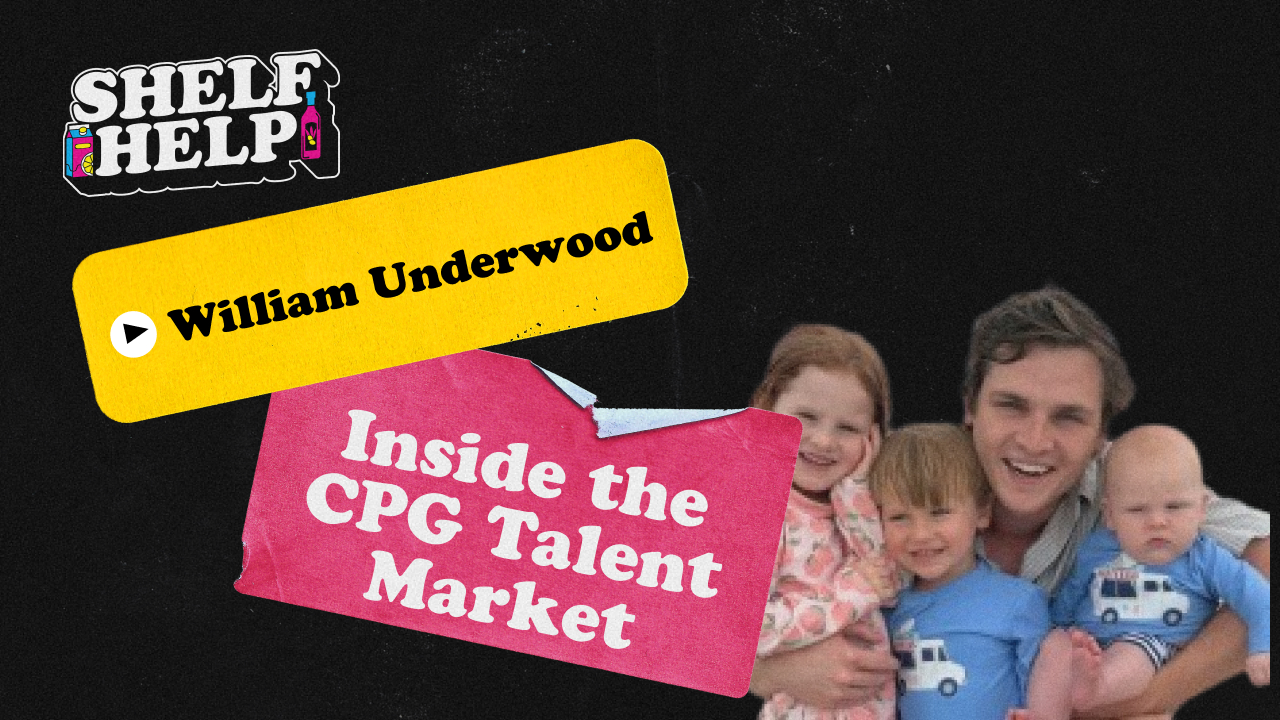



On this episode, we're joined by William Underwood, Founder of Talent Brew - the CPG-focused recruiting and headhunting firm helping scaling beverage and food brands find the right talent through competitive-set focused outreach.
William breaks down what the CPG talent market looks like right now. With post-COVID reorgs, acquisitions, and layoffs, brands have historic access to exceptional talent, but many don't know how to vet or retain it.
We get into the roles trending up, from DTC and TikTok Shop managers to channel-specific account roles, and why AI fluency is becoming a must-have even though most CPG brands don't know exactly what that hire looks like yet.
We also dig into the hiring roadmap for scaling brands - who to hire first, and the common traps like chasing logos on resumes and inflating titles too early.
---------------
Episode Highlights:
🍳 From executive chef to CPG recruiter (the origin story)
🍺 Launching a beer-focused firm during the worst market since Prohibition
📊 Why it's a historic buyer's market for CPG talent right now
🛒 Roles trending up: DTC, TikTok Shop, channel-specific managers
🤖 AI fluency as an emerging (but undefined) hiring requirement
💸 The real cost of a bad hire (financial, emotional, mental bandwidth)
🎯 Competitive set focused recruiting (50-100 companies, 3 referrals per placement)
⚠️ The trap of chasing logos and inflating titles too early
🔥 "Fire in their belly, throwing elbows, and polish"
🏢 Culture = what your employees do that you don't talk about
🧹 How to fix a struggling culture (and when to fire fast)
👀 Brands he's watching: Recess, Trip, Go Brewing, Throne Sport Coffee
---------------
Table of Contents:
00:00 – Intro
00:44 – William's origin story (from executive chef to recruiting)
02:55 – Expanding from craft beer to broader CPG
03:50 – The current CPG talent market (buyer's market)
05:30 – Roles trending up right now
07:00 – TikTok Shop and ecom hiring challenges
08:31 – AI fluency in CPG hiring
10:22 – The real cost of a bad hire
11:45 – Smart hiring roadmap for scaling brands
14:00 – Common founder hiring mistakes (logos and titles)
15:55 – Generalist vs. specialist (and leveraging agencies)
17:00 – Competitive set focused recruiting explained
19:55 – Red flags when evaluating a recruiting firm
22:07 – Interview questions that actually work (go past tense)
25:02 – What brands want vs. what they actually need in a hire
26:36 – Ideal candidate profiles by revenue stage
29:00 – Building and maintaining company culture
33:20 – Brands and trends William is watching
35:00 – Where to find William and Talent Brew
---------------
Links:
Talent Brew – https://mytalentbrew.com/
Follow William on LinkedIn – https://www.linkedin.com/in/william-underwood-405677245/
Follow Talent Brew on LinkedIn – https://www.linkedin.com/company/mytalent-brew/
Follow me on LinkedIn – https://www.linkedin.com/in/adam-martin-steinberg/
For help with CPG production design - packaging and label design, product renders, POS assets, retail media assets, quick-turn sales and marketing assets and all the other work that bogs down creative teams - check out https://www.kitprint.co/.
Shout out to my friends over at Glimpse, the go-to partner for automating retail-related back-office operations and unlocking margin trapped in invalid fees and manual processes.
Episode Transcript
Speaker: 00:00
Welcome to Shelf Help. Today we're speaking with William Underwood, founder of Talent Brew, the recruiting and headhunter firm, pretty much exclusively focused on CPG and hospitality, has a really good sense of talent out there in the market, what brands are looking for. So super excited to chat about all things recruiting. And um yeah, first off, for the listeners, William, ones that maybe aren't as familiar with with Talentbrew, love to just kind of start off getting a quick lay of the land just in terms of origin story, why behind the business and why you initially started it, and then the kind of core services you guys offer, types of brands you work with, and maybe kind of what's what's a bit unique about Talent Brew with within the broader recruiting head-tending space. And then uh we'll go from there.
Speaker 1: 00:45
Yeah, absolutely. So yeah, I think it's easiest to understand actually with my background. So I actually have a background as an executive chef and director of operations working in fine dining, which, you know, long, long story short, my wife and I decided we were going to start a family, and so needed to pivot out of the crazy, uh, crazy lifestyle that comes along with being a chef and wound up in recruiting in the in the space, kind of just fell, fell backwards into it almost and and instantly loved it. I think when I was a chef, what I was best at was avoiding churn in in staff. So I could keep a steady staff. I I kind of intuitively understood how to how to hire and and hire good people that lasted with the organization and could contribute in a unique way and kind of be able to build our teams around that. So kind of had a natural inclination to do that. I think I attribute a lot of that to my my father, who's worked for in organizational and leadership development with nonprofits forever. So kind of just been a sponge next to him, even as a young kid, listening on on his calls. Um turns out that's like a actually a transferable skill set, which when you're a chef, there's not many, you know. Nobody, nobody cares how how well you can you can dice onions when you're looking for like a real world uh position. And so so yeah, did well working for a couple private firms in that space. Um and there's a there's a few things that I picked up on kind of and and became aware of in recruiting as a whole that I knew like at like I don't that doesn't resonate with me. I want to do things a little bit differently. And so um really developed a passion specifically for beverage, craft beer specifically when I was working in hospitality. I'm based in Charlotte, North Carolina, so it's a great, great beer state. Launched the firm, officially launched November 2023, exclusively focused on beer, actually. And so when I started, it was exclusively craft beer focused. Uh, you know, November 2023, arguably worst time since prohibition in the United States to open a staffing firm focused on beverage alcohol. But feel very grateful and blessed to really gain some excellent clients that first year and really just snowballed the firm within, I would say, mid, mid-late 24. I was expanding outside of just beer into all three tiers of beverage alcohol and then broad CPG. So hydration, energy drink companies, agencies that support CPG companies. And yeah, I think that that's really the origin story of the firm. I think a high level, you know, we we tend to work with founder-led organizations on a passion level for me. That's what I love. That's what uh makes me excited about doing this every day, is when I get to work with founders who who have a mission and and a passion and tend to work with scaling beverage brands, startups, scale-ups, PE and VC backed organizations, as well as more established small and medium-sized businesses. Relatively strong uh commercial link to our firm. I would say about 70% of the requisitions we receive are for sales and marketing focused positions. Um, at this point, I spend most of my time focused on executive level, VPC level searches, and then kind of have the firm broken out to my amazing team, which is basically broken down by beverage alcohol, EPG, coffee, and then hospitality now, which is just a new, a new venture starting this year.
Speaker: 03:49
I'd love to just dig into what the broader CPG hiring landscape just looks like right now in today's market, in terms of what the current talent market looks like. Is it, you know, and is it more of a buyer's or a seller's market right now?
Speaker 1: 04:02
That's exactly the vernacular I use actually. So it's it's perfect. But it is it's a buyer's market for sure. Companies, if you're in CPG and you're hiring right now, you have a a like probably historic advantage in access to exceptional talent, particularly if you're in a regulated category, alcohol or cannabis, but with so much you know, turbulence post-COVID, so many re-orgs, acquisitions, layoffs, there's just there's excellent talent out there that's available. I won't get into it now, but that that can create, it will create actually a long-term ripple effect of turnover in organizations that don't know how to hire that talent appropriately and don't know how to vet it and make sure that they've got their heels dug in because at the executive level, I mean, I I know some phenomenal executives who are going on a year of unemployment within the spirits industry, specifically spirits and wine specifically. And, you know, that that frankly, they're willing to take a pay cut to get back to work. They have to get back to work. But so many of these people who are willing to do that and have kind of been beat down by the, you know, by the buyer's market are also going to spend as much time searching for their next role to bring them back, kind of level set them in terms of comp and seniority level. And so I think for brands that are looking to hire, it's easy to have shiny object syndrome right now and like chase that that amazing the amazing logos on that candidate's resume and all of that. But you have to remember like if it's too good to be true, it's probably too good to be true. And you have to hire for your brand right now.
Speaker: 05:28
Yeah, totally. That's a good yeah, that's a that's a good level set. What roles are brands like most urgently hiring for right now and kind of what what's trending up? And and on the flip side, maybe what's kind of trending down, if anything.
Speaker 1: 05:39
Yeah, there's three things that I've I've really noticed. We'll see if I can remember all three as I go along. But the the first one is like a shifting route to market. So beer wholesalers particularly, they they have, as beer has declined, alcohol in general has declined, they're keeping their trucks full. So whether they're selling selling, you know, satanic soda water or coconut water or hydration drinks, whatever, it's providing opportunities for suppliers to leverage uh different DSD routes that maybe historically they wouldn't have um intuitively leaned into. So that's the one thing is that um there's there's a shift in route to market. So for sales people, G-Drink companies don't just need folks who can manage, you know, Unify and Kahi. They need people who can are familiar with the bud network and um can go can go uh blue or red. The second thing is there's obviously uh a massive influx of brands that are primarily D2C and are leveraging social media channels as their primary really sales force. And so whether it's media buyer positions, TikTok shop, bless you, TikTok shop managers, bless you again, or any any really any e-com focused position, that that's kind of a hot, a hot topic right now and can be very challenging to fill those roles because TikTok shop has had a marketplace for what real really just a couple years. And so to find somebody who has the background who's done that before and who's proven is is really challenging. Add on like a constantly shifting landscape of what works in paid ads and and what doesn't work, and and it's it becomes messy. The third thing I've noticed is brands getting really specific on their channel focus. So I think actually I'm seeing it two ways. Brands get very specific on their channel focus, and they're like, we're looking for you know convenience chain managers or or natural chain managers or channel managers, excuse me. That's one thing. So so brands will be like very much rather than having like a generalist managing accounts, they really are getting in the weeds about like, okay, this candidate is great at doing this, and they have these relationships, and that's that's the channel they're gonna focus on. And I'm also seeing actually exactly the flip side of that with brands that are expanding quickly. They're no longer hiring necessarily regional uh sales teams, they're hiring chain account teams that focused on their local geography. Um, I think particularly post-COVID, with uh businesses being built less on-premise and more in retail and in grocery or or convenience or whatever. Some brands I'm seeing are, again, they'll only hire chain account managers focused on a specific territory, and then they're managing distribution and the buyer relationships. And so that's kind of a a weird split. I think there's a time and place for both strategies, but at a high level, I think those are the most prominent roles I'm seeing, actively being hired and like the maybe some of the most challenging positions to fill right now.
Speaker: 08:30
Are you starting to see roles that you're hiring for, maybe especially in the marketing side of things where your clients are starting to require some level of AI fluency?
Speaker 1: 08:39
Yeah, absolutely. I I agree that CPG does maybe seem a bit behind, but I think CPG has always been a relationship business, right? Oh yeah. That's where our slogan comes from. The the beverage people people seem to be the food and beverage people people. But yeah, was actually talking with the founder recently who it was actually for ops roll, and he was looking for somebody who kind of SNOP side of things could tie their organization together with AI tools. And I'm like, okay, well, talk to me about what does that look like? What what tools are they using? And he's like, that's up to the candidate, right? That I think that that's it's not it's not like they're walking into a to an ERP system that's just like tech forward or whatever. It's like it's like architects, engineers, people who can like develop that and who are just like frankly nerds. Sorry if you're listening, you're one of those people, but like have that that talent and ability to kind of look at like, okay, what what needs to be addressed here and how am I going to do that? Um I that's that's the the lay of the land. I think there's tremendous opportunities. And I think we'll see tools that are more broadly accepted arise soon that are that are AI forward and and designed for CPG operators and maybe solve multiple multiple. Yeah, I think that's that's the biggest thing I've seen is like anybody who's hiring for that doesn't know exactly what they're hiring for because it doesn't exist yet. If it does, there's a couple of those candidates. And I've spoken to those candidates and they're doing very well for themselves and and know exactly what they want next. So yeah, it's it's a it's a really exciting time. I think any brand should be leaning into that. And even if it's not a formal position with the company, brands should take note of who they have in their organization that's leveraging technology and AI in innovative ways and and look at how they might be able to leverage that across their across their organization.
Speaker: 10:22
What does a bad hire actually cost a growing brand, especially one that that's growing quickly?
Speaker 1: 10:27
Yeah, I mean, it's so it's so hard to put a number on it, right? It's so hard to know because based on seniority level, like people can do a lot of damage really quickly. And then like what is the cost of somebody who meets quota versus the opportunity of five finding somebody and being thorough in your search of finding somebody who can blow quote unquota out of the water? Certainly think particularly for early stage companies, rather than just the the financial impact of maybe keeping somebody who wasn't working out on salary for six months, you have to look at like what's the bandwidth emotionally and mentally that the founder is having to deal with having somebody on the organization that's not pulling their weight and that's not working out. Um also like what's what's the opportunity cost in that six months where you've had somebody mediocre in the role who, if you if you had gotten it right that first time, you know, where where would that uh portion of the organization be, whether it's sales, marketing, whatever, had they had the correct leadership six months ago.
Speaker: 11:22
Yeah.
Speaker 1: 11:23
So again, it's like it's an impossible equation to put a dollar sign on usually. I know a lot of firms like to throw out, you know, if you a bad hire will cost you double the the first year salary or or whatever. And it's like, okay, for for for what position? And every every organization's different, every hire is different, and and the damage or just lack of performance from any candidate is always gonna always gonna shift.
Speaker: 11:44
Yeah, totally. Um, you mentioned you mostly you really like to work with with founders for up and coming CBG founders that are scaling, let's just say, from a million to 10 million in revenue, where they're starting to really you know beef up the team. Seems like one of the biggest, biggest decisions they face, like who to hire and when. From your perspective and what you found, what is a a smart hiring roadmap look like for like an early stage of just a beverage brand, who and who are like the typically the first two to three critical hires that they should probably be be looking at in today's market?
Speaker 1: 12:14
Yeah, I think so much of that depends on how they retail and what the route to market is, obviously. Um if it's an online brand, generally the first hire actually tends to be more operations focused, 3PL, like agency fluency and and that type of thing. Whereas if it's if it's a brand going to market more the traditional way and like, you know, gonna gonna partner with a distributor and selling chain accounts, and there might be somebody who's more commercially focused. I think the question I always ask founders at that stage, because yeah, some sometimes I'm working with founders and they're like, do I hire a COO right now? Do I hire like a marketing intern? Like what do I even like what's the what's the right path here? And I just ask them, how are you spending your time right now? Like what are the things that are taking the most of your time? What are you doing right now that you suck at? Because we all have things that we're just bad at. Yeah. And and generally, the way I love to see brands hire is the that early stage like key hire. Say this is somebody like at a senior level, maybe director plus, they need to have like the same fire in their belly and and motivation as the founder and at least share a couple of key strengths simultaneously. They need to have like a separate thing, set of things that they're just excellent at and that's intuitive and natural for them. And I think at that early stage, what you need to be asking yourself when you're hiring somebody is like, can I can I work organically with this person? Can they can they pick up my Slack and can they keep pace with me? Will things be able to be communicated only by being CC'd on an email and being implied that like, hey, you're gonna pick up the ball here? Um, and and I think that that's that's that's the the framework kind of I like to use is just understanding, okay, what's weighing you down right now? What are you good at and what's keeping you from spending time at what you're good at and how do we hire to support that?
Speaker: 13:59
Yeah, that's great. And I guess kind of on the flip side, what what are um what are the some of the more common ways that you see founders can trip themselves up when it comes to building their team and in those earlier days?
Speaker 1: 14:10
Yeah, I think I think brands that look at logos instead of individuals that look at like, hey, where did you work and and get excited about that? Yeah, it's it's great to pull somebody from Congo, let's say, prime, but you're not prime, you know, at least, at least not yet. And if they joined, if they joined two years ago, that business sure, maybe that's like not the right business to use for this analogy, the more the more I think about it. Somebody from a brand like that that's had massive success, did did they work there when it was like out of the founder's garage or you know, when it when it was bootstrapped, like pre-seed, whatever it is? If they did, like, you know, double click on that, but also that more than likely that person is is out of range, out of budget for the founders at that, you know, one million stage. So not to veer too far from the from the question here, but I I think that's one of the biggest mistakes I see is what's the what's the who's the individual? How are they going to be able to complement my strengths and what is what is their unique genius that I'll be able to implement and glean from in my business? The other thing, which is like two-edged sword, is uh titles. Giving somebody uh a VP or C-suite title when they don't necessarily have a a team under them and they're not proven at that level, I think is is really risky. You're kind of setting yourself up for failure and turnover in part because there's nowhere for that candidate to go from there. You know, like if if you hire somebody in who was a director now as a as a chief sales officer, there's not a lot of room for growth with that that organization. All of the growth is going to happen beneath them, and they may or may not be ready for it, and there's not much to be able to keep them incentivized other than the growth of the company. So unless it's a co-founder, I think that that can be a risky move and something that I frequently see.
Speaker: 15:54
Totally. Yeah, that makes sense. How do you think about the trade-off between hiring a a more scrappy generalist, which I think is generally the earlier you are, the more that that often makes sense, versus bringing in a specialist before you know the brand might think that they're ready and maybe was to really hire a specialist, but they really needed a scrappy, more scrappy generalist? Like, how do you think about that trade-off and and the stage of what a company company is at?
Speaker 1: 16:14
Sure. I think if we're talking like first couple of hires, usually a generalist is the way to go. You just need somebody who can get stuff done and and free up bandwidth is like what I always think about as like is this person gonna create bandwidth from you or take it? If they take it, just don't hire the person. It's that simple. Also, I think there's so many great agency partners and firms. I think of uh countermeasures corporations, CMC, uh, you know, can be the specialist that you need them to be without having to without having to expand headcount. And so I think now actually a really crucial skill set is how well has this person managed brokerages before, third-party services and agencies. That that I think there's more opportunity to leverage those successfully now than ever, particularly at an early stage. But there's also like a right way to manage those relationships, and you need somebody who can do that. Yep, totally. That makes sense.
Speaker: 17:02
When it comes to actually finding the ideal candidate, I'm pretty sure when we chatted a bit ago, you you, I think you emphasized something called like competitive set focused outreach. What does that actually look like in practice?
Speaker 1: 17:13
So I say I always say we're a competitive set focused practice. So what that means is, and like not not to contradict myself here, but we very much recruit based on the logos that are on somebody's resume. We're not we're not a skill set-based recruiting firm most of the time. There are exceptions to that. The AI analogy we we talked about earlier is a good example of where we might just be looking for somebody with specific tools or skill sets they're familiar with. More often than not, when we begin a search, if uh if a hydration client is coming to us and looking for a national account manager natural channel focused, what we're going to do is compile a list, usually of between 15 and 100 companies that are direct competitors of them or close to a direct competitor. So it might be, you know, this is a hydration company and we're looking at an energy drink company, something like that. But generally we will, in that case, we want to we want to have a shared buyer call point. And then we use our our back-end technology to pull in profiles of generally 20 to 30 candidates who have worked with direct competitors or close to direct competitors of our client based generally on the stage that those brands were in when that candidate worked there. Because again, like somebody who's working for a hundred million dollar brand might be exciting, but are they going to have like be able to be as multifaceted as somebody who's, you know, in that same position for a $10 million brand? They're very different profiles. And so for us, we call it kissing frogs, right? And we don't ever post the job ads. We we make our lists of people, we do direct outreach to those candidates, usually who are currently employed, with our clients' competitors, and begin the conversations and then and then kind of figure out, okay, this is the best fit for you based on the fact that they have these attributes in their personality, or or they've done this before, they they they're familiar with this operating system. Um and again, I think, you know, again, we call it kissing frogs, just talking to those candidates, figuring out, hey, what which one's gonna be the prints? I think when you're posting job ads, which is the the anti-competitive set focus thing, anybody can come in. Like, you're not just kissing frogs anymore, you're kissing like jellyfish and like everything else in the ocean. Uh yeah, that's very much with that method, we've averaged three candidate referrals per placement. So generally, we're we're sending no more than three resumes to our client to get a candidate successfully placed. But most other firms I'm familiar with are 10 to 20 referrals per placement. And so the amount of interview and legwork that the client has to do to find that one great hire is so much higher whenever the firm isn't specialized and doesn't know exactly what they need and what they're looking for. Um, and so yeah, that's that's to expand on that kind of competitive set focused practice. That that's what that means for us.
Speaker: 19:55
What should a brand look for when they're evaluating a um firm like Gears? And what are some red flags that that a recruit that should will give a sign that a firm or recruiter might not be the right fit for a brand for whatever reason?
Speaker 1: 20:07
Yeah, I think you want to do business with good people. Again, going back to why I wanted to start this firm in the first place. Recruiters obviously have a horrible reputation. I always say it's like it's like um, you know, blue-collar workers and then salespeople, and then drug dealers, and then recruiters. Like that's generally like the reputation, how how they're ranked. And I again I I've experienced a lot of that firsthand. And the key kind of principle of my organization and and the way we run our practice is that we're we're just focused on on being humans, right? Like our candidate experience is focused on did that like was that was that process transparent for them? Are we leading them on? Are we not responding to messages from them? Are we ghosting people? Like I like zero tolerance for any of that. And so I think when, especially when you're you're niche down, like we are specifically within CBG, like word gets out fast, you know. And I think that's what I attribute our our growth to as well, is that like people have a positive experience working with us and they want to they want to share that. The other thing to think about is again, I like why not use a specialist, right? Like sure Robert Half or maybe some massive organization run phenomenal practices and and are known for you know delivering great talent, but what's the likelihood that their Rolodex is as as niche down within CPG as a firm that's a specialist? Um, and then I think the final thing I would look at is what's the speed, what's the communication cadence, how much is that firm requiring from you? Because it is a like generally I have a 24 hour communication rules with my clients. Hey, whenever I send a candidate, I need feedback in 24 hours. Otherwise, like the search is gonna drag out and we're gonna waste both of our times. If you don't feel like the if you feel like the firm is just taking on any work, I would say that that's a that's a red flag and like you you want to work with a firm that is gonna, you know, get in the weeds with you and and and be willing to like uh really, you know, hone in on exactly the profile you need and do whatever it takes to find that person.
Speaker: 22:08
What are the keys to actually from a brand side perspective, to actually getting the most out of their recruiter relationship as a hiring manager and making sure that they're gonna get really good candidates and hire a really good person that's kind of on their side that they're actually need to be holding up their end of the bargain.
Speaker 1: 22:20
Yeah. So a great question. I think uh somebody once told me who was a very successful recruiting agency owner, he's like recruiters are like they're like the the CIA. Like they have the I know I know generally when layoffs are going to happen in an organization a couple months before it pops up on on brew bound or whatever industry publication um because I'm I'm getting like people calling me saying like hey Will some shady stuff's going on and like I might need to find a new role here. I think clients being willing to to have a conversation right like take it to I always want the relationship. Like I we can get deals closed right that that's fine whatever I want the relationship. I want to work with brands that are looking for that long term. And I think the ones that do that they just ask me questions. Hey hey what are you seeing here? Hey I saw this going on over at this organization any insight there's like so much that we hear that obviously we're not gonna just like throw out into the public but we're we're really close to the kind of heart and pulse of the industry. And I think brands that are willing to put in time and building that relationship and partnership with our firm get so much more out of it than just like oh we got this placement they also got like oh our competitors about to lose their their spot in Kroger and you know we need we need to like put our foot on the gas trying to trying to uh grab that shelf space.
Speaker: 23:34
What questions should they be asking the interview to figure out if someone has the skill set needed to kind of break through in in today's market.
Speaker 1: 23:41
Yeah I think so many interview processes are based on what would you do questions, how would you handle questions and their their future and they're like based on what the candidates tells you they they might or might not do in a in an imaginary scenario. I think the the number one thing you can do to become a better interviewer um in this case specifically for a marketing candidate is go past tense. What did you do here? Like ask specific questions about where they worked what the environment was like and and when you start to get like the the gut feeling that like oh that res like we're kind of there right now or we need that to happen or we just had that happen last week and I wish we had you then like that those are the those are the questions that I think really get to the bottom of it is hey in your in your last position how did you handle this and there there can be times where you know confidential information is has to be guarded but generally anytime you ask a question about like who the person has been usually tells you the story of who they're going to be and absolutely people can change and there's breakout opportunities for everybody and some people excel in those and some people fall flat on their face. But I think always always always getting a a handle on what the candidate has actually done and contributed previously gives you a and and whether or not they're even able to tell you that and track that tells you so much about how they're likely to succeed or not in the next position.
Speaker: 25:01
What's the biggest mismatch you see between what CPG brands say they want in a hire and what they believe they need in hire versus maybe what what they actually need.
Speaker 1: 25:13
Hiring managers founders wanting baked in relationships particularly with buy huge huge pet absolutely you need to understand how like you know quick trip works and what they're what their reset cycle is like and whatever you need familiarity with that. More importantly you need to be somebody who can identify opportunities and foster relationships from scratch because buyers rotate right distributor partners rotate we all know that hire the person that is going to represent your brand well and that resonates with you if you're a founder on the founder level if you're a you know C member on the the brand's identity level enough that no matter what changes happen, they're they're the right person they like live, eat, breathe and sleep your brand. So huge of mine is if we're if we're hiring a national account manager, obviously we're gonna look for people who have managed those accounts before but when somebody and maybe maybe account management specifically is a poor example here, but when you're only hiring somebody based on their relationships. In fact I would say if a candidate is willing to be hired based on that there's a good chance that at some point a brand has done that before and their relationships, their reputation is probably starting to get burned a little bit because not every brand's going to be successful.
Speaker: 26:25
Right, totally what is a great sales leadersh profile look like for let's just say a you know a Bev OUC brand that's doing say you know three million and looking to get to 10 million in revenue versus a brand that's doing a hundred million and they're looking to get to 500 million.
Speaker 1: 26:43
Yeah I think I think there there's a couple things a couple phrases I I frequently use three I can think of fire in their belly right fire in the canvas belly they got to have passion particularly at that three million like you just got to be passionate and like wake up and and jump out of bed every day. The second one is is throwing elbows right is like can't can you can you just get stuff done and and make it happen and and not require like people around you to push you forward. And the third one is polish. Either of those instances that my my ideal candidate profile is actually very similar um but the size of the brands they've worked for has changed. And usually for that head of sales I love somebody who particularly for a beer brand I love somebody who has a a corporate foundation Anizer Bush is my favorite and I'll catch a lot of flack for that I'm sure but I love people who started their career with Aneizer Bush because they have such a robust training uh such a robust training process and the talent they produce is so polished and well rounded and like understands the business the way it's supposed to be and then goes on to work for startup organizations. And if there's a consistent track record of growth once they move to the startup world that tells you that they've got the polish from an organization like A B or Coca-Cola or Heineken or any of those you know massive industry players and that they probably have the fire in their belly and can throw elbows from working with a startup. So that that like three to 10 phase, I still love to see that somebody who really understands how to run a business properly from usually some sort of corporate foundation but then is is proven and has been successful growing other startup brands. And then when it's that 50 to 100 million it's looking at probably somebody who's spent a little bit more time with the larger organizations and has been part of organizations that have scaled to that you know whatever nine figure mark companies I think I mean to name a few like long drink would be one I would look at uh surfside some of those good boy I'm sorry not good boy I mean good boy too at this point but I was thinking of happy dad those are some of the organizations I would look at and be like okay if they've led in executive level positions with those organizations again that they have a tracker they can they can probably do it again. But I I always love to see that corporate foundation for the for the head of or the the chief sales officer position. Culture is is uh from my experience is is a really hard thing to maintain as as a brand scales from your vantage point what separates brands that have a really great culture from ones that struggle to retain talent just because the culture is not strong and you know it doesn't feel like they're part of something special or something they buy into yeah culture is all the things people do your employees do that you don't talk about right good or bad that's what culture is to me it's all all the things that your employees do that aren't talked about that we don't say like oh we're whatever we have these these core values I'm not saying you shouldn't have those but pay attention to the things that are happening positive or negative that are not flagged not high priority that that is directly reflective of your culture how you're hiring and how you're you're leading your organization so it's really challenging. I I I'll always say like the the best candidate for your organization culturally is likely going to be the best performer in the position even if even if their resume doesn't quite stack up against the the other ones to think of some of the clients I have who have the strongest culture candidates pick up on it immediately particularly if they've worked in one of those cultures before and they've worked in a really positive culture it they'll they'll do the first interview and be like this is what I want. Yeah the the job's great the comp's great whatever but like I want to work with these people because we're cut from the same cloth. So yeah it's like it if if you're putting more focus on talking about what your culture is versus just living it every day then red flag made major red flag you need to be intentional about setting the the parameters and the guardrails for like this is this is what makes our culture special. More importantly you need to live that every single day and and people need to be able to tell you that about yourself and about your team without having to talk about it, without you having to say this is who we are, what we do. Yeah it's like it's a loaded a loaded question I could go on forever but I think that's what jumps out to me.
Speaker: 30:50
In terms of for founders that are uh I guess humble enough and and honest enough with themselves and know that their their culture does need some work but don't really know where to start from kind of your your point of view any things that come jump out top of mind that they can do to become build a more stronger culture and become a more attractive employer that you know when those candidates come in in that first interview they leave right away and be like this is the place I want to be yeah I I don't want to say go to therapy but I do think that founders have an obligation to be a great human first and foremost.
Speaker 1: 31:20
Totally. Like I am positive if you can do that the the culture challenges you have will be more operational issues that that need to be addressed. But when everybody knows that that the leader organization is a genuinely like a good human so much of the work is done already. I would I think any founder who's really struggling with turnover just knowing like hey I've got people on this team that are like taking some liberties or operating in ways that aren't aren't the way I want to do the first thing to do is like don't make it an open conversation with your team there there's a time and place to do that. Talk to people who you know are living that in their organization day to day other other founders mentors whatever talk to talk to a a recruiter who works with those organizations and can pinpoint and get get specific get specific like these are the things that are I'm I'm seeing like a negative attitude I'm seeing like emails from Friday being kicked off and not answered until Tuesday. Get specific on what the problems are talk to people who you know don't have those problems and hopefully did at some point previous and figure out where they're where they're rooted. And once you figure out where they're rooted you you address it openly with your team and you and you create a a yeah a humble open conversation around like hey these are some things I'm seeing that aren't good. That's not how I want this brand to be represented that's not the environment I want my employees to be working in. So let's let's work together in in resolving that and then fire fast. You know when you have somebody who's just who's just a bad apple fire fast. Don't don't hold on to them. We we regularly conduct confidential searches meaning like hey we've got you know somebody on our team who is not working out and we need to find their replacement before we let them go. We do that regularly and I think that's one of the most important things as as a founder you have to be willing to do because that person will eat up so much of your again emotional and mental emotional and mental bandwidth that you you you you can't lose it. Like you can't spend it on on people who you know they're not going to be any different six months from now or a year from now. Yeah totally agree.
Speaker: 33:19
Last question for you Will just because you're in this space you see so many brands and whatnot any particular brands or just kind of trends across the the broader CVG world that have just kind of piqued your interest lately or things that um you're particularly excited about and and tracking just because they they seem interesting?
Speaker 1: 33:35
Yeah uh I I got sober about to hit a year ago now. So really into thank you I appreciate it really into the functional beverage space recess all-time favorite of mine that product literally changed my life from a from a health standpoint trip I love Hayo is a favorite of mine um I love seeing these legacy brands make non-alcoholic versions of their product to delirium what what is the name of that Hugo Brewery whatever but delirium trim in the beer they they released a delirio a zero version of that I finally bought it at Whole Foods yesterday it's it's so good. Go Brewing I love I've got a I've got a mixed pack of them in my refrigerator right now. Throne Sport Coffee amazing product protein great great formulation love the brand love the people behind it. Yeah I think I think those are I'm sure like I could rattle off forever my my refrigerator is just like constantly rotating through all these different brands but those are a few that kind of stand out to me right now with fuzzy coffee carbonated coffee out of that I haven't heard of that one. I'm write that one down. It's it's delicious. It also like I think from a from a functional standpoint particularly being booze free now it's one of the few products that I drink and I'm like oh this is like a a very like well formulated kind of like uh buzz or or whatever from it it's got some functional ingredients in it and it's yeah it's just it's excellent.
Speaker: 34:57
I love it. Awesome. Love it. Yeah well it's been awesome really appreciate the time I think this has been super helpful I think especially for founders out there that are you know on a growth trajectory looking for hiring I think this should definitely be helpful. What's the best place for for people to f follow along with you and all your expertise in terms of hiring and then best place for people to follow along with everything that's going on with the firm as well.
Speaker 1: 35:14
Yeah absolutely so LinkedIn pretty good my line of work I live on LinkedIn find me there I'm I'm always posting probably something a little bit smart alky but um follow me on LinkedIn and then the talent brew company page as well is becoming more active particularly if if you're listening to this and you're a job seeker um reach out to me or somebody on my team who is attached to the vertical you live in whether that's alcohol, coffee, energy drinks, whatever and and yeah we'd we'd love to chat with you.
Speaker: 35:40
Perfect. Awesome well I think that's the pod
.svg)