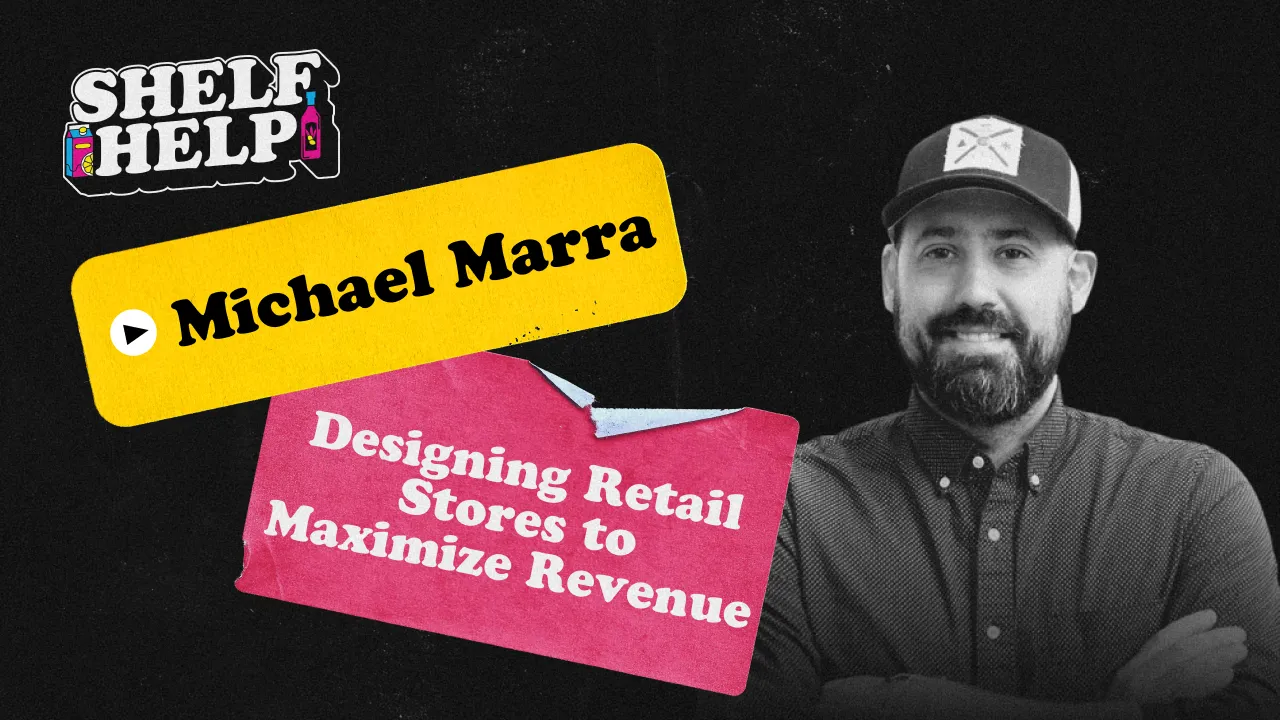



On this episode, we’re joined by Michael Marra, the Co-Founder & Creative Director of Budder Creative, the agency behind modular fixture systems like Budder Groove™ and some of the most immersive dispensary retail spaces in North America.
With roots in industrial design for global beauty and apparel brands, Michael has spent the last decade translating “best-of-CPG” shopper insights into a regulated, ever-evolving dispensary landscape.
Michael unpacks how Budder productized retail hardware, why budtenders shouldn’t carry the merchandising load, and where he thinks brick-and-mortar is headed as the category matures.
—---------------
Episode Highlights:
🪑 Translating big-brand retail lessons to cannabis
🛒 Crafting the ideal dispensary customer journey
🏬 500-sq-ft bodegas vs 20 k-sq-ft megastores—design levers that change
🧑💼 “Budtenders are not your merchandising strategy”
🛍️ Building a profitable, brand-driven shop-in-shop
💄 What cannabis can steal from beauty retail
🔧 Budder’s plug-and-play POP tools for faster roll-outs
🏗️ The future of physical stores in an omni-channel world
📈 Trends Michael’s watching for 2025 and beyond
—---------------
Table of Contents:
00:56 – Budder intro & origin story
03:02 – Designing retail for the world’s biggest brands → dispensaries
07:16 – Mapping the ideal customer journey inside a dispensary
11:53 – Designing a small bodega-style dispensary vs a megastore
17:26 – “Budtenders are not your merchandising strategy”
19:26 – How to build a successful shop-in-shop
23:16 – Beauty retail vs dispensaries
25:45 – Budder’s plug-and-play POP tools
32:12 – The future of physical retail stores
34:50 – Trends to watch
—---------------
Links:
Budder Creative – https://www.buddercreative.com
Follow Michael on LinkedIn – https://www.linkedin.com/in/michael-marra-9033338/
Follow Adam on LinkedIn – https://www.linkedin.com/in/adam-martin-steinberg/
For help with CPG production design - packaging and label design, product renders, POS assets, retail media assets, quick-turn sales and marketing assets and all the other work that bogs down creative teams - check out KitPrint.
Episode Transcript
Speaker: 00:00
Welcome to Shelf Help. Today we're speaking with Michael Mara, who is joining us in the Philly area. Michael's a co-founder and principal at Butter Creative, which is a creative agency primarily focused on the cannabis space and working a lot around the dispensary retail environment. Prior to Butter, Michael spent a decade plus as an art director, design leader doing work for big name brands like DKY, Victoria's Secret, Johnson ⁇ Johnson, et cetera. So definitely got a lot of experience in the CPG and retail world. Let's get into it. So first off, Michael, just people that aren't that familiar with Butter Creative, and just maybe just give a quick lay of the land in terms of kind of the origin story, how you got the agency started, what the kind of core offerings you guys have, core servers you focus on, and any if you have any any exciting milestones or whatnot you want to share that's been going on as of late, and then we'll uh we'll go from there.
Speaker 1: 00:51
Cool. Yeah, thanks. I appreciate uh being on. Um so Butter started in 2018. Um basically a a buddy of mine reached out and said that he had a friend that was moving to Philly, and he kind of linked us up. Um I had just moved from from Brooklyn and and um, you know, he was another guy running an agency, and um, you know, he came to the offices and saw at the time we were working with DOSIS doing a brand display project for them. And, you know, he it turned out that he was working primarily in cannabis at the time. So that was like uh 2018, and um, you know, we kind of hit it off and we we decided, well, let's try to partner up on a couple projects and see how it goes. And it went really well. And um, you know, we've I think we've I think we've been successful because our agency, his background is more in branding and packaging. And he, you know, early on, he's like, he basically told me like, you know, a number a number of his clients needed better merchandising solutions and and displays. They were looking for that kind of work, they didn't do it. So that was an easy place to start. And I also had clients with more brand and packaging needs, so it was it was great. But I think I think we found success because you know, our teams are our collective team is comprised of 2D and 3D designers, and this is an industry that wants to move quick. So having that capability where we could take a brand, create a brand, apply it to packaging intentionally, and then and then think about how it lives on shelf, as well as branding for for full retail spaces. So that's really the the origin of butter. Yeah, I think our sweet spot is really branding as it's applied to packaging and retail. So kind of that that space there.
Speaker: 02:51
I know you before you jumped into cannabis, spent a fair amount of time working on in-store merchandising, POP, general store design stuff for some of those big brands, like I mentioned. I'm curious what were some of the key things you always had top of mind when you were doing this kind of work for some of these, let's just say traditional brands outside of the cannabis space.
Speaker 1: 03:12
Yeah, I mean, so it really depends on on the type of brand or retailer, right? So like and it's it's different in can't I think there's a lot of there's there's a lot of opportunity in cannabis. I noticed pretty quickly that a lot of retailers, you know, left a lot of white space. They left a lot of uh a lot of room for improvement, let's say. Some of the things in traditional retail is, you know, like like what we would do at like Aveda, for example, is you know, you'd have you'd run a marketing campaign, that campaign would show up in in various touch points. And then when you got to the store level, it would show up as well. So like new and notable product would usually be front of house on what we call a launch pad. So you're getting that that that continuity of brand message invoice and marketing. Um, and then the touch points in the store also are very intentionally merchandised and presented to the client in a way that really carries customer experience from you know what would be online into the built environment. So that wasn't really happening at all in in cannabis, but uh, you know, I think the way that the way that we approach it is take some of those best practices, things like cross-merchandising, creating bundles, finding, being very intentional with the sight lines in the store, thinking about signage and wayfinding and and really trying to create an experience that um, you know, can thoughtfully guide a customer to purchase ultimately. Those are some of those are some of the cues I would say from traditional retail. I think where I see a lot of opportunity um is really like thinking about thinking about the intention of of how the store is laid out. What kind of started with the industry, and this is a common, a common scenario, is that people open a store, especially in a new market, and they might just want to maybe they'll build a cool store and it's like it's cool design, but you know, they kind of just assume that the product sells itself. And maybe that works for a short time, and then you're basically competing on price, and it's a very transactional thing at that time. But really trying to fill in the gaps of how do I make this more meaningful and engaging for customers so that they actually feel like um you know it's a memorable and meaningful experience. Cannabis is difficult because you know, a lot of a lot of markets will have things like a lobby space where you walk in and you show your ID and it's kind of like, okay, what is this experience? It's almost, you know, like a doctor's office. Then you go into a lobby, it's just it feels like a doctor's office. And then you go into the retail floor. Maybe there's no real browsing. There's a few display cases with random product, and then you know, you you may go to the butt tender. And if you're new to cannabis, you know, it's not a great place to start because then you're already at the POS, you feel the pressure of the person behind you waiting in line. It's just not a good, it's just not a good experience. So all those little pieces, all those touch points that lead you there, that's that's where we like to go deep.
Speaker: 06:36
Yeah. I mean, dive into that a bit more. I mean you kind of touched on it a little bit, but I, you know, I think you think about various types of dispensaries. Yeah, there's some that, you know, I guess like thinking about like the old Med and Wii Home, where we're just kind of walking, there's display cases throughout the middle of the store. You can just kind of peruse around, walk around as you want. There are employees that come up to you and with the iPad and kind of ask what you wanted. Can you make those other ones that are a bit more intentional in terms of you walk in and that kind of takes you through like the equivalent of like what IKEA is, where it has a pretty defined path where it takes you through and that puts you in front of all the different product categories by the time you get to the front? I'm curious, what is the what is like the ideal customer journey or flow look like in a dispensary? And what does it feel like operators are still really missing today?
Speaker 1: 07:25
Well, I think a lot of operators will merchandise by category. So you will you will go into dispensary and it's not uncommon to find like the vape section or the edibles or the flower bar or whatever it is. So I think that that that does exist today. I think the way that you know you can you can make that a better experience is maybe pulling out of those things or you know, finding certain benefits that you hear that your customers are seeking out, right? So like one of the first things we'll do when we work with a dispensary client is we'll start with trying to really understand from the bud tender's perspective, like what are they hearing clients or customers ask for? Like what are they, what, what are some of the the the the common things that they're finding to be true with customers? Whether it's like, you know, a lot of people in this market can't sleep, or they have, you know, pain management, or like, you know, they're just looking for a specific product type, whether it's like low THC or high THC. Maybe they're just short searching for value. Maybe at the end of the day, they just want to know what you like, you know. So like right there, you have, you know, four or five different merchandising opportunities. You can have like a top seller section of your store, you could have a staff pick section of your store, you can have things like um, you know, uh creating product groupings based on benefits like sleep or or um you know um focus or or or you know relief or whatever. It's really there's there's a ton of opportunity there. And then for the for the customers that the other benefit of merchandising with um, you know, uh kind of showcasing that outcome or that benefit would be that you could start cross-merchandising different product uh categories that then might open up, let's say, a customer that was only buying previously would come in for gummies because it's a very easy entry and maybe they're new to cannabis. That would be something where you can, you know, maybe show some tincture merchandise with the gummies that has a similar kind of effect, or at least has, you know, something that uh allows them to kind of open up to a new thing. But something very simple like identifying staff favorites is like something that everyone should be doing. Um and it's also like about building trust, right? Like I think when you go to a store and maybe the thing that got you in that store, whether it was a social media post or or whatever, maybe there was a certain deal that kind of brought them in, you should see that again when you when you're in the store. And when you when it starts to repeat and the branding matches and the way that you're speaking starts to connect to the customer, the shopping experience really starts online. So that's really the other thing that we we we always look at is like, well, how are you categorizing product? Does it even make sense to have a sleep benefit? What are you how are you communicating to to your customer online? And then what from that do we want to try to translate into the store? Or, you know, what from the st what in the store makes sense to to to bring into the online experience? And and then you start to create a brand that's a little bit more enriched, a little bit more, there's a little more substance to it, there's continuity, and then that can really help create a trust with the consumer.
Speaker: 11:12
Yeah. Looking at it a bit more to say specific scenarios, because I think, I mean, I guess this is not just just the cannabis space, but in terms of dispensary specifically, the size and layout can vary pretty widely from the 500 square foot bodega type shop all the way to the huge Planet 13 megastores, which I know you've done some work on. So dive into a bit more of the in a bit more detail. Let's look at that smaller, you know, let's just say 500 square foot small bodega shop. Like how do you think about that from a tactical specific level, how do you maximize the layout of that small bodega shop that's, yeah, let's just say 500 square feet?
Speaker 1: 11:52
You know, it's funny, it's it's well, it it's interesting. Like I think with with spaces like that, like a small, a small bodega type store, I think has a nice opportunity to create a very like curated experience that you don't want to over-merchandise product. I mean, there's there's that's a that's another kind of big thing that is a mistake. A lot of these, especially like the larger ones that don't know what to put on shelf, they'll put like a lot of shelf, a lot of product. Well, even if it's behind glass, they'll like load up the display case, and the perceived value is affected by by something like that. So having having very intentionally merchandised displays where you're focusing, there's a focus on the product, and it's elevated and and and and and supported with collateral that helps either tell a story or just informs the customer a little bit more is really important. So, you know, I think for any space, the navigation and the wayfinding is is critical. You know, and that again, that's like that starting with the website, but then when you go into the store, what is the signage? What's the first thing I see? What's the cue, you know, where am I waiting in line? Like, help guide that experience. And I think with the smaller stores, maybe that's a little bit simpler in a sense, but when you walk into that store, you should be very thoughtful about what is in front of you. What are the sight lines of the store? So, like you walk in the door, what's straight ahead is going to be really important. It's actually, it's interesting. Well, in the United States, there's a tendency, maybe it's because we drive on the right side of the road, but there's a tendency to kind of veer to the right. So, like just knowing like what is the customer behavior, and then really being very thoughtful about like what is being shown in that, in that place in the store can can be helpful. And for me, what I what I always encourage people to do is to make that, especially if it's a new market, make it about education. Make it about, you know, if someone's new to cannabis and they haven't chopped it before, like let's give them something to kind of start with. And what that might be is a display, you know, often we'll we'll we'll think about things like onset and duration, you know. So, like how quick will this vape product work versus a flower product or an edible or, you know, like what does an AF look like? You know, like how much product is that? So, like very being starting to answer the questions in advance to them being asked to the bud tender is really a great way to start thinking about what are those tools? What are the tools that are gonna make this experience better? Because ultimately, you know, that's that's the goal. The goal is to is to create an engaging experience, and then you wanna, and then that person comes back. But if they feel like they're smarter from being in your store, then that's a good thing. And if they feel like they're now informed in a way that they'll wanna if they'll want to come back, hopefully. So, you know, I think in a small store there's limitations, but sometimes those limitations can can really be a blessing because then you really get to just focus in on the important pieces. Sometimes the bigger stores are can be a lot more challenging.
Speaker: 15:09
How do you approach that huge blank slate like a a Planet 13 example? And maybe for those that don't know, a Planet 13 may paint the picture of exactly what how big that story is. And I know you did some work in that, so maybe whatever you feel comfortable talking through, like what actual stuff you get there and how that relates.
Speaker 1: 15:26
Yeah, and so yeah, we've done some work with Planet 13. We haven't done any full retail design for them, but you know, looking at the spaces, it's more of a, you know, often it that kind of space might be divided up like shop and shops. And and shop and shops are unique in the sense that you can well, it's not unique. I mean, they've always existed. You go to Macy's or you go to any kind of department store, it's it's a lot of that kind of thing. So, you know, I think there's there's there's opportunity for uh perhaps a different kind of experience where maybe it could become more brand focused. I think um a Planet 13 has an opportunity to create more of an experience that is unique because of the volume of the space. Like you can have like interesting mobiles or you can have like, you know, just areas of engagement, whether it's like, you know, like a place to play video games or like, you know, kind of do something. So it's it's a very different intention. I think it also really requires some thoughtful wayfinding, right? So like you got having a big cavernous space with a lot of stuff going on is cool. It's interesting, is action, you know, but like you still need to try to guide a customer to what it is you want them to see or what it is that they want to see, you know, like why are they there? And it's it's again, it's it gets back to like knowing your customer. Who are the customers that are going to Planet 13? You know, they there's a number of stores that um that they have. I know, you know, the big ones in Vegas, and and that's a that's a different space, that's a different market. And the customer going to the Vegas store, you know, is probably different than someone at a um at a California store or s or some other market.
Speaker: 17:22
I saw you you alluded to this a bit earlier. I saw that you posted a or shared a LinkedIn post a few weeks ago, or you said something along the lines of your butt tenders are not your merchandising strategy. I'm kind of curious what what you meant by this and what are brands missing in this context.
Speaker 1: 17:41
Yeah, it's not a dig at bud tenders. It what what uh what I was trying to say is that you can't you can't rely on your bud tender to be knowledgeable in a way that helps um make every sale. I think obviously ideally your staff is super important and you should have a well-educated staff that can that can speak with confidence and and clarity to customers. But it kind of gets back to my my earlier point of trying to have that conversation before they even get to the bud tender because a lot of these questions that they're asking are they repeating the same question. So let's create an environment that answers that question in an interesting way. Um, and then makes it makes the customer feel like, oh, this these guys get me. Like that that's what I was that's kind of what I'm wondering. And then when they go to the bud tender, it's a little bit less of a pressure because they have something to talk about, right? Because like maybe someone went in a dispensary and they weren't thinking about their arthritis or something, and they see like, okay, pain management, this is interesting, or like understanding what terpenes have what effects that can help increase basket size. That's something that, you know, it's you know, I think that's not necessarily like the, you know, your your your North Star is is is selling more, but I think serving more, and I think I think being able to um, you know, meet the customer where they are is important. And I think you can't just rely on your staff to do that for you. Or it's just it becomes just a like I said, a transactional experience. And then you compete on price, and competing on prices, it's a race to the bottom. You know, it's there's nothing, there's nothing there uh of substance.
Speaker: 19:24
Yeah, yeah, that makes a lot of sense. What's the key to designing a an actual successful shop and shop within a dispenser? And I guess defining success in terms of ones you've seen, you've seen the data after they've been installed and brands that it's actually driven an increase in sales from Yeah.
Speaker 1: 19:43
I mean, so shop and shops are they almost become it's like a it's it's a celebration of your brand, it's creating a full experience, and it allows you as a brand to really decide what that experience could and and and should be. I think that um the ROI is sometimes hard to track. It depends on the market and what's being presented, but I think, you know, overall, having a place that represents your brand and shows it in a physical um in an environment and in the context of being able to walk into, I think that there's a lot that, you know, our experience has been when we do those kind of spaces, it's it's often a lot of the um, you know, it's it tends to be motivating for the teams that represent that brand because now they have like, you know, something that they could physically go to and be proud of and see in their in their space. But I think it it undoubtedly elevates you in a in uh in an environment that maybe has a bunch of those things going on. One thing in terms of like quantifying it, I and I haven't I haven't I haven't deployed this yet, but I've been talking, we've been talking to a number of groups about different options with digital signage and and AI tracking and lighting and and such. So like there are ways of tracking engagement with would basically be like a spotlight where you could kind of target certain aspects or areas of your store, or if it was a shop and shop and track the engagement that's happening there. And then you can kind of use that as a lever to start to make adjustments, which everyone should be doing. You know, I think there's also a danger of trying to make too many adjustments at once. And I think, you know, I I'll see I'll see dispensaries store, and I I know I'm jumping back from brand to dispensary, and they are different, but you know, I'll see dispensaries where like every POS is like a different product. And I think that's you know, it there's a certain message out of POS that you want to convey. People already had their shopping experience or they already know what they're Buying, they're there to pick up, basically. So if there's going to be any other selling or any other presentation of product, it's it's impulse buy. So loading up a POS and then making each one a different group of product is very difficult to track the performance of the display, track the performance of the product, because it all depends on who's there and then who the bud tender is. So like finding some simplicity and a framework for selling product is really the place that we like to go with our clients. We like to say, all right, what are our goals? What are the marketing goals? Like, let's just put that out in the world. Because that's another thing in traditional retail that we always have is like the calendars is, you know, 12 months, 16 months, in some cases, even longer than that. But, you know, being able to like look at what are the period promotions, and then how are we going to think about that in store? Or like, you know, it's funny, I I usually I'm kind of going off on a little bit of a tangent. I hope that's okay. Um, but thinking about like what I, you know, what we did in like in in in traditional retail. I've worked with a lot of um beauty brands, and it's interesting. Beauty is probably the industry, in my opinion, that's clo most closely connected or parallels cannabis. Usually people go to liquor and and wine and stuff, and I get that, but I think of beauty because I think it's the scale of the product, I think it's the personal experience. Maybe you might need um a consultant to kind of help you guide that process, like especially like with skincare products or like navigating different strain types. There's the perceived value of the product, but then there's also the packaging, right? Like the packaging is almost the same. Like you got you got mylar bags, you got tinctures, you got you got jars, you got boxes, and they're all the same scale. You got pens, you got, you got, you have drams. So like those are those elements coupled with the experience and the the need to make it kind of personal, I think is a is is great. And that's we we we get a lot of our inspiration for the way that we merchandise, the way we think about space from that, from that industry, from the beauty industry.
Speaker: 24:24
I wrote a small check into a technology company, I think, back in 2021 that was just solving a problem that I had seen when I was running the uh cannabis company in the past, uh, that basically does a lot of helps track and implement retail employee incentive programs. And they started in cannabis and then the first vertically expanded out into I think their first partnership outside of cannabis was was with Sephora. So interesting that you say that. Their first Fourier out of cannabis was was Beauty too.
Speaker 1: 24:51
I mean it's it makes sense. Yeah, but it's the same scale, and even like the in-store experience could be very similar. And a lot of dispensaries also in beauty, a Sephora will section out a store by brand, essentially. And a lot of a lot of um, you know, cannabis dispensaries do the same thing, which you know it it makes sense because then they're able to, you know, kind of tell a brand, hey, this is your space, but then you start losing control over, like as a retailer, you start losing control over the store, you start losing control over the aesthetic and the look of your store. So part of what we like to do is create a framework where you're able to not only elevate the brand, but but put some guardrails on it.
Speaker: 25:41
At some point in your journey, you launch the butter groove system. And then I think a little while after that, the flip display system, which kind of, I guess I would define it's, you know, I think it's you guys define it, kind of a plug-and-play merchandising kit. So I'm curious what led you guys to launch these two merchandising tools and you know, what exactly are they? And then what kind of led you to launch them and and how's it how does it work? We'll start there.
Speaker 1: 26:06
Yeah. Yeah, so so I'll start with the flip display that and and I'll give you the the evolution. But essentially what we did was we created a kit of parts merchandising solution for specifically for cannabis brands and cannabis product. It was designed with the principles in mind of being flexible, working on shelf and under counter, being modular, so being able to expand if it's like a six-inch space at a POS or a full shelf takeover or even more. And then, you know, being able to make it very easy to update. That's that's where we I'm very excited about it. It's something that, and, and you know, we we we produce it, we have uh domestic production partners, and it's cool to design and build out this product. And I think what I'm what I love about it is that because it's all magnetic, it really allows us full flexibility to do whatever we want on it. So any brand can really do whatever they want. Actually, recently we started um doing 3D printing, which is cool because then you could do like very customized, like, you know, pen holder displays and different things that we could do in very short runs. So that's that's very cool. But the reason we built it was really because we kept hearing the same thing over and over again. We kept hearing our clients just, you know, project the same pain points to us over and over again, that they don't know where they're gonna be in the store. They don't know the size of the space that they're gonna be in. Their their packaging is always changing, their brand is changing. They need an affordable solution that it really just grows at the pace that cannabis brands grow. You know, so that was that was really what drove us to solve that. And I started with the flip system because that's that's really where we're where I think it's it's it's really a really effective tool we're finding for for our our clients and for the brands that use it. It started with those same principles. We started with this groove system version, which as we developed it, it's a bit more pieces where the flip is really a piece. It's like it's like a one-piece display, but you can add components, backer cards, you could add stuff to it as you need to, but it it's fully functional with one piece. The the groove system was one that had these grooves cut in that take collateral, and then you can kind of you can lay down the collateral, and then they're stood up with what stands, and it does all the same things in the sense that it it stands up product in a nice way, but it uh you know it's just in a different way that involves more parts and pieces. So where we've evolved it is really into more of an ecosystem of merchandising pieces. So the the groove, the groove displays really primarily are groove trays or shelves now, and and our flip displays actually plug into those those trays as well. So like all the pieces work together. The way I think about the flip, if if you're thinking about like for brands, it makes sense because using the magnet makes it look really premium. And although they're affordable to swap out, like it just has a more elevated look. You're not doing it, you know, maybe you're doing it quarterly, or if you have a new product launch, you don't need to swap these things out all the time. So it's more evergreen. And you know, on the retail side, I think about that as like, you know, if it's like a display that's like a sleep display or something, right? Or like, you know, where you can just put different product and then swap it out and change it. So, but the the groove is really effective. People love it. Like you're able to drop, we drop in signage on it, you can drop collateral in it, and then you know, it's easy to just swap out graphics. It's a little bit more of something where, you know, you can print on site and make those updates. And we've had a lot of success with that on the dispensary level. But these all these pieces, these components, they work together. They work together in in, and that's kind of, you know, that was kind of a fun, it was a fun evolution. You know, um, as we're developing, we're thinking of the things that we have and the customers that have them, and we're trying to solve the problems that we're hearing in a way that allows versatility and flexibility and um, you know, ease operations ultimately, but create an engaging experience for customers.
Speaker: 30:31
Do you guys have anything you're willing to share if you aren't working on anything? Do you guys have any um the next iteration or next addition to this kind of plug and play merchandising kit thing? Any other tools you guys have in the works?
Speaker 1: 30:43
Yeah, I mean, yeah, we um, well, we we were actually in the middle of an install for Nova Farms in Massachusetts. They have a new store opening in Attleboro that's they're deploying this system, and we have this new Outrigger version where it has the shadow box. We have shadow boxes that are basically these larger displays. Think of it like we were inspired by like movie posters, right? Like at the theater, you'd have like those kind of deep set movie posters, but it's for products, essentially. And the large magnet swaps out. You could also, there's magnetic shelves that can attach. It's it's really fun. But that all that stuff works together. And and um so yeah, so we're excited. So for Nova Farms, we uh you know, we we we designed the store, so like, you know, the interior, you know, all the finished selects and everything that goes into interior space. But then like what I'm really excited about is is the toolkit that like the merchandising toolkit and deploying it. And and they have 10 brands and they're all on flip displays, and they're able to for the wholesale side of things, it makes it a lot easier because you could, you know, you could put a bunch of these in a small box and ship them to your sales team, and um, you know, and they're easier to swap out. You can even swap out the different brands. So totally that sounds really cool.
Speaker: 32:04
Yeah, a bit more of a uh taking a uh 40,000 foot view, it's taking a step back, more of a broad question. What does the future of cannabis retail look like in your mind from a design standpoint or anything else that jumps out?
Speaker 1: 32:20
Yeah, I mean, I think I think the future of all retail is gonna be about experience. I think um, you know, I think that thinking cannabis, especially, I think, you know, you want to give people a reason to come into the dispensary, especially if they could order online or whatever. But I think engaging people in that way is smart. Like we have clients that have like secret menus where you have to go in the store to find out what it is. But I think, you know, ultimately, you know, human beings wanna, if you're gonna go to a space, you either want to engage with the people or the surrounding or the environment. And I feel like I feel like retail needs to create unique experiences that are memorable and make people want to be there. And I think you do that with creating an environment that's that's approachable, you know, making it familiar. Um, we talked about like the hurdles of like the way that most stores are kind of set up where I think things like like setting the tone early in a retail experience is very important. And I think that could be something like you know, even having music playing, like, you know, it just kind of creates a different vibe right out the gate, you know. And I think as as retailers start to recognize that, and these aren't these aren't like all these aren't new ideas, these are things that have existed in traditional retail forever. But I think that cannabis dispensary brands are starting to catch up to the reality that you know it's gotta be, you have to consider the experience. You have to consider how you're presenting to the client and you want to or to the customer, and you want to make it something that you know really increases engagement, you know. So I think that's you know, I think that's where it goes. But I think, you know, there's also like I think there's other there's other opportunities that connect in retail, you know, whether it's like thinking about, you know, culinary opportunities or lounges or like, you know, there's other there's like cannabis retail kind of adjacent businesses that I think might start to kind of create more of a ecosystem that can kind of feed one another. And there's like there's there's that lifestyle kind of aspect to it that I feel like hasn't been figured out. And that's interesting.
Speaker: 34:46
Well, that last question for you any brands or any specific brands or just trends in general in the broader cannabis or chem space that you're kind of particularly excited about or tracking.
Speaker 1: 34:59
Um, you know, I see I think everyone is a lot of people are excited about beverages. I've always been very bullish on the idea of a beverage, and it seems like it's finally like really getting traction in a meaningful way. So that's that's cool to see. You know, I think there's yeah, I mean that's probably the biggest one in my in my in my mind is like seeing the beverage category just expand and and kind of uh become you know kind of grow into its own.
Speaker: 35:29
Yeah, I agree with that. Well yeah, Michael, this has been awesome. Uh I really appreciate the time. You got a literally really good insights in terms of Canvas retail and what works, what doesn't work well. So what's what's the best way for people to follow along with you and then also follow along with Butter as well?
Speaker 1: 35:45
Yeah, you know, we're at buttercreative.com, um Mike at Buttercreative.com, and we're, you know, we're on Instagram, ButterCreative, and that's the easiest way to kind of get in touch. Looking forward to sharing this out with the world. Thanks, man. Appreciate it.
.svg)