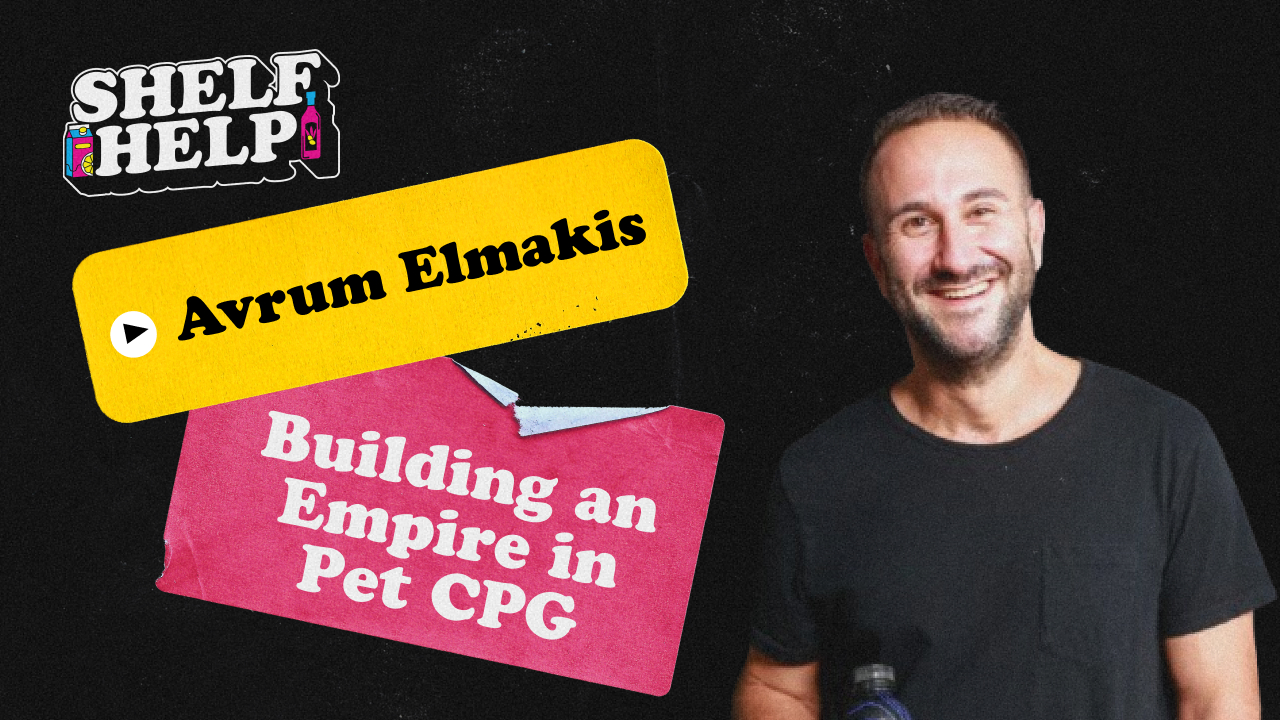
Building an Empire in Pet CPG | Avrum Elmakis, Citizens Pet Products



On this episode, we're joined by Avrum Elmakis, CEO & Chairman of Citizens Pet Products - the Fresno, California air-dried pet food manufacturer behind Unconditional, the premium air-dried dog food brand now on shelf at PetSmart, Petco and Pet Supplies Plus.
Avrum previously founded Best Bully Sticks with is wife and served as President of Woof.
We get into bootstrapping Best Bully Sticks after their day jobs, how the DTC cash conversion cycle let them grow fast without running out of cash, and the different realities of family office money versus private equity. Avrum also shares why his banker-led process in 2013 was about partnership and control, while 2017 was about maximizing value. We also dig into why air-dried, where fresh, frozen and freeze-dried fall short, and how owning manufacturing impacts margin.
Avrum breaks down Unconditional's three formats (topper, kibble plus, 100% air-dried), why human grade isn't the standard he cares about, why stool quality tells the real story, why the brand is skipping Amazon and Chewy, and what it takes to launch straight into thousands of doors and where pet food is headed.
---------------
Episode Highlights:
🔄 The long thread back to Plato Pet Treats and buying the factory
🐶 How "pets as family" sparked Best Bully Sticks
🌐 Winning organic search in the early days of online pet retail
💰 Bootstrapping on a fast dot-com cash conversion cycle
🏦 Family office money vs private equity (much sharper elbows)
🍲 Air-dried explained (the crock pot vs the oven)
🧊 Where fresh, frozen and freeze-dried fall short
🥣 Three formats: topper, kibble plus, 100% air-dried
🏭 Owning manufacturing and cutting out the co-packer margin
🎨 Building a premium look that stops shoppers on shelf
🔬 Why human grade isn't the bar (and stool quality is)
🛒 Launching in thousands of doors (no Amazon, no Chewy)
👀 Trends: fresh and air-dried up, kibble and freeze-dried down
---------------
Table of Contents:
00:00 – Intro
00:52 – What Unconditional makes
01:52 – The thread back to Plato Pet Treats
02:32 – The light bulb moment behind Best Bully Sticks
04:58 – Day jobs and selling online before AdWords
06:36 – Bootstrapping fast growth without running out of cash
08:18 – Family office money and the 2013 dividend recap
09:02 – Going omnichannel (FDMC and pet specialty)
10:19 – Running a banker-led process in 2013 vs 2017
12:44 – Private equity and stepping away
14:58 – Why air-dried over fresh, frozen and freeze-dried
19:23 – Three formats for every pet parent
21:44 – Vertical integration and the co-packer margin
24:02 – Running a manufacturing plant in California
26:32 – Brand identity, naming and packaging design
29:44 – Claims hierarchy and why human grade isn't the bar
35:39 – Going straight to thousands of doors
38:15 – Woof, pet food trends and what's declining
---------------
Links:
Unconditional – https://unconditionalpetfood.com/
Citizens Pet – https://www.citizenspet.com/
Follow Avrum on LinkedIn – https://www.linkedin.com/in/avrum/
Follow me on LinkedIn – https://www.linkedin.com/in/adam-martin-steinberg/
For help with CPG production design - packaging and label design, product renders, POS assets, retail media assets, quick-turn sales and marketing assets and all the other work that bogs down creative teams - check out https://www.kitprint.co/
Looking to dominate the cognitive health space? Upgrade your formula with Cognizin. It’s the branded, clinically backed citicoline trusted by top innovators in supplements, foods, and beverages. Differentiate your brand today at Cognizin.com.
Episode Transcript
Speaker 1: 00:00
Welcome to Shelf Help. Today we're speaking with Avram Melmachis, founder of Conditional, the air-dried dog food brand that just went national, also owner and CEO of Citizens Pet Products, which is a California-based kind of pet food manufacturer behind a few other brands as well. Averon's definitely been in the pet space for quite a while, I think close to two decades, if not more, started best bully sticks out of his house with his wife back in the early 2000s, bootstrapped to pretty rapid growth, brought in private equity at some point, was a president and vice chairman at Woof for a while, Brandon I know pretty well. So a lot of really great experience and super excited to chat. Avon, just first off, maybe just for the listeners, just to start, the ones that aren't as familiar with unconditional, love it to start by just getting a quick lay of the land, just in terms of the origin story and why behind the brand, what the core products look like, and then um we'll take it from there.
Speaker: 00:53
Amazing. So yeah, so and and you had said earlier conditional, and I was like, no, it's unconditional because of our for our dogs, as you can imagine. But origin story was just, I felt like there was kind of this gap in the market that I was seeing in pet for convenient food. So when we think about food, you've got shelf stable, you've got refrigerated, you got frozen. So really good, high-quality, convenient food at an affordable price. And really that's what we're all about at Unconditional. It's really that simple. We make all of the toppers, all of the 100% air-dried in our factory that we own in California. And then we also do a kibble plus where think of it almost as like a box of lucky charms where the base is a kibble, a premium kibble, and then the marshmallows, in a way, are our air-dried inclusion. So we origin story was was a fascinating one to your point. I started in the pet industry back in uh 2007, and the first brand that we sold other than our own, which was called Best Bully Stokes, was this factory's products, which was called Play-Doh Pet Treats. So going back way in time, flash forward 17 years later, these the owners of this factory call me and say, Hey, we're we want to sell and we we want to sell it to you. And so that's when all of these things converged. And that was, I would say, the real origin of it all, which is pretty wild to think about that that that thread lasted that long and persisted over all those years.
Speaker 1: 02:32
Prior to unconditional started best bully sticks after watching your wife, Lauren sounds like spend $700 a month on all natural treats and shoes, and felt like this was a bit of a light bulb moment. So I'm curious going back to all of those earlier days first into pet, why was that a light bulb moment for you?
Speaker: 02:51
For me, and I think I'm we're probably leaning couples, right? It's like you date, then you get engaged, then you get married, then you get a pet. Can you be responsible? Can you be accountable? Can you take care of something before you have kids? I don't know if that's other people's experiences, but that was our journey. And so our pugs were like our children, right? And we had S and Sushi, and she was not spent, I don't think it got that high to $700 on the treats and cheese, but it was high. And I was just fascinated because when I think about my journey as a child growing up, we had a dog and she was kind of an inside-outside dog, right? Like we had a doggy dwarf, and she came in and she ate, you know, brown, round and round, you know, kind of like whatever kibble my parents bought. And that dog was never coming in the house. The dog was allowed, we were allowed to play with the dog in the garage and all of that kind of stuff. And so in my life, to see that transition happen to then, we are having these dogs, and they're really like our children. They live in our home, they sleep in our bed at times, they are just literally kind of like children, and then watching how she would kind of treat them in a way as our children, because they they were, they're our family.
Speaker 1: 04:10
Yeah.
Speaker: 04:11
And it was fascinating to me to see wow, the emotional connection has changed dramatically in my life, right? And so that was kind of the aha moment that wow, you know, the dog has really become, you know, part of our family, right? And so what better business to be in, at least at the time, my thesis was in a place, you know, people would basically do anything for their animal and and and want them to be happy and occupied and and find joy. And so that was that that moment or that series of experiences, if you will, was what prompted me and her to say, hey, let's let's go down this rabbit hole of entrepreneurship. Let's keep our day jobs, right? We were both working full-time at the time, and let's try to figure out if we can do something. And so that's when bestpolistics.com was formed. What was cool was at the time online selling, particularly of pet treats and things like that, is really new. You know, there wasn't this was pre-universal search and Google AdWords and all of that type of stuff. This was all about if you were relevant and you had product that people wanted, search engines ranked you based on what you had to sell and what wares you had to offer. And so I think between that and the nature of the dog consumer, right? That pet consumer being very social and very um sharing, the convergence of all of those things allowed us to get some really good momentum and success. Obviously, you have to have great products, but that was the that was the origin of the why get into it. Now there's a lot more to it than just that. You know, having the, okay, I see this love, this unconditional love for our for our family members and the willingness to spend. And then you have to want and then you have to do it, right? Then you have to learn how to launch a website, then you have to learn how to ship things to people, then you have to learn how to handle customer service and returns and quality and the whole line, and then uh over time, the the whole business of every business.
Speaker 1: 06:37
So you ran the brand for for quite a few years until you brought in that private equity group with you know, no debt, I didn't get any lines of credit, didn't have any outside investors, basically bootstrapping this thing. And I think you grew it super quickly, which I think, especially in CPG, that can be hard in terms of funding POs and waiting to get paid from retailers and whatnot. And I maybe at that year mostly D2C made it easier. But yeah, what were some of the looking back, some of those keys to growing that fast without running out of cash being being bootstrapped?
Speaker: 07:03
Yeah, so again, long journey, right? Like it started at 07, right? We go to work, we come home from work, we pack boxes, we ship them out. That's the first year or two, and we're getting growth and we're getting all of those good signs of momentum and hey, this is gonna work. And then ultimately we get to the point of saying, okay, this is working. I'm gonna leave my job. She then was pregnant with our first child and left her job. So then it becomes really real, really fast because we don't have insurance and it's crazy. But we had been able to replace our income and we felt like there was a lot more to do if we could dedicate ourselves to it. So to your point, we were just dot-com in those early years. So the cash conversion cycle being a digitally native brand is different than being today what we see most commonly in CPG is what we would refer to as an omnichannel brand. So we're sold online, we're sold in stores and all those things. And so cash conversion was fairly quick, mixed with you know, we grew, we just we just grew over time, right? We even though it was really fast, we grew over time from seven to to your point, we took actually family office money, which is very different than private equity money. Very different in 2013, so six years after the start, and mainly not to support the fuel and growth of the business, but mainly just as what what's called a dividend recap to allow us to have been able to really earn money for those first six years. Yeah, then we continue, and that's when we really became, I would say, this super profess. It wasn't that we weren't a really professional company because in 2013 we were on the Inc. 500 list and I had been the recipient of Entrepreneur of the Year and had all of this incredible growth, did this deal with this family office, but then we really started to become what we would call today an omnichannel CPG brand. So we had that digitally native thing, and then we launched two other like brands for different reasons, right? One for FDMC, so Food, Drug, Mass, and Club, and then one for Pet Specialty. And then we really took off because then the products are in the major retailers and uh whether they be mass retailers or specialty retailers, and you have the online store, and so this whole flywheel is going nuts. And so we grew the business again dramatically from 2013 to 2017, and that's when we sold the majority of the business to private equity. And what I would say is that's a very different type of investor, yeah. Um, that in my experience has much sharper elbows, much, much more challenging to work with and deal with, much more involved in the business, right? So if there are people out there listening that are like, hey, what do I do? Because I've I've lived it, you know, those are two very different worlds. So to your point, then we sold the majority of the company to private equity, you know, and then things changed dramatically.
Speaker 1: 10:19
You're of course enough to be in a position where it sounded like you looked at close to 10, maybe even more different PE groups before you you've honed in on the one you actually went with. Assuming I got that right and you're evaluating a few different options. What were what was top of mind for you? What were you looking for and why or how did the the winner really separate themselves?
Speaker: 10:38
Here's what I would say. We ran what's known as an investment banking process, right? Where we hired an investment banker, they went out, and we did that both in 2013 when we picked our family office partner, and we did that again in 2017 when we picked our private equity partner. And what I would say was most important to us in 2013 was the quality of the partner, the patience of the capital, the level of their involvement, right? Were they gonna be a minority? And in 2013, we sold a minority, right? So would we still have control ultimately of our business? Were we still in the driver's seat? Could we still say, no, we're gonna get off at this exit, right? That was what was so important and what we were focused on in that first transaction in 2013. Frankly, in 2017, the intent was to sell the vast majority of the company, right? Okay, and so the motivations changed from what are we really looking for in this partner that we're gonna be married to, to how do we maximize the value for the asset that we've created, right? And so and and it wasn't just that, it was who's gonna be a good steward of our child that we have spent the last 10 years building, which is a long time, right? These child, these businesses, in a way, become an extension of you, the entrepreneur, right? There's an emotional attachment and a component here that many people don't realize, you know, exists. And so you're feeling all the highs, you're feeling all the lows. It's intense. And so whenever I chat with entrepreneurs, I'm like, just remember, it's not flashy lights and just success all the time. There's so much blood, sweat, and tears. So in 2017, it was about, again, we ran this process and it was about maximum. So we chose the partner that was pretty much the max value and one that we felt like would, you know, be a good steward for the business. Yeah. And what I would say is private equity in general, in my estimation and experience, is they're there, they're professional investors. They're essentially financial engineers. They're there, you know. So let's not get it twisted. They're not there to be your friend, they're there to get a return on capital. Sure. And usually a three to five year cycle, you know, they don't, you know, you know, it was not like a family office experience. And so that was, you know, but we also went into that eyes wide open, right? And so unfortunately, after that sale, the business didn't go exactly as planned, and and many don't, but we were not involved in the day-to-day operation, right? So in that sale, part of that sale was, you know, we left the business, right? They brought in a, you know, as they usually do, a quote unquote professional CEO and a professional leadership team to take the company to the next level. I see you kind of nodding, see, you know exactly what I'm talking about.
Speaker 1: 13:49
Yes, of course.
Speaker: 13:50
And so, and so, and so that's when we that that's when we exited, and you don't have that same emotional attachment when you're not in day-to-day anymore. Yeah, totally. Every business is unique in in its timing, in the macro cycle. Every CEO is unique in their skill set and their abilities. Every business is unique in its own, you know, has its own nuances. So, yes, it can work great, it can it can fail, it can do lots of different things. But yeah, to your point, and and there's great experiences with private equity. Yeah, yeah. And I've even had some of those. And then there's bad experiences with private equity, and you can you hear about those too. And so, but again, the key theme is you know, having the right intention going into a process, I think is the most important thing to really think about as a founder or a business leader or an investor or an entrepreneur, right? Are you doing this for true partnership or are you doing this for you're maximizing your value?
Speaker 1: 14:58
Well, yeah, let's fast forward a little bit and dive into uh all things unconditional. You outlined it a little bit at the beginning, why air-dried and how'd you land on there versus fresh or you know, frozen or free dry, freeze-dried and some of the other options that are out there?
Speaker: 15:16
Yeah, so all good, all great questions. So I would start with, you know, I acquired Citizens, right? And Citizens is this manufacturing plant that already had these air-dried treats, a brand called Play-Doh Pet Treats, which is what I which is what I was referring to earlier, that I had started selling. That was like the first brand, or maybe the second brand that I ever sold on bestbully sticks.com. So it's wild. You go to archive.org and you look back in time and you're like, that's crazy. It's really there. And what stood out to me at that point in time was made in the US, limited ingredient, and kind of this air-dried mentality. And what does that mean? And so when you think about what air-dried is, it's kind of like when you make food in a crock pot, it's low and slow. And so it's still the chip. So chicken is chicken. If we took chicken and we put it in the oven and we put it at 450 degrees, we can cook that chicken and it's edible in 30 minutes, or we could put the same chicken in a crock pot and cook it for eight hours and it it's still edible, and it's a very different outcome, right? And so what appealed to me about the air drive was this incredible moisture, hand feel, uh limited ingredient, just a kind of an elegant approach to the to the to the tactic of cooking, if you will.
Speaker 1: 16:43
Yeah.
Speaker: 16:45
And then, you know, they were already making these pieces and and already doing some co-meaning of this type of food for others. And I was like, wow, there, there's an opportunity here to launch a new brand, right? So we still have Play-Doh de Petriz, we still have their existing brand called Furry Republic, which is more for FDMC. And then we launched Unconditional. And we did it because when you look at the market, you know, you have what at least is perceived as super high quality, very high premium, if you look at a pyramid, right? And that would be all of these frozen, fresh things that you see on TV every day or whatever. And all and and the the problem is it's not that convenient, right? So, like, and I've experienced that myself, right? Oh my gosh, I forgot to take it out of the freezer and put it in the fridge. And then it's kind of yucky sometimes. Like my 16-year-old daughter will be like, why is the dog food right next to my lunch? That's yuck, dad. And things like that. And so it's it's like that's real life, right? And so you have that ultra premium segment that's educating the market that there's better than. And they also were talking about all this marketing speak around, well, it's human grade. And it's like, well, slim gyms are human grade, and arms are human grade, and you know, peanut butter cup, you know, and and uh, you know, red dye 40 is human great, unfortunately. But like, you know, what are we really talking about here? So you you you then look at, okay, well, what is convenient, but still yet premium, right? And you have this category of freeze dry. And I'm there, I'm asking myself, like, how many times in a year am I eating astronaut ice cream, right? You know, maybe a few times when I was a kid and I went to the science museum, maybe a couple times uh else throughout life, but it's a very brittle product. It tends to crumble and turn into fines, you know, like basically dust, because freeze drying as a process inherently retains everything that was in there. And so that's not a bad thing, but it also by definition removes every bit of moisture possible, right? And so it's this very dry product, and also the energy required to freeze dry it is super, super high. And because of that, you have a ton of expense, and it's a very expensive product. It's a great product, but it's an extremely expensive product.
Speaker 1: 19:23
Yeah.
Speaker: 19:24
And then we were like, well, how do we serve people a product that's still ultra premium, but can still be accessible? And so that was why we gave birth to unconditional. Was we started with three approaches. One was a topper. How do we meet any customer wherever they are in their pet food journey? Wherever they are, they're happy with their brown and around kibble, they're happy with whatever it is they're doing, they're happy with their fresh, they're happy with their further, whatever it is, right? Try this topper. You can use it as a treat, you can toss it on whatever. Easy access, right? And so to me, it's like, how do you, you know, introduce people to something that new? Second to that, it was not everybody can afford our 100% air-dry product because it's super high in protein. Because of that, and because of the ingredient deck, it's still expensive, right? It's less expensive than freeze-dried, it's less expensive than frozen food, but it's still expensive. It's not accessible to everyone. So we created kind of what we call the kibble plus, right? And that's where we have traditional high-grade premium kibble with our air-dried inclusions mixed in, right? And then lastly, we introduced the 100% air-dried for kind of that premium customer who's looking for, you know, high-quality nutrition every day and just an incredible product, you know. And so we tried to create a line that served the needs of really everyone. And hyper, hyper convenient. That you're you you forgot to take out the freezer. Don't worry, there is no freezer. You're going on a vacation, toss the bag in the car. No water needed, no mixing, no, you know, no, again, how do we make things frictionless for the customer such that they can use it where they want to, how they want to. So that was the that was the idea. And then uh, you know, and we're just getting started, right? We just launched in thousands of doors over the last couple of weeks, which is wild and exciting and chaotic and and and crazy.
Speaker 1: 21:44
One of the goals is having a convenient, really high quality product at an accessible price point. You you bought citizens, so you essentially own your manufacturing process from start to finish. You're able to deliver a really good quality product and high quality nutrition. At a more accessible price, close to 40% lower than other air-dyed brands because you're vertically integrated on that front. Here's how the numbers stack up. How much cheaper is it actually doing everything in-house, taking all the internal costs?
Speaker: 22:12
Yeah. So here's what I'd say. It's hard, right? Because nothing is apples to apples, right? So I don't want to say we're 40% less than this person or 20% less than that person or whatever, because everybody's formula is slightly different. Everybody's doing something a little bit different. And so what I would say is we have a continuum of pricing and quality and options available for people that are significantly more affordable than really any category you could look at, right? So as you walk down that shelf at PetSmart, Petco, or PetSupplies Plus, you're able to see a value on shelf to the analogous competitors, right? If you will. So to your point, right, specifically, most people don't understand this, but most pet food companies, no matter who they are, and we're talking about big companies that you see advertising on television or whatever, they don't own their manufacturing. Okay.
Speaker 1: 23:08
Of course, right.
Speaker: 23:09
So they're copacked by a manufacturer, right? And so when you think about that, the copacker has to make money and then pass that cost on to the brand owner, who's kind of the brand owner, and then they need to make money. And so by going direct from the manufacturer to the customer, right, you're able to take some of that margin out of the equation, right? And so kind of think about how like Tesla's model goes straight from Tesla to the consumer without the dealership in between, right? And so it's kind of like that approach is what is how I would think about what we're able to accomplish here. And because of that, we're able to offer premium product at a very reasonable price point, or what I believe is a very fair and reasonable price point for the level of nutrition we're delivering.
Speaker 1: 24:02
So people maybe underestimate about owning their own manufacturing facility and being vertically integrated and owning the things from top to bottom.
Speaker: 24:11
It is so hard. It is so different of a business, right? And I wouldn't do it if I hadn't acquired a company that had been doing it for 20 years. Meaning I would never and have never started manufacturing, right? Or been part of a company that was vertically integrated. We weren't uh, you know, pretty much any company that I've been a part of before this company, I've never had the manufacturer, right? We were like we outsourced everything manufacturing, shipping, all the different pieces of a business. It is, Adam, it is hard. It is hard to own and run a manufacturing plant. Yeah. Add that owning and running a manufacturing plant in California is on a whole nother level because they are a tough state in terms of regulation and environmental requirements and employer, employee relations, and all of those things. It's it's a challenge. It's a real, but here's what I would say to that. You've got, as an entrepreneur, to figure out what are your lines in the sand, what are your motes, right? That is a huge opportunity. So while it's a challenge, the opportunity is it's not easy to do. No one in their right mind, no one would wake up tomorrow and say, I'm gonna go open up a new pet food manufacturing plane in California, right? That I'm aware of. I don't think I have never met them. I've not seen it done in the last decade. I'm unaware of that happening because it's hard, right? And so I think that's what most people don't realize, right? It's an entirely different business, right? Buying raw material from farmers, turning that raw material into food and treats, processing and cooking all of that, packaging all of that, and then now going to the other business that we know, which is a consumer packaged good business, and now you have to advertise that and sell that and get distribution for that. Let's say it's that let's say it's intense, right? I think is the best way to describe it.
Speaker 1: 26:29
Yeah.
Speaker: 26:29
And not without tons of challenge.
Speaker 1: 26:32
Totally. Yeah, you're preaching in the choir bit on that one. I previous life we built a manufacturing facility in California in probably the most highly regulated space there is in the cannabis space. So I certainly certainly can feel your pain to a certain extent. Anyway, so just circling back to unconditional from a brand identity, uh, positioning, voice, and look and feel packaging design in the market. When you're building all that out, what was top of mind for you?
Speaker: 26:58
We wanted something that, you know, a brand that felt premium, right? Like a brand that like represented the quality of the products that were contained inside the packaging, right? And so that's where we started. We wanted a name that represented what we were trying to do in unconditional love because our dogs have unconditional love for us, right? And so it's like, you know, what better when you come home from work than your dog reading you at the door? Hey, I'm so happy to see you. Let's wherever you are, right? Your dog's there to ha happily meet you. So to me, it started with let's find the right name, let's build the brand and the architecture in a way that feels premium, so that when our customer is walking down a store shelf that it stops them and they say, Wow, that looks elegant, that looks elevated, let me let me grab that bag and at least read about it. Let me see what the differences are, let's look at the price point, let's at least stop. And so between color, you know, that we've used on packaging to kind of convey premium, you know, feel and the photorealism of the photography that we use for our models on the on the package. I I hope and I believe that we're accomplishing that, you know, kind of premium feel, if you will, yeah of the brand. And so that's where we, that's how we architected it. And then we're really talking about the pillars of the brand, right? The fact that it's important that people know that we've been a manufacturer at a very high level for over 20 years, right? Sure. It's important that people know that it's me and my family that own this business. It's not private equity, it's not some big faceless corporation behind a curtain, you know, that makes food for everybody that, you know, whose food you buy every day. It's not, you know, there's no smoke in mirrors. So, so it was important that we really, the pillars were me, my industry experience, my knowledge, the desire to create this, mixed with a known, reputable, quality manufacturer mixed with directly manufactured to you. So there's a pricing element there, mixed with a continuum of offering to meet the customer wherever they are, right? You know, people have never even heard of AirDrive, right? So it's like, well, we'll try it. Well, what's the barrier to that? A $10 bag of, you know, or $20, $20 worth of topper, right? Right. And so to me, those were all of the things that were critical.
Speaker 1: 29:44
Totally. Makes sense. One thing I was thinking about leading up to this episode was uh human food and beverage claims and you know, what you're really calling out from a hierarchy standpoint from a claims' perspective on packaging is is a big thing about standing on standing out on the shelf. You know, example these days, we see big protein call-outs, functional ingredient call-outs, no sugar, those types of things. How does this translate into a you know a fairly crowded pet food shelf? How do you think about hierarchy of messaging claims in this context?
Speaker: 30:14
So here's what I would say again, like I mentioned to you before, the things that we eat. So human grade to me is not a standard that I care about. Okay. Because I have a choice every day. I've I'm a father of four daughters, right? Like when you walk through a grocery store, right, there are plenty of things that are human grade that I wouldn't feed my dog. Yeah, even if he paid me to, right? So uh it's crazy. Having been in this business as long as I have, I kind of understand what what you know, unfortunately, what human grade in the United States means is not what I think a lot of people really understand. I mean, I hope that that's a common sense statement that I'm making. Sure. You know, what you think about what we can eat and and what we can put in food and what is legal and what can be called human grade. So I'm gonna set that to the side. So I have no interest in debating human grade, not human grade. Really, we're we're a pet food manufacturing plant regulated by the USDA, and the government has feeding guidelines for dogs that are veterinarian approved, that are done through a group called AFCO. And to me, that's the what I would call general admission to the game. Then you take it a step further and you're talking about things that I think are important to a premium consumer, which is high protein, an ingredient panel that makes sense, where you can pronounce everything that's in there, that everything is logical, right? They're using coconut for this reason, or they're using this for that reason. But most importantly, it's that the protein is the first ingredient, right? That it's chicken or beef or salmon or whatever it is, you know, and that it's logical, right? And that you can feel good about it, right? And so that's really I think what's important. And then you and then you go to, we have a study that that was done by a third party on our website, really, that talks about, well, how do you measure quality, right? You measure quality in an animal, in a in a pet, usually by what's the stool quality score, right? Like how does that, you know, what's being used by the animal, and then what does the you know poop look like for lack of a better terminology? But you can see the digestibility of our food is higher than most peers. It's it's eaten to completion, the school, the stool uh uh quality score is higher than most of our peers. So, you know, you don't have you know little little excrement versus lots of excrement because there's not filler in the product, and a lot of these products are just basically 70, 80 percent corn and soy and wheat, and then you have a sprinkling of you know byproduct meat in there, and and again, it's still legal, but it's not you know high quality. And so, you know, and then you get to where there's the retailers are sophisticated enough, right? Brick and mortar retail, particularly in pet specialty, those buyers are incredibly talented and well educated on what those consumers want, and that's really the consumer I'm after for unconditional, right? So they're not bringing in retail is hard as hell now in the in this world of Amazon and online retail, which is something important to us too. We're not gonna be sold on Amazon, we're not gonna be sold on Chewy because we believe that this food should be sold by humans to other humans or by us to our customers directly. But they're very it's it's hard. And it's hard because um there's so many choices, right? Like probably every day there's a new food that is that has all kinds of, oh my gosh, we're we're you know, 99% protein, we're you know, this, we're that, we're this, we're that. And they have to sift through all of those noise to pick what they ultimately believe will be the winners because because traffic is down in many cases in brick and mortar retail. So I I know that's a a roundabout answer around claims, but again, what I'm focused on is simply look at the ingredient deck, look at how your dog, what happens, right? Like look at the experience of your animal, right? Look at their eyes, look at their skin and coat, look at, you know, the result of feeding this product, look at their poop, right? That tells the whole story right there. And and and and not debating people to say, hey, we're at 81% protein and they're at 82% protein, or we're at 81% protein and they're at 74% protein. I think I think what we know to be true is the quality of the ingredients that we ingest is of supreme importance. It's important to have higher protein value than lower protein value, but too much protein is not good either. And if you have a mixed diet, just like for a person, right, with vegetables and carbs and protein and it's high quality input, you're gonna perform better, right? And so that's what that's what we've built here.
Speaker 1: 35:40
You mentioned earlier, already in a few thousand doors, I believe, pr pretty quickly, kind of right out right out the gate almost. Like, what does it take to go from let's just call it zero straight to big box right out the gate from a sales, ops, marketing, et cetera, standpoint, compared to building more to say slowly via natural channel first or independence first, and then more slowly scaling up to big box big box, and what's what's the easiest thing to get wrong going this approach?
Speaker: 36:09
I think so. First, what I would say is neither approach is wrong, right? Neither approach is many people would choose this approach if they could, right? The value of why I'm doing it or how I'm doing it is because I've had documented success in the pet business, specifically the pet specialty business, as an owner operator for almost 20 years, right? And so there's a level of trust between me and who I am and what I do and these retail partners, right? And so let's not, you know, you know, mask that. That's important, right? And you then you still have to have a great product and you have to have enough of it, and you have to have a reason to exist, and then you have to market the heck out of it, and then hopefully that creates an equation that works, right? And so what I would say is we chose that approach because we could, and I think it was our best attempt at getting the word out fastest versus kind of the slow, you know, the the slower growth approach, which again, nothing wrong with it. You know, it was just a it was a conscious decision on our part. Now, the challenge with that is you've got to be able to service thousands of doors, but the beauty of having a company that has done this for 20 years gave us the confidence that we could do that at scale, right? And so I I wouldn't recommend it for a first-time entrepreneur to say, hey, let me sell Walmart as as my first customer and see how it goes, right? That could end as a recipe for disaster. I'm saying I'm not saying it hasn't happened and it couldn't happen and it couldn't work. Yeah I'm just saying it would be it would be tough, right? Because there's so much scale and so much nuance to that that uh that that could that could present some challenges.
Speaker 1: 38:15
This has been awesome. We've covered a lot, even on the space, been in the space for so long. What uh any other outside of unconditional and and the and the brands and in kind of your ecosystem, any particular brands that uh you've admired, been watching closely, thinks you're doing a lot of things right, or beyond that, just general trends, like where you see the biggest kind of bite space in the in the pet food space right now?
Speaker: 38:38
Yeah, great, great question. So obviously I came from Woof prior to our sale to farmers dogs. So what I loved about what we did at WOOF was the fact that everything we created was typically just was solution-oriented, right? How do we occupy this dog for a long period of time in an elegant way, naturally? How do we let your dog walk themselves? How do we do things that are right, really useful and inventive and creative? And so I I I've I've had the great fortune of being part of you know, building that company to what it what it is today, and still post-sale admire that business and know that the future is so bright and what's to come is just going to be absolutely incredible there. So that's that's what I would say there. Um, and then when we think about the category of food, right, I think, you know, and if you look at the data itself, whether it's Mielsen or whatever, you know, the the trends are fairly clear, right? The consumer is is looking for, they're looking to go up in quality, right, than where they were. And so, and where are they headed? They're headed to fresh, fresh shelf stable, frozen, also because there's more marketing dollars than I think in ever the in than in the history of the pet business going into that, right? Super Bowl commercials. I mean, it's funny. Every every weekend I'm like, oh my gosh, there's another uh dog food commercial, you know, and so they're headed there. And I think they're also headed to premium format convenient foods like unconditional uh in the air drive category. I think what's in steady decline is, you know, your core kibble, right? Like what I would call your base brown round kibble. And I think freeze-dried is also just as a category in like pretty pretty big decline because it's just extremely expensive to feed. So yeah, so that's what I would say.
Speaker 1: 40:47
Makes sense. No, those totally track. But yeah, I mean, this has been awesome. What's uh clearly have a lot of knowledge in this in this space, uh, to say the least. What's uh what's the best place for people to follow along with all your expertise and everything going on with as you're building unconditional, and then best place for people to follow along with the brand.
Speaker: 41:04
So definitely check us out on unconditional petfood.com, right? That's kind of like our website. Check us out on our social media channels. You can follow me on on LinkedIn, even though I'm not great. That's my only form of social media. Um, but I tend to announce like you know big things in my life and career there. But we're gonna unconditional is gonna be a lot of fun, and it it's uh it's gonna be a fun journey to watch, right? From beginning through its ascension. And so I think it'll be entertaining for folks uh because you know, we're just getting started. And Adam, I'll be honest, you're my first podcast. So you this will always hold a very uh special place in my heart uh in this old journey for unconditional. But uh yeah, that's what I would say. And and and just and then I would leave with some words of wisdom is you know, enjoy what you do, enjoy the journey and and be okay with failure, right? I've had plenty of it, and it makes you stronger, but be proud of what you do, work hard every day, stand for something, and uh and then maybe you know you get you catch some wind on your sail and and you uh you you can take a ride.
Speaker 1: 42:19
So I love it. That's a great way to close it. Well, Abraham, I appreciate the time. I think I think that's the pod.