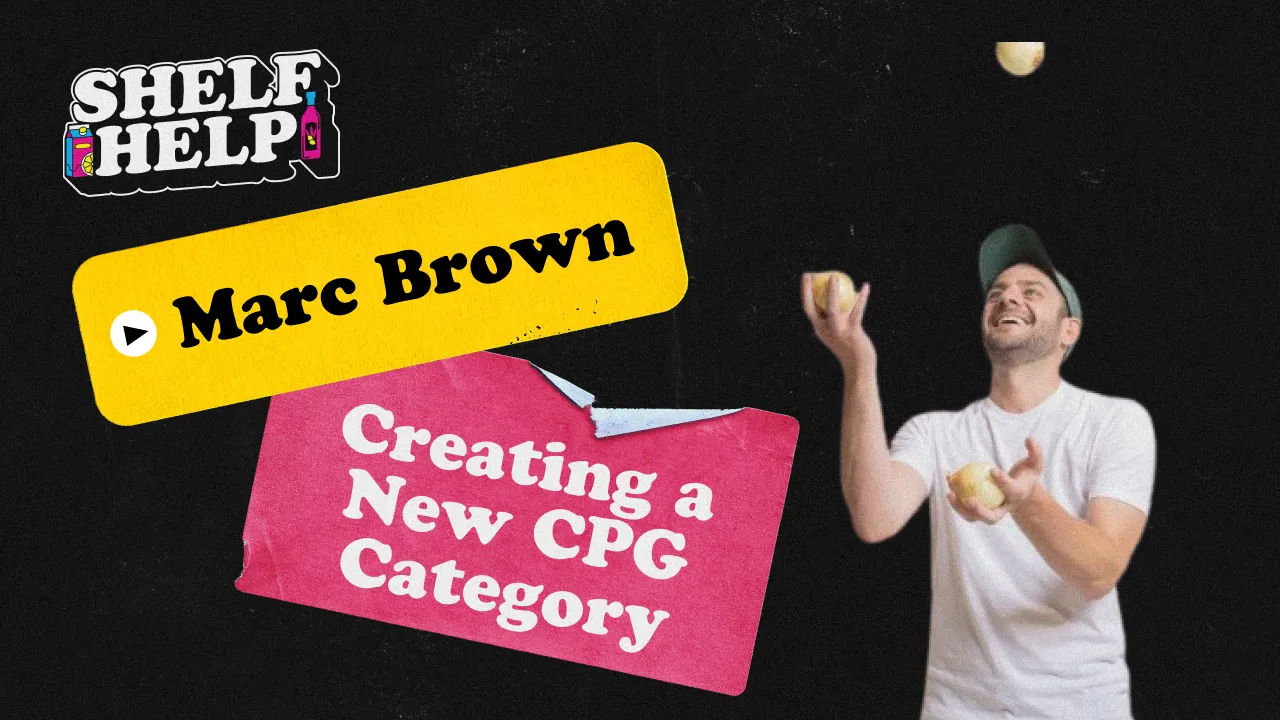



On this episode, we’re joined by Marc Brown, Founder of ONOIN - the newly launched pre-chopped, flavored onions packed in 100% olive oil that can be used as topping, marinade, a base for a sauce, or any scenario where you want to spice up a meal.
Before launching ONOIN, Marc spent years leading R&D and commercialization at brands like Clio Snacks, Danone, and Hain Celestial, giving him a rare mix of chef-level intuition and big-CPG scale-up discipline.
With deep experience in formulation science, co-man development, and taking products from kitchen to retail shelf, Marc brings a brutally honest and highly tactical perspective on what founders actually need to know before going to market.
Marc breaks down why most early formulations are unscalable, how to avoid ingredient traps that kill margin, and what to look for in a co-packer long before you sign an MSA. He unpacks his full commercialization playbook - from securing your IP and managing redundancy to navigating the retailer-distributor-broker maze.
—---------------
Episode Highlights:
🧅 The origin story behind ONOIN and building a new pantry category
🔥 How to simplify your R&D and avoid unscalable ingredients
🏭 What founders overlook when choosing a co-packer
🔐 Securing your formulation IP and protecting the process
📦 Packaging: aesthetics vs. operational efficiency
⚙️ Redundancy, risk mitigation, and readiness for scale
📉 Commercialization pitfalls that derail early brands
🥄 How consumers are actually using ONOIN
📈 Channel strategy: DTC vs. retail vs. distributor
👀 Trends Marc is watching across food and kitchen shortcuts
—---------------
Table of Contents:
00:00:00 - Marc Brown intro
00:56:12 - Origin story and intro
02:48:01 - Where the brand sits in retail
03:52:13 - Consumer education
05:12:05 - How Marc is using ONOIN
06:37:17 - R&D and formulation
10:03:21 - Nailing down a copacker
12:11:27 - Brand identity and packaging design
16:03:02 - Copacker evaluation process
21:01:13 - Redundancy
23:13:14 - Securing formulation IP
24:30:24 - Commercialization
30:03:07 - Scalable ingredients
32:30:25 - Packaging design: aesthetics vs efficiency
35:12:11 - Copacker KPIs
37:12:04 - Learning lessons
39:22:16 - Trends Marc is watching
—---------------
Links:
ONOIN – https://www.eatonoin.com
Follow Marc on LinkedIn – https://www.linkedin.com/in/marc-brown-41500546/
Follow me on LinkedIn – https://www.linkedin.com/in/adam-martin-steinberg/
For help with CPG production design - packaging and label design, product renders, POS assets, retail media assets, quick-turn sales and marketing assets and all the other work that bogs down creative teams - check out KitPrint.
Episode Transcript
Speaker: 00:01
Welcome to Shelf Help. Today we're speaking with Mark Brown, founder and CEO of Oniwan, who's joining us from the New York City area. Oniwin is your new cooking companion, pre-chopped flavored onions packed in 100% olive oil that can be used as topping, marinade, ace for a sauce, or probably a bunch of other scenarios I'm not even thinking of. Prior to launching Oniwan, Mark ran RD at fast-growing Clio Snacks, contract manufacturing and Haines Celestial. So definitely know supply chain manufacturing very well in this space. So excited to get into it. But yeah, Mark, first off, for listeners that aren't all that familiar with Oniwan, give us just a quick lay of the land in terms of origin story, why behind the brand, core products, flavors in the lineup, and then maybe just a few places people can get their hands in them. I know it's pretty early, but yeah, a few places people get hands in them today, and then we'll go from there.
Speaker 1: 00:56
Yeah, of course. So, hey, thank you so much for having me on today, Adam. Um, yeah, so I'm Mark Brown, founder and CEO of Onoin. And, you know, how this product really came about was actually an idea in graduate school about almost 15 years ago. We were looking at white space in the market, and I saw that they had garlic, you know, minced and chopped in every way, shape, or form and water, oil, but not really onions. Entered into a contest, never really thought, not that I didn't think about it, but knew I would always come back to it someday. Um, you know, as you mentioned, had a career in the food industry, worked at Dinone, Cleo Snacks, Hayes Celestial, and you know, kind of with the education, I'll say, of working in RD and commercialization in, you know, small, medium, large-size companies, I finally thought I had uh, you know, the bones to go do it myself. So I took the leap, started developing the products, and you know, kind of came about to where we are today. The initial product only was in oil, but as uh as I've had two kids and loved to cook and really, you know, my time was crunched, I realized as I went to go make dinner, I was always forgetting something, an herb, or this or that. We ran out of garlic. I don't have this, it went bad. So the thought of having everything all in one ready to go was really kind of born out of that. You know, give people an all-in-one solution that they can either use for culinary reasons or convenience reasons, but you don't have to feel bad about it. And where you can get your hands on them is right now on my D2C website, Amazon, and then we are doing a targeted regional launch in the New York City area. So I'll be available in a select shop rights in New Jersey and then stores like Uncle Giuseppe's, DeChiko's, and some of the more specialty uh markets in the Tri-State area.
Speaker: 02:34
I mean, it seems like I mean, it seems like this is essentially like seems to be a new category that you're creating to a certain extent. And I'm kind of curious where where do you where does or where do you envision the brand's gonna sit in retail?
Speaker 1: 02:49
Yeah, so I want it in the produce aisle. I hear anywhere from produce or deli appetizing. Honestly, I want it in the perimeter. What I'm really trying to avoid is the center of the store, the oil, pickle, olive aisle, where it's very overwhelming. There's a lot of yellows and reds, and you grab what you need and you get out. You don't go there every time. Uh, and you know, mentioning chopped or minced garlic, it's actually available in like three to four places in the store. But the one that I want to merchandise it to is yes, in produce, like on the stanchions by the onions and tomatoes and things like that. And while it's not always the most optimal place in the grocery store, the chopped garlic uh seems to sell well. So I will be right next to that. People will see onions and garlic and kind of realize, okay, maybe I don't need to buy an onion right now either, and I can just buy this product and save myself some time and effort tonight.
Speaker: 03:34
Yeah, that makes a lot of sense. That's super smart. How do you think about educating consumers about a new product type like this, especially you know, in the early days with what I imagine is is a more stringent budget where, you know, if you're not entering a new category, people are kind of familiar with it, but you're kind of how to educate some consumers to a certain extent. How are you thinking about that in these early days?
Speaker 1: 03:52
Yeah, so it's something that's always been in the back of my mind that consumer education is always going to be tough. It's not a beverage where if it's in a can, of course. You crack it open, you drink it. A snack, open a bag, you eat it. You don't have to educate people of what to do with it. And this has really been, you know, something I've thought about for a while. Even when I was handing samples out to family and friends, people just eat it as a dip or straight and say, Oh, I love it. It's like great, I'm so glad you do. But there are a thousand better ways, or not better, different ways to use it. Uh, it's pretty much anywhere you can use an onion, you put this. You know, kind of the story behind the name is you can use it on or in. Obviously, it looks like the word onion, but on or in anything. So it's it's always going to be a challenge to get people to understand how to use the product and for them to really understand all of the uses of it. But again, we had some some budget in there from the time be from the start of time for demos and coupons and things like that to really drive trial awareness on social media. And I don't have like a truff style budget where it's going to be every other post in your feed for months on end. But the hope is to really sort of get that to that tipping point where enough people recognize it, enough people are buying it, enough people are using it in their meals and are happy with it, and then kind of use those results and take it, you know, uh Yeah.
Speaker: 05:08
I know you mentioned there's a lot of different use cases. What's the the main few places or use cases that you're using it in in your own house these days?
Speaker 1: 05:17
Yeah, I would say the simplest uses would be like the jalapeno lime I put into taco meat when I'm cooking. It's onions, jalapeno, cilantro, lime, salt, vinegar. It's everything that you should be putting in your food to make it taste delicious. So again, you know, no preservatives. So I'll do things like that. I will take the garlic and herb, put it into a pan, open up a can of tomatoes. I just made my own marinara sauce. I take an avocado with a jalapeno lime, I have guacamole. Chop up a tomato, if you mix it with the garlic, you have brucetta. You mix it with a jalapeno lime, you have salsa. So it's really, really kind of very simple uses that I'm just using to add flavor without without the effort. You know, it's really uh, like I said, I have two young kids. I love to cook, but the thought of kind of preparing everything from fresh every night is pretty challenging, uh, especially with now starting my own company. So having this, you know, with just a spoonful away is really helpful.
Speaker: 06:05
Totally. It seems like, you know, from the the layman's perspective, the ingredients are pretty clean, which is great and simple. And so it's, you know, one might think the RD and kind of formulation process may have been fairly straightforward, but I'm just imagine it was a much more of a delicate journey than one would think. So I'm just kind of curious, without giving away any trade secrets, what were some of those kind of key variables you're playing around with the early days and kind of key tweaks you made between that first version you made to that version that you knew, okay, this is right. I'm ready to take this to market.
Speaker 1: 06:38
You know, and I think we're gonna get into it a little bit later about commercialization and scaling up, but you know, that that's really because I think of my history, I was certainly, of course, I was worried about what it tastes like. But at the end of the day, you know, the garlic and herb, for example, which was one of the first ones I developed, is onions, garlic, herbs, and oil. It's kind of hard to mess that up and make it taste disgusting unless it's too salty or too oil, you know, whatever else that is, it's it's kind of hard to make it taste bad. I was really focused on the processing side of things and how I can replicate what I'm doing in my kitchen and what might scale eventually to a contract manufacturer. So I was looking, or I initially started kind of home canning it, simulating a retort process. After looking at commands and finding that there's not really many retort glass available that don't have ridiculously high MOQs, okay, great. Now it's probably gonna be hot fill. How can I simulate a hot fill? So that's really what I was playing around with most, and also looking at sort of like the upper and lower limits on cook times and things like that, or how much is too much oil or water or liquid, and really trying to get a lot of the analytical and sensorial properties out of it first, without worrying so much about the formula. I've also been on site enough to know that like if you miss a pound of something here or there and your product tastes totally different, you're in deep trouble. It has to be, I used to hate this term when I was an RD, but it has to be what we call a robust formula. Different suppliers, different processes, different things, you all need to get to the same finished product. And that was in the back of my head the whole time is whatever I can make in my kitchen, cool. It doesn't really matter if I'm building a brand out of it because it has to scale somewhat.
Speaker: 08:11
One thing I was curious about is you launch with a few, you got a few SKUs, you launch with a few flavors. I'm curious, was it maybe kind of like a chicken or the egg question, like how you decide which flavors to launch with first? Were you playing around with a bunch of different combinations and doing some RD that ultimately led you, okay, these group of you know flavors, mixtures takes the best. These are the ones I'm gonna go to market with first, or did you start with already in mind, these are the kind of ones I'm gonna go after, and I'm gonna try to figure out how to dial these in until each of them are to the point that I'm happy with.
Speaker 1: 08:41
So I went with sort of the the most popular cuisines globally and what the US consumer will recognize. So I kind of went with a Mexican or Latin inspired with the jalapeno, a garlic and herb, sort of a Mediterranean Italian inspired. I wanted to do an Asian inspired. That was actually the toughest one because there are so many different, you know, obviously Asian is a very broad category, Chinese, Japanese, Thai, you know, whatever you want there. I wanted to avoid a lot of the sauces and kind of making it look brown. So that's why I decided not to go with like a soy sauce or something like that. And then I wanted things that people understand what the flavors are, but they probably don't keep them in their cap uh in their fridge today. Most people don't keep fresh parsley, most people don't keep cilantro or jalapenos. Guarantee you most people don't have lemongrass. Uh so it's things like that where I wanted people to understand the flavors and be comfortable with them to try it, but it's something they're probably not going to have in their shelves every day. Uh, and then, you know, to kind of have a foot in every corner of the world. And then last but not least, you have to have original because people are gonna want to add their own flavors on that. So we have just the plain chopped onions, but you know, it's really uh the global flavors. Yeah, that makes total sense.
Speaker: 09:49
All right, so you got the formulations nailed down. Tell me about that process of searching for a copacker, ultimately nailing down the co-packer you're gonna work with, and then I guess getting to the point of completing that that first production run. What did that journey look like?
Speaker 1: 10:04
Yeah, so I I mentioned uh, you know, I spoke with a lot of different ones. I spoke with a retort manufacturer, and you know, this was my my job previously was to identify and work with contract manufacturers. So a little bit easier for me than maybe some other people, but it was still not still really challenging. I was talking to a lot of different ones between, you know, one of the most important things I think is a relationship. If people will say pricing this, that, the other, but if somebody's offering you rock, you know, rock bottom prices, but you don't trust them at all, are you gonna go with them? So you it's really sort of a balancing act between, I'll say, quality, communication, MOQs, price, and sort of who can you see yourself in business with, not only today, but the future. So, you know, I was talking with some of the some smaller scale commands, and after looking at it, it was like the second I get a decent sized PO, I'm gonna have to move out and go elsewhere, which means more time, money, effort trying to industrialize it at another place. So maybe, you know, I maybe that's not the best advice, but kind of sliding into a coman that's maybe a little bit too big for you right now, but will give you operations uh room to scale. That way, when you do get that PO and you are scaling, it's nothing you have to worry about. Yeah. That was kind of in my thought. What the thought in my head is I finished producing my products of totally at the end of September, you know, mid-September. I don't have to worry about that anymore. Now I can worry about selling and kind of building the brand. And when I need a new product, I send in a PO. I don't have to worry about can they make this? Are they gonna, you know, X, Y, Z? It's really kind of freeing yourself up to worry about the rest of it. So that it's it's not necessarily the easiest uh or the clearest answer, I'll say, but relationship, relationship, relationship, because you are going to be working with these people, they are going to be making your products, they are stewards for your brand. You need to have complete trust with one another. And the last thing I'll say is transparency. You know, if they're not going to be transparent on certain things, there's no reason for that. Of course, they should make a profit on all of these things. It's a business after all, but like if you say that oil went up 200%, I want to see that PO. Because if it did, I have no problem adjusting my price and giving you that, you know, that money back. But we need to kind of have a little bit of mutual trust with each other.
Speaker: 12:07
Yeah, totally. Talking about brand identity, packaging design for a second, the label is like really great, by the way. I'm kind of curious what were the kind of key variables that were top of mind for you when you're building out your your brief or whatever you design or agency workers as an as an example. Uh yeah, what was kind of top of mind for you?
Speaker 1: 12:26
So we talked about consumer education and the fact that people have to know what this product is. The fact that the name is close to onion really helps me out, but I think that was kind of the first thing I thought of was how can I convey what is inside of this product or jar, sorry, package to the consumer.
Speaker: 12:42
Yeah.
Speaker 1: 12:42
If it says Mark Special Sauce, people have no idea what it is. We talk about the zero moment of truth. You basically have like 0.2 seconds to get someone's attention on shelf. Then you have the first moment of truth where they actually look at it, they start looking at it, and they realize, okay, this what is this product all about? But you have to get their attention within that zero moment. So I spent a lot of time looking at the shelves, walking through different stores, and the three biggest things I thought of were brand block cohesion. I want them to look really nice when they're sitting next to each other, but they have to be very clearly identifiable as to which is which. There's nothing worse than looking at a shelf and seeing, what am I looking for? Did I buy the right thing? And oh, this one has X and doesn't have that. Like you should need a magnifying glass to understand what you're buying. And then the third thing was I wanted visual representations on there. People again shop with their eyes, not really reading. So the fact that you can again see an onion, see exactly what's on there, and kind of understand really quickly, okay, this is an onion. There's probably some garlic and some lemon in there. Okay, now I'm interested. Now I'm gonna pick it up, now I'm gonna learn more about that product. But you have to have somebody to pick it up and look at it in the first place. So those are the biggest things, and the the key in my mind is it has to look good together, but you have to kind of differentiate very quickly what's what.
Speaker: 13:58
So I came to you and told you I was launching a new CPG free brand as well. I'm you know, six months, year behind you, about to just kick off the same process with any, I guess what are like things that come top of mind in terms of things I could should keep top of mind that might trip me up along the way, or just kind of tips that you would say definitely keep this in mind.
Speaker 1: 14:16
Yeah, I would say just be very, very careful is not the right word, but just making sure that people are understanding what your product is. So if it's a snack or whatever else, it's a popcorn, that might be a little bit easier. But if it's something like a marinade or a dressing or something that's not immediately in a drink or bear uh or snack category, it's what is this product? The second advice I would say is walk the shelves. Walk the shelves in several different markets. Look at your set, find what you like, find what you don't like, find what's missing, then walk the rest of the aisles, kind of see what stands out to you. Is it colors, is it visual representations? What exactly do you like or don't like about that packaging? And try your best. Again, I'm not an artistic person, but really try to write down or just verbalize why do you like that package or why don't you like that package? And you'll start to kind of see some trends come up of I don't like that because it's really hard to see the words, or I can't understand the flavors, or I'm not sure the color is whatever, but just to get a sense of what you like or don't like. For example, in mine, the category is very old world, cento BG foods. So I want it to go very modern, I don't want to say minimalist, but sort of very different than anything that exists out there, which is again that very old world Italian style kitchen. So I went something, you know, a different way. I didn't want to fit into the crowd. So I would say it's there's no substitute for walking the aisles and taking pictures and looking at as many products as you get your hands on.
Speaker: 15:37
I think there's a little bit, I know, between the Cleo Snack, Saints Celestial, Denone, you definitely got a lot of experience in all things RD, formulation, commercialization, contract manufacturing, all that type of thing. And you touched on that a bit in terms of how important that relationship with relationship is, but maybe beyond that, uh in terms of just finding the right contract manufacturer, co-packer, getting production off the ground, anything else that you didn't speak to earlier in terms of kind of what a valuation checklist should look like, or you know, other factors that are the things that should be top of mind.
Speaker 1: 16:10
I mean, you'll definitely want a contract. I I know it's you don't want to slow yourself down, but you at least want to look at what the contract they're presenting to you is. If there's anything in there that you look right away and say, whoa, whoa, that's that's gonna be a problem for me, kind of get that out of the way in the first place and understand why that might have been put into the contract. Something for you know, uh, smaller brands might be minimums. You have to guarantee a minimum quantity. Never put a take or pay, that's that's what's called into your contract. You never want to have to guarantee volume. If you're a growing brand, kind of explain that. And if they don't want to be in business with you, then you might need to find somebody else until you can get to that point. Uh it's I hate to say it's vibes-based, like the kids, but it's really is sort of again, do you trust this person? Do you want to be in business with them? You should be talking to them all the time. I don't care if you're only sending POs once a quarter, inventory, shipments, this, that, checking in. You need to like this person and you need to trust them. Yeah, best friends with them, but price, everything else, they're all going to work themselves out. But you know, you have to have a partner that's in it for the long haul and understands that they, again, are I've said this before, they are stewards of your brand. They are the ones making your product. They are the ones that if there's a recall, you're going to go to them first. Product, quality, anything. So it's you have to feel comfortable with it. And then you can kind of look at all the rest of it of turnkey and this and that. But you know, it it has to start with like, do I am I, you know, do I get a pit in my stomach every time I have to talk to this person? That's that's a problem. That's not a good sign. No.
Speaker: 17:42
Once you've kind of decided when you want to work with, I assume you would say that it's a good practice to go and actually visit the facility in person. What should a a new founder kind of look out for during one of those plant tours to predict any future potential headaches or QA issues?
Speaker 1: 17:58
Yeah. So this this might be a little bit different if you haven't worked in sort of the RD or quality part of things, but take a look around and are things dirty? Are things out of place? Are things labeled? Are people sort of following rules? And I know that might be difficult to see, but you know, like uh GMPs, good manufacturing practices. Does anybody have any earrings in? Do they have any necklaces? You know, are people sort of being aware of what the rules are and then focusing on them? Every comment's going to kind of run their own way, but it's it's really important if you can look at any of their records or inspection, you know, almost treat it like a quality audit. That's kind of where I said if you don't have that background, it might be tough, but kind of Google what a quality audit might look like and then ask some of those similar questions of what do you handle in terms of a recall? How do you do X? How do you do Y? What are your payment terms? Manufacturing, you know, who's your longest tenured employee? Can I talk to them? You know, just to really sort of ingrain yourself in the because, like I said, if they're the owners of your brand, then they're technically your employees also. You know, all the people that work there, they're gonna be making your products. Talk to them, get a sense of how it works, what doesn't work, and yeah.
Speaker: 19:03
In your experience, like what are there any hidden line items that are the most common things and kind of balloon the actual landed cost? And this could be maybe having to store the store the product if it's not moving as fast as you think, or test batch premiums, or anything that brands should kind of try to address up front in a Copac agreement to kind of avoid any of those surprise costs that end up coming in and the margin looks a lot lower than you were planning on.
Speaker 1: 19:28
Yeah, I mean, this then, Miss, this may not be necessarily tied to margin and finished product, but I would say just watch your cost when commercializing. If you're not going to be able to run saleable batches, how much money are you are you going to put out before you even have product that you can take to market? How many batches, what are the requirements? Is it going to be for those that don't understand total turnkey versus toll? Are you going to be buying the ingredients and labels or is your manufacturer? Because if so, let's say you need 50 pounds of an ingredient, but you're the one buying it. The minimum is 500 pounds. Are you going to buy all that? Is that all going to sit in your coman now? So a hidden line item might be you have a palette of an ingredient that you use once every whatever. Now that's sitting in their warehouse, you're paying $20 a month on it. It might go bad, it might be this. So it's really just kind of watching all of the anything that's not directly tied to your product cog, I would say. Just be really, really careful. Make sure that if there's any packaging costs or tariffs built in, just to really understand the three main drivers of cost at a coman are raw, pack, toll. Understand the the drivers of costing within each of those buckets. And then you can kind of see where things going higher, where things going lower, and also then what kind of fits outside of your cogs, whether that be freight or whatever else, but just to understand where are you bleeding within that PL.
Speaker: 20:49
I think in probably the earlier days, you probably say, like, you know, supplier, co-packer redundancy is just not that important. You just need to get the first production runs out the door, prove this product market fit and all those things. But I guess at what point should a brand start thinking about supplier and co-packer redundancy to the point, you know, if something happens, you've got that backup waiting.
Speaker 1: 21:11
You know, we we always have went over this at my previous company and it was always uh a very heated discussion, I'll just say. I think supplier redundancy is, I don't want to say way more important, but a lot easier to achieve. So in the example I, you know, I gave about my my ingredients and my process, we've used a different type, a different couple types of herbs or garlic or lemongrass to make sure that the product looks and operates the same no matter what the input is. It can become a little bit more challenging on the co-man side of things because you know, a thought exercise. You go find a co-man, unless they're right next to net right next door, is their pricing the same or is it cheaper? If it's cheaper, why wouldn't you move your business there? If it's the exact same and everything is the exact same, you know, then why are you doing all this work? So I would say it's really only I don't say only applicable, but I Would start looking to onboard a second COMAN when you're doing nationwide. So if your COMAN is in one side of the other country and you're sending a lot of product to the others and it actually makes sense from a freight standpoint and you can justify spending fifty thousand dollars to bring a second copacker on board, then it would be justified. But again, the thought is like if you brought it bringing on second co-packer and they're cheaper, why wouldn't you move there? If your goal is to squeeze every penny out, then move all your products there and then kind of deal with the freight back to the other side. So it's it's always a kind of give and take of how much you want to put on your plate. Also, again, is it turnkey or toll? Are you buying all these ingredients? Do you have to buy, you have to set them up as vendors with the same people? What is a product going to look like? Depending on your team or budget or time, it may just not be the thing that you want to attack first, which is why I would say vend uh suppliers and vendors being redundant is extremely important. Uh people run out of things all the time, shipments will be late, a vendor might go under or this or that, whatever. But that I think is the most important going back to what I called the robust formula that if I switched out every single thing in my uh my formula, I should still get the same product. You know, onions, the oil, whatever else, nobody should notice.
Speaker: 23:12
Yep. Cool, that makes sense. In instances where you're not bringing a totally complete formulation to the table, and you're, I guess, doing some work with your co-packer in terms of IP, how do you think about that? Do you always recommend doing what it takes to secure that formulation IPC?
Speaker 1: 23:28
You know, it's really challenging. Um, you know, you bring up a good point about your co-mand. So that should be addressed in your contract. That they should not be making similar products or anything substantially similar, whatever language you want to put within your within your contract. All of the know-how and IP should be yours. Is it protectable? That I think is something, you know, a completely different story. I would say personally, I don't think it's worth it to protect your IP. You're building a brand. I mean, listen, I'll just come out and say it. It's onions, oil, XYZ. There's nothing really proprietary. Most food products do not have anything proprietary in it. You can try and get to it, but there's nothing really proprietary. So, an example is, you know, people say they own the formula for plain yogurt. It's milk and cultures. It has an FDA definition. So, what exactly do you own? That's where I'm focusing really around like the process and how to turn X into Y. I think that is more protectable, the actual summary of steps taken to get an onion into this product, not just the formula itself.
Speaker: 24:29
Yeah, that makes total sense. Leading to the next question, talking about new product development and commercialization, actually bringing a product to market. We're kind of coming to the keys to a successful new product launch in terms of hitting the budget that you were planning for from the beginning and also from a launch timeline. I feel like that's often you see so many times a brand is targeting, hey, I want to launch this product or this, you know, product line extension, something on X date, and ends up being two, three months later.
Speaker 1: 24:59
Yeah, uh timelines I could speak to a lot about. I did some uh some project management and you know the tools, the two schools of thought are you gonna build it forward or backward? I personally like building the timelines backward from launch of to your point about okay, I have to hit this new retailer, when do I have to ship on this date? Kind of build everything backward of lead times for labels, this, that, approvals, and then kind of go back to where I am, where am I today and what are the immediate next steps I get to hit those critical milestones to get to that point. And how to really kind of manage that scope creep is always sort of really tough of what are the must-haves, what are the nice to haves, and then if possible, to get a cogs target up front. That way when you're doing flavor work or things like that, being able to understand, okay, my finished jar has to cost five dollars and ten cents. I'm at five dollars right now. If you talk to the flavor company and tell them you only have 10 cents to play with, that makes their job a lot easier. So it really cogs targets, but also the same thing about must-to-haves or nice to haves. You have 10 cents to work with, but it has to be kosher organic, this, that, the other. Without kind of really understanding the bounds, you're really shooting in the dark. And I would say just being as tight as you possibly can on all of those things will just help you out later on. Of course, you don't know what you're launching, but price and you know what the the non-negotiables, I'll call it.
Speaker: 26:22
What's the most commonplace that brands underestimate cost or I guess complexity, which may play into getting, you know, leading to a delay in launch in in this kind of commercialization stage?
Speaker 1: 26:36
Yeah, I I mean it's it's really the actual commercialization. I mean, plant trials, they fail a lot at big companies, small companies, whatever else. If you're walking in and you're doing something you've never done before, yeah, if it's a new flavor, that's the exact same everything else, sure, that's pretty easy. You could probably run a saleable trial. Something that you've never done before, you go in, you think, oh, I'm gonna, we're gonna figure it out right away. No, you're gonna run that trial, and there's gonna be three more things that kind of pop out at you, and then you have to fix and then go back. So it's it's the actual commercialization and giving yourself enough time for that. In the example I used, people will build timelines and say, okay, we need to order graphics. It takes eight weeks for lead, you know, for whatever, blah, blah, blah. All right, we have a you know, a month for shelf life for trials. What if that trial doesn't work? What if you need two? What if you need months? You know, what that's really where you kind of get messed up is I think in the actual commercialization, building a brief and saying what you need to have and what you don't have, you should be able to sit down in a room and do that. Approving graphics or paying for them to be put to the front of the line or whatever else, sure, money can solve a lot of issues. It cannot solve sort of trials where you don't know what's going on, or you have to go back to the drawing board, maybe go back to the pilot, talk to an expert, talk to a supplier, get new vendor in. That is where a lot of things, you know, people don't understand that the actual bringing something from bench top to a commercial plant, the equipment is all different, the people are all different. The guys that ran your product last time was on first shift, now you're on second shift. No one's ever seen this before. They have no idea what you're talking about, they've never run this. That that's kind of where you get, you know, you can get into trouble and continuity issues, kind of right. Yeah. Yeah. And you know, to I don't I don't say to add to that, but I was always, when I was doing the industrial trials, I'll people would ask me questions. I said, pretend I'm not here. You know, what do you what would you do if I was not here? I'll be there if they if the answer is wrong or whatever else, but it it's kind of has to be that everybody has to be able to make these things when you're not there. Whether you're a founder, this, that, you might be there for the first or second productions, but God willing, I'm making this stuff every week. I'm not gonna be able to be able to be on site all the time. Right. Even if I in-source it, I'm not gonna be on the floor for every production. So, you know, you really need to empower people and you know, whether that's a co-man or your own employees to to understand the process and to do it themselves.
Speaker: 28:46
And how do you think about, and this I'm not sure how applicable this is to when you're working with a COMAN and they've got, you know, assuming they've got uh you know excess capacity versus if it's you're more vertical and everything is in-house. I'm not sure if that's what it looked like at Denome, but I'm I'm curious like how you think about introducing new products into an existing production aligned schedule. You don't want to decrease the uh number of units you're producing for the existing product line that's already selling well.
Speaker 1: 29:12
Yeah, I think it would be just to be as clear as possible and upfront with the coman of what your expectations are, also with distributors. You know, when you get a PO, what is that lead time? If you tell them you need four weeks versus, you know, maybe they'll carry more inventory, but to really kind of understand what your turnover looks like and what the your inventory turnover and then what the line time at the coman looks like, you know, have a call with them and say, Hey, are you guys booked up for the next two months? And if they say, Yeah, we have absolutely no days available, there's no line time. Okay, you know, you might need to start planning things on a on a more quarterly basis. If they're more flexible and you may be only running for a couple hours or a day here or there, then you can kind of have more flexibility and understand what the pros and cons might be of building up a lot of inventory or kind of making it made to order, also.
Speaker: 29:58
Yeah. When we spoke like a week or two ago, I think you touched on kind of the importance of using scalable ingredient supply chains in your formulation. Can you kind of touch on this a bit and why it's important and maybe if you have some example of what led you to know this was important in terms of things came up in the past?
Speaker 1: 30:14
Yeah, I mean, I think it's really just my first uh, I'll say big boy job was at the known and really just looking at, okay, when we need strawberries, we have to contract from all over the world and 15 countries, and they need six months in advance because we're buying hundreds and hundreds of thousands of pounds. So if you are calling out that your product is only made with Moroccan strawberries, what happens when there's a drought there? Right. When now you have to change your packaging. Forget finding a new vendor. Now you have to change your entire communication. So it's really important, or I think it's really important to have, like we talked about, a flexible supply chain where if these onions aren't available, great, I can go to somebody else. You know, for that for that reason, people have asked me, oh, are they, you know, Vidalia onions or this? I say, no, those are available from one place, one time a year. They're yellow onions. Available globally, not a specific type, not Spanish, not sweet, whatever. Those are all sub-varieties of yellows, but they're just yellow onions. So that I think is just really important because you do not want to get yourself into a position where you think you can scale, or CPG is one of the only places where you can 3x your business very quickly in succession by getting new regions, new doors, whatever else. You do not want that to be the issue where, oh, I'm sorry, I'm buying this one herb from the regions of whatever, they can't buy it for another year. That's really tough. And agricultural commodities are even tougher when you're talking like that because they're only usually available once per year. And that way people contract them until the next cycle. You might be overpaying this, that, the other, but a lot of spot markets can really kill you. And I think we saw that with kind of cocoa in the past years, where a lot of brands were really hurting because they didn't plan things properly. The cocoa market exploded. And if they were saying, Oh, we're only from the Ivory Coast or whatever else, it didn't leave them a lot of options to sort of flex within their supply chain. And if they didn't have the cash flow or the margins to really survive that, people could have been in a lot of trouble.
Speaker: 32:02
From a production line standpoint, you've been really on this contract manufacturing side, really close to being on the floor and in factories and whatnot. Like, how do you recommend brands kind of balance the desire to have the best packaging that's gonna stand out on the shelf the most? Oftentimes that doesn't really jive with the most uh efficient from an operational standpoint. So I'm curious, how do you think about that balance of making it look really good, but also minimizing, you know, labor and touch points, optimizing for automation and that kind of stuff?
Speaker 1: 32:32
You know, I would say unless you're gonna have something really, really outlandish or it's going to become your signature. I mean, go to a wine store or something like that. Everyone has a different bottle. It's nothing is really sort of driving that home to me. So I personally, people would ask me when I was talking with all these co-mans, they say, What jar do you want? I said, What do you have? I don't, I want what you have on site because, like we talked about, if I need lead times, I'll grape my glasses still in Taiwan. It's gonna take you know 16 weeks to get over, whatever, all this stuff. What do you have? What are you running today that's available on site? You have you're gonna get your volume discounts, you're available. So unless you're gonna go something so outlandish, and I wrote down some examples of like the there's like a hot sauce that's in a grenade, or the vodka that's or the vodka that's in the skull, which I think is Dan Aykroyd's company. But like, unless you're really gonna go something so outlandish that is a you have to stop and look at it and maybe not even buy it, but to be like, oh, that's really cool. I don't think it's really worth it to have those added costs on such an early stage budget. I would focus really on the graphics and you know, kind of try and be bold like that rather than a long, skinny jar that, you know, I'm the only person that buys it in in America that just doesn't really help out anybody.
Speaker: 33:43
Yeah, I think that makes total sense. I think that's a pragmatic way to look at it. Pretty much, yeah. All right, so let's just say a brand has kicked off things of the Copacker. What does an effective synop process look like?
Speaker 1: 33:55
Yeah, I mean, of course it depends on how often you're running with them and how often you feel you need your touch points to be, um, how many shipments they're going out, but I would say you want to have at least a bi-weekly touch point. People, you know, after two weeks, you your own brain start kind of starts to go and you forget what people are talking about. So just having something on the calendar, at least again, every two weeks with that person to say, hey, no orders this week, or we're planning on producing, or are we still good for this, or any problems, or how's your production schedule, or whatever else it is? They can be 10-minute conversations, they can be five-minute conversations, but during one of those times, you will have a much deeper conversation that will make it worth it. It's you do not want to them to forget about you. Yeah. So it's it's a little bit hard to say, you know, for sure how often you should be meeting with them, or you know, for SOP planning, but it you want to make sure that you have enough inventory to make something should you need it, or depending on you know, what your calendar looks like, if you're again guaranteeing people within a week that you're gonna have product, you better have the inventory or the mechanisms to go get it right away.
Speaker: 34:54
A bit of a related front, you know, I'm not sure what sophistication level the average code packer has, but like in terms of tracking KPIs and a dashboard on a daily, weekly basis. Let's just say you know, wake up in the morning, numbers you want to look at, make sure everything is on track from a production standpoint. What does kind of the ideal KPI dashboard look like? I mean, the two biggest things are service.
Speaker 1: 35:14
Are you ordering what, you know, are you getting what you're ordering? And then, you know, uh what we call OTIF on time in full. Not only are they making it, but is it the full order? You know, you need to make sure that you're actually getting what you ordered. So those are the two biggest things of are is are they are they holding up their end of the bargain? Right. Secondly, would be sort of the deeper things of um quality sort of metrics. So like you want to do complaint per you really uh an aside about complaints, don't have a total number of complaints peg it to something like units or tons or something like that, because that's the really only way to see if you're getting better or worse at these sorts of quality issues is to track your, you know, your complaint by metric ton or something like that. Not so much a KPI or a data, but really want to track like how they're looking at innovation and cost savings. Are they kind of coming to you with ideas about not so much innovation, but cost savings of hey, we saw this, it's inefficient. If you got super sacks of sugar instead of this, we could be a lot more efficient and tolling would go down or something like that. Um, and then I mean the actual dashboard or something like that might be waste, I would say, of making sure that if the if you have 2% waste allowance that's actually being uh you know held to it. Of so kind of again, go through your numbers. If you have a thousand pounds and each one is a, you know, each each of your packages is a is a pound, you should have 998, assuming a 2% loss. Is that real? You know, just to kind of keep tracking that. Because I think that's a big one where people really don't look at weight costs can add up there too, right?
Speaker: 36:44
Yeah.
Speaker 1: 36:49
Is your consumption all you know lining up? So that's a big one.
Speaker: 36:52
With uh just with all your experience in this area looking back, anything comes top of mind, like a decision or strategy that in hindsight maybe you would have done differently in terms of this whole RD formulation commercialization contract manufacturing world that might just be helpful for some other up-and-coming operators that may avoid some of the learning lessons you've had to get along the way?
Speaker 1: 37:12
Yeah, I mean, you know, there's more than one way to skin a cat, more than one way to bring a product to market. You know, with my background, I really focus on the product. You can build a brand and you can do all these things, but the product has to be there. And, you know, an anecdote I've always I've thought about for many years is the sandwich cookie, Hydrox and Oreo. Who was first to market? Hydrox, who's worth $50 billion today, not Hydrox. So it's focusing on the product and the brand. They're two completely separate things, in my opinion. You need to have the product, you need to have something that people are going to want to buy, something that tastes good. And like we talked about with Coman, I really focused on okay, I have a product people like the concept that people like. Now I need to industrialize it. And while I was sort of honing in on a manufacturer, that's when I really started to build the brand out more and do the whole brand identity and everything else. I mean, my advice would be if you had more than one human being to sort of do these things uh simultaneously. But at least me personally, I focused on getting the brand right and then doing the product first, then the brand, which that meant the artwork. Great. Now we're artwork and the brand book is done. Now packaging. Okay, that's done. Now we need to have a photo shoot because I need assets for a website that's all going to kind of bring everything together. And it finally came, you know, came to a head with for me at the end of the summer, early fall, where all of those things came into place and I was able to launch. It took me almost a year and a half of kind of doing all those things behind the scenes little by little. So you could probably do it faster if you just sort of multitask, but then just be aware that you might need to kind of go backward and understand. For example, we're talking about jars and labels and manufacturers. How are you going to design a label if you don't know your jar and you don't know your die line?
Speaker: 38:54
Yep.
Speaker 1: 38:57
Things like that. You can get so far and you could have your brand identity, but you cannot finish your packaging and your die line until you know your jar. You don't know your jar until your co-man. You don't, you know, there's there's too many things that kind of go back and forth where it it has to be a sort of step-by-step process, and you don't want to go too far out of order because it's going to make your life kind of miserable on the back end where they pay to design two labels because it has to be an inch shorter or whatever else.
Speaker: 39:21
Yep, totally. Last question for you, Mark. This has been great. But any any uh any brands, trends in this CPG space that you're just kind of particularly excited about, things you've been tracking it all like?
Speaker 1: 39:31
Yeah, I think you know that one trend I like is the home cooking trend, obviously with my my brand, but I think you know, products like Momofuku and Flyby Jing, Heyday Canning have really shown that you can have really tasty, delicious food in your own kitchen and in jars and cans and all of these things. It's it's sort of our generation that's not going to accept the TV dinners and the bland and whatever else that you can have good natural food that you can still cook at home without breaking the bank. So I really love that trend. The trend that I don't love, protein. I mean, it's it's everywhere, of course. I think fiber is still the big one. It's gut health and fiber. I was an activity guy. I worked at Denone. So I really love the gut health trend. I think that's a really underrated study. I'm not going to try and make any claims with the microbiome and people's brain health, but I think there is a link there. We'll see what happens. But I I really like and think that's a really big thing of fiber, gut health. Protein could take it or leave it.
Speaker: 40:26
Well, awesome, Mark. This has been great. What's the best place for people to follow along with you? And then best place to people uh for people to follow along with Onoin in these uh these early days, whereas I think there's gonna be a lot of exciting updates coming.
Speaker 1: 40:38
Yes, lots of exciting updates. We're gonna be rolling out in stores soon. Amazon. Uh you can find me on Instagram, eat.onowin. Perfect. Don't let the uh the typo fool you on Owin on Instagram and TikTok and LinkedIn. Perfect. Awesome, Mark. This is great.
Speaker: 40:56
Appreciate the time.
.svg)