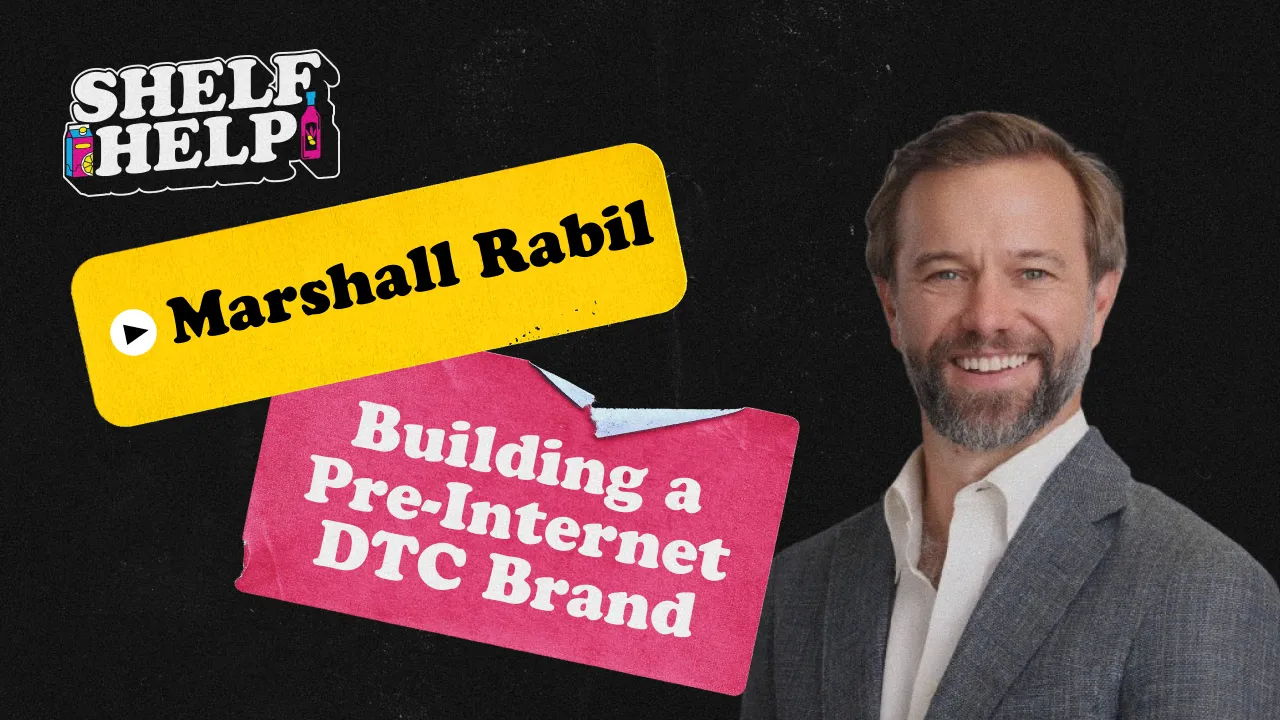



On this episode, we’re joined by Marshall Rabil, CEO of Hubbard Peanut Company (“Hubs”), the Virginia heritage brand that commercialized blister-fried, Super Extra Large peanuts, and became one of the earliest premium mail-order/DTC success stories.
From Dot & H.J. Hubbard’s 1950s home kitchen to a modern mix of DTC, retail, and private label, Marshall shares how Hubs has maintained a craft feel as they’ve growth over the past ~75 years
With experience as a Whole Foods specialty buyer and a decade leading Hubs’ marketing and partnerships, Marshall unpacks sourcing the top 1–2% of Virginia peanuts, why terroir matters for flavor and texture, and how the team balances premium pricing, seasonality, and channel conflicts without diluting the brand.
By the way, is it me or does Marshall sound a lot like Matthew McConaughey
—---------------
Episode Highlights:
🥜 Hubs’ origin story and what “blister-fried” really means
🌱 Terroir: how region, curing, and grade shape flavor and crunch
📈 From catalog era to modern DTC
💸 Holding a premium price
🗓️ Running a heavily seasonal business
🛒 Retail lessons from Marshall’s time as a Whole Foods buyer
🏷️ Private label & co-branded: where it works (and where it conflicts)
⚖️ Margin realities across private label vs. branded vs. DTC
🎨 Visual identity & packaging that drive trial, gifting, and loyalty
👥 Building the team, lessons learned, and the future of the peanut
—---------------
Table of Contents:
00:44:03 – Hubs origin story
03:41:01 – Taking over a legacy family business
06:01:14 – The effect of terroir on peanuts
07:30:17 – Extra Large Virginia Peanuts, focusing on the top 1–2%
09:13:24 – Pioneering the blister-fried peanut at scale
11:27:07 – The early days of DTC to today
12:55:01 – Selling peanuts at a premium price point
14:44:11 – Building a heavily seasonal business
17:19:28 – The retail channel, Marshall’s experience as a Whole Foods buyer
20:37:27 – The private label and co-branded business
22:45:27 – Private label vs. branded retail vs. DTC conflicts
24:42:19 – Margin differences between private label, co-branded, branded
27:22:23 – Visual identity and packaging design
29:58:11 – The team
31:37:22 – Learning lessons
33:49:20 – The future of the peanut
—---------------
Links:
Hubs Peanuts - https://www.hubspeanuts.com
Follow Marshall on LinkedIn - https://www.linkedin.com/in/marshall-rabil-83a24a15/
Follow me on LinkedIn - https://www.linkedin.com/in/adam-martin-steinberg/
For help with CPG production design - packaging and label design, product renders, POS assets, retail media assets, quick-turn sales and marketing assets and all the other work that bogs down creative teams - check out KitPrint.
Episode Transcript
Speaker 1: 00:00
Welcome to Shelf Help. Today we're speaking with Marshall Rabel, president and CEO of Hubbard Peanut Company, otherwise known as Hubs. Hubbs is which is considered by many, I think, to be the creators of the blistered fried peanut at commercial scale, at least, which we're definitely going to dive into. Family run business started in 1954 by Dot Hubbard, who I believe is Marshall's grandma. So yeah, definitely excited to get into it. Just first off, for the the listeners, Marshall, that aren't as familiar with hubs, give us a quick lay of the land in terms of origin story, a bit about the why behind the brand, some of the core products you guys offer, a few places people can get their hands in them, and then uh we'll go from there.
Speaker: 00:44
Sure. Well, Adam, I really appreciate you having me today. I've been looking forward to chatting with you. Um, yeah, you you mentioned it. My my grandmother started our business from her home in Sedley, Virginia in 1954. You know, she was a teacher. And when she was pregnant with my mom, you back in back in those days, you could not go back to work when you were pregnant. And so she um was at home and her father had a little peanut farm. And so she was it just kind of as a hobby, was picking peanuts out of the farm and cooking them up and in a unique way and was giving them away to friends. She was giving them to her sorority sisters at Christmas, and it just kind of took off from there, like a lot of these small businesses do. Somebody's got a product that somebody's like, hey, you should sell these. So my grandfather, HJ, was a purchasing manager and accountant at our local paper mill, and he was kind of worked with her to kind of start the sales process and would take Hubs peanuts to the pharmacies and the hardware stores. At the time, the only game in town was Planters, which is a great peanut brand that most people know. But they what differentiated Hubs from Planters was Dot was picking the largest peanuts that she could find. And at the time, the USDA did not have a grade for these peanuts. They're called super extra large Virginia type peanuts. And like you said, she was blister frying them, which ultimately means soaking them in hot water and then frying them in oil. Planters was a dry roast. They were using smaller kernels, so we believe that that cook process really brings out the crunch and the flavor of the peanuts. And uh so he started selling dime bags of hubs next to the nickel bags of planters. And so because they were twice as big, twice as good, they commanded twice the price. And so that's that's kind of how it all started. Obviously, that the brand name came from his his last name was Hubbard, so his nickname was Hubs. And so that was pretty that was an easy way to get into the branding of it. But yeah, so since then we've we've grown tremendously, but it's always been cooked in our home and Sudley using the same recipe that Dot did. And we've always paid attention to packaging because we've been a gift quality product. So uh we're primarily a direct consumer brand used as a gift, a thank you present, a Christmas present, a touch point for customers and clients. Um, so the packaging element is also something really important to us. And um, you know, we've got a website, uh, it's called hubspenuts.com. But we also work with a lot of different mom and pop specialty markets around the country. We do have a presence in some grocery chains, some private label business as well that uh I guess we'll get into. But that's that's kind of how they started. And it's been really fun to kind of continue to build their brand and vision into the 2020s.
Speaker 1: 03:41
I love seeing families come together that uh end up building a successful business. It's it's awesome. And I guess on that front, uh building family businesses, there definitely seems to be, I don't know, you might say a lot of polarizing views on both sides about building a business with family. What's that experience been like for you and your family? And what would you say are the pros and cons about building the business with all your family members?
Speaker: 04:03
Ultimately, it's uh it's amazing, right? To be able to work with your aunts and uncles and mother and sister and cousins to work on building something. But there, the yeah, the truth is that it is it is hard. I remember as a kid in the 80s, heated discussions around the table, um, listening to them discuss business. There's definitely challenges. My mom was actually the last CEO, and she was in that role for the past 30 years. And at times, she also worked with her sister and her brother, and um, you know, they they worked together for a while in the day-to-day. And really, the last uh 20 years has just been me and my mom and the family on the day-to-day side. But all of us, there's seven of us in the second generation and the third generation, and we're all board members and we're all owners, and we have an intentional meeting cadence every quarter where we get together to go over objectives and kind of fill everybody in and get feedback and work together. You know, obviously, when you when you get you have certain goals and you reach those, you need new strategic plans. And so we all kind of come together on what that looks like. And so it's really been a lot of fun. I mean, I've worked really closely with my mom more than anyone, especially over the last decade, and and we've we've had a lot of fun. I obviously we we disagree on some things, you know, but that's that's the same with many, but uh ultimately it's just been an honor and I've really enjoyed working with her and learning from her.
Speaker 1: 05:35
Diving into a bit more of the weeds, a bit talking about product development, innovation, commercialization, product positioning, all that type of stuff. When I um when I think about the word terroir, I I first thing that comes to mind for me is is wine, you know, partially just because the area I grew up in, right near south of Sonoma Napa Valley. I'm curious, I've read a bit about talk about really the uniqueness of Virginia and how it's a great place to grow peanuts. And I'm kind of curious, how have you found that terroir, you know, actually really impacts peanut quality? And then why do you feel like Virginia is the ideal place to grow the best peanuts in the world?
Speaker: 06:13
Yeah, and I think that's that's great. And and I always say Southampton County, Surrey, Sussex County, right here west of the James River, as we are to to peanuts, as Napa Valley and Sonoma County is to wine. And we really do grow the best peanuts in the world because of the soil and the climate. I mean, that's that's key to any agricultural product, right? Now, peanuts grow in many different states around the U.S. and several different and six, seven continents. So everywhere in the world can grow peanuts similar to wine, but they're different varieties. And the Virginia type is what we grow here. In Georgia, they grow more peanuts currently, but that's a Georgia runner. So the Virginia type peanut flourishes in this sandy soil. We're close to the coast, they're drought resistant. That's one of the things that's amazing about peanuts compared to almonds or some other nuts, is they don't require that much water, right? And they actually put nutrients back into the soil. So it's a great cover crop, rotational crop for our soybeans, corn, cotton. So peanuts really replenish nutrients in the soil, in the sandy soil that we have, but they flourish. And now we're seeing over 5,000 pounds per acre is pretty standard here. And that's that's a really nice bumper crop. And that's uh they they just really work here in this terroir for sure.
Speaker 1: 07:29
That makes a lot of sense. You mentioned at the beginning that you guys really only focus on sourcing those super extra large Virginia peanuts, which I think I read is about like one to two percent of the average crop. It isn't a whole lot. Um just from an actual kind of on the ground process standpoint, what is that what is your sourcing and filtering process look like?
Speaker: 07:53
Yeah. So when my grandmother first started, she would go to the shellers and Birdsong Peanut, who's actually uh at the Hub's Vine today having having a big lunch, which is interesting timing, but they were the shellers for planters, and she would go to them and say, Hey, I want once we were starting to grow a little bit, I want all the peanuts that don't go through the screens. So there's different grades of peanuts. And so that's what I was saying, that they didn't have the grade from the USDA at the time. And she created the super extra large category. So we do just source that top 1% from farmers exclusively in the VC region. So for us, the VC means Virginia, North Carolina, South Carolina. The states don't know that that there are boundaries and state lines. It's just really that same coastal plain, that soil is really great. And so we're working with farmers that contract directly with some shelling partners. And so we're essentially buying from anybody that's farming the Virginia type peanut in the VC region. So Virginia Carolinas, that's that's that's home base for us, and that's that's where we're still sourcing. And we're proud, we're proud of that. Other other states do grow, a Virginia type, so you get them in Texas as well, but we uh we do like to to focus on our home region.
Speaker 1: 09:04
Yeah. Yeah, the importance of really high quality differentiated soil, I think, is uh the key to a lot of growing really differentiated products, which sounds like you know all about. We talked about, you know, that Hubs is known for really commercializing that the blistered fried peanut versus that dry roasting and figuring out really how to produce it at scale. I'm just curious, did it take a while to formulation is the right word, but phone in that formulation process and kind of curious what that was like. And maybe you can also touch on. I think I read that you guys have been one of the keys to really scaling up was this continuous cooker that you guys custom built. So, yeah, tell tell me about all this related commercialization process.
Speaker: 09:44
So it started out, I mean, we still have some competitors that are doing this, just a regular old deep fat fryer, like you fry French fries or chicken tenders or whatever in, and then it grew. Um, and my grandfather worked with a local engineer in Southampton County to develop this continuous cooker, and so we could have larger batches. I mean, we still have the same, same kitchen, it's the same equipment that he developed. This is this is the fifth generation of that same equipment. So it's nothing out of the box, but it it's perfect. We've got a series of baskets, and the first step is a water blanching bath, which kind of seals the membrane of the peanut, and that's one of the reasons that they really become so crunchy, and that's the blister part. And then they're transferred to the oil, and it's the same kind of it it mirrors the blancher, and then they go through the oil for several minutes, and then we salt them and can them. And yeah, but that really was a community effort in scaling our business. We had the continuous cooker, but we also were having women around Sedley and helping my my grandmother's friends before we were sending them out to get blanched, which meant for there's two types of blanching. Blanching is removing the skins, is the first process, and then the water blanching is part of our cook process. But she would work with ladies all over town that would literally hand skin the peanuts, and so it's really been a community effort to grow this and scale this, which has been pretty cool. Are they still being hand-peeled or what's like is that they're definitely not still being hand-peeled. There are blanchers now that that help with that process. Okay, got it. But it that's how I mean, you know, it it it certainly uh was a community effort at first. I'm sure.
Speaker 1: 11:23
Yeah, I'm sure. Shifting gears a a little bit, um, I believe, at least historically, the brand has been primarily a D to C business. Um, assuming I'm I'm correct on that front, what's what have you just I think looking back historically, what do you feel like has been key to really building a growing profitable DDC business in this channel?
Speaker: 11:46
I mean, we were D2C since our inception, you know, before credit cards, before FedEx and UPS existed. So it has been kind of remarkable to see. And now that's kind of the trend in a lot of these, a lot of our industry now, because they're they're nicer margins and you're not having to deal with distributors on a lot of that product. But uh the the key to that has been honestly has been a good product that you build fans that then tell their friends about it. And then so word of mouth marketing, we never really were investing in marketing for most of our history. That was one of the things that I came back to and said, hey, you know, we've got a really great product. People love it, our brand is is known, but if we spend a little more energy and focus on marketing it, I think we can we can grow some of our revenue and and grow our sales and um uh uh become a more profitable and a larger company, hire more people, do do other things. And so, yeah, it was have having you got to have a good product that people like and want to tell their friends about. And that's really been the key for us. I mean, no real secret sauce there, just do do it, do it well and have something people love, do it well and people will share it on their own.
Speaker 1: 12:54
I I totally get it. Yeah, I believe you guys definitely sell it at a premium price point compared to the market, uh, at least on the online D to C side of things. How do you guys I think about telling your story in the context of really justifying the higher price point so people get the story quickly and convert and say, Yeah, I'm definitely willing to pay this higher price.
Speaker: 13:15
Yeah, well, I mean, it is it is a higher quality product. I think every industry has, or especially in food and beverage, you've got you've got kind of your conventional, and then you have your top shelf. Like we're a top shelf peanut, and and that it the peanut we source is more expensive. The oil that we use is more, we're using coconut oil, that's more expensive. You know, we are that we use lithographed metal cans instead of cardboard cans. So the can't more expensive. We had a lit, we have a lid lifter on our can that's the key to the party. That's an expense. We have to have somebody put that on there, but it's part of the experience. We put the can in a box. We have a gift card that goes in that box. And then what you're seeing on the website also includes shipping it to anywhere. Yes, it is a premium product, but it is a premium experience for for engaging with our product and enjoying peanuts. So um I think quality across the entire brand is key. And so, you know, it is a kind of you get what you pay for in some things. Yes, they're peanuts, but they it's a different experience than the peanuts that you're used to having. I mean, you see it in in wine or beef or any product or crop things that you consume, you know, there's levels, and we're just next level peanut.
Speaker 1: 14:29
Totally. No, that makes that makes sense. I think from what I know, at least just doing the research that I did, it the the business is at least somewhat, if not fairly seasonal, I imagine. That's like, you know, focused around the holidays and and gifting and whatnot. Assuming that on the right track there, how do you plan around business that that's fair that's fairly seasonal from an inventory perspective, whatever marketing costs you are investing? Like yeah, I'm just curious how you think about building a business that's pretty seasonal.
Speaker: 14:56
Yeah, and that and that's always really challenging. And as we've grown, the season has just gotten more challenging and and and more complex, and we've had to figure out ways to manage that growth, right? And so we start our season, we start building inventory, you know, now during the summer for the holidays, because fortunately, peanuts have a very long shelf life, they're high oleic, and so they uh they have a long shelf life. So we can start our season a little bit early. The thing that's always every single year is really tricky, is right now I'm sitting on a warehouse full of inventory that we have not sold. It's all based on historical projections, and that is super stressful. Like that that product is not sold, it's sitting there. We're assuming it will based on history and some efforts, but we don't know that it will. So it's it's really it's challenging. It's not, we do, we do kind of combat some of the seasonality with the wholesale markets and some of the grocery business that we have. We are working on different marketing initiatives to make it more of an everyday gift as opposed to something during the holidays or something at holiday parties. So those are those are things that we're consciously working on to try to figure out how to limit the seasonality. But but in every single business and any product, fourth quarter is always the busiest because that's when people are spending money and that's when people are giving products or even in clothes and whatever it is, experiences like fourth quarter, it drives our economy, you know, for the most part. But it is challenging um and a little stressful when you walk in the warehouse and you know that that hadn't sold yet. Um we got to figure out how to move it and hope that it does. But um, we we do are conscious of that. And um, whatever we grow in the off-season, those seems to exponentially impact the season. Right. So yeah, we we we uh we outgrew our space and saidly. We needed more warehousing. So in 2020, we we bought an old grocery store and converted all the middle aisles and the freezer space into into warehouse. And we took other parts of the grocery store and turned it into another packaging line. We took the beef department and uh the meat meat department and the beer cooler and turned that into a production line for our chocolate-covered peanuts. So as we grew, we needed more space and and um we we've invested in that. So yeah, I mean it's it's tough, but it's it seems to be a good problem to have at the moment.
Speaker 1: 17:19
Yeah. From what I know, the the retail channel has has seen some solid growth numbers recently and is is shown some more promise. And I I think, if I'm wrong, earlier in your career, pre-hubs, you were a buyer at Whole Foods, assuming I got that right. Like, how is that your experience being on that buyer side? How has that shaped your guys' retail strategy now being on the other side?
Speaker: 17:42
Yeah, and that was one of the reasons I went to work at Whole Foods because I wanted to learn the grocery market. And I loved pre-this is pre-Amazon acquisition, and I really loved John Mackey's philosophy on conscious capitalism and how business can be a catalyst for change in the community. And I was totally inspired by what he was building with Whole Foods, and I thought this was a great culture for me to learn from. And then I could also kind of get an understanding of what it would be like to get into Whole Foods and what some of those channels were like. And so I worked there for a couple of years when I was in Nashville, essentially getting a graduate degree in grocery. I wasn't, I was, yes, I met had a paycheck, but really it was an education. And fortunately, it you know, during that time I was able to get our products into Whole Foods South. And then I would go to all of the stores and visit them, and I would demo, I would talk to customers, I would say, Hey, have you had Hubs Peanuts? Have you tried some hubs? Come up, you know, and really actively like boots on the ground, like marketing to customers in the stores. And I and I found that that type of environment was really helpful because when you can interact and engage with a customer at a grocery store through demos, they build a, I think uh, you know, we we build connections with people that we know and brands that we know. And when you get to meet people, and and yes, having brand reps do it, but when you're at when you're a part of the the brand yourself and you're meeting people or when I meet people and it's their product, I have a different connection with it. And so Whole Foods gave me a great opportunity to learn from them, but also then sell our product and then demo in all of the different stores around the South region. Things changed a little bit with Amazon, but ultimately we still have a grocery presence. We work with the Fresh Market, which is a great store. We work with Wegmans Natural Grocers is based out in uh Denver. Zupan's out in Oregon. So we'd like to find regional chains that have similar philosophies that we do, smaller, locally owned mom and pop stores. You know, that that's kind of our target market right now. Wegmans is is a great example of a private label brand and a brand that branded product. So we've we do a private label for them, but we also have Hub's brand in their stores with some different flavors. So that's a really fun one. And and then we've got like Orvis, Flyfish and an Apparel Company. They've got 68.9 stores in some really cool places around the country, and we have a co-branded label with them. So they we love their their store, their their business, but they're like us enough to write our our you know our story on the side of the can. So that's a really fun partnership. And so the different channels give us an opportunity to diversify some of our business, but also partner with companies and learn from them and all of those uh larger companies that we work with ultimately have made us a better company and we've learned a lot from our partners.
Speaker 1: 20:36
Yeah, that's great. You mentioned the um the private label stuff. That's that's part of what I was curious about. And I guess just the first question what is uh, if you think about what the ideal private label customer looks like, well, how how would you define that?
Speaker: 20:51
Well, I would I would say the two that I mentioned are ideal customers. Wegmans is an ideal private label customer because they have a brand that people absolutely love. And I love their family's business and and I love how they've grown and the intentionality of their stores. I think they're the best grocery store in the country. And that's not, I mean, I I've I've been to a lot of different stores, but I love their philosophy and how they're community oriented. Um, and so we're proud that we're their foods you feel good about brand. The only way that you would know that it's a hubs can is there's the key on the can still with our little peanut man. But it's the other the other one that I mentioned was Orvis, and I love that because it's a co-branded story. It's like we love your brand, you love our brand, let's tell each other's stories. Like you do peanuts well. Well, we we we have a great retail market. We want to be, we want to have your peanuts in our market because they go well on fishing trips or hunting trips or whatever, right? And so those are great examples for me of companies that we love to work with. But we don't have a lot of pure private label brands. Wegmans would be the only one that is really a pure private label. Some of our other ones, I we really like the co-branded approach for companies that we respect and want to work with as well.
Speaker 1: 22:08
Yeah. When you're doing the the co-branded approach in the retail, do you also have your own just standalone hub-branded ones on the shelf too? Or are the ones where it's co-branded, you're just focused on the co-branded line?
Speaker: 22:20
Yeah, the co-brand ones we just have. It's with Orvis and Zupans or co-branded. Taste Unlimited is a local one in Virginia that is is literally a co-branded product, which is which is great.
Speaker 1: 22:32
So that maybe maybe this question to add was not that applicable because it sounds like you're doing mostly code brand. It sounds like Wegman may be the only one where you've got pure prey private label, also your own branded one on the shelf. So this question may not be all that relevant. But I was curious, how do you avoid cannibalizing like the hub's branded product line? Like, do you only well I was gonna say do you only offer private label to retailers you don't plan on selling the brand into, but clearly you're doing both and then Wegman's, or do you not care that as long as the product, you know, your branded product on the shelf? Or yeah, I'm just curious again, it sounds like it's only Wedmond's, or if this is really No, well, I think I mean I think that's a really good question and it's challenging.
Speaker: 23:07
Like, do we even work with wholesale accounts, right? Or even private label accounts, because the the D to C side, you know your customers, you know who you're who know, you know, you you have direct interaction with them, you've could you control the margins. So it's just it was a strategy in general just to say we're gonna we're gonna open up wholesale channels because you're right. How do you how do you keep your brand integrity as a gift? And we still we think about that all the time. I mean, we're um we're in Food Lions in Virginia, which isn't traditionally a market that we would work with, but as they've improved, I think their offerings of saying, hey, we want to focus on these these Virginia products. You know, they're proud of those Virginia products. Traditionally, we wouldn't be in a market like that. And then we have we do, we get we get some pushback from some of the retail stores that are in smaller towns where there's also a food line saying, Well, hey, we've been selling these, now you can get them there. And so that that is that is tough, and that's something that we are very conscious of and think about. Um, because I mean a lot of the retail markets are kind of your marketing partners too. Like you get brand awareness there, and we have a 12-ounce can that we sell at that market, but but you come to our website and you you have the larger cans that you can use for gifts, and we can handle that. So if you're a daily, a day-to-day consumer of our product, it's great to have those outlets. If you like giving our gifts, we like to have a little bit of a higher quality package feel and the gift notes and how we how we handle it. So it is it is a challenge. And so we are working um to figure that out every day. Yeah.
Speaker 1: 24:43
Thing I was curious in the same realm was was uh the margin differences. And now you're talking about this combrand stuff. So I was wondering, as much as you're comfortable sharing, obviously, like the margin profile between because I imagine on the private label side maybe the margin is lower, but and this, but you don't have to maybe and you know invest in shelf space and marketing programs because it's a retailer selling essentially their own product versus on the hubs brand and stuff, there is some that's some of those added costs, but I imagine the actual you know gross margin may be higher. But and then I'm curious on that third one where it's the co-branded one, is that do you get more of the benefits at the private label one because it's also their brand, so you don't have to necessarily pay for shelf space as much and whatnot. Yeah, but I'm getting that like between those.
Speaker: 25:27
What does the market profile look like? I honestly, you know, one of the reasons we're not in a lot of grocery stores is I won't I don't want to pay those slotting fees, and I really haven't, and we don't do that a lot. You're exactly right. Wegmans is taking that product in and they're moving it. We're not paying that and at the fresh market. And if you can avoid paying those fees, that's what I would a hundred percent recommend. And the direct-to-consumer piece, you obviously are controlling that margin. You're not having to go through a distributor. Now, some distributors are more mom and pop type distributors that are only taking us into like we have a one distributor that's a smaller one that takes us into the Wegman stores. But some of the larger distributors are really challenging to work with, and you get hit with fees that you we take pictures of all of our products as they go on some of these trucks, and then they'll claim that they didn't receive the product and they'll give you chargebacks. And some of the way that that large-scale distribution works and the way that they budget in fees into their business plan almost feels, I'm not gonna say illegal, but the way that they're able to like just charge you and assume that you're not gonna go after because you don't want to go into the portal and spend hours trying to get your money back is really challenging. And it leaves it leaves most of us in the in the brand in the brand space with a bitter taste on distribution. I love the distribute the distribution partners that we have that that help us in some of the smaller accounts. The larger ones are really, really tough to work with. And um, I mean we do you do because you have to, and I I mean I have these conversations with them, it just doesn't seem fair sometimes the way that they're charging you for things that are, you know, anyway.
Speaker 1: 27:11
From a a visual identity packaging design standpoint, I think understanding that the current packaging design has has been around for quite a while, unless you guys have made some updates more in the more recent years. Either way, thinking back to those early days of yeah, the initial visual identity packaging design, what do you recall were some of the kind of key variables that were top of mind for the team and maybe another way to look at it, depending on if you work with an in-house designer agency, kind of the core things that you remember were included in that brief.
Speaker: 27:42
Yeah, so originally we weren't ever worried about how it looked on a shelf because it was a direct consumer product, and we only had salted and unsalted peanuts basically from 1954 to the late 90s. And then we started to add some flavors, and we got into chocolate-covered peanuts and our sweetheat and our honey kissed, and and now we have a snack mix and redskins, single origin. We don't have tons of flavors, but we kind of have something for every profile. And so, kind of our two-tone color palette, they look really nice. If you get three or four lined up side by side, it's a beautiful pop of color. And our logo in the middle of the can really becomes you want something recognizable from six, seven feet away where it draws you in. So color choices are really important. How what you what you have on the front of the can, but we've never really designed our packaging with the shelf space in mind as much as just the the overall feel of it to the customer when they receive it. And so it's we are conscious of that, but we we haven't really designed with the shelf in mind as much.
Speaker 1: 28:49
Yeah, I think I read something about where there was a a period at some point where I think where I read that it was called the key. I'm not sure if that's you guys call it, but they wasn't available when you guys actually put a hold on selling product to those that are available because you didn't you really didn't want to sacrifice the product quality. Is that did I read that correctly?
Speaker: 29:05
Yeah, during during COVID, there was a there was a time when we could not get that metal key. Now that metal key is continuing to get more and more expensive. But I do, I think that is such a part of our brand identity. We did ship, but we let people know, like we were had to apologize that they did not come with the key and that the next batch did. I hated to send those out without it because it really is, it's a nice tool. Like if you get our can, like you've got the tool right there. You don't have to go look for something to open it, and yeah, I call it the key to the party, you know, because it's a to me, when you get the can of peanuts and you open the key and pop the lid and you hit the foil and you get that nice hiss and knows you're getting you're getting into a fresh can of peanuts, it's like that that almost is as satisfying as the first handful. So using that tool really is is critically important to us. And that is a it is an expense, but it's one we don't we want to continue to have. Sure, totally.
Speaker 1: 29:58
Just from like a team standpoint, what does your core group of people that you're working with look like on a on a daily basis?
Speaker: 30:05
Yeah, and I've got such a good team, and that is the only reason we're able to do what we're doing. It's always been uh a very team oriented. I told you from from the day that my grandmother had the ladies around town skinning peanuts to now, it's been a total team effort, and we really have a great team in place. I've got uh my core leadership team would be our CFO and our COO. And then we're we're kind of the ones that are driving the strategic vision. We're actually have just hired a coach to help us put our next plan in place. We've always had our core values as far as we've I think we've always known them, right? Like we've had employees that have or team members that have been with us for their entire careers. And now part of the transition from second to third generation is when they retire, you've got to hire new folks, right? Well, now's a really good time as we've transitioned a lot of folks to define what those core values are. So when we do have to hire new folks, that we we can go through what those core values are. I mean, it's always been about teamwork and attention to detail and quality, reliability, dependability, and being positive, really, but we're really defining all that right now. And so we're working closely with Brian and Nadia, who are those two um key people that run our production and our finance side. Without them, I I would not be able to sit here and have this conversation with you today. For sure. Totally.
Speaker 1: 31:31
Yeah, awesome. Having a great support team is is uh make a break. Oh, yeah. Well, yeah, Marshall, it's definitely clear you've got a uh a fair amount of winds under your belt, a lot of success with this business. I think some of the best learning experiences often come from you know failures or times and things didn't go as expected. Anything that jumps out that maybe took you a while to learn or internalize on that front before, say that the light bulb went off. That could be helpful for some other up-and-coming CEOs or operators.
Speaker: 32:04
Well, on the grocery space and the shelf space, kind of specifically, when I first got into the sales kind of role, the win was getting the new account, right? Like there's a market that I'm thinking of specifically where I was really excited to get in. It was a nice market in LA and I knew it was going to be a perfect fit for us, but we didn't really support the sales of the product there. I told you I didn't like I didn't like paying for some of these things. But you really, if you're in a new market where you don't have a lot of fans yet, you really have to invest in staying on the shelf. The win is not getting into the account. The win is the repeat orders and then building that brand loyalty. That was that was definitely something early on that I learned that if it's a new market and a new region, you really do have to invest in support. Um, or there's thousands of other options, and people are gonna walk by, and there's no reason that somebody's gonna spend nine dollars for a can of peanuts next to the one that costs three dollars. So um that that was a you know a failure on my part early on, not knowing how much it was really gonna take to stay on those shelves sometimes. But I've I've got lots of failures and I try a lot of things all the time, but just continuing to try and to continue to iterate and be creative um and resilient and persistent, you know, that's persistence on in sales too, is key. I've got so there's some accounts that I've been working on for 10 years and I've just got them, you know. And so you really just have to not be overly ambitious, but make sure you're pinging them every once in a while and and staying on top of it, I think. Yeah, totally. Yeah, those are super helpful.
Speaker 1: 33:46
Yeah, Marshall, last last question for you. You've been in the CPG space a while, both you know, fireside now on the brand side, obviously, with the family business. Any any specific brands or just trends in general in the CPG space that you've been kind of excited about lately or things you've been tracking at all?
Speaker: 34:06
Well, yes, but I'm what you're not gonna like this answer, but uh I'm very excited about what we as a peanut organization, the National Peanut Board, is about to do for peanuts. Okay. I think that peanuts have such a great story that is really untold. I mean, you nothing is more American than peanuts, really, but we we we kind of overlook them. And when you look at the environmental benefits, the water usage and the health benefits, good for your brain, good for your heart, a study just came out that they can reverse aging. They're basically a food for the mind diet. And we've got a marketing strategy in place that we're about to launch as an industry that will be a consumer-facing product amongst all of all of the different brands in peanuts specifically, that I think will be a really exciting time to tell the story about peanuts. So hopefully, and this is this is as is planned to launch in 2026. We just had a industry opening of what this new brand kind of tagline and what it looks like. And I'm just really excited that we as an industry, because there's it's very fragmented. You've got the growers, you've got the shellers, you've got the manufacturers and the brands, but now we're all gonna come together under this peanut concept. And stay tuned to that because I really do think that that's gonna be a good story. And we're just at the beginning of a peanut revolution again here in the in the country. What's when what is there a time timing of when that's gonna come out next year? So it yeah, it's early 26. I can't tell you a tagline yet or branding or the colors or any of that, but I am excited. I think it it really is gonna be uh attractive across the board. So looking forward to it. Definitely keep an eye out for that.
Speaker 1: 35:52
Yeah, Marshall, this has been awesome. Really appreciate the time. What what's the best place for people to follow along with you and all your expertise? And then what's the best place for people to follow along with uh hubs as well?
Speaker: 36:02
Yeah, I appreciate that, Adam. Our Instagram is in Facebook or for social uh is at Hubs Peanuts. And then our website, we just launched a new website last week that I'm excited about. It's hubspeanuts uh. So would would love for y'all to come and check us out and um shoot me a message. Awesome. Sounds good. This isn't great, Marshall. Appreciate the time. Yeah, Adam, thanks a lot, man. Appreciate it. That's the pod.
.svg)