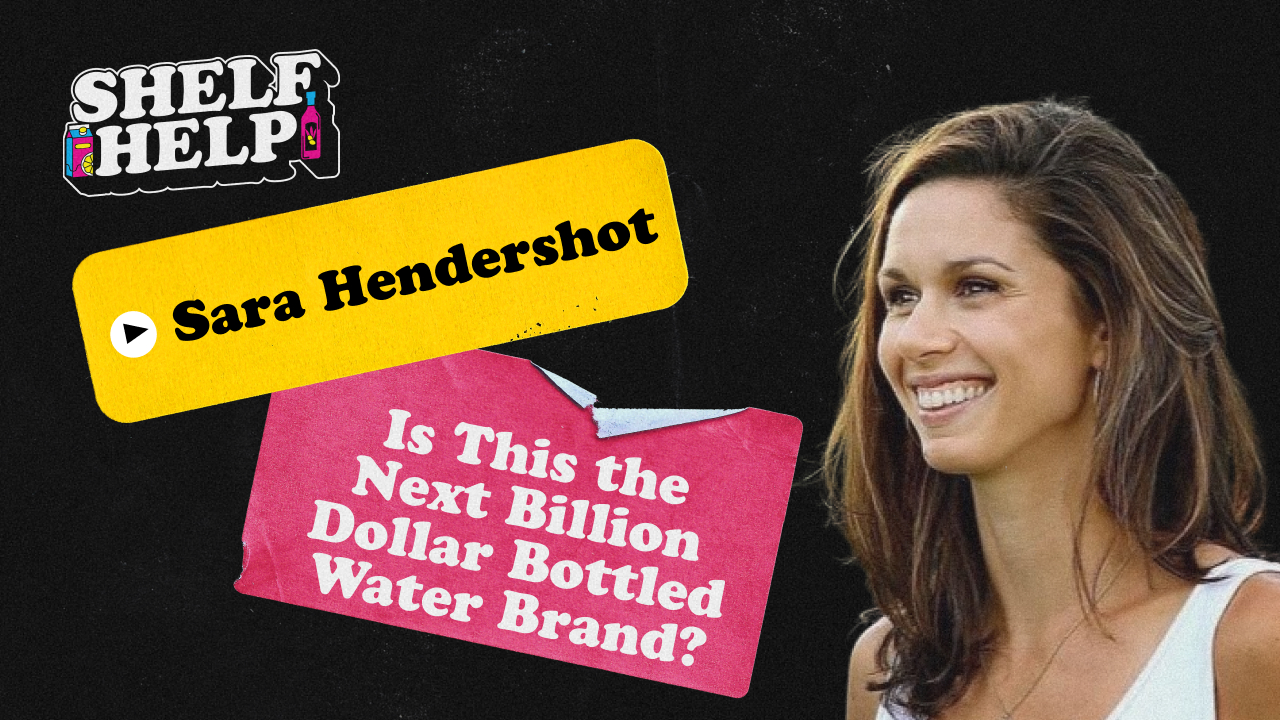



On this episode, we're joined by Sara Hendershot, VP of Marketing at Loonen - the glass bottled water brand that starts with a spring source, purifies it, remineralizes it, and tests every batch for over 350 contaminants. Sara was previously Director of Marketing at Momentous, and before that a two time world champion and 2012 Olympic rower for Team USA.
Sara breaks down how Loonen pairs a high quality spring source with purification, remineralization using Celtic sea salt, glass only bottling, and third party testing for 350+ contaminants printed on every bottle.
We get into the brand build: designing for heritage instead of trend (Levi's and L.L.Bean were the references), choosing yellow and blue to cut through a shelf of clear glass and white labels, and engineering a six pack box that can actually ship glass, and which storytelling hooks landed once they hit market.
A big part of the conversation focuses on go to market: pricing at $3.79 at Sprouts versus the Amazon six pack, consolidating still and sparkling under one parent listing, growing almost entirely organic with zero paid influencers, and landing a first national account six months after launch.
---------------
Episode Highlights:
🐦 The loon: monogamous to one lake until it gets contaminated
💧 The first water that is both spring sourced and purified
🧪 Testing for 350+ contaminants when the FDA requires almost none
🍼 Clara's IVF story and the water lab on her kitchen counter
🏭 Ripping out PVC pipes and replacing them with stainless steel
🎨 Building a heritage brand (Levi's, L.L.Bean, yellow and blue)
📦 Engineering a six pack box that ships glass without breaking
💸 $3.79 at Sprouts vs the Amazon six pack sticker shock
📈 The storytelling hooks that landed and the ones that didn't
🛒 Landing Sprouts off cycle six months after launch
🛻 Route rides, field blitzes, and why every new hire sells
📊 The Amazon playbook: parent listings and organic traffic
🔮 Raising the standard for the entire bottled water category
---------------
Table of Contents:
00:00 – Intro
00:37 – Loonen origin story and what the brand actually is
03:20 – Clara and David: IVF, endocrine disruptors, and Spindrift
05:15 – Why an Olympian started paying attention to her water
06:35 – The bottled water category and why nobody fixed it
09:30 – Sourcing springs and the story behind the loon
12:05 – Educating consumers without fear mongering
14:00 – Competing inside the glass bottled water set
16:20 – Building a heritage brand and standing out on shelf
18:15 – Pricing at Sprouts vs pricing on Amazon
20:15 – The storytelling hooks that actually landed
22:35 – Channel sequencing and the Sprouts launch
25:15 – Route rides and selling in the field
29:20 – The Amazon playbook
32:45 – Demos, field blitzes, and organic social
36:45 – Distributors and brokers
39:15 – Lessons from David Kimmell on scaling beverage
41:45 – Success, standards, and what keeps her up at night
---------------
Links:
Loonen – https://loonen.com/
Follow Sara on LinkedIn – https://www.linkedin.com/in/sarahendershot/
Loonen on LinkedIn – https://www.linkedin.com/company/loonen/
Follow me on LinkedIn – https://www.linkedin.com/in/adam-martin-steinberg/
For help with CPG production design - packaging and label design, product renders, POS assets, retail media assets, quick-turn sales and marketing assets and all the other work that bogs down creative teams - check out KitPrint.
Shout out to my friends over at Glimpse, the go-to partner for automating retail-related back-office operations and unlocking margin trapped in invalid fees and manual processes.
Are you in the market for a new flexible packaging partner? Check out HD Packaging. Third-generation, family-owned and built for the needs of category leaders like Newman’s Own and A Dozen Cousins. Faster launches, lower costs, and no artwork fees.
Episode Transcript
Speaker: 00:00
Welcome to Shelf Help. Today we're speaking with Sarah Hendershot, VP of Marketing at Lunin, the new ultra premium bottled water brand that's tested for over 300 contaminants, bottled and premium glass. Prior to Lunin, Sarah was director of marketing at Momentous, really well-known sports nutrition supplement brand. Also two-time world champion 2012 Olympic rower for Team USA. So nose branding, especially in the health and wellness and high performance space. So yeah, super excited to dive into it. Sarah, maybe just first off, for the listeners that aren't as familiar with Lunan, love to just start off just getting the quick lay of the land, just in terms of origin story, why behind the brand, core products in the lineup, and then uh we'll take it from there.
Speaker 1: 00:48
Totally. Uh well, thanks, Adam, for having me on. Sure. Yes. Uh we've had an exciting year so far at Lunan. We are a new glass bottled water brand on the market. Um, and I've been with the team working on this project for about a year, which has felt a little bit like 10 years in some ways, because there's so many things have happened and there's been a lot of evolution just in that time period. Uh, but it's been a lot of fun. And this is honestly my favorite phase of working on brands. Um Momentous and Lunin are two of those names, but I've worked across a bunch of different brands. And this stage of like building and really seeing the impact of the work you're putting in, I find to be so much fun. Um, you work across everything, but it's very rewarding. And so, yeah, quick, quick and dirty on Lunin. We've been live in the market for just six months. So we we spent a good amount of time laying the foundation for the brand and the product and really getting our operations up and running before launching. Uh, we launched right at the end of last year. And so, in six months, we've we've done quite a lot. We've learned a lot, a lot. And the idea really was that we wanted to be able to launch with a truly trustworthy, really high-quality water that was doing things differently than what is existing in the market outside of Lunin. And what that looks like actually evolved throughout the process of us getting ready to launch as well, and what our vision and image for what truly pure water was actually shifted and changed as we learned as well. But what we are now, and the easiest way I think to describe us is that we're really the first spring-sourced purified water on the market. We combine these two processes that have current or who that have in the past lived totally independently, where you've either been a spring water or you've been a purified water and both of them have their own issues. And we are now the first that is sourcing from super high quality spring. We're then filtering for purity to make sure that contaminants that sometimes naturally make their way into springs don't exist within our water. We're then remineralizing with super high quality minerals like Celtic sea salt instead of table salt. Um, then we're only ever bottling in glass and we test our finished goods for over 350 contaminants. Those results are on the back of every single bottle. So the consumer can actually see what's exactly in this bottle that I'm drinking, which is far and away like more rigorous than what's required by the FDA and what else is happening in the industry. So yeah, that's kind of the quick of what we are. And then I'm happy to share more on like the inspiration behind it too, if that's of interest.
Speaker: 03:23
Yeah, that'd be right.
Speaker 1: 03:24
Yeah. So I think what's kind of cool is our team's tiny right now. Um, we don't even have a dozen team members yet. And everybody has come to this brand with a different bit of a story and a different attraction to like what they latch on to the most. Our two uh co-founders, Clara and David, they were really like the brain people behind this idea, the ones who really started to work on this initially and helped to get it kick-started and come to life. Clara was previously on the investment side and worked across a bunch of different consumer brands. David has a long-standing career across consumer brands as well, but especially in Beverage, he was like number two at Spindrift for the first 10 years of the business and ran all their operations. And so they knew each other through working on different portfolio projects. Um, but Clara, when she went to go start her family, really was inspired by this. She had a hard time getting pregnant, had to go through IVF and through that process, really learned everything there is to know about endocrine disruptors and where those show up in our environment, including in water as being a huge source of that. And when she went to completely flip basically, you know, a lot of her lifestyle, habits in every category, there was an easy solution and there wasn't a good solution in water. And she tells the story about how she was renting at the time. And so she ended up basically creating like a water lab on her countertop because there was no other way to truly feel like she could filter and then remineralize and have a high-quality product that she super trusted. So that's kind of where the initial idea of Lunan was inspired by was trying to fill this problem that they saw, right? There was this area that like wasn't being thought about. And David came at this too with his experience from Spindrift, having really focused on the quality of that product, but then putting them in aluminum cans, which are plastic lined. And so there's going to be, you know, some of that shedding from the container that you're putting your drinks in. And we didn't want to ever have that be an issue. And that's why glass is the only answer to that for us.
Speaker: 05:27
Totally.
Speaker 1: 05:27
But for me, I felt like my connection to this comes from my background in athletics, and that like for so many years, I thought about every single thing that went into my body and every part of my routine and like how was I gonna try to optimize my performance? I needed to try to be the best in the world in my category. And as I've continued to work on different projects, I have realized as a now retired athlete that there were things that I was leaving on the table or categories that I hadn't ever thought about. And when I started at Momentous, I realized I hadn't really thought about supplementation the way that I had, because I couldn't trust that category. And I did, I wasn't educated on what NSF certified means. And now I'm working on Lunin and I'm like, I've never thought about my water as being the vehicle for all of my nutrition and all of my recovery. It is the thing that we consume the most of. It is the majority of what our body is made of. And I never really thought about that. And so now, as like a regular professional human with two kids and not a full-time athlete anymore, I try to make decisions that help me, you know, really like prioritize my health without over-optimizing. And water is an area that I am actually paying a lot of attention to now.
Speaker: 06:35
It feels like the bottled water category seems to be in a kind of an interesting spot right now. It's obviously one of the biggest beverage categories in the world. But I think the real reason that Luna's kind of started, I think, was like, on the other hand, just consumer trust just feels like it's a certainly a pretty low point, whether it's PFAWs or all these microplastics you mentioned, or just like it seemed like this stuff is a lot more all over the headlines these days, which obviously makes sense why people have been more skeptical. What's your just overall take on the current state of the bottled water category and what has changed more recently that's gotten us here?
Speaker 1: 07:10
Yeah. Well, I I look at this in a few different ways. The water category is massive, right? It's huge. And it's because it's not an occasion drink, it's an all-day, everyday, multiple times a day a product, right? You can you could have multiple lunins every day and like really benefit from that and enjoy it, right? So it's it's a very big category. And it's not like there hasn't been premiumization that has existed in this category previously. It has. It's just the consumer really hasn't gotten anything for it. So they've marked up uh their prices and have maybe you know done some nice branding, but there's not really something truly premium about what's in the bottle that's helping the consumer make that connection of like, yes, I'm willing to pay for this because of all this extra that I'm getting. So I think that's one area. It's just kind of been like this dusty old, not innovative category that was begging to have somebody come in and do something differently. And and then I think the other side of it was there truly there is a problem there that we're coming in trying to solve, right? And I think that that's in the past where I have seen brands and sometimes founders really kind of fail, is that they're sort of creating a problem and then trying to work a solution into something that doesn't really exist versus saw there was this problem and nobody was doing anything about it. And when we started to look into why was nobody doing anything about it, it's because it's operationally very challenging and it's expensive, right? There are so many easy corners to cut here. There's so many easy things to do that like could save us a ton of money on in different steps. And we'd be allowed to do that. The FDA says, sure, no problem. You only have to test once a year, right? Or you can you can store your bottled water in plastic and there's no expiration date to them. And we can put them in not temperature controlled trucks and put them under fluorescent lights on the groceries uh store shelves and just let that plastic degrade over time. And you can not test finished goods, you can just test the source, right? So there's so many different things that could have been done. And the reason why nobody was doing this is because it's challenging, right? So we're coming in and we're really trying to think about each one of those steps. And it and it is definitely making it so that there are challenges throughout this process. But um, I think it makes it so that we're also differentiated and people are noticing those differences.
Speaker: 09:28
What does that sourcing process look like for Loon and you have a team on the ground that's like going off the world sourcing the best spring water? You have one that you kind of nailed down.
Speaker 1: 09:36
Yeah, it's a it's a cool question because again, this is another way that we're doing things differently right now. Uh, it is definitely an ongoing process, but the current spring that we are sourcing from is outside of San Diego. And it is one of the dozens of springs that Clara and David visited. And when I tell you, like there are some hilariously crazy stories of them like hiking up mountains to go and visit these springs in person and actually see where they exist. There, there was a lot of that. But actually, you know, the inspiration for our brand name, Lunin, I think really aligns with how we are sourcing from springs. So we, and this is our little bottle, I have it sitting here. You see that there's like a loon on the front of it. And that's because we are inspired by the water bird, the loon. Okay. I knew nothing about loons before joining um Lunin. And I should have because I'm from the Northeast and they're a Northeast water bird. But they exist a lot in northern states and throughout Canada. Um, Clara grew up spending her summers on a lake in Vermont that had loons that lived there, and so she knew all about them. And they're fascinating birds. They are like the the uh, you know, the quote, the phrase crazy as a loon comes from loons. Uh, but one of the features that I think is so amazing about them is that they are monogamous to a single lake for their entire life, even as they're having migratory patterns. So they'll leave in the summer, they'll or in the winter, they'll, you know, fly south, they'll come back in the summer, but they come back to that same exact lake for the entirety of their lives, unless that lake becomes polluted and or contaminated. And if it becomes contaminated, they leave and they don't come back. And so we think about our sourcing very similarly, right? Like we have found a spring, the one that we're currently using, and we will open other springs that, but they have to reach our very high standards. And if they reach those standards and we've tested them and we and the quality is great, then awesome. We can we can source from that spring. But springs are ever changing and our world is this global interconnected water system. And so things do change and shift. And with this process, we are not wedding ourselves to a single source. We're saying, like, hey, if this changes, we will leave and we'll go to another great source that we have also found. But that's a big difference than what a lot of our competition is doing, who have wed themselves to a single source. And then when there's an issue with that source, they run into trouble because either then there's contamination or they've overtapped it, or they have problems then staying in stock because of that. And so we are not gonna have that problem because we follow the same velocity as a loon.
Speaker: 12:11
Where do you feel like the line is between properly educating the consumer and just leading with fear?
Speaker 1: 12:17
Yeah, uh, we talked about this a lot before we launched because it's definitely an area that we wanted to be very conscious of. I I don't want to lead at all with fear-mongering marketing. I think we all kind of get enough of that in our day-to-day lives in a million different places. Like we don't need to be yelled at that we're making bad decisions in a different category, right? So we make a really strong effort to not do that. And I think this is another signal that honestly our timing is really good right now because we don't have to tell that story. Like the market's telling that story for us, right? That that was part of the reason why we even, you know, pursued this idea is because there were so many scientists and experts in the space that were already talking about the impacts of microplastics on your health and what endocrine disruptors really do to your body long term and how you should be thinking about your water as a key source of, you know, delivering your nutrients and like making sure that it's high quality. So that already was existing, and we're gonna continue to let the experts really speak about what they know best. Um, it's part of the reason why we have a scientific advisory board, is because they are the experts and we lean on them for their expertise in that and they can help direct us towards the changing and growing and evolving research. But I think that's something that we're lucky enough right now that like the consumer is already waking up to that and is already paying attention to it. And the consumer in general is so much more educated than we've ever been. Like we are paying attention, we care about the details. And so it's an area where we can just kind of share what we're doing differently and how we are part of the solution of you know, trying to fix this problem. We're not the entire solution, we're part of it, though. And we'll let the consumer do a lot of that research on their own.
Speaker: 13:59
Mountain Valley Spring, they've grown 100% year over year. Liquid Death has obviously become a billion-dollar brand by putting water in cans, essentially. What's driving the premium water boom right now?
Speaker 1: 14:11
I mean, I really view Lunin as it's we're sitting in that glass bottled water set, right? We're not competing directly against the brands that are never gonna stray from being bottled in these different vessels that are either plastic or plastic lined. And so when you look at the other players in the glass bottled water set, I think again, it's like the consumer has has started to wake up to the fact that microplastics are a real danger and something that they want to avoid and that they can avoid within these big categories by making like one good decision that then impacts a lot, right? Like water is water and air are our two biggest areas that we are consuming microplastics. If they're everywhere in our lives, there's no way to eliminate them to zero. We can't, you're not gonna be able to do it. So it's like, don't try to get it to zero. But if you want to look at your two biggest categories that you can impact, water and air are those things, right? And so I think people are starting to recognize that. And glass is the solution for that problem. And so that's where I see the premium set taking off, and and like a big part of that motivation behind it is that you know, people care about glass, and it also becomes a very different drinking experience, right? Like you see that alcohol is an area that is starting to shift down or has continued to shift down, and people want to still have this like enjoyable experience drinking whatever beverage it is that they are choosing. Water is a great one to be able to fill that category with. And when you drink out of a glass bottled water, there is something that feels a little more elevated about that, right? And, you know, we keep talking about Lunan as being premium, and yes, that is true. We are more expensive than like a regular kind of like gas station plastic water bottle. Uh, but part of this mission also is that we don't want to be unattainable. We don't want to be sitting at this outrageously expensive price on grocery store shelves that doesn't make this something that uh, you know, any consumer can engage with and and enjoy. And so when we look at that set of other glass players, we are right in market there and very, very purposeful with that so that we are able to be, you know, accessible across a larger market.
Speaker: 16:25
You kind of touch on this question in a few different ways as you're talking about the Ordin story. Just I don't know, hone all the all this in into a succinct answer. When uh thinking back to those earlier days when you guys are building out the initial brand identity, positioning, voice, visual identity, packaging side of things. What do you remember was you know the key variables that were really top of mind for you when you were actually working on building this out? What do you remember was in the brief?
Speaker 1: 16:49
There's there were two really big things that we were thinking about as we were building this brand identity and the packaging and the labels and all of that. One of them was we really wanted to build what felt like a heritage brand, right? We didn't want to build something that was going to be a flash in the pan, that was going to be bright and loud and you know, pop on shelf in that way just to try to grab people's attention, but then fade with a trend, right? We are very inspired by brands like Levi's and LL Bean, right? Like these brands that have been around forever that truly feel heritage in their design. And so you'll see that in our branding, right? The colors that we've chosen, lean into that, the simplicity of the approach, the fonts that we're using, all of that like has this heritage side. And then I think the other piece of that is we needed to stand out on shelf. We needed to look different than everybody else that was going to be sitting in this glass bottled water set. And when you walk down the grocery store aisle and you look at all the different waters that are sitting there, there is a lot of similarity. There's a lot of clear glass with white or blue labels, there's a lot of green that sits there. We didn't want to be the same shape, we didn't want to be the same look. And so we're coming in with this yellow and blue as our core colors, which really pop on shelf next to everybody else. Like you don't see yellow really, besides maybe a couple of others. But like we, you, we stand out a lot there. And we wanted that to match kind of the tone that we're trying to bring as well, which is uplifting and hopeful and solution-oriented. And I think you get that in a lot of in our brand and packaging.
Speaker: 18:23
Well, you touched on on pricing a little bit. Can you touch on a bit more about how you guys thought about pricing when you're going to market, how consumers have reacted to the pricing so far, and what's what's that process looked like for you?
Speaker 1: 18:37
Yeah, uh our pricing definitely varies based on where you find us, right? So I think that's something to be aware of, and that's something that we're like constantly aware of internally. We launched at Sprouts just last week, which is super exciting. They're our first national retailer. Uh so if you have a Sprouts near us, you can now find Lunin. And we are 379 on shelf at Sprouts. And so that is, I think, like right in line with the other bottles that are next to us. And that was part of how we've thought about pricing, is we've gone out and done a lot of research on what else sits in the market and how can we make sure that we're competitive, but also giving this brand a chance to grow in a healthy way. Amazon is a different story, right? Like we launched on Amazon in December, like right as we were first going live. And we sell a six-pack on Amazon. It's the only place that we sell a six-pack. We don't offer that in retail. Uh, and we've done that also very purposefully as a tool to help us have national distribution before we are in every market. We wanted to be able to have early adopters that got excited about what we stand for and you know what we've created and get us anywhere, right to your doorstep. But it's very expensive to ship glass. So it's a much more expensive product on Amazon. And I think that can definitely look like a bit of maybe sticker shock and that we are sitting at this super expensive like six dollar bottle of water. And that is not the intention. That is the that is only because we are shipping on Amazon that that price is that way. And, you know, we'll continue to grow as a brand that that is gonna continue to evolve over time as we get economies of scale and as we continue to have more national distribution. But the idea is not to be premium in price as much as it is to be premium in the product that we're delivering.
Speaker: 20:18
Love that. In terms of what actually driving trial, what are you feeling like in terms of storytelling hooks are moving the needle the most?
Speaker 1: 20:27
Yeah. This is another one of my favorite parts of building a brand is right, like we had all these hypotheses about what was going to be the biggest hook. And then there's nothing more valuable than getting out in market and actually hearing what is sticking. And so we've had some of our initial hypotheses broken and proven to be untrue. And the things that we're really kind of seeing now as the these three leading points that uh people are latching on to is that we're spring sourced, that we're only ever bottled in glass, and that we have really high quality mineral content. I didn't expect the minerality to be something that people cared about as much, to be honest. I thought that the testing was going to be super important. I thought that our QR code was gonna be like such a selling point. And those are still super important and people definitely care about them, but they're they're secondary and they're kind of like post-initial interaction with the brand that somebody can go deep and learn more and then really kind of get into the nitty-gritty there. But I think understanding that yes, both the process that we go through and the source really matter to the end result. You can't just think of one of those pieces and have that be a proxy for purity. You have to think about every single step along the way. That is resonating quite a bit. Um and then I think it kind of depends on the audience, right? Like there's a lot of different ways to get somebody excited about this and connect with their own personal story. Um, I think even just sharing anecdotes go a really long way. Like the one that I honestly come back to most often is just showing the fact that we aren't cutting corners in ways like our bottling facility. We swapped out all the plastic PVC pipes for stainless steel pipes. And We did that and we paid for that because we did not want our water to touch plastic once throughout the entire process. Right. Like, don't have to do that, chose to do that because we we want to be sure that there's no microplastic contamination. We want to be able to truly tell the customer that from the minute that we take that water out of the ground to the minute that it gets into your the bottle that you're drinking, like there has not been one point where there's been plastic that's touched your water. So I think those kinds of stories like really matter. And and understanding that these are this is like a small team of super hardworking humans who are trying to bring this to life and thinking about every one of those steps like goes a long way.
Speaker: 22:37
Totally. Talk about sprouts a little bit. So I think you launched Amazon nationwide and then a few select California natural channel retailers at the same time. Walk me through that thought process around that sequencing, why those two channels first, and where do you go from here over the next year or two, let's say.
Speaker 1: 22:54
Yeah. Uh so yes, as I mentioned, Amazon was one of our first channels. It is our only like e-com channel. We don't sell direct to consumer through our website. We don't plan to change that. We appreciate the fact that Amazon has this massive distribution and ease of discovery there. And so we're trying to take advantage of it. And again, that was purposeful to be able to make sure that like we could get into anybody's hands who were is it was interested in trying our product. Starting in California, our plan really initially was hey, let's launch in San Francisco and let's launch in LA and use those as two test markets where we spend a good amount of time there really trying to penetrate those markets, trying to learn as much as we can from the consumers, trying to build some brand awareness. We'll be patient with that build. And when we feel like we've got enough of a data story and a case study there, we'll choose another promising market to open and we'll, you know, slowly kind of build from there. The demand was so big so quickly. And we sort of just realized like, oh, everything about this opportunity and this timing and this placement and the product that we've developed is like on fire right now that we've accelerated quite a bit of that plan. Which is an amazing, yeah, amazing problem to have because the problem is now that we're just, you know, trying to keep our feet underneath us. Um and we're doing a good job of that. Like we've we've got enough experience on this team to really be able to scale very well. But we opened up New York way earlier than we initially had planned on doing. We've been live in New York City for a little bit over a month right now. So if you're in New York, you're gonna find us all over Manhattan and now up and down the Hamptons, which is awesome fun timing for the summer in the Hamptons. Like we're we're everywhere there. And then getting our first national retail account six months after launching is like an absolute dream. That's incredible. And we're so excited about that. We were slotted, you know, off-cycle with Sprouts and not through their forager program, like throughout all almost 500 stores nationwide. And so we're very proud of that and like really excited that they are early partners of ours. We do have some other national retail accounts that we'll be launching later this year as well. So, you know, our goal right now is to continue to scale really effectively, to really lean into this natural grocer channel, which we know is a core, core audience of ours, and can continue to just basically can like get the word out about Lunen existing and do that really well with all of our distributor partners and these new national accounts. And I'd be like totally remiss if I skipped over the fact that it's these local spots that are truly helping us like build this brand, right? Because it's all of these independent grocers or small cafes or restaurants who, you know, have taken a chance on us early on, who have brought us into their communities that are really helping us get that strong early adoption.
unknown: 25:44
Yeah.
Speaker 1: 25:44
And that's an area where I we just all so recognize the value of those partners to us and how important they are. And what we try to make sure that they feel like that, you know, they they see that importance, you know, uh shared back to them, in that we spend a lot of time out in the field, right? Like I am our VP of marketing, I am not really on the sales team. I am out in the field selling all the time, like at least once a month, but more than that.
Speaker: 26:08
Totally.
Speaker 1: 26:09
We now have it as like a team policy that if you are going to be a new team member that comes on, you got to go do route rides in one of our key markets to start so that you can meet the teams that are getting us on shelf and working really hard every day. And you can meet these store managers and learn their names and like figure out where the shelving situation is and like how do we continue to get Loon and Great Placement? And I think that is something that can be skipped at this stage of a business or can be thought of as not being necessary. And it so, so, so is. And so I think that's that's a place like our focus will continue to stay in those areas of like making sure that we show up with the people that are helping us grow as people, right? And not just as these huge organizations where they don't have a face at all and you don't know who's behind their water. We want people to know who's behind Lunin.
Speaker: 26:57
Scaling super rapidly, what does that look like from a supply chain standpoint and the spring water stuff? That spring in San Diego, near San Diego, has you know X amount of pressure. So this means you can fill X amount of bottles, like at some point you have to have some sort of number in mind where you understand that spring and what its capacity is before you need to look for another one.
Speaker 1: 27:18
Yeah, springs all do have capacities.
Speaker: 27:21
Yeah.
Speaker 1: 27:21
You can over tap from a spring. And essentially what ends up happening as you do that is that there isn't enough water in the spring to be going through the true like natural filtration process of the rocks and the mountains that that exist that makes spring water a purer water than like tap water. And so we're very cognizant of that. And we worked really closely with those partners. And again, that's that's a big part of the reason why we are unique in that we are not stuck on a single source or to the point where if we're growing really rapidly, we're going to end up compromising the quality of that spring to try to meet demand. So we have we have multiple other springs that we've already located and found and labeled as like, okay, these meet our standards, and we will get ready to open them as we need to. Like there will probably be another spring that's open by before the end of this year. Okay. For us. Yeah. And again, that's crazy fast, but that's because we've got this incredibly experienced team that like has all of these great relationships and knows how to think forward like this, right?
Speaker: 28:25
Um, yeah, imagine David's op skills definitely come into play there a lot.
Speaker 1: 28:30
Oh my God, there's nobody better. Nobody better. Uh, and like it with all of the different brands that I have seen over the course of my 15, 20 year career, and I know I'm still building it and I'm on the younger side of it, but I've worked with a lot of brands and a lot of founders. And sometimes you've got this amazing product and just like not a killer team where you're like, they're just not, they're not savvy enough, or they're not sharks enough, or they're not aggressive, and we can't like quite push the speed enough, or it's the opposite. You've got this like amazingly incredible smart team and just a bad product fit, right? And we are like, I feel so lucky to be on this team right now where both things really are aligned very well. I love this team. I find everybody on it to just be like incredibly impressive, and we all have the same mindset of like how hard we are willing to push right now because we believe in the product that we're building, and I think the product is built is really solving a problem. So yeah, I mean, that's those two magical kind of pieces that if you can get them together, you got something special.
Speaker: 29:29
For some other brands that are putting a big focus on Amazon, just from a tactical standpoint, what does your Amazon playbook look like just in terms of what you felt like moves the needle the most in terms of optimizing just the lifting optimization, the Amazon ads platform, A plus content? What's the things that are top of mind for you guys that you're feeling is having the biggest impact on the Amazon channel?
Speaker 1: 29:50
Yeah, totally. We spent a ton of time getting our listing ready and our strategy ready. And then it's continued to evolve and shift since we've been live. But I think one of those things was just doing a lot of research within the space and recognizing how our other brands that are moving product well within our category showing up. What does the consumer care about that they need to be able to see quickly within the first few slides of your carousel on your PvP to like stand out and show what your differentiation is, right? So we did a lot of research. And then I think we've just we have such a strong brand to be able to then stand on that when we bring that education into carousel PvP format on Amazon, again, it stands out, it looks clean, it shows what it is that we stand for as a brand really quickly. So I'm very proud of our listings. You can go check us out on Amazon and see what we look like there. Um, but that I think was a big important part of it. And then we've experimented with things like our two SKUs that we have right now are still and sparkling. Um, both of them are in a 750 milliliter bottle. We had them split as two separate listings to start, and now we have them living under a single parent listing, right? And like that's been a positive for us in that we're able to send all of our traffic to a single PDP and like then the variant is really easily discoverable, uh, especially in an area where like still is the default product within water uh set. And again, that's another hypothesis that we were initially wrong about. Like I thought that sparkling was going to be a bigger chunk and still is our our winner. We're seeing that shift a little bit as the weather's getting warmer, like sparkling starting to take a bigger slice. But uh, yeah, that's been an interesting piece. And then to be honest, like we had way more plans of having to back with advertising on Amazon. And we've been so fortunate to be able to have this growth that we have had in our first six months be almost entirely organic. And so we are driving so much organic traffic to those pages that we have not had to spend aggressively on our advertising there. And now we're very purposefully keeping that tempered, right? Like, okay, yes, we want to make sure that when you search for Lunin Water, you can find us as one of the top products right away. But that like is essentially the max of what we're trying to do there. And we're focused instead on our organic presence and making sure that the people who we know are gonna enjoy Lunin and are gonna care about us and are gonna want to share about us to their communities, have access to us, and then an easy way to be able to point them to, okay, Amazon is a place to be able to find us. So I think that's kind of like the quick and dirty there, but it it has been a it's been a really helpful tool as well to be able to learn about like core customer demographics and reviews, right? Like what are people liking? How can we improve on our bottle? You know, like that's a direct line of communication with your customer. Uh, so even though retail is gonna ultimately be our most important channel, like it's gonna be the place that we have very healthy margins, we just learn a lot about our consumer through Amazon. So it's it's uh very valuable in that way.
Speaker: 32:54
On the brick and mortar side of things, what's your launch playbook look like? Or let's just say for Sprouts, what's your launch playbook looking like in in general so far? What have you found is having the biggest impact in terms of driving trial and and velocity? And I guess maybe as part of that, definitely curious about the demo side of things is the water category. How big of a place is demos play? So I'll let you take that wherever you want, but we'll go from there.
Speaker 1: 33:17
Yeah, demoing water is an interesting one, right? It's just, it's water, right? So, like, what's so exciting about that flavor? Yeah. And that is definitely something that we're, you know, we're navigating right now. Uh when you try Lunin, the amazing like crisp taste is definitely noticeable. And for people who like like to name themselves as like water connoisseurs, you can totally taste the difference between a different set of water. Lunin has kind of ruined water for me in that like nothing else tastes as good anymore. So I definitely recognize that as well. But it's not something that I think we're getting a huge, you know, amount of like massive traction from sitting out and doing, you know, taste testing outside of the front of a store. There will always be a place for that because we want to be able to educate. And I think that's the piece that's important is that we want to show up to select demo opportunities to be able to educate directly with a possible customer about why they should be thinking about water and like what we're doing differently, and a little bit less out like, hey, can't you taste how great this is? It does taste good though. So I think demoing is definitely uh a portion of it, but it's a smaller portion of it. I think, you know, leaning back to what I had mentioned previously about really being out in the field, that is a huge part of our playbook. We just launched Sprouts. We are about to spend three weeks as a team of eight blitzing as many stores nationwide as we possibly can. And so we are spending our first week out in Southern California. We have all of our route rides set up. We are gonna like visit all of the top sprouts in the area. We are bringing merch. We're gonna go talk and like build relationships with these store managers, find where we are placed and like make that personal connection. It is going to be a very long, tiring three weeks of this. And then when we're done with the Southern California area, we're all gonna split up and we're gonna hit other locations, right? So that's a big part of our playbook, is like getting out in the field, making those connections with the people who really strongly impact how you're showing up on shelf, right? Like if you don't do that, nobody else is gonna be able to do it the same way, right? And there's, yes, there are lots of other groups that you can hire to do some of that for you, but there's nothing like meeting people who are part of that founding team.
Speaker: 35:28
Totally.
Speaker 1: 35:29
So that's a big part of our playbook. And we've done that in every market that we have launched. So we did that in San Francisco initially, we did it in LA, we did it in New York, and now we're doing it nationwide with Sprouts. And then I would just say like organic social has been a huge part of our strategy. We've known from day one that was going to really matter. It's again another direct line of communication with your uh customers, and it's a really great way for us to be creative with how the brand comes across. So we've been doing, you know, each one of these market launches on social and then really kind of celebrating the people who are finding us in those communities and enjoying us. And again, we have done all of that organically. We've we've had a lot of really incredible people like shout us out to their communities with kind of astronomical numbers when you look at like how many millions of impressions we've gotten in the first six months. We have paid zero influencers to post about us. And so that I think is like very special. Uh and you know, it it is coming off in a way, like, oh my gosh, there's so many people talking about Lunan right now, which is great. And we're so proud of that and really happy about it, but it is none of it is paid. And so, like ensuring that again, we get out to those communities that we know are gonna enjoy us has been a big part of launching in new markets and like will be the way that we launch other products and SKUs in the future too.
Speaker: 36:50
From a distributor and a broker standpoint, brick and mortar retail is is uh still somewhat early for the for the channel, but what's the distributor strategy looking like thus far? And there's anything you found unique about what distributors are looking for, what feel like they've shared in terms of like what moves the needle in terms of distributing water versus other categories?
Speaker 1: 37:13
Yeah, uh we are taking both a you know a regional and a national approach to distribution. So we've got some really great regional distributors who have been partners in helping us get launched in those um in those areas. So, for example, like Good Stuff Distributor is our San Francisco distributor. They're such an amazing partner to us. They've really helped us like get the ball rolling in San Francisco. And uh we have similar in LA, we're just launching with LAD right now. And in New York, we have signed on with Big Geyser. So like we've got these regional distributors who are helping us like just crush those markets. Uh, we're also working with Kahee, who's you know, helping us it with national partners like Sprouts. Um, so it's a combination of those, right? Like you really need to be able to do both if you want to be able to scale across both regional and national locations. And again, it's like it's about building those relationships. But I think the demand for glass bottled water has been so high that that it has been an area where in certain markets and with certain distributors, it like it's been just a little bit of a simpler conversation. Big Geyser was an example of that. They really wanted a new glass bottled water, and we came in at a perfect timing with really great differentiation, and they have already placed us like absolutely everywhere, right? So it's a combination of both, but this is my first like true beverage experience. Like, I'm coming in with probably the least amount of beverage experience of this group, uh, but with a lot of marketing experience and a lot of experience in CPG. Uh, and so I'm learning like very quickly from the rest of our team who is more experienced on this, just how important distribution is and those relationships with your brokers. We're working with CMG, they have been great, they have been very integral in us getting up and running with Sprouts. Um, and yeah, like that's that's been one of my most eye-opening, I think, learning so far is just how layered each one of these elements and like markets is, and how you have to think about each one of those relationships as being so important and then navigating them smartly. So yeah, that's again, like that's how we've been approaching it and it's working well so far.
Speaker: 39:18
You touch on David Kimmel a bit at the beginning, definitely one of the more well-respected beverage ops people in in the market today. What have you learned from David so far about scaling beverage brands that maybe isn't super obvious, the average operator wouldn't know about, or yeah, things you would have never learned without working as close to to David as you've had the opportunity to do?
Speaker 1: 39:38
Yeah, I think I look to, again, I keep saying the same thing, but it's like so important. But I look to David as just such a good beacon of like the importance of relationships. Uh like he has been able to call up people that he has worked with previously and make things that should take us six months take us only six weeks, right? Like that is incredible, right? And it's because everybody loves David and he is totally a man of his word. And he when he says he's gonna do something, it gets done. So we're setting that standard across the entire company and like making sure that we can all live up to that. But the other thing is that I'm seeing him do is he's really thinking like years out in advance. And he's thinking not just how do we make sure that this production run gets enough product that we don't short any of our distributors, which obviously like is a priority. Um, but he's also thinking big picture and long term, like how are we going to make sure that we choose partners in our bottling facility that are going to allow us to scale to different SKUs, right? So that we don't have to completely shift our entire strategy when we're growing and we're getting ready for that. Or things like, how are we gonna ship to all of these different locations and be thoughtful? Like the way that he led all of our box design for our six-pack was like masterful, right? Because again, glass is heavy, glass breaks in transit. And we now have this like bulletproof box that we've built that amazing. Looking at the way that like we worked with the box manufacturer and the the like the packing and our 3PL, like all of that was just really, really thoughtful and and making sure that we're not like again skipping steps or jumping over important details that end up having like long-term ramifications down the road.
Speaker: 41:19
Yeah.
Speaker 1: 41:20
So I'd say those, those are a lot of them, but then him just being smart about how we're sourcing these different suppliers too. Like, for example, well, this is a custom glass mold that we have right now, and it's currently like we're shipping them in from Mexico, but we're gonna be bringing it in domestic. And so he's been thoughtful enough about that too of like how do we find a domestic partner here that, you know, can can give us a good price that we know is gonna like make a great product that we can grow with here and is like always thinking those few steps ahead.
Speaker: 41:48
Looking ahead, say, you know, this time next year, and then five years out from there, what does success look like for Lunan?
Speaker 1: 41:58
I think, you know, one way as an athlete, I've always liked to make sure that I'm thinking about the process just as much as I'm thinking about the result that I'm like trying to hit, right? It's so easy to just say, like, hey, here are the numbers that we want to hit, here are the total number of doors that we want to be in. Um, those things are all important, right? Like, yes, we want to continue to grow our national presence and we want to, you know, have great revenue numbers. Sure. Every, every business leader wants that. But I think from a process standpoint, like it sounds cheesy, but it's actually real. Like, we want to see a standard in this industry get elevated. And like, we're hoping that by showing up and saying there is a different way to do this, and this is what the consumer expects, and we're gonna show up and be the first ones to really do it right. We hope that others follow and like this category continues to evolve and shift. You see that in every other category, right? You see that in organic food, you see it in household cleaning products, you see it in clean makeup. Like once a leader came in and set the standard, others have followed and given the consumer more choice. And that's a great thing. That's a good signal for the market. It's a good signal for consumers having power in their spending and also like for us prioritizing health. Because in a lot of ways, sometimes it feels like are we alone in like having to make these health judgments for ourselves? And if we can kind of get a swell behind it, you know, that is backed by other brands that care. Like that's a big positive, right? And I would love to be able to walk away from this project feeling like we really had impact in the industry in that way.
Speaker: 43:28
Yep. Last question. What do you feel like is the I don't know, big b biggest risk or unknown thing that's keeping you up at night right now?
Speaker 1: 43:37
I would say just my the fact that like pretty much everything I'm doing within this is like my first time doing it. That keeps me up a little bit. But uh, we have such an amazing team and so many like great advisors that I can call up and basically be like, okay, how did you do this when you launched in Sprouts? Right. Like, what do you see the difference between Sprouts and Whole Foods being? How should I think about us expanding to Target one day, right? Like I can call them all up and get their points of view and like lean on them for that experience. And I like to think I'm very coachable and then I'm a quick learner. So in those areas where, you know, I am a little bit less experienced, I've got a lot of experienced people around me. But yeah, I just think like, especially being a brand that's had so much exciting growth so early on, it's like you've got you feel like there will be a target on our back, maybe, or a bit of like, you know, just more eyes of like, what are we doing? Because we've had so much positive momentum so quickly. And I want to make sure like we just continue to do things the right way. I and I know we will, but uh, you know, it's nice. It's like pressure is a privilege. And I I feel a little bit of that. Yeah.
Speaker: 44:39
I thought, yeah, higher stakes means uh is a is a privilege, right? Yeah, definitely.
Speaker 1: 44:43
Definitely.
Speaker: 44:45
Um, yeah, Sarah, this has been awesome. This has been awesome to learn more about Lunan. Uh, what's the best place for people to fall along with you and all your expertise in building brands? And then what's the best place for people to fall along with the brand right now as well?
Speaker 1: 44:58
Yeah, you can go find the brand the brand in Sprouts um or on Amazon, our website, lunan.com. Um, so you can find us there as well. On all of our social handles, we are at Lunin Water. And then you can find me. I'm somewhat active on the internet as well, just at Sarah Hendershot. And yeah, I like to share some like behind the scenes about what we're doing as a brand as well. I'll definitely be sharing a lot about our sprout splitzing this month. So you want to see that in action, you can follow along there too.
Speaker: 45:26
Awesome. Well, yeah, Sarah, I think that I think that's the pod.
.svg)