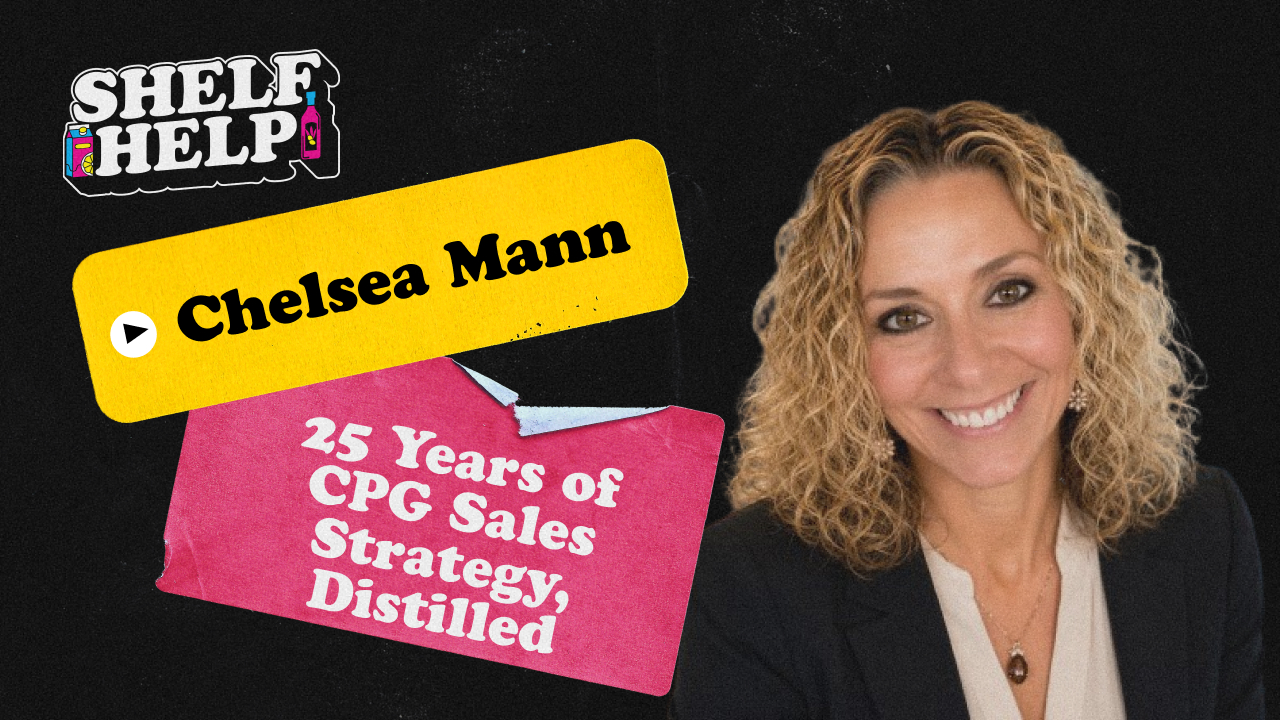
25 Years of CPG Sales Strategy, Distilled | Chelsea Mann, Kuli Kuli



On this episode, we're joined by Chelsea Mann, Head of Sales at Kuli Kuli - the mission-driven superfood brand built on moringa sourced from small farmers and women's cooperatives.
Chelsea brings 25+ years of CPG sales and commercial strategy experience, from PepsiCo and Bimbo Bakeries to Simply Good Foods, Better Being Co. and Ayéya, where she served as Chief Growth and Customer Relationship Officer.
Chelsea breaks down why the margin problem in CPG has outgrown trade optimization, and why every commercial dollar (freight, terms, returns and allowances, pallet configurations) needs a purpose. S
We get into how Chelsea and founder Olowo-n'djo Tchala took Ayéya national at Whole Foods and Sprouts, landing retailer buy-in before the product was even made. She walks through what broke behind the scenes: co-man capacity, unique ingredients, a portfolio that was a mile wide and an inch deep, and folding Alaffia's 20-year-old retailer, broker and payment setup into a brand-new company.
We also dig into the gap between HQ sell-in and what actually shows up on shelf, her "five feet, five seconds" test, the first 90 days at a new company, pricing strategy by retailer type, and the broker, trade and deduction scorecards she builds. In Chelsea's words, you can never save your way to prosperity.
---------------
Episode Highlights:
💵 Why every commercial dollar needs an intention and purpose
🍎 Picking up the apples on the ground: cutting non-incremental promo spend
🚀 Landing Whole Foods and Sprouts before the product was even made
🏭 Co-man partnerships, unique ingredients and the real cost of launching
⚠️ Mile wide, inch deep: why fewer SKUs can mean more
🔄 Integrating Alaffia and Ayéya (remit addresses, payment terms, brokers)
🛒 The last mile: HQ sell-in vs what actually shows up on shelf
📸 Using store photos to verify promos, displays and endcaps
👀 Five feet, five seconds and checking the competitive set at shelf
🗂️ First 90 days: one price list, a product ranker and the size of the prize
📊 Broker, trade and deduction scorecards (and why she prefers scan backs)
✂️ Why cutting people is the easiest lever but rarely the best one
🔮 GLP-1, protein, fiber and the shift to functional foods
---------------
Table of Contents:
00:00 – Intro
00:37 – Every commercial dollar needs a purpose
01:54 – Cutting non-incremental promo spend
03:21 – Taking Ayéya national at Whole Foods and Sprouts
05:01 – Why retailers said yes so early
06:03 – Co-man and supply chain breakdowns
07:51 – Mile wide, inch deep: portfolio discipline
09:39 – Integrating Alaffia and Ayéya
13:15 – HQ sell-in vs shelf reality
14:41 – Closing the execution gap with store photos
15:53 – Five feet, five seconds
17:20 – Fewer field reps and the consumer as auditor
18:34 – The first 90 days at a new company
21:36 – Pricing strategy by retailer type
24:30 – Broker, trade and deduction scorecards
27:30 – What breaks when commercial teams get cut
30:15 – Finding hidden waste before cutting people
34:23 – GLP-1, protein, fiber and functional foods
---------------
Links:
Kuli Kuli – https://www.kulikulifoods.com/
Follow Chelsea on LinkedIn – https://www.linkedin.com/in/chelsea-mann-vp1/
Follow me on LinkedIn – https://www.linkedin.com/in/adam-martin-steinberg/
For help with CPG production design - packaging and label design, product renders, POS assets, retail media assets, quick-turn sales and marketing assets and all the other work that bogs down creative teams - check out https://www.kitprint.co/
Looking to dominate the cognitive health space? Upgrade your formula with Cognizin. It’s the branded, clinically backed citicoline trusted by top innovators in supplements, foods, and beverages. Differentiate your brand today at Cognizin.com
Episode Transcript
Adam Steinberg: 00:00
Welcome to Shelf Help. Today we're speaking with Chelsea Mann. Today's guest, she grew up in uh in sales, spent 25 plus years building sales commercial strategy across pretty much businesses in every channel of various sizes, worked at 400,500 giants like PepsiCo, Bimbo Bakeries, more emerging growth companies like Simply Good Foods, Better Being Co, Insignia, where she served as chief growth and customer relationship offer at Ayea as well. So really cool brand as well, which I'm definitely we're definitely going to dive into, has run a lot of trade pricing, national accounts. So just generally know CPG sales world, how to grow brands really well. Just to kick things off, Chelsea, when uh when we spoke a few weeks back, one thing you told me is that the margin problem in CPG isn't just a trade optimization problem anymore these days. Tell me a bit more about what you're referring to there. And when you say every dollar out the door, what's actually in that bucket beyond trade spend that's top of mind for you when you're considering everything.
Chelsea Mann: 00:56
Absolutely. So when I when I spoke to you about that, I was really referring to every commercial dollar that's spent in an organization has to have an intention and purpose. And I think where the failure is coming is people aren't really paying attention across functional areas, freight cost, pallet configuration cost, what it every consumer or every retailer's requirements are, and the drain and complexity that adds to your systems. So truly looking at it holistically big picture, you have your freight, you have your terms, you have your returns and allowances, you have the pallet configuration requirements and their windows and peel requirements, all of that plays a part in there's a cost to serve every retailer that you have to consider. So when I was referring to that, every commercial dollar in an organization has really got to work harder today than it ever has in the past. And it's not just trade optimization anymore, it's everything.
Adam Steinberg: 01:55
You've led some initiatives to essentially reduce spending on what you called it non-incremental sales opportunities. Can you give me an example or two of what and what these kind of opportunities look like that were the lowest hanging fruit things that you felt like was the first things to cut on this front?
Chelsea Mann: 02:09
Absolutely. So one of the things I like to compare it to is we're we're picking apples at the orchard. And there's some on the tree that are healthy and ready to harvest, but there's some that have fallen to the ground. So I want to pick up the ones on the ground that are still healthy and useful. That's that low-hanging fruit. So when I say non-incremental sales opportunities, we truly do have loyalists for every brand that purchase our product every day. We've trained our consumers to buy on promotions if we do it too frequently, but we also aren't getting the incrementality that we think from every chromo dollar that we spend. So there's different things that you can look at, such as the subsidization that you're doing on your promotions. If you're running the same playbook every year, you're probably not doing it well anymore. You truly do look at it every year and every every promo, every moment to make sure that you're you're maximizing the dollar spend on in the incrementality. You want to get new users into your brand. You do want to reward your loyalist. You can do that through different promotions and advocacies that you do behind the scenes. You don't have to do it through every promo in retail at that stage. So I don't want to subsidize sales as much as possible.
Adam Steinberg: 03:19
Am I pronouncing the name Ayea?
Chelsea Mann: 03:20
Aya.
Adam Steinberg: 03:21
Okay, perfect. This was a brand that was growing really fast. You scaled it into basically from zero into Whole Foods, Sprouts, Fresh Time, Central Market, among others, in under a year. Give me a bit of a breakdown in terms of what that looked like from the sales side of things and the back end to actually be able to support that level of growth and new retail partners that quickly.
Chelsea Mann: 03:41
That was a fast and furious year. And my my partner in crime, Oloanjo Chala, uh, we we really did do, we made the impossible possible by launching the breadth of products that we did across retail nationally was quite a feat in its own. And it took all of us together to do it. But from a sales perspective, what we really did from the start was get the buy-in from retailers before we had the product even made, just to make sure that we had the place on shelf and the purpose of what it was doing. They understood the mission of the product, the differentiators in the product, how it was going to be helpful to the consumers and what they're looking for. Because consumers have been looking for clean, transparent product that's sustainable for quite a while. So that met all those metrics. And you can have a great mission, you can have a great product. If it doesn't work and you don't get the repeat purchase, that's where you run into trouble. So really just trying to have the thought leadership from the start to build that foundation and get it out there as fast as possible. It was it was crazy, it was great, and and we did it. And very proud of the work we did, just launching nationally at Whole Foods, launching nationally at Sprouts. We did an exclusive program for both of those retailers, and we were able to help sustain and stand up that mission of that brand again.
Adam Steinberg: 05:01
That's awesome. And you led essentially all those fire meetings where you got so many yeses from some of those big name players early. What did thinking back, I'm curious what what was the key to getting so many yeses so early? What what did you figure out really was resonating so quickly?
Chelsea Mann: 05:16
I think what was resonating was the social purpose of the brand as well as it was hitting all the metrics of what consumers were looking for. So it consumers want to know what they're buying works, but they also want to know it feel good about the dollar that they spend. So that brand truly was, in my opinion, a unicorn because it did meet all the metrics consumers were looking for, but also had the social component to it as well. And the retailers are very excited to have something on the shelf. The packaging was really helpful too. It was very vibrant and bright. Yeah, totally. So I think that those elements really were just what was attractive. The history that Aluonjo brought to with the Allah brand was very helpful because he knew what worked and what didn't, and we were able to really provide something that the retailers were looking for.
Adam Steinberg: 06:04
From a supply chain ops point of view, and what things started to break early that had to be fixed and patched together.
Chelsea Mann: 06:10
Absolutely. That was uh that was the toughest part. We had the buy-in from retailers, we had the the ideas, we actually had several products that we we weren't able to launch that we had the buy-in from the retailers, we just couldn't make them fast enough, we couldn't make it happen. Because uh the breadth of of the the portfolio was pretty large. Yeah. So it was just getting trying to get clean partnership with your com-mans and trying to make sure that the funding was there to help support. It's very expensive to launch a brand, super expensive, especially with that breadth of of items that we launched so fast. So just getting that support from the commands, being able to partner with them and and make them believe in what we are doing and understand our acceptance and and try to get favorable terms with your commands in order to support the launch. It you have so many costs of of getting the product out there, packaging. I I know I was helping source packaging for the bottles to get the product uh out there as well. So it was it was really just trying to get a good partnership with the CO-MAN to get the product produced in a timely manner and get be able to meet the retailer commitments on time and in full as they expect. Back in was very critical, and I think it's one of those overlooked parts and pieces of the whole process that I I caution anyone who is going to be in launching a brand to make sure that you have that all set and foundation built there, very strong. Because we did have some some things fall apart pretty pretty poorly behind the scenes that we had to really really quickly pivot and and move around.
Adam Steinberg: 07:46
Yeah. That's just part of the deal. Building an early stage brand that's growing that quickly, and just the important part is figuring it out when things do break. If another brand approached you tomorrow, they're teeing themselves up to execute a similar level of rapid pace of growth, they've they've got indications that retailers are interested. One or two things that you that would you tell them to keep top of mind or key things you tell them to watch out for.
Chelsea Mann: 08:08
That's a great question, and I I have a lot of opinion on that. Uh, one of the biggest things we ran up against was we launched at Whole Foods and Sprouts simultaneously, but the SKUs we launched at both retailers were not the same. So we launched, I think it was 33 SKUs at Sprouts and then a similar amount at Whole Foods, and they were not the same SKUs. So we truly were a mile wide and an inch deep. So my big caution to any emerging brand coming out is really be mindful and intentional about your portfolio. And it's okay to be less can sometimes be more. Go a mile deep and an inch wide instead of having this big portfolio of every item you sell in is gonna cost you free fill, it's gonna cost you trade, it's gonna the the placement at shelf is is critical. And being able to fulfill that is the other end of it. So my big big risk is watch out for how wide and how big your portfolio is. It's okay to launch three four items and then add on later. You don't have to launch six items of everything. And the unique needed for each one is is something you have to consider too, because it especially if you don't have your COMAND doesn't work in this stuff every day. And what we had in the product, the shea butter, the traditional African black stuff, those are not they're unique ingredients and they're differentiators that a lot of commands don't have experience working with. So you got to be very careful of the unique ingredients that you put into everything and how that pans out with product quality at the end.
Adam Steinberg: 09:40
And the Yeah day is eventually there was an exit or integration. He played a key role in that integration process and consolidating customer partnerships, relationships, distributor networks, and just some of those commercial processes and bringing those all under one roof. Tell me a bit about what this integration process looked like.
Chelsea Mann: 09:59
Absolutely. So the Alatya brand was founded by Oluanja Chala 20 plus years ago, and he had walked away from it because it's a it's a mission-driven brand, and the mission was being compromised, and he could not live with that. And so we stood up the IA brand to sustain the mission. And it was with great gratitude, and it just really was heartwarming that we were able to get the Lafayette brand back under his leadership. And that was really at the end of the day, the intention was to sustain the mission, stand the mission up, and and continue that for multiple generations to come beyond him and all of us here. So getting that alaffia brand, getting a 20-year brand that has a great reputation in the market already, getting that back under the leadership it needs is is wonderful. But then integrating it with the IA brand who's new and just launched, it was it was a mess. And we we had we had a lot of uh learnings and and and opportunities throughout the whole process that we we took. One of the pain points was the integration of the customers, the retailers, because you already have a 20-year-old brand and you have your new brand, and the new brand is it's expensive to launch a new brand. Now you you purchased the Salafi brand, got it back under your umbrella. Now, what do you do to get the remit addresses, the payments, the terms, and all of that aligned because they're very different across the board. And then making sure when you go to the retailers that they know, hey, they both they're very different, they have different purposes. There's some similarities in the products, but the purpose and difference of them is just being able to be cohesive about that whole process. The biggest pain point though was the integration and the payment terms. As the you want to go with the best one for you, your brand, but you have the retailers that want the best one for them. So renegotiating that with every retailer, getting the systems switched over to the new remit address and getting the customers uh all uh aligned. You have this whole 30 to 90 day window. Yeah, most of your distributor partners and and retailers that they they stop ordering for under one and they start ordering under a new customer number, and the payment is is it's a mess.
Adam Steinberg: 12:19
So I can imagine. Oh god.
Chelsea Mann: 12:21
That was a daily, daily email to some of our top distributor partners. Like, what where are we at getting this set up? And they they don't move with the same level of swiftness you do because you're an emerging brand. You you don't have unlimited dollars to support.
Adam Steinberg: 12:36
So that was really depending and/or depending on and are working with brokers that help with some of that stuff at that point, or no brokers is all you guys in-house.
Chelsea Mann: 12:45
Well, we did it all in-house. We had regional broker partners, and we didn't have any broker partners that were set by retailer with the IA brand. We really wanted to own the retailer relationships to start, and then started getting the the regional broker partners to help support. But the Lockia brand had a broker house that they used across the nation. They did not have that support. And we were looking to switch them over to the IAA broker. So it was it was a a lot of change at once, and we did it all in-house. It was fast and furious.
Adam Steinberg: 13:16
That's awesome. One thing I was curious about where's the gap between what gets sold in at headquarters versus what actually shows up in each individual store actually shows up, shows up on shelf. That makes sense.
Chelsea Mann: 13:28
Absolutely. This is a this is one of my favorite things to talk about because there's a lot of great conversations that happen at headquarters, but execution at shelf, I call it that last mile of detail, is the most critical. You can have a program sold in nationally, but making sure it gets to the shelf is different. You can have product forced into your stores, does it sit in the back room? How's it executed at the end of the day? Do you have the right price at the shelf? Is it is a placement at each each store right? The shelf is what really matters because that's what the consumers are looking at. And that last mile is always the biggest gap. So what I see is a lot of times the headquarters will make the decisions, but then you start looking at every individual store. And we had great partners with dirty hands who was going, they go out and they take pictures of every store, so you could really see quickly how you don't execute in the market like you thought you did. So we we really had to then take that evidence back to the category buyers and say, hey, this is what we're seeing in the market, how can we improve this? But that last mile detail, that execution at shelf, is really the most critical. And if you don't have that visibility to it, you're missing it.
Adam Steinberg: 14:41
Especially as a brand scales, they get into critical mass of doors and different retailers. What's the best way to measure and be able to close this this gap, the discrepancy between selling in headquarters versus what actually shows up on shelf?
Chelsea Mann: 14:54
What I found the best way was the partner that we had with Dirty Hands was great. That that partnership is was something that I I valued and looked at every day. Being able to go in and see the the feet on the street, the pictures they're taking at shelf to see that execution was was something I I couldn't put a price tag on because I was able to quickly see did the promo execute on the day we thought it did? Yes or no? Are we getting the displays and in caps up like we think we are? Because we're paying for them, are we getting them? So that that was one of the biggest things. And then prior to partnering with Dirty Hands, it was you know, just the broker partners that you use. The are they able to do store checks? And then even yourself, like anytime we had a promo, I would go out to the retailers and see like did it did it execute at shelf like we thought. But really, you have to get into the stores, you have to see the execution for yourself. Nothing will replace that. At the end of the day, being able to see that is what's most important.
Adam Steinberg: 15:53
Are there any things that uh I don't know, maybe less obvious that a brand should be checking in store on a regular basis that maybe a lot of them aren't?
Chelsea Mann: 16:01
Yeah, so I think one of the my favorite things is five feet, five seconds. So you go into a store, you look at the shelf, and you're a consumer, what do you pick up in five feet, five seconds? And a lot of times we can create the best ideas, we can do mock-ups on computer to like this is what it's gonna look like, this is how we think we present ourselves. But one of the things we don't really check over and over again is what's competition doing? So if you don't get into the streets and look at the shelf from a consumer perspective, it's easy to keep your brand hat on, but pulling that off and looking at the holistic view is a lot harder. What is competition doing? How often are we paying attention to that? Because we can get very narrow-minded and focused on what we're doing, and we forget to see what is coming in around us, and quickly we find ourselves not innovating appropriately, not not meeting the metrics of the consumer, and we'll we'll quickly pay for the pay the long-term price for that. So I would say checking out competition and and actual placement at shelf. I love to get mock-ups of true the product and then take it out to the retail stores and actually look at what it's gonna look like compared to other brands on the shelf. Because you might find you think you're vibrant, you think you're great, you're gonna stand out, but then every other brand might have done the same thing.
Adam Steinberg: 17:19
So yeah, totally. That's a good point. Just some of the data I I've seen, and maybe just kind of the I don't know anecdotal stuff, is it seems like in in general across the board, across CPG, there's there's less field reps out in the market as there maybe have been historically.
Chelsea Mann: 17:33
And it is very expensive to have field reps out there. It is it is one of the highest cost labor costs to have feet on the street checking out your shelf and your execution. One of the things I don't think we've quite tapped in well enough to in the CPG world is our consumer. What are they seeing and how do they feel about it? Is there programming we can have with them, like, hey, you're in the shell, you're in the store, we'll give you a discount, take snap some pictures, and send it in. I I think that there's ways around it that we just haven't thought yet that we can come up with still. And I think that it's an untapped resource in our consumer. They're there every day, they're across the nation, and we we just need to be able to figure a way out to reach them and pick their brain and talk to them about it. What are they seeing? What are they feeling? What's their what are at the end of the day, they're the ones that buy it. So what what are they gonna put their money on? Because otherwise no one else is is minding the shelf. You have your your your store personnel that stocks the shelves, but they're not they're not brand specific to you.
Adam Steinberg: 18:35
You've dropped into a good amount of orgs and and help reorganize things and and get things on the right track. When you walked into some of these that didn't have just some of the even like the basics to sell the retailers, like no one really had developed maybe the brand stories, team didn't have some of the basic resources, things that needed to sell to retailers. Maybe that's your standard sales decks or sell sheets, or maybe it's more sophisticated things. What did the typical first 90 days look like?
Chelsea Mann: 18:59
So the first thing I do when I start a company is I want to know their sales tools that they have. What is the sales team utilizing in the market? What are they taking when they go to their category buyers and speaking to? What's the brand story? What's their price list? What's their top SKUs? Like, do they have a ranker for their products? If you have four slots at the retailer, which four do I sell? So you want to have these basic elements. Yeah. What's the differentiators? Well, why why would that category buyer take my products over someone else's? They don't want us to make the pie into 15 different slices. They want us to make it bigger. So, how do we do that? So I I always try to understand what's the basics, the price list, the brand story, the selling decks that you take to your product ranker. How do you have all of this displayed? And then I also want to understand the cost of goods and the margins because sometimes what sells in the market might not be profitable. And if you continue to push it, you're pushing yourself into a very bad financial situation. So you want to be mindful of all of these elements and and and understand. So I look at that when I first start, first 30, 60, 90 days of a any company I join. I want to I want to get the take 30 days and review what's available, pick up that low-hanging fruit off the ground. That's what we can quickly do. If they don't have the price list, let's make sure we have one. If and I I'm a big fan of having one standard price list. A lot of different organizations I've been at have had multiple price lists. I'm a big fan of one price list, and anything off that wholesale is trade so that you can account for it and have that true cost of serving that retailer. But not every retail, not every manufacturer works that way. So I I like to have one price list, get the price list, get that clean, get your product ranker, get your sales deck squared away, make sure that it's it's got the purpose, your differentiators, the why to buy, and the size of the prize. If they bring you in, what are you gonna grow their category by? And you better understand your competitors before you do that. Like if you're gonna go in there and say, I'm gonna grow your business, and if you bring in and give me a placement of two items and they're gonna sell one unit per store per week, that better be better than their category average. And it and it better be something you have a plan and a path to get there on. Yeah. Because when you first get on shelf, it's a lot slower in movement than down the road. So it's uh first 30, 60, 90, those are the elements I really prioritize and focus on and look at and make sure that they have that fleshed out and clean first. And to me, that's basic one-on-one blocking and tackling, but you'd be surprised how many companies are missing the basics.
Adam Steinberg: 21:36
You mentioned pricing lists, building on that a little bit. What does your process look like on a more holistic, higher level in terms of building out an overall pricing strategy?
Chelsea Mann: 21:47
Yeah, that's a good one. So you have your price pack architecture is really important. Uh, you have your basic retailers. To me, there's high low, hybrid, and EDLP customers. And you need to have a strategy for each. To me, I have one wholesale. One suggested retail price, and suggested retail price is at the sole discretion of the retailer. So I'm going to tell you what my suggestion is. And here's the range I think you can hit because your suggestion is you have your EDLP retailers of the world that work on lower margin, and they will every day expect you to have that price favorability. But again, they work on lower margin. But then you have the the ones that you have the hybrid approach where they're not as high as your high low, but they don't promote as much. So you you you really just want to be fair and equitable across the board and how you how you provide trade to these retailers. And the way I do it is by looking at like what what bucket do I put them in? What's their strategy? How do I create a win-win situation for them and for us? Because that is, I think, the hardest part is and every retailer is gonna want the investment. The investment truly, at the end of the day, should be equitable across the board. It is just how like I've been down that road where you've got to make sure that it is equitable, regardless of the retailer. And how to spend those dollars in that investment really does matter. So with EDLP retailers, a lot of the times the trade is the investment in their everyday price, and you don't promote, but it's that everyday price. But then for high low, they have that higher price every day and they might have higher margin requirements. Wholes wholesale, that's what they pay, that's what the EDLP customer pays. But my investment and trade might be truly for promotional activity. So that's how I look at it and try to bucket it. But price pack architecture is also important because you have the club retailers that require a value to the lowest price in the market. So you have to ensure that your price per ounce is what you need it to be. And again, they the the margin requirements are a lot different by retailer, so that's why you're able to do that. But you really do need to pay attention to the whole view of it. And start from the beginning when you are about to launch a product, think about where do you want this to go, and think about every channel of business is going to be in. Because having worked across every channel of business from mass, club, natural specialty, they all have similarities, but differences in the requirements. So it is really critical if if you have a plan to launch across the board and all those channels to understand what the requirements are with that thought in mind from the start.
Adam Steinberg: 24:30
Once you've gotten through those 90 days or so, gotten things a bit more on track, at some point you start building out, and maybe this is early on, but you start building out some of the core scorecards. What are some of those core most important scorecards that you typically implement and the things that you're tracking on a really detailed, probably daily basis?
Chelsea Mann: 24:49
Absolutely. So one of my favorite things is to make sure that we have accountability and we're scorecarding. If it doesn't get measured, it doesn't get managed. So I I like to have scorecards. I've created scorecards for broker partners because you want to make sure as if broker partners are great, they have a lot of brands in their bag. So if you don't have a clean communication with them and expectations and what you're measuring, what you're monitoring, you're not going to be important. You're going to be put at the bottom of the list. And it's not because they don't want to take care of your brand, it's because they've got a lot of other a lot of other things to do. So you've got to be mindful of what you're asking. And if they know what you're measuring, they'll tend to work towards that. So having clean KPIs. I'm a big fan of having KPIs that are cohesive across the whole organization, not just for siloed uh departments, because I think that's where we run into troubles. Yeah. So I like to have a scorecard for broker partners. So and those need to tie up and align to what our corporate goals and objectives are. And as you get your overall corporate goals and objectives, it truly should flush down to every department from the top and be able to then to the very bottom of the broker scorecard, this is what we are measuring against, and this is how it ties to that top objective and goal that we're looking to make. So broker scorecards are one of the things I like to have. I also like to have trade scorecards and analysis. What are the deductions coming in? Deduction management is can be a nightmare. And a lot of times the backup you get, if you don't have a man a deduction management team, which a lot of mid-sized smaller companies do not, how do you do that? You want to make sure that you're not just rubber stamping and agreeing to everything because there are several instances where I can tell you many companies I've worked at that you've been billed for things that aren't your product or not even your brand. So if you aren't paying attention to that, then it's important. So I like a scorecard on what's the deductions that have come in this week and was it planned? Did we think that is that aligned with what we thought? And then tying that to the syndicated data. Is that what we saw through the register too? Because that being able to do that whole tying it back together is important. And truly is something that I think is missed a lot of times is how do you you know what is I'm a big fan of scan backs too. If it goes to the register, I'd rather pay for it than off invoice. So you you pay for what you the true end consumer and that price point at shelf. So just having a scorecard to really manage the deductions coming in, the cost to serve the customer, is it aligned with what you thought? Is your revenue coming in where you thought? Just those types of scorecards are what I'm really looking for to start implementing and creating right.
Adam Steinberg: 27:31
Only chat a few weeks ago, we were talking a bit about some of the challenges that CPG is facing to a certain extent, and unfortunately, oftentimes the easiest lever is to pull is just labor, basically, humans, people on the team. Sometimes it's the right decision, sometimes it may not be the best one. Like what do you typically find, like uh, especially on the on the commercial team, when what breaks first operationally when the team, the commercial team, starts to get reduced costs and loses people.
Chelsea Mann: 27:57
Well, yeah, that it is it is a unfortunately, I think we're seeing that more in CPG today than a lot of other industries. Food and CPG. And I think there's some factors uh we'll we can go into a little bit later that's playing a part in that. But the the things that break first is the the easiest things to pull, or they'll do analysis, uh, you know, training, all of those are the people that tend to go first, but the work doesn't go away, it's still there. So people absorb the work and just get more duties, not and and responsibilities that they have to abide by. So the things that looking at it from a big perspective on paper, it looks like it's the right decision to just pull people out. Oh, we'll save this. It's the easiest one, it's never the the the best one, in my opinion. There's so much waste in every organization I've worked at that's just low-hanging fruit that they're not paying attention to. Things like, hey, what's our practices of you know, if we have this old practice that we've always put into play with this old price list, and you know, we've provided favorable pricing if someone has a truckload versus not, and the retailer doesn't know it, why are we then taking the labor and energy for them to call and provide that discount? Like it, there's just there's some basic things that we're not paying attention to, or why are we just rubber stamping every deduction that comes in and accepting it without really reading the fact in the detail? There are a lot of fines and penalties that you'll be assessed that you can dispute. A large part of what I've seen with a lot of different brands that I've worked with is nobody's disputing those deductions. And that's just money there. No one's paying attention to it because they don't have time to. And when you continue to pull resources out, you get less time, and people are less able to research and do what they need to do. I'm a firm believer if you have someone focus on even just deduction management behind the scenes, they'll pay for themselves and others in a hurry. It's just that it is easy to pull humans out, it's easy and it's quick, but it's also not going to save your you're you can never save your way to prosperity. You need to figure different levers and figure out what's broken so you can fix it. Because you can you can pull people, but that's not going to be the right answer.
Adam Steinberg: 30:15
You mentioned to me when you start cutting people from the team at some point because everyone is overloaded with having to do so much different things, is like it gets to the point where it gets hard really continuing to look into the weeds and the details of really understanding where money is really being spent. Tell me a bit more about how what you've kind of seen on that front end. Is there ways to I don't know, avoid that?
Chelsea Mann: 30:36
Yeah, absolutely. And I think truly a lot of times these decisions are made in silos from a top level, you know, it's sensitive. I think that it's important that they, you know, they they right-size the business as needed. Sometimes it's necessary.
Adam Steinberg: 30:50
Yeah.
Chelsea Mann: 30:51
But also when when you add more work to people, they don't have more time to dig into it. And you also have uh no ability to truly see where that money is being spent. So that money, uh it might have looked like this head count cutting it saved us $55,000 a year or more. But what you forgot to see was maybe that reoccurring bill that you somebody signed up for 10 years ago is still being paid and nobody knows it. And it's it's sometimes those little ankle biters that it's death by thousand paper cuts. I have had experience where they're not paying attention to every deduction coming in, not just from a trade spend or a retailer perspective, but a cost of doing business perspective, looking at the different lines. Oh, it's only $370. Well, that $370 was weekly, and yeah, someone's just it's reoccurring, it's just getting charged, and someone's been paying it. And over time, that's a that's a substantial amount of money every year. It's just and nobody uses it. So understanding subscriptions, being very, very detailed on what even down to the dollar, what are you paying for? Yeah, and I think that that's and then also agreements with uh broker partners, like it you renegotiate those, make sure that you're getting the value. Not every broker partner is the right fit for you in your business, especially as it's contracting. It might be time to look at another partner and put an RFP out there.
Adam Steinberg: 32:24
Yeah, totally. Yeah, it's funny, it's like there's two things that came to mind. Like one, there's there's one company we worked with in the past that they have even had a system where they would, I think they used it for like, you know, digital cards that got created easily, but they would basically have all their company credit cards expire every month and a new one be created. So like, you know, things have got canceled, like then they could track and say, Oh, do we actually need this? Uh and so you could kind of track the spend much more easily because they'd get like, oh, this payment didn't go through, and then they get reminders they're actually using something, which is a bit of extreme, but I don't know. It seems like it was working pretty well.
Chelsea Mann: 32:55
Yeah, like maybe monthly might be too often, but yeah, quarterly, maybe.
Adam Steinberg: 32:58
Yeah.
Chelsea Mann: 32:59
Quarterly, I think would be better. But yeah, uh, yeah, that's it, it is something that I think uh, especially these contracts that you get into, these long-term contracts, they're just auto renewal. True. If you don't notice and no one's paying attention, and as you pull people out, there is a very good chance that you haven't, especially if you've done reduction of force, that you haven't done the transfer of knowledge that's necessary. Yeah. And there it's it's moral morale is also impacted big time when you do this. So you get people that are left behind that you're asking them to do more work for the same amount of pay, and now the security's gone. So it I just think it before you pull the human lever, look at every cost because sometimes you might find there's a better way to do it. I know with a past company I was at, we were looking at a price increase, and instead of a price increase, we dug in deep and we can figure out we figured out a way to maybe pull that price increase savings out of trade. So the shelf price stayed what it was, and we didn't have to take the price increase overall. And that's not true human, but there's just examples of that across the board where you can always find the money and savings. There's there's always a way to optimize.
Adam Steinberg: 34:16
Yep, totally.
Chelsea Mann: 34:17
It's just looking at the big picture as the big someone has to have that mandate.
Adam Steinberg: 34:23
To end this on a more uh more fun uh upbeat note, uh any particular brands that have been especially catching your attention lately or just trends in general across the space that you've been tracking more closely.
Chelsea Mann: 34:34
Yeah, there's actually I I'm a big reader and I love trends and I'm a nerd that way. Typically go to the stores on the weekends to see what's happening. It's just what I do. But some of the things, you know, GLP1 has been in the market for a couple years, and I don't I think that that is impacting the way consumers shop in a big way. And I think I I just recently read some research, like 23% of the the United States households is assumed to have some kind of GLP1 usage, and it's changing their habits of how they eat and how they purchase. So I also in that same article read it was like the their grocery bill's a third of what it used to be. That's insane when you think about the impact to CPG, food, and CPG in particular, consumer goods. Yeah, they're feeling it. And you can see that they're focused on protein. Protein's been the name of the game for a number of years now, it will continue to be. The other one is fiber. Fiber's growing like crazy. It's very interesting, people in gut health. I think those things are people are very interested in those. So I think what's gonna win is people want functional foods. They don't want to take more pills, in my opinion. I think that they want to eat it and and they're not eating as much. So they want to get it out of what they're eating versus more stuff to take. So things that I I'm excited about is the fiber, the the protein. You can see protein and everything now. It's an ice cream, it's a like a guacamole, you can see it out there. It's it's happening big time. So uh just really understanding where the consumer's purchase patterns are, and I do think GLP1 is is here to stay with the results that people are getting. So we have to modify how we go to market and what they're looking for. And it is to me, functional foods is what it's all about. Clean labels have been around for a while, but continuing that and transparency and supply chain also meaningful. So sustainability. Those things have been hot button issues for a while, but I think they'll continue. But really excited about what's to come with more protein and fiber.
Adam Steinberg: 36:34
How are they gonna yeah, for sure? I don't think those trends are going anywhere. But yeah, Chelsea, this is been this was an awesome. Really appreciate all the insights here. Uh definitely a lot of knowledge in the C BG space. I think other people would want to follow on with all your expertise. Like, what's what's the best place for people to follow along with you?
Chelsea Mann: 36:48
I'd say LinkedIn is the best place to find me and follow me.
Adam Steinberg: 36:51
Cool, perfect. Yeah, Chelsea, again, this is appreciate the time. This has been awesome. I think uh I think that's the thought.