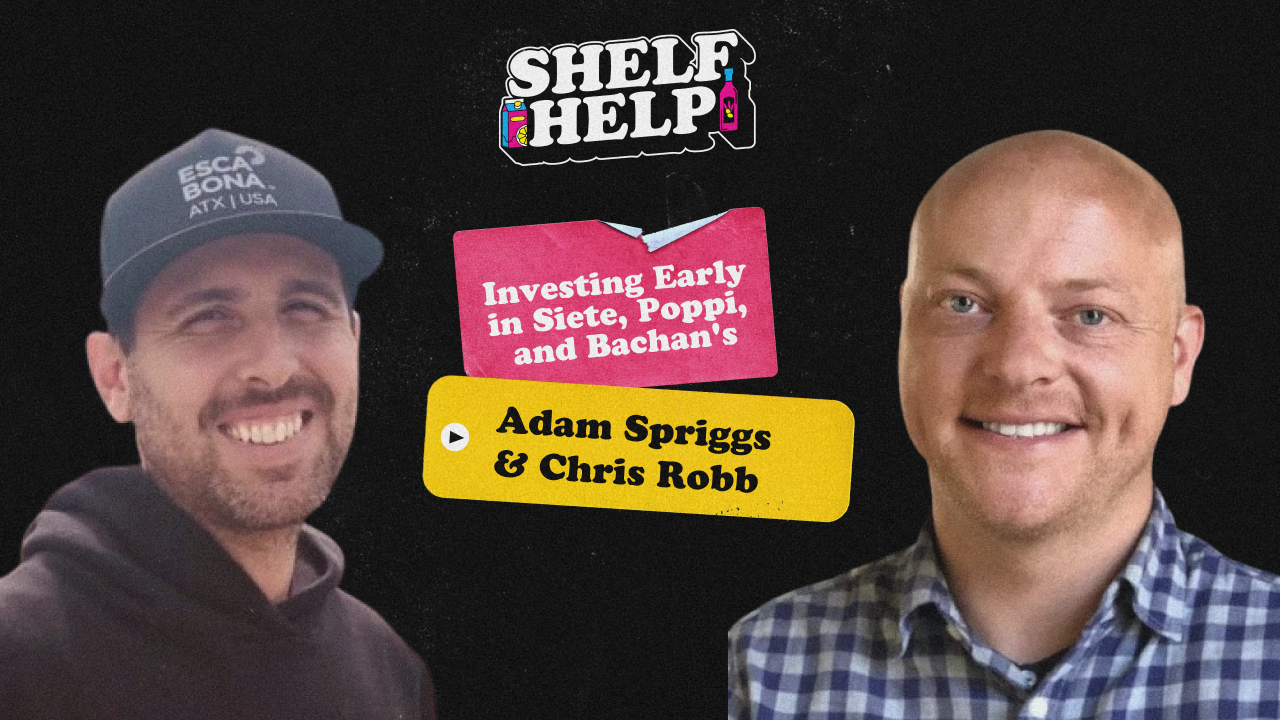
Investing Early in Siete, Poppi, and Bachan's | Adam Spriggs & Chris Robb, The Angel Group



On this episode, we’re joined by Chris Robb and Adam Spriggs, the duo behind The Angel Group - one of the most influential early-stage investment communities in CPG - and Supernatural Ventures.
Between them, they’ve backed breakout brands like Siete, Poppi, Bachan’s, Garage Beer, and Painterland Sisters. They’ve built a reputation for spotting winning founders long before the rest of the industry takes notice.
Chris and Adam unpack what they’re seeing across today’s early-stage CPG landscape - from what categories they’re most intrigued by, to how they evaluate founders, products, and data when there’s very little of it to go on. They share their frameworks for diligence, talk through the stories behind some of their flagship investments, and outline what truly differentiated brands have in common.
—---------------
Episode Highlights:
💸 How The Angel Group and Supernatural Ventures identify breakout brands early
🥇 The story behind their investments in Siete, Poppi, and Bachan’s
📊 How founders get forecasting wrong, and how to fix it
🚀 Why speed is becoming the new differentiator in CPG
📦 The importance of merchandising and store-level excellence
🧠 What truly makes a brand “differentiated” in 2025
📋 How to brief an agency the right way
💬 The biggest fundraising mistakes founders make
❤️ Why Chris actually enjoys the fundraising process
—---------------
Table of Contents:
00:42:14 - The Angel Group overview
03:14:02 - Supernatural Ventures overview
06:06:12 - The early stage CPG landscape today
09:34:04 - Overhyped and underhyped categories
13:07:24 - Investment philosophy and eval process
20:52:21 - Forecasting, how founders get it wrong
23:10:20 - How and why they invested in Siete so early
25:12:22 - How and why they invested in Poppi so early
27:11:01 - How and why they invested in Bachan’s so early
30:47:20 - Founders, green and red flags
34:30:08 - Will they make a bet on a founder new to CPG
37:50:07 - What a truly differentiated brand looks like
39:42:24 - Speed is now going to be the big differentiator
40:11:28 - Don’t let the copacker dictate your product
42:58:09 - What a good agency brief looks like
44:49:24 - The importance of merchandising
47:50:02 - Chris’ best advice for founders
48:42:27 - A good fundraising process, how to screw it up
50:44:28 - The biggest mistake founders make with fundraising
51:43:17 - Why Chris likes fundraising
—---------------
Links:
The Angel Group - https://www.wearetheangelgroup.com
Supernatural Ventures - https://www.supernatural.ventures
Follow Adam Spriggs on LinkedIn - https://www.linkedin.com/in/adam-spriggs-69a91b53/
Follow Chris Robb on LinkedIn - https://www.linkedin.com/in/chris-robb-9a522931/
Follow me on LinkedIn - https://www.linkedin.com/in/adam-martin-steinberg/
For help with CPG production design - packaging and label design, product renders, POS assets, retail media assets, quick-turn sales and marketing assets and all the other work that bogs down creative teams - check out https://www.kitprint.co/
Episode Transcript
Speaker: 00:00
Welcome to Shelf Help. Today we're speaking with, I would say, two of the most sought-after early stage CPG investors in the space these days, Chris Robb and Adam Sprigs. Adam and Chris built the Angel Group, well-known syndicate that invested early in brands like Siete, Poppy, Boshans, just to name a few. More recently, they launched Supernatural Ventures. It's an early stage VC fund focus on consumer as well. So really excited to get into it. Yeah, first off, just for the listeners that aren't as familiar, maybe Adam, if you want to just give us kind of a quick lay of land in terms of original vision for the Angel Group, what the org looks like today, a few portfolio highlights, and then Chris, I'll let you kind of talk about supernatural.
Speaker 1: 00:43
Yeah. Yeah, let's dig right in. And thanks for having us, Adam. Uh, you're a friend and member of the group, of course. So it's good to be here with you.
Speaker: 00:51
Yeah.
Speaker 1: 00:52
So original vision from the angel group, I could come at this really from a couple different paths. I think for the industry, you know, I've been in the industry for 20 years. You see a lot of things kind of come and go. Uh one thing that I was noticing about starting probably about six, seven, eight years ago, is that there is a significant funding gap between founders who are raising money from friends and family uh to when they can actually be credible businesses in the eyes of venture capitalists, like institutional investors. So, you know, that are typically looking for brands that are doing a million dollars or or more in revenue. And there's a big funding gap between the friends and family who back in no matter what, and then the institutional capitals who want to see a kind of jump over certain hurdles before they get involved. And I always felt like the most kind of qualified investor to come in and help fill that gap were industry people themselves, people who work in the industry day to day in different capacities, who might invest their money in the stock market, they might invest their money in, I don't know, sports gambling or private businesses or whatever, real estate. And my thinking was always like, why don't you put your knowledge, your expertise to work and invest in, you know, the early stage landscape of CPG? And so that was part of the vision for getting angel group started was fill that funding gap, bring industry people together. And then selfishly, the second part was that I had wanted to start getting involved in angel investing personally. Um, no finance background, no investment track record, nothing in my family, like just starting cold from industry experience, but primarily as a marketer. I spent my entire career as a marketer, really. And I always felt like I was ill-equipped to evaluate how to invest in these companies on my own. I thought, you know, working alongside other smart industry people who came from sales or finance or operations, we could do a better job communally diligencing these companies and kind of deciding on which brands we felt like we had the most conviction behind. And that was really the genesis of the angel group was kind of building out from there.
Speaker: 02:58
Cool, that's great. Yeah, Chris, and then you guys more recently launched Supernatural. I'm kind of curious. Tell me a bit about that, how it complements the angel group and and uh you know, maybe what kind of the vision is what the firm looks like, you know, five years from now in an ideal world.
Speaker 2: 03:14
Yeah. Well, I think that um, you know, Adam and I were were building the the Angel Group for years, you know, before thinking about doing the fund. And I think it was really pretty organic evolution, frankly, because you know I think the biggest you know driver was when you're talking with brands and and thinking when you when you're kind of building your own conviction, which is how we've always selected brands for the group, it's really been, you know, Adam and myself, um, you know, as two industry hacks, not investors, you know, people that just you know have been 20 years in the industry and grown up in grocery retail or or marketing and branding. And like that's a lot of what we've relied on is instinct in the group was to, you know, to bring in domain expertise to round out our diligence, you know, thinking and to kind of pressure tests, you know, when we're looking at at deals. We felt like we had a really good system for for evaluating, for value add, for deal flow, a lot of factors. And the one thing that we were missing was the ability to, you know, in conversations with founders, say, hey, we really, really believe in this deal. We've kind of done the work, we're gonna bring it to the group, you know, uh, which is an opt-in network, is very different than saying, you know, we're gonna put in you know 500,000 and bring you to the group. And uh we felt like that was a just a natural evolution of the platform and the ecosystem that we wanted to build. And um and also we wanted, you know, Adam and I wanted to be full-time investors, you know, and so I think there's an element where, you know, bringing in some more passive resources, right? Like, you know, the angel group is full of folks like yourself who are in the industry and very active and and want to be participants in the process, but not every investor has time or wants to do that. So it was kind of a way to bring in some more resources into the industry and into this early stage thesis that we have kind of built our identity around. So it's been a lot of fun. I think a lot of people we're you know, still in the in the midst of kind of fundraising, but we did our first close in June, we've executed our first five deals and um you know, got it out of the gate. And it just it feels it feels really fun to um, you know, just it's been a lot of learning for us, you know, standing up as a fund is is obviously a heavy lift. Um, but it's been enjoyable. You know, I think a lot of people talk about the fundraising process and how much of a bear it is and how you know hard it is, and and it is it's a lot of time, it's a lot of work. Um for me, it's been one of the most exciting, exhilarating times of my life just meeting so many different types of people and sharing your passion and conviction for for what we do every day. So, yeah, it's been a fun evolution and and frankly to do it with this guy who I have so much respect for, and um it's been a dream come true.
Speaker: 05:56
That's awesome. That's great. I mean, you guys clearly sit at kind of the the nexus of the universe when it comes to CPG in a lot of ways. So yeah, Chris, I'll let you take this one on that and you can kind of build on it. How would you kind of describe this the current landscape of early stage CPG today?
Speaker 2: 06:13
Well, it's a really exciting time to deploy capital. You know, uh probably the most exciting time that I've ever seen. And I've been, you know, in the industry for a long time. But I think, you know, having started brands myself in the in the growth era, I'll call it, uh, pre-COVID, you know, is a lot of kind of growth at all costs and the mentality. And I know this is stuff that we all talk about all the time, but I think really you see a lot of people on the sidelines, a lot of people waiting for others to make a move, you know. And I think one thing that we think a lot about is if you're willing to make the move first, if you're willing to take the swing. That's a lot of what venture capital is about. And I think that there's been some of that in terms of the venture that exists in this space that um has maybe exited stage left. I also think there's well, you just look at the numbers. I mean, venture capital is down in early stage for CPG 60% since 2021. It's pretty significant, right? So there's a lot of that white space that we love is also a bigger white space today than it was a few years ago. Um, but I also think that um one of the things that we pride ourselves on, and you've experienced this, you know, whether it's uh Justin Benz or AO or uh uh Painterlin. I mean, we we like to come in early. We like to um, you know, and it's kind of how we positioned our fund and position the group is you know, is just um when you have conviction, you got you've got to take the risk, you know. That's a lot of what venture is about. And we have a lot of confidence because we've done that before, you know. We've invested in multiple brands that have been become pretty successful at the pre-revenue stage, you know. So I don't see a lot of people out there kind of willing to take that type of risk. And that's something that we that we've really enjoy doing. And it's you know, when you see it, you see it, and it's a lot operating on instinct at that point, but it's something that we, you know, have always kind of seen as part of you know what we want to do in this industry.
Speaker 1: 08:07
Yeah. Adam, anything you want to add to that? No, not much. Is I think the innovation is relentless. That's great. That's you know, never ceases to amaze me. New founders stepping into the arena. It's you know, unpredictable in many ways in terms of just, you know, how a trend is going to manifest across different categories. So there's always the element of surprise. It makes it fun and interesting. There's always been the social dynamic, right? Food is fun, it's personal, it's tangible kind of versus other sectors you can invest in. I think more people are realizing that too. I think CPG is becoming popular again with, you know, I guess you'd say kind of like outside money, outside interests. They see the simple mills transaction or uh the poppy or siete deals and uh brings some people back into the mix, which I think is a good thing. It's just, you know, that's probably what took us off the rails there for about five years or, you know, 10 years from 20, you know, 10 to 2020 or so, where it was just a lot of tourists, you know, coming by and you know, investing in things like plant-based and gluten-free. And, you know, more recently it's been like non-elk, it's just kind of over-indexing on um these these kind of fleeting trends or these slow to grow or slow to to develop trends. Um, so there's always something new to get into, and I think that's uh that's the best part about a CPG. For sure. Totally.
Speaker: 09:34
What categories based on all the investors you talked to are are the one most excited about right now? And on the other side, are there any that feel like undervalued or ones that are not getting as much attention as maybe they should, that feel like they have some of like the most room to run?
Speaker 1: 09:50
Yeah. Chris, you could you should talk about commodity goods.
Speaker 2: 09:55
Well, I I think at that I, you know, you look at like uh non-alk and plant-based are good good things to look at. And again, I feel like I'm preaching, you know, a little bit to what people understand at this point, but you know, you could see this a few years ago happening where it's like so much money is coming into these categories because when you just look at the trends, okay, people are drinking less alcohol, people are eating less meat, you know, et cetera, et cetera. But it's like there's no infrastructure yet in retail, there's no dedicated feet, there's no planograms built. There's like it's it's you know, for me, I'm like, this is crazy. Um, you know, and also there's just not the demand. And, you know, this is something that you know uh Adam really well, but like what one thing that we talk about, like I live in Saginaw, Michigan, you know, Adam lives in Toledo. So we're you know, you're down in Minnesota, so you understand this probably more than more than more than most, but there's a lot of a lot of the innovation comes out of metros on the coasts, you know, or in you know, particular cities, like even like an Austin or Boulder. And I think it's um, which is great, a lot of it is looking through a different lens than I think we are day-to-day when we're shopping at Kroger or Meyer or, you know, just kind of in more through the looking more through the lens of the mainstream consumer, you know, and and most Americans. And I think that we tend to be more bullish on innovation within bigger categories that exist versus, you know, innovation in categories that that are new. And sometimes absolutely it's worth and warranted to take a swing on something that is disruptive and and really just has that potential to break through the wall. And that's part of venture, absolutely. But I think that we have we just see a big opportunity for I I would call it like back to the future a little bit, you know. Like I've been grew up in the natural products industry, so I've kind of seen this my whole life. But at the end of the day, better for you as a concept is always going to be centered around keeping it really simple. So things like, you know, higher quality protein or you know, higher quality dairy or you know, things like that that are going to be, you know, big categories that they just or you know, french fries, frozen french fries, right? I remember taking a lot of heat when we first brought this to the table. It's never gonna work. Frozen french fries, how big could that be? Right. And I think it's just like, yeah, but you know, most Americans they want a better option. They're gonna eat french fries probably multiple times a week, and uh and they want a better version, you know. And so I think it's just I can't you can't overlook the power of existing behavior uh that you know is within a big category and putting a spin on it that's relevant and current and going to be current, you know, for the next several years, because ultimately that's what's pretty valuable to strategics.
Speaker: 12:32
Totally. Yeah, that all makes a lot of sense. Diving into like the the weeds a bit more. I read a few small angel checks here and there, you know, primarily through you guys to the angel group, and I think kind of some of the things that are top of mind for me, I think are probably not uncommon, is especially those earlier stages. Obviously, the founder and the team, the product obviously has to taste amazing and just is the overall experience really good? You need economics have to be there, philosophy's there, and then you know, you kind of touch on it a bit going after these bigger categories, but in similar ways, like is it clear where the brand sits on the shelf if the buyer doesn't really know what category this it's in? Might be a little more challenging. What is your guys' general kind of checklist look like? And what does a fundable early stage brand look like to you guys in in 2025?
Speaker 1: 13:20
Yeah, I'm glad you ticked off a lot of the items that are just kind of checkbook items, right? That are checkbox items that, you know, I think any investor would come on and talk about, you know, some of the the lesser talked about, I think, criteria or considerations is, you know, one I would say is just you know, the founder themselves outside of just kind of owning and commanding their business. So much I was thinking back on this uh yesterday, Chris and I are always on calls with founders, right? And oftentimes together, Maddie Serviente on our team is also alongside of us for many of these calls. And it's like when we regroup after a call with the founder, I think a lot of times we want to, you know, dig into the business itself, the product concept, its potential. You know, this is a debrief session. But ultimately what we end up talking a lot about too is the founder, what we thought of them. And it's not necessarily like a judgment about them so much as it is like you notice when we're talking about, I really like that guy, or I really like that girl, or I really want to see her win, right? Or I just felt she was really warm and welcoming and you know, open. I think one thing some of your audience or founders raising money for their CPG brand, you know, to go in and um present yourself authentically, I think goes a long way. Being willing to talk about yourself personally, you don't, you know, have to go too far, but I mean, just to open up a little bit. It's interesting how much that, I don't know, just puts points on the board right away with uh with between anybody, right? It's just to be able to connect on a human level. And I would say that, you know, almost every day we're meeting really, really good people who are joining our group, who are investing in our fund, who are founders we want to get behind. But we will go to like extra lengths to see, even if we're not investing in a company, if we connect with a founder on a personal level, and Chris can say this because he's got so many people we've never invested in who are texting with him daily, um, you know, working with Chris and, you know, utilizing his network and brain power and resources, you know, to advance their companies. So I think that that's a big piece is just really feeling like you can get a good connection with the founder. The other thing I would say is the product concept itself goes a long way with us, right? So in almost every scenario, before we do an intro call, we're gonna order product to our homes with the founder of the company that we're gonna be talking with. And we'll all sound it out. We have Friday calls where we've all opened our bags, our boxes of food products, and we're we're sitting around and talking about what we thought of it and how quickly we're consuming through it and what our family members think of it. So seeing something that you know you're just mentally thinking about going back to, back down to the pantry, grabbing another bag, eating through the case, you send it over to a friend's house, they've eaten it, like that's a really good signal for us. And oftentimes it's it it's it's a substitute for market data because these brands aren't in market yet. So you're leaning a lot off of your own personal experiences with the products in the household. So if you can make a big impression with the with the product, you know, create a memorable product experience that goes a long way.
Speaker: 16:28
Yeah. Chris, and more like the quantitative side for brands that are have been in market, at least to a certain extent, what are the must-have metrics for you guys?
Speaker 2: 16:38
Yeah. Well, one one thing I would say just quickly is um, you know, I the everything that Adam said on the founder is is is right on um the home test, the kitchen test, like the product, the product has to be undeniably good, you know. Um and I think a lot of times people overlook, you know, oh, it's 95%, it's good enough. You know, uh it's not 100%. If you're if you're not 100%, like just wait until you are, because the product just has to be undeniable. And I'd say the same thing for the brand. I think like overwhelming majority of the time, that's overlooked, or hey, we'll, you know, we're gonna get this off the ground and we'll invest in the brand at some point. I you know, I really, really look for people that spend the time to get the brand positioning right and to really make that investment. It's a hefty investment, but it's one of the best. If you really believe in what you're doing, it's the best investment you can make. And so a lot of times we'll find stuff that we like. It passes the founder test, passes the kitchen test. The product is exceptional, except, you know, it feels undeniable. Sometimes the brand we don't think is there, you know. A lot of times that will be kind of a piece. And so a lot of times we're willing to kind of do the work, you know, to help with that brand and positioning. And I think that uh not often do you see people that have have gone all the way on the brand front. But part of early stage investing is understanding that not everything's gonna be perfect. But if the product and the concept is undeniable, it's worth putting some elbow grease in to work on the other things that are manageable.
Speaker: 18:03
Yeah.
Speaker 2: 18:04
And so uh that's that's something that we've done multiple times. In terms of the metrics and indicators, you know, for you know, people that are out in market. And this is something I always you know coach, is like, you know, start with your own region, start with your own premium accounts. You know, you're gonna be at an inefficient phase if you're early. And so go to where you can, where customers are gonna be less price sensitive out of the gate, just makes makes sense while you're in your inefficient phase, you know, leverage regional distribution or or go direct if you can, like whatever the situation is. But retail is an indicator that matters to us. If it's gonna be in market, that's what I care more about than D2C, you know, because D2C is a little bit unfair in the sense that you can you're kind of marketing directly through, you know, ad campaigns or or whatever it may be, social influence, it's a little bit unfair versus retail, which is gonna be much more organic velocity. Like if you're in Planogram, you're not on promo, um, you know, that's like a true test of velocity and and how your packaging's working, how your concept is working, how you're standing out against the category. That's just real data you can look at. And so I think a lot of times too, we'll see in pitch decks, you know, inflated data that's built on promo or demo and things like that. So like what one of the things I really look for is okay, what's the non-promo period look like, you know, over the course of, you know, ideally, you know, several weeks or more. And I want to see that this is resonating, you know, at a at a premium price point in a premium market that kind of that is less price sensitive, I want to see that you're working in that organic, you know, premium price point and and beating category on dollars, ideally. You know, that's a good, that's a really good indicator. Regardless of, you know, the the worst metric that people market to investors is door count. You know, door count is not like sometimes if oh, we're in 2,500 or 5,000 doors, I'm like, I don't, I don't, why is your revenue not crazy higher then?
Speaker: 20:01
Right? Well, it's more concerning, right?
Speaker 2: 20:02
Yeah, I think that's the biggest mistake that the founders make is marketing door count. Or another thing that I see is marketing, you know, um, retailers in their timeline that they don't have real commitments from. You know, that's a real red flag or a frustration for me. It's like, okay, if you're putting the retailer logo on there, I'm assuming that you've got a commitment. Uh, if you don't have that commitment, I think it's a bad look. Yeah, so it's uh if you market it as such, where it's like, okay, this is this would be our ideal, you know, outcome and it's transparent that way. But I think a lot of times you're seeing um just you know, Adam said the word authentic, and I think that's right. Just be where you are, you know. Then I don't have to uncover everything. It's a lot, and it helps me, it helps build trust. But you know, it's that that organic velocity, that kind of that retail data, that's gonna be if you're in market, that's gonna be the data I care about.
Speaker: 20:52
Yeah. When it comes to cogs, margins, and also like sales forecasting, what are some of the most common ways that you see founders and operators get this process wrong?
Speaker 1: 21:02
Well, those let's say you start in an Arowan, right? And you're gonna, you know, you've got a good brand, you've got a good shelf presence. Um, you know, there's an Arawan is kind of already immediately gamed in your favor because there's just there's less assortment, there's less choice. And so your velocities are always gonna be like two times higher at Arawan than they're gonna be when you go to a Whole Foods or a Sprouts, right? And so you could be pumping your numbers based off of this rate of sale that you're experiencing in a premium account or an independent account, you know, similar to an Aeroan and projecting that out across, you know, all, you know, I don't know, 250 Whole Foods stores. And the fact of the matter is that Whole Foods in general is just going to be a step down from what you're seeing in some of these other premium specialty independent accounts. And there's also going to be some real laggards within those, you know, 200 Whole Foods stores, right? So they're not all gonna perform the same. So I think it's you know, I owe. always prefer for founders to just take, especially in the early going, you know, I think there's there's a lot more to be said for just being conservative in your in your estimations. And also even when you're going to get to your your price breaks, you know, and your COGs formulations, your margin breakdowns. Like I could look, I've done this. I've looked through maybe I could look at the, you know, 12, 15 decks, you know, from a year ago, any any random sample of them. 80% of those companies aren't going to be where they said they were in margin, you know, a year later and they're not going to be where they were in um in uh in door count or revenue especially.
Speaker: 22:37
Yeah.
Speaker 1: 22:38
So I think, you know, and investors, you know, if they don't remember that, they can look back on it very easily. And I always ask founders, you know, who are actually like a series or a like a a seed stage, you know, like what was your promise to your investors and you know your pre-seed investors and are you there today? So I think it's just good to be conservative with with your numbers and um and not get too far out ahead of yourself.
Speaker: 23:02
Yep. That makes a lot of sense. Well yeah to follow up on that just kind of a bit of a bit of a rapid fire round just like a few sentences on each of these Chris the first one you guys invested in Ciette pretty early. That obviously was a very successful exit. What did you guys see and kind of what gave you conviction?
Speaker 1: 23:21
Well yeah right time right place Adam that's that's about the extent of it I think I don't know if anybody who came in who was invested in the brand when we were would have predicted what was going to happen. I just saw two founders and this was you know it wasn't even a voluntary choice, right? It was part of a program that I was involved with where, you know, you're effectively a mentor to a number of different brands. Ciete happened to be one of them but you know had a a good relationship with Miguel and Veronica was rooting for them saw that the Mexican food or Latam or Hispanic food category was, you know, in sore need of refreshment saw a brand that I think that I thought could do it, but I had no idea where it was going to go from these grain free tortillas into all these different snack categories. So I would chuck that one up to right time, right place.
Speaker 2: 24:11
Yeah I think the brand was always exceptional like to my point around brand, you know, back in I think it was 2016, you know, Expo, I remember their booth in the Hilton ballroom I think it was when they were doing booths back in in that hotel. But you could just tell like they just it was an iconic brand that was built I thought was really exceptional. And I think it was a time of grain free. It was a time for like rising of grain free and it was also a rise of um ethnic you know and and just premium ethnic and and um and also kind of it was also kind of a rise of gluten free too. So there was a lot of boxer being checked you know in that in that time frame you know for a brand like that. And then you just had you had a great a great team right like it was a and it was that that it was a little unconventional like having that family the family side of that business as well. But you could just tell there was a lot of passion you know in that pursuit in the early days as as I recall. Chris same same question for for Poppy what'd you guys see on that one that early on well as somebody who had started a apple cider vinegar beverage in 2013 didn't work um you know I think I knew that that was a polarizing ingredient. I think that I think Poppy and this was true for Olipop at the time as well but I think it we're in the what I re remember a lot about that era was like people did not want sugar in their beverage you know and I think that was part of the challenge with the product I had built had 19 grams of sugar. It tasted really great but and I I you know you needed to balance that but I feel like um I think that there was a lot of brands coming after that space that kind of functional you know soda whatever you want to call it but I think that the that again speaking to brand you know and I think Kabu did a tremendous job with this but you know really kind of moving into that into soda you know was just a big unlock for the time you know and it and it you know I remember talking to other people you know George Bryson comes to mind with he had a brand called Wild Poppy and he was I think he tried had tried a you know he was looking at a soda development and you know there was like there were rumblings on a lot of brands you know but again it just comes down to that kind of the formula like how does the product taste does it does it hit the mark and you know uh a lot of it so much of it's just positioned in brand I think and and having a product that delivers yeah they were also really smart to stay away from classic soda flavors in the beginning so they were you know cherry lime and strawberry and grape and citrus you know and you know they had an orange skew.
Speaker 1: 26:54
So consumers weren't asking for Olipop to match or or poppy I should say to to match the flavor profile of their Coke or Pepsi or root beer you know or diet soda. So um yeah I thought that was a smart move.
Speaker: 27:09
I'm not sure which one of you guys were closer to this one but how about uh Boschon, which I know that's been one that hasn't exited yet, but I know that's that's one that's coming.
Speaker 2: 27:18
Well yeah um I mean I think it's uh I'm I was pretty close to that one from the very beginning and I think I think the the biggest thing for me is like the first time I tried the product I was just I was hooked you know I thought it was phenomenal product and I thought if we could commercialize this um that people would really buy it and I think again remember standing in the grocery store in the early days with with Justin looking at the shelf and seeing you know soybe which I actually liked I grew up eating soybe as a natural food kid um but it was also kind of an acquired thing you know it's like a teriyaki sauce with sesame seeds in it it's kind of a weird a weird one and I don't I didn't think it was really mainstream and then you had a lot of other people playing in the space and private label and you know private label type brands and so it just felt like teriyaki was a really a flavor profile that was really wide open. And um you know at this at the time we were looking at brands like Cholula that were exiting or you know entering into pretty big deals with crazy multiples and we're like this this sauce category is interesting for because you know you there's a lot of interest in condiments you know you could see that rise coming and um and nobody had really kind of taken a premium at that point really I think it was us and and and truff uh that were really kind of coming after that ultra premium when we first launched right which when we first launched it was $12.99 which was a strict like a conscious choice and I remember you know buyers telling us that it was never going to work but I remember just having uh you know Justin having a lot of conviction in the uh in the uh idea that if we used fresh ingredients and we cold fill it and we didn't water it down and we actually made the product that tasted like the one that his you know grandma created the recipe for and the like the one that he made in his kitchen that if we could just bring that to market in a way in a package that that was undeniably attractive and um you know uncompromising in terms of the the sauce itself that it might work you know and we had conviction in trying that at the very least and I've learned more through that that experience of watching that work than on any other deal. But you know we put put that on the shelf with some local grocery stores and we were selling you know almost 300 units in a weekend per store you know on that original SKU and um it was it was outrageous. And so I think that when you kind of you know uh I think a lot of it's timing you know Adam like I really I think it's a lot of it you know now I think there's I don't know how many people are in the same squeeze bottle that we that we were you know using back then. Um and uh but it it was just it really was um it was a lot about the the product itself and and just looking at the category and saying hey I there's nobody really coming after this space it it seems like an opportunity and then positioning right you know we we created a category in Japanese barbecue sauce that didn't exist right and I think that was also a very conscious choice to not call it teriyaki but to call it something that you know and the reason why that's powerful is not everybody knows what to do with teriyaki sauce but everybody in America knows what to do with barbecue sauce. So it it drove it drove occasion and understanding of the occasion I can marinate I can grill I can do this and that's been a lot of the success is is really um I think just you know you can use this in a lot of different ways uh and that hadn't been done yet really in that category.
Speaker: 30:43
Yeah. Yeah those are all really helpful great kind of look behind the scenes. Shifting gears a little bit talking about the founder and founder team what are some of the kind of key things you look for in any red flag that you've kind of learned over time that if I see this kind of red flag, this is probably going to be a no for me.
Speaker 1: 30:59
Well I'll get it started I think it's interesting most times that we're engaging CPG brands, it's a one person or two person team. It's the founder and their wife or founder and their college friend you know it's usually post our fundraising round where they're going out and starting to to hire talent. I think overall our theory you know I don't know if this is exactly universal but it's just to be um I think very cautious about adding headcount to um a team too early. I think uh certainly can't blame a founder for wanting to bring in some some warm bodies to come in and take some of the load off, right? But I think outsourcing or kind of shifting critical functions of the business to an actual full-time staff member too early can be detrimental to uh a company that you know at the time we're engaged in hasn't raised a ton of money yet.
Speaker 2: 31:59
Yeah I don't know Chris what what what how what would you add to that I mean I think that's one of the big biggest things is really just like when you're looking for that you have to be a little wild to want to be an entrepreneur in this space. You know like you've got to really be more than more than 100% all in. You know like you have to you know I think it's um or you have to have some unfair advantage if it's not that you know but like you've got to really be you know willing to uh to work 80 hours to avoid working 40 kind of mentality. And um so I think that's a lot what you look for. I also just think like looking for it's really easy to make expensive mistakes in this business. Like if you you know making mistakes in this business is expensive I should say. And so in the early stage in particular I think the way that you can mitigate a lot of risk especially fr for founders that maybe don't have experience in this industry is is about being open to understanding like learning from folks who have done it before. And so I think that one of the biggest things I look for is somebody that's receptive to feedback and wants to have that open dialogue like Adam said is authentic. Part of being authentic is understanding what you don't know and not trying to act like you you do know to look good. You know like that's that's the biggest thing I look for is if people are trying to posture um to to save face like it's that's not that's the worst that's the biggest red flag right I think it's like that humility you know there's a I think a lot about ego right because I it's I'm I'd be easy to say ego is not you know attractive at all and and it's and it's not you know especially if you're building a friend uh you know that's that's that would I would say something I don't look for but I think you'd need a little a little bit of ego um in terms of what you're doing just to have that the conviction that warrants that more than 100% all in. I'm not saying that always needs to exist, but I think that I've seen you know areas where where it's it's not bad to have a little a little edge to you as well as long as it's not over the top as long as it's still coupled with humility um you know and some other factors that are important. And I think also just how you treat people you know how you like when you're talking about team dynamic it's really um you know leadership is all about you know getting in the trenches rolling up your sleeves and being being the first one in the office and and setting the example and and not asking people to do things that you're not willing to do yourself.
Speaker: 34:29
When you guys see a founder when they're fairly early maybe they've gotten some really like early signs of product market fit. They got really strong taste like they've got a they've come up with a great product brand is is dialed in but they have pretty limited experience have never done anything at CPG before will you guys make a bet.
Speaker 2: 34:49
Well Justin didn't come from CPG you know with botchance you know good example.
Speaker 1: 34:53
Yeah Steven and Alison up Miguel and Veronica at CITA um if you look at some of the other companies that you know have done really well I guess Jen at Goodles had had some experience in CPG. So you know if you go through I'd say about 50% of the founders who've really taken their business and done something with it and never stepped foot in the industry prior to to their first company. So I think we have enough experience with founders to know that you know it's probably as much as an advantage to have not been in the industry than it is to have been in the industry I guess is the way you might look at it.
Speaker 2: 35:26
It's just some I also think when when when there is experience there, it tends to lead to higher valuations and at the early stage like one of the things that we look for is a proper trajectory for the valuation of the business.
Speaker 1: 35:40
Yeah.
Speaker 2: 35:40
I think a lot of times stuff can get overvalued or overhyped in the beginning and it just create it it it creates um something that we talk a lot about which is you know we're hunting a particular return profile and when you start to pay too high a price from the very beginning knowing that the kind of dilution that's coming in this industry um you know you just have to account for what you want your target ownership and what your return profile to look like from the very beginning. And and and so when you when you're starting in a place where if it's overvalued just from where the business is regardless of the experience that's around the table that's supposed to mitigate the risk, you know, I for us it's just less attractive. I think that in our experience I think the other piece is there's just a a trajectory that makes sense. Like you're if you're overvaluing the business from day one, you're also playing a dangerous game, you know, because on one level you're saying all right we're gonna dilute a lot less now and it's gonna be great. You know, on the other end it's like the next time you go to raise which you're most likely going to have to in the early going, if you if something doesn't go as planned, which happens all the time, you're setting yourself up for a potential down round or just to make the fun you're gonna spend a lot more time on fundraising trying to get the next step up. You know, so I think it's what we always try to coach is like it's all it's not always in your best interest to overprice yourself, you know and what happens is I think when there's experience in the industry or you're drafting off of some other success, that tends to be more the case and so it tends to make us shy away a bit more. And so I think that that's what leaves the door open for folks that are maybe more reasonable in terms of where their starting point is and maybe not coming from the industry or not having a whole ton of you know uh credibility to stand on.
Speaker: 37:18
Yeah. I had a growth stage P investor on the show a little while back and he was talking about how there are just so many talented food scientists, formulators out there that these days that it can obviously take a fair amount of time, but making a really good product maybe is not as defensible as it maybe used to be and that building just a really differentiated brand is in a lot of ways really the key to building a really strong moat. And I guess whether you agree with that general premise or not I'm kind of curious how you guys think what what does that truly differentiated brand like look like today in this market and how do you know that they've carved out kind of a defensible place from a brandstone standpoint because obviously it's more than just a good looking logo and and and good looking packaging.
Speaker 1: 38:02
So Adam while you take that one first yeah I don't know it's uh it's almost kind of category dependent too like you could take something like just the gummy category right um there just there seems to be such a surplus of these better for you or functional gummy products that I don't know we've probably seen maybe a dozen in the past year, you know, um 18 months in addition to all the brands that are out there in market. And um it's not a exactly difficult product to go out and find a co-manufacturer to uh to put to produce uh not incredibly difficult to formulate so I feel like then there's there should be almost more barriers to entry but these days there you can go out and contract with anyone you need to go and get take a product to market right um and I think that there's there's there's oftentimes when there's a kind of a hot trend or there's a shift in consumer preferences, you'll see the first two brands kind of come in get entrenched a little bit and then everybody else there's a tidal wave of brands that come behind that. And um brand will help I think some of those companies stand out speed all of a sudden becomes a factor right so like we've looked at some opportunities just knowing fully acknowledging like you're not going to be able to fund off a bunch of other competitors here. You're gonna have to invest in brand you're gonna have to just move through the system more quickly uh to try to realize you know an outcome or to to carve out a real kind of pole position for yourself. So I would say speed comes into consideration there. But I don't know what do you think Chris anything else?
Speaker 2: 39:42
I think speed is the biggest thing that we're gonna see change in the next 10 years. I think you see like with social media and AI and um and uh you know major shifts happening still in retail and will continue to be happening in retail and and you know e-com and delivery and like we're still you know we're in it every day but when you step back and look at it it's like things are just going to go faster and faster. That said though I think there's going to be a lot more noise. And so what I what I would recommend and this is true going backwards as well I see a lot of the time products get dictated by the co-packer you know in other words like you could do the formulation you could do you know you could find the co-packer they're not creative people you know and I say that lovingly right but like it's they need to be they need to be pushed to see like they're not gonna see your vision they're gonna see what they know works because they're because they're if they exist as a co-man they know what works you know from their perspective they're not gonna we don't know what's gonna that your great idea is going to work right so I think there's a big gap between kind of the formulators that you work with and the people who are actually going to produce your product and what I see a lot of time is that that conviction's not strong enough to maintain the integrity of your original idea and so it gets diluted. And if it and like I said if it's not 100% if it gets diluted to 95% probably has less of a chance. And so I yes there's going to be a you know access to more formulation yes you know AI might help you formulate your product in a way that you've never heard of uh you know all those things but it comes down to the conviction of what you want to accomplish that I still think is going to be where the most value lives coupled with the brand moat. Brand moat is always going to be the most important thing I think in this game. I think brand still matters. I think that anybody who look there's good arguments to be made for brand doesn't matter as much anymore. I I just don't I don't believe that I think brand we're brands are so ingrained in our culture for so long that I can I think they're gonna continue to be a really powerful moat. But you know when I look at you know I I get I'm like less interested in patents and more interested in trade secrets you know around formulation. So I think being really intentional from that from the get-go and really having conviction around what you want to do and and I think you know being willing to take a risk if it costs more and you change and you have to your strategy has to match the risk that you want to take on the formulation side. There's still a lot of a lot of the people like as accessible as formulation and and manufacturing are the real secret sauce is is in in what you can create you know what you can convince people to create frankly especially if you're talking early stage right and especially if you don't have credibility yet you know that's the biggest opportunity as I see it.
Speaker: 42:30
Yep. That makes a lot of sense um on the topic of building that brand early Adam in my experience like the quality that a a brand and packaging design agency produces is like largely dependent on the brief that the brand actually provides it's kind of you know I don't know quality in quality out garbage in garbage out kind of concept. I'm and I know you ran you know brand packaging agency at a pretty large scale for a while I'm kind of curious from your perspective what is a good quality brief look like to you from in terms of what a brand puts together and and delivers to that agency Yeah I think it's critical um you know there's some firms that you could go to some agencies you can go to and you don't have to have a brief prepared they're going to help you prepare a brief right they're gonna help you to be introspective as a brand and figure out what the real kind of formidable bedrock of the brand is going to be built around.
Speaker 1: 43:24
But there's a good chance that you don't end up at an agency that that's going to do that. And instead it's just you know open dialogue on a couple of conference calls about what you want to do with this company, where you want to go and and you're gonna get some sort of kind of mixed up condensed soup back in your concept. So that's where having a brief that can focus a creative team I think is really instrumental is just being very diligent about that. I think that if the founder can create it themselves to start, um and then the firm, the agency can help refine that and almost kind of translate the intended spirit and meaning that the founder has put in their brief into something that's going to work and resonate really well with consumers out in the marketplace, accounting for all the other signal brand signals and brand stories and narratives that are out there. I think, I think agencies are really an interpreter between a founder's vision and idea and what is actually going to resonate with consumers out in the marketplace. I think that's the greatest strength of of hiring a firm outside of getting you know design work that you couldn't do yourself.
Speaker: 44:31
Yeah. No, that that makes a lot of sense actually. Chris, a bit of a different side, it's I know um you know you spend a lot of time at Dirty Hands, which you can give a bit of a quick overview of what that is too if you want. But I'm kind of curious that experience, how does that impact advice that you give in terms of having a really strong ground game and where to focus and how to get the most out of your your dollars.
Speaker 2: 44:50
Yeah dirt well Dirty Hands is a full service merchandising company and they they focus on final model execution with full-time people. So in other words people that have relationships at store level that can get stuff done you know whether it's optimizing shelf or packing out product and solving out of stocks or expanding your space or driving in caps like things like that, right? That that you know every day when you show up and and do those things they move the needle. And it was, you know, I before you know spending six years helping grow that business, I was on the brand building side myself and and part of what led me to that was running a brand that grew really fast and realizing how hard it was to execute. You know, through when you're running through broadliner distributors and you don't have any visibility and you don't know where you are on the shelf or if you're in the back stuck in the back room or whatever it may be, I really got obsessed with wanting to learn about the final mile execution side of brand building because I would consider it brand building and you look at some of the best companies in the world like the Pepsi's and the Free Delays and the and these DSDs that own the shelf right like when you think about like the impact of a DSD it's like when you you're in charge of reordering the product not the store like that's the ultimate to me you know because you're you're kind of controlling the space the real estate you know and obviously that works well when you have brands that sell really well that's what motivates the the distributor to do the work and and sell in product is when you've got something that that moves exceptionally well. And so we we called ourselves DSD without the trucks but for me you know because DSD doesn't really it doesn't exist in the same way a natural channel that it does in conventional channel. Yeah Pepsi's not necessarily you know operated as a DSD within some of these natural accounts. And so for me I had the luxury of working with over a thousand brands in that timeframe cross category and I just really learned a lot. You know it was really going to school and and then also just networking with so many of the people that were building the this most successful playbooks for the highest velocity most successful brands. And so you know what I realized is like and if you don't have that execution lined up you know you're you're missing sales you know but I also think it's just the you know the exposure to what the game actually looks like at an intimate level day in and day out over the course of years.
Speaker: 47:08
Yeah.
Speaker 2: 47:08
I realize now as being on the investor side of just how big of an advantage that is when you're looking at brands and evaluating brands. But I I think it's something that we try to share as much as possible our experience we know with founders and try to leverage the network and the capability and the access and and and all those things to help give them an edge. But you know I think it it's a massive thing if you're building a brand in CPG in retail especially, you know, understanding how your product's going to show up every day is a big part of the game. And that's why I part of why I hate door count as a metric because I know from firsthand experience that more doors means more resources that you have to you know to drive velocity and kind of show up in a retailer successfully. So my best advice to founders is start in a small footprint optimize your you know your performance and your velocity and build that relationship and once you feel like that's really solid then you then you think about expanding that you know and I know it's easier said than done with things like moqs and other factors that entrepreneurs are facing but really you know um if if you're not working in in one of the doors you're in you need to fix that before you expand.
Speaker: 48:16
Yeah totally last question for for you guys um last kind of two questions for these earlier stage founders that are actively raising you interact with so many of these on a day-to-day basis are they about to start raising in you know today's market what does a really dialed in fundraising process look like and then on the other side what are the most common ways that you see founders really shooting themselves in the foot along the way in the in this process yeah so di what a dialed in process looks like you know I could speak to this a little bit because Chris and I have been fundraising for the past what eight months or so six months for supernatural.
Speaker 1: 48:55
But I think it's one keeping you know a a good CRM in place, right? So you're gonna you're gonna create a lot of contact and I think that the the next best thing to a yes is a fast no just getting to know where you stand very quickly with investors but always updating like your CRM or your tractor with where you are in the conversation, who needs followed up with who gets the phone call, who gets the text, or who gets put on the email update list, right? And I even think like a founder kind of keeping tabs on everybody in a CRM and even if you get ghosted or even if you you get put on pause or you get a a rejection, a decline, it's still worth keeping those people up to date on the developments of the business, on the development of the fundraise, presenting you know the business to them through something that's not too obtrusive like an email update. You never know when somebody kind of catches a wild hair up their nose and decides that, you know what, I'm gonna I'm gonna circle back around with this founder I'm again or they're gonna forward that email newsletter to you know to somebody who they think it might be a fit for. So I think that's that's half of it is just keeping track of conversations and just deploying the right follow-up protocol in a timely fashion. And you know there's all these other little things too is you want to create a little FOMO. It's about you know shooting all your shots at once kind of I like the strategy of going and saying all right if I've got 20 investors I want to reach out to my approach would be let me find the bottom five that if I sign them it'd be a a miracle or you know I'm I'm maybe indifferent and let me let me run batting practice with them. Kind of take your your C and D accounts and kind of run through your presentation with them and um work your way up to your critical prospects.
Speaker 2: 50:44
But I think the biggest mistake that you can make is and I used to do this when I was younger um you know you have money I need money give me money doesn't that make sense? It's like don't start in a transactional place you know I think is the biggest thing and I have I can't tell you how many incoming messages come in through LinkedIn every time I want to repost it because it just drives me crazy but like would you be interested in this you know I've never met you. And you know quick like it's not really on our thesis. Well do you have anybody in your network that you could connect me to I don't know you. I'm not gonna connect you to my network you know like if you approach fundraising from a transactional perspective you're gonna waste your time more importantly than other people you know and so it's just a waste of time. So I think that you need the biggest thing is like is this is what I like to say and I think as Adam said we're fundraising right now for ourselves but our approach is really and I I genuinely mean this most people are like I hate fundraising. If that's your approach you're not gonna be good at it.
Speaker: 51:43
Right.
Speaker 2: 51:44
I really genuinely like fundraising and the reason is because I get to meet so many cool people some of our LPs that I didn't know before we started this process are literally becoming really good friends. You know and I think that that's the way that you know fundraising I I like to say fundraising is an opportunity and it's because of that reason it literally is a time in your life it's a span of time it's always going to take longer than you than you think but if you approach it in an organic way where you're just searching for alignment you know if you believe in what you're doing you're sharing what you're what you're doing if somebody has alignment in response to that and and also is interested in in and believes in that with you there's going to be an alignment and it's gonna happen really organically and if you're trying to force that just to get the dollars in a lot of times the worst case scenario is that somebody does write you a check and it's not a good fit and there's not alignment. You know and that can lead to a lot of disruption later. And so I think that um you need to be thinking about okay um not only is this an opportunity to meet amazing people who who I can find alignment with but then I think from there the more that you that you build your investor base the more those are going to be the people that are going to be most likely to help you not just complete your raise because they've got friends and networks themselves but also add value to your business and then you know when you want to do the next raise they're most likely going to be the ones to step up and help you fill that round and they're also going to be the most you know after you exit your business successfully they're also going to be the investor base that is most likely to invest in you again. So I think if you just take the long view in terms of how you're approaching your raise, I think it's going to put you in a position of approaching it much differently and much less transactionally. And that's the biggest mistake I see is treating it that way versus looking at it positively and and in the long term view how impactful this process can be to your your network, your life, your business you know not just what you're trying to accomplish from a I need this to grow X, but from a um you know a personal development perspective.
Speaker: 53:50
Yep. Man that's really helpful too. Hey guys this isn't great. Really appreciate the time I know we're uh we're getting over an hour here but uh yeah what's the best place to follow along with with you guys like both personally and then best place for both I guess founders and investors to follow along with Angel Group and then also supernatural as well.
Speaker 1: 54:08
Yeah so Angel Group, our teammate Emily Morgan, she does a pretty good job of keeping us active and posting on there and I know she's in the DMs a lot with with some of our friends and followers so that's always a good place to get in touch. We are theangelgroup.com our our handles uh it's a website handle there's uh there's a form there where brands want to take the plunge and submit their information for review for consideration to present to our syndicate there's a form there we always recommend just kind of reaching out personally either to Chris Maddie uh Maddie Serviente or myself via email I don't put my email out there all too liberally but if you can find it you can email us um and then I would say LinkedIn too is always a great place to connect. Perfect. How about supernatural supernatural uh what's our URL Chris do you remember? Supernatural dot ventures yeah I think that's I think that's right.
Speaker 2: 55:03
Yeah it should confirm it but we should get some I'll put the right one in the notes and confirm beforehand yeah yeah for sure um I think we're pretty we're trying to be pretty approachable but if you're gonna come at us come at us authentically and don't be prepared don't come as come don't come at us transactional.
Speaker: 55:18
Yeah for sure awesome guys appreciate the time this has been great yeah thanks for coming on

.svg)