
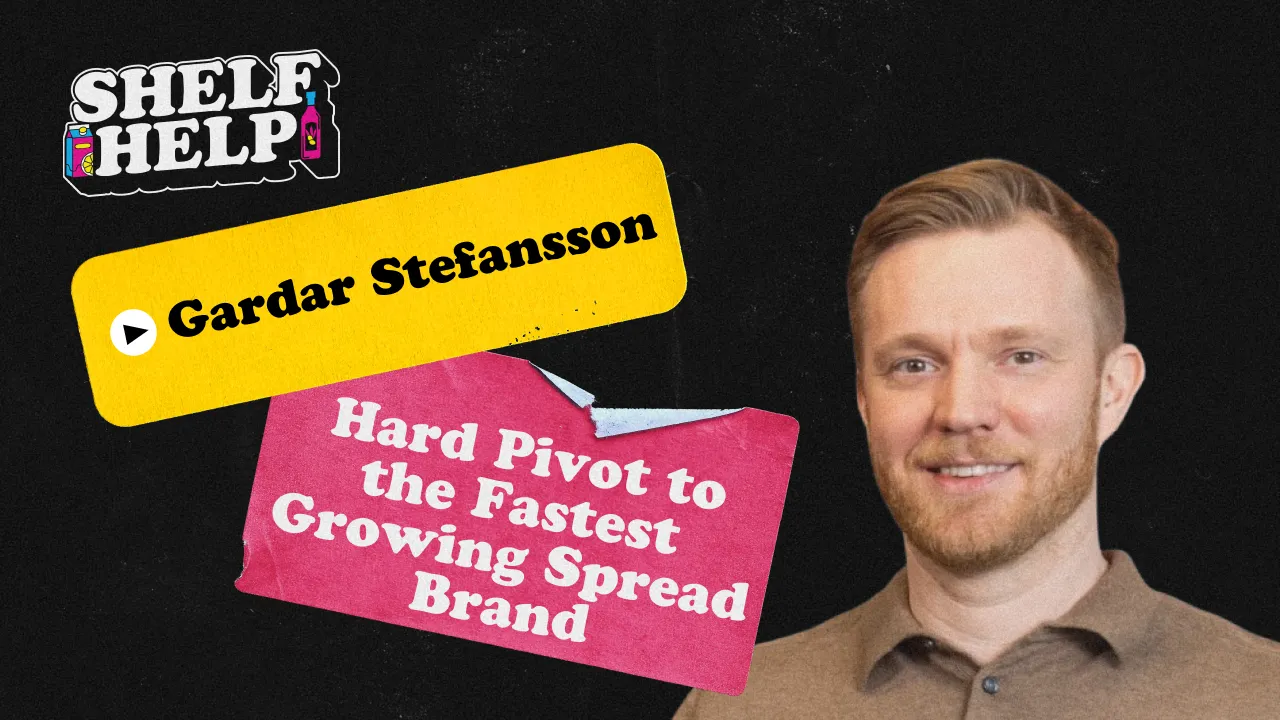



On this episode, we’re joined by Gardar Stefansson, Co-founder & CEO of GOOD GOOD - the fastest-growing spread brand in the U.S.
Born in Iceland, GOOD GOOD offers no-added-sugar, fruit-first jams, jellies, chocolate spreads, and a vegan lemon curd, among others.
Gardar shares how a looming write-off in a stevia/erythritol drops business sparked the pivot to spreads. He lays out the playbook on formulation, packaging that signals “indulgent but better,” moving from Amazon discovery to national retail, and what it actually takes to earn and hold more facings in conventional grocery.
—---------------
Episode Highlights:
🍓 The “inventory crisis” that led to GOOD GOOD’s jam breakthrough
🧪 The R&D journey
🥄 Alternative sweeteners
🧂 Lessons from prior CPG ventures
📦 Packaging & claims that drive trial and repeat without confusing shoppers
🛍️ Amazon as the first wedge, and what still works there in 2025
🏪 Translating ecomm proof into retail wins and cleaner resets
🧱 How to capture shelf space over time
🛒 Kroger, H-E-B, Publix - how to win
📈 Trends
—---------------
Table of Contents:
00:49:14 – Origin story, the big pivot
03:47:10 – R&D and formulation
06:41:29 – Sweetener testing
09:25:25 – Learning lessons from previous CPG experience
12:53:18 – Brand identity and packaging design
17:41:26 – Amazon
24:08:26 – Expanding into retail
29:19:27 – Capturing more shelf space
32:41:09 – Kroger, H-E-B, Publix
37:12:24 – Trends Garðar is watching
—---------------
Links:
GOOD GOOD - https://goodgoodbrand.com
Follow Garðar on LinkedIn - https://www.linkedin.com/in/gardar-stefansson/
Follow me on LinkedIn - https://www.linkedin.com/in/adam-martin-steinberg/
For help with CPG production design - packaging and label design, product renders, POS assets, retail media assets, quick-turn sales and marketing assets and all the other work that bogs down creative teams - check out KitPrint.
Episode Transcript
Speaker: 00:00
Welcome to Shelf Help. Hailing from Iceland. Today we're speaking with Gardar Stefanson, co-founder and CEO of Good Good, fastest growing spread brand in the U.S. Last time I checked. Originally started as via Health, a brand focused on stevia drops and tabletop sweeteners. Gardar was asked to join the company to basically restructure and rebrand into what ultimately turned into the good good you see today on the shelf. And I think over 10,000 doors at least the last time I checked. So really cool story. Excited to get into it. Gardar, maybe just first off, for the listeners that aren't all that familiar with good, good, give us just a quick lay of the land in terms of origin story, why behind the brand, core products you guys offer, maybe just flur out a few places that get people can get their hands on them and then uh we'll go from there.
Speaker 1: 00:50
Yeah, absolutely. So uh Good Good is uh Icelandic originated uh spread brand. We focus on creating no-water sugar spreads that are low calorie with natural ingredients that taste good and are good for you. Uh we started as a sweetener company in Iceland, and uh we were super interested in stevia and other natural sweeteners that had just been allowed in the EU market a little bit before that in the States, and had high hopes to become a leading stevia and natural sweetener brand. That did not materialize, and we needed to pivot to something else. We had overproduced, which is a common problem for CPT companies and Excel forecasts when the Excel sheet looks better than your actual earnings. So I talked to my co-founder and said, like, hey, you know, we need to do something with our inventory here, otherwise it's gonna expire. And I had this uh idea that you know we could make jams out of it because always in the fall in Iceland, I used to go to the mountains with my kids and family and just like pick berries and then make a jam. I was always appalled on how much sugar went into those beautiful natural berries. So I thought, like, hey, we could use our sweeteners to do this. So we mapped in my kitchen, quite desperate, but also full of enthusiasm and and uh and innovative uh mind of set, and and we we boiled the berries, added the sweeteners we had, smelled really good, you know, looked really good, made it cool down a bit, tried it, and it was the worst thing I ever put in my mouth. It was the worst uh thing, it was overly sweet, it it completely was not there. But as with everything, that was the first prototype number one. So after about 100 trials, we got the functional recipe that we still use today. So we pivoted from being a sweetener company into a spread company focusing on the natural aspect of it, focusing on the low-calorie aspect of it, and so forth. That was in 2016 when that happened. We are one of the fastest-growing spread brands in the United States. We sell to 30 countries around the world. We are available in banners like Walmart, Whole Foods, Sprouts, Publix, Meyer, HCB, Kroger, and so forth. So, so growing every year and building our customer base and uh and making customers happy with not eating too much sugar, at least not when they are adding spreads to whatever they're having.
Speaker: 03:39
That's great. So that's such a cool pivot. It's always cool to see companies when they make a pivot like that and see that much success that you guys are seeing. You talked a bit about the kind of RD formulation process, the first version that you made didn't taste great. It sounded like it took a fair amount of iterations to get there, you know, without giving it anyway too many trade secrets. What were some of the key variables that you guys played around with during the RD formulation stage to for from that first one that tasted terrible to the point where you got to the version where you're like, okay, this feels right. I feel good about bringing this to market.
Speaker 1: 04:14
Yeah, the that is a great question, and and to answer that fully, it's still I wouldn't, we're always improving it. You know, it's it's good, and I think that's the key with innovative CPG brand, is like there's no like the formula is never done. You know, you can always make it better, and and sometimes you can even make it worse. I don't recommend that route, but that sometimes happens uh too many. Uh, the iteration was that first we just copied the sugary formula, which is like 50% berries and 50% sugar, and that was the mistake. So it's it's like it's hard to balance natural sweeteners with the fruits, so so we increased the fruit count quite heavily. And then we balanced out the sweeteners. We also use the right amount of uh preservatives, natural preservatives that sometimes boost also the flavoring depending on the berry, and that has helped us you know maintain the flavor profile without sensing that it's sweetened with anything else than just like the right amount, so the fruit flavor really pops up. It's always gonna be less sweet than a sugary one, and that's a benchmark we just have to accept, and that's also what our customers like, you know. But that's like you know, we're just creating something completely different. It's like the jam category has been existence for as long time as men uh were able to cook. So, so as preserves. So, so this was just like our approach to to create this to offer now, since every since sugar is in everything we eat, that wasn't the case 100 years ago. It's the case now to offer an alternative like let's eliminate sugar from from the spread category. Uh it's a tricky thing. I mean, it's it's super easy to create uh a healthy product, you know, like from a macro standpoint or nutritional values, but it's super hard to make healthy product taste good and vice versa. So so so that is a balance that is a thin line that is really hard to to navigate. And I mean we have a storage room back in Iceland with failed products that we haven't even lunched because we don't lunch product unless they fulfill the great taste, as long as the nutritional effect and ingredients are on par uh with that promise. Yeah.
Speaker: 06:34
Did you know from the beginning that you were gonna use this? I think you use a stevia erythritol blend for the sweetener, or did you play around with various options and blends before honing in on that that blend? It might have just been as simple as because you mentioned you were sitting on a bunch of inventory from the the previous brand iteration, like the tabletop sweeteners and then the drops. Was it just as simple as we already have the sittings, we're just gonna use what we've got, or yeah, did was it more was there more tweaking involved in playing around with the different sweetener blends?
Speaker 1: 07:06
Well, I mean the problem was that we had Stevie and Earth it all uh out of inventory. So so we needed to use that. So so that was like the urge to the urgency was hey, we need to get you know this into something and sell it. So that was always what we aimed at. In regards of other sweeteners, I mean we have done, and it's a really good formula. It's as close to like the sweetness of sugar, it's about 80% of the sweetness of sugar, but at the same time, it's not you know that overly sweet and it doesn't have the aftertaste which many other natural and artificial sweeteners have. And so that was like the urgency was that we have those sweeteners on hand, let's use them. And then we just have tweaked the formula like by adding different kinds of berry formulations and ratios and so forth. And uh and that has helped a lot. We are also, I mean, we are constantly developing. So now, for example, we just launched a new line with Whole Foods where we don't use erythritol and use much larger amount of berries, about 80 to 90 percent. So that's like we're always pivoting in that like category and trying to test something else with different customers. With our peanut butter, we use uh prebiotic fibers from chicory roots that are extremely like helpful. It's good for the gut bacteria, but at the same time, it sweetens the product, you know. So it's like it's like it makes the peanut butter a little bit sweeter without being overly sweet, like uh, you know, the legacy brands that we grew up with as kids, you know. So, so so yes, we are always trying things out and and and testing it, but when we have a good formula going and you just need to do minor tricks to it, then and it like the customer really reacts to it well, we we just tend to go along with that. But I think there's always you can always do a little bit better, you know? It's like that's that's the the mindset you need to have. Like, and if as soon as you stop innovating, you are also coming to a halt as an innovator and entrepreneur, you know?
Speaker: 09:14
Totally. So totally agree. I know but previously the good good you built um salt brand out in Iceland, I think is Nordor Salt, if I'm pronouncing that right. Like, what um what like thinking back now, what kind of learning lessons or insights do you feel like from from your days building the Nordur Salt were top of mind as you came on board with the next venture?
Speaker 1: 09:35
Yeah, so that was uh uh amazing experience. And you know, that like was a little bit more in terms of the production side. So my experience from there was building a production facility from ground up, you know, securing investment for it, building it up, uh negotiating with authorities to build that plan, branding and getting everything going from the get-go. So the learnings that I took from there was like, you know, from like branding was just and and pitching a product is something I've used a lot. So I think like as a food entrepreneur, you know, you need to understand how food is made. You know, as as long as you can't understand how fruit grows or, you know, how they're processed, same with like how salt is made, if you can't portray that and put it as your story, you know, I think I think people will like guess, people will at least judge you from that because you need to answer you need to be an expert, you know what I mean, like in what you're saying, and often without boring people to death with tiny details, it can be a really good, intricate part of your pitch. And also the follow-up questions is explaining how things work, you know, explaining how this comes about, like how it's made, why like our product is more sensitive than the sugary ones and so forth. Also, a huge learning is like to, you know, to outsource when you can, you know, focus on what you're best in. And and I mean it was running a production facility from like in the beginning, uh, you know, in the original steps, and also branding and selling and doing all that was an extremely hard thing to do, you know. So it's it's about, you know, with good good. We figured out once we uh got into the spread that, hey, there are great producers out there. We have the recipe, we did all the hard work there, you know. Uh there are people and companies and facilities that are faster, better, faster, and able to scale that we can work with. So, so that was the learning. It's like now we have the recipe, we did like that developing work, and we're gonna continue to develop. Well, maybe we can negotiate with uh Copacker to help us produce, and that's what we did. So, so we outsourced that to a capable producer that's definitely better in doing that at that stage of time than we are. Uh, and meanwhile, we focused on the branding and the selling and the story, and we're able to scale faster without seeking investment to build new production machines or or factory and and so forth. So, so you know, the key there is that able to, you know, know where your strengths are, know what your company needs at that point of time for you to push on. And that was product development, branding, selling, and just being founder and just going out there and and you know, sharing the story and selling the product, you know. And that's like that was the key then and it's still the key now. But like, and that's like diversifying and knowing your strengths and talents and where you should apply them at that stage in your business growth. Yeah, totally.
Speaker: 12:47
That makes a lot of sense. That was really helpful. In terms of the pivoting from via health to good good, in terms of that rebrand, new brand creation, just from a you know brand identity packaging standpoint. I guess first off, just what did that um what did that naming process look like that ultimately led you to decide on good, good?
Speaker 1: 13:12
Yeah, it's uh it's I wish I had a better story. Like I was walking and lightning came from the sky and put the name good good in front of us. But you know, the the truth is that uh our creative agency, uh, and I said that one of our co-founders is actually his agency, came to us with that name. It's that simple as that. Like, hey, I mean, your creating product tastes good andor good for you. Why not call it good good? And as simple as that is, we liked it. I was sure that someone had taken that name specifically in the US, which was not the case. So I immediately registered the trademark and did it worldwide for our category. And you know, we had like there were some people that came to us like when we were starting and like saying, good, good, that's like that's so common. Why not call you like something like a word with different letters, like use Scandinavian letters instead of A or U, you know what I mean? And like then people will you know know that you're different. Totally, you know, and everyone's doing that like in 2019, tons of brands like True Fru and and others, which is cool, and nothing wrong with that. But I also like the idea, like, hey, we it sounds like we have been on the market for 50 years, you know, and and you know, just getting there, and and like as soon as we get more brand recognition, it just feels right, you know. So that was the strength we saw in the name. And today we're super happy with the name and and the product and and being able, I was glad that in 2018 I registered the brand like and took it you know uh for our categories. But you know, I think it helps us in the long run, even though I agree with our our constructive critic back then that yes we would have had a name that would be more different, that people issue to talk about SEO purposes and so forth, yeah. But yeah, I was mainly thinking about how do we look in the shelf, you know, because that's like our main focus is there, even though online is important, it's just about you know how to look in the shelves and then build from there.
Speaker: 15:23
In terms of the the actual kind of visual identity, the look of the packaging and the brand, what were some of the the key variables that were top of mind for you in terms of you know what you included in that brief?
Speaker 1: 15:33
Yeah, uh the brief was simple in the beginning. The first one, we need a name. That was the brief. In the beginning, it just was a super simple logo that was created. And and we like were happy with it. It was not the forefront. We we use different hierarchy in terms of communication, so it was the product name that was communicated first and then the attributes. We like, and then we were like happy with like the patterns were there and everything, like the same idea of like the natural perspective and the coloring. It was all there from the beginning with our from our great designers back in Iceland. But then in 2020, me and my other co-founders are checking out a store that we're in, and we go into the store and we look at the shelf, and we can't find our product there. And we're like looking at the shelf, and we're like, where's the product? It's supposed to be here. It's like the store locator says it's here, and and then like after 30 seconds, we're like, it's there, you know, like, and then we were like, it was awakening for us. Like, even though it looks great on a screen in your computer alone, it doesn't work in the jungle that the supermarket is. So that's when we went back to the drawing board, okay, and we created the smiley good good logo, and we put the attribute first, and then we put the product name below and and focused on the branding as the main communication from our standpoint. But that brief was totally different from the first one. You know, it was about hey, we have our product is like nothing else, it's the lowest calorie natural spread out there. It needs to reflect that in the packaging. This is like our main method of getting new customers, and that's the shelf space that we have invested in. And and from there, the the good good was uh the logo we use today, and the messaging is was created from.
Speaker: 17:39
Yeah. Yeah, that makes a lot of sense. From a go-to-market standpoint, I'm pretty sure you guys made a pretty early bet on Amazon before putting a focus on going into retail. Like what have you guys found that's been key to winning in this Amazon channel?
Speaker 1: 17:54
Yeah, uh, I think like I think like you have to what are you gonna use the Amazon channel for? You know, it's it's not a good channel for uh products that are heavy and have low price, you know. And when I say low price below $20 a unit, which most food CPG products are, you know. In our case, winning on Amazon is to be break-even and and and promoting the product, you know, getting new customers and using it as a marketing channel. And that what has been our our uh you know decision since we got into Amazon in 2016. So the first uh reason for why we used Amazon was that we recognized the power of it. I mean, it had already disrupted the book market, it was going full force into gaming and you know everything that was related to entertainment. And in 2016, the food space had just started, and they had like maybe three years ahead, like allowed sellers to sell on their own there using their platforms. So we saw this as a great tool to get our product to the US without overinvesting in shipping a container, getting a warehouse, uh with expiring products, hiring people to sell, you know. So from there we saw like, hey, let's just send public cases to Amazon and let's see how it goes. Yeah. And and that was like, we got like immediately custom reaction with the reviews, and and like we got like some trashy reviews, and some of them are completely right, you know, like, hey, my jar broke, you know, and then we're like, hey, we need to create a better packaging, you know, and also it doesn't break while shipping, and then then it's been super helpful in product innovation, making the product better, knowing the customer, like what they want, because they're paying a lot to get the product, but we use it mainly, uh, and we were at the time before we got into distribution with 10,000 stores in the state, we were the best-selling jam brand on Amazon. So that helped us get into retail. Also, when we are you know entering seriously the US market in 2019-2020, we're just pointing out the fact that we are the best-selling jam on Amazon, and that's uh uh that's something they can the buyers can then look at themselves and see that this product is bought by thousands of people, you know, every week, and they should perhaps think about adding it to the shelves. So, so and I think it's still super relevant and important channel. Yeah, it's hard to make profits there with glass jars and heavy items at the price point we're at. That's just a fact. But you know, and the beverage beverage CPT founders have exactly the same method, like they they overinvest in Amazon to get the products into the hands of customers and then hope that that will scale into wider distribution.
Speaker: 20:55
Yeah. No, that makes I mean that's a logical strategy for sure. Well, just say an up-and-coming operator approach you, ask you for some advice, and they're just about getting ready to launch on Amazon. What would you tell them is the is the number one, if you had to pick one KPI that they should be tracking on a you know daily basis as they're as they're ramping up on Amazon?
Speaker 1: 21:17
Yeah, I mean, I would first of first and foremost ask them about what what the goal is. You know, is it like is it brand awareness? Is it first-hand customer? Is it just to be alive there with good reviews? I mean, what is the goal? And but like let's just say it's gonna be they want to get trials and increase brand awareness. I will definitely recommend pricing, you know, and make sure that if the goal is to go to supermarket, you can't overly price your product, you have to be on par with the competition there because the customer is not gonna buy uh a six pack or something that costs two times as much there as the competitors. So you have to align on that. Marketing mice like do the right. Sponsor that the keywords put realistic goals in place. Put your spending. Like, how much are you gonna spend? I think a lot of first timers there go in there and and either spend too much or too little, you know. So it's key to focus on that that that's the case. Like this is the amount, this is what I budget for, these are the projected sales. And then I will focus on like just put your best sellers there. Yeah. Don't put if you have 10 SKUs, just put three, you know, like focus on doing them the best. There are gonna be operational challenges. Amazon is gonna lose your inventory, and it's gonna take two months to get something out of it if you get something out of it. Right. You have to lose a lot of money. Yeah, yeah. Expect to of lose. I mean, expect that you're investing in this channel. And you know, and then I think also it's the key is just like focus on the customer that like you know if you get a negative review, analyze it. Like, is it like is it the competitor trying to, you know, keep you out? Is it like something related to how the product is fulfilled? Is it about the taste, you know? And then you know, try to get as many five-star reviews and happy customers as much as you can and then build on that. You know, we will shop, I mean, we always, at least I do, I read all the reviews. I don't know the I read the best reviews and I read the worst reviews just to figure out like what it what are the how is this product, you know. So, so yeah, you're investing in the story of your new SKU or ACN. You want it to look good and you want it to go well, and you know, don't expect that you're gonna be the best-selling item in in week one.
Speaker: 23:44
Yeah.
Speaker 1: 23:44
Or like what are the stores are gonna call you and like, hey, can you get your product? It's like it's it's a long marathon ahead.
Speaker: 23:51
Yeah. No, that makes sense. But those are all really helpful tips. Shifting kind of a bit forward, you guys kind of proved proved the concept on Amazon, prove that there's a market for it, then at some point you decide, okay, we're gonna start, you know, putting the focus on retail. In terms of launch launching it and growing in retail, what did your initial kind of go-to-market strategy look like?
Speaker 1: 24:13
Yeah, I mean, we went in at a too low price, you know. So, so we, I mean, from the the European model, which is like you're always at a low price, you know, and promotions are very rare. You know, they happen maybe once or two, twice a year. So, so we needed to restructure our price proposal and and build our offerings on a 20-week promotion a year, you know, and work with the retailers from that. So the mistake we did was just being inexperienced in that regard, that we have then we quickly learned to fix like with everything. The best way for us is like in the space that we are in, which is moving slower than snacks and beverages and a little bit less innovation than those uh categories as well, is to focus primarily on promotions and like and invest in the packaging and the main message there. You know, that's the key. And work as much with the retailer programs as we can, build good relationships with them, you know, ask them about their you know promotional mechanism that they have or vehicles that they have in place, and build the brand within those banners. So closely monitor that. We use BINS data, we check it every month, we get like all kinds of other data. Then we are also heavily uh in social media, that's the key. I mean, uh if you do it well, that is, and that needs to be authentic with a true voice, sharing a good story, and also communicative. There are your fans are there, and those are the most important people ever. So it's like, and and you know, always treat them like royalty and VIP and try to build the community around them, try to recognize them, try to find them because those are the reasons for why your brand will they are the main fuel in the beginning that will propel it to to to other heights. So it's like the key is just the community and and using those tools available. Other than that, like trying to get new customers is also super important. So do good promotions, you know, focus on your best-selling products that you know are gonna like people will like to buy again, and then build the velocities from there, you know. So it's like it sounds simple, those three main points, but it's super complicated because you're dealing with maybe 40-50 retailers that you need to fix and and and then promotion things get lost. But it's like that's why it's so important also to have an amazing team with you that we could could have, you know, experienced people that just like are on it and and will do the things needed to get things going.
Speaker: 26:55
Last time I checked, I think you guys were in a brand was in roughly 10,000 doors or so that as you've gotten to that you know top spread brand in the US, as you're thinking about scaling up to the next, you know, 30,000, 40,000 doors, what does that strategy look like to you in your mind? Is it you know more of the same, keep doubling down about what's working, or are there some new things you're kind of thinking you're gonna have to try to you know take that next big uh jump in in terms of door count and expansion?
Speaker 1: 27:24
Yeah, I think like the core is the most important one. So we need to make sure that like the stores and new accounts we enter, the velocities are there, you know. So it's like for us, like we are not in a race to get into as many stores as possible. We are in a race to sell as much as we can within the stores we're at. So so that has been our focus, and we have said no to new retailer accounts, just like because that's not the goal right now. So so that's the base. Um and then like we are all constantly thinking about our product offering sizes and and different opportunities. So so that's something we are doing. We launched our peanut butter like a year ago. We've been super careful about not launching it in every new account possible. We see tons of opportunities. It's a new fibrin rich prebiotic peanut butter that's just tastes good and like it's good for you, everything we do. Like, so there are tons of opportunities of like size, different sizes, convenient sizes like to go that we are exploring and and probably gonna lunch. But the core is is still like we are selling, we want to sell more per store this week than we did last week. So so that is like our core focus, and it's so easy. I mean, it's so easy to lose sight of that and like try to get in as many accounts as possible, but there's nothing, there's no feeling as horrible, at least in the CPT world, as getting discontinued because we push in sales. So it's like, you know, it's kind of like hair of the dog is like you go into those all of those accounts and then you're not performing, and then like, yeah, you're not selling, so I'm gonna get a new brand in, you know. So so we take super care of the stores and chains we're in, and and we want to grow there because that's gonna have a multiplier effect, so for sure.
Speaker: 29:20
This question's really getting in the weeds. Uh I talked to some operators that tell me, like, after the first year or two on shelf within a retailer, even when the brand is is a velocity leader, you know, like like you guys in the spread category, it can still sometimes be challenging to kind of capture more shelf space and to be able to get those opportunities that take advantage of out-of-isle opportunities, like you know, end caps, side caps, that kind of stuff. I think partially it's because some of the bigger stylist brands that just pay more for shelf space, kind of try to keep their elbows up. They're always in the retailer's ear. I'm not sure if this resonates with you at all. Have you had like a similar experience? And and if if not, great. If so, I'm curious, have you uncovered any strategy that work to kind of combat some of these challenges?
Speaker 1: 30:08
Yeah, I mean, like we're like uh up-and-coming, you know, basically uh uh the new guys on the block, you know. So it's like we've only been on the market for five years, and we are like competing to legacy brands uh that have been there for 110 years, you know. So it's like that have the power and have done tons of mergers in the past and just own basically the sell space. So yes, it's it's hard to, you know, you know, you have to take space from someone, and like the at least the spread category jams is like decreasing maybe you know 1% a year, or we are like growing like crazy. So that's the story you try to tell. Like, hey, we are like your answer to the customers that are stopped shopping this, you know. So so try to increase the space. But it's like it's it was specifically harder like two, three years ago when we were like trying to build the shoe count. But now we're seeing like we're getting more sell space because, first of all, we got the velocities uh the buyers believe in like that this is what the customer wants, and we have the numbers to prove it. So so we are experiencing that in our space. I think like this is definitely more harder in more competitive space, like snacks and beverages. I think like uh I think that uh is a crazy environment, but but but I mean ours also crazy, but it's it's like you know, it we're also a little bit slower, you know. So it's like you know, it it takes longer time to get that placement than other spaces, I would assume. Yeah. But we have definitely experienced that. Getting the off-shelf placement is just a matter of like good negotiations and discussion and relationship, and also you have to pay for it. I mean, nothing is free, you know, so it's like you have to invest heavily into that, and then you have to figure out am I going to be on that off-shelf place placement with that banner? Is it gonna pay off? You know, and I mean the same questions, you know, arises asked with Amazon, like how are we gonna use this? You know, are we gonna do a BOGO, which is like we're losing on that, you know, uh our margins are that not that high to give one 50% of the product. But at the same time, are you able, you know, to create first-time customers that then are gonna buy it again, you know, and then to justify that spend. It's a delicate uh subject and it's hard to be there, but yeah, it's just a battle, you know. Yeah, and you have to you have to put your best players out there in the beginning that you know are your best-selling skews, and and then that will help you grow the space. Totally.
Speaker: 32:40
Yeah, that's really helpful. You mentioned right at the beginning, at this point, the brand is in a lot of the major retailers, just for other up and coming operators as they're starting to get on the shelf. What have you found are some of the key differences in working between, let's just pick Kruger, HEB, and Publix, just in terms of how you work with them on a daily basis? Are there different ways, you know, kind of keys to succeeding and winning on shelf that differ between the three?
Speaker 1: 33:09
Yeah, absolutely. It also it differates within its retailer culture. So so they have different ways of doing things and different promotional mechanisms and vehicles. So, you know, even though like you want to be in the conversation with your buyer every day, you know, and and you know, that's not always the case. You know, sometimes they just allow you to meet them once a year at a category or not even meet you, you know. So suddenly you're just like uh uplipping their Excel sheet. Other buyers are super communicative and want to have a good relationship with their brands and want them to succeed. Uh and I think that's like a pretty good approach and strategy because you know you're already there in the shelf, you know, and now you want the brand to commit to like build it within your store and you know create better, you know, return on the shelf space that is basically real estate, you know. So so it's it differs per retailer for sure. And uh it's uh it's uh sensitive like communication. You have to be aware of like like that, like if you want to grow, you also have to commit a lot of investment into promotions and so forth. And for operators who are focused on you know growing, I think, and starting, I think like the key is like there's no right way to do it, you know. Use like when we started, we went to Amazon, which very few brands were doing, and then we got into conventional, you know, retailers like Meyer and and Safemart, and then we grew from there. Before that, like people told us, yeah, you have to go with a really specific natural store on this corner in New York City. From there, you can try to approach the buyer for that whole foods division, and then you grow there, and then you go national, and then focus on being in one state and grow. And and we did like the like went on Amazon as a natural brand, then we went conventional, then grew from everywhere. And now suddenly, like in the past one or two years, we we went into the natural like full force. I think the key is to like pick state, pick a state where you're gonna grow. Preferably it's where you live there, you know, and and try to build, like, find the retailers that have good relationships with their core customers. Like if they have good relations, HB is a perfect example. I mean, it's just like they treat their customers and people uh with respect, you know. It's like they they want to surprise them. Here's the food. Like, if something is wrong, they will fund you, they will like treat you, and it's like the communication is awesome. So it's like it's it's important to like find a retailer that like is there and you can maybe preferably grow the brand there and then focus on you know building within the state, and then go to other states that you think are better fit for your product than other states. So it's like there are there is no formula, you know, and we are definitely uh the odd one out because we went different way in. Uh so I and we are proof proof of that. So I think like I think, but I think the key is just like try like same with Amazon, just start if you have 10 SKU stuff with three, like don't that same with like retail, just like focus on you know the best-selling products, you know. Know you're an entrepreneur or innovator or like a new operator, and you want to create everything, and you have built this amazing you know plan in your head, but like you often have to hesitate and pause a bit and just like focus on like building your core. And I often have to remind myself of that, like every day, like, hey, okay, what's happening with our bestseller? You know, like let's take a look at that, and then you know, this could be an interesting new product development and so forth. So, yeah, it's the focus that matters a lot, and then just using that energy inside to sell and promote and build the brand, and that's the key.
Speaker: 37:06
That makes a lot of sense. No, that's that's really helpful. Um, Garda, this has been really helpful. Like last question for you. Um, any brands or just trends in general in the CPG space? Anything that's kind of really piqued your interest lately or anything that you're kind of excited about?
Speaker 1: 37:24
Yeah, I I mean I go to all the shows and I've been there, and like there's always some hype with new ingredients or like CBD, for example, that just went into everything and then like just like stopped. Like vegan, like all this vegan plant alternative. It was huge like uh but now it's kind of like plateaued. It's always gonna be there, and I think the growth is there, and I am totally up for better options in terms of uh meat alternative. But you know, there has been a lot of like it was a lot of overinvestment in that category uh a couple of years ago, and I think it's gonna balance and I think it's gonna grow faster, in my opinion. But I've seen like with the protein trend, it's huge. I think we're gonna see a little bit like not all proteins are equal, so we're gonna see uh a little bit like diversification there, what kind of protein you know is gonna win versus the the other less proteins that are available. And then something also we are leaning on is fibers. I think fiber is the new protein, and I think there are tons of opportunities there, specifically, you know, with modern diet when we have to eat on the go and you know, we're like we don't cook as much as we did, you know. I think trying to get a balanced diet, and there's a missing is missing in our diet is our fibers. So I think I'm super excited about that one. And you've seen that with Poppy and all the drinks and beverages that they leaned on that, and I am pretty sure that we're gonna see that as well with other categories as well.
Speaker: 38:57
I think you're probably right. Well, yeah, Garda, this has been awesome. Uh a lot of really valuable insights here. I think people are gonna be excited to listen. What's the um what's the best place for people to follow along with you, and then best place for people to uh follow along with the good good brand as well.
Speaker 1: 39:13
Well, I'm active on LinkedIn, pouring my heart out there every day. So Gardar Stefanson is uh LinkedIn Antel. Uh good, good is I mean, we're amazing on Instagram and and TikTok. So I would encourage you to follow us there. Perfect. Awesome. I think that's the pod.
.svg)


