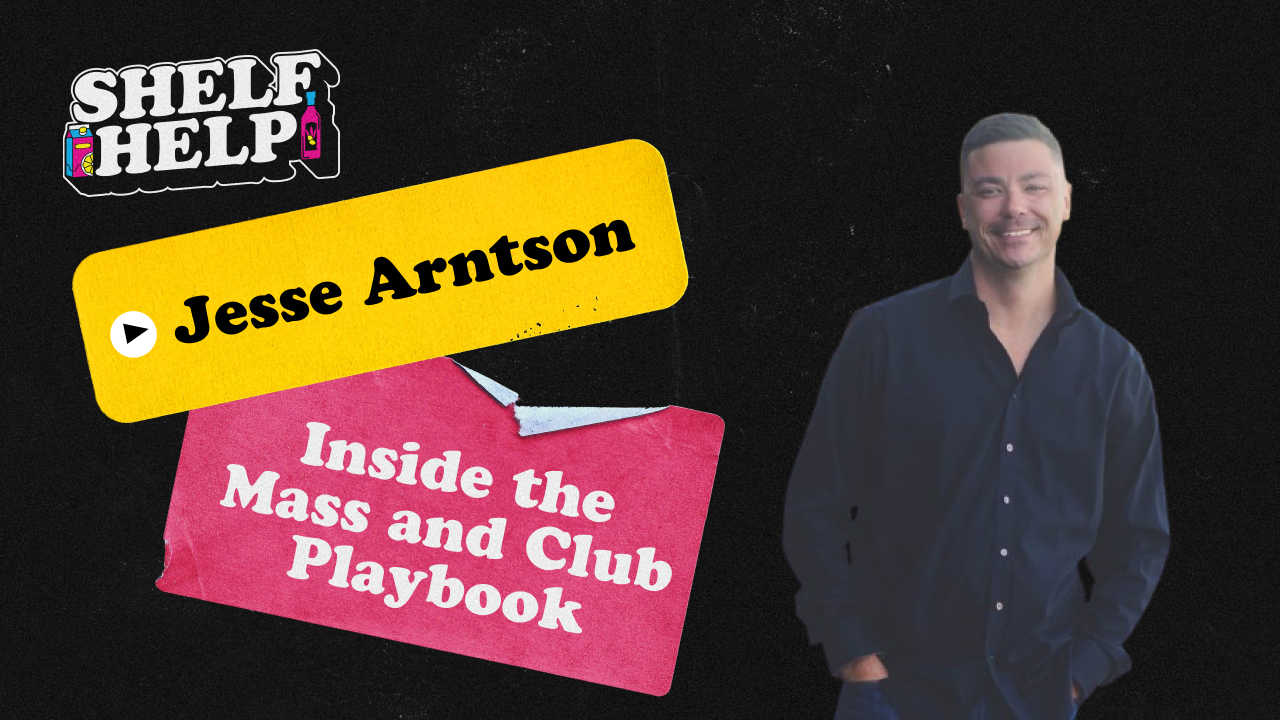



On this episode, we're joined by Jesse Arntson, Director of Sales, Mass & Club at SLATE Milk - the high protein, lactose-free shake and iced coffee brand.
Jesse has spent close to two decades on the commercial side of beverage, with stops at Red Bull, ZOA Energy, Fever-Tree and Bobo's before landing at Slate.
Jesse breaks down what actually separates mass from club, and why the two get lumped together far more often than they should. Mass is broad distribution, assortment strategy and item productivity across thousands of doors. Club is fewer items, bigger packs, bigger bets and almost no margin for error.
We get into what a buyer actually needs to see instead of a 50-page deck, and the short list of questions Jesse answers before he walks into a meeting. He walks through the Bobo's PB&J bar that caught lightning in a bottle at Costco, what happens when a great headline number hides softening velocity, and why past success makes teams slow to act.
---------------
Episode Highlights:
🥛 What Slate sells and where it can live on shelf
🏬 Mass vs club: complexity beats you, velocity beats you
🧭 Picking your first big channel (and what a win costs)
🎤 What a buyer needs instead of a 50-slide deck
🍫 Bobo's at Costco: lightning in a bottle, then the slide
🔁 When to save a SKU and when to let it rotate out
🧪 Innovation has to solve a commercial problem
📦 Never selling ahead of what operations can ship
🎯 Dollars per club, base velocity, and reorder patterns
🛒 Strike zone placement, demos, and promo discipline
📱 Retail media and in-store as one plan, not two
🤝 When you need a broker and when to go direct
💸 The equity questions nobody asks
---------------
Table of Contents:
00:00 – Intro
00:58 – What Slate is and the protein lineup
02:18 – Mass vs club: two different games
03:49 – Which is harder to enter, and harder to hold
05:04 – Choosing your first big channel
06:50 – What a buyer actually needs to see
09:45 – Bobo's, Costco, and lightning in a bottle
11:54 – When to save a SKU and when to kill it
13:32 – Three things to watch on a hot club item
15:00 – Innovation that solves a commercial problem
18:23 – The Slate playbook for mass and club
20:25 – Never sell ahead of the operation
22:12 – Picking which SKUs earn the pitch
23:41 – Velocity levers: placement, demos, promo
25:22 – Retail media, in-store, and asking "so what"
27:47 – Brokers, going direct, and owning the account
32:22 – The equity questions nobody asks
33:54 – Protein, functional beverage, and GLP-1s
---------------
Links:
SLATE Milk – https://slatemilk.com/
Follow Jesse on LinkedIn – https://www.linkedin.com/in/jesse-arntson/
SLATE Milk on LinkedIn – https://www.linkedin.com/company/slate-milk/
Follow me on LinkedIn – https://www.linkedin.com/in/adam-martin-steinberg/
For help with CPG production design - packaging and label design, product renders, POS assets, retail media assets, quick-turn sales and marketing assets and all the other work that bogs down creative teams - check out https://www.kitprint.co/
Shout out to my friends over at Glimpse, the go-to partner for automating retail-related back-office operations and unlocking margin trapped in invalid fees and manual processes.
Are you in the market for a new flexible packaging partner? Check out HD Packaging. Third-generation, family-owned and built for the needs of category leaders like Newman’s Own and A Dozen Cousins. Faster launches, lower costs, and no artwork fees.
Episode Transcript
Speaker 1: 00:00
Welcome to Shelf Help. Today we're speaking with Jesse Arnson, Director of Sales, Mass and Club at Slate Milk, high protein, lactose-free protein shake and protein iced coffee brand. You've probably seen stacked up at Costco, sitting on the shelf at Target, Walmart, all the main places you uh you probably shop. Jesse spent his whole career in commercial side of CBG pretty much. Red Bull, then Zoa, Fever Tree, both of which got acquired by my Coors, then Bobos, and now finally Slate, where he's leading the charge into Mass and Club. So definitely knows the retail sales game about as well as anyone. So super excited to dive into all this, all the things. But yeah, Jesse, maybe just starting off for the this probably small number of listeners in the CBG space that are maybe not as familiar with Slate. I'll just kind of kick things off by getting just a quick Oregon story, why behind the brand and what the kind of core product lineup looks like, and then uh we'll go from there.
Speaker: 00:59
Yeah, you took the words out of my mouth earlier, Adam. Great job. Uh, I'm not gonna do nearly as good of a job as Manny or Josh, the two founders of Slate, but I'll do my best. So Slate's a protein lactose-free brand focused on protein shakes and protein iced coffees. The simple way I describe it is we're trying to make protein easier, more enjoyable, and more approachable for everyday consumers. Today, we have protein shakes in a latte lineup all the way from 20 grams of protein to 42. And the lineup has grown quite a bit in the in the last five or six years as the brand has really scaled. The shakes are really built around high protein, low sugar, lactose-free and great taste. The lattes bring the same protein proposition into a format that people already love and have a daily habit around, which is coffee. What I think makes Slate interesting, at least to me, is that it sits at the intersection between a few big consumer behaviors. People want more protein and they want convenience. They want a better for you option, but it still has to taste good. So they, you know, they want their cake and eat it too. And they're increasingly looking for drinks, not just as a refreshment, but as something that can do something for them. So what's the benefit for me? So from a retail standpoint, that creates some pretty compelling opportunities because Slate can live in multiple places. It can play in protein, ready-to-drink shakes, coffee, functional beverage, convenience. Also creates complexity, but it's a good kind of complexity in my opinion, because consumers, the consumer demand is real.
Speaker 1: 02:18
You own math and club specifically. Between those two, what would you say is fundamentally different about selling into math, you know, the Walmarts and the targets of the world versus club like Costco and Sam's Club, BJ's, that kind of stuff?
Speaker: 02:34
Yeah. Very different channels, even though people sometimes I find them grouping them together because they're both large and they can scale quickly.
Speaker 2: 02:41
Yeah.
Speaker: 02:42
From my perspective, Mass is more about broad distribution, assortment strategy, item productivity, and with uh what the brand's role is in the category. So we're thinking through the shelf, the competitive set, price point, household penetration, promotion, digital support. And then how do we get the item to perform across thousands of doors? Where club is much more concentrated. You have fewer items, bigger packages, bigger bets, and much higher expectations from the retailer and the buyer, and also the consumer. The buyer's not looking to add a bunch of variety just to fill the shelf. They're looking for items that can justify the space, more serious dollar per club and create a stronger member value. In mass, however, you have more room to build a portfolio over time. And in club, the item has to be right. The pack has to be right. The value has to be obvious. The palette has to work, the operational plan has to work, and the velocity has to show up pretty quickly. So simple, in my opinion, the simple version is this when people ask is Mass is about building a scalable retail business. Club is about proving you can create a high volume, high-value member proposition with very little margin for error.
Speaker 1: 03:50
One thing I've heard about Target specifically, it's not super difficult to get on the shelf at Target, but it's pretty difficult to stay on shelf in general between Mass and Club, which is kind of harder to actually get on shelf, and then which one is harder to stay on shelf more broadly?
Speaker: 04:08
Well, I think club is harder to win your way into because the bar is set so much higher. Yeah. You don't get unlimited shots on goal. You need the right product in the right pack and the right pricing, the right buyer and the right timing. So there's a lot of rights there. Stars and moon kind of have to line up. But in mass, mass can be harder to stand because at scale, there's so many variables. You have more stores, more distribution points, more replenishment complexity, more competitive pressure, more pricing scrutiny, more opportunities for execution of the breakdown. But with that said, club can also be brutal. If velocity is slow, there's nowhere to hide. There's no time to hide. If the item's not producing dollars per club, you know it quickly, and the buyer knows it quickly. So my answer would be club is harder to get into, both are hard to stay in, but for different reasons. In mass, complexity can beat you. In club, velocity can beat you.
Speaker 1: 05:01
Let's just say I'm a brand having had a fair amount of success in the independent retailers, the natural channel. They're feeling that they're ready to start focusing on some of these bigger channels, and they're trying to decide which channel to focus on first, mass or club. How should they be thinking about that decision?
Speaker: 05:22
From my perspective, I'd start with a very honest assessment of the product and the business. So, for example, first, does the product have a broad enough appeal for mass? Or does it work better as a discovery value item in club? And there's multiple brands in the beverage space that have done both or pick the channel and then move to the other. Second, can the brand support the channel operationally? It's not enough to want to want the volume. You have to be able to produce, ship, forecast, service, and fund the business. Third, we get those two right. The third piece is does the pack architecture make sense? Some items translate beautifully to club, others don't. If you have to force the item into a club pack that hurts quality or margin or the experience for the consumer, that's a warning sign. So if we get all three of those right, the fourth is, I guess, what does success do to the business? This is something brands don't always think about. And kind of the biggest piece that I've learned from doing a big bunch of club business, a big club win can be incredible. You see it all the time on LinkedIn or with our peers, like everybody's high-fiving, like we got a region or we got a rotation naturally. But if it consumes all your inventory, all of your working capital, and all of the team's attention, it sometimes might not be the first move. So what I've seen for some early brands, you know, like ZOA, for example, where we build from zero to two or you know, a big brand when it's sold, is I'd say don't chase the biggest door count, chase the channel where you have the highest probability of proving repeat, building a strong story and serving the business well.
Speaker 1: 06:48
In terms of getting on the shelf, getting in the door in both of these, thinking about getting in the room with that buyer and what that presentation looks like.
Speaker: 06:57
This is this is always a tough one. You know, from my perspective, less is more. So a strong presentation is super clear, it's tight, and it's suited in the buyer's business, which we know sometimes can be tough if you don't know the buyer, how they go to market or what they do, it's sometimes hard to know their business. But this is where brands and myself sometimes overcomplicate it. You know, sometimes you want to show them everything and be like this and this and this. But what I found is, and where I've had the most success, right, wrong, or indifferent, is a buyer doesn't need a 50-page or 50-slide brand story. They really need to understand a few critical things. What the consumer problem is we solve, why we're positioned to win as that brand, why the category needs us or the item, how the item performs elsewhere, and what you're asking for. So I really I have it in two buckets, like the mass bucket and the club bucket. So for mass, I have some, I have a few non-negotiables. Category context, consumer demand, how's the brand performing? What's our competitive positioning? What are the item economics, pricing, pricing, distribution strategy, expected velocity? And then really, how do we support this thing? So when it all boils down, we need to show that buyer why this item is incremental and why it deserves the shelf space. For club, we need to do all of those things, all of that, like I just said, but we also need to be very sharp on dollars per club. What's the palette productivity? What's the value to the rest of the market? What's our demo strategy? What's our exit strategy? Are we ready from a supply chain standpoint? So I've got a handful of questions and really what I asked myself. So the best decks make the buyer's decision easier, right? Selling to anybody, you know, whether it's telling my 11-year-old daughter to do something she doesn't want to do or having a buyer that's going to buy $500 million of your product, it's just taking them from a no and a maybe and a maybe to a yes, right? And really what I found is when a buyer says no, it's they don't quite understand and they're not comfortable being ready to be like, yeah, I'm ready to do that, because we all answer to somebody, right? So they're like, I don't have enough information to do that. So I have a handful of obvious questions that I asked the buyer, right? We have two ears and one mouth. I do my very best to use them in that order. People listening that know me might laugh at that a little bit because sometimes that's not how it works. But some items that I like to ask them to get them talking and get them to open up a little bit is, you know, what are the items and what does it matter, right? Why now? You know, why does it matter at this retailer? What does success look like? How are we supporting it? What is the risk and how are we managing it? So if I can ask myself those questions, if I'm the buyer, right, and I'm playing myself, if I can answer those and have a good, succinct answer, then I probably have a way forward. So if we answer them, I have a real meeting, right? So if I can answer those five or six questions, in my opinion, then I have a real meeting. If I can't, we're just pitching. And to pitch is great, but it to close, you really have to have succinct answers to follows. And that if I'm a buyer, that's what matters.
Speaker 1: 09:45
So yeah. Talking about Bobos and Costco, I think when we chat a while back, I think your learnings here are pretty valuable. Bobo's really caught lightning in a bottle, but eventually the Costco account, the numbers started to dip over time. Love to have you walk me through what played out here.
Speaker: 10:02
Yeah. Great brand. Love them. You can see the package behind me, maybe the PB and J I don't. I love Bobo's too. It's great. Yeah, so great. You know, as somebody that can't have dairy, uh, you know, and finding a sweet treat in the store is tough, and Bobo's killed it. So yeah, I want to be thoughtful here because I have a lot of respect for TJ, you know, the CEO over there and the team over at Elevate that really helped build that brand. That's the broker and everybody else involved over there. You know, I had nothing but a great experience and love the folks, the people in the brand. But the simplest way I describe it is Bobo's had a moment in the club where the item really worked, and it's that PB and J item behind me. The brand caught lightning at a bottle, which just doesn't happen a ton at Costco. Um, the product had a strong consumer proposition. It fit the channel well and got the volume. It got volume and it got it quickly, and it got it in a really, really big way, like you know, to a point where most brands would dream of. But one of the lessons from that experience is when something is working well, I think we have to be watching the right mech metrics underneath the headline number, right? That total GSD number looks great, but top line sales can hide a lot for a while. And we can look for a big revenue number and feel really good about it. But if velocity starts to soften, if those dollars per club, like I mentioned earlier, are coming down, and if repeat isn't holding, or if the item is losing excitement, you know, in trial, the business can turn faster than people expect. So in club, when a big item starts to slide, it's not always gradual from a business impact standpoint. It can feel gradual in the data, but be very sudden decisions get made. So the lesson I learned there, um, and from other brands, not just Bobos, is club is not bad or big items are risky. The lesson that I learned there is we cannot fall in love with the size of the business and stop watching the health of the business.
Speaker 1: 11:45
On that, on that topic, just in in general, not Bobo specifically, but maybe taking some of the learning lessons you had going to this and all the other experience you've got, when should a brand make the call to kill a product or a skew versus try to try to save it? Like at what point does it feel like you gotta cut your losses and move on?
Speaker: 12:06
That's a really hard call. In fact, that's probably the hardest call. Yeah. For a number of reasons. So when I think about that I think you try to save it when you can clearly identify the issue and you have a realistic lever to pull. Yeah. If the problem is like, let's say, placement or awareness, demo supporting, pricing or timing, we can maybe fix those things. But if the issue is the consumer already tried it and a repeat isn't there, that's a different conversation.
Speaker 2: 12:36
Yeah.
Speaker: 12:37
A brand can spend a lot of money trying to save something the consumer has already voted on. And I've done it. I've been parts of it, right? Yeah, because you fall in love with this thing and you get so emotionally tied to it. And in club, especially, you know, rotation can be healthy. Um, sometimes the right answer is not to force one item to last forever. It's to understand the life cycle of that item, maximize the opportunity, have that item, you know, have the next item ready before the current one starts to fall off. And how I've explained it, explained it is like, you know, peaks and valleys of an ocean, right? You you want those peaks as close together because the valleys are always going to happen. So if I can run from one item to another and just ride the top of the wave versus the bottom falling out, the better off we can be. So the the for me, the the biggest lesson there is the trap is waiting too long because the historical number is big. Past success can make teams slow to act. And I have been too slow to act to make all that number. That thing did that thing crushed last year. We can't give up on it yet. Might just be a tough time.
Speaker 1: 13:32
For brands that are riding a really hot club item right now, what's one or two things they should be watching for so they don't get caught flat footed? But based on what you shared so far, it sounds like one of the main things is sales can be crushing or doing a bunch of demos, but if the repeat sales aren't there, that's probably one of the biggest red flags. Is anything else that we'd call out on that front?
Speaker: 13:52
Yeah, I think for for brands riding a hot club item right now, there's probably three things that I would watch out for and watch pretty closely. Even if an item isn't super hot, there's three things that I watch closely all the time. The first and foremost, it's the North Star is dollars per club. Is that item still earning its space at the building level? Second, is is the base business outside of promo or demos, how's that doing? If support goes away, does the item still move on? You know, does it still move? Does it still do the dollars? If not, then that's something else to watch out for. Third, and and the one that is just important is inventory and reorder patterns. Are clubs pulling product consistently, or are we starting to see slower turns and longer inventory positions? And then if we're really getting down to it, I'd maybe add a fourth. And that would be the innovation pipeline. So if we have a hot club item, enjoy it for sure. But know that it doesn't last forever and it's never gonna last forever. I think what I've learned and and what I've helped other brands do is think about the next item while the current item is still healthy, not after it's already declining.
Speaker 1: 14:56
Yeah. That's a great transition to the next question to hatch. I think what you told me is you actually really helped bleed building a new item, which was the pie bar, to kind of try to fill the gap, which is exactly what you're talking about, while I think the brand was exploring an acquisition or something on those lines. I can't remember if that's what you said, but long story short, I think you just said it's it's just hard to build a new product and really get traction around it in less than a year.
Speaker: 15:18
Yeah, I love innovation. And I I think, you know, I think we all get excited about it and we love to see it. However, I think innovation has to solve a commercial problem, not just a product problem. So in previous lives, you know, I I thought of innovation meaning what flavor can we make or what format would be cool? That certainly matters, but from a sales perspective, innovation I think has to answer a few bigger questions. And those questions to me might be what door does this open? What buyer problem does this solve? You know, what channel does this fit in? What price point does this unlock? You know, what consumer usage occasion does this create? And what does this do to the retailer's strategy or category? You know, like what is this thing gonna do to all of it? So to me, the the best innovation has a really, really clear job. Maybe it gets you into club and maybe it gives mass a better pack price pack architecture. Maybe it solves a margin issue, you know, maybe it gives a buyer a region to a reason to expand distribution, or maybe it gives the brand a new usage occasion. So you brought up the pie bar example specifically. So with the pie bar example, the idea was to create something that could help fill a future gap and give the channel something new to get excited about. Consumers read labels, the the Costco member reads labels, and in that bar category, there wasn't a lot of things that were good and better for you that checked the boxes, that were good for you, that were satiating, that you know, had things you could to really to really stand up behind. So the challenge there was building a great item quickly. It's really hard, right? You can have the idea and the bakery can do it, and you can have all the right pieces in place, and you can move fast, but there's limits. So, like product development, costing, packaging, shelf life, operations, buyer timelines, all those things take a ton of time. And that experience for me really enforced reinforced the fact that innovation can't be reactive. If we wait until the business needs the item, we're probably too late. So, what I've always liked to do is when you're riding high on something, you know, for example, the the Zoa package behind me, we had done so well with some flavors, and some flavors started shifting in the top three. And as that item was doing well and was a rocket ship, we went to the buyer and said, Hey, we want to bring in another piece of innovation for you. You know, this item is doing really good. Hey, we have some new flavors that we think could do really well. Let's bring in an LTO summer package. I'm like, okay, great. And we kept rolling into the next item, which is kind of exhausting because you're always on to the next. But in club, for example, there's not a lot of items that are there every day, right? I I think Costco would probably call them like member service items the Pepsi's, the Cokes, the Red Bulls, the monsters. They have to have those because you know they're such a big household penetration and and you know, they're in so many houses and people expect them on top of the business member. Outside of that, nothing really lives in Costco forever. It's kind of rotate in and rotate out. So I think as you can keep keep on to the next wave and and really make it run, I think that's better off for everybody. So yeah.
Speaker 1: 18:23
Let's talk slate more specifically now. Obviously, brought you in to really specifically take the brand to the the next step in the math and club channels. When they brought you in, they focus on expanding these channels. What what did or what does the playbook look like for you?
Speaker: 18:40
Man, I think for me, the first thing that that my playbook starts with respecting what the what what got the brand here. So what Mike and Manny and Josh did to get them here is super important. I mean, respecting how they got here, but it's also being honest about what has to evolve and how we have to change and grow as a brand. So you had mentioned it, the natural and premium channels are great for building brand credibility. Early adopters, kind of that proof of concept. But Mass and Club require just a little bit different level of brand discipline. So the consumers is likely broader, the price sensitivity may be a little bit different, and the supply expectations get higher. Uh, along with that, the execution requirements are much more demanding. So for Slate, I think you know, the playbook that we talk about is really about transition, you know, translating the brand's strengths into the bigger retail environment. And Adam, they're already doing that before I got here. I just kind of came in and, you know, got to be the guy that helped take them to the next level. So, you know, Slate has a strong consumer proposition. You know, it's a high protein, low sugar, lactose-free, great taste. And they've done it in convenient formats, right? It's in an aluminum can. And that really, really works in a premium setting right now, which Mass and Club do well in. It also works well in the Mass and Club, but the way we package it, price it, support it, and oper and make it work in operationally has to fit the channel. So the playbook for me is pick the right items, build the right pack architecture, protect the brand, deliver strong value, and then really make sure the business can support the uh the volume before we go chase every opportunity. Because, you know, in this world we live in, the worst thing I think we can do is get excited by the size of the channel and move faster than we can execute.
Speaker 1: 20:23
Yeah, it can be ready, really ready for these channels. Operational standpoint, what kind of jumps out in terms of having your supply chain ingredient supply chain really dialed in or prepared to really ramp up, or from your Copac or preparing them, hey, the volumes are needed to increase this much, like we need to secure more line time.
Speaker: 20:41
Yeah, I think our operational, our operations team is fantastic. And you know, using a commodity like Melk can be tough, especially in today's world where um you know protein drinks are hot and you know everybody's kind of fighting for that same resource. So the quick answer is a lot, but in true fashion, I'll give you a longer answer. So I think what we really need, you know, what brands need to do is we need the supply, we need the the capacity, and then we need strong fill rates. And you know, for brands like us that you know don't own our own facilities, what that means is we need the forecasting discipline to make that happen. So and then also the the the packaging that is locked. So and then we need the item you know set up done correctly, we need the right customer service to support it. We need the right, we need brokers and internal teams to know how to manage the account. You need we then need the internal alignment on what the business can actually handle and how do we be honest with ourselves. One thing I've learned in in sales that can create problems is if we sell ahead of the operation, it it's great to be ambitious. We love to go after it, everybody does, but if we can't service the account, that can damage the relationship quickly. You know, Costco, for example, is either you delivered like you said you would or you you didn't, and it's passed fail. So, you know, retailers are giving uh you know, giving brands a shot, but they expect that we show up, we ship on time, we keep the shelves full, we communicate clearly, and and we support the business. And I think if if we can't do that yet, I think we just have to be honest and We might you know brands might not be ready for the opportunity, but at slate, you know, I think these guys have done a great job before during in now to check the box on all those. And I think that's why you've seen the the massive growth of of the brand. Yeah. The team is fantastic.
Speaker 1: 22:13
You guys have got a pretty good ski line of close to 20 or so SKUs. You know, how do you think about which items you want to pitch?
Speaker: 22:21
Yeah, that's a great question. You know, for me that I didn't create the brand and I don't own it, right? It's not my baby. It's easier. But you know, for the likes of Josh and Manny and the team that, you know, they created it, it it it's probably a lot harder. But I think what everybody has done a good job of and been really, really disciplined in the short time I've been here is being objective, being being pretty objective, you know, and what these guys have done a good job with is starting with the consumer appeal, right? Is this item understandable to a broad shopper? You know, does the flavor format have enough reach? And then from there you start looking at the tangibles. Does it, you know, then we look at performance, you know, where is it working already? What does the data say? What is the velocity? What is the repeat? You know, what does the margin look like? You know, then I think we look at channel fit. Some items might be really, really good for natural or e-com, but not right for mass or club. You know, some might be the perfect fit for club because the value is it is the value story is clear for a multi-pack, but some may be better as singles because they drive trial impulse. In mass and club, the buyer wants confidence. They want to know that we're putting our best items forward, not just trying to force the whole portfolio into their set. So the question I always ask is does this item have the right to win in the channel? If yes, then yes.
Speaker 1: 23:34
In terms of once you get on shelf in club and mass, maximizing and sustaining velocity numbers, what you mentioned in club goals are pretty aggressive. What have you found in these two club and mass channels in terms of the kind of core tools, tactics you found to have the biggest impact?
Speaker: 23:49
I think I think the basics matter more than we want to admit. It's that block and tackling. So like distribution and in stock. If the item's not on shelf, it can't sell, so nothing else matters, right? Then the next piece is placement. You know, learned from my days at Red Bull, that strike zone, right? You want it to be that middle of the shelf in the middle, and you want it to be brand blocked. So where the item sits can change the business. In club, palette placement and visibility are huge.
unknown: 24:14
Yeah.
Speaker: 24:14
In mass, like I said, shelf position, secondary displays and adjacency really, really matters. Third, you touched on it, is trial. Demos can be incredibly powerful, especially for a brand like Slate, where taste matters and we crush it. I think, you know, if you have a brand that tastes good and once people try it, the proposition becomes much, much easier to understand for everybody involved. And then the fourth promotional strategy, you know, we need to drive trial without training the consumers to buy on deal. And that's always tricky. And it's getting harder and harder these days with the savvy digital buyer, right? You plug in what you want to buy on Clot, and you know, it'll tell you what to buy, when to buy it, which is pretty interesting, or where to buy it. You know, then touching on that is the retail media and digital support. In the digital age, you know, shoppers are discovering and researching products so much differently now. So I think we have to think about that as like the full path to purchase as a brand. But again, I'll go back to the beginning. None of that works if the foundation is broken. We can spend all the money we want on all the cool media, but if the product is out of stock or poorly placed and not priced correctly, in my opinion, we're uh we're just gonna waste dollars chasing something down a rabbit hole. On the topic of of retail media, both Walmart and Target have their their retail media arms and outlets that they they own and operate. I think they make it easy for a brand to say yes and say, hey, we want to do this and here's why it makes sense. It shows that partnership. That's great, shows that joint business partnership and that ability to hold hands and do it the right way. I think both have come leaps and bounds in the in in the last year or two, really, including Costco. I mean, Costco's media team is wild. I mean they find you know, they jumped on board and are killing it. So I think each of those retailers specifically have a great uh plan in place and port for in place and they do it well. That's how I think you'd ask like, you know, retail media dollars versus kind of dollars spent in real time, right? Physically. And what I've learned recently is this like is always evolving, and I feel like you're always chasing this finish line that runs out in front of you because the game changes just daily. What I think I'm learning is it really depends on what the objective is. So I think retail media is really, really great when we have a clear strategy. If we're trying to drive awareness and support a launch, maybe it's defending search, target category shoppers, or even create digital, you know, digital conversion, super valuable in those channels. But in-store still matters a lot, especially in food and beverage. Um, I don't know the number of the you know consumers that find a brand on shelf, but it's high. So if the consumer is walking the aisle or seeing a palette in a club, that physical presence can do a ton of work. Going back to that blocking and tackling, making sure you're in in the right space and the right time. So I think the mistake from my perspective, and again, I'm not a marketer, I'm a sales guy that happened to have done a little bit of marketing, is treating retail media and in-store support like separate strategies and kind of bookending them. In my opinion, they should work together. So, for example, if we have a big launch, a demo, a display, and a promotional window, retail media should help amplify that moment. It basically all it does is take those things and makes it louder and gets it in front of more eyeballs and ears. So I think for me, the question in this, and I always try to ask in a in a in a way because I'm not a marketer and sometimes ruffle feathers, is like, so what? Or like, what are we trying to really make happen? Are we driving trial? Are we defending an item? Are we building awareness? Are we supporting a buyer commitment? The tactic should follow the objective. They should go one to one. So I always ask, like, so what? And it's kind of like my blunt joke to everybody. I'm like, well, so what? Right? You know, the buyer wants us to do that, everybody wants to do that, but like, so what? So, like again, if the tactic is following the objective, then that totally makes sense.
Speaker 1: 27:47
Shifting gears a little bit, talking about uh brokers and distributors for a second, uh in mass and clubs specifically. How should a brand think about broker relationships in these channels? When do you actually need one? Is it just right from the get-go? Is there any, and if if there are scenarios where this does make sense, when are you better off going going direct as well?
Speaker: 28:09
Man, solid question, and that's a big one. I've got to work I've had the opportunity to work with a boatload of brokers, and every one of them has been so good. And I don't say that in jest, I really mean it. Like I've learned a boatload from brokers, and you know, in reality, I I think they're super pivotal. So I think a good broker can be a really, really huge asset. But a bad or misaligned broker, bad is such a bad term, maybe at a broker that you're, you know, you're not aligned to or there's not aligned to you for one reason or another, can sometimes create more work than they take off your plate. And again, like I said, I've had the pleasure of working with some of the best in the industry from the Walmart side to the Target side to the Costco side. I won't drop any names, but I think those that are gonna get a chance to listen will know who they are. But as I think about that channel and that world and that way of working, at least from my perspective, in the Mass and Club channel, brokers can really help with the buyer relationship. They can also help with the things like item setup and admin and deductions and portal and promotional calendars and analytics and meeting prep and executional follow-up, right? Like all those things that are like slow down things. And that can be extremely valuable, especially for smaller brands that don't have that huge internal team. You know, you can rely on that broker to help you go get those things done. But I say that with a big but, you know, brands can't outsource ownership. To me, that is the biggest thing, right? We can outsource all those other things. The broker can support the relationship, but the brand still has to own the strategy, the story, the economics, and the outcome. Not saying you don't lean into the broker and say, hey, what do you think about this? But really that has to be for the brand to own. So the other piece you asked is I think you need a broker when they bring real customer knowledge, real execution support, and real leverage that we don't have internally. You know, if if they're if we're just bringing them on board to forward emails and waiting for us to tell them what to do, that's probably not the best partnership. And then you ask, like, when are you better off going direct? Man, that's tough for small brands because you know, sometimes you're paying a broker a boatload of cash on a point basis, and you're like, well, we could probably do this better ourselves. Yes, if then we're better off going direct or they're better off going direct if that brand has the internal expertise, the bandwidth, right? That's a big one, and the relationship to manage the account well. You know, buyer relationships are always changing and people are always moving and flowing. So that's one piece of it. But man, the expertise on knowing the portals and the back end and and what's going on there, and then also the capability. You know, do you have the capability? So, in my opinion, if the account is highly strategic, I think the brand needs to be close to the buyer. Even if they have a broker, we need to be involved. You need to hear that feedback directly. Um, you know, because it's it's your feedback, right? Versus hearing it second up from the broker can be sometimes tough. And we need to understand kind of the buyer's priorities and know where the business is going. And I think if you get too far away from that and let the broker do it, you can sometimes get lost in the sauce a little bit. But again, going direct can work really well when the brand has someone that knows the customer and can manage the really small details. But if you don't have the infrastructure, going direct can create a huge risk. You know, these uh these accounts are too important to wing at the Walmart, the Target, the Costco's, the Sam's Club of the world, they're just too big to risk the business early on over some you know small errors or something like that.
Speaker 1: 31:24
And then on the other side, in terms of distributors, how do you really be the best partner to your distributor to set them up for the most success and have be the have the big best partnership you can with your distributor?
Speaker: 31:34
I think it's just being honest and open. I think, you know, I think you have to define what it is you're asking them to do up front and get that buy-in. Like, what are they responsible for of what am I responsible for? What does success look like? What is really good? You know, what are they leading? You know, what does their day-to-day look like? What are the timelines? You know, like what happens when something falls through the cracks? You know, I think a lot of us get you know frustrated with a broker or a distributor. I've worked both sides of it. And, you know, down the road, you know, what we find out is we didn't really clearly lay out what we wanted them to do and how we wanted them to do it. We didn't create that joint business plan. So for me to avoid that, I like the lot like scorecards, regular check-ins, you know, clear ownership, you know, specific deliverables. Here's what we're gonna ask you to do, not vague updates, you know, real things like you know, uh, you know, a bunch of tangible things I think are always important.
Speaker 1: 32:23
You've you've been through a couple acquisitions over the years. You learned some things the hard way from an equity side of things. What do most team members maybe not understand as well about equity when they join an emerging brand as as they should?
Speaker: 32:37
That's a tough one. That's that's near and dear to my heart. So, you know, most people, and let me be clear with you, I'm most people when I say this, speaking from experience, hear equity and like automatically think life-changing money if the company, if the company sells. But and it can, there, there's stories of that, right? We've all seen it, but there are a lot of details that matter. And what I have learned is like, again, and I'm still so green on this, I have a lot to learn is like what type of equity is it? What's the vesting schedule? What happens if the company is acquired before you're fully invested? What's the acceleration? What's the strike price? You know, what's the tax implications? What happens if we leave? What happens if the business raises more capital and there's delusion? Delusion. Delusion. Sorry. You know, again, like I was so excited the first time I heard about, you know, joining a high growth company, but I did slow down to understand the actual terms. And at the end of it, I was let down because of my own plain failure to ask the question. And I say that with a ton of humility because it was just a hard lesson to learn. And I don't think the branding thing did wrong, and the lesson isn't cynical here, but equity can be such a great thing. But I think we have to really understand what it is because what I've learned is hope isn't a compensation plan.
Speaker 1: 33:48
Very true. Very true. Jesse has been awesome. So much uh great insights here. You definitely know the CPG space very well. Any brands in particular or just kind of trends in general in the CPG space that you've been watching closely or things that have been piqued your interest at all lately.
Speaker: 34:05
Yeah, I mean, I'm a beverage guy through and through. You know, 95% of my career has lived in the the liquid space, you know, with you know, small time with Frito and some time with Bobos. But man, I can tell you what, I am still super stoked about the protein segment and side of things. You know, I think the next phase is going to be a little bit more nuanced than just more protein, right? Everything is like more protein, protein bread and protein pasta, protein water, which is great, but consumers are getting smarter and they're picking their lanes. They want protein, but they also care about the things like sugar and taste and ingredients. And is it convenient? And whether does the product fit into their routine? And I think brands that that that win will make protein feel easy and enjoyable. Think back to the early days of uh of energy drinks. They're not going to be, you know, clinical or intimidating, right? They're gonna be like really approachable.
Speaker 2: 34:52
Yeah.
Speaker: 34:53
And then the other one is, you know, I'm also interested in functional beverages. Like go walk a Target and just look at the aisles. There are so many functional beverages. I think the other day I bought a hundred dollars with just different beverages to try it, you know, at a broad scale. And it's pretty wild, you know, Adam. When I started with Red Bull, it's probably almost 20 years ago, like they started functional beverage, right? An energy drink was the first functional beverage ever made. And at that point, the function was to give you a pick-me-up. But now functional beverages have changed, and consumers are clearly using beverages for specific jobs. It could be energy, focus, hydration, protein, recovery, gut health, relaxation. Like, and there's more that I'm even probably missing, you know, with collagen and a bunch of the other ones. So the beverage aisle is becoming so much more functional. And I create that, I think that creates a boatload of opportunity that is super exciting. I mean, and also competitive. A trend I wish I had jumped on earlier is probably the broader GLP1 impact on food and beverage. Not because every brand needs to become a GLP1 brand, but because it's changing how people think about portions, protein, you know, how they feel full, how they look at nutrition, which I think is a really good thing. And I think there's gonna be a lot of movement there. And I think it's gonna change people's, and it already has changed people's lives for the for the better. So I think value is gonna start to matter a lot more. Not cheap, because you know, value and cheap are two different things. Consumers are still spending and spending a ton of money, but they're being more selective. So I think brands need to be very, very clear about why they deserve the price they're asking for and help the consumer understand why that brand makes sense. Totally.
Speaker 1: 36:31
I like that. That's a great way to close it. But yeah, what's the what's the best? We got so much expertise here. What's the best place for other people in the CPG world to follow along with your expertise? And then where would you say best place for people to follow along with uh what's going on with the slight brand these days as well?
Speaker: 36:46
You know, I think probably the best place nowadays is, you know, LinkedIn's probably the best place, just Jesse Arnson on LinkedIn. I'm always super happy and stoked to connect with people, you know, the CPG space, sales, or anyone building something in a space, you know. I've spent enough time in it that, you know, if somebody comes with a genuine question I ask and try to answer and you know, have the more connections the better. Because in in this world, the spaces seem big from the outside, but man, once you're inside, it's super small. You know, there's a handful of us that are still milling around doing the same thing, you know, whether it's Jack Links or Chomps or, you know, Zoo or whatever, a beverage company, the world seems big, but it's it's really not. So you know, if anyone wants hit me up on LinkedIn, I'm more than happy to have a conversation and and and really go from there. But yeah, man. Cool. Well, awesome, Jesse. Appreciate the time.
Speaker 1: 37:29
I think uh I think that's the pod.
.svg)