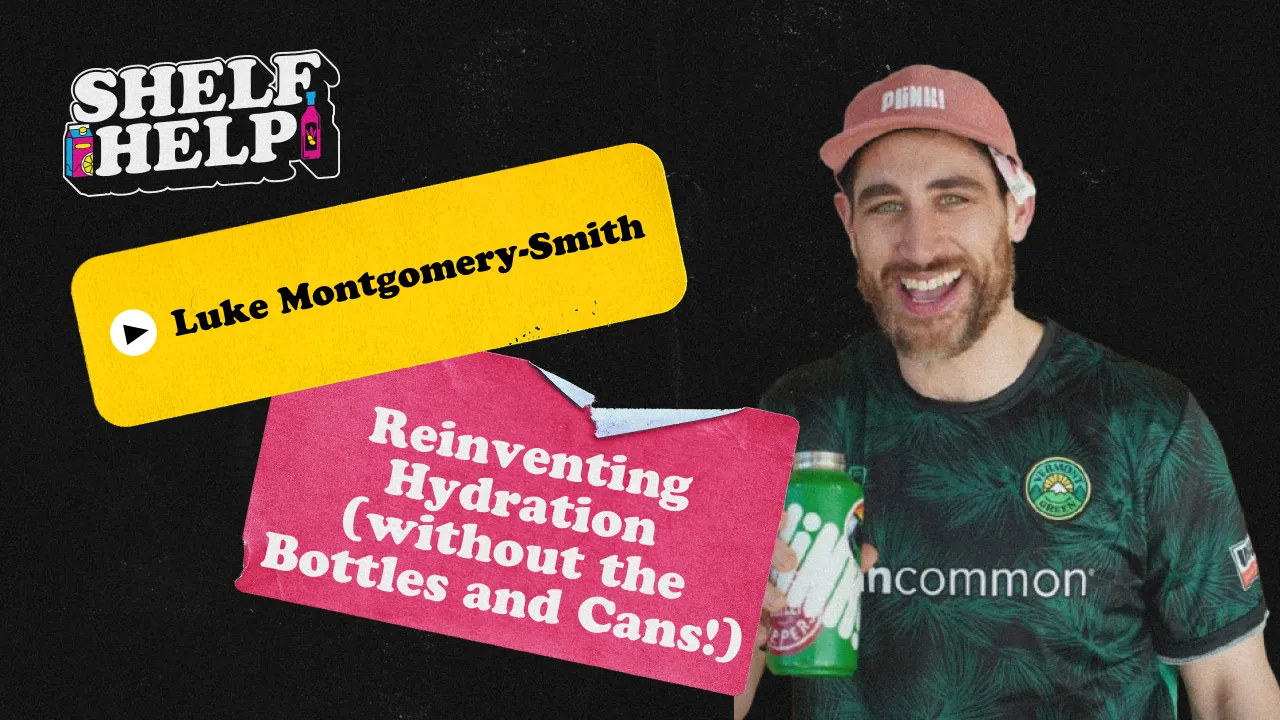
Reinventing Hydration (and Ditching the Bottles and Cans!) | Luke Montgomery-Smith, Plink!



On this episode, we’re joined by Luke Montgomery‑Smith, Co‑founder of Plink!, the effervescent hydration tablet brand that’s rethinking what it means to enjoy a drink without the waste of bottles or cans.
Before launching Plink!, Luke co‑founded Wild Fizz Kombucha, a multi‑award‑winning beverage that saw early success before the pandemic forced a shutdown. Now, as a second‑time founder, he’s bringing those hard‑won lessons into a new category.
Luke dives deep into how he’s building Plink! as a second-time founder, how they nailed a distinct packaging form factor, and how to stand out and win in a crowded market. We explore everything from designing for impulse purchases to the realities of working with retailers like GNC, plus how to scale a demo and sampling strategy.
—---------------
Episode Highlights:
🚀 How second‑time founders approach growth differently
🎯 Standing out in a crowded category with unique positioning
📦 Designing a packaging form factor that drives trial
🎨 Visual identity that sparks curiosity and shelf appeal
🛒 Creating packaging for impulse purchases
🔑 “Trojan Horse” messaging that drives adoption
🛤️ Go‑to‑market strategy and early traction
🏬 Winning at GNC
📈 Retailer velocity expectations and what sets them apart
🥤 Demoing and sampling strategies that convert
—---------------
Table of Contents:
00:52:57 – Plink origin story
03:59:07 – Launching Plink after shutting down Wild Fizz Kombucha
07:25:22 – Learning lessons as a second time founder
09:57:24 – Standing out in a crowded market
13:52:18 – Nailing down a unique packaging form factor
19:26:00 – Visual identity and packaging design
22:43:09 – Designing for the impulse purchase
25:17:01 – Messaging, positioning, “Trojan Horse”
28:19:14 – Go-to-market
31:32:00 – Launching in GNC
35:13:15 – Retailer differences, velocity expectations
37:51:05 – Demos and sampling at scale
—---------------
Links:
Plink! – https://drinkplink.com
Follow Luke on LinkedIn – https://www.linkedin.com/in/lukejms/
Follow Adam on LinkedIn – https://www.linkedin.com/in/adam-martin-steinberg/
For help with CPG production design - packaging and label design, product renders, POS assets, retail media assets, quick-turn sales and marketing assets and all the other work that bogs down creative teams - check out KitPrint.
Episode Transcript
Speaker 1: 00:00
Welcome to Shelf Help. Today we're speaking with Luke Montgomery Smith, who's joining us from Burlington, Vermont. Luke is a co-founder of Plink, a hydration-focused brand focusing on creating joyful hydration via low sugar effervescent electrolyte tablets, which is a cool form factor for this hydration category. Prior to Plink, Luke built Wild Fizz Kombucha, an award-winning UK-based kombucha brand that had gotten to 200 plus doors before having to shut down during the midst of COVID, like in many businesses, unfortunately. But yeah, first off, for the there's a small group of listeners that maybe aren't that familiar with Plink Luke, just to kick us off, maybe just give us a quick lay of the land in terms of origin story, why behind the brand, want to hear about the name, some of the core products you guys offer, and maybe just a few places that uh listeners can get their hands on them and then we'll go from there.
Speaker: 00:53
Yeah, awesome. Thank you, Adam. Uh, thank you for that lovely introduction. I'm excited to chat with you today. Yeah, so Plink. I can't actually take any of the credit for the for the sort of origins of Plink. That all goes to my brilliant co-founder, Max, um, who it's his birthday today. So I'm just gonna say happy birthday, Max, relatedly, because this is coming out whenever it comes out. Um so Max was working in um around the same time that I had founded Wildfisk on Booker and was getting into beverage and tasting, creating delicious drinks. Max was actually working in New York in uh trends and insights, working with Fortune 250 companies, helping them create innovation frameworks for the future. And he was helping, it wasn't just in food and beverage, he was working in sort of government and tech and all sorts of things, but two of the massive macro trends that he was helping companies navigate was all to do with reducing people's reliance on single-use packaging and reductions in carbon emissions. And he'd always wanted to start beverage brands and he'd actually been toying around with a Celts brand, but just flies in the face of those macro trends. And Plink was it was just a lovely 2 a.m. idea, woke up in the middle of the night and it was just like it's Plink, it's a bath bomb, you could you can drink. And it's sort of like that was the idea. He texted a best friend, he's like, it's it's gonna be great, can sustainable, you know, scalable, all of these things. And he just fell back to sleep. And his best friend was just like, that's got legs, let's um look into that. And he had been convinced, trying to get him to do it for a few years. And then, as you said in your intro, I used to have a kombucha brand in the UK, and I had got it to a you know, we were proud of where we got it to, but it was still an early stage business. And when COVID came along, we had to take the difficult decision to either take on a load of debt or shutter the business. And we shuttered the business. And I was telling a friend of mine who was Max's friend, and he was like, I know you've just this has just happened to you, but I've got a friend, you've got to talk to him. He's had this brilliant idea. It's a bath bomb you could drink called Plink. And the friend had actually made a deck for him to like pitch it to me and to try and bring me on. And um, I had just had a product that was short shelf life, chill chain distribution, glass bottles, aluminium cans, shipping it across the UK, exporting it to Europe. I just saw how crazy wasteful the beverage industry is, and there was something really sticky about that idea. They're sort of just tabletized drinks, just add water, bring it, bringing that sort of joy of beverage to life without the waste. So that was the sort of origin story of Plink.
Speaker 1: 03:19
Awesome. That's great. Super, super helpful background. You you you mentioned Wild Fizz. That was gonna be one of my first questions. I know before you built Plink, you built that pretty successful brand or shutting it down during during COVID and a bit of a a similar story, not to go on a tangent, but I co-founded a business in the the regulated cannabis space in the California market. I had a lot of success. I'm running brand our category for a few years in a row, raised a bunch of money, but we ultimately winded down the business as well. And um I just wanted to spend uh just a minute or two touching on that second time founder post-failure journey for others that that may just be in a similar boat. And so it sounds like you got introduced to Max or heard about the idea. I'm curious, did you know you wanted to start another company pretty quickly after shutting down Wild Fizz? Did it take some time? Ponder, did you ponder jumping on board another company when you met Max and heard about the idea? Were you initially apprehensive? And yeah, curious how that what that mindset looked like and from from a journey perspective, let's say.
Speaker: 04:15
Yeah, I mean, for sure, and props on the business that you built. And like obviously, any business is a success in bringing creating something and bringing it to market. I think closing wildfizz really hurt, like was really took us to a really, really dark place. You know, it was a really, really tough period, very short, tough period because we had to like move quickly. But, you know, we had put blood, sweat, and tears into building a we had a, you know, we had a brewery and we had set up our office and we had the little storeroom and we had where you know our young kids, our babies suspended in between the doors where we clean. It was like it was all of our tanks were named. It was fully kombuchery and nicely hippy. And we it was really, really hard. And my yeah, my initial reaction, I I love how in the the beginning intro, I was like, yeah, jump straight back into it. But no, I mean my initial reaction was like, hell no. Like I need to, I just need to get a steady job and just chill for a bit, get my head screwed back on, just give my wife, who was my co-founder in Wild Fizz Kombucha a break, the opportunity to just enjoy parenthood, recover from like the burnout of founder life. But it was COVID. So it was just this totally different time. So it was sort of, I was very fortunate. I actually got a job. But I used to work in events, experiential marketing, which is all meeting people in real life in a festivals or venues. So it all closed down. So we were sitting there at home, stuck behind closed doors on laptops. So I just had time on my hand. And Max's idea was just getting in there and infesting into me. And it was just like, I'm probably the wrong person, uh, but I could do it. Okay, what is it? What is he trying to do? And it was just so I started Googling, you know, this bath bomb you can drink. What is a bath bomb? Okay, a bath bomb is sodium bicarbonate acidic acid in the non-food space as well as in the food space. I was like, okay, it's okay. So sodium bicarbonate acidic acid food. It came up like FFS and tablets was like the fifth search kind of thing. I was like, okay, oh yeah, of course. Baroka is a UK brand that I'd heard of. I was like, it already exists. Okay, that's a good starting point. This isn't a food tech challenge. It's like potentially there is something here. And so I just had it, wasn't like I didn't go like dive in straight away, but I was just chipping away a couple of hours a week to begin with, and then like got a bit into it, and then I realized I was like, okay, I'm not clearly interested in this now. Let's just work and let's and I told my wife, and she was just like, no, you know, she's she's like, that's a really bad idea. And I was like, okay, but I think I really want to do this. You know, you know how fun it was when it was fun. You know, you can remember the feeling that we had. This is what it is. I've got these guys, Max and his friends are like just lovely human beings. They had some good connections to help us make get some introductions to some early investment. I was like, look, babe, we can do this differently. I can pay myself a salary. Let's just try and try and build this a different way. And I can't remember how long that period, whether it was weeks or months. So it took a bit of time to come to dive back in. But um I I did heal some scars first, or like a little bit, and come in definitely with sort of like less fucks given and like less stress about the whole thing compared to Max, who's a first-time founder.
Speaker 1: 07:25
Yeah, totally. You you mentioned a bit about yeah, we're gonna we can approach this differently. We have some investor connections, we can pair ourselves. And that was gonna be my next question in terms of once you decided, yes, I'm gonna do this. What way did you did you approach building Plank just differently versus WildFizz just in terms of being that second time founder and kind of some of those learning lessons that you brought to the table in in round two, let's say?
Speaker: 07:49
Yeah, I mean, I still have lessons to learn, but I think the key thing was, you know, when I really looked at what went wrong with Wildfizz outside of COVID, you know, it was to do with margins and it was to do with, you know, being able to realize actual cash contribution to be able to grow the business. And I think from that's what excited me about Plink from the get-go. I said, okay, this thing is which what the whole electrolyte category is, is you know, sugar and salt, commodity products with taste and storytelling can be sold at a pretty good gross margin. So I was excited by just from the get-go, having a product that could launch with viable gross margins. And then the other thing was I had just been a contract manufacturer by producing the kombucha and kombucha for other brands. A lot of that was processes and cleaning and turning over pumps and changing lines, and it was very production focused, and there's not so much time for the sales and marketing size of the business. And what I remember thinking is 80% production, 20% sales and marketing. It needs to be the other way around to really grow this business. And I saw an opportunity with Plink to go about it in a different way. But originally, you know, created a base formula myself with the help of an original uh sort of guy during COVID that I found that helped me develop a formula, but then took that to a contra manufacturer and knew that I was going to work in a way that was just like, let's do this turnkey, build the brand. Um, I definitely have ambitions for vertical integration, and I really want to get back to the willy wunkiness now that I've sort of had a little bit of time away from it. But that was uh definitely felt like a slightly sort of smarter head on those shoulders to try and get get those things from the get-go.
Speaker 1: 09:35
Yeah, totally. You took you touched on that uh a bit in terms of this hydration electrolyte space being, and you said like a salt, you know, electrolytes and salt are a bit of a commodity. And I think the space seems to have gotten fairly competitive over the past two to three years or so. Um, what was the thought process in terms of how you and Max and the team were thinking about entering this market and how you were thinking about how you wanted to really differentiate Plink in the market?
Speaker: 10:01
Yeah, so honestly, we came about this, we came about the electrolyte and hydration space secondarily to our original goals. Our original goals were really much more willy wonker and like let's create a drink tablet. So let's have all the joy of a Coke or a Fanta or any drink, but without the waste of cans of bottles. So we were trying to really put fizz in a glass without without pressure. That was the concept. And so to create that fizz, the carbon dioxide, you can either force carbonate like all products do and just get carbon dioxide and pump it into the liquid at a low temperature and put a put a lid on it and it will stay carbonated, or you can create carbonic acid in the liquid through a through a beautiful chemical reaction. That's what effervescent tablets are. So sodium bicarbonate and citric acid, the byproduct of which is sodium citrate, so positively charged sodium salts, CO2, the effervescence, and a little bit of access H2O. So it's a lovely bit of clean chemistry. And so we were focusing on that, the middle byproduct, the the CO2, but really that first one, the positively charged sodium salts, is is where the space is. So we actually, when we first first created the initial base formula in Stoke in the north of England, it was just like, let's create the bubbles. And then we learned more that if you add in potassium, it actually helps get the bubbles better, speed up the reative reaction, and give a better performance. And then we started playing, and then you're like, okay, got a couple of electrolytes going on here. And then when we we launched with this quite fuck you, Coca-Cola, stop drinking candle bottle beverages and drink tablets instead, brand platform that was like inspired by sort of punk IPA from brewdog, and just sort of it was quite sort of British in its in its communication, and it landed in so many ways, but it also failed to meet the more American consumer mindset of like what's in it for me. It wasn't quite product positive enough. And as our customers, but because of that, because we were trying to focus on taste, it was it was yummy, it was delicious. People like, wow, you've made you've made my electrolyte taste good. Um, but I still I'm drinking it for the electrolyte properties. So once we learned that with our earlier customers, we went back to the drawing board and reformulated the product and we added magnesium into it, and we got the balance of the sodium, potassium, and the magnesium right, and we made sure that we were sort of focusing on a on a daily hydration moment, but we still brought that sort of passion for taste and the beverage experience. Like I was part of the brief is about the sort of beginning, middle, and end flavor and the organoleptic experience. And if you open a plink, the smell is really lovely, and I thought that was really important, and also not having sediment in the bottom of your glass and having a really clean, like you don't want it to be too viscous, and you want a nice like clarity to the liquid. So we've approached the space to answer the question of like how we're doing it differently. We're sort of coming about it from a totally different point of view. Our point of view is like, let's make a drink in in this form. And that's why we didn't go for powders, which lots of the other guys do. We went for the tablets because we were trying to create a fizzy, a fizzy drink. And then we've realized that the we're like, wow, okay, we're stepping into a really busy space. Like you said, it's sort of there's now a billion dollar juggernaut with liquid IV, and there's these incredible brands that have come in in sports with Element and high hangovers with Waterboy and all over the place. And I think where we where Plink feels that it's sort of uniqueness on is just is about just everyday enjoyment. It's almost like the spindrift of hydration. Eventually, we want to just have flavor palettes just for everyone in the family to really enjoy and feel something that you consume as many of our customers and I definitely do, you know, multiple Plinks per day in a way that you you could with a LaCroix or a Spindrift, but without the guilt of that can going in your blue recycling bin.
Speaker 1: 13:46
Yeah, totally. That's really helpful. On that topic of product development, I think one thing that I read was it's it sounded like it was a bit of a challenge to find a co-packer that was willing to package the tablets and anything other than those, what I think is what everyone would is kind of the default are those plastic tubes versus your individual sachets. And I'm kind of curious, I guess first off, just is it what do those sachet specs look like? And I think it sounded like you had to play around with it a bit because these tablets can be pretty sensitive from like a moisture standpoint or shelf life. I can't remember exactly what it was, but what are those, what are the specs of these sachets look like? And what did that process kind of get to that packaging form factor that you knew was going to be stable, let's say?
Speaker: 14:28
Yeah, so I suppose the dream pre-product innovation was almost like a lush bath bomb. Yeah, I don't know if you know the brand Lush. It's uh it's like an eco-friendly homeware brand that does soaps and dry shampoo and dry conditioner, and it does these bath bombs that sit in these beautiful retail spaces with zero packaging piled up high that you can just come and grab one and put it in your paper bag and take it home. And I think our dream originally was like packaging free. Um, and it was definitely fully, you know, shoes off sustainability, trying to do it, you know, touching feet in the ground. And when we learned about the realism of the volatility of effervescent tablets, we learned why they're in plastic tubes with desiccants in the lid and the challenge that we were up against. So when we called up during COVID, all of these contra manufacturers and we're like, we got this concept for an effervescent tablet without plastic. Fortunately, some people gave us the time of day to go, it's not possible. You know, sorry about that. Most people were just like, most people obviously you can't get through to, and that's just fine. And then certain people, there was one team in Europe that actually were like, Yeah, we're interested in this space. And that's where we first started. And we were like, okay, we're gonna have to, they didn't have a way of doing it, but they had uh ESG goals and they were not hitting them because they make everything in a plastic tube with a, you know, all of this with a plastic lid with a desk in it, and they were really excited by it. But COVID just kept dragging. And in Europe, those plastic tubes are predominantly for selling vitamins and vitamin sales went through the roof, and they were like, look, if we're gonna do something like this, you need to pony up 500,000 euros because we it's an RD project all of a sudden, not a production project. Um, so then so we're like deflated and like, okay, all right, back to the drawing board, start again. And eventually we found someone in the US that wanted to explore it with us, but still it's it's never been scaled in the packaging that we have. So there are some challenges with it. It's an aluminium foil, is the barrier property, but it does contain uh an LDP liner because it's an aluminium and it's a food safe in the same way that every Coke can aluminium has a plastic liner to it. So it's sort of, and that really for me, there was a point where I was like, am I gonna do this? I don't know if I am, it's putting a load more plastic into the world at a time when I fully understand that we ought not to be doing that. But I spoke with advisors and people in the sustainability field, and I think you know, they were right, it's better. It's we got the stats, it's better to have, you know, one little tablet's worth than a whole bottle's worth, and it's better to use aluminium foil than a plastic tube. So we were buoyed by that. It's even within that, so it so it we're pretty happy with with where we got to in terms of from a sustainability and uh and a packaging protection standpoint. It's a it's an aluminium foil. There are some challenges with it. We've seen like if it were to go in a container ship across to Australia as it currently is, like it would cook in the aluminium, the heat, it wouldn't be able to cope. Whereas in the plastic, it wouldn't just keep generating more heat. You might be able to it to be slightly stronger. So yeah, it's it's uh it's a fun, it's been a really fun challenge. And at the moment, it's all hand-packed into the boxes, and it's something that we're working on to try and improve that as we scale.
Speaker 1: 17:35
Yeah. So it sounds like this kopac you're working with, they didn't have this capability to package these tablets in the in these sachets versus the the plastic tubes. Did they have to did you have to convince them or did they have to buy any new equipment to be able to work with this specific form factor? Are they also just packing the the tablets in the pouches uh by hand right now until it gets to the scale where investing in some automation makes sense?
Speaker: 18:01
No, what's really interesting is in Fvescent tablets, almost all of the factories do actually do some version of this, because for samples, to just send out single serves just on a smaller line. So on the non-automated lines. What's amazing about FSN tablet lines is they are predominantly 100% fully automated from going in the blender to being put in that sort of cardboard tube after it's been packed into the plastic tube. Sorry, the cardboard box after the plastic tube is just 100% touch-free, which is obviously why everything is as it is. It's fully automated in the plastic tubes, which is like it's just I was what's amazing about FFS and tablets is the technology's been going for well over a hundred years at this point. So they are this a sort of fully understand why every co-man was going, just put it in a tube, dude. Just wrap the tube, you know, put your brand on the thing. And I think we're I'm really glad that we held strong on that and we're now building a great relationship and hoping to show more brands that there are different ways to do it and bring bring joy to a category that has maybe got a little bit of stale that has so many legs, uh, so much legs. And I'm really excited about effervescent tablets as a platform in general. Yeah.
Speaker 1: 19:14
Yeah, I definitely think uh that's one way to really differentiate in a in a competitive space is actually having a different form factor, packaging form factor combination of the two. So I think super smart from that perspective too. On that topic of the packaging stuff and the actual packaging design standpoint, from a visual identity standpoint, what were some of those key variables that were top of mind for you guys? And another way to maybe look at it, what were the key things included in the brief with whomever you worked with, whether it was an agency or freelancer or someone internally or whatnot?
Speaker: 19:43
Yeah, I think this is one of the areas where hindsight is wonderful in 2020 vision. And we made a load of mistakes, and I'm glad we did in many ways, but I also now know I would think about things slightly differently because we were coming at this as a beverage, and we really wanted to distance ourselves from supplements, and we were excited by different, and we were excited by unique in a way that we maybe were already different and unique by having the single serve. So when we actually launched originally in direct to consumer, the brand platform was really all about joy and it wasn't about electrolytes or hydration at all. So it was just color and it was popping, and we got really excited. The the initial run, they were on six sheets, so they weren't single tabs, they were six of them together, and it was like the size of an envelope. So we were like sort of excited by the sort of scales like software, like you could send it in like an ALL postcard around the country, and we had it in these boxes that fit through letterboxes, and it was it was all about creating joy and having it having a nice beverage moment, and it was less about messaging hierarchy and getting things right for retail. And it was working with an incredible team that are part of the Plink family and have been part of us from the from the whole get-go, but we got the brief slightly wrong. And then we so after we launched and we started learning from our customers, you know, you have created this delicious hydration moment. That's what you are, you're a hydration product. We, you know, we went back and we started studying Noon and Liquid IV and the players that were in the space, and but we still really, really wanted so much more difference. You know, our box on the pack, we were taking cues from beverage still. At the time, it was a tea dispenser that had a tear-open thing, and you would take one from the bottom. Um, and we were still, it was all around joy and joyful hydration. We were still not really shouting the product packaging point of view, but I think everything that we do at Plink is all of is is very emotionally driven. And now it is we have much more data informing us making better packaging decisions. But I think it I'm so all the things is almost like, what did we want to do? You know, we put the emboss on the on the pack because it makes people feel something when they pick it up. And you know, we had um we also had some UV spot vibes. Because it makes people feel something when they when they hold the packaging, and it was like really important getting like we did spend so much time on our PMS colours and making sure that they were the colours that we felt were right for us and trying to trying to get that right. And we still make mistakes on that. You know, our yellow was slightly too light, and yellow and white is like a cardinal sin. And there's all these things that we're learning so much more about. But um, I think for us, we're really excited about bringing joy into people's lives, and that comes from both just a delicious hydration experience that helps people feel good. And people do feel better when they plink, but it's also just when they open the door in their pantry or they have it on the countertop because it looks nice, you know, how our box is part of that, bringing joy to our customers.
Speaker 1: 22:43
Yeah. The packaging form factor you have in terms of the single serving, the SKU sizes as well, seems like that's pretty optimized for impulse purchases at the register. Is that something you had in mind from the beginning? I was like, we want this to be able to be this, you know, you know, single serve, lower price point, impulse purchase buyer. Just kind of did that you guys come to that conclusion over time as you were developing this product, or was that really the thought from the get-go?
Speaker: 23:08
Again, it was predominantly because we were a drink, right? You don't you don't always want to buy a multipack, you want to be able to just pick one up. But we also, uh as a beverage brand, we also knew that it was all about sips to lips. It's a sips-to-lips game. It's like, how can you get the product in people's hands as cheaply as possible? And if you can do break-even marketing or even revenue-generating marketing, that's what these single serves were all about. So we, as soon as we entered retail and saw that that was our sort of competitive advantage over a noon or something, is that they're in a tube and we've got the single serve, we really pushed that with the retailers. And there's something quite money brick about hydration. It's really compact, it's easy, and it is something that is an impulse purchase now by the cash registers. And it's been a huge, we've definitely, as soon as we entered retail, geared towards that, and we created a box, which was our bodega box, which gave you like a nice open top single serve so you can pick it up. And our early retailers, we had this incredible champion, a guy called um Ian at Healthy Living in in Burlington, Vermont, who gave us a chance. And he originally was taking our lead because he was like, Tell us your brand story, where do you want to be placed? And we're like, We're take changing the beverage game, put us you know next to water and they'll pick us instead. So we were like next to like Topacico and Seltzers and things, and because we had a following, people were picking us up in in Vermont, but it's only a couple of stores. But he was like, Why don't we try putting you by noon and buy the other products over there? And and we moved, and so he was no longer really the buyer for us because it was moving us into a supplement space and he was the beverage buyer, but he just helped us do that, and then he gave us the positions on the cash register and helped us really find our fee. And then as soon as we had that data that showed, in essence, when you put when you have the single serve out, it converts to multi-pack purchases, and that's what the data showed us. It said when you put us out in the cash registers, for sales grow really quickly, and then people find the multi-packs, and then the sort of single serves die down as the multi-packs grow. And we used that tactic in City Market, which was another Vermont-based um awesome co-op as well, and got some incredible data from there that that really helped uh give us the wings to sort of spread out regionally.
Speaker 1: 25:14
Yeah, that makes a lot of sense. From a messaging positioning standpoint, there's this concept that this Fred Hart is a well-known designer in the CBG space, may or may not have heard of him, but he's uh I've heard him talk about this concept called Trojan horse positioning, where it's basically like the area is essentially brands should focus their messaging on what matters to consumers most, even if it maybe is not what makes the brand unique. So I think one example he talked about was Chetty's, for example. They originally were focusing on talking about regenerative cheese, and then they shifted to more of like an appetite division, an appetite-driven approach. I know you guys have had a pretty big focus on sustainability, but it seemed like you lead with flavor. So I'm curious, how does this concept resonate with you? Do you guys take a similar approach?
Speaker: 25:58
Yeah, uh, yes, I'd say we do. And I I know Fred, I've met him a couple of times, think he's a great dude. We and that we struggled with that, to be honest, originally, because we were so focused on sustainability as our sort of it was so it was like we had three brand pillars. It was like easy sustainability um or two, and what and the other one was sort of like joyful wellness, like accessible wellness. And I think we were really pushing sustainability in so many more ways from like on our socials and in our messaging because it felt like important to us. And when we realized it, that was almost like it's not even it's kind of post-purchase now in many ways. It is still side of pack, but it's come, it's the sort of smug glow that you get when you receive the email afterwards going, oh yeah, by the way, it's 1% for the planet, and we've got our sustainability things and you've helped, you know, keep plastics out of the ocean. But really, that I think it's about learning what the customer wants, right? And it was daily hydration and great tasting hydration is what they keep telling us they come back back for. And we're continually getting better at that. I think, I think, I don't think we're definitely, it doesn't feel like we've yet mastered that, but I think that we're we're growing into that space. And I I really like the sort of at the beverage forum, the chair, the curriculum Dr. Pepper chairman said, you know, have the confidence to sell consumers what they want. And I think that that's really so many sustainable or impact-driven founders that want to make the world a better place are really driven by the impact that their business can have. But at the at the heart, a customer wants to buy something, and it's not because of the brand in general, it's because of the product attributes and it's because of the feeling, and it's because of the whatever the active ingredient is, or whatever it is, it's because of the experience that they'll have. And I think that's the that really hit home to me. And it's something that we've since then been like really clear on with all of our ads and bits and pieces, and it's starting to it, it's converting well to just being like, this is what our customers say, this is what it is, you know, and just keep it simple.
Speaker 1: 27:54
Totally. Yeah, I mean, it typically takes you don't uh have the right message right away. It typically takes a while to hone it in and iterate over time. From a go-to-market standpoint, sounded like you focus on D2C for longer than you may have liked, resisting the urge expanding to retail quickly, which it seemed like that benefited in the long run. In what way did it feel like waiting helped create a bit of an on-ramp for success at retail, whether it's having more data to use when you're pitching retailers or maybe something beyond that?
Speaker: 28:20
Oh yeah, no, kind of kind of the flip of that actually. So what happened is we launched D2C in 2022, and we because we didn't get that quite value proposition quite right, and we knew that we didn't want to do all that testing with paid ads and we couldn't, and we wanted to do it organically, but we also wanted to like find growth. So we actually went to, we almost did like a geo-fenced. We were like, we're both in Burlington Vermont, we're just gonna not leave Vermont for 12 months, and we're gonna test, tweak, iterate, learn, grow as well. So we actually did our sort of initial testing IRL in retail, and it was in those two stores, Healthy Living and City Market, really, four, four stores, small chains, and a number of other stores across across the state. But we we went through like four or five packaging iterations, pricing changes, it led to a formula change. It was we did all of that learning in that in that sort of 12-month period, and we learned, you know, we got some really phenomenal cash register data that showed that we could outsell liquid IV and outsell noon. And we got some really incredible consumer data that led us to to reformulate the product and get a and bring a better product to the market and sort of improve our pricing higher structure. But what it also was, it was it was in Vermont and we just Vermont's a beautiful, incredible home state, but it's it's it wasn't really giving us the growth outside of Burlington. So it was almost so we actually then took that data and we're like, we've gotta we gotta bust out this beautiful green green mountain and and go and and spread the word. So we actually were almost like retail first in many ways, even though we had launched E to C, I'd definitely say that we had a retail first strategy. And it's only been in the last sort of six months, really, that we've really started spending any money online to acquire customers and really hone in on that experience. And that's been in many ways just like so different to when we did it at launch because we've we've got so much data behind us. We have customers with real loyalty, we have people that have just been subscribing now for over two years and consume Blink on the Daily, who have given us so much information about you know why, why they're doing that and why they love it. So we're now just sort of reigniting a sort of we're very broadly omnichannel, Amazon, and our direct-to-consumer experience and and retail. So it's it was maybe backwards actually. Many brands go all D2C first and then find their way into retail, maybe with more ease or maybe not with Maurice. I think the interesting thing is that there's no there's no right path. I think it is talking to a founder a couple of days ago, survive in advance was his phrase. You know, that's what it's all about.
Speaker 1: 30:49
Yep, I 100% agree with that. Following along on that that retail track, uh, I know you had a fun journey getting into into GNC. I know you broke this journey down in a fair amount of detail on the, I think it's on the startup CPG positive. So we don't want to dive into too much detail and reshafts that all thing, but I am curious in terms of it. Sounds like as part of that program, at least what I read, you can correct me if I'm wrong, but they offered a lot of really helpful training and insights in terms of how you should do forecasting correctly, even like really nitty-gritty stuff like pallet specs and other like important logistics variables. So I'm just curious for other early stage founders that are listening that are a little ways behind you guys, what were to say, two to three things you learned that have feel like have had the biggest impact on the business?
Speaker: 31:32
Yeah, I mean, of the GNC experience, yeah. I mean, really surprisingly positive with the GNC team. And surprisingly, because they're a big business, you wouldn't expect them to give you the time of the day. And I think it came down to how well the deal was brokered with startup CPG. I'm not sure. But yeah, I think we were all early stage, some of us slightly earlier than the Plink, some of us a little bit further down the road. And they, it was like a definitely not a boot camp, but just a real lovely onboarding process where um I think you know they opened our eyes to the mistakes that can be made and the things that you can be tripped up on. And I'm really grateful for them. You know, we we chose to and we weren't forced to, but like strongly advised to to onboard with SPS so that we could like grow up some of our back-end capabilities and the ordering and invoicing processes could be done more seamlessly. And yeah, we just it was definitely a uh a good growth and learning opportunity every day, right? Is going back to school and back to college. And it was probably like a six or eight week process once we got got the listing before we started shipping out to their distribution centers. And because they're self-distributed as well, it's obviously the nuance is very much solely for GNC. I'd say like the two the two bits advice that was sort of most helpful, I suppose, was one, I suppose it sort of humanized the buyer of a big retailer in a way that I hadn't before. And now I feel more comfortable reaching out to those guys and asking a question. There's sort of no question is too silly, and if they're not busy, that if they're too busy, they won't respond. But if they're not too busy, they'll respond and get get you an answer straight away, and just sort of like leveling the playing field of small brand and big business actually all after the same thing, which is a great experience for the consumer. So that's sort of one thing that was great, and then the other thing was just I suppose just always shoot your shot because we weren't really you've got to go for that. GNC probably wasn't like necessarily exactly where we thought it would come in from a timing perspective, but uh it was a pitch competition. So the second thing, just like shoot shoot your shot. It came from a uh came from a pitch competition that we weren't necessarily going for, and just we went for it and we got it and we landed an opportunity, and it's definitely helped grease the wheels with other retailers, it definitely helped with investors, it helps with just some of the various doors that you've got to get through in this game.
Speaker 1: 33:45
Yeah. What uh I think I also read GNC had some pretty specific velocity benchmarks that they wanted to see you hit. I'm curious what what did those look like in terms of the key metrics that they were they were looking for?
Speaker: 33:57
Yeah, so it was interesting in the startup CPG set, they didn't really have them, which was one of the reasons that but then when we got it, which was an interesting sort of missing element. But then when we sort of graduated into the main set, it was like the main reason to be moved into the hydration set, out of the startup CPG set, is that they then did have the benchmarks and they did have the other brands that they needed to meet. Um, and I think that that's one of the challenges in general, not just in GNC, with lots of stores when they try innovation sets, is that the innovation set is cross-category, multi-categories, and they don't really there isn't like a middle benchmark that they can work towards. Yeah. But uh, yeah, it's interesting. The benchmarking, I was talking to another founder yesterday about this. I think every every buyer wants the benchmarks to be greater than what their average sales are. So it's a kind of interesting thing where they're like trying to bring like fresh juice to the category. And you know, we're we're still a small brand without a huge marketing budget. They all want the benchmarks, right? They want to make money.
Speaker 1: 35:00
Right, of course. For um for the founders of fast-growing up-and-coming brands, they're just starting to get on shelf. What what would you say? What have you learned as now you're I think you're on the shelf in CVS and I'm sure a bunch of other retailers, and what what have you found are the key differences in terms of selling and and sell through at supplement focused stores, whether it's a GNC or vitamin shop versus you know your your CVSs or Walmarts or Targets or whatnot?
Speaker: 35:26
Yeah, it's a but I think I'd say the thing that is that any founder ought to do is like come in with your eyes wide open that there is that is a those things that you mentioned is a broad church, and they all have wildly different velocities. Yeah. Over 10 to 20 times different velocity expectations across whether it's be drug to mass and grocery and natural. And I think the most important thing is to know who you are and what you are and what you'll be benchmarked against. And when we first launched, we were benchmarking ourselves against beverages. The turns in beverage are rapid, and the turns in supplement are less so because you're buying a multi-pack, firstly, you know, and generally more than a week's worth in that multi-pack. So it's it was actually quite disheartening for us at the beginning because we were we had we weren't benchmarking ourselves appropriately. And we were, and when we got some data that sort of made it made us feel that we were closer to beverage benchmarks, we were like really caught, like hooked onto that data and was really excited by it, as opposed to really delving into why that was happening and why that was in a specific short window and what our sort of more nationally average benchmarks would be in that space. So I think the key is like if you know if you effectively benchmark yourself, then you can do a much better job. And I think it's easier and easier and easier now that more and more data is is sort of getting readily available for that. But I would um but every channel, every channel has its upside and its downside in that sense. That the the ones with the great velocities, they have expectations for promos and and paying for end caps and paying for just advertising space, you know, internally. So yeah. I think there's there's no there's no one channel that's better than the others in the supplement space.
Speaker 1: 37:11
Yeah, for sure, totally. I and one thing I know in retail, whether it's the supplement space or any other retail environment, it definitely seems like the demos and and sampling are are a pretty big important piece of a moving product off the shelf and really driving velocity. I'm from curious, what is what's your guys' experience been on this demo sampling side of things and what's kind of been your strategy there? And assuming it has been part of the strategy as as you guys continue to scale and get into a lot more doors, what's your thought process in terms of how you're able to going to be able to scale that demo? Let's just say you're in a few hundred doors now, just say you're getting to 20,000 doors, what does that look like and shouldn't be able to scale that demo strategy, let's say?
Speaker: 37:51
Yeah, I think demoing is the single most important thing that you can do in your business is getting people to try the product. If you if you back your product, you want more people to try. If they try it, they'll love it. So we try to do what is as unscalable as possible, which is that Max and I try and fly out to every single store that we small chain that we do. We can't do all the independence, but in as many areas as we can and do demo tours and just go out there and meet customers in the store. It means that we can confidently drag people over from all over the place in a way that a demo staff wouldn't necessarily be able to do and sort of question someone's decisions on the shelf because we're, you know, knowledgeable on the space and really help educate customers. And we try and do that as much as possible. So just physically put the founders in front of the customers in the store and have those conversations. Obviously, that is totally unscalable and doesn't really work. Already we're like at the edge of what works with there. And so so we're just trying to find the right partners now in in in different regions to help with the sampling. And we've just launched um a sort of quite broadly distribution in in United supermarkets in Texas and in Bristol Farms in uh Southern California. And I'm gonna be doing tours in both of those spaces, but also trying to find partners for those regions that to help us move products. And then the other thing at the sort of the next edge of the scale is you can't do physical sampling at that scale. You have to you have to do things digitally. So we we're gonna find sampling crew to help us in the regions, but that the next stage of that, when you're going from hundreds of stores and to thousands of stores, which we've already just done into CVS, right? 1200 stores just under, it's like it's impossible to put people in those stores. So we have to look at digital solutions for sampling. So whether that is working with someone like Westock or someone like IELT, and we're we're working with WeStock at the moment and doing some couponing and rebates to get people into the stores, but we're also looking at other non-traditional ways of like HelloFresh doing a sampling campaign with them or other areas and other events and partnerships that we can do to get product into more people's hands. And then obviously, on a digital world, there's affiliates and influencer marketing and getting products in as many people's hands as possible and referrals and discount codes. And I think that's our biggest challenge is like how do you give out as many products as cheaply as possible at scale? I think I love Red Bull as the sort of gold standard for this, driving around in their cars with the giant can on the back, the Red Bull wings, all the university students. Just like when I used to work in experiential marketing and we did stuff for Red Bull and we did stuff for Innocent in the UK, it was always like, how cheaply can you give away and how quickly can you give away X amount of samples in a high footfall area where we have good distribution? So it's like you can't do it until you have the distribution. But once you have the distribution, it's just like just put it out there, guys. Trust that you'll attract your customers by sharing it with them.
Speaker 1: 40:44
It's a harder thing to scale, but it seems to always be worth the investment pretty much.
Speaker: 40:48
But I think it is, yeah, and uh but also it is is why these things are hard to scale. That's why CPG takes a generation, because you've got to build capacity and you've got to build the budget and you've got to be able to give away 20% of that production run to sampling, and you've got to find the the margin elsewhere in the business to be able to sample effectively.
Speaker 1: 41:06
Yep, totally. Last question for you. Fun question. If you had to put your say you had to put your life savings on the line, what's one prediction you might make about the CBG space?
Speaker: 41:16
Putting all my life savings onto one thing. I think uh if it was a quick turnaround, I'd put all my life savings on a quick win, is that people are still going to be consuming protein.
Speaker 1: 41:25
Um I think that's definitely yeah, I don't know.
Speaker: 41:28
I feel that um I think and I I would hope that we are really waking up to that not all of CPG historically has been about creating food and drink products, it's about maximizing profits. And this is definitely not putting my life savings, but my hope is that this sort of the change with these getting petroleum products out of kids' products and things is just the hope is that food and drink come back. The solution is not in food science, the solution is in our soils, it's in food, it's in community and sharing. And in the short term, that's not what's winning. And I would bet all my money that it's not about to win in the short term. But in the long term, more and more founders are admitting to it, more and more people are admitting to it. I just like we've just got to wake up and we are we are gardeners of this earth, and we just gotta plant it. There you go.
Speaker 1: 42:20
I love that. Told them the same page there.
Speaker: 42:22
Okay, nice.
Speaker 1: 42:23
Awesome. Really appreciate the time. A lot of great insights here with you.
Speaker: 42:26
So much.
Speaker 1: 42:26
Um, where's the best place to follow along with you? And then also, where's the best place to follow along with Plink as well?
Speaker: 42:32
Yeah, and uh sort of on top of that, is like the best place to buy Plink if you would like to give it a try, is we're available nationwide on uh drinkplink.com. I think there might be um a lovely free shipping discount for a little period at the moment. And we're also available nationwide on Amazon and we're in uh select, CVS, and GNC stores as we've discussed, and in natural stores across the country. I'd love it if you want to chat anything electrolytes, just hit me up on LinkedIn. It's Luke Montgomery Smith. Give us a follow on DrinkPlink on Instagram, Facebook, TikTok. Um, and I'd love to connect with any of you guys. Perfect. Awesome. That's the pod. Peace, Adam.
.svg)