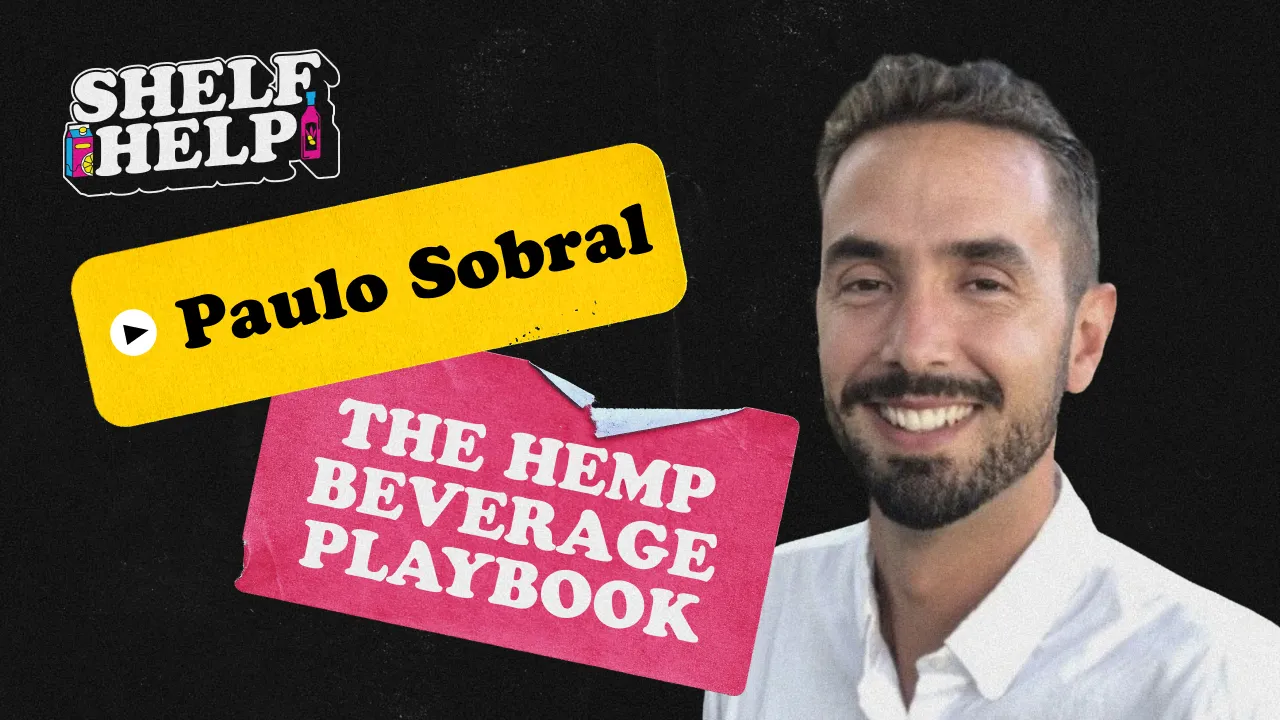



On this episode, we’re joined by Paulo Lacerda Sobral, the CEO of Lolli Soda - classic soda, remixed with cannabis. Lolli focuses on legacy flavors like Cherry Cola, Grape Soda, and Orange Soda.
Paulo honed his beverage chops at big names like PepsiCo and Sierra Nevada Brewing before diving into the cannabis beverage space.
He brings deep expertise in beverage manufacturing, distribution strategy, and regulatory navigation - plus a clear-eyed take on what it’s really going to take to make THC drinks go mainstream.
Paulo shares what inspired the creation of Lolli, why he isn’t trying to disrupt soda, and the future of cannabis beverages in retail. We talk through the real costs behind hemp beverage ops and why so many brands fail to focus on quality.
—---------------
Episode Highlights:
🥤 Why Lolli is “classics remixed,” not wellness-forward
🏭 Lessons from Pepsi and Sierra Nevada in scaling ops
🌱 The challenge of THC beverage regulation state-by-state
💸 Real talk: tolling costs, margins, and cold-chain myths
🛒 Why convenience stores are a sleeping giant for cannabis
📦 The importance of shelf stability and flavor-first development
🧠 Navigating burnout and founder identity in the cannabis world
📈 How to get distributors and retailers to actually care
🎯 Why beverages require IRL sampling, not just DTC funnels
—---------------
Table of Contents:
00:00 – Intro & Texas hemp regulation discussion
03:00 – What inspired Lolli + Paulo’s journey from Pepsi to pot
07:00 – The state of cannabis and hemp beverage
13:00 – “Traditional” beverage vs cannabis and hemp beverage
17:00 – What makes a great THC soda (formulation + flavor)
19:10 – C-stores
23:19 – The on-premise channel
24:45 – DTC
30:00 – Who should your first hire be in cannabis and hemp beverage?
—---------------
Links:
Lolli - https://www.drinklolli.com
Follow Paulo on LinkedIn – https://www.linkedin.com/in/paulo-l-sobral/
Follow me on LinkedIn – https://www.linkedin.com/in/adam-martin-steinberg/
For help with CPG production design - packaging and label design, product renders, POS assets, retail media assets, quick-turn sales and marketing assets and all the other work that bogs down creative teams - check out KitPrint.
Episode Transcript
Speaker: 00:00
You see like Texas is doing that, and then I've seen like a lot of headlines at the federal level is that it's a lot of positive news, so I don't really know I don't know what to believe. I mean, you know much better than I do. What's your take?
Speaker 1: 00:13
You know, I think Texas was a big one because he went against his own lieutenant governor. Yeah. The feds, I have no freaking idea. I'm not trying trying to be smart on it, because like I I kinda like being ignorant because then that way you know you're just kind of living in the moment, so that's the way I'm taking it right.
Speaker: 00:32
I think that's a good approach. That's all you can do, I guess, right now, right? So what's the latest is like there's gonna be like some sort of special legislative session, like in the month, a month or two. And that is this like does that mean this is the only topic to be discussed essentially? Is that what that means?
Speaker 1: 00:46
I don't know. I haven't gone deep enough to find out. Um, Texas goes into um session every two years. So I don't know what other bills he vetoed. Uh, I don't know if those are included in it, but yeah, it's it's we're not gonna expect it to be the free-for-all open market like it was. But beverages, low dose beverages are the safest thing when it comes to uh talking about.
Speaker: 01:07
And I also wonder like what how are they defining THC? You know, is it THCA, T Delta 9, Delta 8? Like, what are they what do they even did they specify that in that bill?
Speaker 1: 01:19
Uh well the bad the bill was that any form of THC was banned. Not non-detext, basically. Got it. So they're gonna allow some level of THC. Now they're gonna probably cap it. It's gonna be about form factors. What type of like to get a hemp permit, you just need to pay like 200 bucks, no background check. And they rated some of these like smoke shops because they were selling stuff aboard above 0.3%. But yeah, I think synthetic cannabinoids are gone, and this is just my thinking here. I think synthetic cannabinoids are gone. I think THCA flowers are gone, I think inhalable voliform are gone, but we'll see. I don't have no idea.
Speaker: 01:57
I'm not I'm not that opposed to like HHC and some of these weird synthetic ones. I don't know. I've never tried those. I've I haven't heard the good, I haven't heard good things, I'll say that.
Speaker 1: 02:06
They only exist because to get around these loopholes because it's cheaper to make than deriving it from other liquor, which is how we make our drinks. So I'm I'm fine.
Speaker: 02:14
Yeah, totally. All right, well, yeah, busy weep. Well, uh hopefully this will be a bit of a bit of a break. All right, welcome to Shelf Help. Today we're speaking with Paolo Sabral, who is the CEO of Lolly Soda, joining us in the Bay Area. For those of you that don't know, Lolly is a classic soda remix with cannabis that focuses on legacy flavors like your cherry colas, grape sodas, orange sodas. Super exciting time in the cannabis and hemp beverage space right now, to say the least, especially a lot of the stuff going on this week, too, which we may jump into. Um before that, Paolo spent a good chunk of his career at Pepsi and Sierra Nevada, as well as some other players in the cannabis and hemp beverage space, like a Vertosa and can. So got really a lot of context, a lot of good experience in both this cannabis and hemp space as well as traditional CPG beverage. Excited to get into it. So, first off, Paolo, just to start off, just for the people that aren't that familiar with with Lolly, give us just kind of a quick lay of the land in terms of origin story, why behind the brand, core flavors, products you guys offer, and then just a few places, core places where people can get their hands in them, and then we'll we'll go from there.
Speaker 1: 03:25
Yeah, for sure. So, first of all, great to be here. Uh, appreciate going over my background. As you can tell, I've been a big beverage, early cannabis companies, and cannabis beverages. But for the last six years, I've been narrowly focused on this category. So I've had a pretty good view of the landscape, I'd say. And I think what we were missing was a soda in the market that looked like a soda first and foremost. So we're definitely not the first cannabis soda. Many starting dispensaries. We got Keith Cola. Uh, they were a kind of mine when I was at Vertosa, Cantrip, CQ, Wheat Justice, Green Nunky, which both start in the Canadian market. And I still think a lot of them, because they start in dispensaries, might look like cannabis products first. So I always differentiate. There's cannabis products, and then there's products that have cannabis in it. And to me, beverage has more mainstream potential if it's cannabis is treated as an ingredient rather than the star. So we wanted something that looked and tasted like a premium craft soda first, and then it also just happened to get you high. So obviously, there's a lot of uh uh traction with Poppy, Olipop, these brands. They're definitely premium craft sodas. They're promoting some type of functionality, in their case, gut health. So we are, again, a premium craft soda that people love. They love the flavor of it, they love the mouthfeel of it. And then our functionality is that euphoric ingredient that we all know and love. Um, something else that we do different than a lot of the products you see in the market is how we position it. So a lot of them lean into wellness, Sea Alternatives, or they're very cannabis culture forward. We're just a fun soda, and that also tells people drink what you want, do what you want, which is kind of going against a lot of the current trends of being more towards wellness. People still like their indulgences, they still like their vice. It shouldn't be something you're drinking all day, every day, and it's usually not for most of our consumers. It's just a little break and a little bit of fun in your day. And for my time at Pepsi, you know, we learned everyone loves soda. So these flavors are already known and loved. It just adds to THC. So that brings easier trial for consumers, distributors, retailers to pick it up. And the team that started Lot League, they've been Canbridge's cannabis beverages for about five years now. I met them very early in 2020 when I was still working at Bertosa. And a year later, they launched a high-end cannabis spirit called Pamos in the California Dispensary Channel, which you know very well has its share of beverages, the challenges with beverage adoption, amongst other things. And so Pamos made the wisest decision to pivot to hemp a couple years ago. I stayed in touch with them throughout the years. And when I was at Sierra Nevada Brewing, I was the head of the uh business development for the Copac division. We built a massive pipeline of hemp beverage brands lining up to work with us. And California banned hemp derived THC in September of last year. So not only was I gonna have to rebuild some of that pipeline, but I was ignoring my ambitions to make this a massive category. So with my connections, knowledge and experience in this cannabis beverage space, I just basically didn't want to live with regrets 20 years from now if I didn't make a move soon. Uh so I reconnected with the Palmos team. They told me about the concept, and they were about three months from launch at the time, so I jumped at the chance to go for it and leave that launch as their initial go-to-market strategist and CEO.
Speaker: 06:35
How you describe it, this beverage space or beverages that use THCs as an ingredient, whether in the regulated THC space or the hemp hemp space, definitely garning a garning garnering a lot of attention right now. At the same time, it feels like there aren't that many people that really have a lot of experience in the space. It feels like there's only so many people that have more than what feels like five minutes. And you're definitely one of those. So just in terms of where we are today, I guess just the king's off, yeah. Where are we, where are we today? And then why does it feel like things are all of a sudden exploding? It might be in reality, it's a 10-year journey, and all of a sudden people are paying a lot of attention to it. But yeah, where we are today, and why do you feel like it feels like things are exploding, at least to an outsider, let's say.
Speaker 1: 07:19
It's definitely been that long for cannabis beverages. Ten years ago, they did exist in the dispensary channel. But you know, until companies like Virtosa came around, there's issues with stability, with the THC ingredient being and maintaining potency over time. As you know, back then third-party lab testing wasn't even required with the medical regulations. But I I think now we're actually arrived as a legitimate category. I just had lunch with our with our software provider for our CRM, and they're they're a legitimate software provider for the alcohol industry, and they're getting ready to report category data. Nielsen is starting to report category data. So, how we've arrived at a uh as a really established beverage category, I say it started first with the US Dave Farm Bill in 2018. And as you probably know, that permitted hemp cultivation domestically. And many people, including myself, believe the Department of Agriculture intended to permit rope and not dope, as they say. So we wanted to source hemp domestically to make hemp protein power, hemp seeds, hemp fibers, you name it. There was a little bit of talk about CVD and topical applications, but for the most part, they were not looking at cannabinoids when they were permitting hemp. They were looking for another crop that farmers can make money off of. But the language defined hemp as a type of cannabis that has no more than 0.3% THC by dry weight. And the interesting thing is the farm bill regulates crops, not finished goods like a beverage. So about a year later, I joined Vertosa, and back then we thought CBD would be the cash cow, and it was for a minute. But around maybe 2020, we started selling Farm Bill compliant hemp that contained Delta 8 THC. And then some people started pushing down the open, including Delta 9 THC, again, using that legal definition as a finished good that has less than 0.3% THC by dry weight. So technically it's farm bill compliant, but the farm bill doesn't regulate that finished goods. But anyways, the train kind of left the station at that point. And I think the second moment that was really crucial for our category was Minnesota defining hemp at a state level in 2022. And what they did was they looked at the farm bill definition, but they had their own definition that permitted up to 10 milligrams of THC in a finished good. So that was clear. And what was interesting with that is the first early big adopters were beverage distributors and liquor stores. And that was allowed to be sold alongside other adult beverages, both at retail and on the same distribution truck. And that created a safe harbor for major distributors in Minnesota to feel comfortable to start carrying the drinks. And I joined Cannon at that time. Within 60 days, we had a product launch in Minnesota, a hemp derived version of Cannes. Looked and tasted and got you high just like the cannabis version. But we were struggling to get headway at the same time in a lot of don't use cannabis states, marijuana states. Um, we were in about eight at the time, and a couple of months later, we're in Minnesota in the same trucks as Pepsi and Heineken. So it just kind of happened at once, and less than a year later, Toll Wine and Moore brought into Minnesota, then they started expanding to other market. And at that point, the spark became a flame, and that's got us to where we are today.
Speaker: 10:19
That's really helpful. Talking about the state of today, what is the next things are moving so fast. So let's just say what is the next five years in this market look like, both in terms of market standpoint, also policy standpoint. I think this is probably a timely question, which might be a good time for you to maybe touch on to a certain extent what's what's been going on in Texas over the past week or two, and then also what it seems like what conversations are happening at the federal level and in Congress as well.
Speaker 1: 10:45
Yeah, so we we just survived a scare in Texas. As you know, we had a ban bill that got to the governor's desk and he vetoed it at the 11th hour. Uh and the silver lining I was looking for there, because you always have to look at it when we're in our category, was this is gonna scare off some people that are just trying to get rich quick. And we had a lot of people do that with when Minnesota and Total Wine did their thing. And the category got flooded with a bunch of people who didn't understand the regulations, the challenges, and they weren't weren't in it for the long haul. So we had a lot of rapid expansion as distributors started bringing on the category, didn't know how to hoot of it in terms of suppliers who had staying power or not. So a lot of them took on a lot of suppliers at once, and now they're looking to put more stringent um uh put a more stringent magnifying glass on who they bring in. Whether they're scrutinizing the brand appeal, the liquid quality, is the liquid even having the ponency as advertised on the can? Where does this company stand for stand from with a long-term regulatory perspective? Do these companies have financial staying power? So, anyways, I think we had a lot of uninspired brands saying the same alcohol alternate messaging that category leaders like Cannes started off with. And it's really simple to make a uh seltzer base and just add some powdered flavors on there and then add a THC motion to it. And then put something out there that's acceptable. That doesn't mean it's gonna change the world or even get long-term consumer adoption, but somebody who walks into the store and is just looking for something that's gonna get them high at a certain price point, is just gonna buy whatever's on the shelf. So now I think you're actually gonna see it look like a real CPG category, where again, uh you're gonna have to have something special and differentiating the message. A reason for consumers to believe in your brand, a a targeted consumer base, and something differentiated in your liquid as well. And you're gonna start to see sub-segments in the category. So it's not gonna be just TC beverages. You're gonna have just like with caffeine, right? You have coffee, energy drinks, and so on and so forth, you're gonna see a lot of sub-segments, so cannabis tea, cannabis coffee, cannabis seldas, cannabis seltzers, cannabis spirits, and they're just gonna get more granular when you see the set, and it's gonna start to bleed into maybe other sets in the retail store shelves as well.
Speaker: 12:58
Yeah, you touched on this a little bit, thinking about that that Pepsi experience you talk about, you know, it's gonna look a bit more like traditional beverage, but in terms of where the the market is today, where do you feel like are there just those the biggest differences between yeah, just say traditional big beverage, like the Pepsi's of the world versus where this cannabis and pet beverage space is right now, and and where do you feel like some of the similarities are are at at the same time?
Speaker 1: 13:21
Yeah, I'll start with the differences. Um, so you're talking about Pepsi, that's that's just the largest food and beverage company in North America. And where it's widely different is at its core. I think Pepsi is a distribution company first and foremost when it comes to beverage. They they have carried third-party brands that they end up acquiring, like muscle milk, naked juice, Cavita, Rockstar. Not sure if they ended up acquiring Celsius. I think they did, but that's another example. So they have a big portfolio and includes Free-Lay, Quaker. But speaking on beverages, they leverage that massive portfolio of billion-dollar brands to lock in shelf space at retail. So when I was there, I can ask for exclusivity from a college or hospital saying I'm the only non-alcoholic drink a lounge in your building, with exceptions of categories we've been playing, like dairy, so they can have milk. And we could do that because we have high performing brands in every type of liquid you can imagine, whether it's tea, isotonics, water, carbonated soft drinks, energy drinks, protein drinks, juices, you name it. So Pepsi gets that exclusivity or that dominate shelf space or cooler space, and they can throw million dollars of innovation that can flop. So obviously, being a scrappy startup beverage brand, you don't have those type of resources. You don't have that type of cloud with the retailer, and you are uh building a category, and you're also dealing with these regulatory challenges. So a lot of times you're having to educate the retailer on regulations as well. But less and less more, less and less than in the past. Now you can actually just talk like you're a beverage brand. But it still exists today and it still is a burden we all carry. So we aren't we aren't getting some national distributors involved in cannabis beverages and that. But until they have ownership and brands, I don't think they're gonna throw the bank at any of them. So we're all scrapping a win on surface and shelf velocity. All the big players, big companies without naming names are doing their research and kicking the tires. But they won't enter until it's federally permissible for the most part. So basically the main difference is the vast resources, network, established brands, established categories that allow you to incubate innovation, versus everybody just scrapping by trying to make some magic happen. Or it's all the same, but that's a shorter answer. You still win by cutting and market, creating something that pleases a specific customer base. The pitch still feels about the same at the retail level. So you're still selling beverages to retailer and the retailer is just trying to maximize your profit per square feet. They don't necessarily care about your brand or liquid. I know that because when I was a Pepsi, I didn't even pretend to be passionate about drinking the drinks I sold. It was just conversations about trademath more than anything else. They just want to know if people are walking in the door or going to buy it and at what rate they're gonna buy it at, what is their profit per year?
Speaker: 15:56
Right. Totally. Where's on on that topic, where do you feel like your Pepsi experience has really proven to be the most valuable coming into this space?
Speaker 1: 16:07
Yeah, for sure. It's just knowing how to talk to these retailers, knowing what increases shelf velocity, knowing what motivates the retailer, and then being in the distributor's shoes. I I know uh what what their challenges are and what they're looking to do. Basically maximizing the space on their truck stops per day. So again, it's just the unit economics, the trade math, those are all the skills I carry over and help me tremendously in the going into cannabis beverages.
Speaker: 16:32
Yeah. Yeah, that's your problem. That makes a lot of sense. I think historically, like in the regulated GHC market and dispensary channel, it's been pretty challenging for beverages, I think, for a variety of reasons. Whether it's there's not that much space in a dispensary to have a fridge, the distributors are not really set up just because of the weight of beverages. I think a lot of distributors don't want to go over that weight limit where they have to have that commercial permit. And there's a bunch of various reasons. And so it just hasn't really been effectively supported. This space from that dispensary channel. Have as things started beginning easier, is they're seeing there's more and more interest from consumers.
Speaker 1: 17:07
We are seeing more traction at dispensary retail, believe it or not. Uh, we did have a lot of artificial hype, I want to say, because a lot of companies were well capitalized without a plan of profitability in cannabis retail. And the biggest challenge is manufacturing, in my opinion. So you touched on the dispensary channel challenges, but you know, now dispensaries are starting to realize what's not differentiating them is having the biggest selection of 22 different vape cards. So they are allocating more floor space to beverages, believe it or not. But on that when it comes to manufacturing, where it all starts, as you know, you need to get a cannabis license to manufacture beverages. And most people who seek those licenses uh are making pre-rules, concentrates, stuff that takes minimal relative equipment, minimal capex relative to beverages, takes little space and is not as sophisticated as a manufacturing process, not as complicated as a manufacturing process. And you also make more margin on a per unit basis. So if you're in most markets, you're a licensed cannabis producer, you can't make anything that is not cannabis. So if you think about a beverage manufacturer standpoint, if you have an efficient line, you want to get that line as busy as possible. And you can't do that if you're only selling products that are only permitted to go into one channel where people aren't buying drinks at a large scale. So it's a widely inefficient business from a manufacturing standpoint, and the brands have to foot that bill for inefficiency. So as a result, your co-packing fees are going to be 6x what you'll get in hemp. So most brands I know in the regulated channel now are going to a pure licensing model where they partner with those manufacturers and distributors, and then they just get a royalty on sales. And if you are a manufacturer, a lot of times they have their own house brands, and the same thing with the distributor. So if you walk into a dispensary today and look at a fridge, it's probably just two or three manufacturers and or distributors that are stocking most of those drinks today. So it's just more efficient. There's a lot of consolidation for manufacturing and distribution and also rank.
Speaker: 19:05
Yeah. I saw you wrote about sea stores not too long ago. Now you feel like they might be a bit of an untapped gold mine for cannabis and hemp beverages. Why do you feel like this channel hasn't been much of a focus yet? Are brands waiting on brands and or sea stores waiting on some sort of catalyst, or is this channel just simply not really been much of a focus yet?
Speaker 1: 19:25
I mean, I think it's primed for the category, but it's a combination of a couple things that make it challenging today. Cost, regulations, chain reluctance tend to uh uh be involved. So about 60% of sea stores are independent. So you do have a lot of door-to-door selling you need to do. Where with uh Specs clicker stores in Texas or Total Wine and more, we're in both those chains, hundreds of stores with one point of contact. So it's a lot more efficient for a brand. Yeah. And when it comes to regulations, uh unfortunately, there's a lot of states are now permitting sales in only 21 plus stores. It's better than an alright band, but sea stores are instantly disqualified as a result. It just happened in Tennessee. I think Alabama, trying to remember, Alabama just changed the regulations. And when it comes to cost, space is a premium at a sea store. So it's very competitive for non-alcoholic beverages. Non-alcoholic, you can pay the plate, so you pay swatting fees, and pets and coke dominate that space at sea stores, like I was sharing earlier. So many new brands have to support with a free show. The product might not be merchandise with the beverages, it might be this catch all open air core. And retailers know that they can take advantage of brands because uh the demand is higher higher than supply. So they just cycle through exciting new brands, give them free products, even if they rant them a slot, it's probably not a permanent one. Because sea stores are always getting orders all the time, too. So even if it's not intentional, you'll just have an empty slot and it's gonna get filled before you even realize it. It's gonna be hard to get that space back.
Speaker: 20:55
Yeah. So what's what's the key to to winning in this channel? And maybe where does a brand's strategy need to differ compared to liquor stores, the ones you're talking about, and and grocery where you are able to sell.
Speaker 1: 21:08
I I definitely think the job is a lot easier if you have a DST distributor on your side right now. So DST, if not familiar with the acronym, stands for direct store delivery. So they go in, they inventory what's in the store, and then they have a computer that's adjusting order, and then they deliver the order as well. And it's usually the big dominant players, like I mentioned, Pepsi, that they also fight for that shelf space. So they're doing the fighting for you, they're paying for the slot. So then the conversation you have with their DSD distributor is what's in it for them, what margins you're gonna get, velocity you're gonna get, can they build something better in-house, or is there another competing brand? Those are the conversations you have. So it's almost like you do the pitch at the distributor level, and then the distributor uses your muscle to get you into the C store. Yep, that makes total sense.
Speaker: 21:58
In terms of retail and shopping. For marketing tactics for this channel specifically. What should tools should brands have in their tool belt? Whether it's like, you know, shelf shockers, Io violators, I imagine it's a lot of compact POP displays that are sitting up here that register that kind of stuff.
Speaker 1: 22:16
Yeah, the the first thing I'll say is you think about your package. So you gotta stand out on shelf, that's obviously a given. But the thing to remember about C stores is most of the products bought there are consumed instantly. I I think the metric I got was 90% of them from Nielsen. So it's a big focus on single serve. So what's that? You're going in the cold box, cooler claims are great, shelf whoppers are great, branded glides. I really am a big fan of those because it's kind of what's silly if a competing product goes into a glide with your brand on it. And thinking about my time at Pepsi, 99% of my C-store bit business, if not my word, it was single serve versus multi-packs. So you need to focus on the single serve when you're picking out your package, your packet. You need cases that have less unit quantities, not only because the back room is tighter for backstock, but it also keeps the case costs low because a lot of them don't have a lot of cash flow to play with regular to big box retailer.
Speaker: 23:14
How about on the on the on-premise channel? I know that's probably more limited. But for the states where on-premises is worth playing and what's working well on this channel.
Speaker 1: 23:32
Well, you mentioned it's pretty limited still because of regulations and also insurance liabilities. And traditionally the channel's more conservative since people are consuming at their establishment. So most insurance policies today would drop if you serve THC. So to win, you almost have to uh present an insurance solution to the establishment if they haven't brought on THC out there already. There are some policies out there, they are the premium. Personally, for the from my perspective, it's worth it for the establishment because it delivers a different experience for consumers, people like me who end up ordering a mocktail and then spiking my own drink. Um we have a sister brand called Pamos that I might, I think I mentioned earlier. So they've had a lot of success with responsible high-end establishments that are willing to let us educate their staff. So that's definitely crucial. And we find places on the menu. We make sure that the potency is responsible that we're putting on us on-premise establishment. And Pamos cannabis cocktails are just as complex and more enjoyable for the mixologist to make than their alcohol analogs. So when we engage with an on-premise operator who's willing to do the work to ensure their insurance provider is supportive and train their staff, we'll offer unique customer experience that helps really helps that restaurant board uh be behind cutting-edge trends.
Speaker: 24:46
On the D2C channel, I know it seems like some brands are doing well. I think Breeze is probably the one that everyone talks about because they publish their numbers publicly and D2C is a big part of their business and seems like how they scaled so much. But at the same time, I could be chosen wrong here, but I guess other than Amazon, I don't really see anyone ordering Pepsi off of Pepsi's website for D2C. I'm curious how important do you feel like this D2C channel is going to be in let's just say five years compared to where it is now?
Speaker 1: 25:16
Yeah, I mean when I put Pepsi, I left in 2016. I don't even think we're paying attention to it outside of just putting stuff on Amazon. Yeah. And I have a ton of respect for the Breeze team. They know I love them. Um, I think what they did really well is there's curious people on their phones that didn't even know THC drinks were a thing, and they can get them delivered to their door. It is the DoorDash era. Uh, and they're probably not accessible when the stores where they've shopped already. So they go for it, try it out, and they then fall in love with it. Um, it's done a lot of wonders for our category, and their brand is blown up as a result. And it was a huge portion of our revenue when I was at Cannes, too, even though Cannes uh already had traction at retail. So a lot of them probably prefer to get breeze wherever their favorite drink is when they're on grocery trips. And Brief knows this because now they're focusing more on retail. Shout out to my friend Brian Dewey, who also comes from the regulated cannabis industry, who's now leading that charge for them. So that said, people buy drinks at sea stores, like I said it to consume on the spot. People get drinks with their groceries when they're already getting food. They're out in a bar and a restaurant, get a drink with their meal. That's traditionally how we consume drinks. Um, and since you brought it up, I think liquid, people want to consume them instantly or stock their pantry. And when they stock their pantry, they're getting their other pantry staples, so it's got to be bundled with grocery. Yeah. It's just not where you sell a lot of drinks outside of Amazon where you just get something on subscription that you're going through a unit or two a day every day.
Speaker: 26:41
Yeah. Yeah, I don't agree with that. On the topic of sell-through packaging is a big part of that. If I came to you and told you I was getting ready to launch a brand in this space, I'm about to kick off packaging design. What are two to three things you'd tell me to keep top of mind or tips you'd give me, or on the other side, things to watch out for that might trip me up?
Speaker 1: 27:04
Yeah, this is where I have a ton of healthy friction when I was a consultant. It's a great question. The thing to keep in mind is it's still an unknown category to most consumers, and there's no consistent THC beverage look. So we know what a beer looks like, we know what looks like a wine, we know what looks like a soda. Obviously, some companies are pushing those boundaries, but uh they do it to stand out, and it's a reason like when you're standing out, you it might you have a hard time staying in an established set. So when you think about THC drinks, the exercise I like to go through is what drink are you placing in the consumer's fridge and look like that type of drink until there's a consistent look. So, you know, a lot of times I see brands get too esoteric, too cute, treat it like it's an art project, a lot of confusion and noise and beautiful designs on the package. Uh, and I always like to use the example of my wife, people are busy, so she goes out and buys whole fat yogurt and comes back with a little fat yogurt because she was too busy or distracted to read the package. So don't sit there and make something that's an art project if you're trying to stay on the shelf. Keep it simple, keep the message different. They just want something instantly that looks like something they're familiar with and as part of their routine already. And always keep your logo the star. That would be my basic guidelines there.
Speaker: 28:17
Yeah, that's it, Rafael. In terms of supply chain, you've been the space for a while, including a stinet vertosa, as you mentioned. I think it's pretty clear on the you know, the regulated T or a dispensary channel, you have to be licensed THE regulated cannabis manufacturer. There's a limited number of those. On the hemp space, what does the manufacturing and co-packing space look like? Is it still pretty limited? Are more and more coming in coming into the market? Yeah, what is what does it look like?
Speaker 1: 28:49
Uh it's night and day from when I was at Vertosa. So I have a ton of scars for my time there. It was a huge challenge of ours. Lucky for now, the category, there are a lot of craft brewers with a lot of line times. Not good for the craft brewer, but good for the category. And they believe in the category now. Some are pivoting entirely to THC beverage cope backing, and Vertosa, now they've been around for six plus years. They have a lot of history case studies, and they did a good job of educating code packers on how to make quality THC beverages. But initially, the Copacker didn't want to take your guidance until issues started to happen. That's for a lot of reasons. And part the category wasn't established, Vertosa wasn't established. Technically, they are easy to make, but having a stable emulsion and a unique beverage matrix is where the challenge is. So a lot of times cope backers just wanted to sell the emulsion as a commodity, so they view this as competition. Um, but there's definitely a lot of availability now from beverage professionals, and there's a lot of uh know-how on how to make of high quality. So it's pretty easy now if you have a co-packer that's used to making, let's say, craft beer, that they can make a high-quality THC beverage with all the knowledge and resources we have versus six years ago when I started in it.
Speaker: 30:03
Right. Totally. What if I was an entrepreneur or aspiring entrepreneur? I thought I was more interested in this B2B route further up the supply chain rather than building a consumer-facing brand. What opportunities do you see for entrepreneurs who want to get involved in what holes do you see, let's say?
Speaker 1: 30:22
Uh I would not recommend copacking, manufacturing, or distribution. Only reason is uh alcohol has its challenges right now. So all those big alcohol players have the infrastructure already. And those games are just about how, for the most part, you know, obviously you got to account for service, is how how many can you make and at what price? So it's all a matter of scale. So I always like to answer this about what people ask me for as a B2B professional. It's data, raising money or growing sales. So I think the data is coming online also from these big players that are doing analytics for LDL beverages. Markets are still a little too fragmented. So if you can do something at a hyper-local level that's really deep, that might be a value. Um get granular at a local level if you're going to get into that game. And sales brands want to be everywhere, but can't afford too many full-time boots on the ground professionals. So we there's still opportunities for more at, say, third-party sales agency can that can really help brand scale quick and fast.
Speaker: 31:23
Yeah, totally shifting gears from a team standpoint on the brand side. What do the first two to three people look like that you recommend a founder in this MTHC beverage space hire or look for?
Speaker 1: 31:39
Uh first of all, ask what the founder skill set is. Um, but I think what's most important for any startup beverage brand is that beverage sales professional. It could be the founder. If it's not, it needs to be a co-founder or very early employee employee. Um and I think that's very important today, especially um something else to consider now is I think a lot of brands are built online with organic content. And up to the two early 2000s, it was still a lot of traditional media where these big uh beverage companies can buy all the media time and media space and newspapers, which remember when those were things. Um, but now people are digesting all their content digitally, and anybody can make content with an iPhone. So that needs to be somebody that's on the cutting edge of those trends, lives and breeds your brand, and knows how to build online community at scale.
Speaker: 32:28
Yep. And for someone that they're not in a place or maybe they just don't want to build a company themselves, they've had some experience in the traditional beverage space. Let's say they want to get their foot in the door. Like what roles do you say are most in demand right now? And how should they position themselves? And yeah, what are the leading companies looking for in terms of experience, skill set, that kind of stuff?
Speaker 1: 32:53
Definitely think it's going back to one of the earlier answers the salespeople that can create a market and own a geography. So it takes a lot of effort to build trust with retailers. So if they already have that book of business, that trust, they know how to sell drinks. Again, these are drinks with an ingredient in it. It's easy to teach the nuances of the cannabis ingredient, um, cannabis regulations, all that stuff we have to deal with versus getting somebody who already has a huge network and knows how to move drinks at scale. Um, so I think for the most part, if you're a beverage professional and you can just talk about the the skills and processes you put in place to move a lot of beverages at volume, then you have to pick up brands you want to.
Speaker: 33:34
That's that's really helpful for someone looking to get in the space. Uh last question, say for someone that's has some traditional beverage experience, they have decided, hey, I'm I want to be an entrepreneur, I want to build build a brand in this space. What are, let's just say, two to three things you tell them to keep top of mind and or things to watch out for, or maybe a bit of a some doses of reality, let's say?
Speaker 1: 33:57
Uh that's a great question. I feel like throughout the last couple of years, half of my career here, um, I've talked more people out of it than jumping into it. It's harder than you think, is the first thing. And everybody says that about every CPG category. This beverages are probably the hardest CPG category. And then cannabis beverages are the hardest segment in beverages. So even harder than you think after I say that. So I would say find a way to be profitable quick or find investors with a long look at the horizon that would stay off your back and not question micro decisions. The keep the thing to keep in mind is nobody's done this before. So even though they're brilliant in other arenas, they've had success so slowly, they're not gonna know what you know until they get in the weeds themselves, and they're not going to because they have money and probably better things to do with their time. Right, totally. They gotta climb that mountain with you, you know, take it one step at a time, not question all those decisions, like I said. And the other thing is we all have a burden on education and regulations, but it's important to know you're running a business two at the same time. So I always used the example of Uber and Airbnb because they did this really well. They were skirting uh taxi cabin hotel regulations, but they delivered a better consumer experience than the traditional taxis and hotels. And when they got a certain scale, they started paying for lobbying. But initially they won the hearts of consumers, and then the consumers started to become their advocates. Yeah. So for a lot of people entering the space, focus on your team, focus on your customers and consumers, and then whatever spare time and money you have, you throw towards uh regulation fights. Um, but I would say that would be my advice is to not get too deep into the weeds on that, because once we get the will of the consumer on our side, then there's gonna be no stopping this category.
Speaker: 35:46
Well, definitely seems like, especially if you got traditional beverage experience, don't come in thinking you know everything and coming in with a fair amount of a pretty humble approach, knowing the space is very different in a lot of ways.
Speaker 1: 35:59
Yeah, I still don't know the golden playbook, to be clear. I just know a lot of what not to do.
Speaker: 36:04
For sure. Yeah, that's great. That got almost more helpful. I just moved out, I just moved out to um Minneapolis a month ago. I think this is definitely one of the markets that's more places you can pick these type of beverages up. Where where are some places that I can get lolly out here, both on the um retail side that if there if it isn't any restaurants that I can go and see on the menu and order at any what what places are come top of mind?
Speaker 1: 36:28
In Minneapolis, you gotta go to top 10 wickers.
Speaker: 36:30
Um I know that's not kind of the default one yet.
Speaker 1: 36:33
Yeah, yeah. So that's our partner up there. They're great. We we still need to build out our Minneapolis sales support. So we are uh if you're interested in the sales role up there, then hit me up for sure.
Speaker: 36:44
Pell has been great, super knowledgeable in the space. What's the best place to for people to follow along with you that are really interested in the space? And what's the best place to follow along with Lolly as well?
Speaker 1: 36:54
Lolly, please follow us on all socials, uh the usual suspects there. Uh for myself personally, I'm pretty active on LinkedIn. Try to help people save time and money whenever I can. Uh destigmatize the plant, which is that burden we all carry. So I'm pretty accessible there. Just send me a DM, say hi. If you try Lolly, give me your honest feedback. I'd love to hear it.
Speaker: 37:14
Perfect. Awesome, Palestine. Great. Really appreciate the time.
.svg)