Reinventing Ready-to-Drink with Booz Box Cocktails | Ryan Provost, Booz Box Cocktails



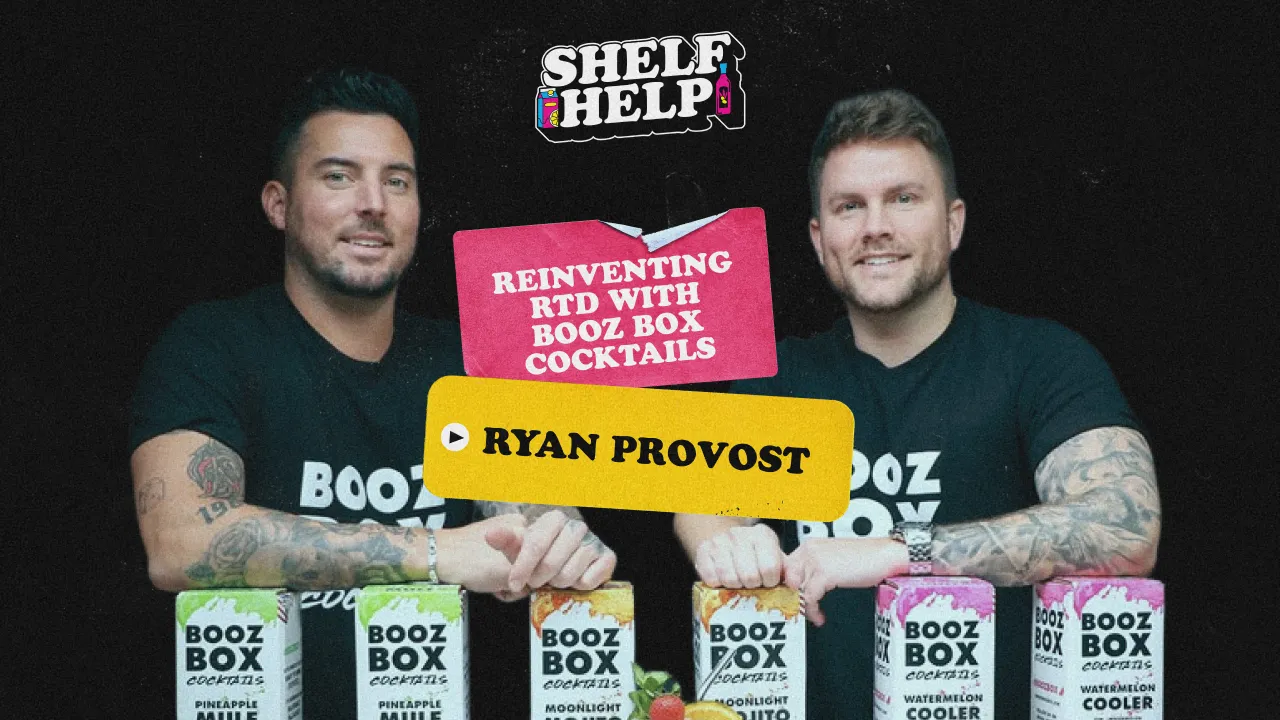
On this episode, we’re joined by Ryan Provost, the Co-Founder and CEO of Booz Box Cocktails, a boxed RTD cocktail brand disrupting the spirits industry with bold packaging, craft mixology, and a form factor nobody saw coming.
What started as a pandemic dinner-table idea between roommates in Jersey City has grown into a multi-market brand now sold in six states including New Jersey, Florida, California, and Texas. Booz Box Cocktails are 1.75L boxed cocktails that deliver bar-quality drinks—like the Pineapple Mule and Watermelon Cooler—straight from your fridge tap.
In this episode, Ryan shares how they landed on boxed cocktails as a form factor, why branding for Gen Z was a non-negotiable, and how a co-packer pivot unlocked their go-to-market. We also talk through fundraising challenges, working with a tiny team, and why good taste (literally) is still the most important growth lever.
We chat with Ryan about standing out in a crowded RTD category, refining flavor formulations, convincing skeptical distributors, and lessons learned from a crowdfunding campaign that didn’t quite go to plan.
—---------------
Episode Highlights:
🍹 Why boxed cocktails were the winning form factor
📦 What it took to get a co-packer to take a chance
🎯 Branding lessons for Gen Z and millennial appeal
👨🍳 From bartending notebooks to scaleable SKUs
🧃 Flavor challenges (and the cucumber misstep)
💡 Form factor as both differentiation and a moat
📉 What didn't go as planned with their crowdfunding campaign
🚚 Building a self-distribution playbook
🌍 Expanding into 6 markets in under 12 months
🔥 Why “taste” still trumps branding
—---------------
Table of Contents:
00:00 – Intro & Booz Box origin story
02:30 – Choosing boxed cocktails over cans
06:00 – Form factor, branding & Gen Z appeal
11:00 – Working with their designer, Kyle Perry
13:00 – Recipe formulation & co-packer challenges
17:30 – Manufacturing woes & their redemption story
21:00 – Distribution strategy & key markets
25:00 – Balancing velocity vs. distribution
28:00 – Crowdfunding lessons
30:00 – Where to follow Booz Box & invest
—---------------
Links:
Booz Box Cocktails – https://www.boozbox.co
Follow Ryan on LinkedIn – https://www.linkedin.com/in/ryanprovostofficial
Crowdfunding campaign on Loupt – https://loupt.co/offering/booz-box
Follow Adam on LinkedIn - https://www.linkedin.com/in/adam-martin-steinberg
For help with CPG production design - packaging and label design, product renders, POS assets, retail media assets, quick-turn sales and marketing assets and all the other work that bogs down creative teams - check out KitPrint.
Episode Transcript
Speaker 1: 00:00
All right. Welcome to Shelf Help. Today we're talking with Ryan Provost, who's joining us from New Jersey. Ryan's a co-founder and CEO of Boozebox Cocktails, a ready-to-drink cocktail brand that was started in New Jersey in the heart of the pandemic by Ryan and his co-founder Norman. And uh before launching Boozebox, Ryan founded a Brooklyn-based music and event label and has been a longtime video editor, music artist, entrepreneur. And uh yeah, really sad to chat. So with uh with that, let's get into it. So, Ryan, just first off, for the listeners that that aren't all that familiar with with Boozebox cocktails, just give it a quick lay of the land in terms of the origin story and kind of the why behind the brand, the products, and and where listeners can get their hands on them.
Speaker: 00:46
Sure, sure. Yeah, thanks for having me, Adam. I appreciate the invite on the podcast. Yeah, Boozebox is a company, an RTD beverage company founded by myself and my business partner Norman during summer of 2020, during the pandemic, right when things were were getting started. Um, yeah, we were living together at the time in Jersey City. Uh, we were roommates, um, and you know, we were sitting around the dinner table, just, you know, kind of bouncing ideas off each other and you know, figuring out a way we could start a business. We landed on Boo's Box by that Norman is the mixologist of the company, and I'm more of the business end, and we kind of just put our heads together and came came on this idea to put Norman's cocktails in a box, which originally inspired from a uh wine box. So that's kind of how we got the idea of boxed cocktails and getting to your wild. Um, you know, we chose to do boxed cocktails because of the competition in the market. And, you know, we kind of found that, you know, the competition in this market is slim to none. Not exactly in the market, but within our niche being boxed cocktails. So so yeah, we landed on that and you know, we figured it'd be a good route to take. And, you know, uh, we we could be happier at the end of the day. It's been a long road, a lot of ups and downs, but here we are today, a year in business and uh, you know, six six markets under our bell, and we couldn't be happier.
Speaker 1: 02:02
Yeah, it seems like the majority of RTD cocktail brands are marketed in single serve cans and booze boxes served in this 1.75 liter cartons that I believe provides 14 cocktails per package. I I was curious, you touched on a little bit, but in terms of like the thought process, research, et cetera, that led you to decide to go this route versus the more typical single-served can route. Did you know, did you and Norman know you wanted to go with the box from the form factor? Like right from the beginning, we know we want to do something different here, or was it kind of a process to get to that decision?
Speaker: 02:32
Yeah, you know, we we didn't know right off the bat that we wanted to go that route. Um, you know, it was kind of just a lot of research and development. Um, you know, we are drinkers, you know, like not, you know, just on the weekends, you know, we would we would go out for our occasional cocktail out in Hobok and Jersey City, which is what, you know, filled with cocktail bars and places to drink because there's not much else to do, but do that. So uh yeah, we we did a lot of research and development, you know, we would hit liquor stores and you know, see what was on the shelf, and you know, we wouldn't really see any boxes around. So, you know, that that's kind of like part of the reason why we wanted to go that route as well, you know, because you know, the competitive nature of of this industry is is solely based on cans. And um, you know, we kind of just wanted to differentiate ourselves. And, you know, like I mentioned, we didn't really see much in the way of box cocktails on the shelf. So, you know, we want to be that that first to market type of brand. Um, there's a few other brands out there that are doing what we're doing, but you know, I I think we still have uh, you know, some time to really prove ourselves and um, you know, prove who we are and you know, our business model and kind of you know, our brand, our name, which is super important. Um, you know, having that name and landing on it and actually, you know, thank God it was available, you know, and that was one thing we were worried about. And and that was one of the things obviously that we needed to make sure was was uh was was a real thing, you know. We had to we had to make sure that the name wasn't taken. So, you know, booze box landed on it, trademarked it, and you know, uh just went from there. Off to the races. Yeah.
Speaker 1: 04:01
How how is that different size and and form factor made it easier to differentiate in the eyes of either and or like the on-premise or those off-premise buyers?
Speaker: 04:13
Yeah, so that that's actually one thing that that is is in our advantage when you know we're speaking to distributors and and other retailers, uh, being that we're a box cocktail and people really love the packaging. It's bright, it's vibrant, it's different. Um, you know, the name really sticks out. And and those are two really key factors that that come into play when um you know the higher upset distributors or retailers are making their final decisions is that they look at the name, you know, they look at the packaging, and then obviously we send them samples and they taste it. And, you know, uh for the most part, they're blown away. We've had some distributors deny us a fair amount because if people weren't fans of the taste, and you know, they say it's too, it's not their vibe, you know, that that really comes from more like the beer distributors, really, because they're they drank beer, um, you know, and and they're that's what they're more focused on, I guess. So I guess, you know, when we would send them samples, they kind of they would kind of just take in, taken off by it, and they weren't really used to the to the whole kind of you know, RTD taste and the flavor profile and whatnot. So yeah, just getting on their good side from the packaging and then, you know, trying to trying to figure it out from there, uh, you know, in terms of uh, you know, the flavor profile, you know, we still have a lot of of things to do, you know, in terms of changes to it. So uh hopefully we'll be able to land on that that perfect taste. But I think we're almost there.
Speaker 1: 05:28
Yeah, that's great. Is there is there a plan to to potentially expand into I obviously it seems like the the carton, you know, larger serving size format is kind of core to the brand. Is there thoughts or plan to think about exploring other form factors and or serving sizes as well to expand the line?
Speaker: 05:46
Absolutely, absolutely. We we have plans to um downsize the the packaging to a 500 ml or or 300, 330 ml Tetra Pack. So that's actually in our roadmap for the next year, uh possibly, you know, into 2026, set to see how this year goes until we start getting that into play. But um, that is definitely one of our priorities. Um, you know, I think that's gonna be where the true volume comes into play. The true the sales velocity really, uh, you know, just having that price point a little bit lower off the shelf for the consumer is gonna be really a game-changing factor. Um, I think that one of one of the reasons why some people get chased away is because you know, people are you know obviously conscious about their spending nowadays, you know, and and when they see that 25 and some some stores 29.99 price point, you know, they're you know, they're they're scared. You know, people don't want to spend that much anymore. So getting down to that $4.99 for a single serve off the shelf, it's gonna be yeah, we're we're excited for it. Yeah, it's gonna be game changing, I think.
Speaker 1: 06:52
Yeah, definitely a lower mirror to entry, I imagine, for sure, for people to try it for the first time, if nothing else. For other other up-and-coming CVG operators that that are in kind of this product idea and stage, considering kind of a unique form factor or serving size as one way to differentiate. There's there's another one that comes to mind that a buddy out here who has a brand out here in Denver, he's got an ice cream brand. He just launched uh Soft Serve in Pouches, which I think is like the first time I've seen that. It's like a super unique factor. So I'm still in terms of other operators that are considering going a similar route in one way to differentiate themselves, based on what you guys have learned, what are a few things they maybe should keep in mind you're gonna watch out for to get out good good or bad learnings you guys have had so far?
Speaker: 07:35
Yeah, no, I I think we have to watch out for one, the price point. I think the price point is super key. You know, we definitely need to get down to that as long as we get it to the 24 or even under 20 uh price point for the majority of our retail locations that we're in now, I think we'll be in a good position. But other than that, yeah, I I really think that just uh upping our marketing game, I think a little bit, um, you know, keeping up with our tastings and just keep keeping up with our our overall operations. Um, you know, it's just me and Norman just running the business right now. We're bringing on a few key key consultants and uh, you know, sales and distribution partners to help us expand. But um, you know, on top of that, it's really it's really just me and Norman doing our thing. And it's it's hard sometimes to keep up. So it's really all about just staying focused and and staying on top of things and you know, making sure the distributors are are all happy. You know, I think that's that's one of the most important things in this in this game.
Speaker 1: 08:26
Outside of the actual form factor, the actual just the look and feel of what you've got on the pack, did you guys go with a a branding agency like freelancer or some other option you guys have talent in-house? And how did you guys just kind of decide how to work with and what was that evaluation process look like?
Speaker: 08:41
Yeah, yeah. So we actually got introduced to somebody through a friend in Jersey City. His name's Kyle Perry. He's based in Florida. He was actually a Hoboken resident for a little while. So we weren't really friends with him at the time, but we actually became close with them ever since we started working with them. Um, you know, we were hopping on calls with them all the time, you know, getting getting our just make sure that our packaging was the best it could be. So yeah, we would do our weekly and bi-weekly calls with them and uh, you know, just make sure that our packaging was was on point. Um, yeah, we started off kind of in a weird, weird direction, I guess, you know, off the bat. And it's it would look nothing like what you see now, you know, there were a different, a couple different variations of it before landing on what it currently is. And and that took a few weeks to nail down. So, you know, after we kind of did a little bit of drafting in in Photoshop, and we landed on this splash that you see, along with the logo, it only took a couple days, so that was easy. But the splash is what really kind of took a little bit longer. So, you know, from the splash after we got the design there to what it is today, yeah, we kind of landed on, you know, just manipulating the color a little bit and just getting it a little more vibrant, a little more catchy, you know, for the Gen Z and you know, the millennial kind of branding, which is what really sells today. So, you know, that's kind of what we wanted to land on. And you know, I th I think it came out pretty decent for what it is. We're getting a lot of compliments on it. People seem to love it. So yeah, I I think in the near future, though, we might be considering a a rebrand. Nothing too major, but I think just like cleaning, cleaning it up a little bit, adding a few more details to the box, like you know, some nutrition facts like sugar and things like that, uh, which we didn't add off off the bat because we were unsure of you know TTB. That's a whole nother story. So I'll tell you the legality issues with sugar and what you can actually put on the box is that they'll come back, you know, time and time again if it's not correct. So that was that was a huge headache getting all that approved by TTB. But uh yeah, as it is now, uh, you know, it's yeah, the packaging is uh is great. And Kyle Perry, our artist, did a great job at it.
Speaker 1: 10:48
Yeah, it looks really good. Thinking back to way back when you're putting together kind of original creative brief that you that you gave to Kyle, like thinking back to that, what in terms of what you put in that brief, like what do you remember your vision was, or what did you feel like were the most important points you wanted to make sure he called out of the package?
Speaker: 11:06
I think some of the main points were, you know, just keeping it really Gen Z, you know, really just capturing the attention of the younger generation. And, you know, when people look at our box, they think of a party in a box, you know, they think of the experience of the box. So that was one of the main things we wanted to make sure that was evident and and really key with the design. There were a couple other designs that we we kind of tossed around and it was, you know, like a beach on it with like a sunset. And um there were a couple other ones I drafted up with like flowers on it, like that kind of resembled a uh more like botanical kind of cocktail, like a gin, like you know, I just it didn't feel right, some of them. So yeah, they like a few of them were just like really off-brand and it was kind of confusing. So I think the splash really just nails down the more like sophisticated and uh like authentic kind of cocktail drinker kind of packaging. So that that's kind of the one of how we landed on it, I guess.
Speaker 1: 12:04
Yeah, that makes a lot of sense. That makes total sense. If a first-time entrepreneur like approach and said, hey, we're I'm in the process of developing an RTD brand of some kind, anything, like a a few things that you would tell them to keep top of mind as they go through the similar kind of pack design process that you went with Kyle to any kind of learnings you have you might share with him, hey, keep this in mind, or you maybe want to avoid this.
Speaker: 12:26
Yeah, I I would just avoid some of the kind of kind of just random, you know, like like for example, like the beach kind of sunset thing that we had on it before. It was kind of like a scene scenic route that we wanted to put on packaging. I I think that route is kind of like not it in a way. I know I've seen some teas out there doing that. Like there's one that just came out called Skimmer, and they have like the scenic like beach whatever picture with a seagull over top and you know, a sun and what or whatever, which is all cool and everything. You know, I guess it's kind of a cool idea. It depends on what kind of drink it is, too, at the end of the day. But um, yeah, a lot of people are doing that. And, you know, obviously, yeah, like people like to be outside in the sun drinking a cocktail, which is always great. But uh it's all about keeping it neutral and keeping keeping the likability, I guess, of the consumer just like focused on you can drink this anywhere, not just the beach. So we want to we want people to be drinking this on the mountain, you know, in um, you know, on a farm, you know, or just at a party, at a tailgate, whatever you can think of, you know, and not just the beach.
Speaker 1: 13:27
Yeah, and that made that makes total sense. Not trying to pigeonhole it in some specific use case. Exactly. Like shifting gears a little bit, talking about formulation. What have you guys found to kind of creating what I guess what's what's been key to create RTD cocktails that really taste amazing? Uh, because it sounds like it's been a bit of a journey for you guys. And what's been like the hardest part? And yeah, what what's been key to really for you guys to make it taste that good?
Speaker: 13:51
So we went back and forth a few times with our with our manufacturer, our co-packer, and and they're the ones that actually ended up formulating the actual recipes. The recipes first off came off came from Norman's recipe booklet. So he's a mixologist uh in Jersey City, Hoboken, and really all over. And we took his recipes from his booklet and we took his top three and you know, kind of just made them our our top three products off the bat. Uh and what actually Norman did was he he created the cocktails, put them in mason jars, and sent them over to our co-packer. And what our co-packer did was kind of taste it, analyze it, and match it as best as they could. And honestly, they did a great job at doing that. I think one of one of the only small mistakes they did made they made was at the watermelon cooler. They kind of just they did something with the cucumber that just was really funky tasting. So we had to go back and forth with the watermelon cooler a couple times to perfect it. And the other two, I think, were just one maybe one change to each. So it wasn't anything major. But yeah, just it's all all about, you know, that first taste really, making sure that first taste you get from your samples are exactly what you want, you know, and and if they're in the right direction, you know, then all is good. But you know, if they're not, then you know, you're gonna be in a world of hurt, you know, going back and forth and you know, it's a pain, but you know, just making sure your your your formulas are where you want them to be off the bat is uh is super key.
Speaker 1: 15:18
Yeah, having a really good tasting product makes sense.
Speaker: 15:21
Yeah, it that's the icing on the cake right there. You know, it's not just the branding, it's not just the logo or the name, but the taste. That's what people remember.
Speaker 1: 15:29
Are are some spirits, have you found did you guys find are some spirits harder to work with than others, like vodka versus gin as an example?
Speaker: 15:38
Uh no, they're not like harder, I guess, but they're uh yeah, because you know, there's a couple gin RTDs coming out, and people seem to be really, really, really liking it. Like Long Drink, for example. They're they're a gin-based RTD and they're and they're crushing it right now. So I'm really happy that we have a gin cocktail because it's kind of like that that odd one out. You know, some and even rum, too. Not many people do rum cocktails either, but it's more like vodka tequila. Like those are the top. You know, people love those two base spirits, and you know, whatever, whatever you can think of. A margarita, you know, the number one selling cocktail in the world, I believe it is. And that's a tequila base. So that's actually one of our next products that we're gonna be introducing. So we're excited for that. But uh, but yeah, like gin, vodka rum, tequila, all great, all you know, the base spirits we're gonna be using. I don't know if we're gonna have any plans for other other spirits, but yeah, we'll we'll keep with those for now.
Speaker 1: 16:28
Yeah, that makes sense. I like in terms of those first three flavors or SKUs you guys launched with, how'd you decide to go about you know what flavors and and what formulations to launch with first? I know you mentioned it sound like these are like the three top ones in Norman's booklet. He just found these are the ones that did the most popular in his experience, or how'd you guys go by that process?
Speaker: 16:46
No, no, you you know that those were the top three in his booklet. So yeah, we landed on those. And you know, watermelon, pineapple, you know, strawberry are some of the top three flavors in the like the drink market, the beverage market alone. So I'm really happy that we landed on those three. Um, and on top of that, there's some of the top selling in uh Norman's restaurants, bars that he's worked with. So that was another kind of little piece of data that we use to make our final decision.
Speaker 1: 17:14
Yeah, having that point of validation with him is crazy. For sure.
Speaker: 17:17
Because, you know, it's a good starting point, you know. It's like obviously you you want to go by what the people are are enjoying and buying most, even though it's it's only in Jersey City and Hoboken. And obviously, you know, it's the demographics not the same everywhere. But um, you know, it's it's a good starting point to make that final decision.
Speaker 1: 17:33
Yeah, totally. You talked about your your copacker a bit and how you worked really close with him in the formulation. Curious for you know up-and-coming beverage entrepreneurs, like how did how'd you go about finding your co-packer? And and then, you know, was it hard to find one that could really meet your specific spec quality flavor, et cetera?
Speaker: 17:52
Yeah, so finding our co-packer, that's oh man, that was an interesting story for us. Um, and that was part of the reason why it took us four years to launch. So our first co-packer that we worked with, they were based in Atlanta, Georgia. And we, oh man, that was a terrible experience. Uh, we actually flew down there and met with them and you know, they had our formulas all drafted up and you know, everything was ready to go, and we finally got the funding in order and kind of just ghosted us. But yeah, I'll keep that story short. It was just really just a ghost, and we just went from there and we were kind of just stuck in stuck in the dark, really, after they did that. And, you know, we were looking for another co-packer to fill in their shoes. And that was a that was a tough search. So, you know, we just did a little bit of just research online, um, did a little bit of outreach through through friends and our network. Uh, we landed on um their Meta brand. They're based in Edison, New Jersey. Thankfully, they're they're local, you know. Uh, you know, Norman and I are Jersey guys, um, yeah, having them 45 minutes away is uh was super helpful to be able to go and meet with them and their team. But um, but yeah, they they did a great job at formulating our recipes. Uh they're they're doing a great job doing our um you know our manufacturing, our co-packing in general, um, you know, everything from our our packaging to you know the the bag and box concept of, you know, and and filling everything, uh everything went great. And, you know, we're on our second run right now with them, and you know, we we couldn't be happier with with finding them. And and thankfully we did because there's not many manufacturers out there that do bag and box. So uh having them, you know, kind of pivot from their normal canned beverages that they normally do, and having them do bag and box for us, um, that was something that they weren't really familiar with. So they even made the risk in um you know bringing in the right equipment and kind of uh training their team and everything to be able to you know knock this out. And then, you know, like I said, they did a great job of doing that.
Speaker 1: 19:44
That's I mean, it sounds like that that might be a bit of a like a um bit of a moat you guys have in terms of that form factor if there's not as many options for other people to try to come in and actually find be able to bring something to market like that. It sounds like it's yeah, it sounds like a bit of a moat for you guys, which is cool. Yep, totally. Is it hard to um and maybe it wasn't, but was it hard to convince that co-packer to give you the time of day as like an upstart brand with a minimal track record? Probably gonna have like the smur the first runs probably gonna be smaller than you know some of the bigger clients, you know, that they've been working for a while that's more established brands. And if so, like how'd you get them excited to work with you guys and give you the time of day?
Speaker: 20:18
Man, so so they have they don't have any minimum orders, which was lucky on our part, our part. So that they would have done a you know a 500 case order if we wanted to. So that was super lucky. Other than that, they didn't do bag and box. So that was one of the hurdles that we had to overcome with them and kind of talk them into helping us out after meeting with the owner over there a couple times, you know, through through phone, really, not even on Zoom or didn't even meet in person before that. But it was mainly just a few, a few phone calls with him and really just talking about our brand and just telling him about the position that we were in and you know the headaches and nightmares that we went through over the last three years. You know, we told him our story and he he felt for us, you know. He was he felt really like, wow, you guys are in a position right now where you need some help. And, you know, I I think we can be those people. And, you know, he he he came in clutch for us. So uh yeah, we're you know, we think about that every every day, man. If we didn't have them, then I don't know where this brand would be right now, to be honest.
Speaker 1: 21:16
Shifting gears a little bit when when you're thinking back when you guys launching in terms of your go-to-market plan when it comes to distribution, did you guys decide to focus more on on-premise or or off-premise for launch, or if it was really focused on one or the other? And if so, what was the strategy behind that decision to go with one or the other?
Speaker: 21:34
So we were focused on off-premise off the bat. We we knew like the whole time this was going to be an off premise brand. So that's that's the route we were going to take, and and that's the route that we're still currently on. We we were able to lock in a few on premise locations, one of them being Pier 13 in Hoboken. It's a nice outdoor venue uh with our you know, they have the tables wrapped and our logos everywhere. And uh, you know, we We partnered up with the the owner there and he was able to uh you know just get us in and you know we we we have frozen market or um sorry not market frozens along with we sell the the the single boxes and the single drinks as well. So, you know, we have a couple different variations, which is also good for this venue. And um we're just hoping that other venues start start catching on. But uh other than that, we have a couple bars that we uh we sell to. And uh, you know, they they people are they're they're seeing what we're doing, but I think it's just gonna take a little bit more time for them to really figure it out and figure out the bag of box play at the on-premise. So it's it's don't get me wrong, it's it's gonna be tough. But um, you know, I think that people are gonna start realizing it soon that it that it's gonna be another option for them to hold a product like this at their bar.
Speaker 1: 22:43
Yeah, for sure. Totally. I'm sure that single serve option you guys have come into is gonna be a great fit for that.
Speaker: 22:48
Yeah, exactly. You know, it's it's easier for the bartenders, it's convenient, it's cost effective. You know, if you if you add up the cost of the ingredients compared to what we have in our box, our our box it's way cheaper, all in. So no, you know, instead of paying, you know, six, seven dollars for the ingredients and and all the other, you know, the spirit, everything for per drink, you're paying, you know, under two dollars for ours. And and that's where you see the real gains.
Speaker 1: 23:09
What's the the distribution footprint look like today in terms of like the markets that you guys in or your channels, number of doors, that kind of stuff?
Speaker: 23:14
Like we're yeah, yeah. So so the current markets that we're in are are New Jersey, New York, Rhode Island, Florida, California, and Texas. Over the last year, though, since we launched, we were doing self-distribution for New Jersey, New York, Florida, California. And we actually got a distributor for Rhode Island. He was actually a buddy of mine from my my college, uh URI, University of Rhode Island, and we were we were frat brothers. So he actually reached out to us directly and you know wanted to work with us. You know, he saw we were doing a product and wanted to bring us into his portfolio. So yeah, we agreed and you know, we got into the Rhode Island market, you know, quicker than anticipated, and that was all great. So we're looking forward to another great summer with uh, you know, the Rhode Island market this this this summer. Uh, we have a couple on-premise accounts there along with uh you know a ton of uh liquor stores throughout the the whole state. And then obviously we're gonna be focusing on New Jersey and New York pretty heavily. We just locked in a distributor, uh City Moonlight for the the entire New Jersey-New York markets. So yeah, we'll be focusing heavy on these as well. Florida, we just lock in distribution. Uh Paradise Craft, they're called. They they cover the entire market. Texas True is another distributor that we have, and they'll be covering all of Texas. Right now, they're just covering the total wine stores that we're in right now. We're in about five stores in Texas, so that they're dealing with those right now. And we're locking in a couple little liquor stores here and there. But uh hopefully that that starts getting going soon because Texas is going to be a major market for us. Yeah, and then uh we're still doing self-distribution with California and uh in talks with other distribution for a couple other smaller markets as well. So so yeah, busy and expanding and yeah, just uh, you know, we're just keeping our foot on the gas here. Yeah, it's exciting. Only a year you guys are in that many markets. That's that's super impressive. Really impressive. Thank you, thank you, thank you. Yeah, it's been uh I don't know, yeah. I look we look back at it, you know, and we we were like, shit, man, how are we in six markets already in one year, you know? And it's you know, it's really just about staying focused, I guess. And really, you know, this is what we do every day, and you know, it's uh it's it's wild, it's it's tough, it's you know, ups and downs, but you know, you'll you'll get uh a couple yeses here and there, you know? Yeah, totally.
Speaker 1: 25:17
One thing I I often hear seasoned operators in in the CPG space in general talk about is balancing the the focus between velocity and and and dist and distribution points, meaning like focusing on how fast you get your product is moving off the shelf and in the current doors of trend versus getting into as many doors as fast as possible, like and that kind of delicate balance between the two. How do you guys think about this?
Speaker: 25:40
So I I think it's good to focus on very few markets off the bat. So I think that we're we're strategizing perfectly, honestly. Uh there's a lot of brands that I heard here out there that are just moving a little too fast. I know we launched six markets in one year. I know that that's fast and everything, but some some brands that I heard of uh, you know, in the past, they would expand to, you know, mm 10, 15, 20 markets, you know, in a matter of a year, two years. And you know, before they know it, they're you know, uh into deep, you know, and there's a lot of work that you have to do after you launch these markets, you know. You don't just launch with them and just you know have your products sit in their warehouse. You know, you have to you have to hire sales reps, you know, you have to get a team in place, you need to to market, you need to get the tastings going, you need to, you know, get get some you know events going, influencer marketing. You know, there's so so much to it rather than just landing that distributor. And uh, you know, it's it's it's tough, you know, sometimes because you know you don't realize which distributor you should be going with at the end of the day. You know, like um, you know, obviously it's best to focus on the larger markets, which is what we're doing right now. But yeah, like if those little distributors come in every now and then and offer you, like, hey, I'm interested in your brand, I want to take you guys on, it's probably best to rethink that and restrategize and focus on what you you're currently in and get on those shelves in the markets that you're currently in and and focus on those accounts alone. Don't really focus on, you know, trying again every liquor store or or bar or uh every retail chain that that you can think of within that market. Maybe just you know, if you're just starting out, focus on those uh rather, you know, total wine chain. If you're in 13 stores, 20 stores, just focus on those for a bit. If you're in buy rights, like we're in a handful of buy rights in New Jersey, like focus on those for a bit and get those sales going and get get people, you know, tasting the product, liquid the lips, and and making sure they uh you know come back for more. You know, those reorders are important, you know, they're more important than actually landing the distribution partnerships.
Speaker 1: 27:38
Yeah. Yeah, that makes that makes a lot of sense. In terms of you know, expanding the footprint, obviously, and and and growth, fundraising officing often plays a key part of that. So, yeah, talking about fundraising, I know you guys recently launched a crowdfunding campaign.
Speaker: 27:53
Yeah, so so crowdfunding has not been going so good. Um, we we expected a lot more and better results to be coming from it, but um, you know, it was a a lesson learned, I think. Um, you know, it's it's really it's really a hard thing to to go about. We we learned a lot from it, but uh, you know, maybe there's some things that we could have done better or differently throughout the last three months of the campaign, but um, you know, we we really gave it our all. Um, we couldn't have done any more than we did. I mean, I think it's really just about people being being scared because we're a new brand and the amount of people that are deploying capital right now are slim to none because you know you have to look at the state of the of the market currently, you know, we're not in really a good place, you know, we're about to be in a recession, is what people are saying. So, you know, not many people are spending, not many people are investing. And P and the people that are investing, they're making safe bets. They're not making risky bets. Um, you know, and I guess you could say that we are a little bit of a risky bet, uh, being a new brand and not showing as much of sales as we could. People are just a little skeptical about putting money where we're in a risky play like us. So, you know, it is what it is with the crowdfunding. And, you know, like I said, we we gave it a shot. Uh, we have one more uh month left in it, and you know, we're gonna play it out and then and then see what happens after that. But um, you know, other than that, yeah, taking meetings with investors every day. We're we're just we're keeping our feet on the gas, really, you know, because we we definitely are going to need that that funding soon to be able to really expand and and really get this product to where where it should be and where it deserves to be. So yeah, like in terms of funding, yeah, man, it's it's tough. It's tough in general. But yeah, I think it'll it'll come and we'll get the right partner sooner or later.
Speaker 1: 29:31
For sure. Yeah, I'm sure you guys will. Yeah, it's not like you guys are doing a bifurcated approach. You guys have been yeah, testing out the crowdfunding route, but also taking meetings with with traditional investors and kind of going both routes. I think it I think it's smart. You can kind of done just put your eggs and all in one of those baskets and yeah, maybe the crowdfunding campaign will just kind of could end up being just kind of like a nice supplement to traditional route that you go.
Speaker: 29:54
Exactly. Exactly. If it ends up working out in the next month, it ends up working out. And yeah, if it doesn't, then you know we'll just we'll move on from it. Lesson learned, you know, learned a little bit about a space we didn't know anything about, and uh and yeah, just move on from it. Yeah, I think it's all about finding that that one investor that really believes in us. Oh, and and that that I think that's what it's gonna take. You know, it's not gonna, you know, the more you push somebody that's kind of skeptical about it, the more, you know, like you know, why why have that person on your team? You know, if they're gonna be hesitant, you know, you want that person that's gonna be all in, you know, that that person or or those people that are truly see your vision, you know, where this this product could really go. So yeah, totally. We're looking for those types. Yeah.
Speaker 1: 30:32
Fundraising is so much just it's so much like similar to sales in terms of like a numbers game. You just gotta talk to the investor so you find the one that totally jives with the vision and then that all works out. Exactly. Yep. Well, yeah, Ryan, this is this is uh this has been really awesome. Where can uh where can people find you got find you, follow along, and also uh where they can find the crowdfunding campaign as well.
Speaker: 30:52
Sure, sure. Um, yeah, so you can follow us on Instagram at Boozbox, B-O-O-Z-B-O-X. Uh we also have a YouTube channel, we have a TikTok, um, and we have uh a Facebook page as well. Uh but yeah, you can follow us on on any of those platforms. Most active on Instagram. A lot of good content coming soon, a lot of good collaborations coming soon. So we're excited for that. Um and the crowdfunding campaign. Um you can find us on looped.co, l-o-p-t.co. And our campaign is right there on the front. And um, and yeah, we're we're still seeking investors until May 15th. So a little less than a month left.
Speaker 1: 31:33
Cool. Awesome. Well, uh, I'll definitely share this out and uh hopefully get some more people uh coming in your way on the crowdfunding campaign too.
Speaker: 31:39
Yeah, th thank you very much, Adam. Yeah, I I appreciate the time and uh yeah, thanks again for having me on the podcast.
Speaker 1: 31:44
Yeah, likewise. Thanks so much, Ryan. This has been great.
.svg)