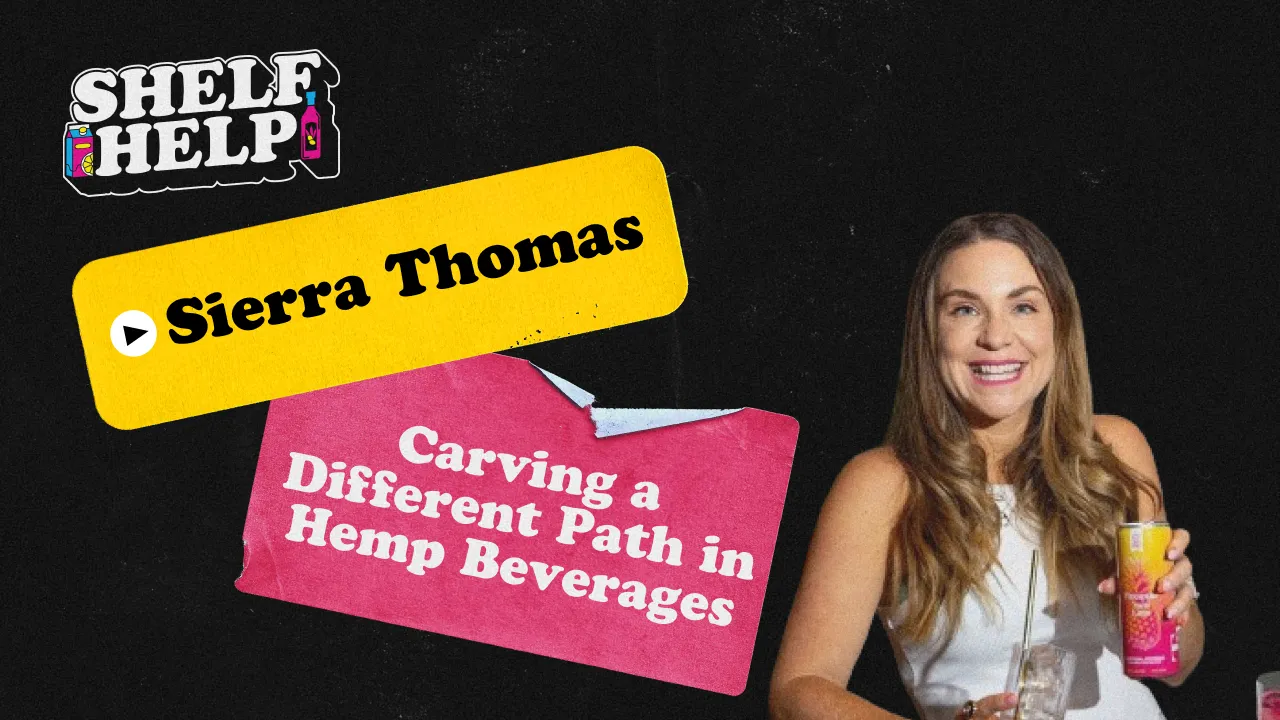



On this episode, we’re joined by Sierra Thomas, Founder and CEO of Tropink - the Hawaiian-inspired, functional beverage brand made with real tropical fruit, vitamin D, broad spectrum hemp (no THC), and a little bit of carbonation.
Sierra spent a decade in media and music before going alcohol-free in 2010. She’s bootstrapped Tropink thus far, scaling into premier retail locations across her home state of Oregon.
We dive into Sierra’s formulation journey, why she chose broad-spectrum hemp over isolate, and how she navigates compliance and food safety. She unpacks packaging choices (and a sustainability miss she fixed), go-to-market strategy, and retail tactics that actually move cases. We also get into upcoming SKUs, fundraising strategy, and the trends she’s watching.
—---------------
Episode Highlights:
🧪 From bench-top trials to co-packed, tunnel-pasteurized runs
🌿 Broad-spectrum hemp vs. isolate and how dosing/COAs build trust
🧂Alternative sweeteners
🎨 Brand identity that “feels like a sunset” and why it matters on shelf
♻️ Shrink sleeves vs. digitally printed cans: a sustainability pivot
📣 Turning the Super Bowl into a rebrand launchpad
🛒 Oregon-first saturation, menus, and placements that fit the audience
📈 Velocity levers & independent retailers
🧭 New SKUs, no-THC stance, bootstrapping, and the NA wave ahead
—---------------
Table of Contents:
00:30:03 – Origin story
05:38:11 – R&D, formulation
11:48:19 – Hemp extract: broad spectrum vs isolate
15:36:14 – Sweeteners
17:27:07 – Brand identity and packaging design
23:03:18 – A packaging learning lesson
25:48:06 – Leveraging the Super Bowl for a rebrand launch
27:42:25 – Go-to-market
30:44:06 – Retail tactics
36:25:20 – New SKUs around the corner
40:01:01 – Hemp THC?
41:01:04 – Fundraising (or not)
42:07:10 – Trends Sierra is watching
—---------------
Links:
Tropink - https://tropinkdrink.com/Follow Sierra Thomas on LinkedIn - https://www.linkedin.com/in/amy-collins-4a200216/
Follow me on LinkedIn - https://www.linkedin.com/in/adam-martin-steinberg/
For help with CPG production design - packaging and label design, product renders, POS assets, retail media assets, quick-turn sales and marketing assets and all the other work that bogs down creative teams - check out KitPrint.
Episode Transcript
Speaker: 00:00
Welcome to Shelf Help. Today we're speaking with Sierra Thomas, founder of Trup Inc, Hawaii-inspired non-alcoholic, functional, hemp-infused beverage brand with no THC, which I think is interesting these days. So maybe Sierra, just for first off listeners that aren't all that familiar with Trap Inc., maybe just give us kind of quick lay of the land in terms of the origin story, why behind the brand, what products you guys offer, and maybe just a few places people get their hands in them, and then we'll go from there.
Speaker 2: 00:30
Perfect. Well, Trop Inc. It's a premium non-alcoholic functional beverage. I try to position always as functional and tropical, because the functional ingredients, spoiler alert with the new ones coming out, might not have CBD or vitamin D in them. So that's the lane I've always been in. The reason or why behind why I created the brand was back in 2010, I was working in the music and ad industry. Super fast paced, super celebratory, concerts, events, entertaining, you name it. And I was very, very good at drinking pro, excelled at it. I should have worn awards, but sadly, I decided that I needed to retire a bit early. So that's the year 2010 when I went alcohol free and started my journey into sobriety and kind of rediscovering who I was without the booze. And back in 2010, like a lot of listeners probably can relate back to, there weren't a lot of options out there. It was a really crappy mocktail packed with tons of sugar, fake ingredients, probably more calories than I would have had in a cocktail. So scratch that. Or it just didn't feel inclusive because when I'd be out with clients, inevitably they would ask, Why aren't you drinking? Are you pregnant? Like, what's going on? So for me, early on in sobriety, that was a real need because I love entertaining, I love restaurants, I love art, I love live music. And so trying to find a way to take all the things that I love, but feel a part of and celebratory, inclusive, and at the same time kind of cool too and edgy. So that's why I created Trapink. When it originally launched, it was launched under the brand Pink Cloud Beverages. And then I did a rebrand after Super Bowl last year. But it was all to support my challenge. Only child, Taurus, how can I fix the things in my world? And that was being calm at events, having these functional things that my body needed and craved. And CBD or broad spectrum hemp was a huge part of my journey early on in sobriety, still is. And as you mentioned, Adam, native Oregonian. So unlike the sun out there today, it's not usually like this. So I need the extra E3 cliff number two.
Speaker: 02:42
I totally understand that for sure. I remember being up in there in those days. I think when I was I think my sophomore year of undergrad there, I think it had been, I think it was even for the Portland area. I think it was like the rainiest winter of the past 10 years. So sophomore year was definitely pretty crazy.
Speaker 2: 02:57
I'm sorry. And then summer comes and you're like, oh my gosh, this is why I moved here.
Speaker: 03:01
One of the best places in the country in the summertime.
Speaker 2: 03:04
Exactly. So you know. But yeah, the winters and even sometimes end of fall. Brutal.
Speaker: 03:09
Yeah, totally.
Speaker 2: 03:11
And I want to make sure I answered all your questions. So tell me if I missed something.
Speaker: 03:15
Yeah. It's kind of like the core core products in the lineup today, and then maybe just a few places people people can get their hands on them today.
Speaker 2: 03:21
Yeah. So launched with two functional beverages. I actually will have open cans here. One is a lilacoy lounge chair. So Lilicoy Lounge Chair is a swell of real tropical fruit. Lilicoi is passionate fruit grown in Hawaii. So it's yellow on the outside, tart, tangy. And then I complement it with pink guava, and that's where you'll get the more luxurious mouthfeel and a little bit more of the sweetness to it. It was developed off of another challenge of mind shocker, but I loved pog when I lived in Hawaii. Loved it. Couldn't get enough of it. What kid doesn't too? So my thing was I was never a huge fan of orange. So I was removing the orange and I wanted a clean, healthier version. So that's how the fruit profiles were developed and brainstormed in my head is to kind of transport me back to those moments. And then I always use a swell of real fruit juice because real fruit juice or puree's just tastes so much better. Challenging to make an RD, but taste is the most important for me. And then the functional ingredients, you nailed it earlier. I have 30 milligrams broad spectrum hemp per can. I also have my daily dose of D3s, the Sunshine Vitamin. And then the other one that I launched at the same time was my Pining for Paradise. So that one is very light pineapple up front intentionally, then super heavy with Yuzu, because I love Yuzu. And then it ends with lime, something familiar for new buyers and shoppers out there. The other thing is same functional ingredients, but I've always been really intentional about having low carbonation. When I quit drinking, a lot of the times when I didn't want those high calorie mocktails, I would lean to like seltzer waters. And not to be TMI, but you just feel bloated, like belchie, all the things that you don't want when you're out entertaining. So the low carbonation is very intentional in the drink, as well as a swell of real tropical fruit. And then I'll share later, not now, but I'm launching two new ones this year. I'll give a quick tease. One will be Coco Paradiso, and I'll have two new functional ingredients that I haven't had in my beverages before. And then the other one's gonna be Elichi mojito. Those two functional ingredients I'm super excited about because I've been using them in my personal life in the past year and have noticed huge differences. And plus, there's a lot of research coming out with females right now around one of them. And I can share more later on, I'm sure, when we get into it.
Speaker: 05:37
Cool. Perfect. Thinking way back to those early days of formulation. Usually it takes quite a while to kind of dial things in, find a formulation process that works. I guess without giving away any trade secrets, kind of what were some of those key variables that you were playing around with or kind of key tweaks you made along the way between, say, like the first version you made to the final version when you say this is right, I'm ready to bring this to market. And how many batches did it take?
Speaker 2: 06:03
God, I mean, I couldn't even count so many. Like embarrassing. RD to me is always an evolving process. It's also based on consumer fan feedback. In the earlier days, I am not a food scientist. So for me, it was a lot of like mixing mocktails or alcohol-free cocktails in my house, sharing them with friends and family. Usually they'd add booze. But until I found ones that I really enjoyed. There were a lot of really awful ones, really awful. Like the original, the pineapple yuzu lime, that wasn't supposed to be that curation. It was actually supposed to be, let me test my memory. It was supposed to be lime, key lime, ginger, and lemongrass. And I had to be like, hail Mary, I can't do this because so many different iterations of it, and it still was tasting medicinal to me almost like a pine salt. So the pineapple yuzu lime was actually an accident with the Yuzu. I can share that story. It'd be a whole nother podcast, but a very pleasant accident. But for me, it was a lot of mixing at home back in 2010 to when I launched nearly three years ago. There were so many different variations. The things that I've learned along the way in RD, I can't even begin to go into. I am very fortunate. We have, as Oregon's known for its microbreweries per capita, we have the most, I think, still. And my friends in the beer industry have been such amazing advocates. It's not made the same way because I'm pasteurizing, unless they have an NA, they should be tunnel pasteurizing, more pasteurizing, but they have been a pivotal part of my journey. I joke around with my daughter. It was like take your kid to work day all over again. I'd go help on tunnel pasteurize, pack boxes, check pH, check bricks. I wanted to learn everything micros, macros, like all the things you have to be careful with food safety. And that's something that's constantly evolving for me every day. The two new ones that I launched, I had to do a lot of different stability testing because one hadn't been used in our RTDs before. So for efficacy, stability, then you factor in real fruits. Now I get why people use concentrates. A, they're cheaper. B, it's so much easier to produce. But call me the stubborn Taurus. I refuse to let go of the swell of real fruit because to me it's all about the taste and mouthfeel. That comes with challenges. You have different crops or lots of fruit juices that change based on season environment, all out of my control. Where they're coming from, Yuzu's coming from Asia, so it's very perishable. It comes frozen. So then freight's involved with that. And then you have tariffs also as well. So there's always these constant changes along the way, and figuring out how different processes, such as tunnel pasteurizing, can affect flavor and fruits. And that was something that I learned fairly early on. One of my mentors was like, hey, before you even like produce any size production run, once you nail it, do it like you know, your own lab in the back and like just get glass bottles, carbonate them, boil them, get it up to the time and temp that you need and see how it affects the fruits. And if I wouldn't have taken that set many times, it'd be a very different launch. So yeah, just learning a ton of stuff. And I'm always wanting feedback. So Adam, I'll send you some and like the more feedback, the better.
Speaker: 09:18
I think I read somewhere that you kind of like to maybe in certain instances, position trip ink as kind of like a functional non-alcoholic version of Spindrift. And from what I know about Spindrift, you if you touched on it briefly, but they're that manufacturing process is somewhat unique and challenging in that you have to like squeeze real fruit through, I think they like using equipment that wasn't you know really initially meant for that versus using the more typical concentrates or the fruit essence like LaCroix. Like, yeah, do you use a similar process to spindrift? I mean it's so like what's how did you figure out how to make that process actually work, I guess?
Speaker 2: 09:53
Yeah, so love spindrift, huge fan, drink their product all the time. And when I relate myself to spindrift, it's because I think very highly of them, but also because of the real fruit like you hit on and also low carbonation. Spindrift isn't like packed with high carbonation levels like a LaCroix, and I love that. Um, I would assume that we use very, very similar processing. They're gonna have to pasteurize their product, so there's gonna be a prescription time and temperature just to make it shelf stable and safe. One of the things that I learned early on in food safety kind of brings us way back to like my childhood high school days, dating myself with Odwala when they have a huge recall with you know, real fruit, not pasteurizing. So there's different ways to do it. You can do tunnel pasteurizer, which basically blame's term, put it through a dishwasher and it's heating it up slowly. You can do HTST or Flash where it goes in hot into the can, so it's pasteurized before it goes in. There are different types. I use tunnel just because I'm very particular about micros and macros and things entering the can before. So I want to be extra safe. It's a double step for me, even though they're low pH. Um, as far as squeezing real fruit juice, they're not sitting there squeezing real fruit juice, but there are larger machines that help accomplish that. And it depends on the type of product, fruit. So there's different filters that you can use. There's centrifuges, which is lame term, would be a huge food processor. So sometimes I will use that, for example, with my pink guava, because guava has a lot of viscosity, but not all of it, to help with production yield, but then still incorporate some of it without using that. So you still have the mouthfeel. But there's so much equipment, it's expensive equipment out there and different ways to go about it. But as far as processing, yep, we're still gonna have low carbonation, we're still gonna like have that kill step for safety measures. So similar.
Speaker: 11:46
On the infusion side of things, I'm pretty sure you put a big focus on using broad spectrum and backtreck versus and bisolates, which uh I built a company in the regulated T T space in California in the past. So I'm fairly familiar with this space. And I'm curious what kind of RD experimentation did you do, and like what are the results so results show that kind of led you to commit to this broad spectrum? And I guess for those that aren't familiar, as part of that answer with the differences between the two and kind of the entourage effect and maybe give us a quick crash course is part of the answer.
Speaker 2: 12:18
I mean, there's hundreds of cannabinoids out there, and there's many providers that have CBD, whether it's isolate, broad spectrum, full spectrum, I'm always big on they're not all created equally. And so for me in the beginning, anything with RD, since I'm not outsourcing it and I'm doing it myself, it just takes a really long time. Like the two new ones, I mean, I've been talking about working on for two plus years. So when it came to using broad spectrum hemp, I chose that one versus isolate or full spectrum for two reasons. And this is my personal opinion. So for Icelit, they're stripping everything out except for CBD. And so for me, I felt like for me to metabolize it and get that effect that I was searching for, I needed a much, much higher amount. So, say like when I first started taking like tinctures, and maybe I was starting off with like 25 milligrams a day, like I might need on upwards of 50 plus to like have the same kind of reaction within my body. And then there's broad spectrum. So broad spectrum, very similar to full spectrum, however, no THC. So the reason why I chose broad spectrum is because they use more of the terpeneterpenes, more of the plant, the flower. It creates that entourage effect more solid, in my opinion, than an isolate. Also, it has no THC. And so for me, being in sobriety and journey, that resonated with me. Also, a lot of people can't have anything because they're getting drug tests or they work for the government. So there's certain limitations, and also where you can enter stores and retail. And then full spectrum, just take broad spectrum, same, same, limited small amounts of THC, like albeit very small, because it has to go along with the farm bills. But with full spectrum, I didn't use it because two reasons. One, it had trace amounts of THC in it. And two, quite frankly, out of like the many that I tried, and there were a lot in RD, it just always tasted really hempy and bitter. And I couldn't really find one that worked. So I narrowed it down to three different providers. And I would recommend any of these three providers to anyone in the RTD space. And it came down to efficacy. So dosage, you have to make sure because CBD is oil, so it has to be soluble and work within a beverage. Otherwise, there's no effect and it's pointless, water oil. Also, you have to worry, or I had to worry about can liners. That's a big part of it, not to get out, but there's certain can liners that you can and cannot use because of scalping. I had to consider the provider of the can. So, like working with companies like Ball to get their testing and all their research ahead of time. And then also just having the efficacy as far as dosage that once it's inside your beverage, it will live up to what you claim after pasteurization, after mixing, after blending. So I actually dose a little bit higher based on knowing that there could account for some scalping. And then I do third-party lab tests after every single run, which leads me to another factor. I didn't want a partner that wasn't providing COAs or third-party testing. I don't want metals, I don't want pesticides, I don't want all the crap in your body that no one else wants or doesn't know they're putting in their body. And then I'm trying to think, oh, and taste. Like I didn't want affecting the real fruit juices and affecting the flavor and taste. So that was like number one tied with efficacy.
Speaker: 15:36
In terms of sweeteners, I think you guys use blend of allulose and monk fruit. Did you experiment a variety of different options? And why did you feel like that blend ultimately was the winner?
Speaker 2: 15:47
The superior one? Okay. Many reasons. I hate stevia. Personal preference. I think there's an aftertaste. I like my body literally has an adverse reaction to it. And there are so many beverages and founders that have it in their product, and I love their branding, I love their flavors, but I can't even try it because I can taste it right away. So that was personal.
Speaker 1: 16:08
Yeah.
Speaker 2: 16:10
You can research that one. Not very much, yeah.
Speaker 1: 16:12
I'm aware.
Speaker 2: 16:13
Yeah. So that was out from the get-go. Um, I experimented with honey in the earlier on days. And the reason why I didn't go with that, higher calorie count also, honey can crystallize. So as far as production, you're dealing with a lot more steps involved. And then for the reason why I chose, and it's very, very light. I don't like sweet beverages. So this is like very lightly sweetened. I chose monk fruit and allulose blend for it being a clean option for not metabolizing the same way. And monk fruit on its own can sometimes be a little bitter. And so the combination when pairing the two, it didn't leave that bitter aftertaste. And then allulose, for those that don't know, is um derived from like figs, raisins, maple. And so it has a really nice mouthfeel as well that lent itself to the recipe and batches that I was doing. But like I said, really small amounts. The next two, one doesn't have any sweetener at all in it. It's just all the fruit. And then the other one, based on the fruit, so I shared them earlier. The lychee mojito actually uses brown sugar because just that caramelized type taste with it. So those will hover about 50 calories versus my current two at 20. But those were the reasons.
Speaker: 17:25
Yep.
Speaker 2: 17:25
Clean taste and yeah.
Speaker: 17:27
Shifting gears a little bit, thinking back to those early days of building at least the V1 of the brand identity packaging design, which I know you said started out as Pink Cloud. What were kind of the key variables that were top of mind for you? And how did your Hawaii influence play a part in that?
Speaker 2: 17:43
Oh, it played a part in everything. I love the branding and marketing. This is like where I get excited almost as much as what's in the can, because that much time and thought went into it. Very fortunate. Um, my buddy has a design company. Shout out for Joel Brandon. If you guys need design, all these wonders, not only a good friend, but very talented. We go way back from our days in the music industry. He actually did my wedding invitations. Like he knows about my sober journey. So it just felt like the perfect person to align with. Um, and also he knows how crazy I am about marketing and branding. So he knew all the iterations that were coming and he still jumped on board. It was a fun project for many reasons. One, at the time, I don't believe he did any CPG products, primarily like footwear and lifestyle. And so it was a challenge for him, but an exciting one. And my main focus is I was very, very concerned, always like that North Star leading me in the right way. So Pink Cloud Beverages, I'll just briefly go on the reason why when it launched and the transition. But Pink Cloud Beverages is kind of my unicorn name. And what I mean by that is Pink Cloud is a term in sobriety. It's after a couple months when you come out of detox, if you will, and you have these moments of elation, euphoria, you feel on top of the world. And so those feelings also were the feelings that myself, my husband who drinks, friends and family that drink feel when you're on vacation. Like it's those moments where you can breathe. And it's just like, you just can like let it all exhale. And for me personally and my family, those moments are best found on white-sanded beaches with teal waters. That's just my passion and my love. And so pink cloud for the sobriety terms, and then also for transporting you to that tropical state of mind where you look off into the sunrise or sunset and you see just those pink, beautiful coral, like ombre-ish looking clouds. Fast forward to the rebrand of Trop Pink, which no one tells you how hard a rebrand is if all you're rebranding is the name and you want to keep everything else the same because you have to think of so many different elements.
Speaker: 19:49
So many. Yeah.
Speaker 2: 19:50
So many. I mean, it's I think it's harder than just like starting from scratch. So part of me I was like, oh God, what was I doing? So I rebranded for a couple of reasons. Number one, inclusivity. This is a drink for everyone. It's not just for people in sobriety like me or sober curious. Shoot, my husband uses it for a mixer for a healthier version, entertaining. So multi-purpose drink. My entire thing was taking people and transporting them to that tropical place. Those moments of elation and euphoria, just like in early on sobriety for me. And so my North Star was always being transporting people to that beach. And so you can see a little bit as far as the can, some of the inspiration from the beginning were those sunsets, the bright colors, but also knowing consumers. You have three seconds or less when it's on the shelf. So something that was eye-catching and popped and stood out, that you knew exactly the flavors. If you ever have seen lilicoy or passion fruit cut in half, it's not attractive to look at. And it's using the using the flowers, but then just being straightforward what it is. And I always try to start with something that might be new to a consumer. So might be familiar with purple passion fruit, but not maybe lilicoy. And then guava, something that's more commonly used in their everyday life, whether or consuming sense, you name it. And then same thing here. And then always calling out the functional ingredients, the benefits, and what that is. Also, I gave Joel another challenge. I mean, I should show you the iteration of design and can artwork. It kept just like narrowing back less and less to what we had on it, which was fun. I have an earlier one somewhere. But um also I'm a huge Andy Warhol fan. I believe he is all about escapism as well. And so I fit felt like it was a natural fit. So you'll see the fruits intentionally like pixelated and very like pop art, just like Andy Warhol's. And that's something that will continue throughout is the bright colors making you feel like you're in a tropical place, and then that pixelated fruit with the function up top. So that was a mouthful, but branding's huge for me. We set our whole entire brand guidelines based off three target personas. We named those personas, we knew what. Influencers they followed, what shopping patterns they had, what lifestyle activities where they were at in their point of life. And that altered throughout time too. I mean, it still stayed very relatively close. But once we started having, you know, solid sales and getting into different locations and tracking velocity, we really had a strong identity of who that target fan was. And so they became our North Star, sticking to those branding moments. But what would they connect to? What would they want? So that's kind of the branding and how it all developed. But man, easily a year. Easily.
Speaker: 22:36
Yeah, it's always a long journey. It always typically takes twice as long as you think. I think it's how to any decision points along that journey that felt that you remember being especially kind of contentious internally, or ones that required a lot of debate, or is there everything seemed pretty aligned?
Speaker 2: 22:53
No, I mean, I think that's part of being an entrepreneur and a business owner. It's always how you pivot and overcome those. Every one of those situations, there's a lesson to be learned. I'll give you one on just like ignorance as a new founder. My like, oh, if I could go back in time, this is what I would do. So my very first run, I was like, it'd been working on it for a very long time. My husband's like, people aren't gonna notice a percentage difference of the fruit. Just launch it. It tastes great. And I was like, I noticed the percentage. So finally I launched on my 40th birthday. That was my deadline for the good food mercantile that was in Portland. It was gonna be there. I was gonna launch, and that was my hard deadline no matter what. So I had, you know, backfill everything as far as timelines to get everything done in a timely manner. And biggest kind of timeline at the time was cans. You know, you have to order cans in advance. I had to make sure I had the right liners, all that stuff. So total ignorance on my part. I'm just shopping by cost because, you know, cost of goods, want to have good margins. And I went with shrink sleeve. And actually, I'll show you my old school can. So this is back on those pink cloud beverages. But you can tell not much has changed. I went with shrink sleeve because I'm a texture person in senses. Smell, texture. I loved the feel of matte versus gloss. Loved it. So I was like, okay. So for those that don't know, shrink sleeve is where they apply it. I don't know if you can see it with a thin plastic sleeve that goes over it. No one tells you that in order to recycle those, you have to peel off the sleeve before you recycle them. Part of dropping's DNA is giving back to the environment, being stewards for our earth. I have a daughter, we love paddleboarding, we love the beach, my husband loves camping, we love outdoors. I want this place to be better than when I left it, which isn't realistic. So trying to keep it as close as we can. And after doing my first run, someone was like talking to me about digitally printed cans. I was like, you know, it was relatively new, I think, back then too. And as soon as I knew, like it was a higher premium. The printers were still in like kind of beta testing here in Oregon at least. So I had to like do freight across the country. But I was like, I have to switch. This doesn't align. And I was horrified to the point where anytime I was at an event, I'd you know, be telling about the product, they'd be asked questions of like, oh, make sure to take this off and recycle. Otherwise, it won't recycle. And they looked at me like I was crazy, and I was like, and make sure all the other cans. So that's my biggest like regret early on. Ignorance didn't know any different. And also, quite frankly, sometimes I had challenges earlier on with that run because the cans, when you heat them up and then when they get cold, you know, shrinkage and stuff like that, sometimes the sleeves wouldn't be as adhesive. So that was a whole nother problem in itself.
Speaker 1: 25:35
Yeah.
Speaker 2: 25:36
And it kills me because I still see these like big brands using it. I'm like, oh my gosh, like you're not bootstrapped. You have all the funding to like make the shift, and you're not. But that's another conversation.
Speaker: 25:47
So you uh you leveraged a Super Bowl for like the relaunched.
Speaker 2: 25:51
It was just pure fun. Uh huge Taylor Swift fan, Sabrina Carpenter love music. There was a lot of like attention around Taylor at the time and her now fiance. And so using things from lyrics and stuff to tease the announcement, both with retailers months before, making sure to stay tuned on social and press releases afterwards is when we're gonna like debut and announce it. I will say it's funny because rebrands are hard. Um, because it's also like mourning of one name and the rebirth of another. And so you have all these mixed emotions, like, am I making the right decision? And I'll never forget when one of my like buyers was like, I like this new name so much better. And I was like, Oh, did you not like the name before? It's like calling your baby ugly. And then it also I had to do a lot of education too with the name, like tra pink. You know, you look at it, some people might say tropink, some people might say trapink. So there was a lot of education and having fun with it on how to pronounce tra pink. Um, always telling people to check out what it means on urban dictionary, spoiler alert. But uh, it was just a smoother transition than I ever anticipated. And I think, yeah, and I really do think a lot of that was we were only changing the name. So, like at the end of the day, everything else was the same. And I had one person that was at an event, they do these huge Portland night markets here in Portland, which is kind of fun. Local makers are packed. You're seeing thousands of people by the end of the three days, I have no voice. And one of the ladies came up, she's like, Oh my god, I love draw pink. I've been drinking it since you launched. And I was like, Oh yeah, back when it was, and she was like, Oh, pink cloud? She's like, Oh, I just noticed drop pink now. And I was like, Oh my gosh. And it was it was quick. I'm the one sometimes that slips still, but yeah, it was just a lot easier than I would have thought.
Speaker: 27:43
From a go-to-market and a retail standpoint, tell me about how you were thinking about your pricing strategy.
Speaker 2: 27:51
That was a hard one. Some other earlier on mistakes. So, pricing strategy was you want to be competitive in the space. When I launched in Oregon, there's a ton of amazing like non-alcoholic beverage founders here. And at that time, there weren't, but there were a lot of beverage founders that were doing CBD beverages. Much more saturated in our market than any other state, in my opinion, because I feel like Portland was one of the OGs. Denver, pretty close second. So that was good and bad. The bad was you have to be competitive, like you said, with pricing. So you have to be competent enough earlier on so people are willing to make, you know, a shift and try, sample your product. But then also, my ingredients compared to most were more premium, meaning real fruit, more production involved, higher dosages at the time of CBD. So that was really hard. Um, making sure to stay competitive, but also get what we were putting into the beverages. And so we intentionally selected more high-end grocery stores, using ones here in Oregon would be like a new seasons market, 21 locations, Zoopans, three, but they're known for curating like amazing products higher end, market of choice, who's really all about like local founders and sharing those stories and what makes Oregon so amazing. And so, really starting off, we're like the elephant's delicatessen, where you go and you get these great like to go or meals to take home that are prepared. Fish tacos are amazing if you're ever in the area. But really targeting places that our target persona, those three that we identified, were shopping. And then also thinking lifestyle. So for me personally, when I quit drinking, it was super hard to go out to live music venues or really nice restaurants because I didn't have any options. So that was a personal mission of mine is to get into those venues, get into those dive bars. I still like going to dive bars, I just don't drink anymore. Also, getting into like the vineyard. So, like your friend that's the DD has a really nice curated option. And then the kind of surprise kicker for me was I did a test with a boutique hotel and was like, oh my God, we're moving through so much product and it's such a high premium. And so that kind of clicked, and I was like, Oh yeah, that was always hard for me traveling too. So then we started focusing on that channel as well. So thinking of like the Hoxtains of the world, the woodlarks, so very boutiquey, hotel Lucia, things to that nature that supported that persona's lifestyle. So a lot of like grocery, on-prem, and then lifestyle events is big for us. So doing like wellness retreats or sound baths, or like, you know, for example, Soho here in Portland does like sound baths up at the pool. So things like that, like places that transport you back to kind of the mission. And online. I said and online, never want to forget that one.
Speaker: 30:44
I've heard you talk about I think I've heard you call it there's kind of a pervasive cancel culture in CPG, meaning once you get kicked off a shelf for lack of velocity, it's really hard to get at second chance. Um, from a really kind of tactical standpoint, what are the core tools you found to be the most impactful in terms of really driving velocity at the independent grocery level?
Speaker 2: 31:06
Yeah, I'll I'll start off by saying that I have different opinions than a lot of people in this. Um, a lot of founders, and not all of them, will be like, scale, scale, scale, get in as many doors as possible. And I'm like, say no if it doesn't make sense. There have been like amazing partners in California that most people would probably die to get into. However, you have to say no. Because if you can't support them to drive the velocity in store, that's when you get canceled. And so my philosophy has always been to saturate my market I'm in so they have the best service, the best pull-through, the best velocity, and then strategically scale into the other areas. And so things that worked for me on the storefront level, we'll just use private grocery stores, for example, is demos. Like most founders hate them. I love them because it's an unpaid focus group. You get feedback from so many people walking through, whether can design, taste, flavor, smell, you name it, every person that walks by, whether they love it, don't like it, I want feedback. And I actually like when they have those people that are like, uh, you know, it's good, but it's not, you know, my favorite. I'm like, why? So garnering as much information because in RD, and as you, you know, kind of finalize and change and adapt with recipe formulation, it's very helpful. But also once they try it, they usually love it. And so that's pull-through and sales. And so demos is huge. In the beginning, I was just doing demos at locations that hit kind of like the target hot zip codes from our online sales. And I think if I would have done that differently, I would have done the ones that didn't have like high consumer purchasing online to introduce them to that. When I made that pivot, we saw like velocity nose increase significantly. And then we paired those with special pricing. So whether you do a price reduction or like buy to get a certain percentage off. And I do those seasonally, and I also do them based around events or things like Labor Day, or where people like back to school, certain events that are big triggers for people to want to have options. And then, like, you think the regular like sober October, dry January, stuff like that. Also, I've been fortunate with some of our partners actually creating marketing pieces for me. So they've done full-blown videos like market of choice, or like Zoopan's created shelf tags. And like, I gotta be a part of that process with my brand guidelines. And it just feels like a true partnership where new seasons might have it in a flyer with their tropical sale. So it's all about just thinking outside the box and how to activate their shoppers and enhance their experience. So demos, specials, and really events are big for me because I can hit a lot of people and I can have signage that drive them back to those locations and then the map feature online too.
Speaker: 33:57
Yeah. At what point do you feel ready to open up new doors?
Speaker 2: 34:03
I think I'm always ready to open up new doors as long as it's a good fit. Good fit means after a partner, like it's a partnership. Like I'm here to help drive sales for you. You're here to help showcase and be a billboard for my product. Your audience aligns with mine. So a lot of the times I'm finding that my wellness, more focused, cleaner ingredient type persona isn't shopping at, say, a convenience store. So that convenience store might have 120 locations in Oregon, but their target's not right. So I mean, it just depends. A lot of factors get into it.
Speaker: 34:39
Is there a plan to start engaging larger distributors that they can really expand the brand's presence, or are you really going to be focused on more immediate territories you feel like you can really have a true impact on for the foreseeable future? For how are you how are you thinking about that?
Speaker 2: 34:52
Probably the latter. So I've been in conversations with distribution for God, over a year and a half.
Speaker: 34:58
Yeah.
Speaker 2: 34:59
Could could jump in at any time. There's two reasons why I haven't. One is always you have to look at your costs and you know you have to look at your account list and be willing to hand that over because they're gonna take, you know, 30% margin. And then you have to look at what your time is valued at. So I always said by year four, I'll move into distribution. So we're getting there. I also wanted to have a portfolio with more than two drinks. Now, the reason why no distribution yet is because I want to have that direct line of communication with buyers, consumers. It's very important to me in the beginning era of the brand. And then also, quite frankly, with the two is CBD, there are challenges, you know, with FDA and what stores will take in CBD and what won't. So, like, still, you can't get into like a Whole Foods or a Kroger's or Safeway. The other two launch with the creatine magnesium blend, those doors open. But I still would stay to the roadmap of saturating this market and slowly expanding into those key markets I've identified and probably hand select distribution companies in those markets based on team, based on values, based on portfolio, a lot of other factors versus a larger one right up front.
Speaker: 36:08
That makes a lot of sense. You alluded to it a little bit. You just kind of touched on a little bit. It sounds like maybe creatine magnesium, which you're playing out.
Speaker 2: 36:14
Spoiler.
Speaker: 36:14
Yeah, you work on these CB skews. Yeah, what what can you tell me about about these software?
Speaker 2: 36:19
I can tell you all because I already told you. Yeah. It's all good. It's gonna come out on shelves next month, anyways.
Speaker: 36:25
Oh, nice.
Speaker 2: 36:26
So very excited. Uh, the two new ones are the Leichi Mojito that I talked about, Coco Paradiso. I'm doing a creatine magnesium blend. And like with CBD and vitamin D, trying to help in my personal journey with like anxiety and seasonal, like sad and not getting enough sunlight here. Those were the solutions. Creatine and magnesium, oh my gosh, like if I could scream to have everyone take creatine, especially females that aren't already, I would. I had this total stereotype of creatine as like gym bros getting swole, getting like all bulked in the gym, loading up. You probably can relate being, you know, previous football player. But it's so much more than that. Creatine is like one of the safest cross-like approved functional ingredients out there. Importantly for females, we don't create it as much in our bodies as males. So it's even more important for us. I'm embarrassed to say, but I was always like an athlete in soccer, so like running, hood to coast, things of that nature. I had never done weightlifting until last year when I started. Very humbling. Also, at this age, I need to, but how to have that muscle mass and keep it as I age and recovery. Creatine has been amazing in that aspect. Not to get too personal, but there's been so many studies around creatine and cognitive performance lately. So I have my mom, one of my best friends, love her dearly, has early onset dementia, some cognitive damage. And the studies that they are finding with creatine for dementia, for Alzheimer's, for cognitive performance is unbelievable. Like, so for me, it was it started off as like something personal. Like it's helping me in my everyday life. And like I'm thinking clearer and quicker. But like now to have it like so personally impact someone in my like sphere, it's amazing. Cause like the other two helped people in my like, you know, non-drinking sphere. And they're like, thank you. Now I feel inclusive. And now this kind of enters a new era of Sierra's personal challenges. And what are those solutions? But yeah, so it's it's been exciting. I still went back and forth. This pilot run will have a creatine magnesium chelite in it. I also will do a follow-up run with creatine monohydrate on its own. There's pros and cons to both. Creatine monohydrate's been studied more depending on your partner, more soluble and RTD, especially with lower pH like mine. However, the creatine magnesium, I think it's like the next generation of creatine. It's getting two for one. And it's just, it just makes your body incorporate it kind of like broad spectrum hemp, like metabolize it effects to me stronger, but not a lot of studies still on it.
Speaker: 39:07
Yeah, that makes sense. That's exciting. I'm definitely keeping my keep my eyes out for those.
Speaker 2: 39:11
Yeah. And the flavors are like my favorite. I always get like stuck on the sound amazing.
Speaker: 39:15
Yeah.
Speaker 2: 39:15
Yeah. But Coco Purdy, so everyone's like, what is that? Because most people know lychee or lychee. But cocoa puris, so literally came from we went two years ago, our family went to the British Virgin Islands. I love, I well, I used to really love cocktails, but I still love the NA cocktail now. And they had one called a painkiller. And if you ever had one, you know, you know. It's like heavy coconut cream and like orange and pineapple and island spices. So this is a riff off that because I don't want it to be super caloric. So it's coconut water for hydration. You had pineapple. We all know I don't like orange. I talked about it earlier. So there's another little citrus for a playoff in there. And then just the warm island spices. It's delightful.
Speaker: 39:57
Amazing. Oh, yeah, I'm definitely gonna get my hands on one of those when they're available. The hemp THC beverage category is definitely getting a lot of attention these days. Are you at uh are you at all click considering launching a THC line or not at all on the radar? And I guess kind of wired why not?
Speaker 2: 40:15
Yeah, you know the answer. Um, I wouldn't say never, never. However, like it's not authentic, it's not part of my journey uh in sobriety. I will say also a big reason on the strategic like founder side is there's so much different compliance and legal around it. It's still in the infant infancy stages, whether you're using Craft Humph, Delta 9, THCV, there's so many different options out there. I would be more inclined to say, want to purchase these recipes and you can white label it and add it.
Speaker 1: 40:45
So if anyone wants to for grab.
Speaker 2: 40:48
But for me personally, I wouldn't launch it in my portfolio, but I'm always up to monetize something.
Speaker: 40:54
Yeah, totally. I think that's actually a really good approach. I like that. From what I know, I think you've been bootstrapped up until this point. Is fundraising on the horizon at all? Do you plan to continue to sell fund the business? What's what's the current thought process there? And has it changed at all since the beginning?
Speaker 2: 41:10
Yeah, I mean, I think this is a challenge every founder has. There's silver linings on both sides.
Speaker 1: 41:15
Yeah.
Speaker 2: 41:16
Bootstrapping completely up until now, it gives me complete control. I can pivot when I need to pivot. I don't have to make concessions where I don't feel like I want to make concessions. However, to scale quickly and to say if you're gonna launch with Kroger, Sprouts, and you're wherever Costco, you're doing a huge, large production run, that would make more sense. I don't necessarily want to f that bill right out of the gate.
Speaker 1: 41:40
Yeah.
Speaker 2: 41:40
So I have been actively presenting and talking to different investors and groups. So when that time comes, I'm already ready and I know what the positive things were, what some of the hurdles were. I'm not fundraising now because there's no immediate need. But as you know, like it takes money and financing and long term, that's probably down the road from now.
Speaker: 42:04
Sure. I think that's a that's a a pragmatic approach. Last question for you any brands, trends in the in the broader CBG space that you're just particularly excited about or things you can kind of keeping your eye on?
Speaker 2: 42:18
Well, something that I'm like really excited about. Well, I mean, creatine's fun right now because I'm in it. Um, and I feel like there's few brands right now out there that are doing it into RTD or the ones I've had, I'm like, ooh, don't really like the taste. So there's room for improvement. One that I love going back to like my life and things changing. So protein's big for me. I'm trying to have more protein in my diet. So it's really fun seeing what types of ideas and innovations are coming out, whether it's protein popcorn or whether it's, you know, protein chocolates, or I mean, you name it. So that one has been really exciting to watch and just quite frankly try all of them and see which ones, you know, have the best efficacy and taste, obviously. So that's been a fun one. I love watching the THC realm as well. Uh, I love watching the craft hemp, so like THCV. There's some fun brands out there that a lot of my friends like that have kind of, I guess, RD styles to me, except with adding that. One that's a great one out of California, Cannes Social. I've always not only looked up to their products, they have an unspiked version, which I do consume. Great marketing, I love it, kind of like the pioneers in the industry. But then you have, you know, other ones like in Arizona, like Magic Cactus, that, you know, are coming up. So those are fun ones to watch. Yeah, I mean, I just love anything NA is fascinating to me, or anything functional.
Speaker: 43:44
Totally. Yeah, I'm on the same page there.
Speaker 2: 43:46
Yeah.
Speaker: 43:47
What's uh what's the best place for people to follow along with you? And then best place for people to follow along with the brand these days.
Speaker 2: 43:53
Yeah, I would say probably most active right now is Instagram. So handles at Trop Pink Drink online, tropinkdrink.com. We're getting up there on TikTok. I'm learning, I'm challenging myself, so stay tuned for that. And then LinkedIn, you can follow the brand Trapink or myself, Sierra Thomas, connect anyway, YouTube, you name it. We're out there.
Speaker: 44:14
Perfect. Awesome, Sierra. I appreciate the time. This has been great, super informative.
.svg)