
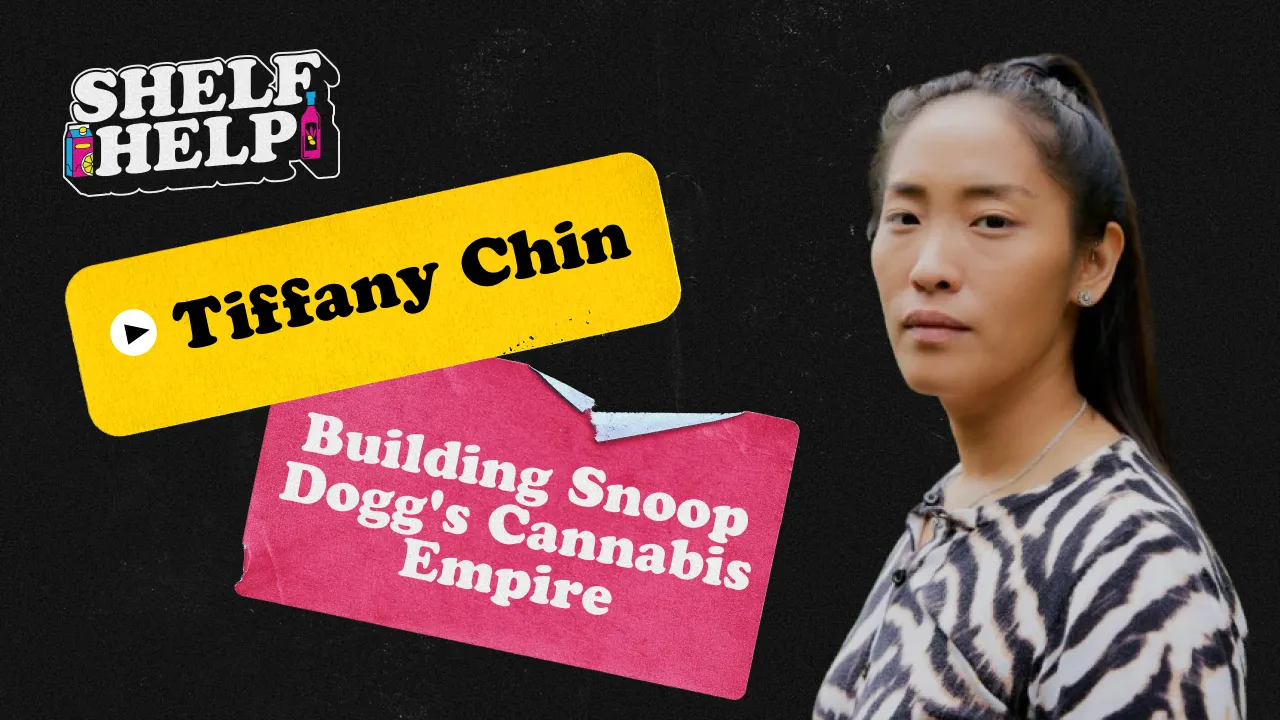



On this episode, we’re joined by Tiffany Chin, the CEO of Snoop Dogg's cannabs empire.
Tiffany started her career in corporate retail and tech, but over the past decade she’s helped launch and scale some of the most iconic brands in the space — from Leafs by Snoop to Death Row Cannabis and S.W.E.D., with products and retail locations spanning all across the U.S., Amsterdam, and beyond.
She’s structured some of the most influential licensing deals in cannabis, built brands that move product globally, and continues to shape the future of the category with a unique blend of operator-level rigor and cultural fluency.
In this episode, Tiffany breaks down the real playbook behind sustainable brand growth, what makes or breaks a licensing deal, and the power of Snoop's reach.
—---------------
Episode Highlights:
🌍 Building a cross-border cannabis empire with Snoop Dogg
📦 From Death Row jars to Dogg Pounds vapes in Canada
🛠️ What makes a licensing deal actually work
🧃 Why beverages are the on-ramp for new cannabis consumers
🧠 How Tiffany thinks about AI’s future in cultivation
👀 What she looks for in partners, team members, and new hires
🎯 Advice for anyone trying to break into the industry
—---------------
Table of Contents:
00:00 – Intro & Empire Overview
06:00 – How to Structure a Good Licensing Deal
14:00 – Regulated vs. Hemp Market
21:00 – DTC, Delivery, and the Future of Retail
24:00 – Beverages, Brand Strategy & Snoop’s Vision
30:00 – Building & Trusting Your Team
34:00 – AI, Growing, and Scaling Smart
38:00 – Real Talk: Advice for Newcomers
—---------------
Links:
Follow Tiffany on LinkedIn – https://www.linkedin.com/in/tiffanyfiege/
Death Row Cannabis – https://www.deathrowcannabis.co/
SWED Retail - https://swedstores.com/?meadowQuery=
SWED DTC - https://swed.com/
Follow Adam on LinkedIn - https://www.linkedin.com/in/adam-martin-steinberg
For help with CPG production design - packaging and label design, product renders, POS assets, retail media assets, quick-turn sales and marketing assets and all the other work that bogs down creative teams - check out KitPrint.
Episode Transcript
Speaker 1: 00:00
All right. Today we got the pleasure of speaking with Tiffany Chin, joining us from LA. Tiffany is essentially the CEO of all things cannabis and hemp for the infamous artist and timeless cultural icon, Snoop Dogg. She was a co-founder of Snoop's Cannabis VC Fund, Casa Verde Capital, as well as brands like Lease by Snoop, and currently leads Death Throw Cannabis and SWED, just to name a few. With an analytical Warden background, extensive experience as an on-the-ground operator, and a deep understanding of consumer culture. Tiffany is a bit of a unicorn. And not to mention, she's just an awesome human and a great friend. Thank you. I could go on, so let's just get into it. So, Tiffany, just to give the listeners just a sense of how many different brands and projects you own, just give us a sense of how expansive Snoop's cannabis and hemp empire really is.
Speaker: 00:50
Yeah, for sure. It's great to be on, Adam, and it's great to see you. You know, usually when we do chat, we're just on the phone. So it's nice to see your face. But I guess we'll start, let's let's start from the ground up in terms of uh supply chain. We can start from retail and then we'll go back, right? Perfect. So retail, we actually have I heard you actually say Swed. We like to say Swede because it re-rhymes with weed.
Speaker 1: 01:10
Fair enough. All right, good to know.
Speaker: 01:12
All good. Um but Swede stands for smoke weed every day. And we have basically launched two retail uh locations, one in Los Angeles near LAX in Inglewood, and a secondary location basically two weeks after we launched the one in LA in Amsterdam. It is a coffee shop, so a consumption lounge is what we would call it here in the United States. And uh yeah, those two stores have been humming along, and there are more coming. So if we move up from there, we also have actual product that we sell in our stores under the Death Row Records cannabis brand and line, right? Um there are multiple different kinds of products. So starting from the top, in terms of top quality, we have jars and eights, eighths and jars. We then also have our like pendant bags, which are supposed to look like you know, the chain that the guys wear on the team. Um, we even put two peg holes in so you could put a chain through it and make it kind of like vanity packaging. Very cool. And then we also have our um value line, which actually is great weed that I purchase in seven or fourteen gram um denominations, so either a half or a quarter. Uh, and then we also have these pre-rolls that Snoop really, really likes um in bubblegum OG, and I think the other one's cotton candy OG right now. Uh, we also are available with these products in New Mexico and Michigan, and soon to be in some other territories later this year. We also have a different brand up in Canada. The words death and the phrase death row were not very positively looked upon, even though it is a 30-plus-year-old record label. And so we had to go with a different uh direction, and we ended up reusing our old brand of LBS Leafs by Snoop, called pounds, basically, and we called it dog pounds. So in Canada, we have dog pounds, they have vapes, we have flour, we have pre-rolls, and and we're doing pretty well up there. And then we also have the hemp side of our business, so the non-regulated side of our business. We have hemp flour. If you go to Swede.com, we have hemp flour on there for sale, as well as edibles that can be delivered to, I believe, 38 states in the country, as well as our hemp-derived Delta 9 and CBD beverage line called Do-It Fluid under Death Row, as well as Doggy Spritz, which is under the Snoop Dogg line. And so those are available wherever you can buy your hemp products. So DoorDash actually, we work with them really closely, and they are able to deliver our products to you in hopefully under 30 minutes, depending on where you are. Um, but that's I think that's pretty much encompassing what we do. We obviously have partnerships. We just signed a deal with Scentsy Seeds because they are the standard when it comes to quality and veracity of their actual seeds, being able to germinate, pop, and and give and deliver to the consumer and grower what they have tested in their in their labs and their stashes over the years, right? So um I think that's I think that overall, we also have a deal with Futurola. Sorry, I'm just like remembering all these things that we've been doing. We only recently came out with the products, and they are basically uh rolling papers and cones and uh all hemp-based, as well as what's Futurola really known for? They're known for their industrial knock boxes, right? Right. And so Snoop was like, man, I know I know how to roll. I know you know how to roll, but how many people like to smoke weed and don't know how to roll? I want to figure out how I can make like a personalized knockbox. And so when we were talking at Futurola, they were like, we love that idea, that's really great. We actually have that thought coming out, and we have already ideated what it might look like for a three to five, you know, personal knockbox joint thing, right? So um we are coming out with that soon as well. It's really cool, and it'll make it a lot easier for people who may find some anxiety when it comes to rolling their own J's a little bit more ease to do so. But I think that's pretty much it for now. And there's a lot of things coming up. We're definitely expanding Swede in a very strategic and calculated way, as opposed to kind of like spraying and praying and just kind of picking up as many retail locations as possible. And then with the product expansion, you know, first and foremost, like it's like quality needs to be there, right? So lots of things in brewing, lots of things happening, and we're excited about what's to come in the next year to three years, yeah.
Speaker 1: 05:45
It's crazy. We've known we've known each other for quite a while. I know you're working on a lot of stuff, but hearing it all laid out in one big list is is pretty wild.
Speaker: 05:53
Yeah, yeah, it is. Um for sure. It's it's a lot of things to keep in your mind and keep organized. But um we manage, yeah.
Speaker 1: 06:02
Yeah, we'll we'll get into how you manage all that. I mean, yeah, just to kick it off, I mean, I think one thing that came to top of mind for me was, you know, the cannabis space is, I think, unfortunately, littered with the skeletons of a lot of failed partnerships for you know a variety of reasons. And I think, you know, laying out all that you've done, I think there's a good chance you've probably structured and executed successfully executed more licensing deals and partnerships than maybe anyone in the cannabis space. So I have to imagine, like you know, everyone else, that some have worked you know, out better than others. So when you look back, what's been key to building a licensing deal and or partnership that will really stand the test of time?
Speaker: 06:40
So this is a great question because I've had many different partners in many different portions of the industry. And I believe the common thread for all good partnerships, and I don't even, I'm not even saying they are a good partner, but the feeling is mutual, right? Like I need them to also believe that we are a good partner. And so those mutual feelings come across when expectations are very clear and set, as well as having a very aligned vision, right? If we don't have an aligned vision, if we don't have an idea of how we want to move forward together, and there might be competing ideas about strategy or implementation or commercialization, that's when there will be uh, I don't want to say a power struggle, but to the at to that same effect, like there is essentially, I I don't how I don't know how to say it without being rude, but essentially, like, this is how we're moving. If you don't move this way, then we can we can separate or we can figure out a way to sell off. It we need to figure out a way that we are all on the same page and making sure we're driving towards the same goal. And I know that the alignment is never a hundred percent, right? Like you always try to do that with your employees by giving them some options or you know, feeling like they're part of the company and working towards a greater valuation of the of said company. But when you're talking about a wholly separate business or group that we are working together for what is seemingly a common goal, it's not always a common goal. So we just have to make sure that we want them to win, they want us to win, and if we don't both win, then it's not a great partnership.
Speaker 1: 08:21
Yeah, it it seems like a lot of it is comes partly down to like when you're having that initial conversations and deciding if you want to work together is really focusing on having a lot of honesty and making sure like it's clear is like be honest now, you know, let's really be honest about what we want versus what we don't want. So we don't have to, we're not trying to, you know, position ourselves just to kind of close the deal and having a lot of honesty up front is what it sounds like, I imagine.
Speaker: 08:44
That's definitely the case. And this sounds really silly, but it's also a lot of getting to know the other group and sensing where they stand, regardless of what they're saying, right? Kind of understanding through their body language or things that they may have said off the cuff that they don't feel like mean anything, that we can then, me and my team can then decipher and understand where their true intentions may or may not lie. So vibe, that's like a really important thing. If we can't be friendly with you, if I don't think I can go out for a drink with you or smoke a J with you, maybe we're not the right partners.
Speaker 1: 09:21
Yeah. Do you actually have a formal checklist? And if so, if not, it doesn't surprise me either. And but if so, are there things that are you know non-starters andor like absolute requirements?
Speaker: 09:33
Yeah, so obviously I mostly get to choose the partners. Me and my team are able to vet them and do our due diligence and understand, fly out, meet with them, tour their facilities if they are a producer, retailer, their store if they're a retailer, all that kind of stuff. And it really comes down to whether or not, yes, so Adam, your first question was, is there a checklist, right? When we're talking about actual product and production, the first item on that checklist, and there's no other items after it if it's not checked off, is quality of product. That is our number one tenant when it comes to anything cannabis-related, hemp related with Snoop, because we need to like Snoop authentically lives his life the way he lives it, which in this world is he smokes a lot, right? And we don't need to, we don't need to create a brand for him. We didn't need to commercialize his idea of what he wanted to do with Death Row Records and how he wanted to put cannabis into it. You know, we can always get him flour whenever we want. People give it to him and throw it at him, right? But to be authentically smoking your own product because you actually like it. And not just that. Last week he even mentioned to me, and I knew this already, but he was like, I wanna, I want the product to be so good that sometimes I go and buy it. Like half the time, if not more. Maybe it's not me physically walking into the store, but I'm I'm giving my assistant $500 cash to go and buy my product because I want it and it's so close. It's it's literally three miles down the road. That's when I know we've done a good job. When he himself doesn't need to hit us up for a drop, but rather, hey, I know that the store is right there. I know that Tiffany's probably busy on a Sunday or Shaggy's with his kids or AK's running around in in you know Nevada or or Amsterdam. So then he's like, you know, I'm gonna take the load off of them and just go to the store and figure it out. And he does that because he likes the product so much. That has been one of our biggest reasons, I feel, that we've been able to sustainably grow for the last two or three years since we launched the brand. After that, it's really about understanding what their market looks like as well as their position in the market. Are they considered to be a friendly in the market, right? There have been many groups that have oodles of cash that are like, yeah, we're ready to give you blah, blah, blah, and get you this and get you a private jet and visit here and blah, blah, blah. And once we start doing a little due diligence and we ask around, there's like five separate groups and different data points saying, like, don't work with that guy. And we'll we'll dig to the bottom of it. And if that's the case, we can't work with an individual or a group that is viewed in the market as not playing nice in the sandbox, right? So there are many of those situations where things look a little too good to be true on paper, on the call, on a meeting. And once we do a little bit more digging, we realize what the root cause may or may not be. Quality of product, obviously, the ability to commercialize and understand like legal ramifications and really have things buttoned up. We just can't be doing that for every single territory that we're trying to go to. We understand the basics of the legal status as well as regulations, but that's not going to be on us to manage, right? We're going to be providing the artwork and the direction and the IP and you know, Snoop and you know, whether or not he's demonstrating and smoking or doing a voiceover or something else, right? Like popping up and saying, make sure to go to P37 for some New Mexico fire, right? Whether whatever that is, that's how we kind of support who we do have in the market while also making sure that they this is like it's a complementary type of relationship, right? Like we are here with assets, you guys are here for operations, and that's that's how we want to work together. But yeah, I would say, again, quality first, but in terms of market exception, like they are accepted by the market as a partner, that's important to us as well.
Speaker 1: 13:32
Yeah, that makes a lot of sense.
Speaker: 13:33
Yeah.
Speaker 1: 13:34
You alluded to it a bit in terms of alignment of expectations, I think, earlier. But on the flip side, if you had to just sum it up in, you know, a sentence or two, like what would you say is the most common reasons or are common reasons licensing deals ultimately fail?
Speaker: 13:49
Sure. I think, you know, and you know, there's a lot of times where being on the Snoop team, we understand that our expectations might be skewed, right? Because we're working for someone who is maybe the big one of the biggest celebrities in the world, one of the biggest faces in the world. And as long as we're able to make sure, like I said, interests are aligned, but expectations are set and understood, right? Like there are certain individuals or groups that believe being in a partnership with Snoop means that they're gonna talk to him every other week or get to see him every quarter. And that's not that's not what this is, right? Like if you want to do business with Snoop, that's great, and that's something he will greatly welcome. But there are certain expectations that I have to manage with potential partners in that, yes, like there are going to be these opportunities, but to ask for them now or to expect them will be a folly on your side. And um, some are quick to pick up on it, some of them are they get it immediately. Um, and then others just don't pick up on it and still haven't and are you know asking for certain exceptions to what the standard of partnerships or licensing is.
unknown: 15:09
Yeah.
Speaker 1: 15:09
Yeah, that makes sense. That doesn't surprise me, especially for the world you're working in.
Speaker: 15:14
Yeah, yeah. It's weird with entertainment for sure.
Speaker 1: 15:16
For sure. I can I can imagine. Talking about you mentioned earlier all the different markets that you're in, both across you know, cannabis and hemp, I think specifically, you know, psychoactive hemp. I think everyone in and around cannabis definitely has their eyes on the on the psychoactive hemp side of things. For operators that have had some success in the regulated THC THC space that are looking to expand into hemp, you know, what would you say they're in for? You know, granted it's it's still a pretty new space, so totally understand your knowledge here, maybe somewhat limited like pretty much everyone else's, but so I feel like I don't even have the authority to necessarily speak about this space and the transition or maybe the coexistence of being in both, right?
Speaker: 15:58
But the hemp market or maybe we could call it the minor market or the unregulated market, it's definitely a different beast in the supply chain. The growing obviously is pretty similar, but the end process is different when it comes to testing or stressing the actual flower to decrease or increase certain compounds when they are tested. But as the expansion into hemp continues, that allows for so many derivative or processed products to be created in a plethora of categories that are opening up to these are 36 or 38 states, like via mail, right? I'm talking about tinctures and topicals and like you know, your 80-year-old grandma who has arthritis can now get some get some relief on her arm. It's just really interesting to see uh the possibilities in that unregulated market and maybe even understand how we could translate that into the major market or the regulated market.
Speaker 1: 17:03
Yeah.
Speaker: 17:04
Something else that I think is really interesting is if you are in the regulated market, just for IP sake, just for protecting yourself and your brand, it would make sense for you to even just create a hemp line and commercialize literally one item just so that you could then apply for a federal trademark under hemp flour or hemp products. That's just a lot easier than going state by state just because cannabis is not federally regulated or allowed yet. And so you have to, you know this, right? So we have to apply based state by state on the IP that you do have.
Speaker 1: 17:42
Right.
Speaker: 17:42
Another trend then generally that I'm seeing is with the way that the regulated market is, you unless you're doing delivery, you have to physically go into the store, right? That's just something that the regulations have required around purchasing, right? You have to go into the store. Or if you're getting delivery, you're getting delivery, but then you have to show your ID and all that kind of stuff. I find that with just general buying habits, a lot of people are doing a lot of digital purchasing, D2C stuff or even subscription stuff, right? Every month or every two months, you get another thing of this, right? And why wouldn't that be the case with cannabis? Why are we limiting cannabis, whether we're talking about regulated or unregulated, to brick and mortar only, right? I understand we're, you know, we're talking about retail and what that means, but e-commerce is a really big part of e-retail. And you're seeing, we are now seeing in the industry, especially on the hemp side, specifically on the hemp side, brands that are posting eight to nine figure, not nine figures, like close, like mid eight-figure numbers annually in revenue. And it's because they're all D2C. And it's if they're able to own their market and their consumer all that information that they want to gather while also commercializing a product that is federally legal because 28, the farm bill allowed it to be, right? And so I feel as though when we're talking about the hemp industry, people are gonna be a lot more interested in that because of the ease of acquiring your product. And it's so ingrained into our lives right now. Amazon, Costco, Target, like having that immediacy and getting the product next day or same day, that's gonna be really huge for the consumer that is now growing into an adult age. So those are my thoughts. Yeah.
Speaker 1: 19:28
You mentioned Target a bit. I know you you worked at Target earlier in your career. How long do you think until we see cannabis products or maybe specifically Snoop's products on the shelves at Target?
Speaker: 19:39
So this is actually funny. You mentioned this, Adam. I I think it was back in 2018 or 2019. You know, the farm bill news came down, and everyone in the industry is like, oh, what does this mean? I knew what it meant. You knew what it meant. We all knew what it meant. And I actually called my mentor from Target. Shout out to Gene Lormius. And I was like, hey, I have this idea, right? Like CBD, like 50 state legal CBD, there's like other products that you could help with sleep and whatever else. Target should start up a whole hemp division, right? This could be a giant market for you guys. And uh, I tend to forget that while Target and Minneapolis is a pretty liberal leaning city, it's funny. I know with all the recent news about Target, maybe it's not seen as left as it used to be seen. Target is still pretty risk averse when it comes to the, like when you're talking about the big box chains and that group, right? And they weren't ready for the category at the time. However, I believe Walmart sells CBD gummies. And so Target needs to get on this if they want to potentially compete with Walmart, where you know, volume pricing is gonna really help Walmart move the needle on this category.
Speaker 1: 20:54
Yeah. On that, I guess on that topic as well, you know, being the, you know, orchestrator, architect of, you know, Snoop's cannabis empire, like how do you think about building, you know, his empire as uh in in a way that best prepares for that future? And I guess the second part of that question is like how do beverages and and maybe you're if you want to speak about the recent kind of investment partnership with iconic brands as an example, like how does that play into the future as well?
Speaker: 21:20
Yeah. Um something about beverages that I like to always say is all of us were born knowing how to drink, right? Like whether it's formula or milk, we know how to drink. Um we don't start eating until six months, and uh we don't start smoking until we're 21. Just kidding. Uh, whenever you do smoke, right? So these things are learned. Yes, food and ingesting is very innate to us, but more innate to us is drinking. And it is also the generally accepted social lubricant, right? There's no smell, there's no potential issues around like, are you getting ash on somebody? I'm trying to think of other vices that might be considered, but drinking really is the one vice that is considered to be acceptable. And so which is silly. Cannabis is, in my opinion, much better. But, you know, I think that bringing together hemp and cannabis into a beverage line was kind of a no-brainer for Snoop. But also making sure that he's not trying to cater to his normal audience of, hey, let's get high, let's get really messed up and not even messed up, but just like, let's get chill, let's listen to music and party and get high. Rather, it's more of a, hey, I know that you might not be used to this industry or this feeling. So let's start you off slow and right. And so we actually started off with really low dose products, like three to five milligrams, and we're now coming out with higher dose product. I say that with quotes because they're not high for me and probably not for you either, but seven to ten milligrams per can, right? And essentially with these functional beverages that are way lower in calories and sugar and additives and whatever else than alcohol, we are hoping to replace a similar habit of maybe buying a six-pack, right? Or having a half a bottle or a bottle of wine a night. Instead, you can buy a six-pack of beverages and you'll probably feel really good by the end of your session. So that's that's really the idea of Snoop is an everyman, right? He's not, he's not just for these people or those people or those people, right? He's caters to everyone. He wants to be everyone's fun uncle or, you know, friend, right? And so we have the smoke. We have the, we have the, but then what about the people who may not be able to stomach all that and be able to handle all that and wants to try something that Snoop likes? So I I hope that the audience and the consumers understand that we're trying to offer a variety of different options for you to get into the Snoop's world of smoking weed every day. You don't have to smoke. It could be drink, you know, it could be eat.
Speaker 1: 24:01
Yeah, totally. That that makes that makes a lot of sense. Um, it makes a lot of sense.
Speaker: 24:06
Yeah.
Speaker 1: 24:06
Shifting gears like a little bit, it seems like more and more these days. It seems like more and more people are spreading their focus across, you know, multiple ventures, fractional roles, a lot of gig type stuff in a similar but different world to a certain extent. You know, you actively run, as you mentioned at the beginning, a variety of you know, businesses and and investments across Snoop's portfolio. Like how do you allocate your time and how do you prioritize?
Speaker: 24:31
Yeah, it's a client at the end of the day, is the priority. So Snoop is the priority, not only in like time and work, but also in terms of the integrity of uh a certain like statement that I'm making to him or notifying him about if there's a deal going sideways or if something like those are the most important, right? There are a lot of times where I have to block out noise. You know, like what is today? Today is April 8th. We are 12 days away from 420, which is like our Christmas for this industry, right? And so I have to prioritize what I get done on certain days because there's something happening on the 13th, or there's something happening on the 17th, or there's something happening on the 19th, right? But as we sometimes there's moments, April is a big example of this month where sometimes I have to take things hour by hour, sometimes I have to take things day by day, and some things I have to take week by week. But once we get out of this like really grinding work schedule of events, events like we have to launch, we have to do this, then it becomes more planning in advance, which is really helpful. We kind of understand, hey, like there's this event in Berlin in June. There is like MJ BizCon in December, there is Benzinga, you know, like all these different things that we're trying to figure out. And, you know, Spanibus just happened, right? So how are we organizing where our time is going and the efforts that we're placing? There's usually a cost-benefit analysis, not necessarily like on paper, but you know, in our brains that we work through and determine whether or not this is worthwhile. But luckily for me, it's not just me running this solo with my business partners of i licensees or actual partners or investors, but rather I do have a team. Shaggy and AK are some of the best people that I've ever met in this industry, and that's saying a lot. There's just this innate trust that the three of us have with each other that is very rare to find in this industry, as well as if we want to talk not just cannabis, but also entertainment. And so um I feel very lucky that I was able to find these two guys, and they've been able to do things that I sometimes just wouldn't have believed could be done. Yeah.
Speaker 1: 26:49
Yeah, you you talked about team a little bit. You you mentioned Shaggy and you know a few others. Like, you know, what do you look for when you're on the search for talent? And, you know, what's like a must-have across any role that you hire that for you is like they gotta have this or it's not gonna be a fit for me.
Speaker: 27:02
Yeah. Um, so funny enough, I actually didn't choose AK or Shaggy. I had known them both separately for a while, but it was Snoop that put this team of three together. And I think all three of us were a little apprehensive in the beginning and didn't know what to expect from each other. But I have to say, Snoop sees things that sometimes even we don't see because it's on a different level. And he sees that he was like, These three people, they have very, very pointy, different, you know, attributes as well as fortees and strengths. And I know that in their weaknesses, at least one other, if not the two others, can can help with that, right? And so I always say this, but we really do fit together like puzzle pieces, in the sense that if I don't know something, I'll I will readily admit it and pass the microphone or the floor over to AKR Shaggy. And they often know, like we've been able to work together and figure out ways to be a little bit more, you know, like not poker face necessarily, but not not betraying emotions while we're on calls or in meetings and understanding like, you know, what it means to be business people in a space that doesn't usually have a lot of good business people that also understand the actual cannabis culture and line, you know? So uh these two guys are pretty amazing. But to answer your other question about like who we look for or what do we look for about talent, we I I would say diversity is really important just because having different, and I don't just mean by race or gender, but rather like AK has grown in just crazy facilities all over the world, right? Shaggy, you would never imagine, but he he has AR'd and been credited on like hundreds of songs. He is a sound engineer. And then I went to a business school. Great. So in terms of like the way Snoop saw us and was just like the three of you guys are a tripod, right? Like this is excellent. You guys could really run this, our differing backgrounds, but then also like Shaggy's white, AK's Persian, I'm Chinese. Like, that's that's a great diversity component as well, right? But in terms of why the, I think just generally the three of us really work together, is we all have varying degrees of experience in actually growing. And I'm not saying that people who've never grown or operated a grow shouldn't be in this industry because that's not true. There, there's a great variety and need for all people to be in this industry. But when it comes to understanding the plant and branding something and commercializing something, it really helps to understand from seed to sale what that process really is. Because then from there, then you can accurately craft the story and market what you need to do around that process, right? So I would say when we are looking, and we are, we look for experience, not just in their area of expertise, what it's what whether it's like accounting, finance, marketing, whatever else, right? PR, but also in the cannabis space itself and their understanding of the space. Yeah. And then also, we usually test people out kind of before we bring them on. I almost feel like that's what happened with me and Snoop. He basically saw what I was doing, really liked it, and then called me back to work for him directly. And so I already have like 10 separate people that I'm already like, they would be great to have on my team. And I'm, you know, one's in Toronto, one's in Michigan, one's in Dallas. You know what I mean? Like there's just all these things, like one's in Florida, one's in Spain. I'm just keeping these relationships open because I know once and if and once we get to a size that I need to really grow, I can tap on these people. They trust me, I trust them that they would come over and we'd be able to grow something really big.
unknown: 30:58
Yeah.
Speaker 1: 30:58
That's great. That's awesome.
Speaker: 31:00
Yeah.
Speaker 1: 31:00
But I guess when you when you think about in terms other than like actual when you're decided, you've already decided, yeah, we're gonna hire someone internally, but like maybe taking a step back when you think about sourcing in terms of like, you know, what frameworks andor you know, variables or factors come into play as you're kind of you know building out your plan with regards to you know internal versus external resources. Are there certain you know functions that you always tend to bring in-house versus contract out? Or how do you kind of think about that when you're thinking about, yeah, does it make sense to bring this in-house, or should we you know focus on you know contractors or vendors and that kind of stuff?
Speaker: 31:32
That's really great. So I would say PR and marketing are usually contracted out. And that is just because, in particular with cannabis, general marketing firms can't operate as nimbly in this space as, for example, our marketing agency, the flower agency, right? They understand what words cannot can and cannot be used on TikTok or X or Twitter, whatever, or Meta or Google ads. Um, they understand what can and can't be visually proposed on an 8 or a 15-second video. They know that after certain hours, we can do radio shots, slots, because the population listening is less than 10% under 21. They know those things. Obviously, we do too, but it's so much easier to have a team who can offer the variety of functions, right? Like here's the here's the actual brand manager, right? Then here's the email communications person, here's the person doing all socials, here's the person doing assets, here's the boost and person doing promos, um, right? Like calls to action. So there's different functions that we're getting for less than the price of like six full-time marketing people, right? We do have marketing for Death Row Records. So we work really well with Justin on our team. But again, he is more here to be the common thread, having making sure that all the different business groups are speaking to each other. Um, but when it comes to each individual business unit, sometimes it might make sense. If we're just if we're just having one person, it might make sense for us to hire in-house. But if it is something more holistic and large that we're looking to affect, we probably do need an outside team. So it just depends on what support we do have from the wider death row team versus how intricately difficult it is to understand our industry versus the amount of work that we would get trade-off for a certain amount of money, right? So all those factors really come into play when we're deciding internal or external.
unknown: 33:33
Yeah.
Speaker 1: 33:33
Yeah, that that makes a lot of sense.
Speaker: 33:35
Yeah.
Speaker 1: 33:36
Yeah, that makes a lot of sense. I mean, so shifting gears a little bit, I'm sure you you probably get asked this fairly often that this is like the top of mind for everyone. But yeah, it seems like the number one thing that's in everyone's mind these days is is AI and how are we gonna use it? How are we gonna get ahead? We don't want to get behind. Like, how are your team, you and your team currently leveraging AI, you know, if at all? And do you foresee any areas, you know, like kind of specific to the cannabis space where it could be like uniquely beneficial compared to other industries?
Speaker: 34:04
So it's definitely, I'll be honest, we are not doing much with AI other than art and marketing, creating little fun characters of Snoop, for example, to message like what we're actually trying to say, but we don't have his image to utilize, so we can just do it ourselves. But we actually are working on something big with it's part AI, but it's also part something else. And it will be in our next Swede store. Uh, but I can't, so I can't talk much about it yet, but essentially watch the space. We will be launching that third suite location later this year, and there will be some type of tech aspect to it.
Speaker 1: 34:46
Are you are you allowed to tell us where this next location is gonna be?
Speaker: 34:50
It'll be in California.
unknown: 34:52
Okay.
Speaker: 34:52
That's that's what I can say. Yeah.
Speaker 1: 34:53
All right, fair enough.
Speaker: 34:54
Yeah, for sure. But yeah, go ahead.
Speaker 1: 34:56
No, go ahead.
Speaker: 34:58
I was just about to say, like, in terms of applications of AI in general across the industry, I feel like something that's really this might be completely off base, but eliminating human error would probably be the best thing that we could do to utilize AI when it comes to the growing process. Um, you know, learning the more intricate ins and outs of the plant genetics, the process, producing without human error, a replicable harvest every cycle, right? And I know we don't like to talk about cannabis as a commodity, but at the end of the day, it is a commodity. There are a crazy amount of variables that could affect output, quality of product, right? Like machine failure, genetic malady, like external pets, there's just all these things. But to then rapidly collect, okay, Adam, how long does it take for one cycle? Fucking eight to 12 weeks, right? You don't know until the end of your two to three month period if your product came out well. You're always hoping, you're like, yeah, I've run five great harvests, ten great harvests previously, but you're always kind of crossing your fingers. And I know that because that's how I felt back when we were growing together, me and my husband. And to be able to take this data and then essentially run potentially thousands of tests, not like tests, but thousands of fake runs, right? Like imaginary runs that the AI can then create, toss random variable like, hey, there's a there's a snowstorm, right? Oh, there's too much humidity or the butt thrips come in, or you know, tobacco, whatever virus. Then they can do that A-B testing and figure out what process would yield 199 out of a thousand runs would be successful. And that's where I think AI would really benefit. And I think this is not just for cannabis, right, Adam? Like this could be for berries or growing broccoli or any other type of commodity, you know, hops and wine and grapes, right? Like, damn, that harvest, that wine from 2001 was really good. How do we make sure we can replicate that with the changing climate that we see in the valley or in uh in Australia or in Chile, right? Like wherever you're getting your wine. That's where I think we're gonna really be able to leverage AI in just all this growing technology.
Speaker 1: 37:19
Yeah, that's that's that makes me feel excited about how AI can be applied to cannabis.
Speaker: 37:23
I hope that's what they do, but you know, I feel like a lot of people are kind of using AI for some other stuff right now. Um, we should just focus on wanting AI to help humanity, which is what I feel most of the creators of the AI platforms have voiced. Whether or not those are their true intentions remains to be seen, right?
unknown: 37:44
Yeah.
Speaker: 37:44
Yeah.
Speaker 1: 37:45
Last question for you is to close it out. For someone that's intent on joining the cannabis industry as a new entrant, hasn't worked in the space, obviously coming in at a time when the the the space is is certainly challenged in in a variety of ways. What should someone like that, you know, be expecting? And and how do they know if they're gonna be, you know, they're they're a good fit to join this industry that is constantly changing and has a lot of challenges. Like every industry does, but I think there's probably some unique challenges to cannabis for sure.
Speaker: 38:16
I would say it's not a glamorous industry. Like if you want glamour, entertainment, right? Or alcohol, even. I know that's a declining industry too, but it's a glamorous industry, right? Like the way that you get schmoozed and wined and dined in alcohol or in hospitality or entertainment is very different than what you get in cannabis. It is a very tough industry. I actually had an it was a young woman who was working at a congressional office who was like, I don't want to keep doing this. I want to work in the cannabis space. And I asked her, I was like, What's your experience? You know, I'm not even asking about your experience with cannabis, but what in general is your work experience, right? And what are you looking to get out of this in terms of work experience or a career, a long-term career? And obviously she wasn't sure. She was still in her young to mid-20s, but she did express that she didn't have a lot of actual experience with the market itself. And so I basically recommended that she get her feet wet, right? Like the similar, the same way that I kind of did on the grow side and trimming and understanding like what it means to actually make this plant. I told her to find a bud tending job and to understand the struggles of a retail space, to understand what consumers want and to see if you have those sales chops, right? Because sales, you could sell, you know, $100, $200 worth of product to a consumer. If you can do that, you can probably sell a hundred thousand worth of product to a retailer, right? So making sure she can understand the translatability of certain skills, but also just starting at the beginning, right? Like I there's nothing more humbling than starting at the bottom, being an assistant, being an intern, being a and I do believe that that really helps somebody in any space learn the ropes, just observing, just listening, being a being a fly on the wall and just being present, that that is invaluable, invaluable. And so, if possible, for anyone new entering the industry, if you can, find yourself a mentor. Find yourself somebody who won't mind having you on every single call or have you take notes for them. Or, you know, you might you might not get a salary, or you might get a really paltry salary, but that in and of itself will be huge knowledge for you to move forward. And that's not even just on the business side of things and like papering and negotiating, but even understanding how to handle difficult partners or move forward with a client and strike deals. There's there's a little bit of IQ NEQ when you're looking at this industry. So yeah.
Speaker 1: 41:01
Yeah, that's super helpful for I think anyone's thinking about jumping in and what what's the reality and what what they should be expecting.
Speaker: 41:07
Yeah, yeah.
Speaker 1: 41:08
Well, yeah, Tiffany, this has been awesome. Always enjoy our conversations. Any anything else you feel like you you you want to share with the world before we close out? I'm sure everyone's gonna be excited to listen to this. Anyone who's, you know, Snoop Dogg or Snoop Dogg, right hand man in cannabis, everyone's gonna be interested.
Speaker: 41:21
You know, just have fun, right? Like if you're in this industry or you're a consumer, just have fun, right? Like that's what this plan is all about. But also smoke weed every day. So yeah. There we go.
Speaker 1: 41:34
Well, yeah, Tip, and where uh where can people like find you, follow along? That's like you know, LinkedIn, Twitter, yeah. Follow along with what you're working on.
Speaker: 41:41
I'm on LinkedIn. I'm on LinkedIn. I think you can just find me at Tiffany Chin at C-H-I-N, uh, like the thing on your face, not Chen. And uh I think on Instagram it's a spoonerism. I think it's Chiffany Tin. So you can find me there as well. I'm not on X, I'm not really on Facebook or anywhere else. So yeah.
Speaker 1: 41:59
Perfect. All right. Well, thanks, Tiffany, appreciate it.
Speaker: 42:02
Yeah, thanks so much, Adam. This is wonderful.
Speaker 1: 42:04
Yeah, for sure. Have a good day.
Speaker: 42:06
You too.
.svg)


